Showing posts with label Catherine Breillat. Show all posts

Monday, February 18, 2013

Anatomy of Hell


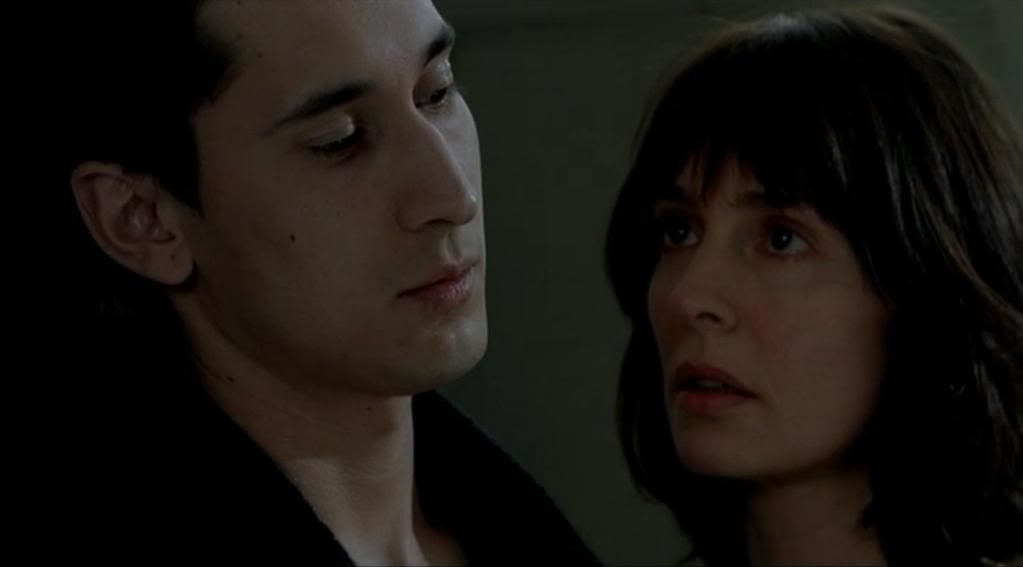
Catherine Breillat has never exactly been a subtle filmmaker, or a particularly easy one to grapple with. Her films are often bluntly provocative and polemical, using in-your-face, sexually explicit allegories to deliver her ideas about the essential antagonism between men and women. Anatomy of Hell is probably the ultimate Breillat film in many ways, a purely symbolic and abstracted confrontation between unnamed incarnations of female carnality and male brutality. It is also one of the director's worst films, a vile and simplistic work that wallows in its visceral images while advancing a rather nasty, limiting ideology that casts all men as vicious brutes, suggesting that while women are founts of life, men provide only death. It's familiar feminist rhetoric, here delivered in such exaggerated fashion that it seems grotesque, totally removed from anything that might shed real light on the nature of male/female dynamics.

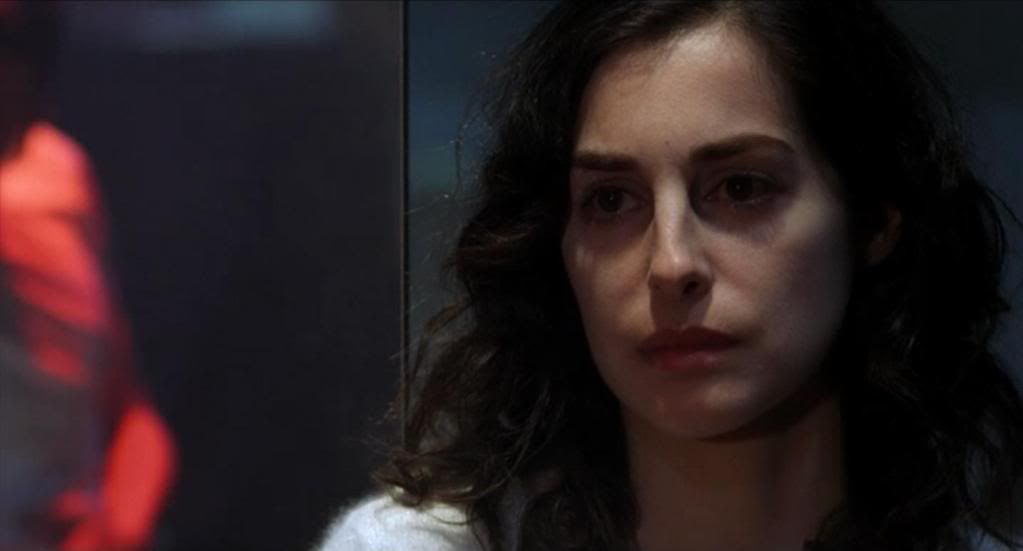
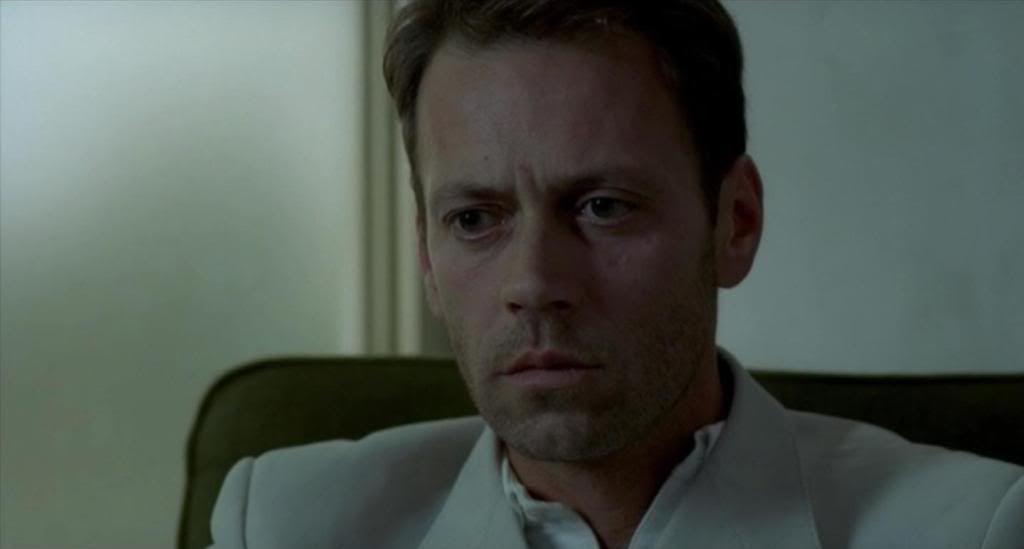
Breillat, never one to shy away from provocative imagery, has still never seemed so eager to offend as she does here, piling on so many calculatedly confrontational images that the effect is numbing rather than challenging. The film's allegorical structure focuses on the relationship between a young woman (Amira Casar) and a gay man (Rocco Siffredi), who finds her cutting her wrists in the bathroom of a gay club. When he asks her why, she responds, "because I'm a woman," which is a pretty good indication of the level of discourse Breillat is working with here. Casar represents the eternally suffering woman, subject to the hatred and disdain of men, which leads her to hate herself, to hate and deny her body. In order to deal with these feelings, she makes a deal with Siffredi: she'll pay him to come to her house, where he'll look at her naked body and talk about women.

At the root of the film is the idea that men hate women, and that perhaps gay men hate women most of all — that last being an especially repulsive concept, suggesting that gay men wouldn't be gay if only they didn't hate women so much, if only they weren't so disgusted by what's between a woman's legs. The man is gay, Breillat theorizes, because as a boy he once killed a bird, in innocent cruelty, and now he permanently associates female genitalia with the slippery guts of the bird, spilling out beneath his sneaker. He finds women disgusting, intuitively linking sex and death, and linking womanhood with his own boyhood shame and disgust — disgust with himself, and with the little pink crushed bird who'd died. Breillat seemingly extrapolates from this situation to all men, suggesting that the straight man's contempt for women is simply a less extreme version of the gay man's total disengagement from female sexuality. Breillat often locates the formation of sexuality in childhood, although not always in such a crude, blunt way. But then this film is Breillat at her crudest and most blunt, pouring out a really quite remarkable stream of outrageous ideas in between visceral scenes of sex, closeups of a bloody vagina, and other scenes carefully calibrated to offend and shock.

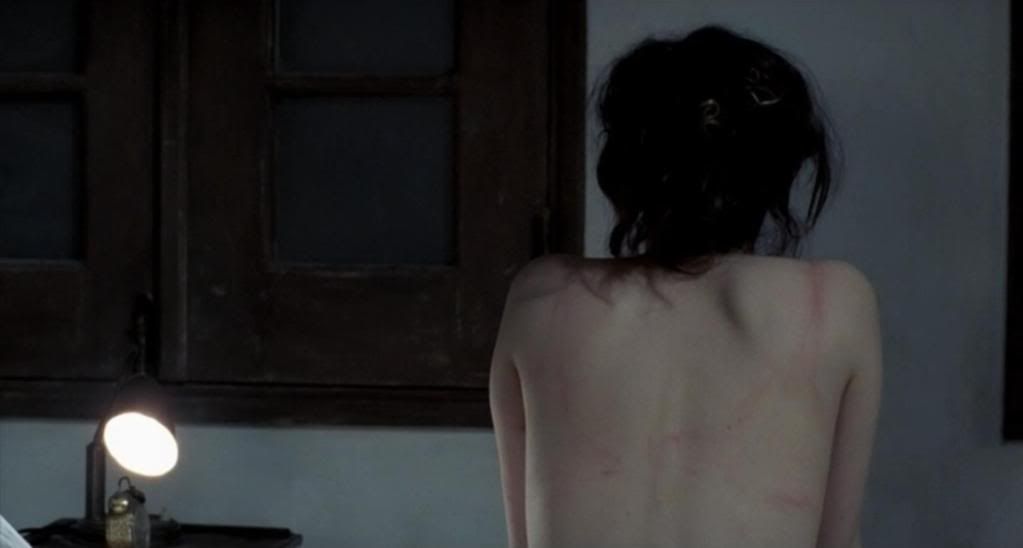
The film suggests that the essence of male/female relationships is hatred and self-hate, disgust and violence. Casar says she knows that Siffredi wanted to kill her during the course of one night — when he'd stood over her threateningly with a gardening implement before turning it around and sticking its blunt end inside her instead, leaving it hanging out of her at a jaunty angle. According to her, and presumably according to Breillat as well, the desire to kill a woman is "an urge all men have, that's how they are."

Breillat is dealing with all this at such a simplistic level that she winds up simply repeating clichés and stereotypes about both men and women rather than really interrogating or overturning those kinds of received ideas. Her most overt provocations — like having Siffredi and Casar share a glass of water mixed with menstrual blood from a tampon — come across as almost comically overwrought, and there's also some (presumably unintentional) comedy to be found in Siffredi's wooden line readings. Since Siffredi seems to get the bulk of the film's most torturously overwritten philosophical observations, his stiff acting — he spends much of the film staring blankly into space — only makes the film even harder to take seriously. (There's probably a joke about "stiffness" to be made here.)

With Anatomy of Hell, Breillat sets out to deconstruct misogyny, to confront it head-on. Obviously, the intent behind the film's overt presentation of a woman's body, without eroticism, is to challenge and subvert the disgust that men supposedly feel at the idea of women's body hair and menstruation. Breillat seeks simultaneously to disgust and to suggest that what she's showing is not disgusting, a contradictory dual purpose that sabotages the film; she really achieves neither aim. Breillat has, in recent years, moved away from the overt provocation represented by films like this and Romance, instead crafting increasingly nuanced works that explore her familiar themes without relying so heavily on viscera and excess. Anatomy of Hell was her last film to date in this vein, and it's the grimy, ugly bottoming-out of this approach. There was no further, or lower, to go after this, and perhaps this film's slate-clearing vitriol is what made it possible for Breillat, in the years since, to move so decisively beyond this kind of shallow provocation to the genuinely fascinating, intellectually rigorous work she's been making ever since.

Wednesday, October 10, 2012

Sex Is Comedy


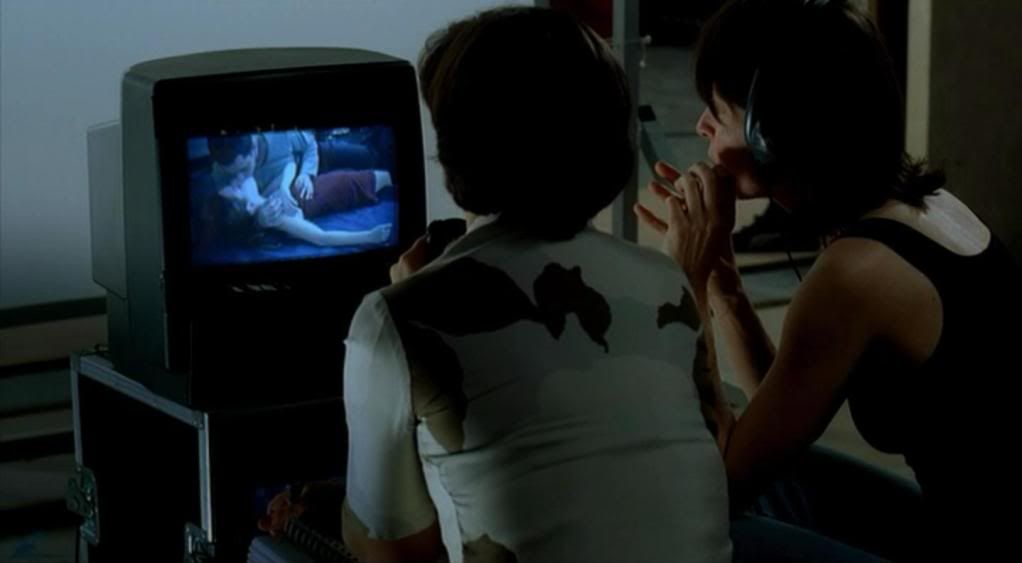
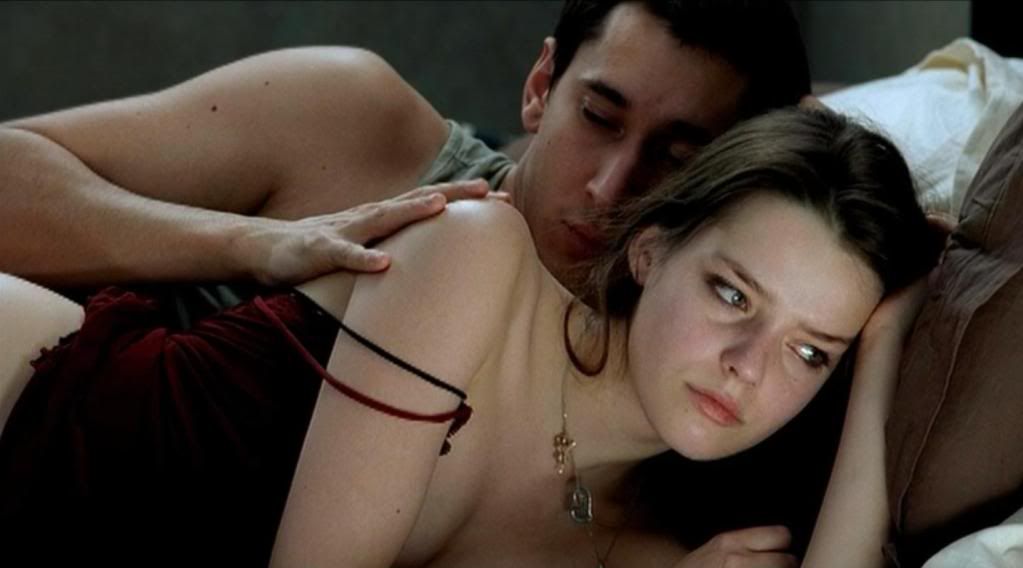
In Sex Is Comedy, Catherine Breillat lays bare the essence of her cinema in an especially direct way, making a metafictional, quasi-autobiographical film about a director making a film. Jeanne (Anne Parillaud) is a director very much like Breillat, a director whose work deals candidly with the antagonistic, push/pull, love/hate nature of male/female dynamics. Her latest film builds up to a scene of a young girl losing her virginity, but to capture onscreen the complicated emotions of this moment, she must overcome the resistance of her unreliable actors, who are never named but only called, somewhat pompously, the Actor (Grégoire Colin) and the Actress (Roxane Mesquida). As with much of Breillat's work, it's all too obvious that she's laying out a thesis and singlemindedly setting out to prove it.

It should come as no surprise to anyone who's seen the director's other films precisely what that thesis is. For Breillat, sex is a power struggle, love is a power struggle, virtually any relationship between a man and a woman can be boiled down to a power struggle. It's all a vicious game, which is why sex is comedy, although "sex is tragedy" would be equally apt. Jeanne, standing in for Breillat, stages love scenes like a war, and the behind-the-scenes glimpses this film provides into Breillat's working methods — the film is supposedly based particularly on her experiences while making Fat Girl — are fascinating. She's constantly looking for tension, for anxiety, arranging the actors into uncomfortable postures, the girl's elbow digging into the guy's ribs, or the girl putting her arm around his neck in a pose that's more like a wrestling headlock than an embrace. Jeanne is alternately tyrannical and tender on the set, and she has almost intimate, sexually suggestive relationships with both the actor and her assistant Léo (Ashley Wanninger), mirroring the relationship in the film she's making.


Unsurprisingly, Breillat finds, on the set, a neat parallel for romantic relationships in the power struggle between actor and director, each of them pushing at and pulling on one another by turns, fighting for control and dominance, arguing over every petty detail, like whether the actor will take his socks off or not for one scene. She recreates, with him, precisely the uncertain, will-she-or-won't-she vibe that she's trying to capture onscreen, and it's unclear if this relationship with the actor is "real" or simply a game, a way of getting the performance she wants out of him by keeping him destabilized even between takes.

That's one constant thread running through the film, a suggestion that this film's portrayal of faked intimacy between actors can be seen as a parallel for the games and power struggles that also go on in real relationships. The film's title encourages the comparison: sex is comedy, not only on a film set, but in the real world as well, where these same struggles and masquerades and fakeries go on without being acknowledged as explicitly as they are here.

Much of the film is dedicated to constant introspective meta dialogues, with everyone debating the nature of acting, the struggles of translating one's vision into cinema, the difficulties of filmmaking. It often feels as though Breillat is giving an interview, speaking through her characters about her own filmmaking process and her own ideas. It's interminably interesting and frustrating, and it exists mainly as a commentary on Breillat's other films, to the point where it's difficult to separate it from the rest of her oeuvre. It's a film where a director employs sexual manipulation in order to convey sexual manipulation onscreen, a tricky paradox that might just signify Breillat addressing or acknowledging the critics who have accused her of making exploitation films.


It all builds up to the moment when the actors finally perform their big love scene, and after some false starts they infuse the scene with genuine, harrowing emotion, particularly Mesquida, who's shivering and spasming and crying as Colin coaxes her character into letting him take her from behind. The scene is intense and shattering, though it doesn't even remotely capture the conflicted, complex layers of desire and reluctance that Jeanne had claimed to want from the scene — instead, typically of Breillat, the sex just looks unpleasant, like a rape or a near-rape, forced upon the unwilling girl by the insistence of the guy. It's strange that Jeanne is so insistent that girls both desire sex and are scared of, but all that comes across, here as in many of Breillat's films, is the fear, the pain, the unpleasantness, and none of the supposed desire. (One of the reasons that Breillat's more recent fairy tale films have been her best work yet is that they do embody the contradictory dichotomy that's only given lip service here.)

When the scene is over, the actress is still sobbing, and Jeanne, her own eyes red and her face overcome with emotion, embraces her and comforts her. The extra level comes from the awareness that Mesquida is playing an actress overcome by her part, leaving one to wonder how much of this is genuine, how much acted, and how closely the film within a film mirrors the film that Breillat actually made. In any event, it's a complex ending to a film that is otherwise only intermittently engaging for much of its length, even if it does add some crucial context to an understanding of Breillat's work.

Wednesday, September 12, 2012

Romance


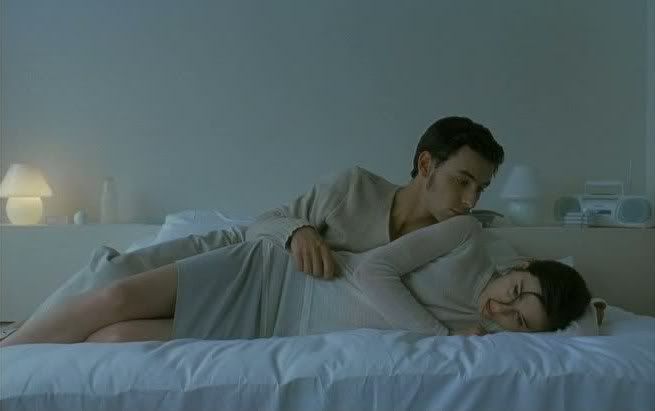
"Love between men and women is not possible." So says Marie (Caroline Ducey) towards the end of Catherine Breillat's ironically titled Romance, and the film goes about methodically proving this thesis by examining Marie's feelings about sex and her relationships with various men. Marie is in a long-term relationship, a conventionally "romantic" relationship, with Paul (Sagamore Stévenin), a handsome but passionless model who no longer has sex with her, who doesn't even want her to touch him. His apartment, where they sleep together sexlessly every night, is pure white, and they both dress all in white, virginal, unstained, totally clean and tranquil. The walls are white, the bedsheets are white, the lights are bright fluorescent white, the furniture is white. Everything is clean, clinical, untouched, and it's no wonder that there's no sex within these spotless walls, no hint of passion or tenderness. Paul is reluctant to even take his (clean, white) shirt off in bed, and Marie says she feels like she's sleeping next to a ball of cotton.

This spartan cleanliness is contrasted against the dirtiness and messiness of the sex that the increasingly dissatisfied Marie seeks out with other men, first with the muscular, sexually voracious Paolo (Rocco Siffredi), his name so similar to Paul's that Marie starts forming an almost romantic attachment to him too, and then with her boss at her teaching job, Robert (François Berléand), with whom she engages in sadomasochistic games of bondage and restraint that wind up getting her more excited than actual intercourse. Notably, Robert's apartment is decorated in red, and when he first ties her up, his red shirt against her white dress seems like a stain, as though he's going to leave bloody smears all over her from the bright red of his home, with red curtains framing her like she's on stage as she's being bound and gagged. The second time she goes to see him, she's wearing a bright red dress with black underwear, the first time she's ever worn anything but shades of white and gray, and the effect is shocking — even more so when she returns in this red dress to Paul's white apartment, her presence there suddenly standing out from the surroundings rather than fading amiably into the walls.

Breillat is dealing with sex and desire, control and submission, but it's all so schematic, so deathly dull in its rote plodding towards foregone conclusions. Towards the end of the film, Marie imagines sex as a mechanistic whorehouse where her upper and lower body are separated from one another by a wall with a hole. On one side of the wall, Paul sits beside her, holding her hand and smiling lovingly at her, while on the other side of the wall "ape-like" naked men approach her spread legs with simian lust, waiting in line and taking turns to fuck her. The symbolism is so crushingly obvious as to barely qualify as symbolism: lust and love are separated from one another, the ideal of the monogamous romantic relationship clashing against the animalistic desires of men. It's a treatise delivered with all the finesse of the porn movies whose passionless imagery of sex Breillat is drawing on here. Men are either fey automatons like Paul — whose woman-chasing seems to emerge only from a sense of duty, a sense of what he's supposed to do as a man, and who's actually implied to be gay — or big dumb studs like Paolo or remorseless ladykillers like Robert, who boasts about having had 10,000 women, including Grace Kelly.


Breillat is depicting Marie as someone who's seeking pleasure for herself, trying to break free of the idea that women don't desire sex, that women don't have the same strong lusts as men — but at the same time so much of Marie's behavior dovetails with male desires, with male fantasies of female submission and degradation. Marie is trapped, but it's not always clear by what; in any event, she's always staring at the world through the prison bars of the few stray strands of hair that break free of her pulled back hair to lay across her face. Notably, in the scene where she goes to see Robert for a bondage session, dressed in red, she lets her hair down for the first time, but is she really free, being manipulated into position by this lothario who has such naked contempt for women?

Part of the problem is that Breillat depicts all the sex as equally unappetizing and passionless, whether Marie is supposedly getting off on it or not. Towards the end of the film, she goes for a gynecological exam and is felt up by a succession of medical students, each waiting a turn like the men in her pornish whorehouse fantasy, and this clinical examination is filmed with exactly the same slightly bored detachment as the scenes in which Marie is supposed to be enjoying herself. Maybe that too is part of Breillat's thesis, that all sex is unavoidably compromised and fucked up by these weird societal ideas about men, women, relationships, desire, and love. At one point, in a rare flash of humor from this mostly humorless film, Breillat cuts from a splash of semen spurting onto Marie's stomach to a shot of a doctor spreading gel on her stomach for an ultrasound examination. That about sums it up: all sex is clinical and emotionless, and one might as well visit a doctor as get into bondage.

Thursday, April 19, 2012

The Sleeping Beauty


Catherine Breillat understands very well the appeal and the power of fairy tales and children's stories, their ability to reflect and create dreams and nightmares, to provide ideal images or give shape to primal fears. The Sleeping Beauty is her second film in a row, following Bluebeard, to deal with children's stories and fables, deconstructing these ancient tales and the lingering influence they have on children's ideas about the world, as well as what these stories can teach about growing up, love, sexuality and the differences between boys and girls. One senses that Breillat has found, in these sensual, magical films, the perfect form for expressing her provocative ideas about girlhood and womanhood.

The Sleeping Beauty is, if anything, even richer and stranger than its predecessor, following the little princess Anastasia (Carla Besnaïnou) into a dream world where she must stay for a hundred years, cursed by a witch to die but instead left in this in-between state by the intervention of three more benevolent witches. When she wakes up, they promise, she'll be 16 instead of 6, having passed through the troubling transition stage from girlhood to womanhood in her sleep. Like Bluebeard, the story is taken from one of Charles Perrault's folk tales, though here Breillat blends it with Hans Christian Andersen's The Snow Queen and renders it as a surrealist dream. Anastasia wanders from one strange scene to another, encountering a train station populated with mannequins, a wicked jailer covered in boils (who, strangely, forces her to bowl with skulls), and a band of pirates led by a little gypsy girl (Luna Charpentier). At one point, Anastasia is taken in by a farmer woman (Anne-Lise Kedvès) and her son Peter (Kérian Mayan), with whom she lives happily until Peter disappears. She spends the rest of her dream life chasing after him; in his absence, he has become her ideal man, her dream man who she'll always be chasing after.


For Breillat, childhood is an idyllic, pre-sexual Eden in which boys and girls can happily interact, and gender identity is fluid. Anastasia is a princess who wants to be a knight, and who reads about hermaphrodites in the dictionary as a bedtime story before going to sleep. When she stays with Peter and his mom, Peter and Anastasia are instantly happy together, rough-housing and playing, sleeping in one bed, curled up with their heads close together. It's the onset of sexual maturity that opens a gulf between them, as Peter enters puberty, symbolized by the sight of the lovely, chilly Snow Queen in a silvery gown like a wedding dress, followed by a snowflake drifting into his eye, changing his way of looking at the world. From that point on, he's cruel to Anastasia, and they now sleep in separate beds like a married couple in an old Hollywood movie, their perfect union and genderless play forever altered by the dawning of sexuality and the realization that childhood is moving towards its end.

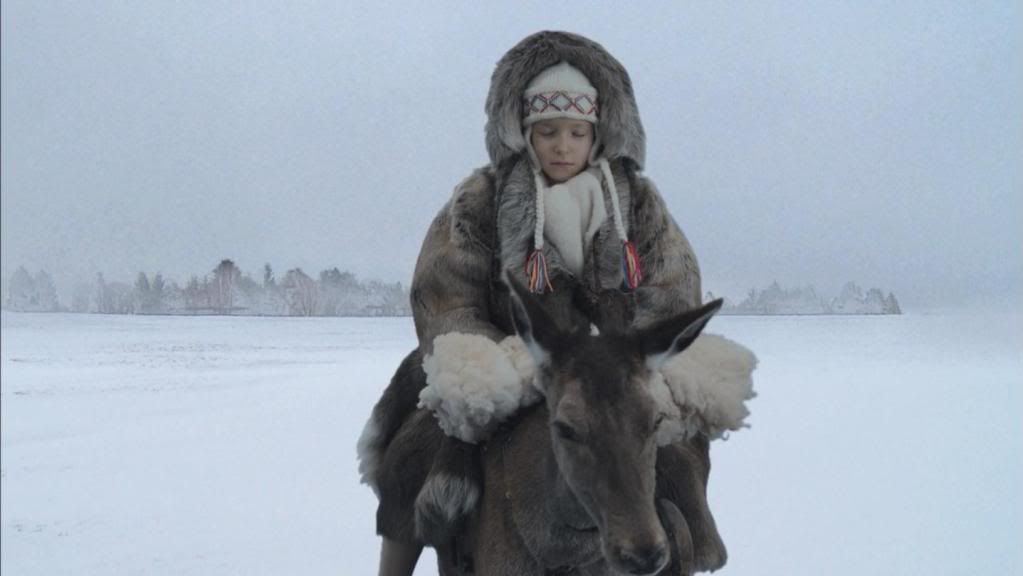
The film's style is both magical and direct, with crisp cinematography that makes these glistening fairy tale locales seem quotidian and grounded, even when they're populated by albino princes and princesses who invite Anastasia for a tea party that's more Alice in Wonderland than Perrault. In one stunning sequence, Anastasia rides a reindeer into the arctic wilds to find an old crone who controls the winds, and the snowy landscapes stretch across the screen, the Northern Lights explosively filling the sky, with the princess a fuzzy little smear in her pink coat, lost and alone in this beautiful but deadly land. The film is richly symbolic, loaded with heavy psychosexual meanings encoded in every object, every image. When Peter shows Anastasia a queen bee, folded in his hand, he tells her that it's so weighted down that it can't move, causing Anastasia, a princess who may grow into a queen, to cry out that she doesn't ever want to be like that.


The film is all about the trauma of moving from childhood's dreams and fantasies into the much less fantastic reality of adulthood. The pivotal moment comes when Anastasia wakes up at the age of 16 (now played by Julia Artamonov) into the modern era. Before this, the film had been an anachronistic mash-up of all times and no time at all, with old-fashioned costumes side by side with more modern objects and decorations, giving the surreal dream the timeless quality of a fairy tale. When Anastasia wakes up, she's in the modern world, her dress and corset and princess' demeanor now the anachronisms in a world of cars and TV and boarding schools. And she finds waiting for her, not Peter, but his descendant Johan (David Chausse), who nevertheless bears enough resemblance to her dream man that she's instantly drawn to him.

Breillat cleverly deconstructs and subverts this "happily ever after" ending by daring to ask what comes next after the sleeping princess wakes up from her curse into the arms of the waiting prince. What comes next is disillusionment: he's too eager, she's shy and virginal, reluctant to give up her virtue so quickly to a man she's just met, while he keeps trying to get away with more and more in their playful flirting. Pushed away, he hangs out with another, more accessible girl, dressed in modern clothes, making out with her while an erotic movie plays on the TV. Meanwhile, Anastasia is reunited with the little gypsy bandit girl, now grown up (and played as a woman by Rhizlaine El Cohen), and she has an erotic encounter with her that's far more sensual and satisfying than her hesitant teenage games with Johan. When she finally does go to bed with Johan, it's painful for her — Breillat cuts to them in mid-act, with Anastasia screaming, seemingly not in pleasure — while Johan is confused and hurt to find that she doesn't want him for himself but as an echo of an ideal dream man whose image she'd had in her head since childhood.


Obviously, the fairy tales that kids learn only set them up for various forms of disappointment, creating impossible romantic ideals to which the reality can never live up. After she has sex with Johan, Anastasia finally sheds her white, lacy princess' dress and the corset that had left painful-looking pink stripes across her back, for a more modern black skirt and stockings, cutting her long hair as well. The dream is over, childhood is over, and she's shed the illusion that she's a special princess, accepting that she's just another girl, in just another complex, painful, confusing, up-and-down relationship with just another boy.

In the film's final image, Johan and Anastasia lay in bed together, their heads outside the frame, red claw marks across his bare torso and tears in her black stockings; they're hurting one another, settling into a familiar kind of damaging relationship. He asks her, "Do you love me as before?" "As before," she agrees, before adding, "but this is after." This is their happily ever after, an acceptance that childhood is over, that the dreams of youth were only dreams, that they are not special or unique, not princes and princesses but common lovers, damaged by their expectations about one another and the ways in which they've so quickly disappointed one another. The fairy tale is over, but its impact on the real waking world lingers.

Wednesday, April 18, 2012

Bluebeard (2009)


Catherine Breillat's films have often been concerned with childhood and innocence, especially the loss of girlish innocence, often with the implied or explicit double meaning of the loss of virginity. Her take on the classic tale of Bluebeard is one of her most direct and fascinating inquiries into childhood and the ways in which societal ideas about love, sex and marriage are passed on to young girls. The film operates on two levels, constantly switching back and forth between two parallel stories. In one, two little girls (Marilou Lopes-Benites and Lola Giovannetti) — the younger one named Catherine, suggesting an autobiographical stand-in for the director — play in the attic and read the story of Bluebeard, with the younger one relishing her older sister's fear of the story's gruesome details and violence. This material alternates with a sensual, visually beautiful adaptation of Charles Perrault's Bluebeard itself, with the titular great lord (Dominique Thomas) taking his newest child-bride, Marie-Catherine (Lola Créton) into his castle.

The alternation of the two stories suggests that the Bluebeard legend is part of the mythology by which young girls learn about adulthood. The other story mentioned by the girls, who intersperse their readings from the book with playful chatter about marriage and other matters, is The Little Mermaid, and together these two stories represent the two extremes of girlish indoctrination into love and sexuality: on the one hand, the swooning, tragic romanticism of a girl willing to give up everything for her great love, and on the other hand a girl terrified of her man, terrified, subtextually, of the violence represented by sex. The girls talk a great deal about love and marriage, but it's clear that they really understand nothing, they're too young, they've picked up bits and pieces out of context but much of what they've learned is myth and legend, filling them with equal parts unrealistic romanticism and uncomprehending terror.


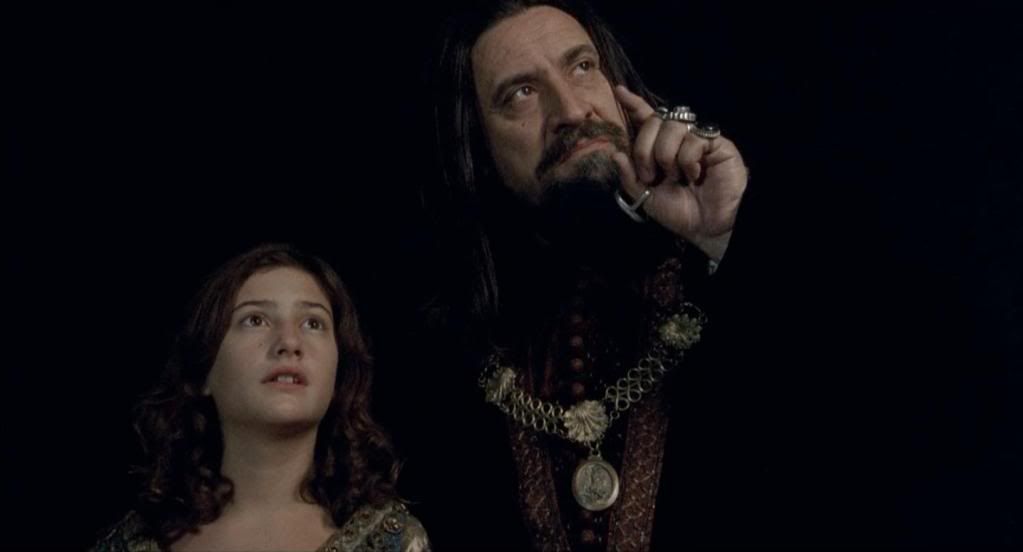
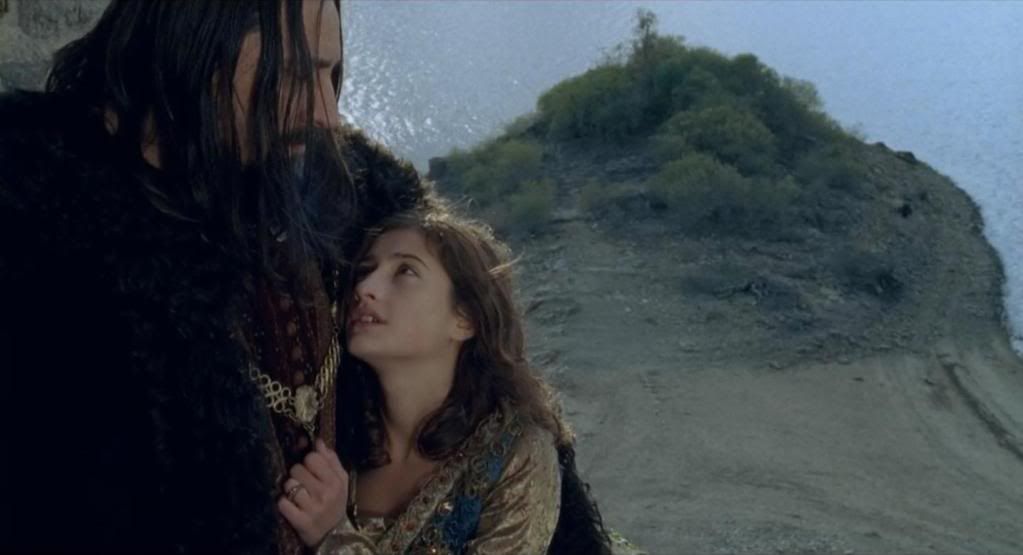
Within both stories here, it's the younger of two sisters who is bolder and stronger. Just as Catherine lacks her older sister's fear, Marie-Catherine doesn't tremble before Bluebeard like her older sister Anne (Daphné Baiwir) or the other girls, but is actually strangely drawn to him. Indeed, Breillat's Bluebeard isn't a terrifying figure so much as a tragic one, a sad and withdrawn mountain of a man, looking especially tremendous next to his tiny child bride, who looks up at him with wide eyes and a mischievous smile, and is unafraid to assert her own way when she moves into his castle. There's a class component to their relationship: Marie-Catherine and Anne had lost their father and been left to poverty, and Bluebeard's marriage proposal is a form of rescue, one that the irrepressible Marie-Catherine, who refuses to feel sorry for herself, eagerly leaps at. She revels in her lavish new home and her freedom, setting aside a tiny room for herself, a room so small that her massive husband cannot even enter — the sexual symbolism is unmissable and delivered with winking bravado.

And yet Marie-Catherine finds herself liking this seemingly gentle giant who towers over her, dwarfing her tiny form, looking at her with kindness and admiration and more than a little incomprehension. In other words, he's a typical man, baffled and intrigued and amused by the ways of women. He's also something of a god for her, a subtext that's made strikingly clear in the test he sets for her, giving her a key to a basement room and then forbidding her from entering it; it's as though she's Eve in Eden, being tested by God, ordered not to eat from the readily accessible tree of knowledge. Breillat seems to be suggesting that the Bluebeard tale, far from being a mere gory fable of male violence, is a reflection of all marriages, all of them repeating this paternalist power struggle that originated with the relationship between God and Eve. This tragic Bluebeard is just as trapped by expectations and roles as his young wife, forced to repeat a violent ritual over and over again rather than break free of the cycle.

This theme of repetition is realized formally in the scene where Bluebeard traps Marie-Catherine in a tower but must ascend and descend several times as she tricks him with delaying tactics. Breillat repeats the same image of Bluebeard going up or down the stairs several times in succession, conveying the impression that there are far more steps than there actually are, and enforcing the sense of being trapped by a cycle, forced to mechanically repeat the same actions and embody the same stereotypes over and over again. With this in mind, the curiously ambiguous final image becomes, not a victory, but a simple reversal of the cycle, the violence of this relationship reconfigured but not eliminated.


Religious hypocrisy plays a big part in perpetuating the helplessness of women and the dominance of men in this film. Towards the beginning of the film, Marie-Catherine and Anne are housed in a religious school where they're dressed in form-erasing robes and nun-like habits, until the girls are told that their father has died. The Mother Superior tells them not to be sad, not to grieve, but to rejoice: "He is in the Kingdom of Heaven," she says, and Breillat immediately cuts to a shot of the girls, shocked and upset, their faces wet with tears, not the least comforted by these empty words. The irony is then made even more bitter by the nun's announcement that the girls must leave: "this is a private college, not, alas, a charity." This woman is pious and unworldly when it comes to grief, suggesting that the girls think abstractly of Heaven rather than deal with the actual physical death of their father, but she then becomes coolly businesslike because the girls' family can no longer afford their tuition.

Breillat is depicting a societal structure that seems stacked against women in every way. After their father's death, the girls and their mother are left to poverty, their possessions taken away to pay off debts. They're totally abandoned and cast out, and the girls' mother tells them that their only hope is the convent, since they have no means and no one will want to marry a girl without a dowry. Anne reacts badly, getting angry at her father for dying and her mother for dressing them in mourning black, but the younger, tougher Marie-Catherine more appropriately strikes out at the representatives of the societal forces that are essentially punishing these women for losing their man. Marie-Catherine vows to strangle the compassionless Mother Superior and shouts curses at the men who dispassionately remove the family's possessions from their home; she understands that it's not the fault of her father or mother, but of the societal rules that govern their opportunities. She understands that justice is for the rich, not the poor, so she simply vows to be rich.


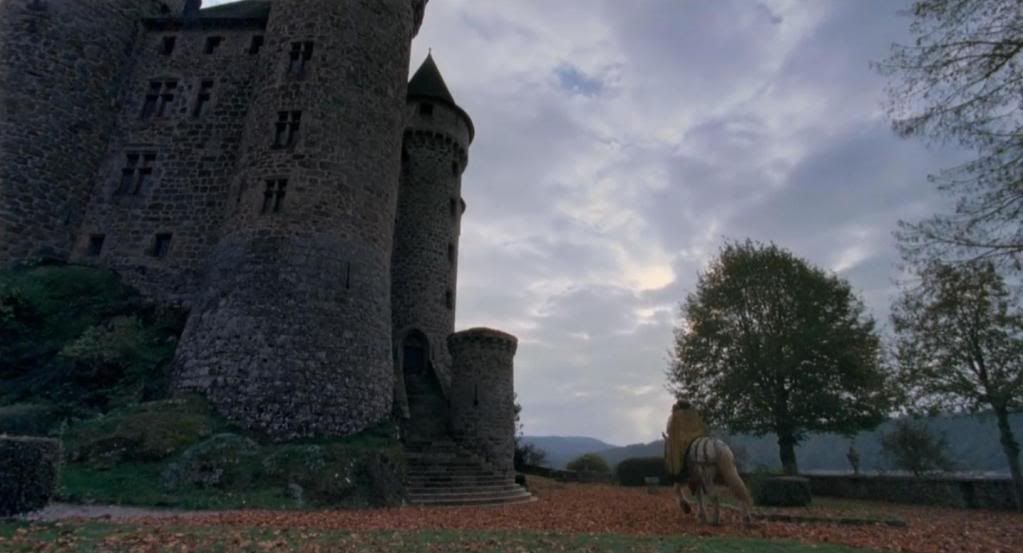
It seems that starting with The Last Mistress, Breillat has become a much more complex filmmaker than ever before, discarding the porny provocations and didactic tone of much of her earlier work in favor of rich layers of subtext and suggestion. Her Bluebeard is concise, not even an hour and a half long, but it's packed with elegant intimations of multiple deeper meanings. Her images have a fairy tale's beauty, capturing the looming majesty of Bluebeard's castle, the sumptuousness of the elegant clothes and jewels, the lush greenery and rocky shores of the surrounding countryside.

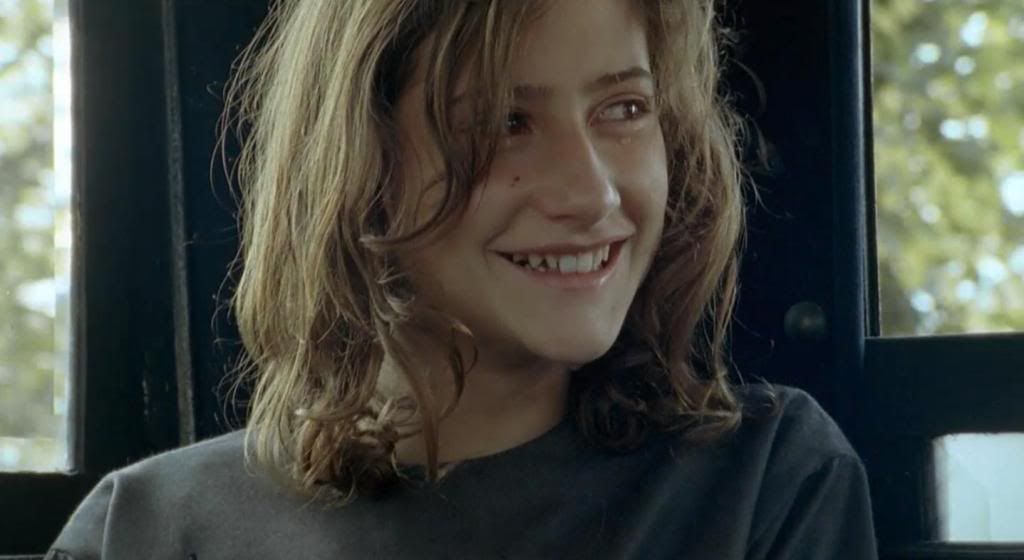
Breillat is also very sensitive to the nuances of the actors' performances, inching in for astonishing frame-filling closeups in which every twitching smile, every sisterly eye-roll or naïve stare, is sublimely rendered. Breillat seems particularly bewitched by the young actresses playing the two younger sisters, and Créton especially has a distinctive, mischievous face that perfectly conveys the mix of fragility and self-assurance in this young girl. Ravishingly beautiful, infused with melancholy and metatextual playfulness, Breillat's Bluebeard is one of the director's finest films, a work of great density and emotion that provokes far more thought than the director's more overtly provocative earlier films.

Friday, April 15, 2011

Fat Girl


Catherine Breillat's Fat Girl is a chilling and disturbing movie, an in-your-face provocation that presents a devastating portrait of the kind of insinuating sexual exploitation that goes on everyday. It's a film that's deeply suspicious of the concept of "love" and the things that are done in its name, and it's all leading towards an unforgettable final line and final shot that forces the film's moral to snap into place with unavoidable clarity. The film focuses on the relationship of the young sisters Elena (Roxane Mesquida) and Anaïs (Anaïs Reboux), the former pretty and poised between girlish and womanly, the latter chubby and sullen. During a summer vacation, Anaïs watches as Elena gets an older boyfriend, Fernando (Lorenzo de Rienzo), and hesitates before losing her virginity to him.

The film's centerpiece is a very difficult-to-watch, discomfiting sequence in which Fernando relentlessly tries to convince Elena to have sex with him, while Anaïs watches from across the room in her own bed, pretending to sleep, covering her eyes then spreading her fingers apart to peek through. The scene is so disturbing because it's so real, so believable, and because it's pretty much rape. Elena keeps resisting, telling Fernando she doesn't want to, and he just keeps on verbally wearing her down, telling her it will be a "proof of love," telling her that if she doesn't give him what he needs, he'll have to go with another girl, someone he doesn't love like he loves her, and he doesn't want to do that. It's icky and scummy, and one wants to watch the way Anaïs does, half-covering one's eyes, wanting to turn away but unable to despite the burgeoning sick feeling that the scene inevitably produces. Breillat is as relentless as the boy, holding her camera on the duo as they awkwardly wrestle and turn around, Elena looking increasingly upset and confused beneath the barrage of Fernando's words. Her face suggests that she feels assaulted even before he actually does anything to her, and the contrast between her tormented visage and his smug smiles and flowery speeches is nauseating. It's a raw, unsentimental depiction of "love" as predation and exploitation, and it has the searing force of an uncomfortable truth.

This scene — in which Elena eventually relents, more or less, to anal sex, then feels ashamed afterward — reverberates throughout the entire rest of the film. Breillat is ultimately more interested in the relationship between the sisters, and especially in the lessons that Anaïs is learning by watching her sister's miserable introduction to sexuality. Anaïs, though younger, often seems more mature and cynical than her romantic older sister, who buys into Fernando's promises and professions of love completely. Anaïs isn't so sentimental, because she's watched her sister from a more objective viewpoint, outside of this relationship, and she sees how tawdry and ugly it all is. As she says at one point, the benefit of being the second child is that she gets to advance at a faster rate, to learn from the mistakes of the older child, and though she's talking about their parents' increased permissiveness with the younger daughter, her words also apply to her understanding of sexuality. She gets to learn about sex by watching her sister, and what she learns is that guys exploit girls for sex, that girls are often forced into doing things they don't want, that sex is somewhat violent. When Elena says that she's going to "give herself" to Fernando, Anaïs says that her expression is strange; it's likely that Anaïs, from her vantage point, sees the transaction as one where the guy takes rather than one where the girl gives.


The relationship between the sisters is always at the center of the film, and Breillat presents them as opposites in many ways, but bound together by sisterly affection and rivalry, by equal parts love and hatred. There is a surprisingly touching scene in which the two girls lay in bed one night, their heads close together, talking and laughing, reminiscing about their childhoods and their fights, giggling like the little girls they are. It's the one moment when they really seem like children, with their girlish giggles and their innocent banter — elsewhere, they seem to be growing up very quickly. Anaïs spends much of the rest of the film quietly glowering from afar, watching everything with alert and somewhat angry eyes, her face locked into a permanent scowl, her features small and delicate within her moon-like face. It's rather poignant, and also cruel, when Breillat repeatedly films the two actresses with their faces pressed together, emphasizing the differences between them, calling attention to the gulf between the sexualized Elena (and Mesquida was nineteen at the time, but believably looks much younger, like a Lolita-esque little girl trying to be sexy and provocative) and the younger, asexual Anaïs.

The girls are left to learn their lessons on their own, as their parents (Romain Goupil and Arsinée Khanjian) seem totally disinterested in anything the girls do. When Anaïs breaks down crying at breakfast one morning, the girls' parents make a cursory effort to ask what's wrong, and then the father storms off in annoyance while the mother simply writes it off as "adolescence." They're totally incompetent parents, wrapped up in their own lives and ignoring their daughters completely, blind to what's going on. They even meet Fernando — who's obviously so much older than Elena — and chat with him as though he's simply a nice boy but then, later in the film, they act as though they're shocked and disgusted when they learn that Elena actually had sex with him. They blame the girls for everything and, in that case, the subtext is that guys are expected to act like this, that guys are expected to want sex and to do anything to get it, so it's the girl's fault if she gives him what he wants.

All of this unrelentingly ugly depiction of sexuality is leading towards the shocking ending, in which Anaïs finally gets to apply the lessons she's learned in an unexpected way. Breillat subtly builds the tension leading up to this climax, as she extends the long drive home from the vacation, with the mother, who hates driving, at the wheel and the teary, worn-out girls sullenly sitting in the car with her. The tension builds and builds as the mother drives angrily, and the uncomfortable silence in the car is occasionally broken by bouts of recrimination and tears, or by the mother's blasting of a glam David Bowie rocker. The highway, crowded with trucks and impatient speeders, adds to the tension, and several times Breillat's staging of the long drive suggests that the film is going to end with a car crash, with a horrible accident. Instead, it ends in a rest stop where the mother and her daughters are confronted with an even more blatant depiction of predatory male sexuality than Fernando had been, and in the final line, and the final freeze frame on Anaïs' chillingly empty face, Anaïs suggests that what she's learned from watching her sister is that a guy forcing himself on a girl is normal, to be expected, that in fact it's not even rape, really.

This is a film with a very clear point of view about sex, that it's something forced upon girls by the guys who claim to love them and simply use them instead. It is, of course, a pretty limited view of sex, but that's part of the point: the film is intended as a cautionary tale, as a film to excite fear and reprehension. It aims to teach a lesson, not the same lesson as Anaïs learns — to accept rape — but the lesson that the danger of a society in which Fernando's behavior is accepted and even considered normal is that rape will be accepted. In order to reach this conclusion, Breillat has to make everyone other than the two central girls either clueless or borderline sociopathic, and the startling violence of the final scenes especially feels somewhat contrived and artificial, on the level of the fearmongering everything-is-dangerous attitudes of the American Law and Order shows. Breillat, from her very radical feminist perspective, winds up treading pretty close to the conservative outlook on sex as dirty and shameful. Another way of looking at the film, however, is that it presents sex as dirty and shameful within this context, in this exploitative situation where guys force themselves on girls who have few real defenses and no one to turn to, especially not judgmental adults who don't want to hear about their kids having sex and are quick to place the blame on the most blameless party.

Monday, July 7, 2008

The Last Mistress


Catherine Breillat's The Last Mistress is a film marked by profound tension, and not just the tension stirring within and between its divided characters, but the tension it creates within the genre of the period romance from which it draws both its story and its style. Based on a mid-1800s novel by Jules-Amédée Barbey d'Aurevilly, the film relates a classic, even archetypal, tale of misplaced love. The young "libertine" nobleman Ryno de Marigny (Fu'ad Ait Aattou) is preparing to finally settle down and marry the lovely Hermangarde (Roxane Mesquida), but there remain questions and rumors about his passionate ten-year affair with his Spanish mistress, Vellini (Asia Argento). This is a story of sexual passions invading the lavishly decorated drawing rooms in which the film is primarily set, of visceral, physical desire overwhelming even the most well-meaning "pure" emotions.

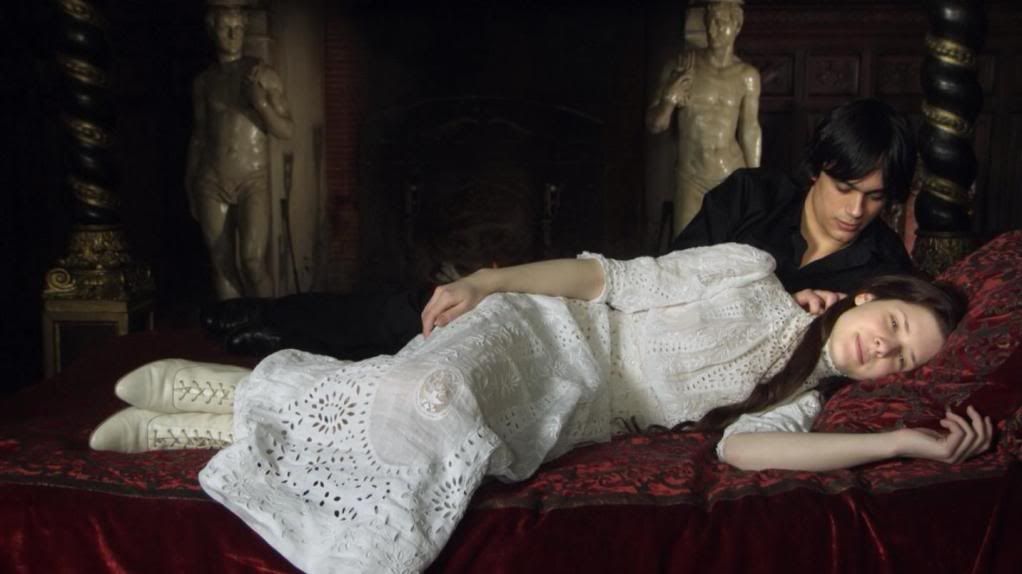
The main agent of this infiltration is Argento herself, who quite literally seems to have come from an entirely different, more lurid film than her surroundings. Set off against the wan, pallid Aattou, who's so heavily made up with powder and reddened lips that he looks more feminine than his lover, Argento is a vivid, powerful presence, unrestrained by either social conventions or the strictures of good acting. She delivers a totally unhinged performance that never fails to sell her unconventional magnetism and attraction, even if it's not always convincing as conventional dramatic acting. She's the epitome of the earthy seductress: her sneering lips with a hint of fuzz above them, crooked teeth, hooked nose, piercing black eyes, and a curvaceous body that, with her complete lack of self-consciousness, is allowed to simply be, to move naturally and without modesty, in sex and in the way she walks alike. It's certainly no mystery why Aattou falls in love with her, even though he calls her an "ugly mutt" on first sight. It's not quite as obvious why she should fall for this handsome but taciturn young man, surely like hundreds of others in Paris at the time.

Then again, this may be part of the point. Aattou unmistakably belongs to the world of the chic Parisian salons, the drawing rooms, the polite society that sneers at a "creature" like Argento, looks down on her as subhuman. Argento simply does not belong, and doesn't want to. She's a much more modern creation than anyone else in the film — Breillat's framing of the otherwise uninhibited sex scenes mostly succeeds in obscuring Argento's copious tattoos, but even so she can't help but reveal a fleeting glimpse of the ink on her back, just above her butt. When measured against the film's overall carefulness in obscuring this body art, it doesn't feel like an accident, but a conscious acknowledgment of the extent to which Argento's very persona shatters the film's commitment to period realism. Her character often seems to have come directly from a hard-edged 50s Western, a tough saloon gal thrust into a Victorian romance. In one of the film's most striking and memorable scenes, she smokes a tiny stub of a cigar in a dark parlor, blowing smoke rings while she watches the men play dice. This scene is masterfully orchestrated, with Argento first facing a mirror, letting out wisps of gray smoke, in sharp focus with the whole rest of the room blurry in the mirror behind her. Later, when Aattou is at the table playing, a smoke ring wafts across the frame from offscreen, briefly encircling his face, a tangible reminder of Argento's out-of-frame presence, her fierce seductive power.

In scenes like this, she calls to mind no one so much as the Mexican actress Katy Jurado, from countless Westerns but especially as Gary Cooper's former lover, and the subject of enduring scandal, in High Noon, a film that has unexpected resonances with Breillat's film. Argento has the same force, the same sultry Mediterranean quality, as Jurado, but there are crucial differences in the two films' treatments of the love triangle. While Cooper leaves Jurado, without second thoughts, for the virginal, blonde, blue-eyed, and white Grace Kelly, Aattou only thinks he is in love with the very similar Mesquida, a noblewoman standing in for Princess Grace. It may be, of course, that Breillat did not have such specific examples in mind, though she is quite obviously responding to the archetypes that govern High Noon, and indeed most of Western culture in general, with regard to women, race, and sexuality. Argento is the film's real woman, one who unabashedly enjoys sex, who is as aggressive and self-assured as a man, who is unrestrained by the fear of what society might have to say about her. She is also olive-skinned; Argento is Italian, but believably plays a Spanish interloper in Parisian society, especially as compared to the artificially pallid Aattou. She is, essentially, the woman one is supposed to have a fling with but never marry. Even Aattou, when he first sees her, dismisses her as "pure vice," based solely on her superficial appearance. In contrast, Mesquida is the virginal wife, pure and almost completely impenetrable, in both senses; she is a mystery within the film, barely present in its first three-quarters and opaque even after the couple's marriage, her thoughts demurely hidden in contrast to Argento's messy openness and emotionality. This too is a reversal of sorts, a subversion of the typical story where the focus is on the wife whose husband is unfaithful to her. This is not the story of the poor wife, but of the husband and his mistress, and the overpowering love they feel for each other.

Breillat continually emphasizes these tensions and contrasts. The film's very structure is designed to introduce disjunctions between the sexual and the austere, the genuine love and the fragile imitation. The bulk of the film's middle section consists of Aattou recounting, to Mesquida's worldly and knowing grandmother (Claude Sarraute), the story of how he met and embarked on a ten-year affair with Argento. This reminiscence is contained within flashbacks long enough to forget the framing device, but Breillat continually returns, for brief interludes, to the sedate parlor where the story is being told over the course of a single long night. These interludes are often severe breaks from the reality of the story, with Breillat cutting directly from the lovers intertwined in convoluted sexual positions to a shot of the old woman lounging on her couch listening to this decadent tale. The grandmother positions herself as a wise, sophisticated figure as she listens and then, at the end, still accepts Aattou as a suitable husband for her granddaughter, believing him when he says (quite earnestly) that he is done with his former mistress for good. Of course, one can't help but wonder why this intelligent, experienced woman doesn't realize what must inevitably happen, why she doesn't realize just how deep Aattou's love for his mistress really is — it can only be social blindness to the possibility of such love even existing. At one point, several of the upper-class characters express amazement at the idea of a relationship that lasts for ten years without the bonds of the law (marriage) compelling the lovers to remain together.

It is this debased conception of both love and marriage that Breillat sets out to attack, not from a coolly feminist point of view but from a stance that privileges the extreme emotional states of the lovers, as well as glorying in the physical pleasures that love can hold for both partners. In one scene, Aattou makes love to Argento while recounting to her how one of his society conquests is disgusted by the very thought of sex, how she keeps her legs closed, looks away from him, gets no pleasure from the act. Argento's response is articulate and moving: "some women don't know what it is to feel love." The wedding scene is equally eloquent about the film's ideas on sexuality and romance, posing another dichotomy between openness and oppression. At the beginning of the wedding, a child reads a passage from the New Testament that was, he says, selected by the bride and groom. It is from the Gospel of Matthew, Chapter 19, about the nature of marriage: "Have you not read that He who created them from the beginning made them male and female... For this reason a man shall leave his father and mother and be joined to his wife, and the two shall become one flesh. So they are no longer two, but one flesh." This is immediately followed, with a jarring cut to a priest shot from a low angle, by a homily in which the priest explains the essential subservience of women, who are by nature subject to men, created for the sake of men, and marked with signs of men's authority over them.

The disjunction between these two very different religious responses to marriage is all the more striking for the fact that they are both based on the exact same story, in Genesis, of God creating Eve from Adam's rib. The first quote, besides its expected focus on the man as the active partner (he is "joined to his wife," not the other way around), is surprisingly egalitarian, presenting marriage as a fusion of two bodies back into the one they originally were. This is a very sexual view of marriage, one that is borne out by the rest of the story that the child reads. When Jesus is questioned further about what he says, he basically responds that not everyone is cut out for this fusion, and that if one is better able to live as a eunuch, so be it. In contrast, the priest's stern homily is a more sinister interpretation of the Adam/Eve split. For this priest — and for the dominant religious hierarchy in most of history — marriage is not an equal fusion of two souls, but a master/servant relationship that returns the missing "rib" back to its proper owner. That two such different interpretations could arise from the same Biblical material, and that the one more damaging to women should be the one to take hold, is a major thrust of Breillat's commentary in this scene.

As should be obvious from this cursory gloss of the film's themes and structures, there is a great deal of intertextual and metatextual commentary going on within The Last Mistress. Breillat cleverly, sometimes wittily, uses the surface conventions of the period drama to riff on the treatment of women in relationships and the suppression of female sexuality by both religious and societal forces. The film itself, on its surface, is not always successful in its exploration of churning tensions, and it especially boils over perhaps too much during a shrill and melodramatic sequence in the Algerian desert. Still, the film is never less than interesting even when it outreaches its grasp, and every scene seems calculated to generate further thought about the multiple implications of this story. It's a fascinating and deeply thought-provoking work.