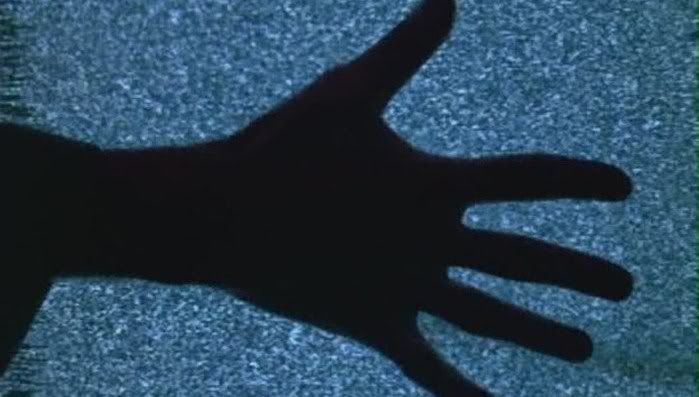
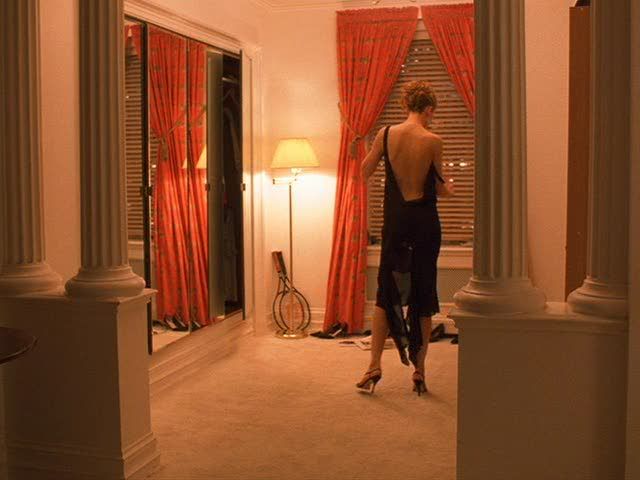
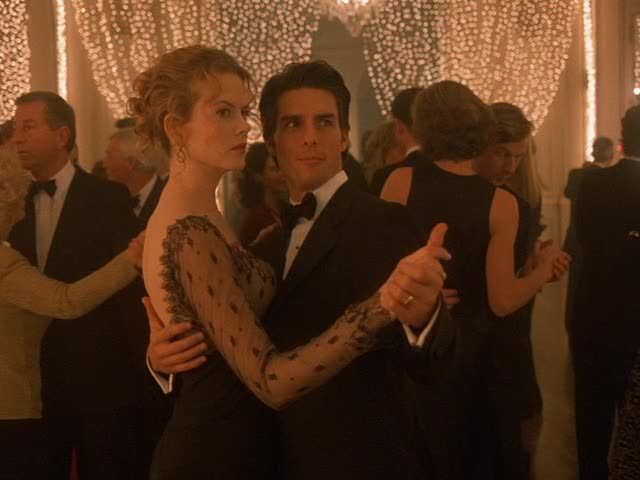
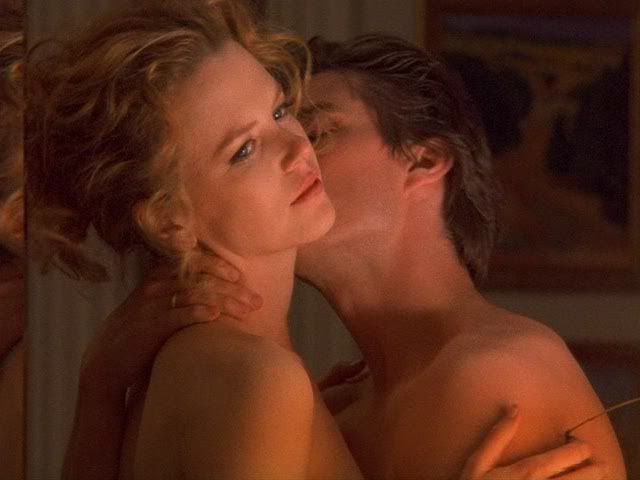
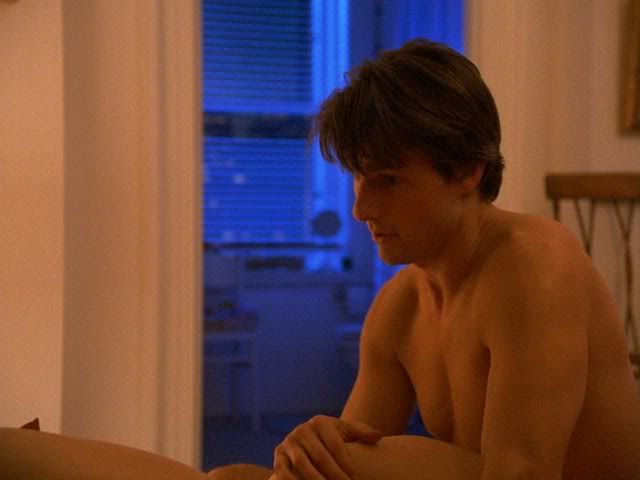
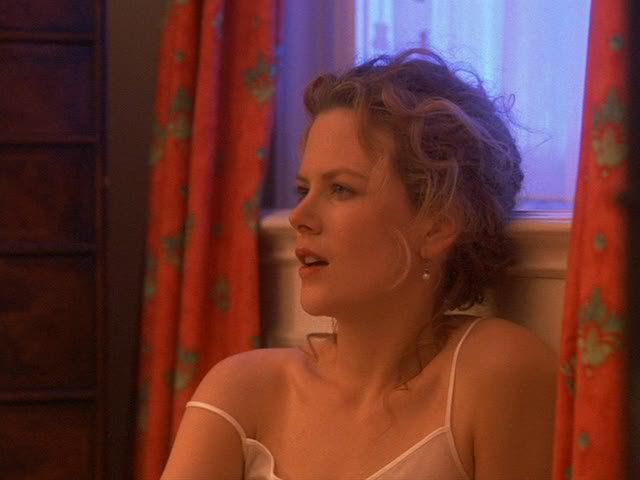
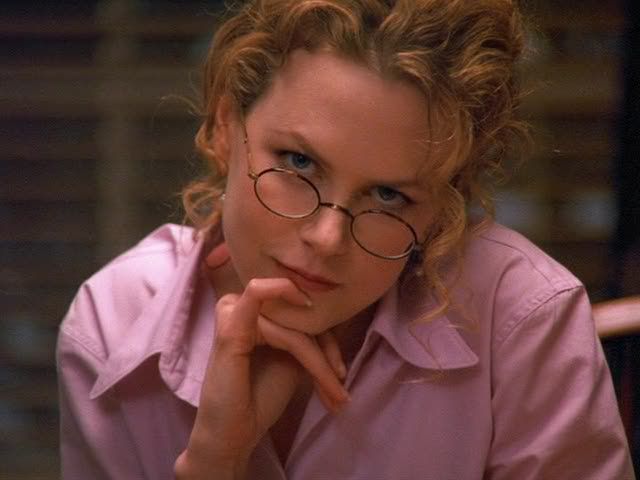
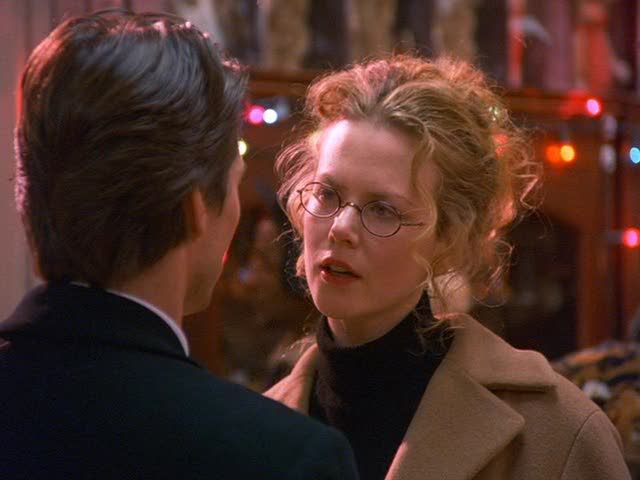
Stanley Kubrick's swan song, Eyes Wide Shut, is also his defining masterpiece, widely misunderstood upon release and only in retrospect re-evaluated as a sensitive and supple treatise on love, marriage, desire, jealousy, and fantasy. Kubrick cast (then) real-life couple Tom Cruise and Nicole Kidman as Bill and Alice, a doctor and his wife who undergo a marital crisis when Alice admits, while stoned, that she once entertained a vivid, powerful fantasy about a sailor. She never followed through on it and indeed never even met the man, but says that for a day at least the fantasy was so potent that she was ready to throw away her marriage for its sake. This revelation shocks and destabilizes the cocky, self-assured Bill, as much for what it reveals about the sexual nature of women in general as for the troubling implications for his own marriage. He is thrown off to discover that women, including his wife, have desires and fantasies, that women are sexual creatures as much as men are.
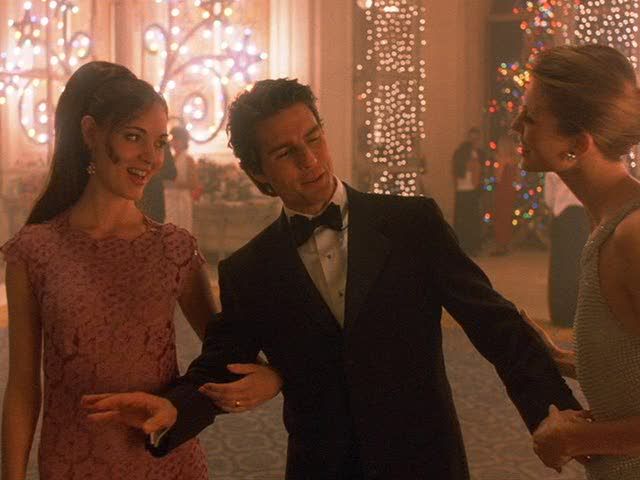
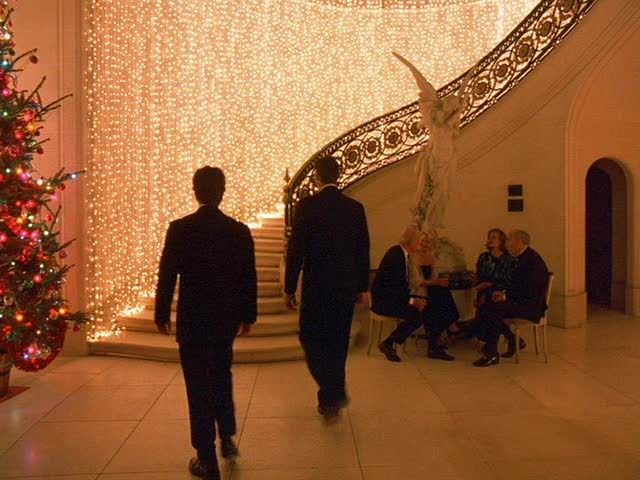
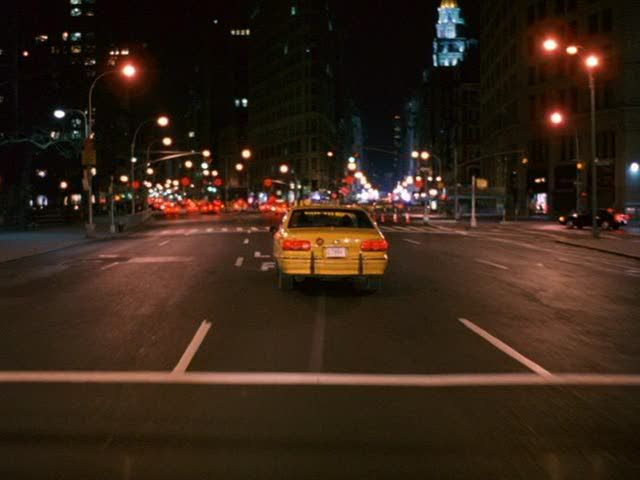
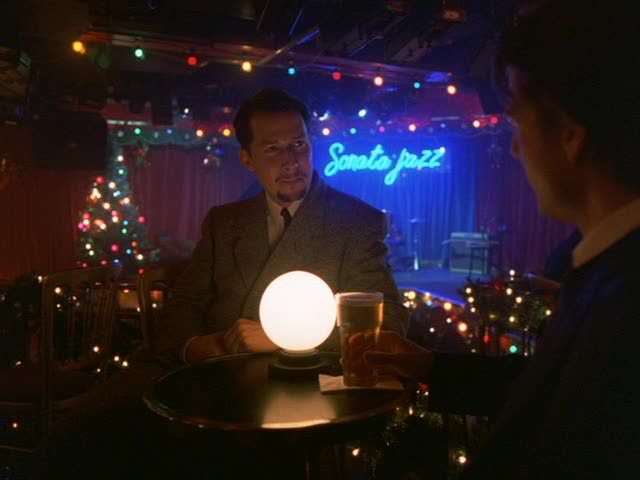
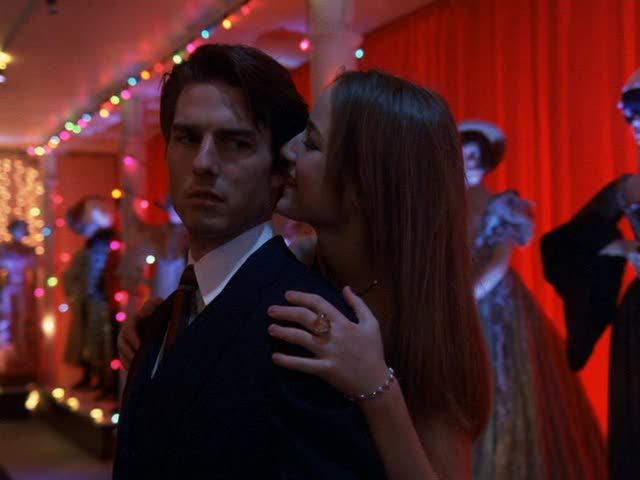
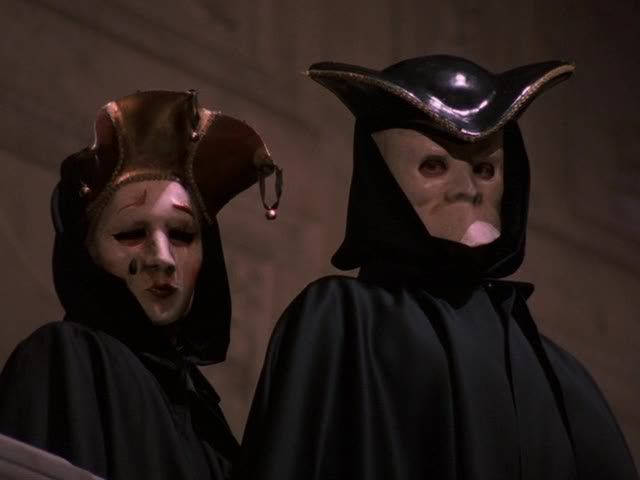
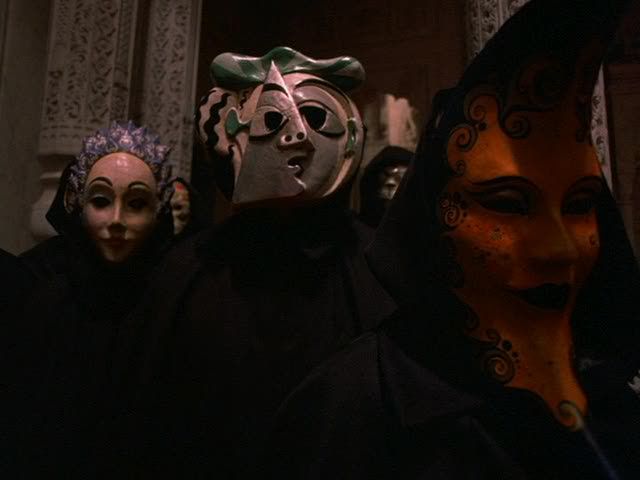
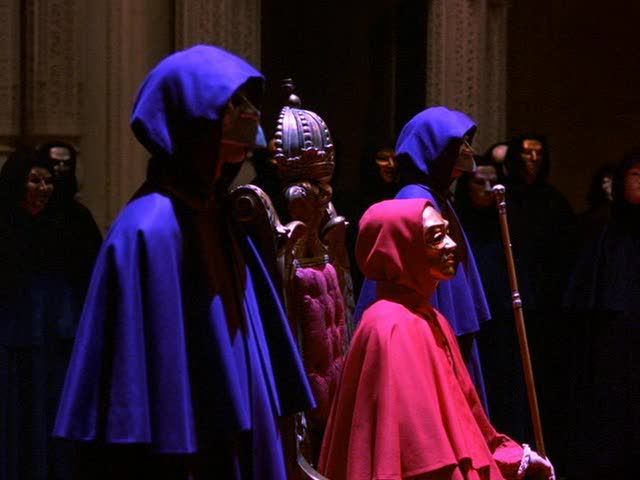
This seemingly prosaic realization sends Bill careening through the nighttime streets of Manhattan, on a sexual odyssey that's as fantastic and dream-like as his wife's imagined affair, which Bill replays in his mind in blue-tinted porn loops. At every turn, Bill encounters markers of sexuality: the daughter of a dead patient who comes on to him at the wake; a gang of drunk frat boys who shout homophobic slurs in the streets; a prostitute who he abandons before consummating a transaction; the Lolita-esque daughter of a costume shop owner who offers herself to all comers with an unreadable smile on her face. Bill is adrift, and his sexually charged journey culminates at a mansion outside town. There, he cons his way into a bizarre costumed orgy where masked, caped men couple with prostitutes amidst baroque ceremony. This is a turning point for Bill, after which he traces back the route of his sexual journey in reverse, with the tantalizing signs turned ugly and threatening — AIDS, forced prostitution, murder — warnings that the dangers of sex can be equal to its pleasures. Kubrick relates this tale with a warm, sensuous visual style that softens its hard edges and noirish touches. He emphasizes the fluorescent colors in his sets; it is the Christmas season and hardly a room in the film is not decorated with a brightly lit tree or festooned with multi-colored bulbs. The film is also, despite its reputation for the famously censored central orgy sequence, a lovingly rendered ode to marriage and reconciliation, which suggests that whatever wounds may be opened by fantasies and waking dreams, they might be healed with the sensual pleasures of love. Alice, who is the focal point of sympathy in the film even when she's offscreen for long stretches of time, gets the film's final word, providing the succinct, alluringly vulgar answer to the film's unspoken question.






13 comments:
Ed,
Wonderful images from a film I once loved as well. Now, my feelings on it are mixed. But your review goes a long way towards urging me to reassess it once more.
Nice article. I really love this film and my appreciation for it (as with most of Kubrick's films) only grows over the years and subsequent viewings. One of the reasons why I think it is so good is that it is open to so many different interpretations/readings. Is the film some kind of fevered dream taking place in Bill's sexually frustrated mind? Or is it taking place in Alice's mind, which I always thought was an interesting angle.
Anyways, I really enjoyed your article. It makes me wanna watch the film again.
Thanks for the comments, guys.
Tony, the film's message and sexual politics may be "quaint," as you say in your own interesting review, but they are certainly heartfelt. A lot of what you're criticizing also seems very much intended: particularly Cruise's stiffness and the naivete of his character. Kubrick doesn't necessarily like Dr. Bill, and he doesn't necessarily want us to like him either; Bill is very sheltered and sexually tame, which is why his wife's rather ordinary revelation sends such a shock through his ordered existence. The film's ending is optimistic, not just because it is an ode to marriage and fidelity, but because it suggests that Bill is sexually wiser than he was before.
J.D., I'm with you on the multiple readings of this film. It is incredibly rich, and its mysterious power only grows each time I watch it.
I love this film.
So glad to see someone else appreciate it.
Like many of Kubrick's films, I have spent the better part of the past 20 years trying to interpret them. I think you have given me something further to think about regarding this story.
Wow. Can't believe I didn't comment on this with some major kudos and agreement. This is one of my favorite Kubricks (although, admittedly, I have mixed feelings about all his other films not named 2001 or DR STRANGELOVE). This film has more sustained power and quiet energy than most anything you see "these days."
Count me in as someone who appreciated the film when first released and still loves it--more, in fact, with each viewing.
This film is as rich as The Shining in its multi-layered density. I also find it to become quite humorous in many unexpected places!
Most of Kubrick's films are better the second time around and this is no exception.
I just watched - and more importantly - listened to Eyes Wide Shut as wide as my eyes and ears could be. What I have not read in any of the reviews to date is the theme of how our personal faults can blind us from reality. Personal faults such as jealousy, naivety, self-centeredness. In just about every scene, there is a discussion between two individuals who seemingly are conversing about the same thing. However, each character is on a different plane, only perceiving that the conversation is intimately understood by the other. For example, the prostitue Domino has an alter ego (yes, a different but similar looking actress), Sally as her room mate. Essentially, Sally is meant to represent Domino unmade up and natural. However, Bill does not recognize that the woman facing him is really Domino. Sally does not recognize Bill's inability to see that she is really Domino, and thinks that Bill is just playing around with her, perhaps as a game leading to another sensual escapade. Alternatively, Bill not recognizing Sally is really 'daytime' Domino, thinks that Sally is flirting with him and trying to wean him off Domino. When Sally makes up the HIV story to further the game, Bill believes it and is not able to continue the game. However, Sally misinterprets Bill's rejection as his sense of guilt (cheating on his wife), similar to the event the evening before. Both characters in essence, have their 'eyes wide shut', communicating but not connecting possible due to their personal biases, experiences and prejudgments. Every scene in the movie is or may not be what it really seems or appears to be. Eyes Wide Shut challenges the viewer's own biases, experiences and prejudgments. By the way, the reason for the mask in bed beside Nicole Kidman's character, Alice - she was the orchestrator of the entire charade to set her husband up for his misadventures at the orgy. She did this to shock him into being more faithful and understanding of their relationship. At the end of the movie, Alice was remorse for putting her husband through this and was committed to making the relationship work. However, Bill misunderstood Alice's remorse as fear for being in danger of being eliminated by the cult, the fear that he was consumed by. This fear blinded him to the reality that was facing him, that his wife loved him deeply and wanted him to committ to making their relationship work.
I love this film too, great review. I just found your blog, look forward to reading more reviews, thanks ,,,M
Great review and great blog.
I really loved the music in this film, especially the main Shostakovich theme and the backwards chanting in the orgy.
Kubrick is one of the masters of matching sound to image, and in 'Eyes Wide Shut' he really takes it into the stratosphere—when the high harmony kicks in during the masked ball, I thought I was going to have a panic attack.
Thanks for commenting, David. (And apologies to those who have commented in the past and not gotten a response from me; I'm trying to get better at keeping a dialogue going in the comments.)
The music in this film definitely warrants being highlighted. That Ligeti piano music is just CHILLING.
So misunderstood and among my favourites of Kubrick! You deconstruct the themes and characters brilliantly..Gonna watch it again now :D
Post a Comment