Showing posts with label Claire Denis. Show all posts

Wednesday, August 10, 2011

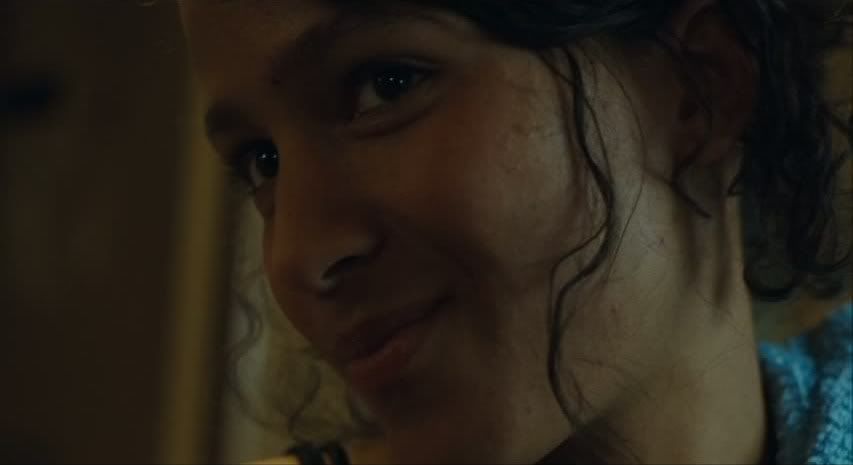
White Material


In White Material, Claire Denis returns to colonial Africa, the site of her debut feature Chocolat and her sensual masterpiece Beau Travail. Building upon the foundation of those earlier visits to the continent, White Material is dark and strange, overflowing with violence and foreboding. It's also much more abstracted than Chocolat's grounding in colonial Cameroon: this film's setting is an unnamed African country on the brink of post-colonial chaos, with French rule being replaced by a simmering war between the new, corrupt African government and the rebels roaming the country armed with rifles and machetes, blocking off roads and seizing whatever they can from the few whites who haven't already fled. The film is an allegorical fever dream of war and disintegration, the bitter fruit of years of colonial rule and post-colonial breakdown.

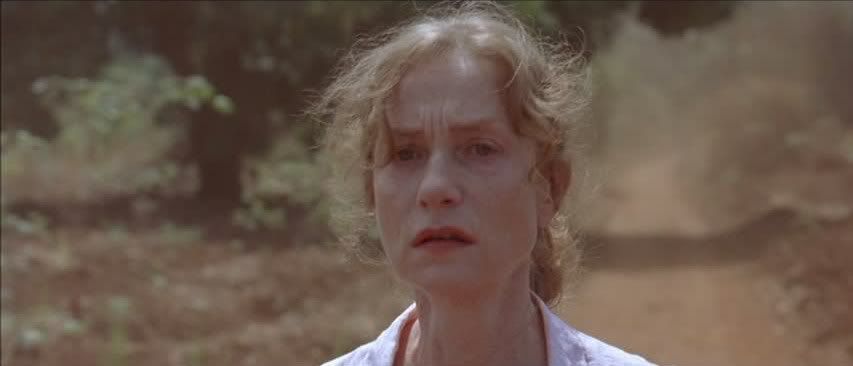
Early on, the plantation manager Maria Vial (Isabelle Huppert) sees a French military helicopter circling her land, warning her by megaphone that she should flee, that the French are pulling out and she won't be safe. They leave behind a land wracked by poverty, brimming with hostility. The French who formerly held all the land and all the wealth have seemingly transferred their privilege to a new government, who either accepted it as a gift from the fleeing colonizers or seized it in the process of evicting their former overlords. The people still have very little, they are poor and frightened, surrounded everywhere by war and rebellion and hatred when all they really want is to go on living their lives and providing for their families.

In her own way, at a grander scale, that's all Maria wants as well. She is fabulously privileged, with a large coffee plantation and a nice, spacious home, but she too only wants to protect her family, to protect what she sees as hers, to go on with life as she knows it even after it becomes obvious that things are changing, becoming too unstable, for the old ways to hold on any longer. Maria represents the "white material" that serves as a code word for the contempt of the blacks for their former masters. The "white material" is the things owned by the whites, but also their skin itself, a constant reminder of the old regime, the way things used to be. Maria and her family remain improbably pale, un-reddened by the hot African sun that's constantly beating down on them. Their seeming inability to tan is symbolic, as though they are not really tangibly there, as though the sun's rays don't really touch them. They are ghosts in this land, ephemeral presences soon to vanish as their time has past.

They each seem to realize it, though they deal with in different ways. Maria's husband André (Christopher Lambert) is lazy and useless, giving up his hold on the plantation and trying to negotiate a graceful way out, for himself at least. His father Henri (Michel Subor), who owns the plantation, is sickly, dying, nearly silent, roaming through the grounds as a mute observer to the ruin of his home, his presence a reminder of Subor's similar roles as a post-colonial relic in Denis' Beau Travail and L'intrus. Maria's son Manuel (Nicolas Duvauchelle) copes especially badly, even lazier and more useless than his father; the land, and the colonial system in which he grew up, has made him weak and pathetic. He lounges around all day, rarely ever getting out of bed, rarely leaving the darkened room where he's surrounded by fans, shielding him from the sun and the heat. He doesn't work, unlike his mother, who's not afraid to get her hands dirty doing the same work she hires local Africans to do for her: she could have thrived anywhere, one senses, but her son is a true child of the colonialist system, bred to do nothing. In the second half of the film, a close encounter with death finally drives the young man mad, and afterward he stalks through the film, his head shaved like a skinhead, his mouth twisted into a permanent smirk, his chest bare and his skin still remaining that milky pale color even after days spent running around the African plains in this fashion.
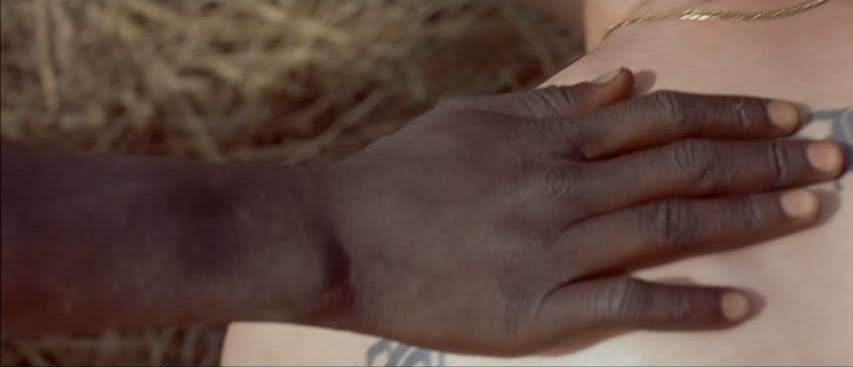

The film is elliptical, its chronology fractured, so that it opens with the blood and fire of the inevitable denouement before sifting back through layered flashbacks that explore the slowly building sense of dread leading up to this fiery climax. The music of Denis' frequent collaborator Tindersticks adds to the mood of desolation, as they provide one of their finest scores, a creeping, repetitive set of minor-key themes that periodically build to a throbbing, thudding outburst of rock as though the tension has to be released somehow. And still the pressure builds. Denis sets the film in an unnamed country that could be any number of African countries at any number of points in Twentieth Century history, and the result is a film that feels timeless and yet grounded in historical reality in that this scenario has played out, with subtle variations, numerous times in recent memory.

This is a full-throated cry against the horror and insanity of war, especially the particular kind of bloody, pointless war that has broken out in Africa again and again in the wake of the colonial era: the war of the oppressed against the oppressed. Even the rebel known only as the Boxer (Isaach de Bankolé), a symbol of resistance to the people of the country, seems horrified by this war when he stumbles across a church where the priest has been slaughtered and laid out on the floor in the position of a crucifixion. Was the man killed by the Boxer's rebels, or by their enemies? It hardly matters; the war's cruelty and pointlessness eventually swallows everyone up. As the Boxer first peers into the Church, a graceful camera move causes a ghostly crucifix, way back in the darkness, to drift across the frame, momentarily visible in the shadows before sliding back into them. That's how fleeting any kind of grounding or comfort is in this insane context, where all mooring has been removed. There are only momentary glimpses of humanity to be found here. Maria cares for the wounded Boxer, promising to get him medicine from a small village pharmacy that still struggles to maintain order and stability, scantly defended by a single armed guard, a meager defense against the chaos erupting all around them. Even Maria is eventually corrupted by this climate of hysterical violence, and when she snaps her actions are every bit as senseless, as pointless, as everything she's seen happening and everything that's happened to her as she tried to hold on to the remnants of her life.

White Material is a chilling, harrowing film, a potent depiction of the insanity of violence. Denis' elliptical editing creates a drifting, sensuous quality that contrasts against the mood of impending doom that slowly becomes inescapable. It's a filmed nightmare of a scenario that, despite its horrific abstraction, feels all too real and familiar.

Monday, July 18, 2011

35 Shots of Rum


In 35 Shots of Rum, Claire Denis captures the slow, quotidian rhythms of life for the working class people living in a particular apartment block in Paris, especially the train conductor Lionel (Alex Descas) and his student daughter Jo (Mati Diop). There are dramas in these people's lives, but they are small-scale, domestic dramas, rooted in discontent, restlessness, race, class, and the unspoken but powerful desire for a different life. The film's incidents are mostly intimate and subtle. One night, Jo buys a rice cooker, and when her dad comes home he reveals that he bought her one as well; no doubt she'd told him about it but hadn't expected him to remember. She just smiles, thanks him, and doesn't tell him about the duplication. The subsequent shot of Jo holding the rice cooker she'd bought, still in its box, and smiling warmly, suggests everything one needs to know about the close, affectionate relationship between father and daughter.

Denis builds the film's emotional foundation from such small, casual moments. The film is slow and soft, narratively slack and drifting, qualities that give its actual dramatic incidents a greater heft for arising out of the steady pulse of ordinary life. This is the work of a director self-assured in her own style, settling into the comfortable rhythms of her characters with a profound sense of quietude. The film opens with the hushed, gentle music of Tindersticks — Denis' longtime musical collaborators — softly caressing the sensual images of trains and train stations that introduce the film. The soundtrack mirrors the film's visual aesthetic in its simplicity and ghostly beauty: pastoral flute, the hesitant strum of acoustic guitars, the occasional barely noticeable humming of vocalist Stuart Staples. In the opening scenes of the film, the camera looks out the front of a train at the tracks stretching out before it. The passengers are ghostly reflections in the windows of the train cars. The train enters a tunnel in the daytime and when it emerges, Denis cuts to gorgeously lit nighttime images, trains passing in the darkness lit up inside with yellow and pale blue hues, apartment blocks similarly illuminated, their windows like banks of tiny televisions in which silhouettes stretch or walk by or smoke while leaning out the window.

Denis has always had an intuitive feel for such temps mort. Here, she invests much of the film's emotionality and sensuality in a handful of evocative set pieces that represent breaks from the day-in/day-out routines of these people's lives. Lionel and Jo look forward to going to a concert with their neighbors Gabrielle (Nicole Dogué) and Noé (Grégoire Colin), but when they actually set out on a rainy night in Gabrielle's taxi, the car breaks down, stranding them far from the concert. Instead, they go to a bar where they dance and drink, and Denis lingers lovingly over the little gestures and glances that pass between the characters, as when Lionel desires the pretty bar owner and Jo dances with Noé, who has long shyly wanted her without quite daring to make his feelings known. Gabrielle and Noé represent the steady, subtle pull of other people tugging at the father/daughter bond, but Jo and Lionel continue to cling to one another, resisting the appeal of love and romantic companionship. Jo's mother is dead, and in her absence father and daughter have been self-sufficient, relying only on one another, though with Jo now grown, presumably on the verge of graduating from college, it's obvious that this arrangement can't last forever. Noé wants Jo, and so does her classmate Ruben (Jean-Christophe Folly), but still she retains her quiet, isolated life with her reserved father, who so rarely says anything. Lionel, for his part, pushes away, sometimes cruelly, the gentle but persistent advances of Gabrielle, who, as a letter that Jo finds reveals, has pursued Lionel for many years.


Another key scene is Lionel and Jo's visit to a German woman (Ingrid Caven) who seems to be the sister or friend of Jo's mother. They go to see her, and Jo speaks with her in German, while Lionel simply sits quietly, perhaps not understanding very much, perhaps just maintaining his customary silence. Afterward, father and daughter visit Jo's mother's grave, then sit by the beach in their van, watching the wind whip through the tall grass by the shore, watching children walk by in the pink dusk light, holding lanterns and chanting a song, celebrating some holiday. It's a lovely, sensual moment, coming towards the end of the film, and it has an air of finality, as though father and daughter are finally coming to terms with the necessity of change.

That's also the meaning, perhaps, behind the titular 35 shots of rum, a rite which is never explained but which seems to represent a break, a way of marking some great change. There's a sense of sadness in it, but not quite the desolation that's found in the similar climax to Rainer Werner Fassbinder's The Merchant of Four Seasons, which seems like a subtle reference point here. Caven's presence, certainly, seems like a nod to Fassbinder since she was an actress very much associated with his work, part of the company of actors who he regularly cast in his films. Denis is also dealing with the idea of giving up on life, and Lionel's coworker René (Julieth Mars Toussaint) provides an example of the despair and loneliness that could be waiting for the similarly aged Lionel if he chooses to give up on life as René does. Instead, the shots of rum represent for Lionel, not suicide or despair but a kind of melancholy celebration, an acknowledgment that his daughter is growing up and preparing for a life of her own, and also an acknowledgment that there could still be a life for him in the wake of her departure. The film's final shot economically suggests the splitting of their one life, as father and daughter, into two independent lives, with an elegant visual metaphor that refers all the way back to the early scenes of the film.

35 Shots of Rum is a warm, touching movie with a deeply humanistic concern for the lives of people whose mostly uneventful lives are, in fact, rich with emotion and internal activity even when the surface seems placid and narratively inert. It's notable that both Gabrielle and Lionel are involved in transportation, getting people to where they need to go, while their own lives outside of work remain static and solitary. It's notable, too, that virtually everyone in the film is black or of mixed race, and there are very few signs of Caucasian French people. The film's casting suggests the racial isolation and separation of this society: even in school, Jo takes a class about Third World economics that is, naturally, taken mostly by black students. It is as though, as immigrants or descendants of immigrants in this country, they remain in their own little world, cut off from the larger populace of native French white people. At one point, as René and Lionel are discussing growing old and losing relevance, Denis pointedly cuts away to an elderly white woman sitting alone on the train nearby, as though to suggest that some things are universal, and indeed there is little in the film that explicitly addresses race. It's just a subcurrent, an unavoidable fact of the characters' lives, though the absence of much integration with the dominant culture is another indication of the isolation and separation that Jo and Lionel feel. Thus, their personal disconnection from life and other people becomes a representation or reflection of their larger racial and cultural disconnect from the society in which they live.

Friday, October 30, 2009

The Conversations #10: Trouble Every Day


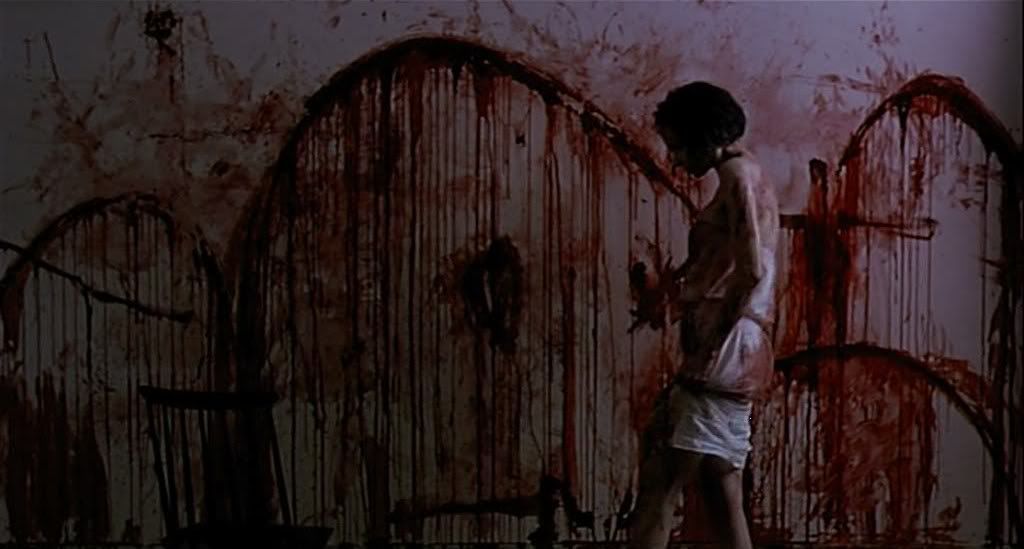
The tenth installment of the Conversations is here, just in time for Halloween. In this latest discussion, Jason Bellamy and I turn our attention to Claire Denis' Trouble Every Day, a startling and deeply enigmatic film about vampirism, lust, infidelity and addiction. As usual, our discussion is fairly lengthy and intensive, covering not only the film itself but also diverting into a debate about what constitutes the horror genre. We always hope with this series that our piece will be just the beginning of a larger conversation, so please stop by and weigh in with your own thoughts, either about this film or about horror in general.

Continue reading at The House Next Door

Monday, September 21, 2009

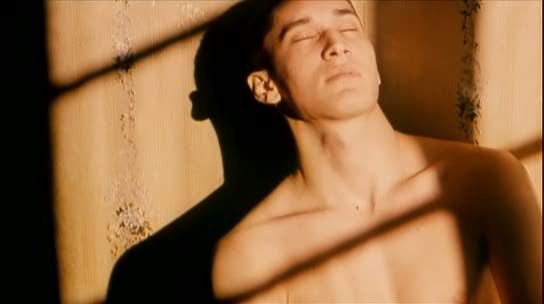
Nénette and Boni


Claire Denis' Nénette and Boni is a low-key, understated family drama, blending fluidly between observational pseudo-documentary scenes of lower-class life and the characters' stylized fantasies. The title characters are Nénette (Alice Houri) and her brother Boni (Grégoire Colin), who have been separated from one another for years, following their parents' divorce: Nénette went to live with her con man father (Jacques Nolot), while the older Boni went to live with their mother, carrying on alone after her death. Boni lives now in a big house that's he allowed to become rundown, sharing it with his friends as they deal in stolen goods, run a pizza van, and dream of something better. Nénette, meanwhile, has run away from home after discovering that she's pregnant, and she winds up running to the only place she can think of, to her estranged brother's house. This strained, difficult reunion is at the heart of the film: the pull of family, the desire for connections and stability and someone to care for you. Nénette and Boni are both essentially alone, without real support. Boni is living a minimal existence in a house that never seems to have any food, where even the pet rabbit has to scrounge around for bits and pieces, and Nénette, with her undependable criminal father, isn't much better off (especially considering the subtextual hints of incest and the film's pointed refusal to identify the father of her child).

They are fending for themselves, but they offer to each other the only real hope of finding some real family, some real support. Nénette is struggling with her burden, unready and unwilling to become a mother to her baby, but at times she nearly becomes one to Boni, watching over him as he sleeps, mashing up bananas and feeding them to him when he feels ill. There is a nascent maternal quality in her that she directs at her brother even as she tries to ignore the baby growing inside her. At the same time, her presence awakens an unforeseen nurturing quality in the immature Boni as well. He's an oaf and a horny teenager, obsessed with the neighborhood baker's wife (Valeria Bruni-Tedeschi), immersed in fantasies of rape and domination in which he can be a very different person than the shy, quiet boy he actually is. He's a self-absorbed jerk, and his initial dismissive reaction towards his sister is very much in character, but eventually her persistence wears him down, and in his own weird, awkward way he actually begins to care, to protect her — at one point, in a bit of foreshadowing of the over-the-top denouement, he actually wards off their father by shooting at him with a BB gun.

The film is episodic and languid, drifting through these aimless lives. Denis is always attentive to the way people live their lives day to day and minute to minute, and that is especially the case here, with this film's emphasis on poverty, struggling for money and food, loneliness and disconnection. It's a true urban film, and a modern one as well. It's about a city where no one knows anyone else. When Boni first sees Nénette early in the film, he simply looks at her and then passes by her, as though he doesn't know her; and as far as the audience is concerned, he doesn't. There's a sense of how difficult it is to get to know people, to really connect. Later in the film, Boni meets the baker's wife, his ultimate fantasy, while she's out shopping, and unexpectedly she latches onto him as a familiar face "from the neighborhood." It's apparent that she's happy to see him, that she's just eager for some human connection amidst the holiday rush of Christmas shopping, the anonymous crowds crushing in around him. She's even flirtatious with the younger man, but he can only stare blankly at her as she nervously chatters to fill the silence. Denis holds a closeup on his glassy stare, a faint ghost of a smile dancing across his lips, for an uncomfortably long time, driving home just how empty his earlier bravado was, just how far he actually is from the crass, nasty persona he's imagined for himself. He's locked up inside of himself, unable even to hold a conversation with the object of his desire.


Throughout the film, Denis explores her central characters through small details, through the accumulation of such telling moments, as well as incidental observations, like the momentary shot of Boni and one of his friends playfully dancing to hip-hop while serving pizzas. There is also, as usual with Denis, a real sensual quality to the imagery, both in the gorgeous Agnès Godard-lensed street scenes and vistas, in the fantasy interjections, and in the moments of surprising, unusual sexuality scattered throughout the film. At one point, Boni kneads a ball of dough with the urgency of a lover's caresses, moaning and letting out sexual exclamations as he thrusts his fingers into the dough, beating and molding it in his hands and then finally thrusting his face into it in sexual exhaustion. In an earlier scene, he holds his pet bunny, that symbol of fecundity, in one hand, while thrusting his other hand into his boxer shorts. These incongruous outbursts of sexual feeling suggest Boni's out-of-control teenage hormones, his inability to channel his sexual impulses into acceptable outlets.

In contrast, throughout the film Denis inserts silent, lyrical interludes between the baker's wife and her American husband (Vincent Gallo), who if one such interlude is to be believed, was a sailor who stayed on in France to marry a French girl and become a baker. These scenes are outrageously exaggerated visions of a happy marriage, conjured up possibly from Boni's mind as a corrective to his own damaged existence and that of his sister. The baker and his voluptuous, sexy wife represent for Boni a kind of ideal, and he imagines them meeting and falling in love, having sex, having a baby together. Boni himself sometimes appears in these fantasies as well but his presence is ephemeral, as though even in dreams he can't really imagine himself coming between this couple. It doesn't matter that the real couple doesn't really warrant Boni's rapturous vision of them — they bicker, and the woman is often heavily made up and crass, as well as flirting suggestively with Boni when she meets him outside the bakery — all that matters is that Boni imagines them as a fairy tale perfect couple, happy and well-adjusted. Certainly nobody else in this film meets that description.

As a whole, Nénette and Boni is an interesting smaller work from Denis, evincing her usual concerns — sensuality, race and class — and exploring them in a decidedly relaxed, minor key. The film's observational subtlety is anchored by the fine, naturalistic performances of the leads, as well as the more stylized depictions of Bruni-Tedeschi and Gallo, whose worldly vivaciousness provides a contrast to the inward-looking siblings. The film simply meanders along, dealing as it does with growing up, with stumbling towards maturity and the dangers of falling back into the trap of immaturity. It's as poetic and elliptical as all of Denis' films, but lacks some of the punch and passion of her best work, and it's sabotaged by the melodramatic outbursts of the final fifteen minutes. Still, it's a typically fascinating film from a director who's always worth watching.

Wednesday, April 29, 2009

Films I Love #29: Vendredi soir (Claire Denis, 2001)


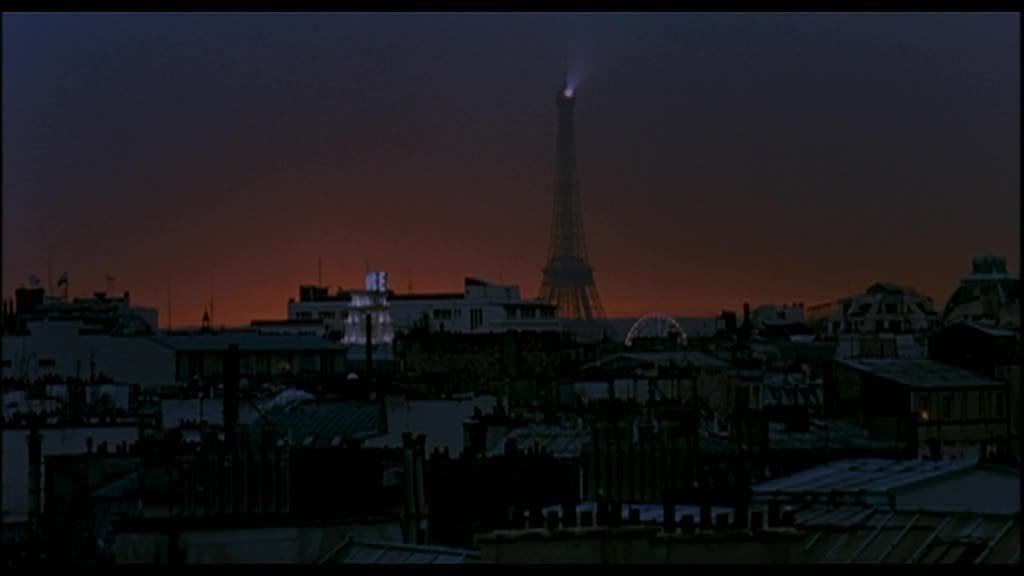
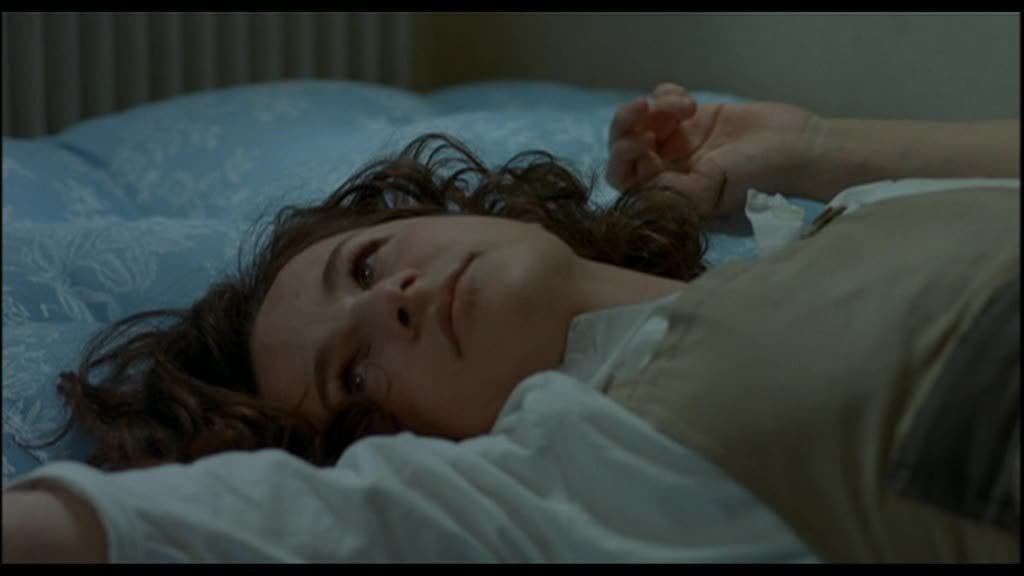
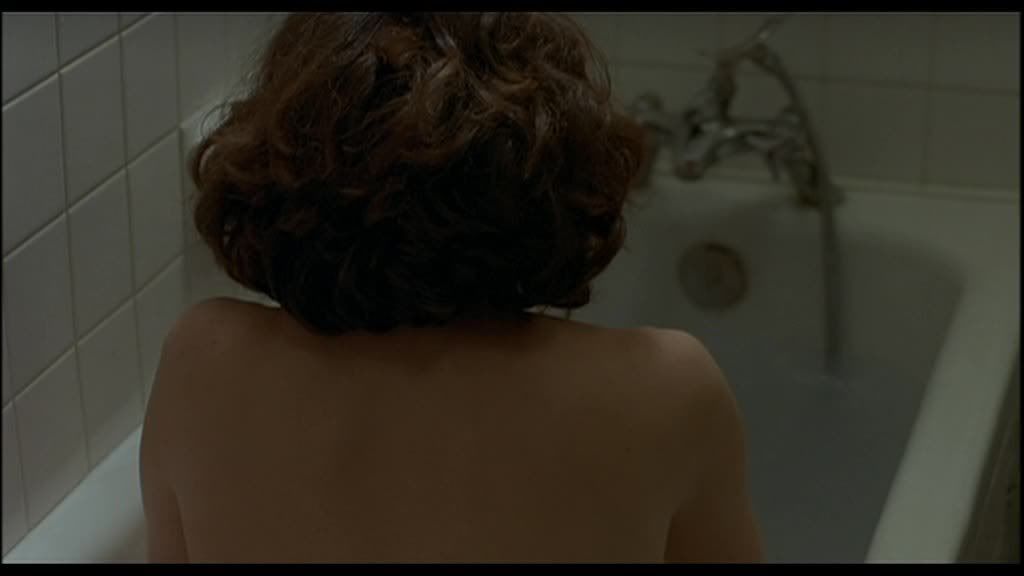
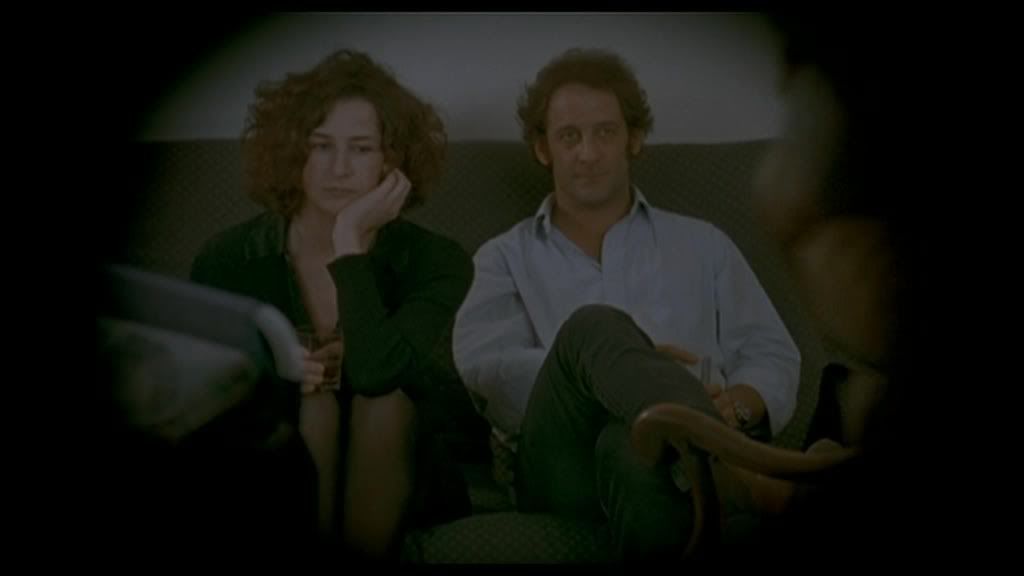
Vendredi soir is not French director Claire Denis' best known or most critically lauded film, but it is her sweetest, her warmest, her most romantic, her most stripped down and simple, a purely sensual ode to desire and sex. The images of Denis' long-time cinematographer, Agnès Godard, are always lush and colorful and sumptuous, and she outdoes herself here, creating a sensuous moving postcard of Paris on a cold, rainy, busy Friday night. On the eve of moving in with her boyfriend, Laure (Valérie Lemercier) finishes packing and then goes out to spend the evening with friends. But Paris is at a standstill, with a tremendous traffic jam keeping her near-stopped. Along the way, she picks up a stranger named Jean (Vincent Lindon), who joins her in the slowly moving car to stay out of the cold. The pair then spend the night together, having sex at a nearby hotel, eating dinner, exchanging laconic conversation but mostly remaining strangers, locked in their own worlds.

Denis never probes these characters psychologically, never provides any hint of why they sleep together, why they're drawn to each other. She never ventures into their heads, lingering instead on the surface. This is, in one sense, a kind of feminist statement, suggesting that women can initiate and enjoy casual sex for its own sake as much as men, but more deeply the film is simply a celebration of sex and sensual pleasure, period. Denis presents the encounter itself almost entirely in abstracted closeups: chests pressing together, fingers running along bare skin, feet rubbing together, legs crossing over one another, eyes peeking out from around the contours of the other's body. Denis surrounds the sex scenes with whimsical touches, bits of rough but clever animation, ways of opening up the night, the city, the rain, the traffic to the same level of sensual enjoyment as the sex itself. Bored in traffic, Laure playfully imagines the letters on a car's rear bumper rearranging themselves, a stray "S" dancing along the car's rain-streaked surface. At dinner, the toppings on a pizza form a smiling face. The film is all about sensual pleasure, the little joys of daily life, and Denis emphasizes small gestures, finding the beauty and poetry in everything from the lights of the city to the smoke curling from the tip of a cigarette to the act of making love.