Friday, June 19, 2009

Kurt Kren: Action Films

[This is part of a series of posts in which I explore the work of the Austrian DVD label Index DVD. This company has released a great deal of valuable European experimental cinema onto DVD, naturally focusing on the Austrian underground but occasionally branching out as well. Index's DVDs are distributed in the US by Erstwhile Records, so anyone intrigued by Index's catalog should take a look and support the fine work both these companies are doing for obscure and avant-garde cinema. The review below focuses on a selection of the films included on one of Index's three Kurt Kren DVDs, this one compiling his work with the Vienna Aktionists.]
During the mid-1960s, Austrian experimental filmmaker Kurt Kren became momentarily associated with the confrontational performance art of the Vienna Aktionists, primarily Otto Mühl (who would later contribute to Dušan Makavejev's great Sweet Movie) and Günter Brus. Mühl and Brus specialized in bizarre "materialaktions" in which they would act upon the human body with paint and food products, creating messy, perverse spectacles in which sexuality, bodily functions and physicality were foregrounded and explored. In 1964, Kren began filming some of these aktions, though he was not interested in being a documentarian. Instead, he took the raw materials of Mühl and Brus' aktions and acted upon them himself, creating new works through the formal exploration of the images he gathered at these events. The results often infuriated the two provocateurs, who had desired a more straightforward documentary record of their work — Mühl would eventually begin filming his performances himself instead — but Kren's raw, ragged films nevertheless capture the intense spirit and unfettered physicality of this scene, while crafting these images into entirely new works of his own.

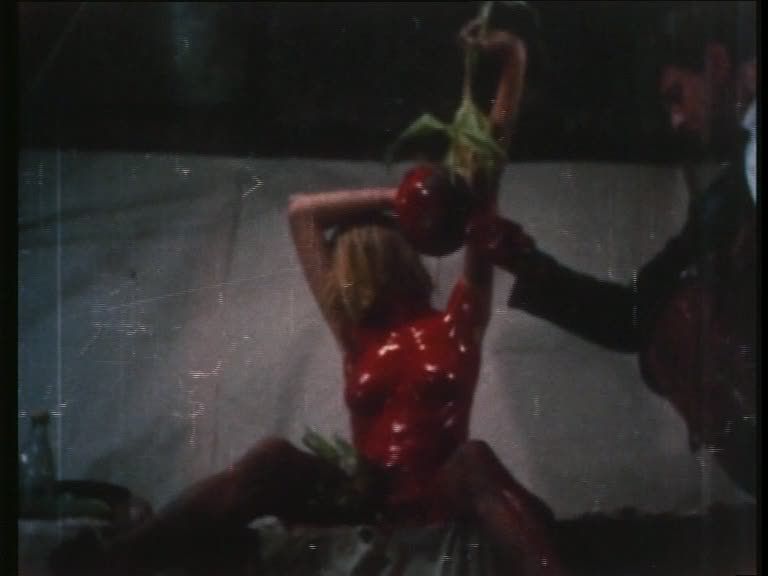
His first film in this vein was Mama und Papa, based on an aktion by Mühl. This first film sets the tone for Kren's work with the Aktionists, and especially for the color films he made with Mühl. The editing is hyper-fast and fragmentary, and carefully cycles through the same shots in a rhythmic pattern, returning again and again to the same images. This pulsating repetition shatters the cause-and-effect chains of Mühl's aktion, but preserves its subversive power. This aktion, as with most of Mühl's performances, consists primarily of nude models being coated with paint or food, their bodies carefully arranged and posed as though molding inanimate objects. Mühl methodically lays out his arrangements of flesh and viscous materials, focusing on the interactions of colors and forms, as though he were a painter working with the human body as his canvas. Kren's film limns the visceral qualities of Mühl's work; the sense of disgust is palpable, as is a feeling of profound discomfort. One can't help but see these films and imagine the sensations: the stickiness and sliminess of the liquids, dripping off the participants' bodies, puddling on the floor around them.


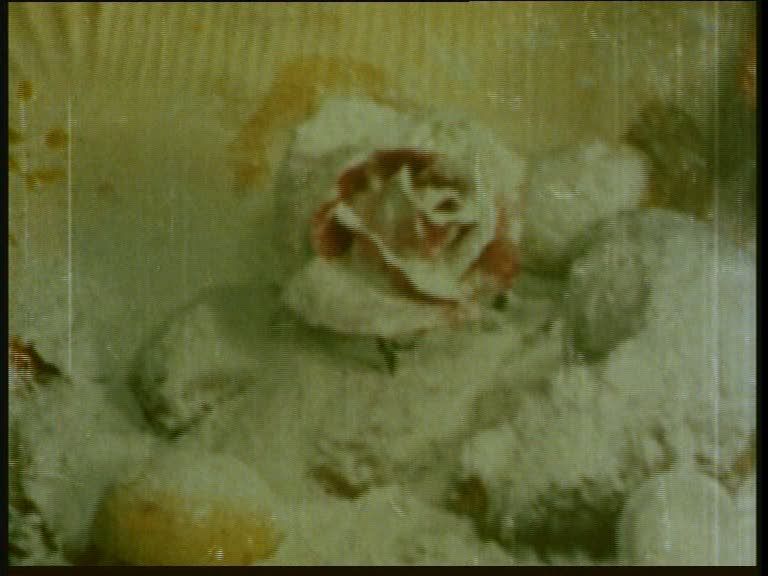
And yet Kren's films also demonstrate that Mühl's work goes beyond such confrontation, beyond the sensations of disgust. There's a kind of childishness to these performances as well, an innocence that seems rooted in childhood games, in mud pies and sand boxes. This spirit of play is perhaps most apparent in O Tannenbaum, also derived from a Mühl aktion, a ludicrous Christmastime farce in which Mühl arranges his actors with Christmas trees protruding from their asses. Working like a flower arranger or a gourmet chef, he carefully lays out assortments of eggs and sausages around a man's penis, then tops it with a flower — or places a pair of toy glasses over the penis as though it were a nose. There's a goofiness to much of this work, a loose spirit of improvisation that works against the notes of menace and exploitation and deviant sexuality also running through Mühl's work. These two threads tangle together in his films, much as his performances tangle together human bodies into indiscriminate masses of limbs and torsos, dehumanized canvases to be acted upon.

Kren takes this ethos further by acting upon the footage, abstracting it from its origins and the ideas of his collaborators. By chopping up Mühl's aktions into blurred, frantically edited montages, he reduces them to their visceral essence. In O Tannenbaum, what remains is a brilliant sense of color, the bright reds and greens of the Christmas season being sprayed onto bodies in violent slashes of color. Of Kren's Mühl films, only his last, Cosinus Alpha, slows the action down enough to make it more coherent, rather than treating it as material for montage. At 9 minutes long, it is also the longest of the Aktionist films, and its pace seems positively languid in comparison to the others. What comes across here is a sense of the erotic and the sexual in Mühl's work, a dimension of his performances largely missing in Kren's other films, despite the copious nudity. Here, the camera's relative steadiness, and the slow, deliberate movements, emphasize the sensual contact of flesh on flesh, the rubbing and caressing as bodies rub against one another, covered in thick soupy muck, kneading the liquids into one another's skin.

This sensuous film emphasizes the pleasurable aspects of Mühl's performances, especially since it's apparent that his models are not simply passive in this instance, but are actively engaging with one another, and with the mess that covers them, seemingly taking pleasure in wallowing in each other so messily.

The other major thread in Kren's Aktionist films was his interaction with Mühl's colleague Günter Brus. Brus' work is quite different from that of his contemporary, and as a result Kren's films are different as well. Whereas all of his Mühl films were in bright color, glorying in the eye-catching palette of these aktions, the Brus films are all in black and white and decidedly more abstract, distanced from the concrete reality of the event being captured. If Mühl's aktions are messy and sexualized and all more or less the same, Brus seems to be more conceptual, more varied, and probably more interesting in his own right — his works captured here seldom seem to be simple exercises in sloppy play, but are instead rigid engagements with conceptual re-imaginations of the human body.

Kren's films sometimes make Brus' work hard to grasp, however, because even more so than with the Mühl films, these films atomize and break down the continuity of the event itself. Ana was the first film Kren made with Brus, and it's seldom even clear what's actually going on here. There are flashes of movement and occasional moments of clear activity, but for the most part the action is an indistinct blur, rapidly flitting across the frame. For much of the film, Kren's choppy cutting approaches the impressionistic pixelization of Stan Brakhage's painted films: black forms dancing across a plain white field, shifting and vibrating from frame to frame, seldom resolving into anything representational. This approach is as viscerally stunning as Kren's treatment of Mühl's work, but seems to have wandered even further afield from the content of the work itself. In Silber, Kren's abstractions progress even further, to the point where virtually the entire film takes place in a vague, under-exposed darkness. It is perhaps the weakest film in this set, the one film where Kren's refusal to provide a faithful documentary account results in a loss of any context or even content; all that remains is the form, the pace of the editing.
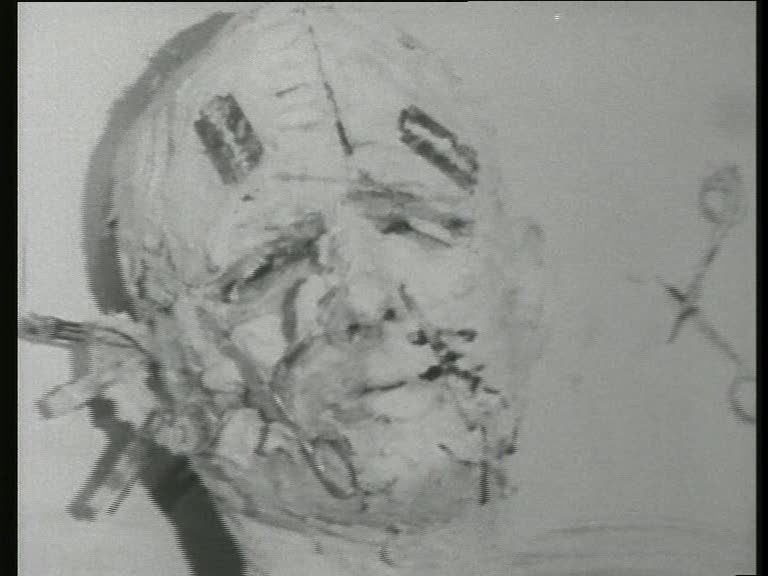

Fortunately, the strongest film in this set is another of Kren's collaborations with Brus, the harrowing Self-Mutilation. For this aktion, Brus coated himself with a viscous paste, rolled around on the floor, and subjected himself to simulated (and probably some amount of genuine) mauling with scissors, razors, pins, clips, corkscrews and knives. It is an expression of anguish in its purest form. Brus' face and body, covered with a thick porridge-like substance, are reduced in their entirety to his mouth, perpetually open in a scream or a cry, and his eyes, staring fearfully out of the muck accumulated on his face.

Kren responds to this performance by concentrating on Brus' face, on the expressions of terror, pain and despair that are communicated solely through the eyes and mouth, with everything else reduced to a lumpy gray landscape. The pace is much slower than in Kren's other films, the shots longer, so the emphasis remains on the performance itself as it does in few of his other Aktionist works. This is perhaps the Aktionists' ultimate statement, the simplification of human emotion to a primal scream, eyes pleading and a mouth opened in a silent howl, unable to communicate, unable to forge deeper connections, unable to get beyond one's own body and the pain it feels. This is a startling, terrifying portrait of imprisonment within the cage of the body: a man trapped by his own sensations, self-imposed and yet unavoidable. The film takes place almost entirely in closeups of Brus' face, essentially trapping the audience along with this sufferer. Kren's camera frequently goes out of focus, capturing the wild-eyed Brus as he flails about, his face contorted, his hands scraping at the coating on his skin. The filmmaking is simple and direct, a perfect accompaniment to this performance's terrifying straightforwardness.
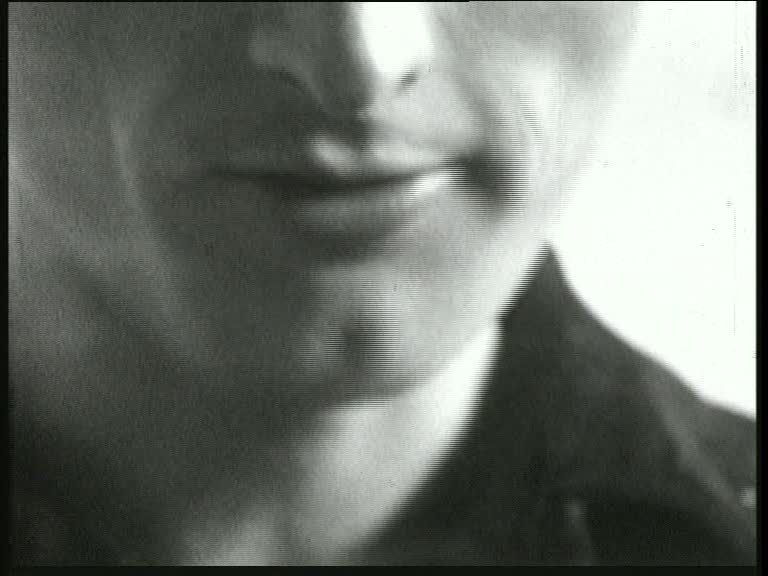

After Kren ended his association with Mühl and Brus, he returned to the formalist experiments he'd been making prior to this brief Aktionist period; this was the filmmaking mode that would define the remainder of his career. Before he fully ended his collaborations with the Aktionists, however, he made one last film in this vein. 20. September, unlike the other Aktionist films, is not a document of an aktion, but is instead a true collaborative work in which Brus is more or less an "actor" for Kren. The film has been charmingly nicknamed the "Eating, Drinking, Pissing and Shitting film," and that title pretty much announces what one is in for here. This disturbing, difficult-to-watch film takes the Aktionists' exploration of the body to its extreme resolution, simplifying the "plot" of a film to the four simple bodily processes that form the basic bedrock of human existence. Along with breathing and sleeping, these are the necessities of life, the things that humans must do in order to live, to survive and thrive. Kren films each of these processes in intimate closeups: images of Brus' mouth as he drinks a beer or shovels food into his mouth, intercut with straight-on images of a penis emitting a steady stream of urine and an anus opening up to allow the feces to crawl slowly out.

There is no possible reaction to a film like this but visceral disgust and discomfort, and that seems to be the primary intent. Its point is a simple one, and it achieves it by juxtaposing both ends of the processes by which we sustain our lives: drinking ends in pissing, and eating ends in shitting. Unlike the films crafted from actual Aktionist performances, this film seems to work on one level only, and once its essential point is understood — which happens pretty quickly — all it has to offer is the repetition of its message of disgust. However disturbing and gross the other Aktionist films are, however much they wallow in filth and disgusting images, they are always more multi-faceted than this, always more complicated in the juxtapositions of sexual feelings, disgust, playfulness and subversion of the norm.

Kren's collaborations with Mühl and Brus yielded a body of work that, while perhaps peripheral to Kren's later work as a formalist and structuralist innovator, is still interesting in its own right. It's the rare piece of provocation and controversy that retains its power over 40 years after it originally appeared, but that certainly applies to these unsettling films.

Thursday, June 18, 2009

TOERIFC: Someone To Love

[This post is prompted by The Oldest Established Really Important Film Club, which will be spotlighting a different blogger-selected film every month. This month's selection is courtesy of Ray from Flickhead. Visit his site to see his thoughts on the film and to join the main discussion.]

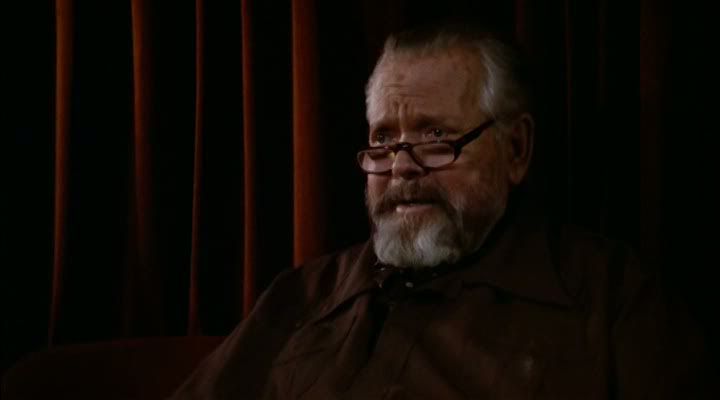
Towards the end of Henry Jaglom's Someone To Love, Orson Welles, playing an unnamed father figure who arrives mysteriously on the scene to dispense wisdom and prophecies of doom, asks the film's main character Danny (played by Jaglom himself), "why have you imposed this peculiar misery on your friends in a noble institution like the theater?" It's tempting to extend Welles' question, to expand upon it, to ask Jaglom, why have you imposed this misery on your audience? Because Jaglom's film is undoubtedly among the most painful cinematic experiences imaginable, an extended two-hour prediction of the most self-obsessed sitcoms that would arise in subsequent decades to take over the airwaves. Like a particularly unfunny and maudlin episode of its spiritual successor Friends, Jaglom's film spends virtually its entire running time wallowing in the miseries, insecurities and whiny banter of a group of aging show business types, all of them gathered in a dilapidated theater on Valentine's Day by Danny, who wants to create some kind of film/performance art/psychology hybrid by experimenting on his friends and acquaintances. His conceit — and by extension, Jaglom's — is that there is something about his generation, these aging boomers who grew up in the 60s, that makes them particularly susceptible to the condition of loneliness and an inability to make lasting romantic connections. So he gathers together everyone he knows who is going to be alone on Valentine's Day and invites them to a party, which in fact turns out to be some kind of group therapy session where he asks them all about why they're alone, how they feel about being alone, what they think causes them to be alone, and so on.

Yes, it's exactly as aggravating as it sounds, and exactly as solipsistic. Jaglom's work isn't funny enough to be a comedy, and it isn't exciting enough to be a drama, and its characters aren't developed fully enough for it to really work as the kind of Cassavetes-style fly-on-the-wall realism to which it so desperately aspires (Jaglom even namechecks Cassavetes at one point). The result is that nothing really cuts too deep, or makes one laugh, or creates any interesting tension. There are occasional ideas and lines of dialogue that have some heft, a frisson of intellectual vigor and insight into the lives of these people. At one point, Danny delivers a great speech about how the biological origin of loneliness must be intended to drive us towards each other, just as the feeling of hunger drives us to eat. At times like this, Jaglom cuts to the core of the issues he's dealing with, really engaging with his themes at a primal level. The same can be said of Welles' entire cameo appearance, both because Welles is such a powerful actor that his mere presence elevates any film, and because Jaglom gives this father figure some of the film's best material: an edgy, probing investigation of the effects of feminism and the sexual revolution on the nature of modern romantic relationships.

So it's not like the film is intellectually or emotionally bankrupt. There's undoubtedly substance to Jaglom's inquiry into romance, and one senses his sincerity. But he tends to bury his insights in a morass of chatter and nonsense, in a neverending torrent of regurgitated clichés. This might be bearable if the silliness and banality of the dialogue emerged in some way from the characters, if it felt organic to them, but the characters are mostly such flat, cardboard constructions that it's hard to get any sense of them as people at all. Moreover, most of the acting is at such a stagey, mannered, contrived level that it's constantly breaking the fourth wall, even when Jaglom isn't intentionally breaking it by hauling up all kinds of camera equipment onto the stage and having his actors speak to the camera as part of the film within the film. All this artifice is just another hurdle to leap in trying to get closer to Jaglom's ideas and characters (a futile effort, I'm afraid). Even Danny and his afraid-to-commit girlfriend Helen (Andrea Marcovicci), ostensibly the main characters, don't really develop beyond a very surface level: their whole dramatic arc throughout the film can be summarized as Helen being afraid to give up her independence by letting Danny spend the night in her apartment, and by the end making a slight concession that she may change her mind someday. Jaglom is after profound themes and big ideas, but he approaches them through the most mundane route, through the kinds of utter trivialities that could only be of interest to the most committed of solipsists.


Jules Feiffer, a dabbler in film and a masterful cartoonist and playwright, has pretty much perfected the kind of inquiry that Jaglom is after here. In his script for Mike Nichols' bracing Carnal Knowledge, and in countless cartoons for his now-ended weekly newspaper strip, Feiffer has traced the antagonisms and insecurities and self-erected barriers that plague the relationships between men and women in the modern age. Jaglom's dialogue constantly recalls Feiffer, and it's not a favorable comparison. These characters, who speak in self-aware psycho-babble and jittery self-analysis, are the kind of people who Feiffer would satirize and deflate, with merciless wit, in his best cartoons about the gender wars. Jaglom, on the other hand, doesn't want to poke holes in his characters, maybe because he's one of them, so he spends the bulk of his film indulging their whims, listening to their whining, allowing them to spill their utterly prosaic souls. And then, in order to have it both ways, he ushers in Orson Welles to take the piss for a while, to call them out for being whiny and annoying and self-obsessed. It's a welcome change of pace, and Welles basically says everything that any impatient viewer was probably shouting at the screen well before the hour mark, but it doesn't quite take the edge off the film's overall indulgence of such solipsism.

Ultimately, though, what hurts the film the most is not that one is forced to spend so much time with people who only want to look in mirrors, but that Jaglom lacks the cinematic panache — or the inclination — to do something interesting with this cast of bland characters. He's a poor man's Woody Allen, a poor man's Eric Rohmer, a poor man's Jules Feiffer. He's got all of Allen's neuroticism and insecurity, without the humor and visual craftsmanship. He's got Rohmer's inclination towards endless talk, without the French master's wit, emotional subtlety and pictorial sense. He's got Feiffer's archetypal themes and subjects without the insight and satirical bite. Worse, his filmmaking itself is amateurish and uneven. His cutting is inept, displaying all the distracting attributes of a theater director working in film: especially, the awkward reaction shots in which people, supposedly watching something happening nearby, seem to be in an entirely different room or maybe a different building. Sometimes Jaglom's looser moments, mostly involving the camera crew within the film, evoke Cassavetes with the informality and spontaneity of the aesthetic. More often, though, Jaglom's visual sense is stagebound and unimaginative, a perfect complement to his banal writing. It's impossible to watch this film without thinking of all the better films in this general style that one could watch instead. These comparisons are perhaps unfair to Jaglom, but mostly they're a function of boredom: if he'd given his audience something interesting to watch or to think about, they wouldn't have to think about other, better films instead.

Wednesday, June 17, 2009

Films I Love #35: Caché (Michael Haneke, 2005)


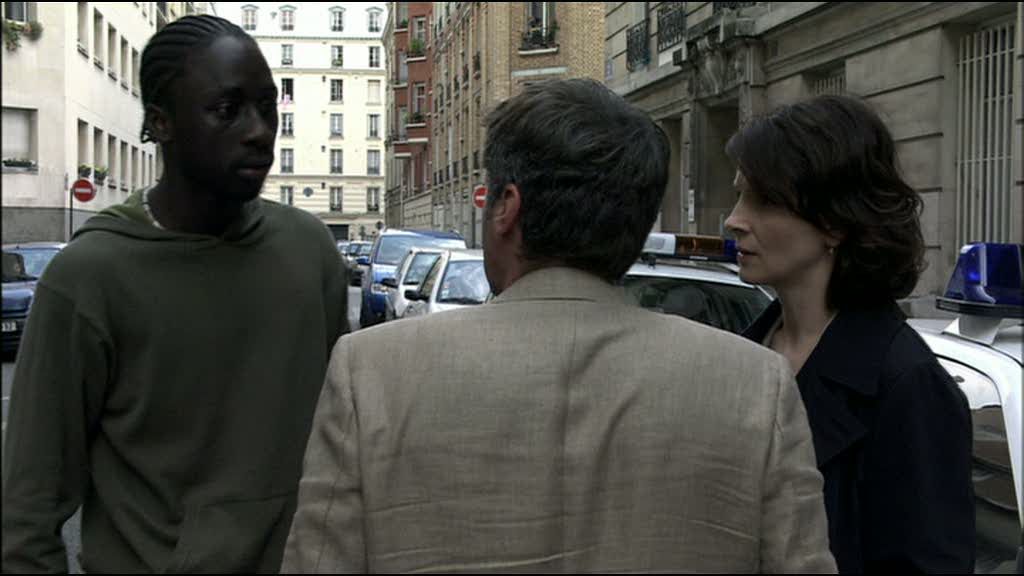
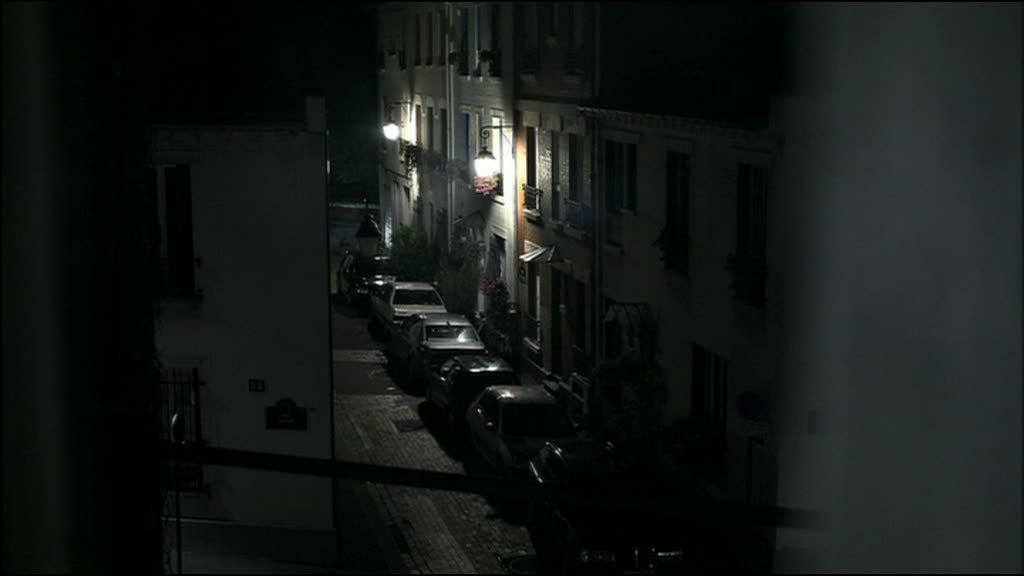
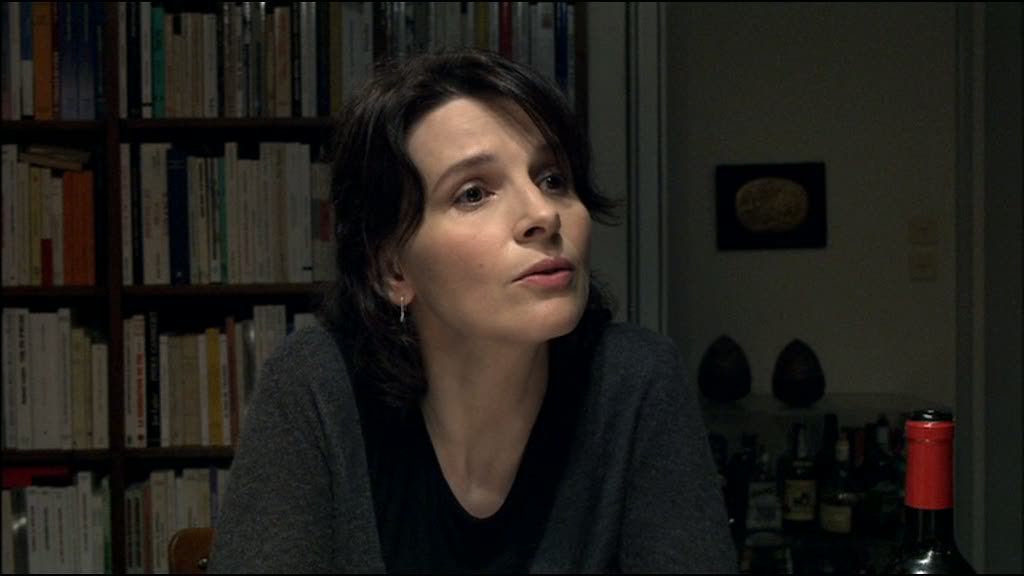
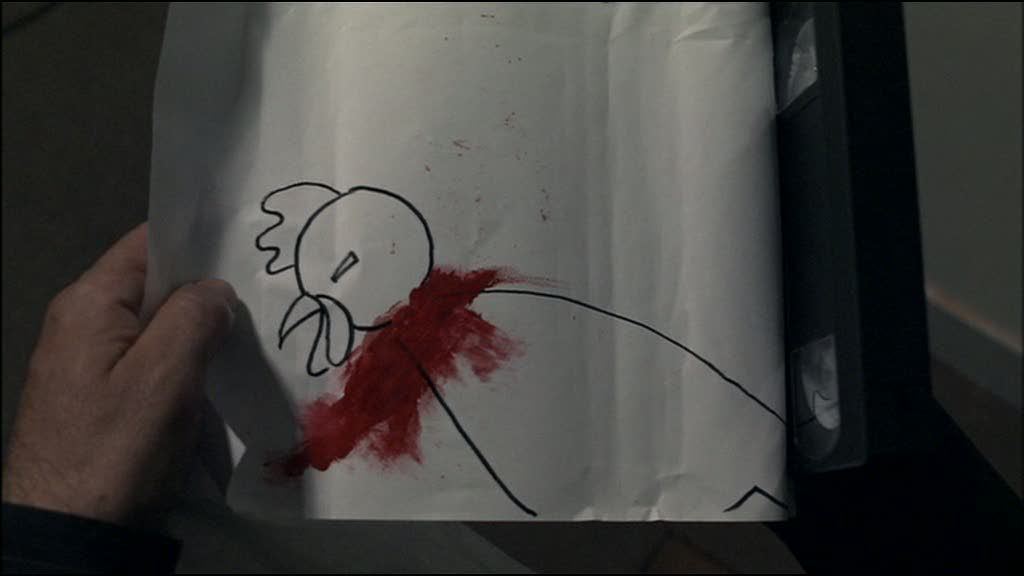
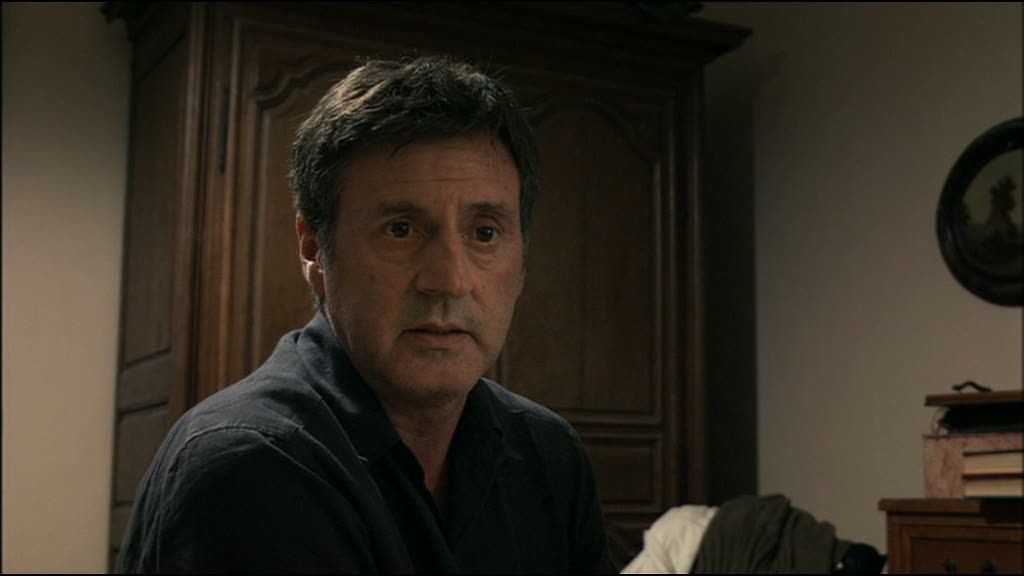
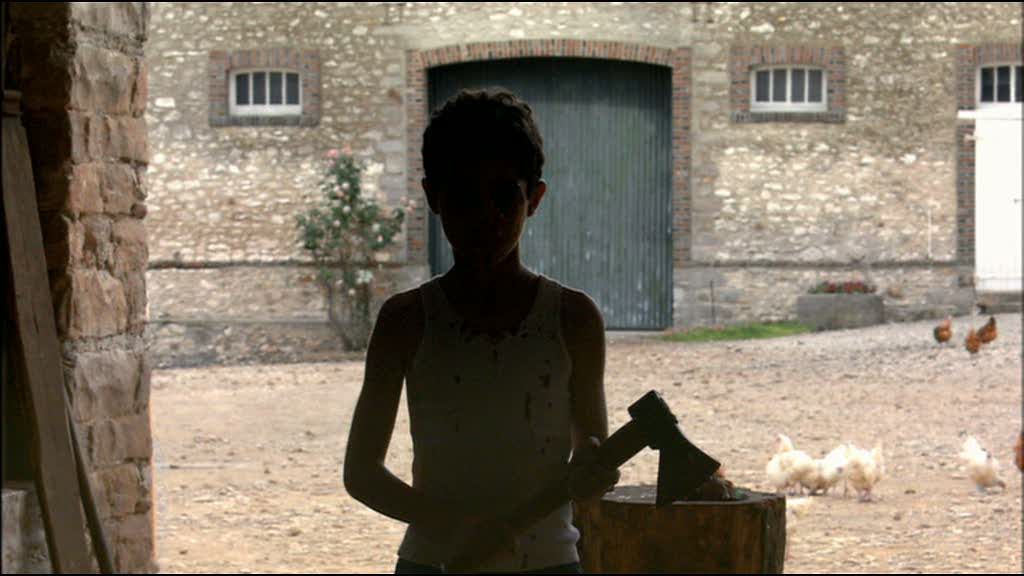
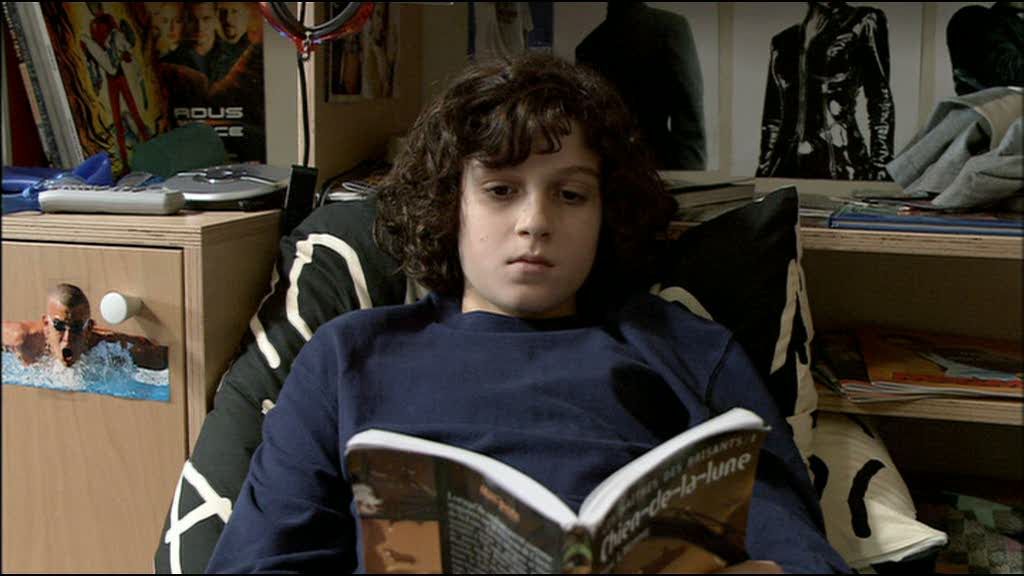
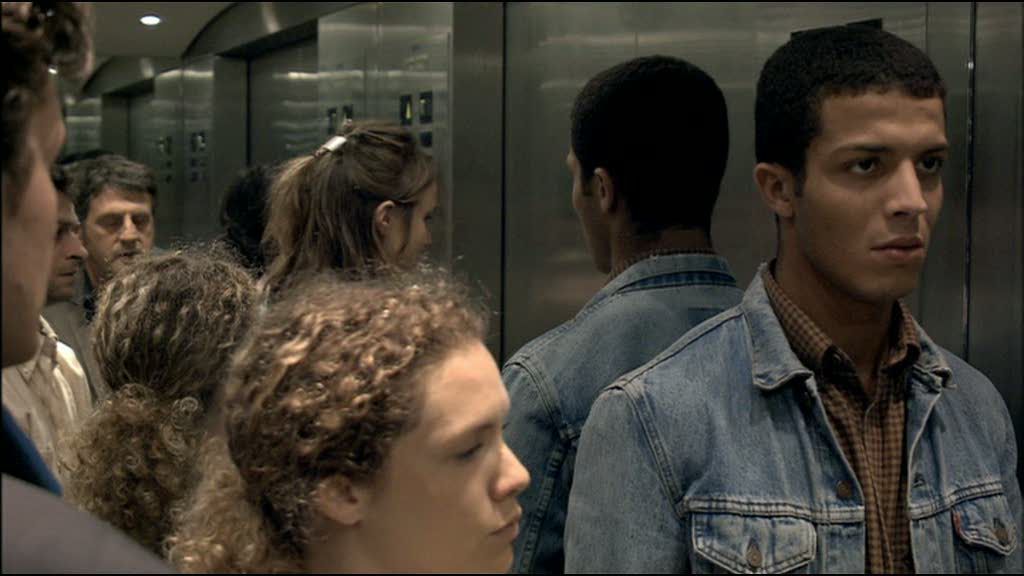
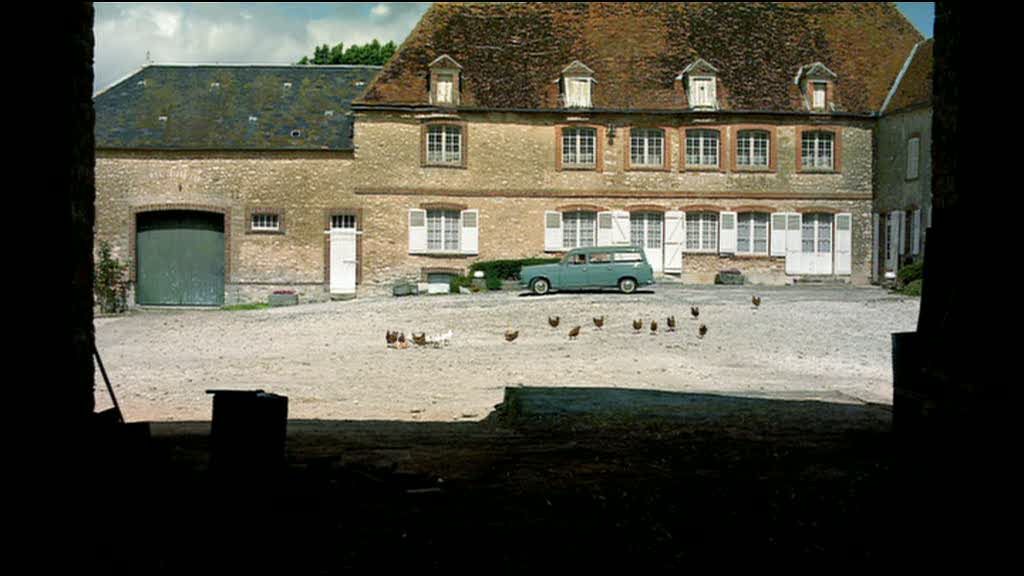
Michael Haneke's Caché boasts a thriller premise worthy of Hitchcock (or David Lynch, whose Lost Highway may have inspired the conceit). A French bourgeois couple, Georges (Daniel Auteuil) and Anne (Juliette Binoche), begin receiving mysterious videotapes at their home, tapes that mostly just show the exterior of their house in long, static views. The film's famous opening is a lengthy, silent view of a street scene, with eventually voices talking over it, expressing impatience that nothing is happening, a metafictional nod to ADD-afflicted modern cinema audiences. Only when the view is literally rewound is it revealed that this is a videotape, and that the voices are those of Georges and Anne as they try to figure out who sent this tape to them and why. This mystery drives the film, but it soon becomes clear that Haneke is not interested in providing a solution or treating this story like a conventional thriller. He's much more interested in the way this situation opens up windows into Georges' past, specifically calling up long-suppressed memories of an incident that occurred during his childhood. Through these videotapes, Georges reunites with Majid (Maurice Bénichou), an Algerian who as a boy lived for a time with Georges and his parents. Due to childish jealousy and insecurity, the young Georges told a lie that got Majid ejected from their family, essentially ruining the boy's chances for a better life beyond his immigrant status. This incident, nearly forgotten by Georges in his adult life, has never faded away from Majid's mind; he has nursed these wounds ever since. Haneke is probing at the intricacies of immigration and the failure of French political and social life to engage with the country's imperialist past, and especially the Algerian War.

As the videotapes keep appearing at Georges' door, his struggles become an allegory for the difficulties of dealing with issues of race, immigration and social status. For Georges, the past has been repressed. He has allowed his own actions to become remote from himself, to be dismissed from his mind, with little thought for the concrete effect that his childish lie has had on another man's life and opportunities. As a ward of an affluent white, native French family, Majid's life would doubtless have been much different than it turned out to be, and this is the central fact of the film, a fact that Georges is reluctant to address. But the videotapes increasingly make it difficult for him to avoid these uncomfortable truths. Haneke, always interested in media and documentation, sees video as an aid to memory, a way of confronting long-suppressed ideas. This is why his characteristic objective stance, embodied in his long takes and observational distance from his characters, is not cold or off-putting but paradoxically a way of getting closer to the truth, of not flinching away from even images that are difficult to watch and deal with. The film's notorious ending, in which the questions raised by the narrative are not resolved but left dangling in the most startling fashion, is not a dodge for Haneke. He wants to raise more questions than he answers here, to get people thinking about their own complicity in the routine injustices of the world. But he also wants to provide a measure of hope, as he does in the film's oblique final shot, which presents, hidden within its cluttered frame, a possibility of conversation and reconciliation, a suggestion that the crimes of previous generations can be addressed by the current generation.

Monday, June 15, 2009

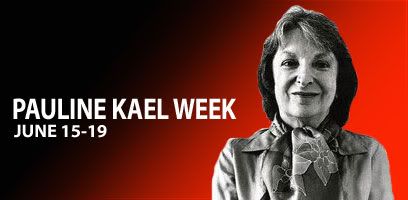
Pauline Kael Week at The Cooler


Jason Bellamy, friend of this blog and my correspondant for The Conversations, is running an exciting event all week long over at The Cooler. From June 15 to June 19 (and possibly longer if the interest is there) Jason will be presiding over a series of discussions of the work of the influential and controversial film critic Pauline Kael. Basically, every day he'll be posting an excerpt or selected quotes from Kael's writing, and inviting discussion and commentary in the comments sections of his posts. He's also welcoming outside posts: if you have something to say about Kael at your own blog, simply send the link along to Jason and he'll post it as part of Kael Week. You can keep track of the entire event by visiting Jason's central post, which he'll be updating with both his own contributions and any links sent to him by other bloggers.

Jason has already posted the first contribution to the blog-a-thon, a discussion of violence in cinema centering around Kael's review of Stanley Kubrick's A Clockwork Orange. Keep checking back at The Cooler all week long for much more. This promises to be an enlightening and stimulating event, so please take a look and contribute!