Showing posts with label war films. Show all posts

Monday, March 11, 2013

The Battle of the River Plate


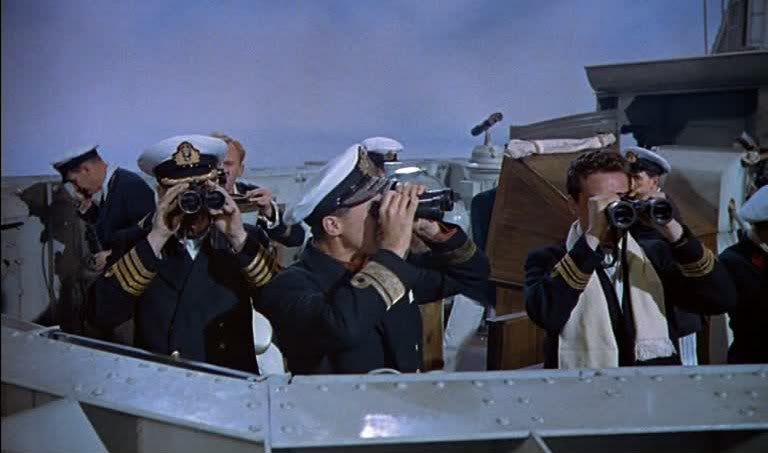
Michael Powell and Emeric Pressburger's The Battle of the River Plate is a scrupulously authentic film about a real World War II battle, in which a trio of British cruisers pursued a German battleship that had been sinking ships along British supply lines. It's a tense, well-crafted war movie that uses real World War II era ships — including at least some of the ships that were actually involved in this encounter — to recreate this intense naval battle and its aftermath along the coast of Uruguay.

The film opens by humanizing the German Captain of the Graf Spee, Langsdorff (Peter Finch), who takes aboard the British Captain Dove (Bernard Lee), the skipper of the Graf Spee's latest victim. The two captains, from opposite sides of the war, nevertheless immediately strike up a gentlemanly repartee based on mutual respect and rivalry. Later, after the battle, Langsdorff expresses awed admiration for the cruisers that had attacked him and sent him into retreat. Seemingly stunned by the way the battle had occurred, he is shocked that the three smaller ships had charged directly at him as though they were much bigger; so great was their bravery, he says, that he was convinced they were actually trying to drive him towards an unseen fleet of much bigger ships, which in fact did not exist. Langsdorff is obviously an honorable man: when, during the post-battle diplomatic negotiations, the propagandistic Nazi reports about the battle are read aloud, Langsdorff paces anxiously back and forth, bristling at this distortion of the battle, which minimizes the bravery of the British sailors and the damage taken by the Graf Spee.

The film is steeped in the value of coolness under fire, valorizing the British officers and sailors who always maintain their gentlemanly reserve and their dry wit in the face of battle and death. The captain of one ship, under heavy fire, is injured in his legs and spends the rest of the battle dispensing commands while a medical orderly applies bandages and stitches to his wounded legs; when the captain notices that the doctor is applying bandages to his left leg as well as his right, he remarks that he hadn't even noticed that both legs were wounded. The same valor is displayed by the lower-ranking sailors as well. When the gunnery station of one ship is blown apart by shells, the wounded and bleeding men struggle to maintain their stations, asking only that doctors are sent down below to tend to them while they prepare to fire again. One of the men, when asked how he is, remarks only that it's "a bit drafty" with all the jagged holes in the hull.


At the height of the battle, Powell and Pressburger cut back and forth between the three British ships and the captured British officers imprisoned in the hold of the Graf Spee. They're in a tough position, cheering on the British navy even though they know that a direct hit on the enemy means their own deaths, that they'll likely go down with the German ship if their own side wins this battle. The heroic sailors cheer on the pursuing British cruisers anyway, speaking as though they're with the British: "we're on their trail," they cheer, even though in fact they're in the heart of the German ship, awaiting destruction at the hands of their own side.

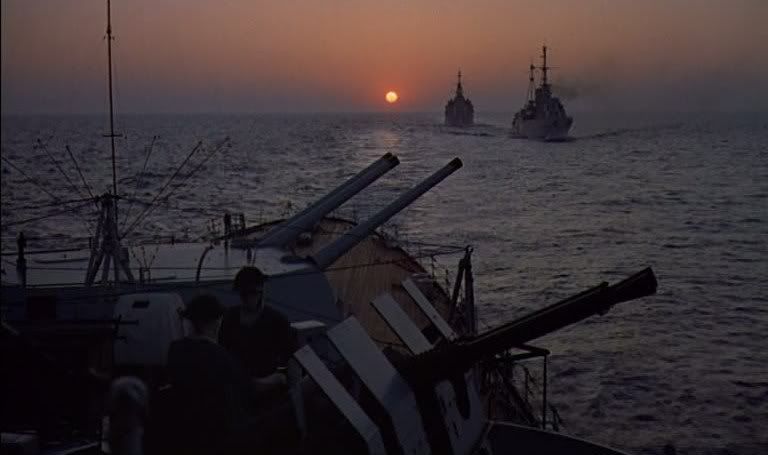
Powell and Pressburger create a moody, potent nighttime atmosphere in scenes of British ships drifting through the night, hunting the Graf Spee with a red-tinged night sky hanging overhead. The nights are eerily quiet, the ships cutting through the water with the dull murmur of their engines and the water lapping at their bows. The images have a sightly unreal magic hour beauty, the red glow in the sky setting the bulky silhouettes of the ships off from the glistening water. Later in the film, Powell and Pressburger's depiction of the harbor of Montevideo, where the Graf Spee takes shelter after the battle, is equally compelling, as the film shifts from the claustrophobic intensity of the naval war sequences to the tense diplomacy and negotiations that take place over the German battleship in this neutral country. The atmosphere of this small harbor, now flooded with journalists, sailors and diplomats, is rowdy and colorful, with much of the action here centered in a small bar where an American reporter (Lionel Murton) sends out breathless dispatches on the struggle over the Graf Spee.

This is a film all about the glory of war, about the nobility of the men who face death so bravely and stoically, whichever side they fight for. It's an almost romantic film, with its depictions of calm battles where no one seems especially ruffled even when men are dying all around them, and images of war ships smoothly gliding through the water beneath dramatically lit skies. The film's climax occurs right at twilight — "the twilight of the gods," one observer in Montevideo remarks dramatically — as the long-awaited showdown between the Graf Spee and the ships amassing to prevent its escape occurs against a blackening sky, the flames of an exploding ship lighting up the night while red and purple hues fill the sky above.

Tuesday, May 1, 2012

Four Sons


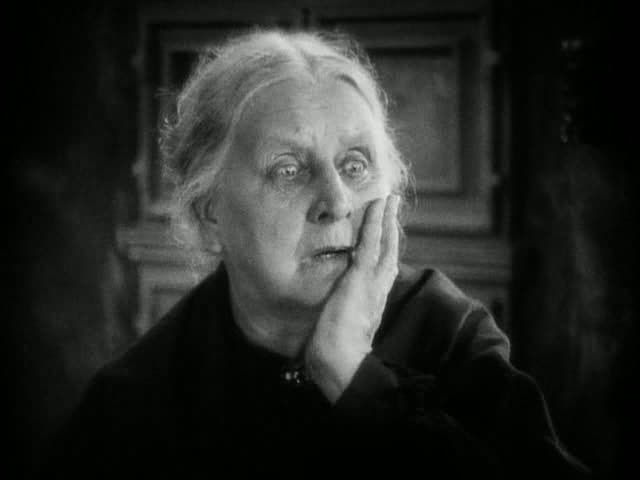
Made under the heavy influence of German Expressionism and especially the recently emigrated F.W. Murnau, John Ford's Four Sons represents one great director being deeply affected by the work of another, letting the spirit of Murnau's cinema infiltrate and blend with Ford's own still-developing style. Murnau had just made Sunrise at Ford's studio, Fox, and Ford shot parts of his film on leftover sets from Murnau's classic. Four Sons opens in a small German village, where the postman (Albert Gran), immediately seen in the first shot, strongly recalls Emil Jannings' mustachioed doorman from Murnau's The Last Laugh. Ford follows the postman in a graceful tracking shot that winds around the village, occasionally pausing for the man to exchange friendly banter with people he meets along the way, or for a wagon loaded with hay to cross the frame. This lengthy traveling shot instantly establishes the atmosphere of this comfortable, happy little town, where everyone knows everyone else, children gleefully scamper underfoot, and there's a warm communal vibe to this place and its people. In this idyllic small town, the elderly Mother Bernle (Margaret Mann) proudly raises her four sons, who love and idolize her with the characteristic Fordian adoration for parents.

Indeed, though this film takes place primarily in Germany and draws on the influence of Murnau, its affectionate, sentimental depiction of family life amid a tightly knit community is purely Fordian, a precursor to his Irish films like How Green Was My Valley. The domestic bliss of the Bernle family is soon shattered, though, as the arrival of World War I casts a pall over their family and their town. One of the four sons, Joseph (James Hall), has already departed for America, where he's done well with his own restaurant and his own happy family. Two more of the sons are sent off to war in the German army, leaving behind only the youngest son, Andreas (George Meeker), to stay home with his mother. The film is remarkably even-handed in its depiction of war and patriotism. The only real villain here is the German major Von Stomm (Earle Fox), a caricature of Prussian rigidity and sneering evil, but the rest of the German officers and soldiers are portrayed as ordinary, decent people fighting for their country. Ford takes care to never let Von Stomm's villainy overwhelm the picture: immediately after Von Stomm's vilest scene, when he forces Andreas to enlist in the army, another German officer kisses Mother Bernle's hand on the way out, as though acknowledging his disapproval of his superior's actions.

The film's plot basically piles up one tragedy after another, as the war claims one son after another from this family. In the end, only Joseph, who has gone to war in the army of his adopted country rather than for Germany, is left. Ford's sentiment can be overwhelming: several times throughout the film, Mother Bernle sits at her table and says a brief grace before eating with her sons, and each time the scene recurs this ritual becomes sadder and sadder, more and more tinged with loss, with the repeated composition calling attention to those missing from the table. The final time the scene appears, the table is empty except for Mother Bernle, and she imagines her four sons as ghostly presences, superimposed over their empty chairs; the image is unbearably sad, and unbearably maudlin.


Elsewhere, Ford's direction more economically conveys grief and tragedy without resorting to such forced sentimentality. The postman's delivery of letters with black borders, signifying a dead soldier, provide a heartbreaking shorthand for loss, and the postman, reluctant to be the bearer of such bad news, makes each step towards his destination seem like it takes tremendous effort. The second time he delivers this kind of letter to Mother Bernle, he appears in a deep focus shot through her window, while inside she kneels in front of the window, looking through a chest, preparing for the homecoming of a son who will never return. As the postman slowly approaches the house, framed by the window, she finally looks up, sees him, and freezes, immediately knowing what news he brings. Equally powerful is the shot of the mother watching as Andreas is inducted into the army; she watches at a window, then places her palm against the glass, as though raising her hand in a wave goodbye, an image that Ford fades into a shot of soldiers on the march.

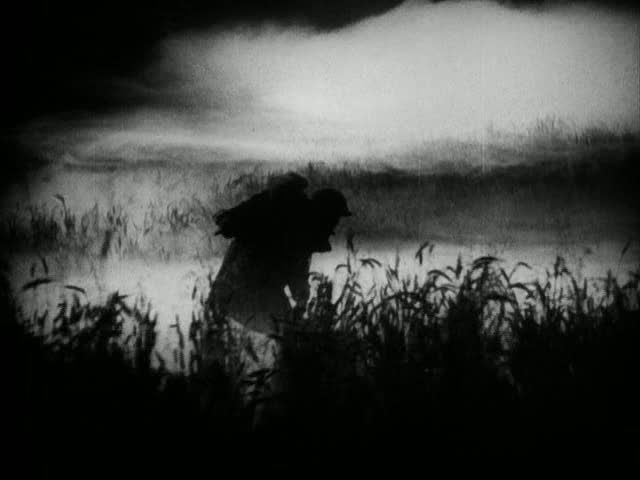
The war itself is minimally conveyed with a foggy, bleak wasteland in which the soldiers crouch and hide. Ford mostly focuses on the faces of the soldiers in extreme closeups, streaked with dirt and sweat, their jaws clenched and their eyes furtive. Ford uses very few titles, only cutting in some minimal text when it's absolutely necessary; his visual style is extremely expressive, and generally no words are needed. The performances of the four Bernle sons are mostly overstated and overacted, but Mann delivers a rich, naturalistic performance as the loving, suffering mother, and there are numerous scenes that display Ford's feel for subtle gestural communication. In one scene, Joseph and his wife (June Collyer) chat while she holds their baby next to her head, creating a very resonant image of the happy family clustered around the child. While the couple is speaking, Joseph's wife casually kisses the baby's head while listening to her husband, a little gesture of tenderness that's easily missed but adds to the scene's touching depiction of domestic bliss.

The film's final act plods on a bit too long after the natural climax, with an extended and rather unnecessary sequence of Mother Bernle emigrating to America and struggling with US immigration laws at Ellis Island. These scenes lay on the pathos a bit too thick, even for a film that's already slathered in sentiment. Despite this over-long finale, Four Sons is a rich, evocatively shot melodrama that explores Ford's fascination with family, war and tragedy.

Monday, June 6, 2011

Saving Private Ryan


It has been said that all war movies are ultimately anti-war. The implication is that it is impossible to show the reality of war — the death and destruction, the dismemberment, the endless struggle over just one more patch of land like any other — without showing its horror, brutality and pointlessness. It has also been said, however, that no war movie can ever truly or completely be anti-war. By the nature of the war movie genre, it is inevitable that these films will be exciting and visceral, that they will show the bravery and honor of the soldiers, who are always at their bravest precisely when they are delivering grand, solemn speeches about how they're not brave. If Steven Spielberg's Saving Private Ryan proves the truth of one of these axioms, it is the latter rather than the former. Spielberg's film is all about the honor of war, the bravery of the soldiers. Saving Private Ryan has often been praised for its realism, for its truthfulness to the experience of war, but Spielberg's idea of realism is hiring real amputees to play soldiers who get their limbs blown off. It's shallow realism, a thin coating of the real over a foundation of Hollywood contrivances and rote recitations of familiar ideas.

The script (by Robert Rodat) makes repeated use of the words of Abraham Lincoln's letter to the widow Bixby, who lost five sons in battle during the Civil War, the key words of which refer to those who offer their lives as a "sacrifice upon the altar of freedom." (There's a metaphor for Spielberg's "realism" here, since history has shown that the letter was mistaken, and at least three of those sons didn't die in combat.) This letter is read early on in the film by a general upon learning that three brothers have died within a week of one another during the invasion of Normandy, during World War II. A fourth brother, James Ryan (Matt Damon), has air-dropped into a chaotic region, his location and status unknown. The film bears the name of this Private Ryan, and it's this man, who remains offscreen for much of the film, who serves as the focus of the subsequent action. Later, the words of the Bixby letter are repeated in voiceover, and again they seem like brazen manipulation, an unthinking regurgitation of grand words with a grand name to somehow legitimize them.

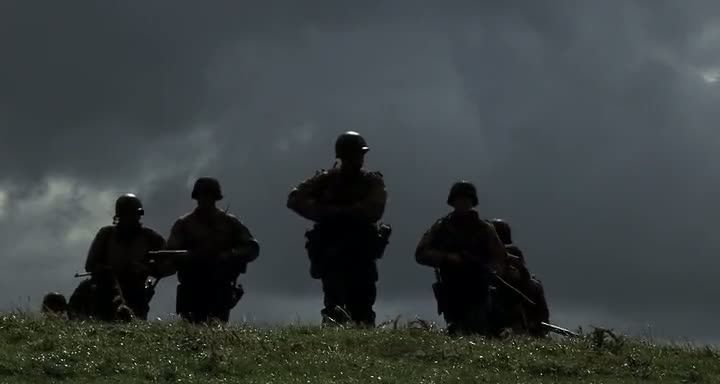
Such sentimentality is at odds with the battle scenes, in which Spielberg tries to be unstinting in his depiction of the horrors of war. The celebrated opening (which kicks in after a lame and thoroughly Spielbergian framing device) is a nearly half-hour re-enactment of the invasion of Normandy, a bloody and relentless sequence. The opening minutes of this sequence are especially striking: as the troop boats drift towards the shore, Spielberg shows the men inside the boats, praying and muttering to themselves, throwing up, shaking with fear. And then the boats arrive at the beach, and the gangway at the front lowers to allow the soldiers to charge off... and the enemy machine guns open fire, cutting down whole ranks of soldiers where they stand, before they have a chance to take so much as a step forward. Within seconds, a whole boat's worth of men has fallen, each line collapsing riddled with bullets, clearing the path for the next men behind them to be shot as well. It's horrifying, this devastating slaughter, and the rest of the sequence only intensifies the sensation of being surrounded by death. It's loud and visceral. Limbs fly, the bottom half of a man's body disappears into an impact crater, blood spurts, bullets ping off metal, medics struggle to staunch the flow of blood from men who are soon dead, either from existing wounds or new ones, as bullets continue to fly. In one shot, Captain John Miller (Tom Hanks), dazed from an explosion, watches as a soldier with his arm blown off wanders aimlessly in a circle, stoops down, and stands back up holding his own detached arm before strolling away like a zombie.

This is powerful stuff. But the film's visceral feel for combat and death doesn't really carry over into the scenes after the battle of Normandy, when Miller's unit is tasked with the mission of locating the missing Private Ryan and bringing him back safely, so that his mother will not have to hear that her fourth and final son has also died in combat. Miller's men resent the mission, resent being asked to risk eight lives for the sake of one, and though Miller mostly tries to keep his reservations to himself, he too is unhappy with the job. He loves and cares for his own men and feels the pain of losing each one, but Ryan, as he says himself, means nothing to him. The bulk of the film consists of this small group's trek across a battle-fraught stretch of France where German and American troops square off in various ruined small towns.


When the soldiers aren't engaged in battle, Spielberg and the script mostly resort to war movie clichés, like one man's never-sent letter to his parents, taken after his death by another man in the unit and then passed from one man to the next as those carrying it are killed in action. Another man regrets a childhood unkindness to his mother. Another man is Jewish and never gets tired of shouting his religion at German soldiers. The home and pre-war occupation of the guarded, private Miller are the subject of a pool in his company, and of course at a key moment he must deliver a big (and unbearably maudlin) speech about what he did before the war. The action is realistic and visceral, but when the soldiers put down their guns there's nothing but obvious scriptwriters' devices and Hollywood speechifying, a reminder that for all the blood and missing limbs Spielberg displays onscreen, this is still just another in a long line of Hollywood war movies, and a rather traditional one at heart.

There is one cliché that Spielberg and Rodat go to great lengths to subvert, and that's the cliché of the cowardly or incompetent soldier who redeems himself at the last moment in a grand act of bravery. Corporal Upham (Jeremy Davies) is a translator and map-maker who has never seen combat, but who joins the unit because Miller needs someone who speaks both French and German. Upham cowers at the fringes of each battle, watching from the sidelines, but in the film's final battle, a desperate struggle to hold a bridge against German tanks and infantry, he's tasked with running back and forth among the American positions, carrying ammo where it's needed. At some point, his already modest courage utterly falls apart, and he can barely do more than whimper and cower in a corner, trying to hide from the Germans. There is a certain moment that seems to be building towards Upham's redemption, but that redemption never comes. The tension of the scene arises almost entirely from the way Spielberg cleverly sets up expectations for a very conventional resolution: one expects Upham to finally man up and come to the rescue, but it never happens. It's a bracing defiance of convention from a filmmaker who is usually conventional, and purposefully so, even at his finest moments. So it's worth noting that Spielberg defies the convention in order to reinforce another, solidifying Upham's status as the cowardly and ineffectual intellectual figure. He also ties this cowardice to one of the film's most laughable contrivances, the German soldier who Upham had earlier defended from summary execution, only for him to return at the climax, once again killing American soldiers. It's outrageous, especially since it winds up suggesting that Upham was wrong, earlier in the film, to oppose the summary execution of a surrendering enemy soldier. The film seems to be singularly lacking in the perspective that enemy soldiers are, like Miller and his men, mostly just ordinary men doing their duty for their country. Instead, Spielberg, with his blockbuster instincts, has to make this random German soldier the villain of the piece, and everything surrounding Upham and the German soldier is so irredeemably muddled that it's not really clear what, if anything, the film is trying to say about this situation.

Sometimes a movie that isn't very good can still be interesting. A movie that fails in a thousand ways can still capture the imagination, provoke thought, deliver startling insights. Spielberg's movie is the opposite. Saving Private Ryan is a "good movie" that's not that interesting, a well-made war picture with no particularly fresh or interesting insights, only confused messages and silly regurgitations of clichés and leftovers from countless other war movies. In isolated scenes it sometimes seems like a fine film, and at its best it's undoubtedly a great action movie. There are scenes here, moments of awful beauty, that must surely rank among the most powerful cinematic encapsulations of the wartime experience. The red waves washing up over the bodies of men and beached fish at the end of the battle of Normandy, bloody waves gently rolling into the shore, are haunting and unforgettable (though borrowed from Sam Fuller, a towering influence on this film). The film's non-battle scenes don't often rise to this level, though, and the film is torn between two modes, between stark realism and Hollywood artificiality, without ever quite settling on one or the other.

Wednesday, May 18, 2011

Paisan


Roberto Rosselini's Paisan was his second postwar film, made after his scrappy, low-budget Rome Open City, which was filmed in the immediate aftermath of World War II with any film stock he could scrape together. Paisan is similarly rough and minimalist, continuing the ragged neorealist style that Rosselini inaugurated with his postwar work. The film consists of six tales set during the Allied liberation of Italy from the German occupation, focusing largely on interactions between Italian citizens and American soldiers, with the German troops a constant peripheral presence and lingering threat. The film is an interesting fusion of neorealist naturalism, melodrama and sentimentality. The stories Rossellini is telling are melodramatic rather than naturalistic, built around ironic reversals and stock characters, and the emotions evoked are generally broad and universal rather than specific. The film is more about the general experience of the liberation than it is about any particular stories or characters from this period, so its characters are fairly generic and its dialogue is mostly functional and rote.

Rossellini was working with a mix of actors and non-professionals, drawing from the ranks of the American soldiers still stationed in Italy to portray the Americans in the film. But the effect isn't quite realistic so much as amateurish; almost all of the Americans turn in awkward, stiff performances and not all of the Italians are much better. The amateur performances add to the sense of a film captured on the fly, with whatever materials are at hand, whatever locations can be filmed and whatever people are around, most of them real people who'd really lived through some version of the events depicted here. The film follows the structure of the Americans' northward advance through Italy, with each episode set in one town along the route of the military campaign, from the very south in Sicily to the very north in the Po River region. As the film progresses, and as Rossellini depicts the military struggle proceeding north, the relations between the American military and the Italian people become closer, less prone to misunderstandings and miscommunication. In the first three episodes of the film, the language barrier and differences in attitudes prevent a true connection between the Italian people and the Americans liberating the country, but in the final three episodes those divisions are increasingly erased.

The climax of the first tale is a touching scene between the American soldier Joe (Robert Van Loon) and the Italian girl Carmela (Carmela Sazio), who had been guiding a group of American troops through a dangerous area where only she knew the way. At one point, the other soldiers go out scouting, leaving Joe behind with Carmela to hide in a hilltop fort until the rest of the troops return. Joe doesn't speak any Italian, and Carmela doesn't speak any English, and yet the two sit side by side, trying to communicate, speaking to one another without really understanding anything of what the other is saying. They occasionally get a word or two, or can communicate through gestures and pantomime. The scene is very moving in its quiet, simple way, as they attempt to overcome the language barrier between them and make a connection. Rossellini stages the scene in one long take, a steady shot of the two people sitting next to one another by a window, talking, struggling with their words, smiling and sharing stories about their lives that, for the most part, they know the other person doesn't understand. It's a wonderful scene, and the warm emotions of this moment set up the heartbreaking ironies that follow from it in subsequent scenes, when a group of German soldiers stumble across the fort. The episode ends, not with communication but with further misunderstandings; that brief moment of frustrated connection is extinguished by violence.

In the second story, a black American soldier (Dots Johnson), drunk and disoriented, is taken advantage of by kids and street thugs — disturbingly, a couple of hustling kids try to sell him to the highest bidder in a back alley — and eventually winds up being led around by the bratty Pasquale (Alfonsino Pasca). As in the first episode of the film, the focus of the story is the inability to communicate across the language barrier between Italian and English. Sitting atop a pile of rubble — Rossellini filmed in the real streets of wasted Italian cities — the soldier entertains the boy with a frenzied re-enactment of a naval battle, in which the boy understands no more than a few words but enjoys the spectacle anyway, laughing and smiling. What he misses, of course, are the notes of pathos in the man's story, his drunken musings on home and the poverty and squalor that await him back in America. But the soldier doesn't really get the kid either, not until the end of this story when he finally confronts the reality of how so many poor, displaced Italian people are living: gangs of kids without parents, families without homes, large makeshift communities assembled from whatever trash is at hand.


In the third story, the American soldier Fred (Gar Moore) is picked up by the Italian prostitute Francesca (Maria Michi), who takes him home and listens to his story about the early days of the war. He tells her about a girl he met back then who was beautiful and kind and embodied, for him, the happiness of the liberation. Now it's six months later and Fred has grown cynical and exhausted, and he looks at the Italian people, and especially all the girls who have become prostitutes catering to the American GIs, with contempt and disgust. Of course, Francesca is the girl from the story, and once again this episode turns on a very O. Henryesque irony, based on the soldier's failure to recognize the girl he so badly wanted to see again. He also fails to recognize, as the black soldier had, the difficulties of surviving in the postwar chaos, and he has no sympathy for girls like Francesca who do the best they can to get along in this difficult situation. This sequence, which takes place mostly inside and is noticeably glossier than some of the other sequences, demonstrates the limitations of Rossellini's approach here. Without the virtues of the rough, realistic street photography of postwar Italy, all that's left are the tired clichés of the writing and the amateurish performances.

In the fourth sequence, the American nurse Harriet (Harriet White Medin) and the Italian citizen Massimo (Renzo Avanzo) try to find a way into German-occupied Florence, where Italian partisans are heroically fighting against the Germans while British troops sit just outside the city, waiting for reinforcements to arrive. Obviously, the gap between Allied efforts and Italian efforts remains large, but Harriet and Massimo run hand-in-hand through the city, each desperate to get inside for a different reason, her to find an Italian partisan who she loves, him to find his family who he fears may be in danger in the German zones of the city. The episode is basically an extended action sequence, with an emphasis on the spatial geography of the city, as the pair run across rooftops, dodge through hidden tunnels and avoid snipers and German patrols. It's a thrilling, effective sequence that ends with a moving, expressive closeup, one of the film's most glorious shots. Rossellini excels at closeups, at faces, and his final image of Harriet here is a sudden classical composition that emerges with devastating power from the loose, ragged style of the surrounding scenes.

The film's fifth segment concerns a trio of American military chaplains — a Catholic, a Protestant and a Jew — who arrive at an Italian monastery and are welcomed by the monks. The monks, however, are discomfited by the realization that two of their guests are not Catholic, and they become concerned about the two "lost souls" who they fear have made the wrong choice in terms of religion. This story evokes the gentle humor that Rossellini directed at the brave priest in Rome Open City; it's obvious that Rossellini has great respect for religion without being entirely straight-faced about it. The sequence where the monks find out that the American chaplains are not all Catholic is clearly played for humor, as they go running around the monastery in a panic announcing to the others that there's a Jew amongst them. It seems like Rossellini is setting up the story to mock the provincialism and intolerance of the monks, but instead it turns out that the monks are genuinely worried for the men, that they believe so strongly that their Catholicism is the only correct path that they don't wish for any good men to risk their souls with another religion. The segment is tonally unbalanced with the rest of the film and ends with a saccharine speech from one of the American chaplains, driving home the moral of communion between Italians and Americans, praising the Italian monks for their "pure faith."


In the final segment, depicting the battles on the Po River, the boundaries between the Italians and the Allies have been virtually erased. The Italian partisans speak Italian, and the American and British soldiers speak English, but they all seem to understand one another, without the difficulties of language seen in the earlier segments. They are working together towards a common goal, and the segment opens with a taut suspense sequence in which an American soldier and an Italian partisan cooperate from different points along the river in order to fight some German sentries while retrieving the body of a dead soldier. In this episode, the various armies and nationalities intermingle, and in the nighttime scenes it's impossible to see who's who; one can only hear the voices drifting across the dark river speaking English or Italian. Even so, this episode also emphasizes the one crucial distinction between the Italians and the Allies, which is that the Italians are fighting here for their homeland, for their people, while the Allies are on foreign soil. There's a difference, too, in the treatment of the prisoners who are captured by the Germans, and the film ends with a moving and horrifying tribute to the sacrifices of the Italian partisans who fought and died in the battles to push the Germans out of Italy.

On the whole, Paisan is an interesting if deeply flawed movie. It is obviously a very emotional look at the postwar period and the events that affected the Italian people in the final stretch of the war. If the film's writing is occasionally sentimental and generic, Rossellini pours real feeling into his images and into his portrait of the rubble-strewn streets of his home country.

Tuesday, February 1, 2011

Rome Open City


Roberto Rossellini's Rome Open City, made in the immediate aftermath of World War II, is a stirring, deeply moving portrait of Rome during the final years of the war, with the Nazis occupying the city and Allied forces slowly closing in. It is a rough, ragged movie, made on whatever film stock Rossellini could scrounge up in the desolate post-war economy, shot in the bombed-out streets of Rome with a kind of documentary realism that imparts an even greater impact to this story of the enduring resistance against evil. The film is divided into two parts, with the first half focused on the daily lives of a loose group of Resistance fighters living in Rome. Francesco (Francesco Grandjacquet) works for a Communist newspaper, and helps coordinate the activities of a group of militant anti-Nazi fighters, led by his friend Giorgio (Marcello Pagliero). Francesco's fiancée, the widow Pina (Anna Magnani), is involved in the struggle as well; despite being pregnant, she helps incite riots against the shops that control food rations and keep the people of the city from getting enough to eat. Even her son, Marcello (Vito Annichiarico), joins the fight, as part of a gang of kids, led by a crippled boy, who go on late-night bombing runs against the Nazis.

Rossellini has crafted a portrait of a whole community — a whole people — united in opposition to the evils of the Nazis, with everyone contributing to the fight, even the children. Obviously working from his own experience of the wartime occupation and the tyranny of the fascists, Rossellini has made a deeply humanist work in which he gives equal weight to the everyday concerns of these people as they simply try to live, and to the urgency of the behind-the-scenes struggle against the Nazis. The need for bread, for food, drives the people, who are so starving that they must overcome their moral compunctions against stealing, simply in order to survive. In the midst of this chaos, Francesco and Pina still plan a wedding, still desire the normalcy of getting married. Pina's family excitedly gets ready for the day, baking a wedding cake — doubtless with whatever materials they could scrounge together — and planning a "feast" of the meager luxuries they can gather in this devastated city. Rossellini's casual presentation of these scenes emphasizes the sense of life staggering on, trying to approximate normality even in the midst of the terror and uncertainty these people feel.

The details mean everything for Rossellini, the small touches that demonstrate how thoroughly he understands this situation and these people — because not long before he was among them, living the life depicted here. At one point, when someone wonders if the Americans are really close, if the promise of liberation is really at hand, Pina nods towards a nearby destroyed building, a victim of Allied bombing. The only sign of hope for these people is often the evidence of the destruction wrought by the Nazis' enemies on the city. Others within the city are not as aware of the importance of this situation. Pina's callow sister Lauretta (Carla Rovere) works in a cabaret, and thinks nothing of letting German soldiers drive her home. She's sick of the squalor of her home life, embarrassed to be poor, and she wants only comfort and fun. She seems oblivious to everything outside herself. Her friend Marina (Maria Michi), Giorgio's girlfriend, isn't so oblivious, but she's still abstracted from the struggle, selfish and unable to truly grasp the import of events. She keeps looking for the missing Giorgio, who's hiding from the Gestapo, and seems annoyed that he hasn't been in contact with her, as though he could reveal himself so casually. Marina's weaknesses — including her drug use — make her easy prey for the Germans, who keep her under their thumb through the sinister spy Ingrid (Giovanna Galletti), who has a weird lesbian chemistry with her target.


Rossellini balances the film's darker moments with surprising humorous touches, particularly in the portrayal of the priest Don Pietro. The priest is an exceptionally pious man who is ashamed to even admit that he knows a popular song, sheepishly whistling along and then seeming embarrassed to even be aware of such worldly matters. Later, in a shop selling various religious and secular statues and decorations, he's troubled by the proximity of a figure of a saint to a statue of a nude woman. He turns the nude statue away from the saint, then realizes that now she's mooning the saint with her bare, rounded butt, and turns the saint away, sparing his stone eyes the sight of the voluptuous nude. Rossellini shoots this bit of silent comedy with the statues in the foreground and the priest framed between them, so that the nude statue's butt is turned provocatively to the camera as well as towards the saint, juxtaposing the statue's sexual charge against the priest's discomfort. The priest is a man who believes that the Nazi occupation is God's punishment for humanity's sins; he tells Pina that this "scourge" was deserved because of people's sins. But this belief doesn't stop him from joining the Resistance, from doing everything he can to help. His religion is judgmental, rooted in fire-and-brimstone and the fear of sin, but instead of judging those around him as individual sinners, he recognizes the real evil around him and turns his attention to that.

The sequence where the Nazis storm the apartment building is a brilliant example of Rossellini's mastery of tone. The sequence is tense and almost unbearably suspenseful, as the Nazis weave through the building, taking everybody outside, trying to find the men who are hiding and escaping through various secret passages. Rossellini balances this tension with the subtle humor of the priest's attempts to hide a machine gun and bomb before the Nazis find them: the priest's reaction when Marcello knocks the bomb off the table by hitting into the gun is hilarious, despite the high stakes. The priest's subsequent interaction with a cranky old man who he's pretending to help is equally fun, as the flustered priest tries to explain that he needs the old codger — who keeps excitedly shouting out how much he hates fascists and Nazis — to lie still and pretend to be sick. He finally has to resort to hitting the old guy in the head with a frying pan, which prompts Marcello to admiringly study the dents in the pan afterward. The mingled humor and suspense of this scene is especially potent because the whole sequence ends in such heartrending tragedy, which is even more jarring and unsettling considering the tone of what went before.


In the film's second half, in the aftermath of this shattering event, Rossellini shifts his focus onto the attempted escape and capture of Giorgio and Don Pietro by the Gestapo officer Bergmann (Harry Feist). The harrowing sequence where the Gestapo question and then torture Giorgio, while the priest is forced to watch, occupies much of the second half of the film. It is a powerful testament to Rossellini's belief in the power of the human spirit, in the strength of the men who dedicated themselves to the Resistance. Bergmann tries everything he can think of to get the two men to talk. He tries to split them apart by stressing to the priest that Giorgio is an atheist and a Communist, and by telling Giorgio that the royalists in the anti-Nazi Resistance will eventually betray the Communists. But neither man talks, no matter how much psychological or physical pressure Bergmann exerts on them. They are secure in their belief that they're doing good, and Bergmann's petty means of coercion prove insignificant to such men of strength. One of Bergmann's officers sums up Rossellini's point of view in a speech where the director, surprisingly, seems to put some of his own ideas into the mouth of an embittered Nazi officer who has belatedly realized how bankrupt his own side's ideas are. This man bitterly says that he once believed that the Germans were a superior race, but that seeing the resistance of the Italians and the French has changed his mind: if these men can be so bold, so honorable, can so stoically resist all manner of torture or threat of death, how can they possibly be inferior to the Germans who kill them? Even Bergmann seems to understand the logic of this.

This is the underlying message of the film: no matter how terrible things are, no matter how triumphant evil might seem, the ultimate victory of good is assured by the tremendous strength and persistence of those fighting on its side. The film presents evil as eternal, as preying on the weak, like Marina, who sacrifices everything for a fur coat that, in the end, is taken back from her after she faints at the sight of Giorgio's corpse. Ingrid walks out, arm-in-arm with the slimy Bergmann, and blithely declares that she's saving the coat "for next time." Such evil corrupts and destroys what it can, but Rossellini counters this image with an even more potent tribute to the spirit of men like Giorgio and Don Pietro. These two men, with such different opinions and ways of life, with different values and beliefs, are nevertheless united in their goodhearted insistence on helping others, on combating evil, on refusing to capitulate to the easy alternatives. This is the difference, too, between the strong, brave Pina and the flighty, insecure Lauretta and Marina. And the film's final image, a shot of the children walking together down a dusty road, seems to suggest that the next generation of such good men and women is already developing. It is remarkable that Rossellini, in the aftermath of a horrible war, could make a film of such hope and humanity and grace, a film that acknowledges the horrors the world had just lived through while paying tribute to those who had so bravely resisted these horrors.

Monday, April 12, 2010

The Hurt Locker


Kathryn Bigelow's The Hurt Locker is a powerful, crisply made action movie about a military bomb squad working in Iraq. William James (Jeremy Renner) is the new leader of the squad, replacing the former sergeant who's blown up by a roadside bomb in the tense opening scenes. James is an unwelcome new presence to his teammates, the professional Sanborn (Anthony Mackie) and the perpetually nervous Eldridge (Brian Geraghty). James is a cowboy, or as one superior officer appreciatively calls him, a "wild man." He steps recklessly into danger, always placing himself in the most unstable positions, always refusing to give up or walk away until he has defused the bomb.

The film excels at crafting one suspenseful, taut action set piece after another. Bigelow has an exquisite feel for pacing and timing, for drawing out tense moments into seemingly endless, heart-pounding sequences where each gesture, each slow intake of breath, feels like an explosion. The film is largely structured around the squad's tour of duty, with periodic onscreen titles announcing how many days they have left before they get to return home and end their tenure in Iraq. Each sequence then advances these three men a day closer to leaving Iraq safely; there's little more structure than this slow countdown, and the length and tension of each individual sequence emphasizes just how harrowing and exhausting a tour in Iraq must be. In one sequence, as James struggles with a huge car bomb, Sanborn and Eldridge survey the area, watching for suspicious activity in the crowds of Iraqis who inevitably gather to watch as James tries to defuse the bomb, tearing apart the interior of the car looking for wires and tracking down the ignition device. It's tense and wonderfully handled, as Bigelow cuts back and forth between James, trapped in the claustrophobic interior of the burned-out car, and the two soldiers outside, their eyes flitting around, trying to look everywhere at once and knowing that they'll never be able to see everything. The tension builds and builds and builds, as James cannot find the ignition device and, outside, the atmosphere starts to get subtly menacing.

One of the film's most effective aspects is the way in which it portrays the Americans' complete incomprehension of the Iraqi people around them. In scene after scene, the Iraqis are a silent, threatening presence, simply staring impassively at the soldiers; their thoughts and motivations are a mystery, both to the audience and the soldiers. It's impossible to know who among them is an insurgent and who is simply a citizen observer. This situation creates a dominant mood of fear and paranoia, in which every Iraqi is potentially a threat, everyone they meet might be a spy, or a bomber, or a sniper — or simply a citizen, as scared as the soldiers are by what's going on, unsure of how to act or what to do. At one point, a taxi cab speeds through a blockade of soldiers towards James, who stops the car by pointing a pistol at it, holding it in a Western-style standoff. It's a mysterious scene, since it's not at all clear what the cab driver intended to do, what he wanted, where he was going. Was he an insurgent or a terrorist of some kind, or simply an innocent man who'd blundered into the wrong place and then froze up, making himself appear guilty through his refusal, or inability, to speak or understand? As James says afterward, equally chagrined and darkly amused, if the man wasn't an insurgent already, he would be now.

Scenes like this establish a situation in which the gap between the American soldiers and the Iraqis is more than a simple language barrier; it's a profound disconnect in culture and understanding, a complete lack of knowledge about the other's motivations. The two sides are so rarely able to get beyond the mutual fear and paranoia, complicated by the legitimate threats that seem to be omnipresent in this country. As James defuses a complex web of bombs, an Iraqi man watches from a window above, and it's apparent that he was the one who planted the bombs. He runs downstairs, and his eyes meet James' for a moment as the soldier works on the bombs; the bomber and his prospective victim come face to face for a moment, but James has no way of knowing it. In the scene where James is defusing the car bomb, Sanborn and Eldridge watch a group of men in a tower seemingly signaling to a man across the way with a camcorder, and they're helpless, unable to guess what's going on, knowing that they can't shoot until it's probably too late, until the men have put whatever they're planning into motion. The film shows the complex types of decisions facing these men, never sure if they're confronted with friends or enemies. No wonder they're so tightly wound that they mistake a British squad with a flat tire for a group of Arab commandos.


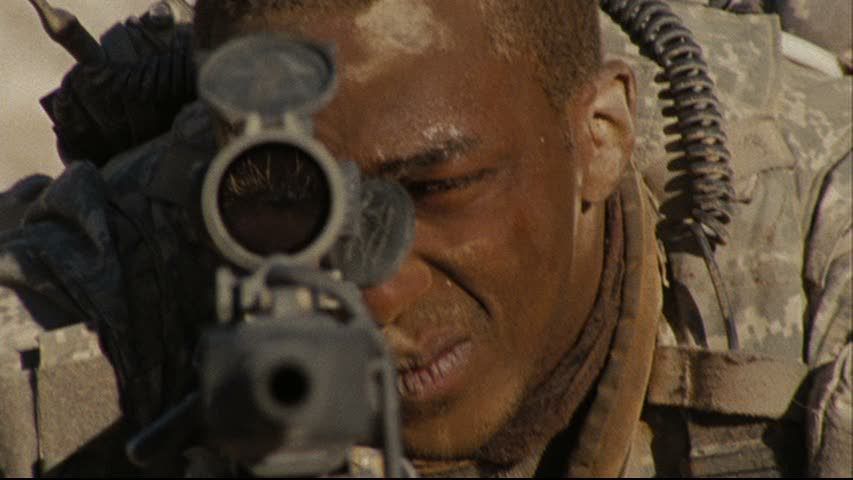
This encounter triggers the film's best set piece, a lengthy confrontation between opposing snipers in the desert, as some insurgent snipers set up in a small shack some distance away and begin picking off the British and American soldiers. Sanborn takes up a sniper's perch in response, and time seems to slow down, as each motion takes an eternity. The rifle jams, the bullets are covered in sticky blood from a dead soldier, and each shot takes long moments to set up, with James directing Sanborn where to aim. Each missed shot demands an adjustment, a small tweak upwards or to the right, and Bigelow switches between shots through the rifle's scope — heat-blurred, hazy views with hints of motion identifying the locations of the enemy snipers — and forward views of Sanborn staring through the rifle's sight. The men are so intent they barely notice the sweat or the flies crawling across their faces. It's a compelling, tense sequence, and Bigelow hits each beat perfectly, with an attention to detail that allows each moment to have an enormous impact.

To the extent that the film simply stitches together several such set pieces, The Hurt Locker is a successful portrayal of the tight focusing effect of war, the way the immediacy of a moment in which a soldier might die overcomes any hint of context. The reasons for the war never enter the picture; no preaching here, from either side, since politics are as far from the everyday life of the soldier as Washington, D.C. itself is from Iraq. Likewise, the personal lives of the soldiers only sporadically come up, as in the coda in which James returns to his family and finds that, despite his love for his child, he doesn't really know what to do with himself outside of a war zone (a tired cliché that demonstrates, perhaps, the film's weakness whenever it's not concerned directly with warfare).

More often, The Hurt Locker is about the moment to moment struggle for survival and the effort of getting the job done. There is an brief stretch towards the end of the film when it initially looks like the narrative is going to cohere into something more conventional, as the hints of a broader plot start coming together. James is moved when he finds the corpse of a young Iraqi boy who'd been selling DVDs on the military base, and goes rogue trying to get revenge, but this winds up being a diversion from the less showy routine of the day-to-day bomb defusing job. It's a nod to action movie conventions, the hero who has to go off nobly seeking revenge, and in that sense it's interesting that Bigelow ultimately portrays James' action movie impulses as betrayals of his military professionalism, misguided and ineffectual. When he tries to be an action movie spy, sneaking through the streets of Baghdad in civilian clothes with a pistol, breaking into random houses looking for information, he's shown up as out of his depth, unable to perform the way he does when he's in his blast suit, facing down a deadly explosive device. James might be the film's "cowboy," who's praised by the higher-ups for his bold but reckless manner, but in the end he has to face that he's most effective when he maintains a more grounded view of his job, rooted in professionalism and procedures.

The Hurt Locker is a strong film, narrowly focused as it is; it takes as its subject these three men and their tension-filled daily tasks, and probes the sensory and emotional textures of this job. The film is formally rigorous, with a powerful feel for sound: both the explosive bursts of a bomb going off and the hushed, expectant silence that precedes it. If Bigelow doesn't aim much higher than crafting an especially visceral, affecting action movie set in our most current war zone, that's perhaps a shame, but it doesn't invalidate her achievement by any means. Indeed, there's no mistake: this is a fantastic action movie with some real flames of substance flickering at its core.

Monday, July 20, 2009

TOERIFC: Black Book


The films of Paul Verhoeven seldom deal with morality and appearances in conventional ways. Verhoeven's filmography represents a prolonged examination of the depths hidden beneath overly familiar surfaces; he often mines within genre templates for the emotional truths obscured by superficiality. And in his 2006 masterpiece Black Book, he turns to the question of historical truth, examining the history book truths we take for granted, exploring the vast gray areas that exist between black and white, good and evil, hero and villain. If Verhoeven was making a Western, most of his characters would wear gray hats. His is a morally ambiguous universe in the deepest sense, one with no easy answers, no pat moral conclusions.

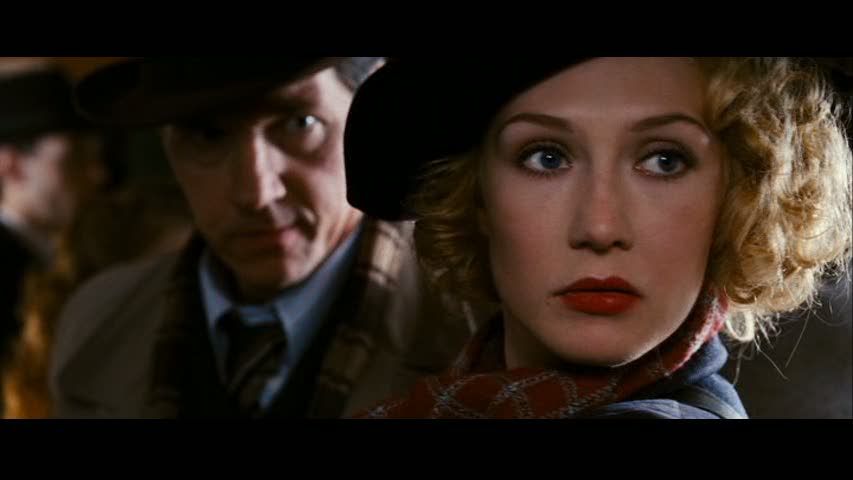
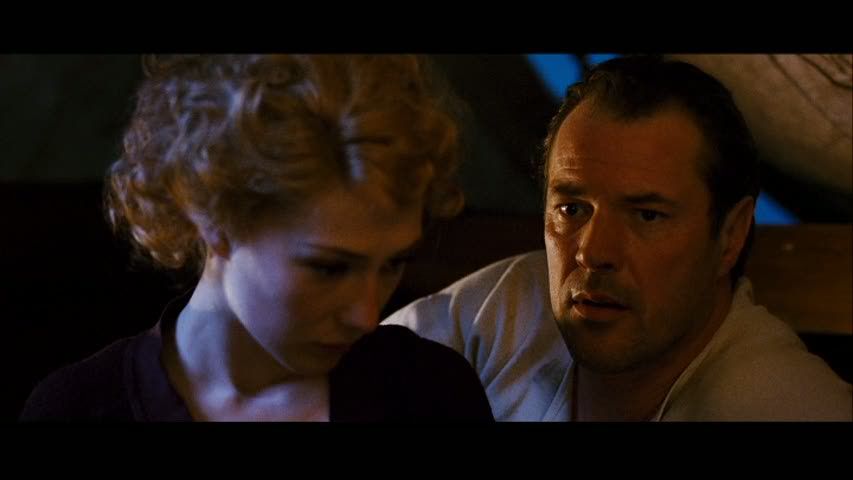
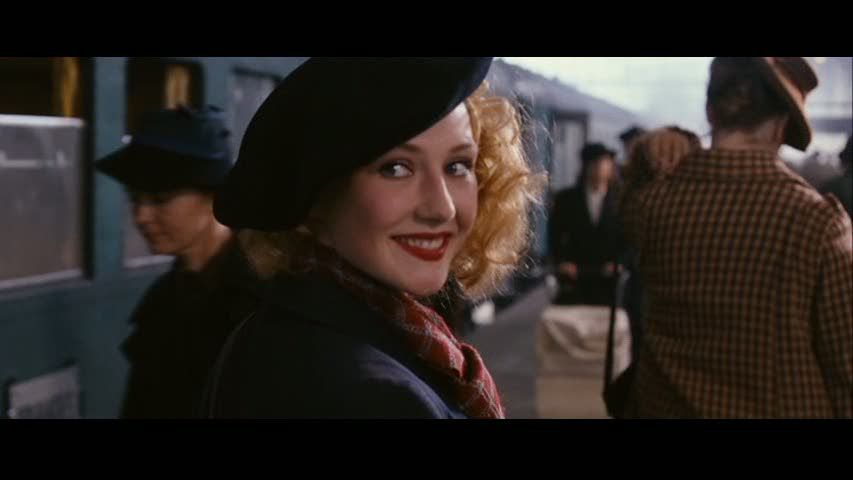
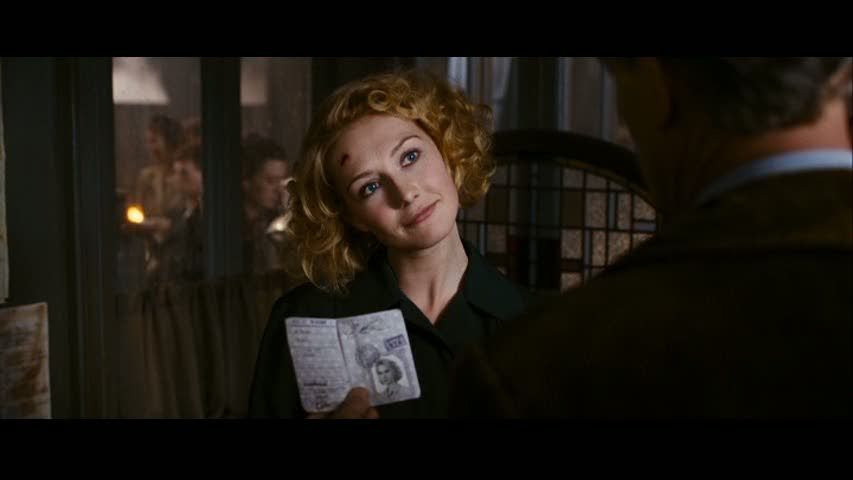
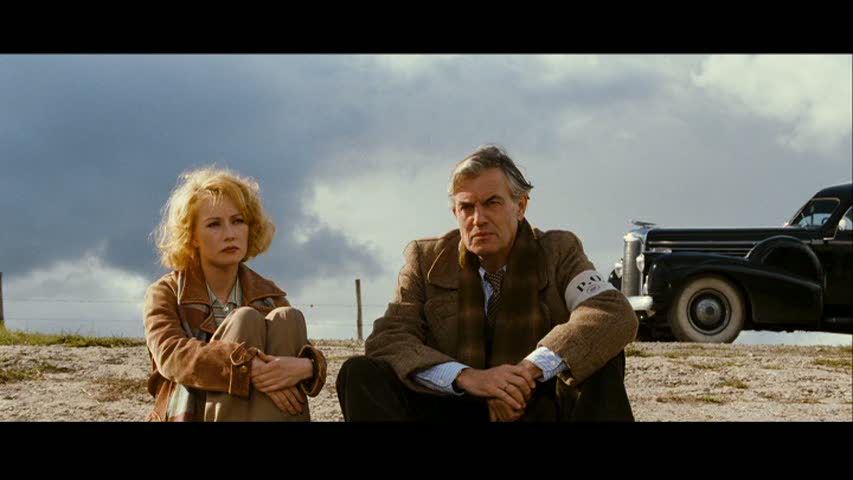
This perspective is especially challenging here because Black Book is about the end of World War II in the Netherlands, where in the final months of the war, the Nazis, Dutch collaborators and anti-Nazi Resistance fighters continued to fight, always thinking about what would happen once the war was over. The film's central character is young Rachel Stein (Carice van Houten), a Jewish woman who soon changes her name to Ellis de Vries as part of her disguise from the Nazis. When the film opens, she is living with a Christian family who begrudgingly shelter her, forcing her to faithfully recite Bible verses before she is allowed to eat (exactly the kind of self-righteous hypocrisy Verhoeven most loves to mock). When her shelter is destroyed by Nazi bombs and her identity discovered, she attempts to escape with her family, but instead she winds up the sole survivor after the sinister German officer Franken (Waldemar Kobus) ambushes the boat and kills everyone else. Now named Ellis, she falls in with a group of Resistance fighters and, at their behest, infiltrates the Nazi command by cozying up to SS officer Ludwig Müntze (Sebastian Koch).

Of course, the plot only grows more complex from there. The script, written by Verhoeven with his frequent collaborator Gerard Soeteman, is serpentine and epic, structured around the multiple twists, betrayals, moves and countermoves that characterize this tale of wartime spying and resistance. The film is lengthy, but with the exception of the brief framing segments in post-war Israel, its action covers only around a year or two, from the last few months of the war to the immediate post-war period, the time of liberation, revenge and readjustment. This brief time frame is packed with incident, however. Verhoeven has always known how to tell a story. In fact, he's often been picked on for this very skill, for his ability to work competently — even vigorously — within conventional storytelling modes. That's why he was such a good fit for Hollywood, at least for a time, despite his penchant for outrageous provocation and radical subtexts. He's a provocateur and a satirist, but even more than that he's a storyteller, an entertainer. Rather than using satire to undermine entertainment, the way so many covert satirists have, he allows the two strains of his work to coexist, to intertwine, so that in a Verhoeven film the excitingly sensual surface he offers up is inseparable from the cerebral and thematic undercurrents of his stories.


This means that his films are always rollicking good fun, if nothing else, and Black Book is no exception. His action sequences are thrilling and visceral, and the plot is a complex web of deceit and double-crosses, with new twists continually introducing complete shifts in the status quo. Of course, sexuality is also almost always an important factor in Verhoeven's films. In Black Book especially, however, Verhoeven's treatment of sexuality is far from simple exploitation or gratuitous titillation. One of the film's most important subtexts is its subtle revelation of the ways in which women are used and then punished for their sexuality, for their charm and beauty. Ellis seduces the Nazi Müntze only out of necessity, after the Nazis capture a shipment of weapons along with several Resistance fighters, including Tim (Ronald Armbrust), the son of the Resistance ring's leader Kuipers (Derek de Lint). She agrees to help by infiltrating the SS headquarters, planting a bug in Franken's office and generally providing information on what's going on, as the Resistance cell tries to figure out a way to free their captured comrades.

So Ellis uses her sexuality for the benefit of her friends; she is willing to sleep with Müntze, and even to expose herself to the unwelcome attention of the brutish Franken, the man who murdered her family. But she is not praised for her behavior; she is silently, implicitly judged. Before she goes undercover, the doctor and Resistance fighter Akkermans (Thom Hoffman) makes sure that he sleeps with her first, as though marking her before the Germans get ahold of her, claiming her as Dutch property. Her sexuality is a tool, a weapon, a resource, and also something to be fought over, but she is never treated as an equal, as someone to be respected in her own right. Even when she first joins the Resistance group, she is eager to help, but seems disappointed when she learns that all she has to do is pose as Akkermans' wife, kissing him to distract Nazi inspection parties as they smuggle underground materials from place to place. This assignment establishes the boundaries of what she will be asked to do as a part of this group, though her quick thinking when the mission nearly goes wrong indicates that she is more than just a pretty prop, that she can think for herself and ingeniously get her allies out of tight spots. Still, they do not respect her, and Ellis knows it.

One of the key moments here comes when Ellis arrives at the Resistance's secret base while they are listening in on the microphone that Ellis planted. They hear Franken having loud, raucous sex with his secretary Ronnie (Halina Reijn), and the Resistance fighters are laughing wildly, mocking the lovers and especially the girl. They call her a whore and comment on how horny she must be, and they laugh uproariously. Ellis looks uncomfortable, her head bent down, her eyes averted from everyone else, certainly not laughing. She realizes that Ronnie, an ordinary and not very bright young woman, is just doing what she must to survive, that she's no Nazi or "Nazi lover" but only someone who knew, as Ellis did, that she could use her sexuality as a way to get by during a difficult time. And Ellis knows, too, that the others might just as easily say the same things about her. She's sleeping with Müntze just as Ronnie is sleeping with Franken. Ellis has a pretext for her actions, but in the end sex is sex.


Complicating matters even further is the fact that Müntze is not an unsympathetic character, and in fact he is portrayed as a relatively decent guy. He is an SS officer, but by this late point in the war, he has realized that his country is losing, and instead of reacting out of greed (as Franken does) or self-preservation (as so many others do), he attempts to calm down the violence in his own little corner of the war, negotiating with the Resistance to halt the hostilities on both sides. He knows the war is over in all but name, and sees little point in further death, further violence and horror. Moreover, he very quickly deduces that Ellis is a disguised Jew, and not long after discovers that she is a member of the Resistance. But in both cases he keeps her secret, protecting her and conspiring with her.

There is a hint of tension between them, of course, which bursts out in the wittily Freudian scene where Ellis thinks Müntze is getting an erection under the covers, only to find he's pointing a gun at her: underscoring the forced, duplicitous sexuality that thrust them together. Even so, the relationship between them is surprisingly tender and sweet, a true romance in the midst of so much deceit and treachery and violence. He is, perhaps, a good man who had been warped by the war, forced into his position by cowardice or some other motivation — it's never made clear how or why he became such a high-ranking SS officer, or what he must've done in the past. But with Ellis, he is loyal and kind, and their sex scenes have a warmth and passion that never feels like playacting.

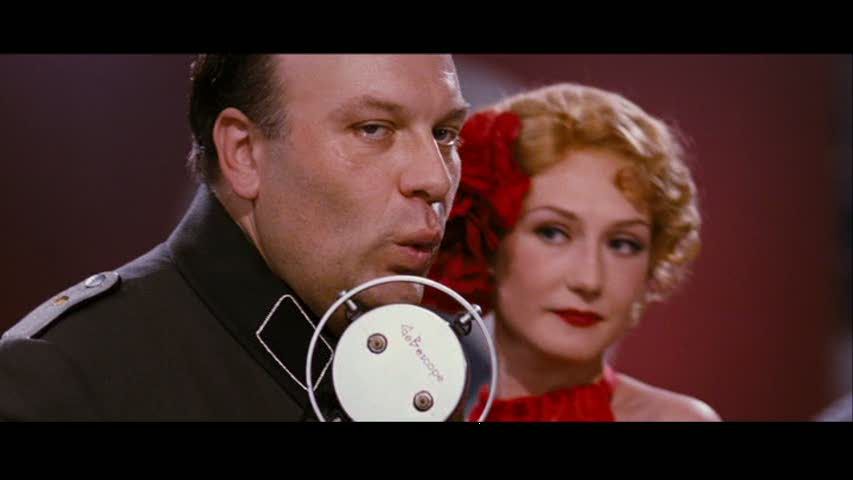
This brings up the question of appearances and surfaces again, and of acting. Carice van Houten is asked to virtually carry the film on her tiny shoulders — she is its center and its heart, almost never offscreen — and she gives a phenomenal performance. In many ways, she is also playing an actress, a woman who must be able to disguise her true self completely. She must do this first as a Jew, dying her hair blonde and changing her name, shedding her Jewish roots. She even dyes her pubic hair, as though changing even her sexuality; Verhoeven shows her daubing between her legs with a brush, making art of her sex. Then her disguise becomes even more complex when she is employed by the Nazis. There is an extraordinary sequence when she first sees Franken and recognizes him as the man who murdered her family. The creepy, lumpen oaf is hunched over a piano, cheerfully singing a song and playing; he is as goofy and awkward here as he was cold and evil in the earlier scene. Ellis stares blankly at him, and runs from the room, retching and throwing up when she reaches the bathroom. But she takes a moment, cleans herself up quickly and pulls herself together, and when Müntze asks her what's wrong, she smiles and takes an eager swig of champagne, then goes out to sing a torch song with accompaniment from Franken, lewdly dancing and posing as she sings the sexually suggestive lyrics.

Van Houten is excellent at conveying these sudden shifts, the way Ellis' face can quickly and smoothly transition from a sour, numb expression into a bright and seemingly genuine smile. Verhoeven, with his concern for the relationship between appearances and reality, is especially interested in this fluid masking of emotions: at what point do Ellis' faked smiles become real? At what point does her façade of affection and desire for Müntze bleed into something deeper, more true? Such questions are at the heart of the film, and they go beyond Ellis' undercover theatrics, extending to every aspect of the story, to every character. Virtually all these people are wearing masks of various kinds, and they're all more than they appear to be on the surface. For one thing, the film rejects facile categorizations of "good guys" and "bad guys," suggesting that real evil is not always as easy to identify as the cartoonish Franken, who in any event is also capable of playfulness and good humor, and who seems to love making music. Moreover, Verhoeven is saying, often evil can be mistaken for good, and vice versa — not to mention the complications of most people combining the two within themselves.


Verhoeven explicitly mocks the moral absolutism that ignores such gray areas. This is especially obvious in the character of Theo (Johnny de Mol), a devout Christian who becomes hysterical after killing a man to protect Ellis. He believes that because he has committed murder, he is now "as bad as the Nazis," an absolutely absurd idea that demonstrates a complete inability to see moral gray areas. Verhoeven, by contrast, is interested only in the gray areas, in why people do what they do, in the complicated interactions of morality and practicality from day to day. For Verhoeven, morality never exists in a vacuum, but is integrated with people's situations: the choices available to them and the choices they make as a result.

What's also interesting about the film is its almost-complete emphasis on the kinds of stories not often told about World War II, the stories that are generally overlooked and glossed-over. Verhoeven has always been interested in this material, in the history of resistance and collaboration in his homeland. In 1977, he made the epic Soldier of Orange, which is similarly engaged with issues of collaboration and resistance, with the interesting ways in which wartime can warp or divert a person's character and destiny. In many ways, that film seems like a warm-up for Black Book, a first examination of the territory he'd return to here, now mining even deeper, digging even further into the ugly contradictions of his nation's past.

Those contradictions are laid bare here, particularly during the film's final hour, in which Ellis, suspected of collaboration with the Nazis, is forced into hiding along with Müntze, who's fleeing the dubious "justice" of the post-war regime. Verhoeven has often been accused of a lack of subtlety, and the final hour of this film could certainly provide copious material for anyone wishing to make that case. He heaps suffering and degradation on his poor heroine, who is misused and betrayed despite all her efforts to do what was right, to help her friends and exact revenge for what happened to her family. Instead, she is arrested as a collaborator, labeled a "Nazi whore" who sang for the Germans. She is, at one point, stripped and slathered in excrement, at a prison where drunken soldiers and prison guards abuse and humiliate the prisoners. And then she is betrayed again, nearly killed by the last person she thought she could trust, Akkermans himself, who turns out to be a genuine collaborator, the man who kept tipping off Franken to the locations of fleeing Jews.


Verhoeven undoubtedly makes things difficult for his heroine, and he also makes her plight difficult to watch — this Passion of Ellis is harrowing and often stomach-churning, both physically (the feces bath) and emotionally (the execution of Müntze). But no matter how much Ellis suffers, Verhoeven never strips her of her dignity: her warmth and passion, her energetic spirit, her honesty, her defiance. When the prison guards demand that she sing for them like she once did for the Nazis, she simply shakes her head: "not for you." She is an ordinary woman in extraordinary times, and she rises to the occasion in every way, molding herself to be tough enough for what she has to face.

And she always retains her idiosyncratic sense of humor, her playfulness — seen in tossed-off little moments like the one where she takes a bite of a carrot meant for a rabbit, then turns around to speak with the bite stuffed into her cheek like a chipmunk, or the scene where she brushes her teeth by gargling with champagne, then opens her mouth wide for inspection with a grin. Verhoeven obviously admires her cheekiness, and he admires his actress too, admires the versatility she brings to this role: compare the matronly, melancholy Rachel seen in the Israeli framing story against bold, blonde Ellis for some indication of the range and depth van Houten brings to this character.


Indeed, "range and depth" is a fairly good summation of Black Book as a whole as well. It's an extraordinarily complex and multi-faceted film, both narratively and thematically. Even as its plot continually subdivides and changes directions, Verhoeven probes deeper and deeper into the sexual, political and psychological subtexts of his story and characters. His style is direct and bombastic, with a subtle stylization to the way he groups other characters into two-shots with his heroine, tracing her varying relationships with the men she encounters. Ellis is always turning towards the camera, flashing it a smile or a penetrating gaze; Verhoeven makes it natural enough that it never quite breaks the fourth wall, though the technique does call attention to itself, and to the continual highlighting of the star.

I could certainly find a lot more to say about Black Book — it's a film I suspect I could write a book about, delving into each scene and giving it the careful consideration it deserves. It's that rich, that layered. For now, however, I'll simply open up the discussion for others to share their impressions of Verhoeven's film. What does everyone else think?

Wednesday, May 20, 2009

Soldier of Orange


Paul Verhoeven's Soldier of Orange was the film that started him on the path to Hollywood, the film that made no less than Steven Spielberg take notice of the Dutch talent. It's not hard to see why: it's an epic, masterfully made film, a brisk, constantly moving wartime adventure about friendship, betrayal and the ways in which people can stumble upon their principles. The film traces the lives of a group of rowdy friends between 1938 and 1945, from their time at a Dutch university to their entanglement in World War II, as their home country is dragged into the conflict by Hitler's invasion. These youths are initially far from interested in the war or Germany or anything else. They expect their country to remain neutral, as usual, and if anything many of them are sympathetic to Germany, nursing some of the same anti-Semitic sentiments as Hitler and his followers. So they play tennis, and go to parties, and compete over women, oblivious to the impending chaos about to engulf Europe. When Britain declares war against Germany, a few off them are troubled, but most don't care: they simply switch off the radio and return to their tennis match and their gaiety. This only changes when Germany actually invades Holland, bombing civilian targets and sending in soldiers.

What Verhoeven's interested in here is defusing the usual war movie clichés: the over-the-top patriotism, the stoic heroes, the girl loyally waiting back home. He signals his subversive intent, subtly, in the opening scenes. After a mock-newsreel introduction of the Dutch Queen returning to her own soil after the war, greeted by an extravagant welcome, the first scene of the film proper is a noisy, chaotic sequence in which a group of shaved-head young men are berated, beaten and mocked by neatly dressed men who order them around like drill sergeants. The film's subject, and its opening (with a credit sequence accompanied by the Dutch flag), prime the viewer to interpret this scene through the filter of World War II history: the shaved heads, the shouted commands, the sniveling men who seem to be prisoners. Actually, it's a particularly brutal fraternity hazing, and its end result is to forge a lasting friendship between new recruit Erik (Rutger Hauer) and the fraternity president Guus (Jeroen Krabbé).

Verhoeven patiently explores the pre-war life of these young men, upper-class boys studying to be lawyers and take their place in society. Their lives are disrupted by Hitler's bombs, and the German invasion forces them to make difficult choices, to choose sides. Guus and Erik will join the underground resistance against the Nazis, along with friends like the Jewish boxing champion Jan (Huib Rooymans), the resourceful organizer Nico (Lex van Delden), and Robby (Eddy Habbema), who runs a transmitter sending messages to England. Erik's friend Alex (Derek de Lint), who has a German mother and thus sees the situation somewhat differently, joins the fascist army and goes to fight in Russia. Others, like Jack (Dolf de Vries), simply lay low and wait out the war at home, secretly completing his degree and preparing for post-war life even while the bombs are falling and his countrymen are dying and fighting back. Verhoeven doesn't want to present a simplistic portrait of patriots fighting for their country: these are real people, with complex relationships and complex reasons for what they do. The film is based on the real story of Erik Hazelhoff Roelfzema, the aide to Queen Wilhelmina whose book about his experiences provided a starting point for Verhoeven's film.

Indeed, Erik is a hero, but he arrives at it only slowly, even reluctantly. He dabbles in the resistance, but his efforts are wasted, and he sees his friends and allies dying and being captured, seemingly betrayed. The Germans strategically allow him to overhear that they have a spy in London, a man named Van der Zanden (Guus Hermus), then they release him. So when Erik gets the chance to escape to London, he does so, along with his friend Guus, intending to help out in any way he can and especially to expose the traitor who may have been compromising the Dutch resistance. As usual with Verhoeven, such things are more complex than they seem at first. The supposed spy turns out to be a staunch ally of the Queen, and the traitor within the midst of the resistance has his own reasons for doing what he does. Robby turns out to be the weak link in the organization, agreeing to help the Germans when they threaten to take his Jewish fiancée Esther (Belinda Meuldijk) to a concentration camp.


The emotions in this film are complicated and subtle, especially for a war epic with action taking place on a grand, international scale. Verhoeven never forgets about the human dramas, never leaves behind the characters and their smaller stories in favor of the big picture. What's striking, then, is that everything that happens here amounts to so little, does so little to affect the outcome of the war either way. These people and their struggles are peripheral to the main thrust of the war, as the British officers themselves acknowledge: they're using the Dutch fighters mainly as a distraction, throwing Erik and his compatriots at the Germans in order to waste the enemy's time, to draw their attention away from more important matters. Verhoeven's storytelling is taut and his action sequences are suspenseful and perfectly conceived, and yet by the end of the film it's obvious that virtually nothing has been accomplished by all these intrigues and missions: Erik presumably does much more in his mostly unseen bombing runs than he did throughout the entire rest of the film. Verhoeven is interested in history, but he's interested in it largely as it happens on the ground, as it affects individuals and their small, historically minor lives. He is bringing historical footnotes to life, investing their stories with all the grandness and nuance and detail usually reserved for major players in these struggles. Despite the opening, in which Verhoeven skillfully blends faux-period footage of Hauer in with genuine newsreel footage, this is not a Forrest Gump kind of historical movie, in which the characters wander through major historical events. Instead, this film is all about unraveling the tightly knit story of abstracted history into the individual threads that comprise it, each small strand insignificant in itself but each adding to the cumulative experience of a time and place.

This is rich stuff. Verhoeven, so often thought of as a director of big, bold gestures and over-the-top stylization, is actually just as capable of subtlety and restraint. He largely hints at the deep emotional bonds linking Erik to his friend Robby's fiancée Esther. The two have a halting, infrequent affair, succumbing to passion for one another at times of stress, but Verhoeven communicates their longings largely through glances, through silent moments in which a great deal seems to pass between them. There is a wonderful, perfectly staged scene late in the film, when Erik begins to suspect that Robby is a traitor when he sees all the nice things that Esther has at their house, at the peak of wartime in Holland. She tells him that Robby gets all these things for her, things that Erik couldn't even get in England, through his friends in the resistance. But when Erik asks her if she really believes that, she pauses and simply shakes her head, just once, from side to side, her face steeled but her eyes sad. There is so much in that gesture, the resignation and defiance and the knowledge that her man has betrayed his principles, betrayed even his friends in order to keep her safe, and that even though she is torn up by it she has gone along with it, has allowed him to do it and allowed him to think that she doesn't know. This all happens beneath the surface, again in the exchange of looks between Erik and this woman who he loves, but who various circumstances have kept from him.

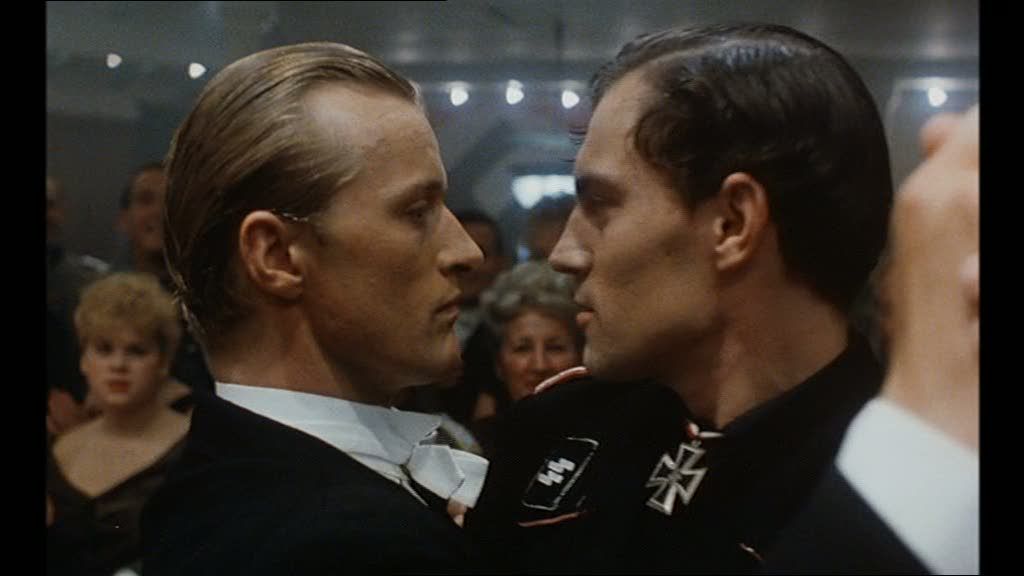
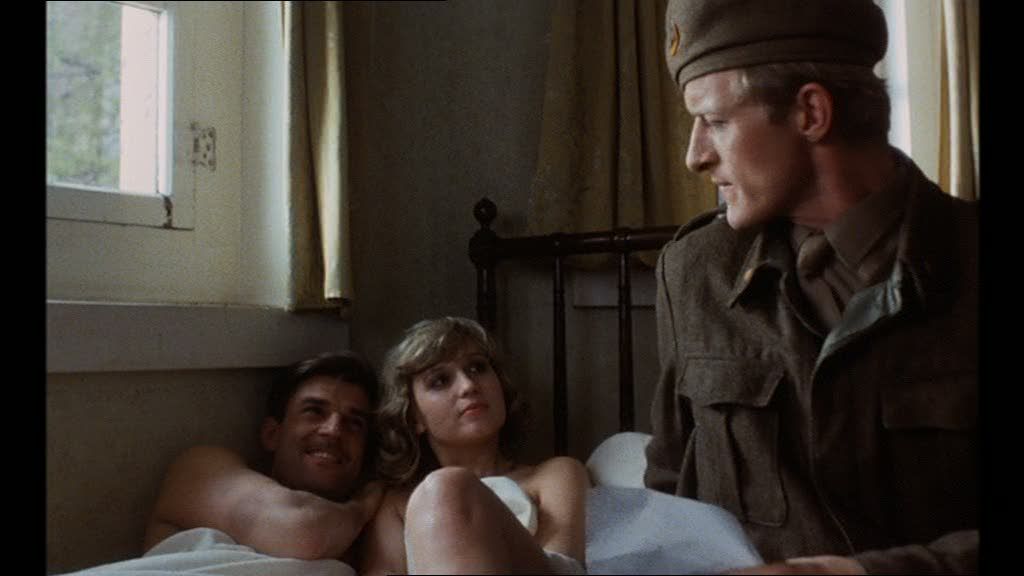
There is a similarly great dynamic at work in London, where Guus and Erik engage in a friendly rivalry to bed down the pretty English military secretary Susan (Susan Penhaligon). Again, a lot happens between the lines, as Susan flirts with both men, inviting Erik under the covers to join them after she and Guus have had very public sex in a second floor window, with Erik down below hilariously trying to prevent the Queen from getting an eyeful. Verhoeven allows a great deal of ambiguity in the way Susan manages the rivalry of these men for her affection: when she conspires to have Guus and not Erik sent on a dangerous mission, is she trying to maneuver the man she wants closer to her, or trying to make the man she already has a hero? Also implicit in these scenes is the homosocial love of Guus and Erik for one another, a love that transcends their sparring over Susan, even when she lays naked in between them. Later, this kind of love between men will bridge even the opposing sides of the war. One of the film's most memorable sequences is the extended tango that takes place between Erik and the fascist soldier Alex, when Erik stumbles undercover into a party for the Nazis. The two men dance together, their faces just inches apart, their hard profiles seemingly on the verge of a kiss, and discuss the vagaries of history that have made them enemies rather than friends.

Soldier of Orange is a typically dense, potent epic from a director who consistently manages to find the difficult and powerful emotions within blockbuster material. This is a deeply personal and contemplative war epic, even as it moves at a brisk, thrilling pace. It satisfies every expectation of its genre, packing its lengthy running time with battles and betrayals and suspense sequences — like the indescribably tense climax on a Dutch beach guarded by the Germans — and yet it is also subtle and humanistic. It's a film about the tight interplay between choice and fate in determining the flow of a person's life during times of upheaval. And it's also a visceral, rousing action picture. Verhoeven is one of the few directors who is able to have it both ways, while compromising neither.

Wednesday, April 22, 2009

The Life and Death of Colonel Blimp


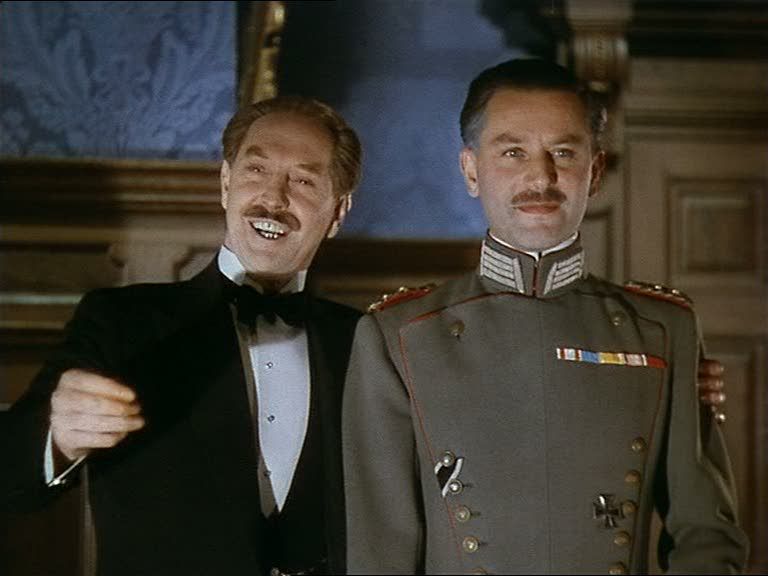
Michael Powell and Emeric Pressburger's The Life and Death of Colonel Blimp is an absorbing, stylish character study, a film overflowing with complex emotions: love, loss, aging, friendship and betrayal, the confusions of political change, but most of all nostalgia, an aching, bittersweet nostalgia for a more innocent time that may never even have existed outside of the movies. Nevertheless, the film's titular Colonel Blimp — the nickname of Clive Candy (Roger Livesey), who matures during the film from a volatile young soldier into an aging, rotund, well-respected general — is indubitably a representative of that more innocent time. He is an embodiment of the English gentleman, with all that entails, for both good and bad. He is stiff and elitist, with a great respect for rules and procedures, for protocol. He's condescending and imperialist, unquestioning of his own country in all that they do. But he's also kind-hearted and generous, the kind of man who will fight a duel and then become best friends with his opponent afterward.

This is exactly what happens in the film's first extended segment, a reminiscence of Candy's time in Berlin during the early 1900s, where he has gone to defend his country's honor over accusations that the British had committed atrocities during the Boer War (which, of course, they did, though Candy doesn't know this and the film is politically unable to acknowledge it). Candy means well, but his blundering nearly causes an international incident when he, more or less inadvertently, insults the entire German army. The Germans pick an officer from their ranks to fight a duel against Candy, and when the two men wound each other, they are sent to the same hospital to recuperate. There, Candy becomes fast friends with the officer, Theo Kretschmar-Schuldorff (Anton Walbrook), despite the other man's lack of English. They communicate mostly through the lovely English governess Edith Hunter (Deborah Kerr), who in the process falls in love with Theo. This is the film's most detailed and evocative segment, and for good reason, since the events here will haunt the remainder of Candy's long life. His friendship with Theo will last, despite long absences when the two men do not see each other, and despite even the period of hostility when they fight on different sides during World War I. But Candy will be even more deeply scarred by his unrequited and, indeed, never pursued love for Edith, who stays behind in Berlin to marry Theo. Candy, always a gentleman, smiles broadly and congratulates his friend when he learns of the couple's engagement, but he is hurt nonetheless, and he returns to London feeling a great loss, a loss that will affect him for the rest of his life. He will continue looking for Edith everywhere he goes, and will find at least two more incarnations of her (both also played by Kerr).

This romantic, melancholy story is simply one thread weaving through Candy's long and eventful life. In between incidents, the film uses documents and objects to mark the passage of time: newspaper reports, photographs, letters, and especially the accumulation of animal heads in Candy's den, each one dated and stamped with the location where he shot it. Various deaths are noted in simple two-line obituaries, the entirety of a life reduced to a platitude in a newspaper — the exact opposite of this film's sprawling, generous storytelling. Even so, these interludes sometimes seem to elide too much. Candy's long and presumably happy marriage to Edith look-alike Barbara Wynne (Kerr again) is treated very superficially, and his wife's character is never allowed to develop very much beyond her resemblance to his first wife. One wonders if this is intentional, reflecting Candy's essential disinterest in her beyond her appearance. One gets this sense especially from a late scene, after her death, in which the much older Candy proudly shows off her portrait to Theo, mechanically repeating how much she looked like Edith.

In a way, though, it hardly matters, since despite the romance the real central relationship of the film is the one between Candy and Theo, who reconnect as old soldiers when the latter flees to England, escaping from the Nazi horrors in his own country. The relationship between these two men is complex, woven together with politics and with their mutual love for the same woman. One of the film's most interesting uses of time is the way it condenses the period of time between the two World Wars, so that Theo's departure from London as a defeated P.O.W. after World War I is swiftly followed by his return to London many years later as a refugee from the Nazis. In the first scene, he leaves offended by Candy's patronizing attitude towards him, and he angrily tells his fellow German soldiers about the weakness and naivete of Britain — an ominous suggestion of the post-WWI bitterness and bad feelings that would thrust the Nazis into power. By leaping over the intervening years, the film powerfully depicts how Theo's initial bitterness over losing the war had given way to a more resigned melancholy, as well as a hatred of the evil forces taking control within his own country.


This film was made at the height of World War II, so it should be no surprise that it contains elements of anti-German war propaganda. What's interesting is how subtly this material is incorporated into the narrative, and how sophisticated and twisty the film's messages about war and nationalism can be. Candy is a naïve figure, convinced of his own rightness and that of his country: he believes in fighting wars according to rules, maintaining strict decorum and gentlemanly conduct even in the midst of combat. A repeated theme throughout the film is Candy's obliviousness, his outdated outlook on the world, which persists even as those around him increasingly argue that they must respond to the aggressions of their enemies not as gentlemen but as unrestricted fighters who will do anything to win. One of the film's most interesting questions, then, is whether it's Candy or the filmmakers who are actually naïve — or if they just expect audiences to be naïve. The film repeatedly characterizes British fighting methods as decent and noble and pure while the methods of their enemies are characterized as dirty and cowardly. Beyond the obvious contradiction — the quaint fantasy of fighting a "decent war," as though so much bloodshed could ever be anything but horrible — this mentality willfully glosses over all sorts of historical facts about British warfare preceding World War I, which could hardly always be described as "noble."

Candy doesn't realize that his ideal of a gentleman's war is a fantasy. There are hints in the film of darker realities — one scene cuts away before a scarred soldier begins interrogating a group of German prisoners, but there's little doubt that things got ugly after the fade to black — but it's obvious that there couldn't be any more tacit acknowledgment of these kinds of things, not in a wartime propaganda drama. For the most part, this is a brightly colored Technicolor fantasia of Candy's worldview, nostalgic for a time when wars could be fought with honor. But as nostalgia goes, this is especially sumptuous and skillfully executed nostalgia, with gorgeous studio-bound Technicolor imagery, lushly painted matte backdrops standing in for sunsets and bombed-out wartime locales. The obvious artificiality of it all helps create the impression of war as a clean, honorable affair, a game between gentlemen, who set start and end times, in between which they bomb one another. The beautiful, textural cinematography (by George Périnal, with future Powell/Pressburger cinematographer Jack Cardiff assisting) is suited equally to sweeping, colorful vistas and enveloping closeups.

One of the best of these is an extended shot of Theo as a much older man, a long, carefully held closeup during which he tearfully recounts the story of his stay at the hospital in Berlin, where he met both his future wife and the friend who would remain his one constant throughout his life. The camera stoically studies his face, now lined and worn with age, his features softened by his bittersweet memories of the past, of this time when he was so happy. The rich emotions of this scene are deepened by the immersive quality of the closeup, and by the fact that these characters have grown and matured over the course of the film, aging slowly into their older incarnations. The makeup used to age them sometimes makes them look mummified, caked in white paint, but the subtlety and warmth of the performances always shine through. Candy could easily have been the oversized caricature implied by the film's title, a walking symbol of British obliviousness and elitist condescension. And he is, to some extent. But he's also a sympathetic, richly drawn character, a man left behind by history, a man whose private ideals are increasingly out of sync with both his nation and the world, if they were ever in sync with anything beyond his own fantasies to begin with.

Thursday, March 5, 2009

Air Force


Howard Hawks' Air Force is probably the most artful, moving, beautifully constructed piece of wartime propaganda to emerge from the Hollywood machine during the patriotic peak of World War II. In Hawks' hands, the film's naked propagandizing — its portrayal of the Japanese enemy as only good in an unfair fight, its sweepingly romantic vision of wartime service — is secondary to the way the film studies the camaraderie, intimacy and mutual respect fostered among the crew of a B-17 bomber plane. The plane's crew is portrayed as nearly a family, bound together by their shared tasks and the responsibility they hold towards each other. Each one is required to keep the plane running smoothly, and each one has a specific job to perform. This tight interlocking community is a typically Hawksian male group, with the film's only women the wives, mothers and sisters left on the sidelines, hoping for the safe return of their men.

The film's claustrophobic aesthetic enhances this feeling of closeness and intimacy: the bulk of the action is set within the body of the B-17, in its cramped quarters where the men cluster together in small groups defined by their functions. The pilot Quincannon (John Ridgley) and his co-pilot (Gig Young) form one group up front, often with the crew chief Robbie (Harry Carey) between them, hanging over their shoulders to relay communications back and forth between the pilots and the rest of the crew. The navigator (Charles Drake) and bombardier (Arthur Kennedy) form another functional unit, as do the boyish radio operator (Ward Wood) and his even younger and less seasoned assistant (Ray Montgomery), a new recruit so green he introduces the captain to his nervous mother just before takeoff. Another new arrival is the wiseguy gunner Winocki (John Garfield), perhaps the only one of the crew who doesn't fit into the group at first, since his standoffish attitude and negativity about the Air Force (he wanted to be a pilot but failed out of flight school after causing a fatal accident) isolate him from the others. In the Hawksian world, isolation from the group is the ultimate sign of failure, and Winocki's alienation is visualized in a scene where the others, disgusted by his negative talk, all leave him sitting alone, silently smoking a cigarette at the rear of the plane. His attitude is a stark contrast to the rest of the crew, particularly the cheerful, gregarious crew assistant (George Tobias), who fits in with any of the plane's sub-units.

This particular B-17, with its familial structure, is one of a squad of planes on a routine flight for deployment in Hawaii, arriving unbeknownst to them on the morning of the Pearl Harbor attack. In the resulting chaos, the plane is shuffled from one burnt-out, bomb-shredded airfield to another, ferrying through the Pacific theater trying to get to someplace where the bomber and its crew can be useful. The film is structured so its first hour or so unfolds at a very leisurely pace, lingering within the cockpit of the bomber, leaving time to develop the individual crewmen and their relationships to one another, exploring the joking camaraderie and optimistic outlook of these proud young men. Even after the Pearl Harbor attacks, the action is mostly sparse and spaced out, so that much of the film is less about war and battle than it is about the mechanical precision of airmen performing their tasks. Hawks takes great care to document the procedures involved in running a plane like this, from the loading of bombs to the task of refueling to the delicate process of navigation. Every aspect of the plane's functioning is subjected to Hawks' meticulous eye for detail, often making the film seem more like a beautifully shot and constructed documentary than a wartime action flick.


Of course, this should not imply that the film is without its share of more visceral thrills, and the second half's taut air battles in the Philippines are fast-paced and exciting. This is particularly true of a prolonged battle during which the B-17's crew struggle to repair the plane on the ground even as enemy fighters strafe by continually overhead and the Japanese army progresses overland towards the base. It's a tense, suspenseful sequence, and a brutally realistic one: the impact of bombs shakes the ground, and the camera, with earth-shattering intensity, while the jittery jackhammering of machine gun fire makes each viewer feel as though he was handling the gun himself. The sequence artificially ratchets up the suspense with the hoary old cliché of the propeller that won't start as the Japanese army finally closes in on the taxiing B-17, but the overall crispness and economy of Hawks' filmmaking makes the occasional overwrought touches more easily forgivable.

And though the film's focus is undeniably on the bomber crew as a group rather than as individuals, Air Force is often a surprisingly emotional film, a film of tremendous richness and depth. This is nowhere more apparent than in the treatment of death, in the understated but nonetheless poignant reactions of the men to the encroachment of mortality. When Robbie learns that his son, a fighter pilot stationed in Manila, has died during one of the Japanese attacks, Hawks allows the older man a few moments of underplayed grief: a few seconds of resting his head in his hands, an anguished look upwards, his eyes searching the roof of the plane as though looking for answers, holding back his tears. It's a small, subtle bit of acting, all the more affecting for its simplicity and restraint. Later, Hawks further emphasizes the nobility of a wartime death during a moving scene in which the crew, clustered around the bed of their dying captain, send him off for his final flight, running down the pre-flight checklist with him as though prepping the plane for takeoff. Hawks shoots the crew in tight clusters, grouped around the bed, draped in expressive shadows, a funeral rite for men unable or unwilling to directly acknowledge death except through metaphors.

For the finale, much of the grace and economy of scenes like this is largely eschewed, in favor of a bombastic aerial assault on a Japanese fleet, orchestrated like a rapidly edited symphony in images, bombs falling and destroying ships, sending bodies flying through the air. The editing of the scene quickly becomes repetitive and deadening, reveling in the carnage as the enemy is wiped out. The mood of the scene is celebratory, which is somewhat disturbing when seen in a modern context: for a film that delves so richly into the emotional and professional complexities of American military men, the film's willingness to dehumanize their enemy counterparts is disheartening. Still, for the time the film was made, one could hardly imagine it turning out any other way, and the rage and anger of that final orgy of destruction is certainly understandable for a nation still smarting from Pearl Harbor. The climax of the film is a cinematic revenge for that sneak attack, a cathartic outpouring of anger on the enemy in the form of bombs. Even so, Hawks' brilliance is much more apparent throughout the rest of the film, when he's chronicling the tightly choreographed professionalism of these men, their camaraderie and mutual admiration, their dedication to their plane, rather than when showing the fiery final result that all this precision and nobility is directed towards.