Tuesday, February 23, 2010

The Best Comics of the Decade #40-21

This is a list of the best comics of the decade, and below is the listing of numbers 40 through 21. The first group of entries, for numbers 60-41 on the list, can be found here, and the top 20 is here.


40. Y: THE LAST MAN
by Brian K. Vaughan, Pia Guerra, Goran Sudzuka, etc., 2002-2008
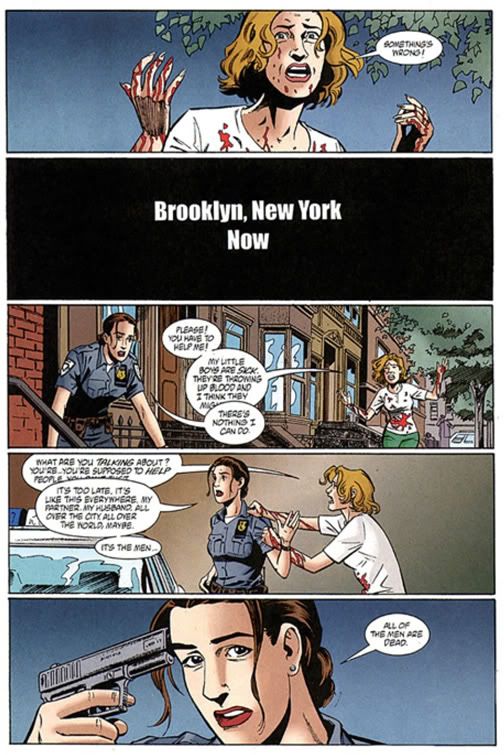
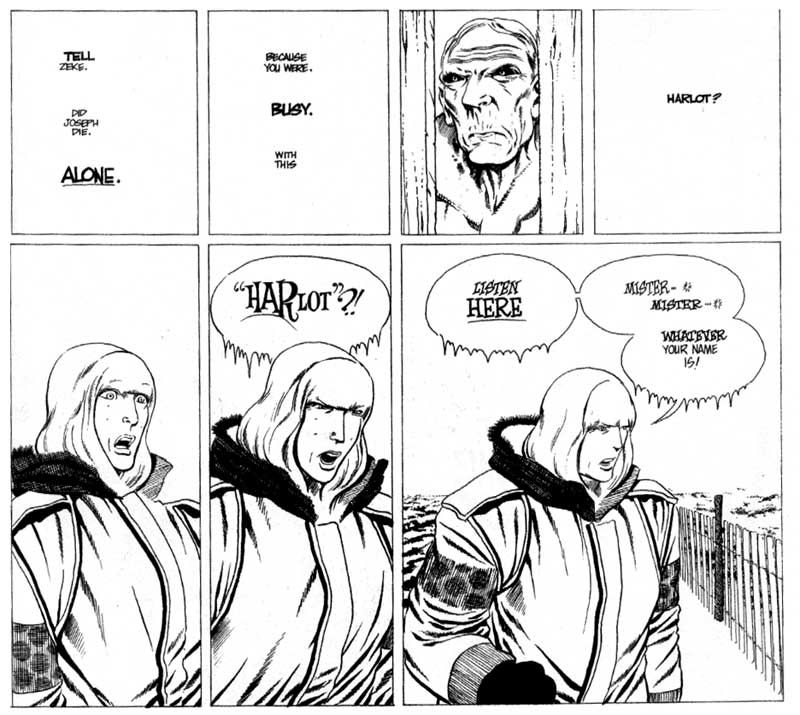
Brian K. Vaughan's Y: The Last Man is pulp storytelling at its best. Starting from a winner of a high-concept premise — a plague wipes out all the males on earth save two, the young slacker Yorick Brown and his misbehaving pet Capuchin monkey — Vaughan explores the various repercussions of this apocalyptic scenario in one exciting, probing story after another. The book wears its politics on its sleeve, and its commentaries on gender, war, race, religion and politics are almost always blunt and on-the-nose. But Vaughan gets it across because he just has such an instinctive feel for genre storytelling, and for characterization over time. Yorick and the increasingly large cast of friends and enemies surrounding him are memorably developed over the series' length. Vaughan's issue-to-issue plotting is impeccable, and the story moves with the page-turning drive of the best pulp fiction. It's almost impossible to put down once you start reading. In this respect, the clean, attractive art of co-creator Pia Guerra (and a string of mostly strong guest artists and substitutes) does just what it should, defining the characters with a few bold strokes and clearly underlining Vaughan's storytelling. There's nothing showy or innovative about this series, just good classical storytelling within a light sci-fi framework. Vaughan earns extra points, too, for his bold final arc, in which he abruptly shifts the series' focus in surprising ways to deliver a strange, emotionally intense, utterly unforgettable coda, the kind of ending that hits like a ton of bricks because no one ever saw it coming and yet, in retrospect, it's an utterly perfect conclusion. [buy] | [buy] | [buy]

39. SEXY VOICE AND ROBO
by Iou Kuroda, 2000-2003
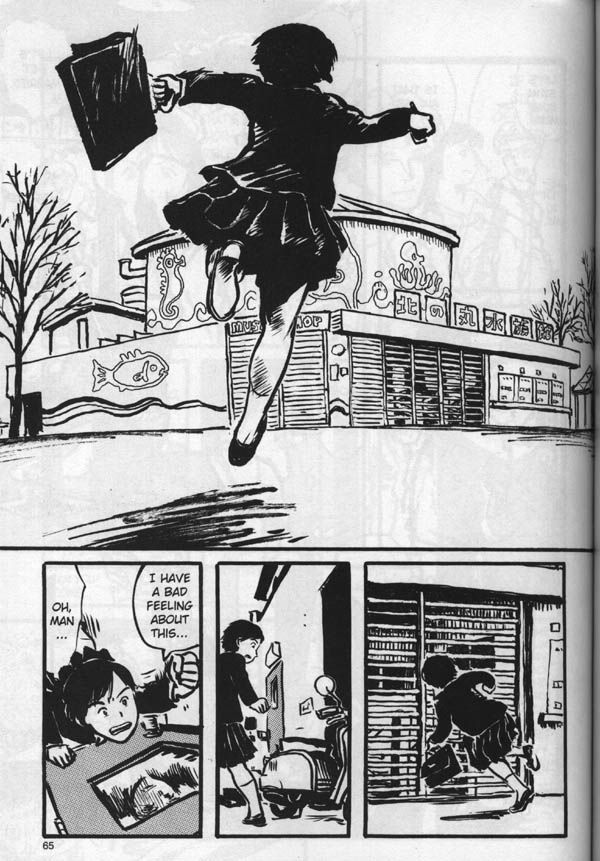
Iou Kuroda is part of that small corner of the Japanese comics industry that is analogous in some way to the American independent or art-comics scenes: working outside of mainstream genres, with a distinctive and decidedly unpolished style, publishing outside of the biggest venues. Sexy Voice and Robo is a collection of Kuroda's short stories starring the titular Sexy Voice, a fourteen-year-old girl who earns her nickname by posing as an older girl for a phone line where guys call in to talk, non-sexually, with what they think are attractive young women. Sexy Voice is preparing herself for a life as a spy, or something equally exciting and glamorous, so she's training herself to act, to be deceitful, and getting herself involved in all sorts of shady business. She becomes an errand girl for an aging mobster, and occasionally ropes in the pathetic toy collector Robo, one of her regular phone line contacts, to serve as an ineffectual bodyguard on her more dangerous outings. Kuroda's stories, however, are less action-packed genre pieces than quiet, reflective examinations of communication, relationships, memory, the gaps between appearance and reality, and the unknowability of the inner self. Throughout it all, Sexy Voice is an endlessly fascinating and charming heroine, overflowing with wit and vivaciousness, caught at a moment halfway between a playful kid and the jaded adult she might someday become. Kuroda's thick linework, so sketchy and so unlike most other manga, is perfectly suited to these unusual, appealing stories, which mix genre elements with an observational affinity for the little things that comprise character. [buy]

38. LIKEWISE
by Ariel Schrag, 2009
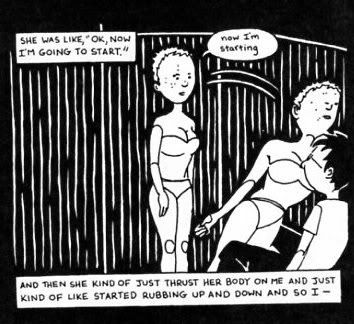
For every year of high school, from 9th grade through 12th grade, Ariel Schrag set herself the task of writing a comic about her experiences. This four-book journey culminates with Likewise, the chronicle of Schrag's 12th grade year, a 300+ page opus that transforms this high-schooler's largely internal dramas into a stylistically diverse stream-of-consciousness epic. The book ranges far and wide, continually shifting from the recounting of events and anecdotes to more conceptual segments where Schrag wrestles with understanding and defining what it means to be a lesbian, or how to get over her long-time crush and one-time girlfriend Sally, or why she documents all this stuff in the first place and what it all means. She frequently namechecks James Joyce's Ulysses, and adapts his stream-of-consciousness style to a high school girl's sense of media overload and diaristic rambling. Schrag's voiceover is a near-constant presence in caption boxes throughout the book, sometimes representing the transcriptions of journal entries, sometimes pages of computer printouts, sometimes tape recordings of conversations and monologues. Her art style is as diverse as her continually morphing prose, too. Her sketchy, expressive figures, with their rubbery faces, sometimes solidify into more densely rendered sequences with delicate shadings, or into pages where rich blacks dominate the compositions, or others where the characters and words seem to be disintegrating into childlike scribbles of great emotional intensity. Throughout it all, Schrag's self-awareness and self-criticism mediate the excesses of her autobiographical indulgence, preventing the book from seeming like the mere teary ramblings of an introspective teenager. By the same token, Likewise is infused with a real sense of humor and observation that pushes Schrag out of herself, forcing her to engage with other people, to include their perspectives in her work to offset her own. It's a dense, rewarding book that transmutes high school melodrama and theatrics into something far richer. [buy]

37. LOST GIRLS
by Alan Moore & Melinda Gebbie, 2006
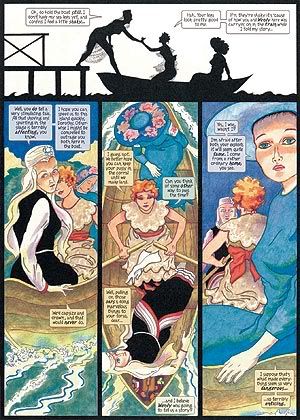
This infamous book is Alan Moore's foray into literary pornography, as he retells the stories of popular fantasy figures Dorothy, Wendy and Alice as sexual adventures, recounted through the lens of nostalgia on the eve of World War II. Melinda Gebbie's sumptuous, quirky artwork lends depth and nuance to Moore's deliberately purplish prose, while the book's themes are much deeper than one would expect from Moore's stubborn insistence that he was making straight-up porn. The book deals with differentiating reality from fantasy, and encouraging imagination as a creative outlet, an escape and a counter to the horrors of reality. It is, in fact, a slap in the face to those who would censor artistic expression. Moore issues challenge after challenge to the puritanical and perverted minds who insist that to look at, or draw, a morally objectionable act is the same as actually engaging in it. It's a beautiful, provocative work. [buy]

36. BLACK HOLE
by Charles Burns, 1993-2004
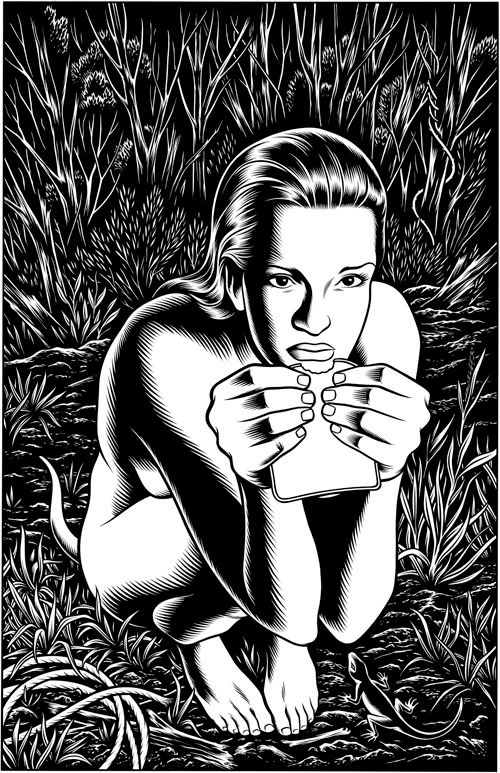
Charles Burns' long-running series Black Hole is the peak of the artist's great career in horror comics. Burns has a knack for locating pathos and unsettling emotions in horror scenarios, and this story about a sexually transmitted plague among small-town teenagers is no exception. The series ran throughout much of the 90s, but since Burns finally published the last few installments and the collected book after the turn of the millennium, presenting it in its long-awaited definitive form, it seems appropriate to count it among the best books of the 2000s. Burns' noirish style is well-suited to this unsettling story, in which teenage anxiety about sexuality is externalized in the form of various mutations that turn affected teens into monstrous creatures, their sexual anguish etched into their bodies as scales, boils, rashes and new appendages. Few books do a better job of capturing the fear, and the excitement, of nascent desire and adolescent longing, as these diseased teens are driven mad by hormones and embarrassment. [buy]

35. ALIAS
by Brian Michael Bendis & Michael Gaydos, 2001-2005
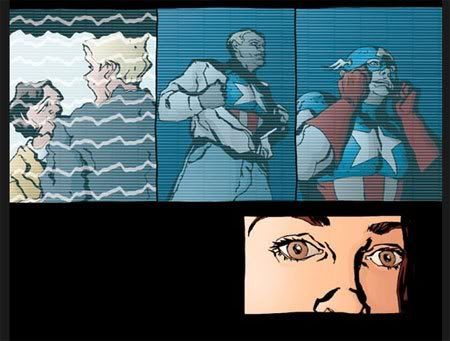
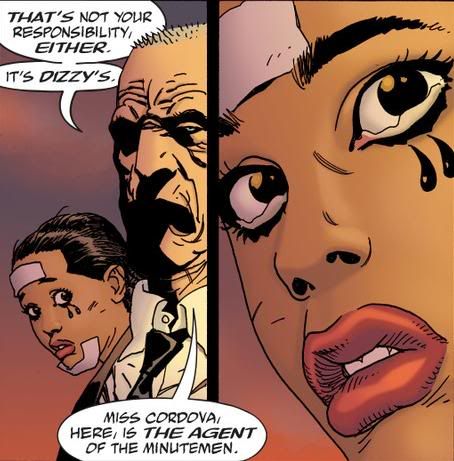
Before Brian Bendis began turning his attention to various Marvel superhero titles, with increasingly diminishing returns, he crafted the masterful series Alias, which existed on the periphery of the Marvel universe and dealt with superhero storytelling in an unusual and emotional way. The series centers on Jessica Jones, who is at least technically a superhero, or was at one time anyway: she has some minor powers, a bit of super strength, and once dressed up as a crimefighter. Now, however, she's settled into a more prosaic life as a private detective, where her powers occasionally come in handy, but mostly she's just a normal, if tough and isolated, woman. What sets this book apart — beyond its presence in Marvel's MAX imprint, which allowed it greater leeway in cursing and sexuality — is its focus on character development over action. Jessica is a strong, complicated character, and the throughline of her growth throughout this book is the real focus rather than the genre plots. Bendis' most brilliant ploy is to use superhero melodramatics as a way of probing character in unexpected ways: Jessica's long-ago encounter with the Purple Man becomes a central device in a surprisingly candid, sophisticated story arc about dealing with sexual abuse and humiliation, while her romantic relationships with superheroes Ant Man and Luke Cage are developed far beyond the usual level of so-called love in superhero comics. The book deals intelligently with issues of trust, insecurity and painful memories, and Jessica is surely one of the most memorable and original female characters in all of superhero comics. [buy] | [buy]

34. PLUTO
by Naoki Urasawa, 2003-2009
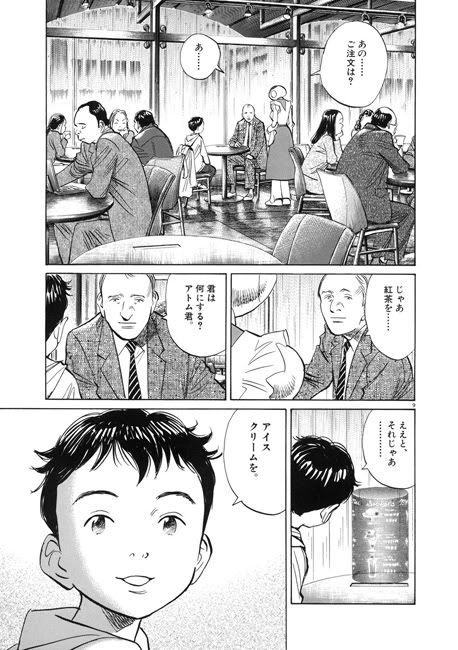
Naoki Urasawa's Pluto is the manga-ka's response to his biggest influence, Osamu Tezuka, the single artist who has arguably had the greatest effect on modern Japanese comics. Urasawa takes as his reference point a popular story from Tezuka's long-running Astro Boy series, a sci-fi adventure mostly aimed at younger readers and probably the artist's most famous creation. "The Greatest Robot on Earth" details Astro Boy's struggle against a mysterious and powerful robot called Pluto, who's destroying all of the most powerful robots in the world in a quest to be the best. Urasawa expands upon this story, using Tezuka's original creation as a framework within which he builds his own much more complicated world, filling in details and fleshing out the characters with motivations and histories that were barely even hinted at in Tezuka's breezy, action-oriented tale. Pluto shifts the focus onto robot detective Gesicht, who's investigating a series of murders that may be connected to the systematic destruction of the world's most powerful robots. Urasawa weaves in references to contemporary events, including some surprisingly blunt "war on terror" satire and minimally camouflaged references to Iraq, but his real innovation here lies in the way he digs beneath the surfaces of these characters, unearthing emotions and philosophical questions that cut to the core of what it means to be human, to think and feel and regret and love and hate. Even more than Urasawa's long-running thriller Monster, the real thrust of this much more compact series is an interrogation of the concepts of nature versus nurture, examining the events and experiences that define a person's personality and moral character. Urasawa is always interested in evil, which he sets up as a terrifying absolute only to probe the more subtle gradations between good and evil: in Urasawa's work, everyone has their reasons for what they do, everyone has their secret traumas and tormented memories. It's a pulpy soap opera convention that Urasawa routinely imbues with much greater depth, lending pathos and philosophical sharpness to his propulsive storytelling. [buy] | [buy] | [buy]

33. LOUIS RIEL
by Chester Brown, 1999-2003
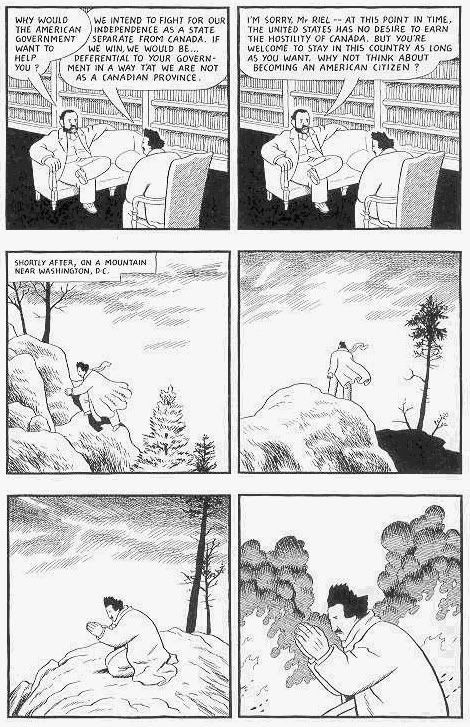
Chester Brown's biography of Canadian dissident Louis Riel is a strange and inscrutable work, presenting Riel's tragic story in a simple, direct style, with little trace of commentary, so that it's difficult to know what to make of this tale: is it a satire, a tragedy, a black comedy, an exploration of spirituality? Or none of the above? Is it simply the story of a life, told in such a way that all the external interpretations, the guesses and conjectures and the weight of history, simply fade into inconsequentiality in the face of Brown's blank-eyed, Harold Gray-inspired style? Riel, for Brown, is simply a man, and when confronted with the unknowability and distance of such an extraordinary but obscure man, Brown sticks to the facts without venturing into more ephemeral areas. The result is an attempt at an "objective" biography that raises many more questions than it even attempts to answer; Brown tried the same thing with Jesus in his Gospel interpretations, with even more confusing and provocative results. [buy]

32. A DRIFTING LIFE
by Yoshihiro Tatsumi, 2009
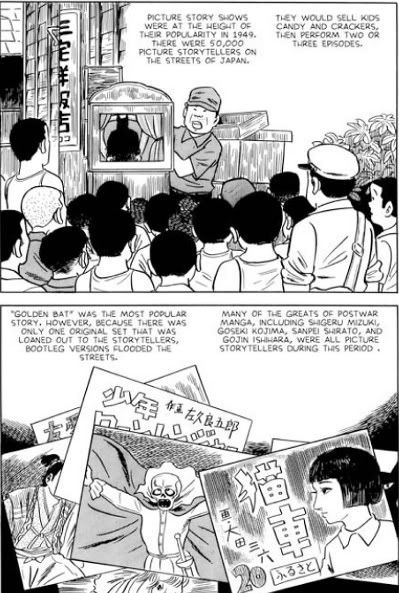
The quiet, introspective manga of Yoshihiro Tatsumi was introduced to American audiences by Drawn & Quarterly's series of hardcover tomes collecting some highlights from Tatsumi's punchy, minimalist short stories. With his simple, direct style and schlumpy everyman protagonists, Tatsumi depicted urban malaise, loneliness and sexual perversion with a flat, affectless tone that contrasted against the sometimes harrowing content of his stories. But as good as these stories are, his magnum opus is a newly produced, massive volume that tells the story of his early years as a struggling manga artist, trying to create a new, more realistic movement within Japan along with a few likeminded artists. It is a memoir of a largely unexplored area of Japanese comics, packed with references to artists and works that are largely unfamiliar in the US. His straightforward style positions this volume as a historical account, establishing the context of this time and place both in relation to Japanese history (World War II, the American occupation, the bombs) and the artist's personal life. It is, typically, concerned with sexual maturity, and also with the internal struggles of a man trying to find his own place in life and art. It is especially enlightening to see Tatsumi himself, through his thinly veiled autobiographical stand-in, assume the place of his usual everyman protagonist, confirming the artist's sense of identification with his troubled, conflicted male antiheroes. [buy]

31. MADMAN ATOMIC COMICS
by Mike Allred, 2007-2009

Mike Allred's periodic returns to his defining creation are always cause for celebration. Frank Einstein, the reincarnated hitman known as the Madman of Snap City, had previously been the star of three different series, but the last one, Madman Comics, ended in 2000, and Frank's guest spots in Allred's enjoyably fluffy spinoff The Atomics weren't quite as satisfying. Madman Atomic Comics reunites Allred with his signature character, who looks like a superhero but more often acts like a goofy, lovestruck kid, or maybe a philosopher. Indeed, this fusion of childlike enthusiasm and philosophical speculation is the core of Madman, which recycles 60s comics and pop culture tropes without the irony and deconstruction that so often accompanies modern attempts to reinvigorate the culture and kitsch of the not-so-distant past. Allred's characters speak in a hip patois of beatnik lingo, "groovy" 60s hippie-speak and slangy comic patter. His clean, pop-art drawing style reflects a similar blend of eras and influences, a blend that at times explodes to the surface within the pages of this latest series, which perhaps represents the peak of Allred's Madman saga thus far. The series opens with Frank in unfamiliar territory, briefly becoming convinced of his own godlike status before heading off on a twisty odyssey that mostly involves coming to terms with his own past, identity and existence as a creative product. In the series' epic third issue, Allred sends Frank careening through a shifting mental landscape where each individual panel is drawn in a different style from the history of comics. Thus, Allred gets to have great fun envisioning Frank (and his robot doppelganger Astroman) as drawn by a who's who of comics' greatest stylists: Caniff, Crumb, Herrimann, Schultz, Segar, Gottfredson, King, Seuss, even encompassing more obscure indie names like Richard Sala and Chester Brown, alongside various superhero and EC Comics pastiches. It's a dense, fun issue, propelled as much by the constant stream of inquisitive, philosophical dialogue (all about the self and the nature of life) as by the stylistic diversity on display. This is the apex of Allred's latest take on his creation, perhaps, but it's also indicative of the strengths of this series as a whole, its careful balance between dazzling visual ingenuity and the more subtle emotional and intellectual concerns that occupy the minds of Frank and his creator alike. [buy]

30. EPILEPTIC/BABEL
by David B., 1996-2003/2004-2006
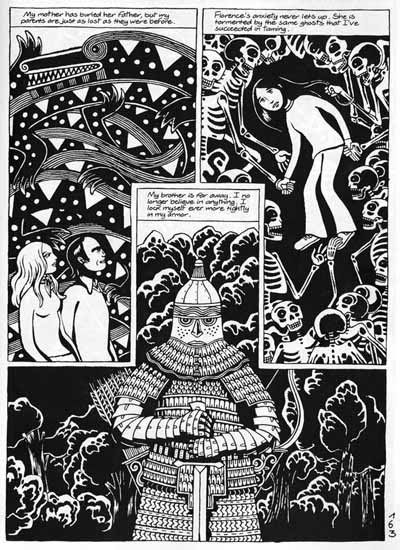
The French cartoonist David B. wrote and published much of his epochal series Epileptic — an autobiographical story about his relationship with his increasingly non-functioning epileptic brother — during the 1990s, but he finished the work and published it in English for the first time during the 2000s, which in some way qualifies it for this list. It is, in any case, an immensely satisfying work, because it doesn't make the mistake of so many autobiographical comics of thinking that a true story is enough. Instead, David B. takes his youth and his brother's ailment as the raw material for his wide-ranging attempts to understand the concepts of sickness, family, history and maturity. With his elegant style, dominated by striking blacks and contrasts, he invents numerous metaphors and visualizations for his brother's disease, treating the fight against the disease as a physical, mortal conflict.

David B. then continued his work in Babel, a thus-far incomplete series that elaborates upon the territory of Epileptic by venturing further into political, historical and philosophical content in the context of his family and his youth. This series' examination of genocides and wars brings a global, historically engaged perspective to the artist's affecting visuals. [buy] | [buy]

29. CHIMERA #1
by Lorenzo Mattotti, 2006
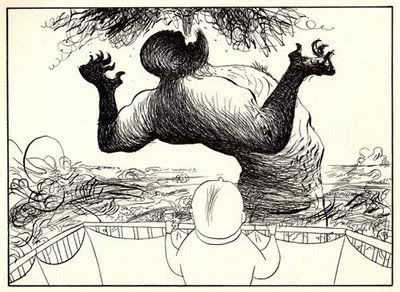
Italian artist Lorenzo Mattotti has not been a particularly prolific presence in comics, though his short albums of the 80s — Fires, Murmur, Labyrinthes — established him as a fine, expressive artist with an intuitive grasp of color. Chimera is thus a rare pleasure from this elusive artist. Drawn for Fantagraphics' Ignatz line and intended to be the first issue of a continuing series — which, true to form, now seems unlikely to materialize — Mattotti's Chimera is a semi-abstract, mostly wordless comic in which multiple styles collide against one another. The book ranges from sketchy, scruffy pen drawings to thick ink washes to passages of dense, frenzied linework. Mattotti captures the flow of dreams and nightmares, fluidly transitioning between layers of reality as his chameleonic style shifts from spacious compositions dominated by white space to dark passages where you have to squint into the inky complexity to suss out the nuances at work within Mattotti's roiling chaos. The book ends with its best sequence, a panel-by-panel journey into a dark, shady forest that hints at a next issue that never was. It would've been great if this series had led somewhere further, but as it is this comic stands alone as a powerful work in itself. [buy]

28. DOGS AND WATER
by Anders Nilsen, 2004
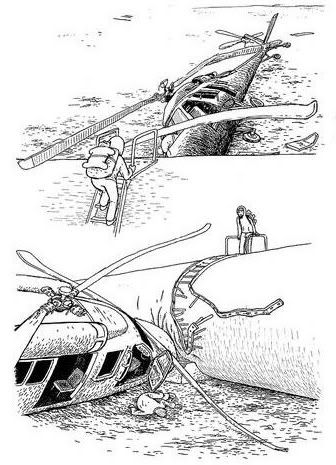
Dogs and Water is the most complete and potent statement thus far from promising young cartoonist Anders Nilsen, who has created a small but intriguing body of work ranging from his in-progress series Big Questions, to his harrowing attempts to respond to the death of his fiancée in The End and Don't Go Where I Can't Follow, to his two books of ultra-minimal sketchbook exercises, to his various anthology appearances and short-form experiments. In Dogs and Water, his talent is at its most concentrated and distilled, creating a simple but enduring work whose resonances and themes lie just beneath the placid surface. With his minimal line and judicious use of white space, Nilsen sketches out a forlorn wasteland where a solitary wanderer drifts along, encountering various horrors along the way. The book is a parable of wartime dislocation and dehumanization, a mostly wordless story where communication is difficult but ultimately offers the only hope of salvation for these disconnected, isolated people. [buy]

27. THE DARK KNIGHT STRIKES AGAIN
by Frank Miller & Lynn Varley, 2001-2002
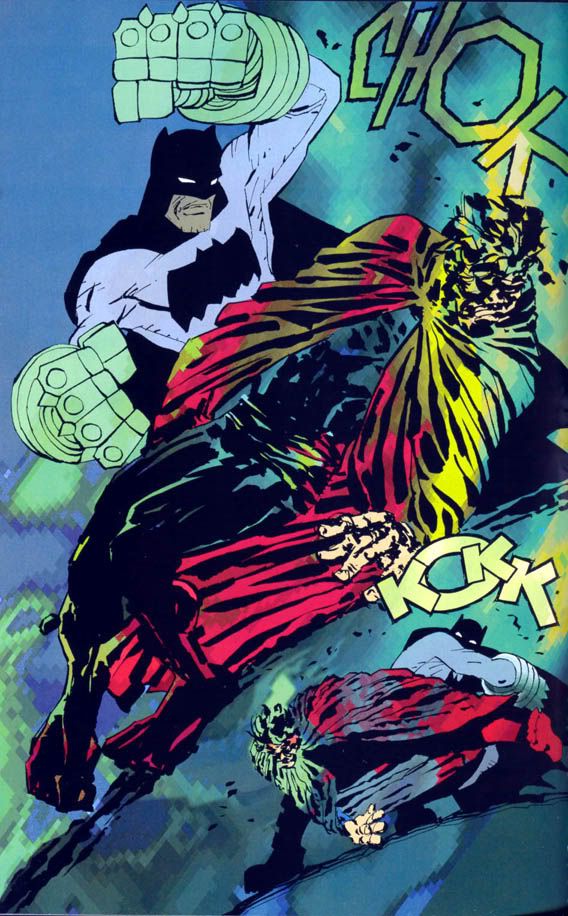
Frank Miller's sequel to his widely acclaimed The Dark Knight Returns is not thought of with much respect or affection by most comic fans. Fans expecting another DKR, a second gritty look at a tough, grizzled old Batman coming out of retirement, instead got a garish, outrageous media/government satire in which the titular Dark Knight barely even appears for long stretches of time. The book is as much Miller's snotty perspective on the DC universe in general as it is a return to his apocalyptic Batman universe, as he satirizes and pokes at the company's most iconic heroes: Superman, Wonder Woman, Green Lantern, The Question, Robin. It's probably the nastiest and ugliest work to ever come out of the Big Two's superhero factories, but there's also a kind of gaudy grandeur to Miller's vision, particularly in the computer colors of his then-partner Lynn Varley. Her work on Miller's sketchy, minimalist compositions often goes well beyond mere coloring into actually creating the Vegas-like infotainment superhighway in which this story is set. It's a messy book, no doubt about it, inflected with Miller's loony right-wing paranoia and his naked contempt for the characters he's writing about, but in spite of or maybe because of these out-there tendencies, this book is never less than a visceral, entertaining, balls-out read, from its frenzied opening to its cheekily anti-nostalgic ending. [buy]

26. THE SQUIRREL MOTHER
by Megan Kelso, 2001-2006

Megan Kelso's short stories are quiet and unassuming things, drawn with a clean, breezy style and unadorned dialogue. It would be easy to dimiss these fragile, open-ended pieces, collected in her anthology The Squirrel Mother, as simple and overly familiar tales of the mundane, except that Kelso's moral probing and feel for understated emotions goes far beyond the talents of most of her peers. The deceptively clean style and pastel colors suggest a light read, but Kelso's work can be devastating in the way she pares down the excess to get at the essence of a particular moment or situation, like a mother's struggle with domestic responsibility versus personal ambition in the title story. In the book's moving and mysterious final story, another woman, this one a rural pre-teen, plays a sexual game, her reasons unexplained: because there's nothing better to do, or she's insecure, or she just finds it fun? These kinds of decisions and feelings are at the core of Kelso's complex, emotionally challenging comics. [buy]

25. GYO
by Junji Ito, 2001-2002
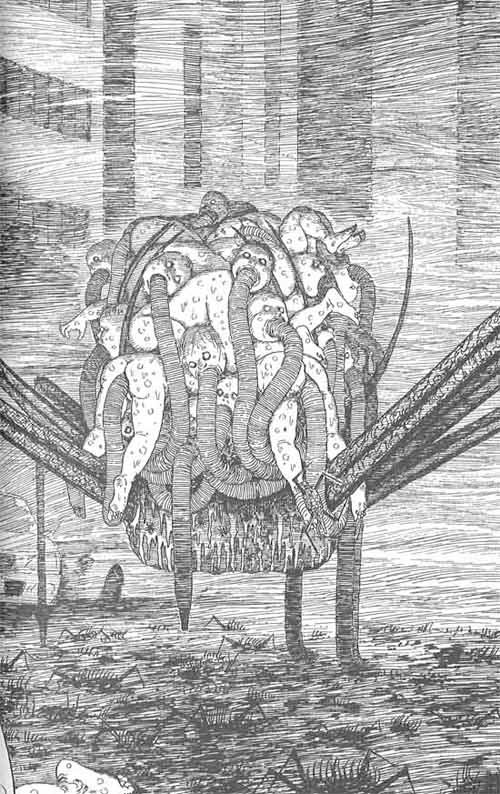
The work of horror manga-ka Junji Ito is marked by his strong, unusual imagination, his knack for concocting devilishly bizarre scenarios and extracting horror from absurdity. Nowhere is this more evident than in the two-volume Gyo, which starts from a bizarre premise — decaying fish begin to sprout robotic legs and take to the land — and just gets weirder and weirder from there. There's an element of gross-out, top-this grotesquerie to Ito's precisely drawn images, and he follows each of his nutty ideas through to its (il)logical conclusion. By the time the book ends, it's gone a long way from the jaunty disjunction of its sharks-with-legs opening premise, and the wealth of bizarre, terrifying sequences along the way make this one of modern horror comics' best works. [buy] | [buy]

24. MULTIFORCE
by Mat Brinkman, 2000-2005
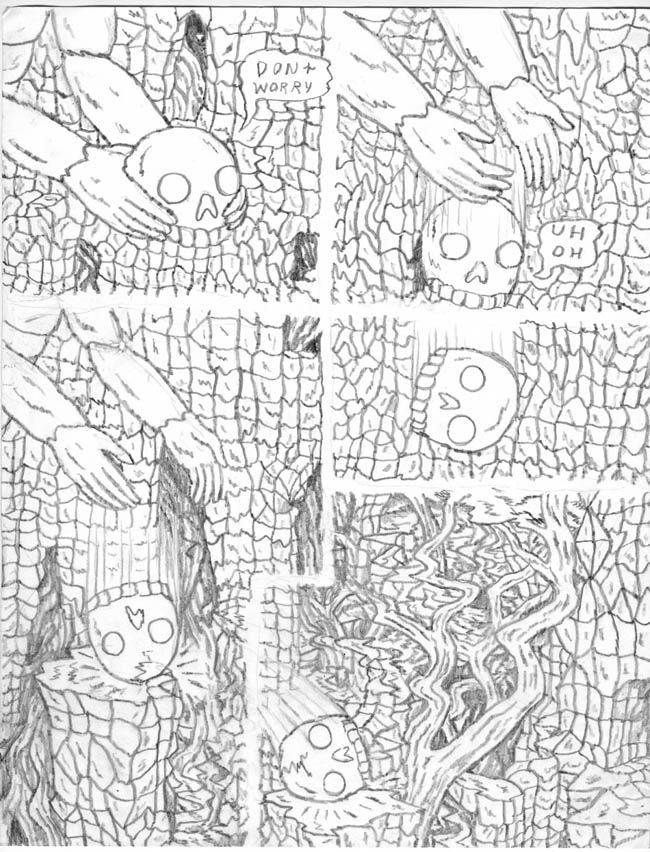
Mat Brinkman's Multiforce is quite possibly this elusive artist's defining work, consisting of a series of newspaper-format strips mostly published in the Paper Rodeo zine. These large-format single-page pieces are perfectly suited to Brinkman's feverish, incredibly detailed visions of a strange world populated by monsters, skeletons, and outlandish creatures of all kinds. His strips are funny and bizarre, packed with numerous sight gags (a skeleton head rolling down a complex series of paths, then bursting open to unleash a rainbow stream) and absurdist comic dialogue. Monsters sell arms on a street corner and the constant back-and-forth wordplay and banter make it uncertain if they mean weapons or actual limbs. A skeleton walks everywhere repeating his name as though he's terrified of losing his sense of identity, but his constant self-identification proves to be his fatal undoing. Brinkman's dense pages are filled with small stories and gags like this. He also works with radical shifts of scale, as his panels vary from tiny little clusters of miniature figures to massive landscapes that take up half a page. Multiforce is, along with Brian Chippendale's Ninja, one of the great statements to come out of the loose Fort Thunder artist's collective, an encapsulation of Brinkman's imaginative, fantastical aesthetic in a handful of large, dense pages. [buy]

23. GOGO MONSTER
by Taiyo Matsumoto, 2000
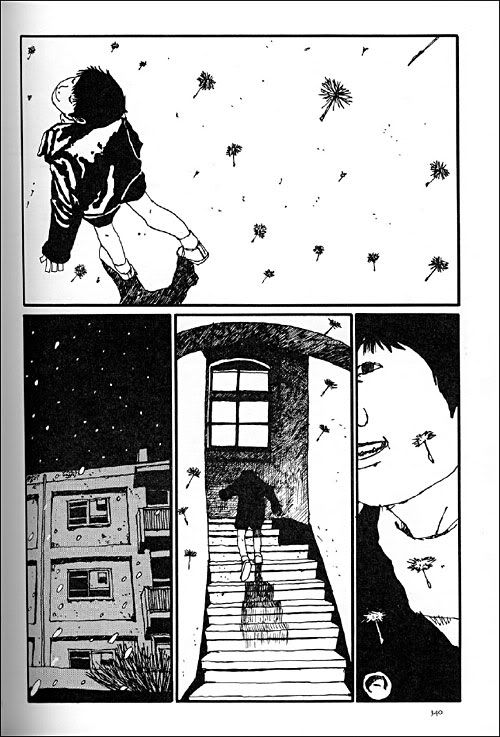
Taiyo Matsumoto, most famous for his cyberpunky magnum opus Tekkon Kinkreet, returns again to the subject of rebellious young boys in GoGo Monster. This book, originally published as a single volume in Japan in 2000 and only recently making the transition into English, is mainly focused around an outcast boy named Yuki, who is in touch with an alternate world of monsters and powerful godlike beings that only he seems to see. He shuns his peers and his ordinary world for this fantasy realm, and his gradual shift towards adulthood, when he begins to lose touch with this alternate world, is symbolized by the arrival of a new gang of more threatening, sinister monsters who begin to overwhelm and battle with Yuki's old friends. Implicit in this story is a clever metaphor for maturing, for growing up and losing touch with the vivid imagination and playfulness of childhood, which are replaced with more adult concerns about mortality and responsibility. Yuki is a boy who's afraid to grow up, and Matsumoto dramatizes and visualizes his anxiety in terms of an epic war between invisible monsters who live in water drops and dance to the sound of the boy's silver harmonica. Yuki is joined in his struggle by his new friend Makoto, a more grounded boy who is nevertheless drawn to Yuki's strange immersion in unseen worlds, and by the outcast known only as IQ, a boy so isolated from the world that he goes everywhere with a cardboard box covering his head, so that he only looks out at his surroundings through a small circular eyehole. Matsumoto's affection for these outcasts and dreamers is strong, and his own eccentric, sketchy style, so unlike most other manga, is perfectly suited to this kind of story. His ragged linework and skewed, constantly shifting perspectives contribute to the book's sense of a slippage between prosaic reality and some more magical realm whose presence is sensed in subtle ways rather than seen. [buy]

22. HOW TO BE EVERYWHERE
by Warren Craghead III, 2007

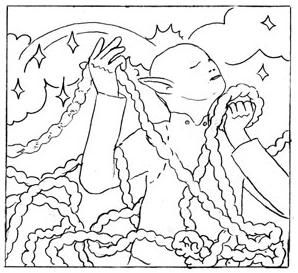
Warren Craghead's work is quite distinct from traditional comics, and this compact book — featuring Craghead's responses to the poetry of Apollinaire — is the perfect introduction to his experimental, evocative style. Craghead weaves Apollinaire's words into assemblages of minimalist drawings, most of which show fragmentary views of people and objects: an arm, a hat, a ladder, a leg, a face with no features. These fragments are arranged into complex structures on pages that use white space in striking ways. Craghead's compositions force slow, careful reading, following the unconventional flow of the words around the page, and tracing the ways in which these words — which are used as graphic elements as much as the drawings themselves — interact with the images. [buy]

21. OMEGA THE UNKNOWN
by Jonathan Lethem & Farel Dalrymple, 2007
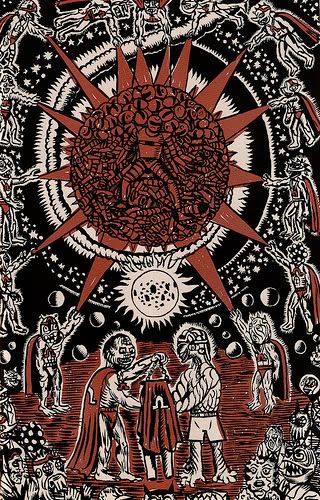
Novelist Jonathan Lethem's "cover version" of a compromised 1976-77 Steve Gerber/Mary Skrenes/Jim Mooney superhero series is a brilliant and imaginative take on superheroes made by someone who clearly loves them and sees the untapped emotional potential in the genre. Lethem's version of the story starts from the same ground as Gerber's series; his first issue is virtually a beat-for-beat remake of the original's first issue, in which a detached, intellectual young boy gets in a car accident, discovers that his parents were actually robots, and manifests strange powers after coming into contact with a blue-clad, silent superhero type, the titular Omega. From there, Lethem increasing departs from the original story, which was compromised by Marvel's insistence that Gerber incorporate multiple Marvel Universe guest stars and tell a more conventional superhero story than he'd been planning. Lethem, on the other hand, is free to explore his weirdly unlikable young hero and the resonances of the story's Hell's Kitchen setting. Lethem's typical concerns — community, race, the power of fantasy, corporate branding versus individuality — percolate throughout this story, even as it veers back and forth between a loose superhero/media satire and a nuanced coming-of-age drama. There's a lot going on here, and Dalrymple's sketchy, distinctive art, bolstered by the muted color palette of Paul Hornschemeier, breathes life into this quirky universe. Hornschemeier himself also draws a superhero origin story in one issue, but even more notable is the appearance of several jaw-dropping pages of comics-within-the-comic by the legendary Gary Panter, whose raw, energetic drawings wind up being the only self-expression of the otherwise silent alien Omega. [buy]

Monday, February 22, 2010

The Best Comics of the Decade #60-41

For the next couple of days, I'll be posting a countdown of the 60 best comics of the last decade, from 2000-2009. I've put a lot of work into this list, which is surely incomplete (I haven't read everything) but nevertheless gathers together what I feel is some of the best work to appear in the comics artform. The list will be posted twenty entries at a time. Numbers 60-41 are below, 40-21 are here, and the top 20 is here. I have written a brief blurb about each comic included, not as a definitive analysis or commentary, but only to provide some suggestion of what each entry is like. I encourage others to chime in with their own choices and commentary as well. Though this probably doesn't need saying, this list reflects only my own personal taste, idiosyncratic as it is. I have attempted to include a wide cross-section of modern comics, but my biases and preferences have surely dictated the relatively small sampling of superhero or autobiographical comics included here, to name two popular genres, as well as the marked dominance of more formalist and experimental artists. I have also made an effort to include only works truly produced and released for the first time during this decade, thus excluding the wealth of older reissues that have come out in recent years. For the most part, each entry represents a single work, though in a few cases I thought some artists were better represented by their complete oeuvres or some combination of similar books rather than a single representative piece.

In making this list, I confirmed my impression that the artform of comics has reached a creative apex in recent years. The comics produced from 2000-2009 are varied and encompass a diversity and general high level of quality previously unimagined for an artform once considered pulpy trash for children. This is a great time to be reading comics, and this list is my perspective on this especially fecund era's most satisfying works.


60. CEREBUS
by Dave Sim & Gerhard, 1998-2004

Dave Sim's long-running warrior aardvark series Cerebus finally wrapped up, after 300 issues and 27 years, in early 2004, marking the end of Sim's grand project to tell the life story of his title character. Of course, by the time of the 300th issue, the book had changed dramatically, increasingly focusing on Sim's oddball ideas, including his (to say the least) troubled attitude towards women and, especially in the last few extended story arcs, on his, ahem, unusual ideas about religion. What's fascinating about Cerebus in these later stretches is watching Sim become a better and better visual artist with every page, restlessly experimenting and honing his craft, while descending further and further into absolutely loony theology and misanthropy. The nadir, in terms of both ideas and visuals, is the lengthy stretch in Latter Days where Sim offers up, in eye-strainingly small text, Cerebus' line-by-line reinterpretation of the book of Genesis according to Sim's own idiosyncratic reading of the first book of the Bible.

So what's Cerebus doing on this list, anyway, if its glory days were already behind it? Well, the two-book extended story arc represented by the collections Going Home and Form and Void are some of Sim's finest work, at least as an artist. Bolstered by the gorgeous background work of his collaborator Gerhard, throughout these books Sim experimented with form and style, breaking down the page in innovative ways while introducing more of his characteristic metafictional elements. A sequence during a blizzard is especially evocative, as the snow seems to flow in white streaks across the page. He offers up dead-on caricatures of Ernest Hemingway and F. Scott Fitzgerald, even aping the latter's literary style for certain sequences.

Even in the less successful later books, Sim's imagination and feel for the comic page comes across. The final book, The Last Day, opens with one of the most formally dazzling sequences in comics, as Sim collages in photocopies and draws processes happening on both the cosmic and molecular scale, while seamlessly incorporating dense footnotes and textual effects. That this formal ingenuity is linked to some of Sim's silliest ideas only slightly takes away from its overall impact. These books aren't without their problems in terms of the narrative and ideas, but there are few comics that display more formal panache or sheer visual wonder, and for that alone it deserves a place on this list. Cerebus, at times one of the best comics around, ended in the 2000s, and any list that didn't acknowledge this fact would feel somehow incomplete. [buy] | [buy] | [buy] | [buy]

59. SLEEPER
by Ed Brubaker & Sean Phillips, 2003-2005

It's fairly routine by now to inject a noir sensibility into superhero comics, but few series have done it better than Sleeper, written by Ed Brubaker with art by Sean Phillips. In Brubaker's conception, the superhero concepts and powers mostly take a backseat to strong character writing and crime fiction tropes, as he follows deep-cover secret agent Holden Carver as he infilitrates a powerful criminal organization. The problem? The only man who knows he's undercover, as opposed to a genuine crook, is in a coma. The series boasts a wealth of twists and turns, and all the double-crosses and intrigues one could expect, but its true worth is in its characters, in the way they change over time, always balancing just on the boundary line between good and evil. Moreover, as much as Brubaker underplays the superhero aspects of the story, Sleeper still boasts, bar none, the best use of superpowers in a mainstream comic. The character of Miss Misery, the series' femme fatale, is a woman beset by an illness that saps her strength unless she commits evil acts; the more bad things she does, the better she feels and the more powerful she grows. Over the course of the series, Brubaker exploits this unique "power" in inventive, revealing ways, placing his anti-heroine in paradoxical situations where Miss Misery's central dilemma creates strangely moving ramifications for her and those around her, including Holden. [buy] | [buy]

58. POPEYE AND OLIVE/P+O
by Richard McGuire, 2002

Richard McGuire has only a small body of work within comics, mostly limited to a few short stories (including the seminal "Here" from Raw) and his experiments with E.C. Segar's Popeye character. Collected in two French volumes, McGuire's Popeye drawings are abstract representations of the famous sailorman and his beanpole-thin girlfriend Olive Oyl. It's a demonstration of the inherent power of cartoon iconography: strip these familiar characters down to stylized outlines in a single primary color (either red or blue) and they're still recognizable, still resonant. On page after page, McGuire delineates Popeye and Olive with blobs and pipes shaped to suggest their cartoon figures. There's no narrative, just endless transformations and variations, McGuire riffing on these basic forms, demonstrating the variety of ways in which he can explore the same visuals, and the massive warping that Popeye can withstand while remaining recognizable and iconic. Popeye and Olive is the original collector's edition book, massively expensive and long unavailable (but excerpted in Dan Nadel's great anthology The Ganzfeld), while P+O is a sequel in which McGuire's improvisations take on a distinctly sexual nature, positioning his heroes within abstract narratives of desire and lust, like geometric porn.

57. THE TICKING
by Renee French, 2007

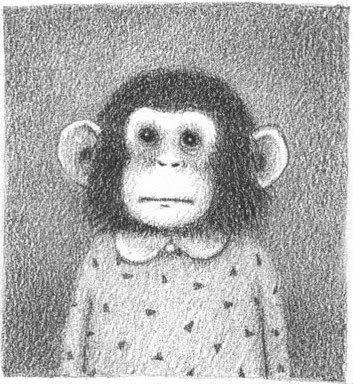
The Ticking relates the dark fable of Edison Steelhead, an isolated boy born with his eyes on the sides of his misshapen head, like a fish. His mother dies in childbirth, and his father, from whom he inherited this appearance, wants Edison to get plastic surgery to correct his looks. When Edison refuses, his father begins lavishing more of his attention on his new adopted "child," a monkey who he puts in a dress and introduces to Edison as a new sister. It's a strange book, then, to say the least, exploring the traumas and confusions of childhood through this unsettling story. French's delicate artwork only accentuates the eerie quality of Edison's struggle to come to terms with the world and his own uncertain place in it. French's beautifully rendered pencil drawings, enclosed within undersized panels isolated in large areas of white space, are haunting in the way they balance naturalism with surrealism. In the same way, French balances the tragedy of Edison's youth against her deadpan sense of humor and feel for unusual imagery. [buy]

56. PLANETES
by Makoto Yukimura, 2001-2004

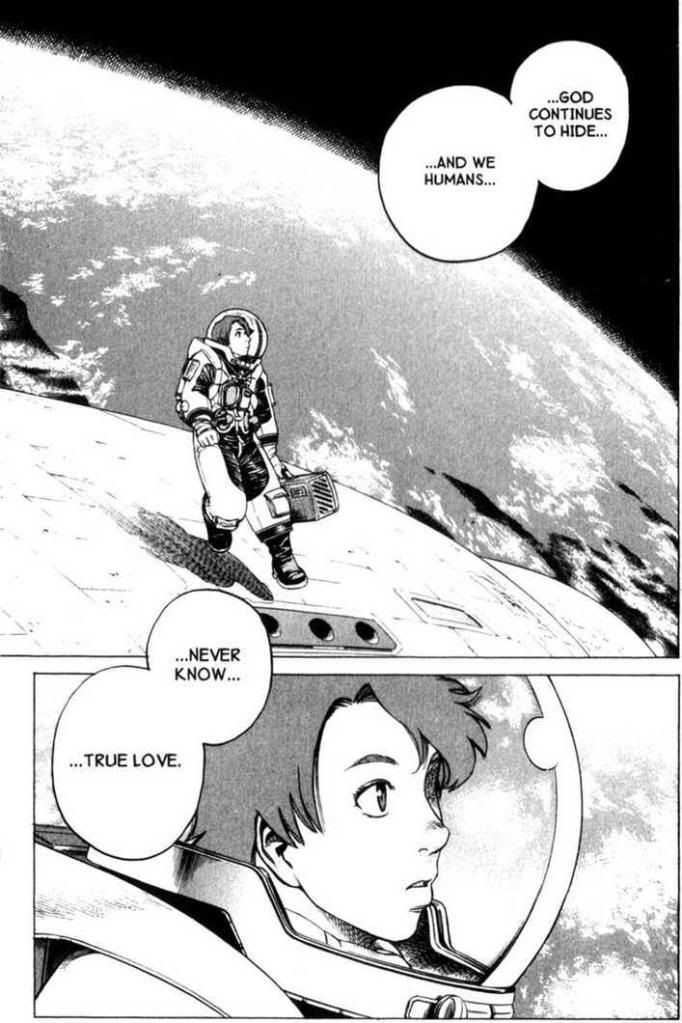
Makoto Yukimura's Planetes is an exceptionally intelligent, enjoyable "hard" sci-fi manga, concerning the low-key adventures of a trio of deep-space "garbage men" tasked with clearing away the clutter and debris left behind by space exploration. The environmentalist idea at the core of the story — that technological advances inevitably have unintended and far-reaching consequences — is only one current in Yukimura's episodic five-book narrative, which is equally involved in the lives and ambitions of the central characters, the various political and revolutionary plots fermenting behind the scenes, and the day-to-day routine of a spaceship crew. The series sketches out a very complex universe, but never gets too bogged down in the details, instead focusing on the rich character relationships. It helps, too, that Yukimura's artwork is absolutely gorgeous, with a hyper-realistic style that lends weight to all the images of gleaming spaceships racing through a dense black void. [buy] | [buy]

55. INCANTO
by Frank Santoro, 2006

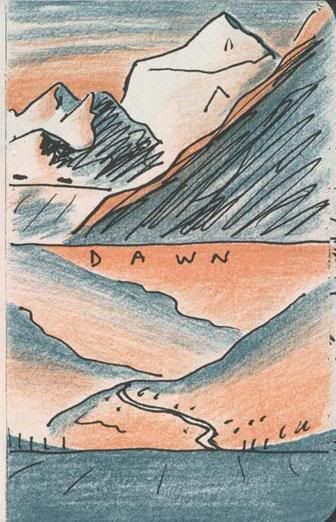
Incanto is a strange little comic, artist Frank Santoro's nearly wordless appropriation of manga-style aesthetics and storytelling, marrying the look and feel of manga to an abstract, experimental approach, stripping down manga's form to a raw essence scribbled across the page. It's a book about moods and feelings, evoking rather than telling a story; its effect is approximate rather than specific. Santoro uses a small palette of colors — just orange and blue — and a deliberately sketchy style to suggest a dreamlike flow of violence, sexuality, horror, memory, nature, separation and reunion. One doesn't so much "read" it as get swept along by the elusive evocations of its images, which occasionally crystallize from the fragmentary linework of hazy, half-remembered dreams into the startling clarity of a particularly important memory. Santoro depicts several landscape scenes with a crayon-and-marker virtuosity that makes them look like romantic children's drawing vistas, standing out with raw potency from the sketchy, indistinct figures who roam through this non-story. [buy]

54. LUMAKICK
by Richard Hahn, 2002-2004

Richard Hahn's poetic comics are among the most original works to come along in years. Hahn's self-published series takes its name from Popeye's mispronunciation of the word "lunatic," and the way this malapropism links Hahn's comics to the history of cartoon iconography makes it a very appropriate moniker for his own work. Not that Hahn is a direct descendent of E.C. Segar in any obvious way, but that he draws upon the basic elements of cartooning in order to craft his own minimalist abstractions and lyrically poetic interludes. The short pieces in the two issues of Lumakick range from enigmatic abstractions to quietly emotional stories in the key of novelist Paul Auster to the deadpan wit of Hahn's recurring characters, the losers Clemenza and Tessio. His minimalist style is equally well-suited to all these varying modes, which coexist comfortably alongside one another. [buy]

53. MASTERPIECE COMICS
by R. Sikoryak, 2000-2009

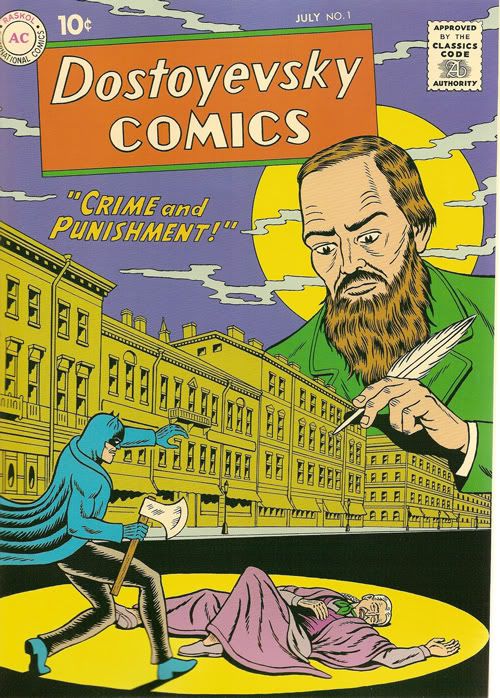
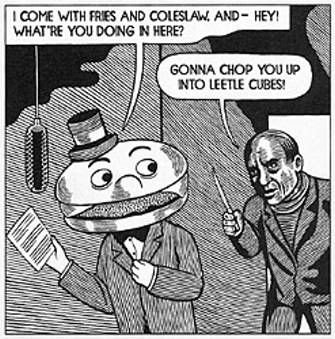
R. Sikoryak is one of the cleverest, sharpest parodists in comics, a chameleon seemingly capable of appropriating any style in order to explore unexpected junction points between pulp culture and fine literature. He's been working in this mode, sporadically, for a long time now, but the 2000s saw some of his best and most fully realized parodies: his retelling of Crime and Punishment through the filter of Batman, his Bronte/EC horror pastiche, his casting of Little Lulu as Hester Prynne's daughter, his existentialist Beevis and Butthead strip. These pieces reveal a sometimes startling thematic continuity between his literary and his trash culture sources, recasting popular antiheroes as literary icons and reveling in the friction sparked off by this fusion. His work is both outrageously funny and unexpectedly revealing, suggesting that high and low culture are more unified than one would expect. [buy]

52. TALES DESIGNED TO THRIZZLE
by Michael Kupperman, 2005-ongoing

Tales Designed To Thrizzle is Michael Kupperman's latest showcase for his absurdist, Dadaist humor strips, a compendium of bizarre gags and non-sequiturs. Kupperman's lunatic imagination conjures up the unlikely duo of Snake and Bacon, who simply recycle their familiar catch phrases no matter what ridiculous situation they find themselves in. He also concocts whole alternate histories, in whimsical visions of imaginary pasts when a sex-starved populace, deprived of release by constrictive laws, had to turn to loophole refuges like sex blimps and sex holes, taking their illicit sexual encounters either below the ground or high in the air. These absurd scenarios proliferate throughout each issue of Kupperman's series, as he follows each loony premise through to its (il)logical end result. He's a versatile stylist as well, employing a clean aesthetic that shifts from a pastiche of woodcut engravings to the cartoony melange of Snake and Bacon or his Mark Twain caricatures. [buy]

51. THE BEAST MOTHER/MOME STORIES
by Eleanor Davis, 2006/2007-2008

The short stories of Eleanor Davis draw on myth and horror to craft succinct, mysteriously moving little parables, like Grimm fairy tales where the "monsters" are almost always infused with pathos and feeling. In her standalone minicomic The Beast Mother, a grotesque, naked female monster kidnaps and cares for all the children from surrounding towns, bringing them to her cave where she tenderly cares for them. With her lumpy body and distended breasts, she is a caricature of motherly affection, feeling raw needs that she fulfills in the only way she can. The story, told mostly without words, is about a hunter who tracks and kills this beast, thereby freeing her half-feral children so their true parents can reclaim them. The beauty of Davis' story is its moral ambiguity, the way she manages to make this ending bittersweet and emotionally shaded; the hunter seems ambivalent about what he's done, and even the children aren't grateful when he destroys the only mother they ever knew. Only the townspeople are happy, paying off the hunter and gathering up their long-missing kids. The hunter goes off to camp, and who knows what happens to these newly reunited families. There's an air of sadness in this ending, an air of loss. There's a similar emotional complexity at work in the handful of stories Davis has contributed to the anthology MOME. In the best of these short works, illustrated in Davis' striking style with sepia washes for color, a ferryman brings a parade of monsters hauling sacks across the water to a gathering, never questioning what's in the sacks, even though they rustle like something alive. It's a parable about the ordinary man's encounter with horror and evil, and how easy it is not to ask questions, to simply do one's job and go about the prosaic business of one's day as if nothing unusual is going on. It's a resonant piece, asking hard questions about morality and conscience in an accessible, stylish way. This is, perhaps, Davis' greatest strength as an artist. [buy] | [buy] | [buy] | [buy] | [buy]

50. AUTOMATIC KAFKA
by Joe Casey & Ashley Wood, 2002-2003

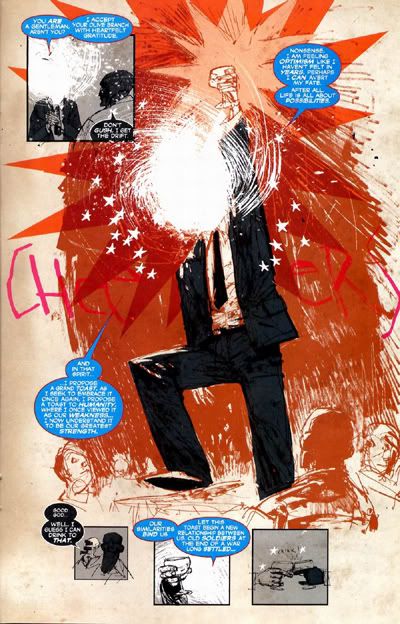
Automatic Kafka is one of many comics to tap into the post-millennial zeitgeist and deliver a frenzied, passionate critique of the junction points between media, superheroes, sex, drugs, war and politics. Like Richard Kelly would later do in film with Southland Tales, writer Joe Casey and artist Ashley Wood mimic the sensory overload and cluttered landscape of modern culture. Wood's art, descended from the Barron Storey/Dave McKean school of sketchy multimedia collage, especially sets the tone, with his frenzied scribblings, bold use of color, and abrupt stylistic shifts. The series — which unfortunately still hasn't been collected to rescue it from oblivion — is a brilliant and scattershot satire centering around a robotic man called Automatic Kafka and his fellow degenerate ex-heroes. Casey's heroes have long ago stopped doing anything remotely heroic, and now instead dedicate themselves to various vices, and to pimping out their celebrity on TV, or as ass-kicking government agents. And they live in a deeply strange world, as reflected by Wood's wild artwork: scorpions deliver cryptic warnings, the panels are surrounded on all sides by commercial advertisements, and a man with a firecracker for a head plots behind the scenes. The apex of his approach comes in the series' third issue, in which the title hero's TV game show is visualized through a manic cluster of slogans and icons threatening to overload and crowd out the actual images of the narrative. It's a smart, funny, provocative, visually stimulating comic that remains very unfairly overlooked.

49. ELVIS ROAD
by Elvis Studio, 2007

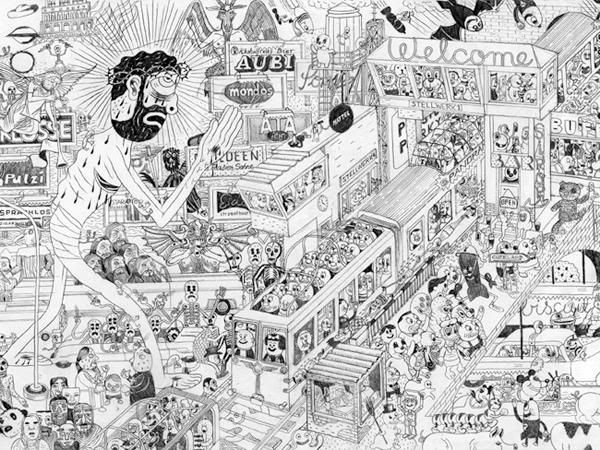
The artistic duo of Helge Reumann and Xavier Robel, together known as Elvis Studio, have a distinctive, obsessively detailed style, crafting sprawling landscapes where something seems to be happening in every corner, every inch, of the drawing. This style reaches its apex in Elvis Road, an ambitious and original book in which the pair drew a lengthy, scrolling crowd scene stretching out across a roll of paper. The book is designed to be read, not in the traditional manner, but as one very long scroll; the accordion-folded pages can unfurl into a single 20-foot-long sheet. Within this epic sprawl, the two artists feverishly doodle out various mini-narratives and scenes that play out inside a wild, apocalyptic framework. Within the chaos, cops and criminals do battle, characters from popular culture and world history make appearances, factories spew smoke, Klansmen and Nazis go on parade, and Jesus and the Devil themselves prepare for epic battle. [buy]

48. 100 BULLETS
by Brian Azzarello & Eduardo Risso, 1999-2009

Brian Azzarello's 100-issue crime drama started off as a satisfying high-concept gimmick based around its title: a mysterious man known only as Agent Graves would show up out of nowhere, give some down-and-out malcontent a suitcase, and tell them that it contains both a gun loaded with untraceable bullets and information about a person who wronged them. It plops a moral dilemma into the laps of Graves' selected people. Will they seek revenge? Will they change their lives? Will they use the gun? And, if so, how will they use it? Conceivably, Azzarello — his pulpy, punny writing bolstered by the striking noirish artwork of collaborator Eduardo Risso — could have kept pumping out variations on this formula indefinitely. It's a strong formula and one that allows for nearly infinite stories. Instead, over time Azzarello subtly began revealing the broad outlines of a much bigger, more complex story, a history-spanning intrigue incorporating secret organizations, betrayals, double- and triple- and quadruple-crosses, gangsters, drug lords and the American aristocracy. Ultimately, the series offers up a potent critique of the lust for power, the nearly irresistible drive for various forms of control: money, sexuality, prestige. Throughout its length, the large cast gathers into nebulous alliances, and Azzarello cleverly keeps the multiple plots and subplots up in the air without ever sacrificing characterization or his underlying themes about greed and corruption. Taken as a whole, 100 Bullets is both an utterly engrossing crime/conspiracy thriller and a cogent American satire. [buy] | [buy] | [buy]

47. EIGHTBALL #23: THE DEATH RAY
by Daniel Clowes, 2004

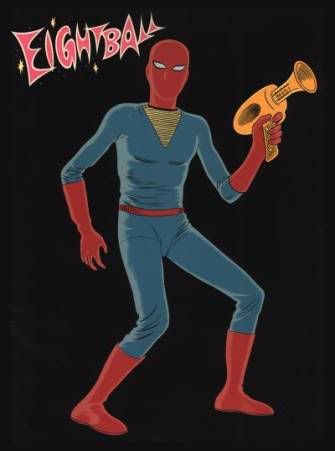
The 23rd (and final, as of now) issue of Daniel Clowes' long-running series Eightball is a self-contained epic in miniature, poking at superhero archetypes, with their ideas about "responsibility" and "right," in order to tell a quiet, maudlin story of loneliness and self-isolation. For Clowes' characters, great power — a "death ray" that can zap anyone out of existence, but which only works for the loner protagonist Andy — never really manages to make things better or change their lives in any appreciable way. Instead, while imagining life as a costumed adventurer putting things right, Andy uses his death ray in small, petty, inconsequential ways, because basically he's a small, petty, inconsequential man. This dark, cynical vision is bolstered by Clowes' clean, austere artistry, particularly his striking use of color, utilizing an array of palettes to convey various memories, fantasies and emotional states. The layout is intriguing as well, eventually drawing together the strands of narrative through the use of seemingly disconnected shorter strips, in numerous styles and from a multitude of perspectives. It's this multiplicity that makes the book more than just another sadsack loser tale. Clowes insists on incorporating the lives of others into Andy's isolated world, allowing the story's ripples to fan out beyond the narrow confines of simple genre parody. Instead, The Death Ray is a poignant lament, and a blistering portrayal of the ways in which people's simplistic understanding of life, love and happiness prevent them from even imagining ambitions beyond their immediate vicinity. [buy]

46. WHAT IT IS
by Lynda Barry, 2008

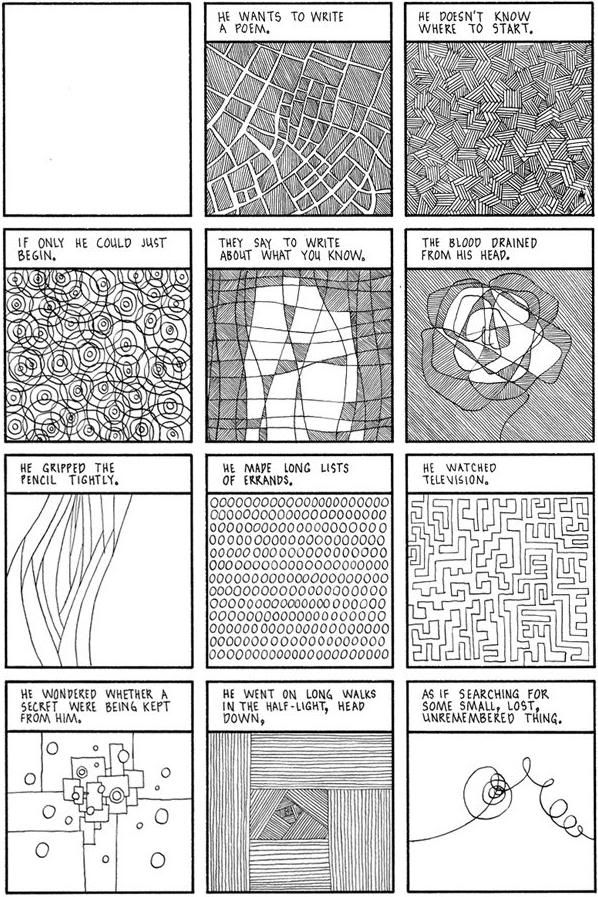
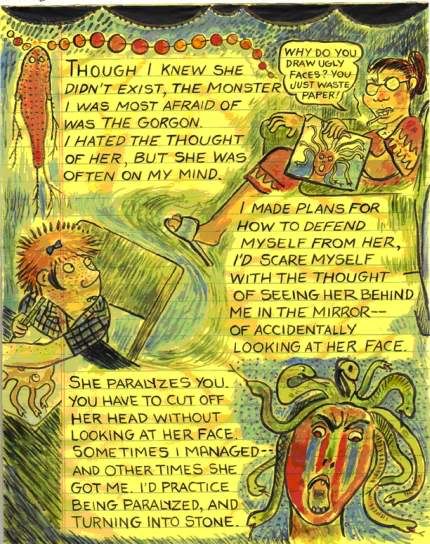
What It Is is a wonderfully inspirational book, a book that's overflowing with creativity and generosity. Barry has essentially crafted a very aesthetically rich "how to" volume that seeks to get people excited about writing and drawing and inventing their own stories. The book is divided into several sections. In the first, Barry alternates between short comics that relate stories from her childhood and collage sequences in which dense patchwork constructions of text and images raise basic questions about memory, imagination, creativity, aesthetics and thought. Barry is constantly suggesting provocative ideas, offering up challenges to the reader, and her tightly packed pages defy traditional reading. Instead, the eye flows freely around her pages, picking up various threads and following them from one idea to the next, letting her web of associations and questions evoke all sorts of images and concepts. This is the book's longest segment, but she follows it with two shorter "how to" sections, in which she lays out several exercises intended to jumpstart creativity and get would-be writers or artists used to the process of telling stories and exploiting the rich veins of memory. Finally, there's an excerpt from Barry's own sketchbook exercises and margin notes. The whole thing would be reminiscent of those vaguely New Agey "anyone can write" motivational seminars, except that Barry has such enthusiasm, and such restless creativity in every page she crafts, that her example is genuinely inspiring and beautiful. [buy]

45. YOTSUBA&!
by Kiyohiko Azuma, 2003-ongoing

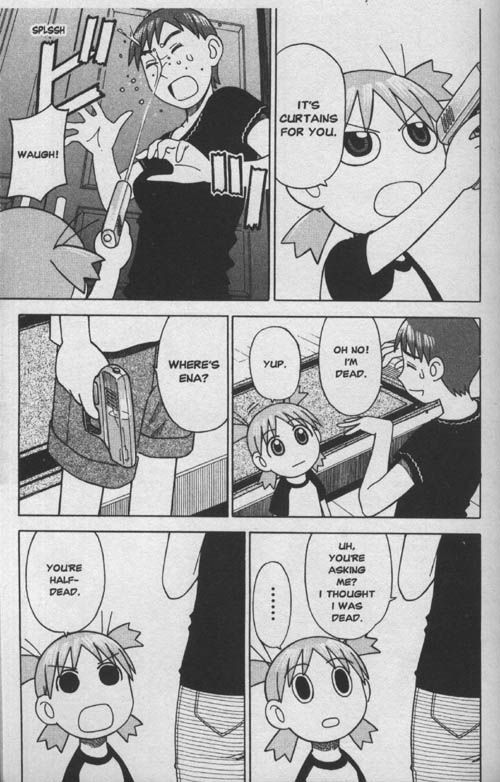
There are few comics as purely joyful and exuberant as Yotsuba&!, a series that's unusual for generating a surprising amount of substance from an especially slight premise. The title character, Yotsuba, is a very happy four-year girl who lives with her adoptive father, a slacker who doesn't always seem to be paying the most careful attention to his perpetually curious, cheerful, somewhat strange little daughter. Yotsuba might be four, but her behavior could best be described as that of a newborn who can talk: she is fascinated by and curious about everything, and she approaches each new discovery with the wide-eyed, gape-jawed, squealing-with-delight reaction it deserves. The book's title thus provides its structure as well. Each more-or-less self-contained chapter revolves around Yotsuba's encounters with a variety of everyday objects, places, concepts and people: Yotsuba & TV, Yotsuba & Shopping, Yotsuba & Drawing, even Yotsuba & Global Warming. The framework is simple, but allows for near-infinite variations. Yotsuba invariably encounters something and then milks every bit of nuance and emotional catharsis from the experience, reacting to life with a voracious and seemingly inexhaustible supply of joy and pleasure. As her bemused father says at one point, smiling with resignation, nothing ever gets Yotsuba down, while seemingly everything surprises and delights her. Kiyohiko Azuma documents Yotsuba's domestic adventures with a clean, attractive style, shifting ably from semi-realist depictions of the natural world to the cartoony exaggerations of Yotsuba at her most emotional. And the book is frequently hilarious; Azuma has a keen comic timing, and a good sense of body language, so that he sets up visual gags perfectly through the rhythms of his panels. These books present a character who enjoys life to its fullest, who appreciates the splendors of the world, of other people, of the simple delights just waiting everywhere to overcome us when we're not expecting it. Within this deceptively simple work is an ode to taking life as it comes and appreciating every day as though the world had been made anew, just for us, every morning. [buy] | [buy]

44. SKYSCRAPERS OF THE MIDWEST
by Joshua Cotter, 2005-2008

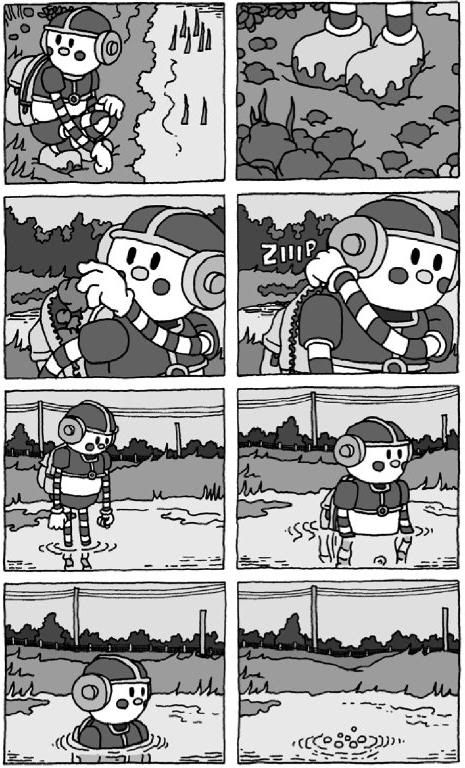
Skyscrapers of the Midwest is Joshua Cotter's loose blend of autobiography and fantasy as a way of evoking the experience of a typical middle American childhood, presumably his own. But instead of assuming a direct autobiographical mode, Cotter turns himself and the rest of his family into anthropomorphized cats — and then further abstracts them by spending much of the book within the head of the deliberately unnamed protagonist, who frequently imagines himself as robot superhero Nova Stealth. A giant-size Nova Stealth also appears as a rather melancholy incarnation of God, a shambling, outdated model who seems to be just going through the motions in continuing to dole out life and death. Obviously, Cotter's ambitions extend beyond mere quotidian slice-of-life drama; his book's clever shifts between stylistic modes reflect a boldly experimental sensibility and an eagerness to visualize childhood's slights and wounds through a child's imaginative mind. As a result, the book is packed with great sequences, with devastating insights, heartbreaking incidents and moments of surprising humor. At the book's climax, Cotter flows so brilliantly from a comic book-inspired fever dream into a poignant vision of the afterlife that this sequence — in which the central protagonist is depicted solely as a silent robot — is utterly overwhelming. [buy]

43. POWR MASTRS
by C.F., 2007-ongoing

Powr Mastrs is the first real long-form work by artist C.F. (also known as the noise musician Kites). It is an exercise in sci-fi/fantasy world-building, establishing a complicated fictional world with its own rules of magic and technology, and a large interlocking set of characters who perform arcane rituals, reference seemingly rich pasts, and engage in various plots, adventures and daily routines. Drawn in C.F.'s distinctive minimal style, these stories read as though the bored margin doodlings of a high school have come to life, with details filling in and characters acquiring personalities and back stories of their own. C.F.'s faux-naif style, stripped-down and with a great deal of white space, lends an air of childlike enthusiasm and imagination to his stories. With the second volume, C.F. introduced spot watercolor to his black-and-white drawings, a welcome addition since the best of his previous work has always exploited his feel for color. In these first two volumes, it still feels like C.F. is setting the groundwork for a complex epic to come, introducing characters and establishing relationships. But on the other hand one can equally easily imagine a whole series like this, in which grand dramas are subsumed by the surreal daily life of this imaginary land. [buy] | [buy]

42. ABSTRACT COMICS: THE ANTHOLOGY
by Andrei Molotiu (editor) & various, 2009

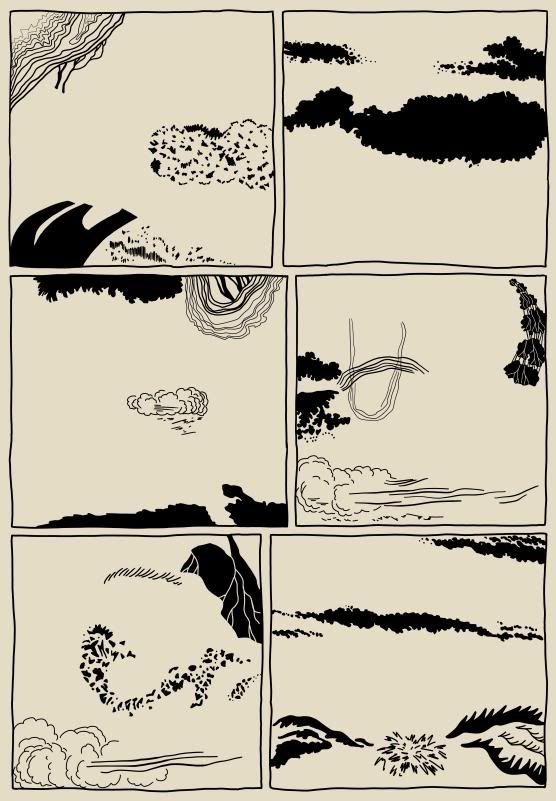
Abstract Comics is an important book because it gathers in one place a persuasive argument for thinking about comics, not in terms of narrative or even figuration, but as pure sequences of images with complicated and ambiguous relationships between one image and the next. Editor Andrei Molotiu believes firmly in abstract comics — comics with no narrative throughline or even "unified narrative space," as his introduction puts it. The anthology then presents an overview of this nascent field, ranging from freshly commissioned pieces to classic examples, and encompassing artists who have never worked in the form before, artists whose work has occasionally flirted with abstraction, and those who have, mostly in recent years, created whole bodies of work meeting Molotiu's definition of abstract comics. They are comics where the sequence is everything, where the pure flow of images is the whole content of the experience. These pieces cannot really be "read" in the conventional sense, but rather challenge viewers to come up with whole new ways of appreciating and understanding them, encouraging a reading experience somewhere between looking at a painting and reading a sequential narrative. Maybe it's the experience of looking at a series of paintings in order.

In any event, the book features some truly stunning and imaginative work: the organic blobs of Anders Pearson, the Duchampesque watercolor scrawls of Casey Camp, Henrik Rehr's shifting currents of densely packed lines, Mike Getsiv's suggestive, boldly colored swirls, Warren Craghead and Richard Hahn's mastery of panel rhythms, the unexpected visual gag inserted into Geoff Grogan's multimedia collage, Alexey Sokolin's forbidding stormclouds of black scratching, Andy Bleck's sensual scribble figures, Derik Badman's renderings of only background fragments from old Tarzan comics, the multiple contributors who turned in dense, virtuoso ink pieces towards the end of the book. Not everything here is at the same high level, but it's a surprisingly consistent anthology, unified by its theme and Molotiu's commitment to including pieces that advance his definition of this particular approach to comics. What's best about the book is how open its territory ultimately is, how much room it leaves for artists to come up with their own ideas about abstraction and sequence. It is a truly groundbreaking book that points the way towards a whole new conception of comics and challenges readers and artists alike to explore this new area. [buy]

41. ASTERIOS POLYP
by David Mazzucchelli, 2009

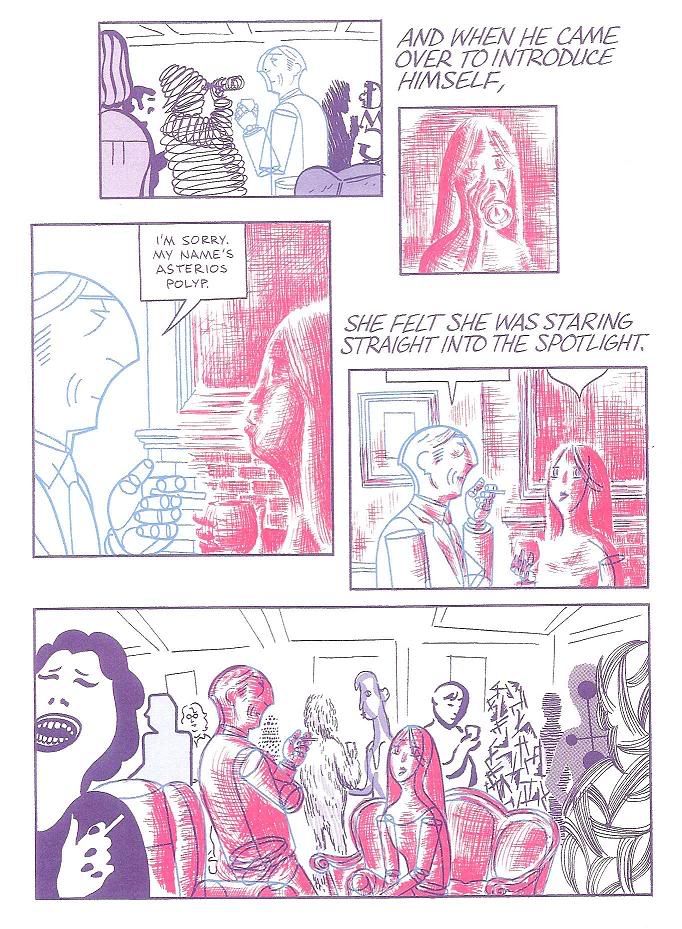
David Mazzucchelli is a master of comics form, so his first long-form work is of course reason to rejoice. Asterios Polyp is the work that everyone has been waiting for from Mazzucchelli, a formalist masterpiece whose cartooning gestures and densely layered sight gags provide visual delight on nearly every page. The title character is a pompous failed architect who, wallowing in self-pity following his divorce from his beloved Hana, sets off to abandon his former life, while compulsively returning to the past in painful memories and dreams. Ostensibly narrated by Asterios' stillborn twin, who periodically shows up as a dotted-line absence standing next to his living brother — yes, this is a very high-concept work — the book deploys one bold storytelling device after another as Mazzucchelli cleverly probes the relationship between Asterios and Hana. One of the book's best devices is the way every character is drawn in a subtly different style, complete with distinctively varied font styles for their dialogue. Thus the hard lines of Asterios and the fluid curves of Hana clearly set them up as opposites, as does the fact that, during their first meeting and on occasion afterwards, Asterios is drawn as a conglomeration of blue polygons while Hana is red and sketchy. When they're connecting and falling in love, Mazzucchelli depicts their two worlds coming together, her red crosshatching filling in his polygons, his clean blue lines infiltrating her more rounded form. It's an elegant visual metaphor for the idea that each individual sees the world differently, and that reconciling two different worldviews in a relationship can be a great challenge. Mazzucchelli packs the book with clever visual touches like this, casually evoking Will Eisner or Frank King with his layouts, or drawing a train worker's irate word balloon so it resembles the MTA logo, or using a dotted line to fill in the missing portion of a broken beer bottle. Each page offers up surprises and flights of fancy, and Mazzucchelli's panels are stuffed with clever details that enrich his characters, fill in the narrative, or simply offer up a diverting chuckle. It's a fun, innovative book, not so much for its story (which is rather typical at heart) but for the ways in which Mazzucchelli breathes new life into familiar situations and characters, simply through the grace and beauty of his art. [buy]


The second part of this list, encompassing numbers 40-21, has now been posted here. The top 20 is here.

Saturday, February 20, 2010

I've been interviewed...

I've been interviewed as part of the "Critical Mass" feature at Only Good Movies. This is an ongoing series of interviews with various film critics, and I've been selected for the latest. You can read the Q&A here if you'd like to get an idea of my critical philosophy and ideas about film.

Thursday, February 18, 2010

Two 1960s avant-garde shorts


Storm de Hirsch's Peyote Queen is as hallucinatory and strange as its title suggests, an experimental film in which de Hirsch is continually playing havoc with the frame, with the basic unit of film. De Hirsch was originally a poet, and surrounded by the inspiration of other 60s avant-garde filmmakers, she decided that she wanted to become a filmmaker as well. Her work is thus defiantly amateur in its origins, and her outsider's perspective on the medium is apparent in her non-conventional approach to the film strip and the frame. Like so many other avant-garde filmmakers of the era, coming to film from other media and other arts, she makes a virtue of her amateur status. She chops frantically away at the surface of the film, allowing jagged holes of white to cut through the featureless black sheets of an unexposed film strip. The film opens with white specks (actually holes punched directly into the film stock) flickering in time with the soundtrack's congo drums, like footprints appearing and disappearing in unstable sand. The ragged clusters of white splotches pulse to the beat of the drums, alternately matching the rhythms of the music and syncopating with the drumming.

Then de Hirsch introduces her rough animations into the film, a rapidly flickering collage of images that are here and then gone within the space of a single frame, a fraction of a second. These images flash across the frame, suggesting various shapes and forms without ever quite settling into any one definitive, stable state. Crude drawings of breasts mutate into blinking eyes and then back again, or the form loosens altogether so that the lines simply ebb and peak like waves. Fish and lips and flowers and boats also appear from out of the frenzied mash of images, which at other times is simply a scratchy abstract grid. The film's animation builds continuities between the female form and various other objects and geometric forms. In this way, de Hirsch abstracts the curves and shapes of anatomy into this fluid jumble of lines and designs, suggesting that the form of the body should be appreciated aesthetically just like any other artistic form.

This sensibility is carried over when, after the initial barrage of frenzied scratchings and scrapings, de Hirsch switches over to photographic imagery, a switch that's signaled by a ferocious burst of pure color, a few frames of layered rainbow hues seeming to scroll vertically down the screen. De Hirsch then divides and subdivides the frame with a kaleidoscope of colorful, constantly-in-motion images. The frame is segmented into four squares, each of them showing more or less the same thing, slightly out of sync so that the flashing lights and colors create dazzling effects as different corners of the frame shine or glisten with reflected light. This division creates tensions and frictions, balancing between stasis and motion; at times, one half of the image will be at rest while the other half frantically jiggers and swirls about. De Hirsch uses a simple handheld fragmented mirror, divided into trapezoidal segments with a circle at its center, and this filters and warps the image, at one point turning a woman's face into a circle of eyes, insectoid and clustered together. De Hirsch has a seemingly instinctive feel for such bizarre images, generated through disarmingly concrete and even prosaic means. She makes no attempt to obscure the fact that this nightmarish multi-eyed demon woman is actually just someone playing with a little knick-knack.

The film's visceral, disorienting style is matched by its soundtrack, which shifts between multiple modes to match its visual transitions. The circularly repetitive, tribalistic congo drum rhythms of the opening minutes eventually give way to a lo-fi, exuberant boogie-woogie, before returning to the drums, this time even more explicitly tribal with the addition of chanting. This ritualistic music lends a mood of near-spiritual catharsis to de Hirsch's images, which are simultaneously aggressive and introspective, representing subjective inner states with raw physicality.


Bruce Baillie is an experimental filmmaker and a founder of the San Francisco-based avant-garde distribution cooperative Canyon Cinema. The documentary Here I Am was made for Canyon's newsreel program, which documented the kinds of local issues and institutions not often covered by conventional news. Baillie's film is about the East Bay Activities Center, "a day program for emotionally disturbed children." It's a direct, low-key documentary, a simple, wordless chronicle of the school and some of its students. There is no narration, no commentary, no text, just images of these children as they play, interact and gather around their teacher for lessons that go unheard. The film's soundtrack is mostly composed of the children's laughter and cries, not synchronized with what's actually onscreen but recorded separately and then overdubbed, creating a generalized atmosphere of children in action. Baillie combines this sound with the droning, melancholy cello of Eda Borgfeldt, which occasionally drifts to the foreground or appears as a faint hint beneath the clamor of the classroom.

This is an utterly straightforward, un-ornamented documentary; its title, to some extent, is its whole point, and the images are merely an emphatic exclamation point to the message sent by those three words. It's Baillie's way of allowing these marginalized, oft-forgotten kids to say, I am here, I'm a person too, I deserve some attention too. That's what emerges, again and again, in Baillie's offhand images from the schoolyard and the classroom, where he captures these kids playing and enjoying themselves. The kids sometimes seem aware of the camera, curious about its presence, staring inquisitively into its lens, but at other times they simply go about their business, doing normal kid activities.

Baillie's cinematography is appealingly rough, lending an unassuming kind of poetry to these images of children with various unidentified mental and developmental disorders. The film opens with a series of tracking shots along foggy streets, thick with gray smoke, the sky darkened with clouds, as the cello's drone further adds to the oppressive atmosphere. From these moody, foggy opening credits, Bailie pans down from an overcast sky to a child playing on a swingset, her compact body propelling forward into the frame as the cello is replaced by the chirps of birdsong. Although the film is framed by images of fog and darkness, in between, the actual images of the children are bright and even cheery. The children sometimes seem upset or confused, and Baillie's camera captures these emotional interludes in tight closeups, but more often they seem carefree, simply running about and playing like any other kid would. It's this sense of normality that is at the heart of the documentary.

Baillie often films from unusual perspectives where something is jutting into the frame: some branches and flowers from a bush, the chain of a swingset, a metal bar, a rope, the corner of a building. Bailie often seems to be watching from an awkward position like this, close to these children but not really intimate with them, even when his closeups capture their unfathomable expressions. This gives the film an off-the-cuff quality, a casualness in its presentation that prevents it from ever seeming like a preachy "message" movie. Instead, it's simply a minor document of a place and time, of some children who need special care and special attention in order to find their place in the world.


This post is a contribution to For the Love of Film: The Film Preservation Blogathon, which is hosted by the great bloggers at Ferdy On Films and Self-Styled Siren. This is a fundraising blogathon for the Nation Film Preservation Foundation, who do the very important work of preserving the heritage and history of cinema by preventing older films from sliding into oblivion. Go donate to them now. Here's some information about the organization and this blogathon's purpose:

The National Film Preservation Foundation is the independent, nonprofit organization created by the U.S. Congress to help save America’s film heritage. They work directly with archives to rescue endangered films that will not survive without public support.

The NFPF will give away 4 DVD sets as thank-you gifts to blogathon donors chosen in a random drawing: Treasures III: Social Issues in American Film, 1900-1934 and Treasures IV: American Avant Garde Film, 1947-1986.

The two films I've written about above were both preserved, like so many other avant-garde films, by Anthology Film Archives in New York, and both films appear on the Treasures IV set mentioned above. This essential set would virtually not have been possible without Anthology. This organization, founded by Jonas Mekas, Stan Brakhage, Peter Kubelka, and P. Adams Sitney in 1969, is one of the most important institutions for avant-garde cinema in the United States. It is a great theater — constantly screening a rotating repertory program of classics and obscure experimental films alike — but even more importantly it is dedicated to preserving avant-garde films that would otherwise be lost and forgotten forever. And it is especially difficult to preserve the legacy of avant-garde cinema, which is invisible to most people these days. These films were made outside of any established film industry, often by solitary artists working with extremely minimal means, and the resulting roughness and imperfection of the films themselves is intrinsic to their special qualities. It is thus a special challenge to preserve these films without extinguishing their unique fire. Organizations like Anthology, and like the NFPF, are dedicated to just that purpose. Please support the invaluable work they do.