Friday, February 4, 2011

Blood Simple


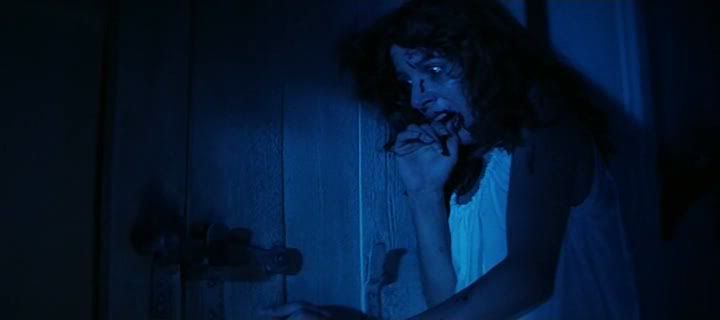
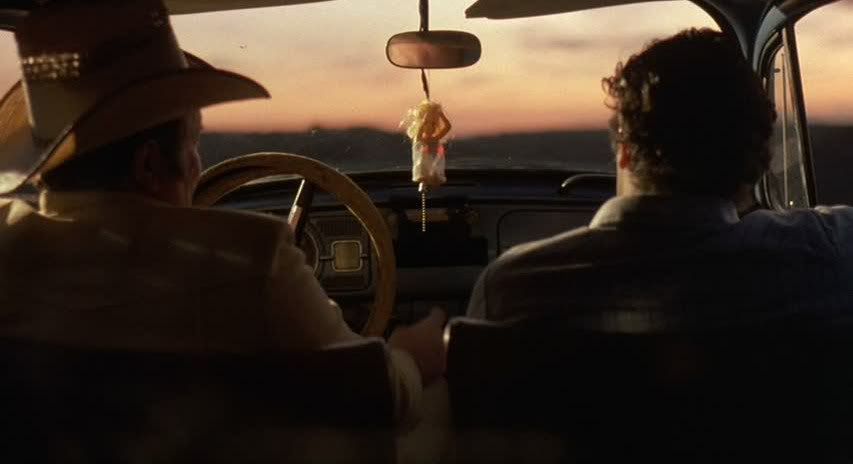
Blood Simple was the first feature of Joel and Ethan Coen, and it's a natural debut for the brothers, a darkly comic/tragic neo-noir that wallows in the greed, pettiness and stupidity of people driven by love and revenge to do terrible things to one another. In the film's opening minutes, Ray (John Getz) is driving Abby (Frances McDormand) away from her nasty, brutish husband Marty (Dan Hedaya), the owner of the bar where Ray works. Ray and Abby's love affair will trigger all of the film's grisly events, in one way or another, and the opening scene is already loaded with menace and the promise of coming tragedy. As Ray and Abby talk in the car, driving at night along a dark highway, they're bathed in pale midnight blue tones, the camera lingering in the backseat of the car, barely catching glimpses of their faces, so that their voices seem disembodied in the darkness. Abby is running away, not sure of where she's going, just sure she doesn't want to be with Marty anymore, and Ray, in his stolid way, simply keeps repeating that he "ain't no marriage counselor," but that he really likes Abby. It's obvious where this is heading, but Ray and Abby keep earnestly, nervously beating around the bush, delaying the inevitable moment when they'll fall into bed together. And the eerie mood of this scene, juxtaposed against the tenderness and vulnerability of the soon-to-be lovers, says all one needs to know about where this story will go once their affair begins.

At least, the broad strokes are apparent from the beginning. But no one could quite predict just how horribly off course this story of revenge and jealousy will go by its end, or just how many weird twists will crop up before the last drops of blood have been shed. When Marty finds out about his wife's infidelity from the slimy, smirking private investigator Visser (M. Emmet Walsh), he hires Visser to kill the lovers for ten thousand dollars. What ensues is a whole string of bloody events, most of them centered around tragic misunderstandings and acts of staggering stupidity. These people — all of them, with the possible exception of the wide-eyed, innocent Abby — are an unfortunate combination of utter incompetence and bloodyminded nastiness, and they go about slaughtering, assaulting and robbing from one another in the most ludicrous ways.

At the base of the film is the notion that people are programmed to think the worst of those around them, and that while this impulse is often proven true, again and again, sometimes it is tragically false. Ray is turned against Abby with ease, doubts planted in his soft head by the hateful words of Marty, who naturally has nothing but bile and spite for his unfaithful wife. What started as a love affair is then plagued by doubts and suspicions, by nasty words and bouts of jealousy founded on phantom fears. The unfortunate Abby barely enjoys a day of her new love before she's subjected to fights and suspicions that suggest that this new relationship is already heading down a path similar to the one that led her to the end with Marty. Abby is, however, one of those rare decent people who sometimes meander haplessly through the Coen brothers' cold, cynical universe. She is a premonition of the decency in McDormand's Marge Gunderson in Fargo, a truly good person despite some flaws, full of energy and vigor, eager to talk and to share her feelings. It's not her fault, one senses, that her wide-eyed ingenuousness inspires distrust and, eventually, hatred in the men she ties herself to. And it's not her fault that these foolish, inept men sloppily plot to kill and destroy one another with her at the center of their plots.

Often, the Coen brothers have been accused of laughing at their characters, holding themselves above the stupid actions of these people, looking condescendingly down on their creations as they stumble about. It's sometimes true, though that cynical attitude is softened, if only slightly, by a countervailing sense that the filmmakers are sympathetic to these characters as well, that they feel bad for these people as they destroy themselves through their base emotions and desires. In this, the Coens' first film, their worldview is perhaps especially clear, and it's obvious that if the filmmakers are laughing at their creations, the laughter is always tinged with a sad awareness of the futility of all this violence. The film opens with voiceover narration by Visser, announcing the film's themes and indeed the themes that would continue to animate the brothers' films throughout their subsequent career:

"The world is full of complainers. And the fact is, nothin' comes with a guarantee. Now I don't care if you're the Pope of Rome, President of the United States or Man of the Year; something can all go wrong. Now go on ahead, y'know, complain, tell your problems to your neighbor, ask for help, and watch him fly. Now, in Russia, they got it mapped out so that everyone pulls for everyone else. That's the theory, anyway. But what I know about is Texas, and down here... you're on your own."

That just about sums up the bleak worldview of the Coen brothers: their characters exist in an amoral universe, derived from film noir's bleak settings, in which everyone is out for his or her self, and one can't rely on help or sympathy from anyone else. Not even from the filmmakers, who watch these characters fumble around from an omniscient, detached viewpoint that suggests a God who's equally amused and disappointed by the follies of these people in their shortsightedness and petty emotions. The murders in the film are purposefully staged so that it's obvious that the characters think they're being clever, that they've planned everything out and have thought of everything. At the same time, the Coens take pains to reveal the opposite: the slip-ups, the stupid mistakes, the missing information. They highlight details like Visser's lighter, or blood spots on a car seat, or a hand touching a surface, sure to leave behind incriminating fingerprints. Again and again, they revisit the bar where the film's first murder takes place, and each time they do, with different characters, things have been changed around and each character tries to understand what has happened, to fill in the gaps in their knowledge. To some extent, the film's tragedy is caused by this lack of understanding, and by the willingness of these misguided fools to leap to conclusions and act rashly anyway.

Thursday, February 3, 2011

3 Women


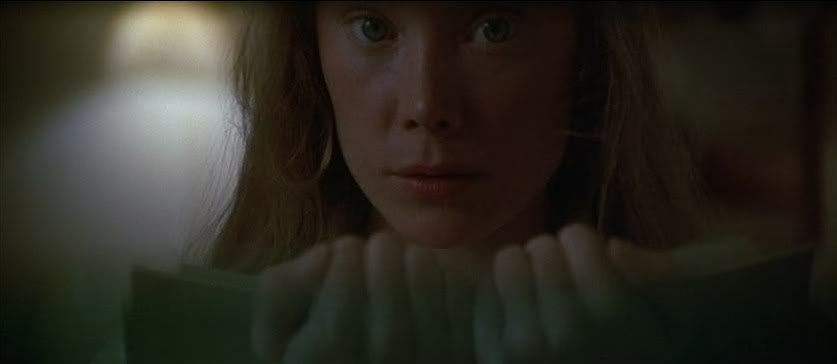
Robert Altman's 3 Women is a bizarre, unsettling, darkly funny and mysterious film. It is virtually indescribable, proceeding according to its own skewed, dream-like logic, presenting the frequently absurd dialogue and characters with an utterly straight face, balancing carefully between portentous, densely symbolic drama and loony black comedy. The film centers on the relationship between two women, both named Mildred: the relentlessly chatty Millie (Shelley Duvall) and the shy, awkward young Pinky (Sissy Spacek). The two women meet at a job, working at a spa caring for elderly patients, and the girl-like Pinky, who seems more like a child than an independent young woman, instantly idolizes Millie and latches onto her. The two women soon become roommates, despite Millie's offhanded nastiness towards the other girl, and Pinky's attachment to her new friend only becomes more intense and creepier. The third women of the title is Willie (Janice Rule), a slightly older woman who runs a local bar where Pinky and Millie sometimes hang out. The pregnant Willie says little throughout the film, though her disturbing paintings of monstrous, Egyptian-influenced figures locked in combat show up everywhere. Together, the three women represent three generations of womanhood, with Willie as the grandmother, Millie as the mother, and Pinky as the child. This linkage between the women only becomes clear during the film's coda, but before that point it's obvious at least that Pinky is like a free-spirited child, excited by everything, always asking innocent questions, playfully blowing bubbles in her drinks.

The film is a strange character study of these three women who, in different ways, are dissatisfied with their lives. Millie is a chipper, cheery woman who presents herself as a popular girl with an endless string of boyfriends and suitors, but in fact she's strange and lonely, unable to connect with anyone. Her stories about herself don't match up with reality at all: it's clear that no one wants to be around her, and rarely does anyone even acknowledge her constant stream of non-sequitur anecdotes and self-promotion. Her outgoing persona is a mask, disguising her inner loneliness and desperation, and she has a whole vital fantasy life about how all these guys want her, how she has countless men wrapped around her fingers when in fact she can barely get anyone to acknowledge her existence. Although Pinky outwardly seems very different, she is similarly lonely and strange, similarly disconnected from everyone around her. At work, everyone ignores her as thoroughly as they do Millie, and she seems immature, arrested in her development, like a child sent out on her own before she was really ready.

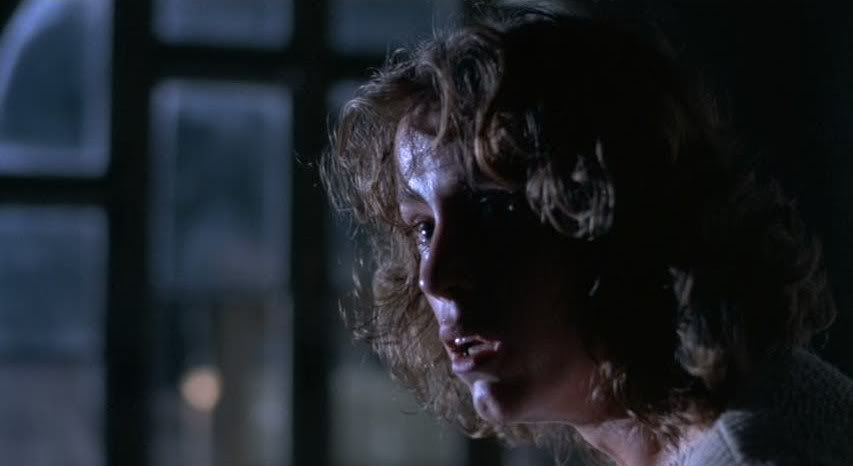
The relationship between the roommates reverses, however, following a confrontation over Willie's washed-up former stuntman husband Edgar (Robert Fortier), who's clinging pathetically to his TV cowboy persona. Millie comes home with him one night, and when she yells at Pinky for judging her desperate promiscuity, Pinky throws herself off the balcony into the pool below, a pool decorated with Willie's sinister paintings, seeming to writhe with the waves and ripples in the water. When Pinky emerges from a coma some time later, she's assumed Millie's personality, writing in Millie's diary, hanging out with the guys at the apartment complex who Millie had always wanted, even coming on to Edgar. She begins to seem like a more successful and well-liked version of Millie, garnering the attention that Millie had always wanted so badly herself. Faced with this change, Millie begins shrinking into herself, losing her flirtatious demeanor, becoming more like the indrawn girl that Pinky had previously been.


Altman presents this drama of psychological transference and doubling with a detached, unsettling directness that enhances the strangeness of the story and the characters themselves. The film is a complex web of symbols, from Willie's paintings with their exaggerated sex organs and violent poses to the constant use of water to overlay the characters. At various times, there seems to be a filter of water wavering across the frame, turning the women's faces blue, its waves flickering up and down to cover the screen and then recede. Sometimes these shots might be motivated by the presence of a fish tank, but more often the water appears without any obvious motivation, as though there were waves constantly churning in the characters' heads, foreshadowing Pinky's watery plunge and subsequent mental realignment.

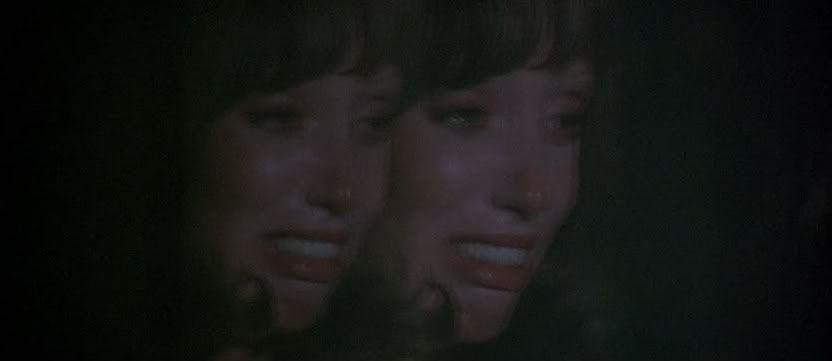
Doubles are also important here. Millie and Pinky work with a pair of twins (Leslie and Patricia Ann Hudson) who don't talk to anyone but each other, who are locked into their own private world, maintaining an abstracted distance from everyone around them. Pinky wonders aloud what it would be like to be twins like that, and raises the possibility that maybe they switch places every day, deciding which twin they'd like to be that day. Pinky obviously wishes for that kind of fluidity of identity, the ability to become someone else, to trade places with Millie, who she worships so deeply. The film's second junction point, after Pinky's near-drowning, is preceded by a lengthy dream sequence in which Pinky dreams of superimpositions and doubles, seeing Millie's face doubled as it had been in the mirrored surface of Pinky's hospital room, seeing Willie doubled in her grief over Edgar's cheating, seeing the face of a plastic witch from Willie's bar superimposed over the face of Pinky's mother, who Pinky insists isn't really her mother. When she wakes up from this dream, she seems newly vulnerable, more like her old self, and this prepares her for her final transformation, when, in the film's mysterious coda, she seems to have formed a makeshift new family with Millie and Willie, taking on the role of obedient but sullen daughter.

Implicit in this ending is a commentary on gender roles and expectations, on the place of women. By the end of the film, the three women are inhabiting an older ideal of the family unit, but notably without any men in the equation. With their quirks and their idiosyncrasies, these women never quite fit in anywhere, so they have to create their own space, their own family to replace the absences that are otherwise in their lives. Millie didn't know her parents, who didn't want her and abandoned her to various foster families. Pinky rejects her parents, who are surprisingly old considering their daughter's youth, and who seem utterly disconnected from the world, reacting even to the news of their daughter's coma with a curious abstraction and lack of emotion. And Willie's only family is Edgar, a philandering drunk who cheats on his pregnant wife and pathetically lives in his past, when he at least flirted with fame and success by appearing as a stuntman on TV. Clearly the families these women have are inadequate, and by the end of the film the women only have, and only need, one another.

All of which implies that 3 Women is a very heavy movie, but in fact it both is and isn't. The heavy symbolism and dour mood is constantly being subverted by the goofy, absurdist, intentionally banal dialogue, which everyone delivers with a deadpan nonchalance that only winds up making it more disarmingly comical. There's something purposefully off about the film's tone which enhances the sense of wrongness and disconnection in these people's lives. Millie in particular is a source of loony comedy, as she's constantly babbling about hula dancing, "hot dates," and her low-budget recipes for tuna casserole, pigs-in-a-blanket and cheese on crackers. There's something helplessly funny about her, and about Duvall's earnest performance, like the way she very sincerely explains the difference between English mustard and French mustard as colors, or the stunned expression on her face as she watches the childlike Pinky gulp down a whole glass of beer after pouring salt into it and blowing away the top of the foam. The film seems especially disconnected from reality during the visit from Pinky's supposed parents (John Cromwell and Ruth Nelson), who bring along a prayer placard — "for the kitchen," the mother helpfully explains, in a line that is unaccountably funny in context — and who seem generally unattached to the same reality as the other characters. But then all of these characters seem to be inhabiting their own individual realities, separated from normal society and fully invested in the odd alternate world of Altman's film.

Wednesday, February 2, 2011

Suspiria


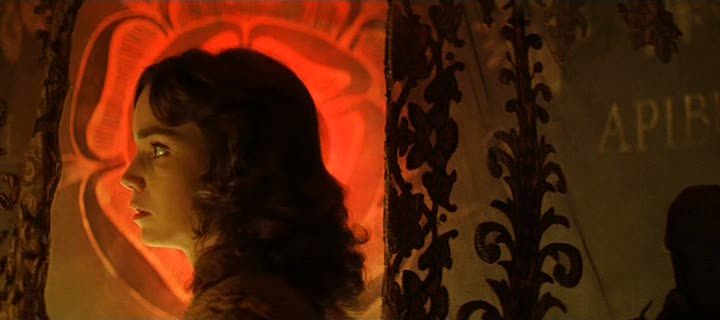
Dario Argento's Suspiria is a horror film based almost entirely around mood and the slow escalation of tension through music and garish color schemes. The film's concrete horrors — a sequence of murders and creepy occurrences at a German ballet school — don't arouse nearly as much terror or suspense as Argento's habit of filming nearly every scene as though something indescribably awful were lurking just out of sight. The film's design is lavish and ornate, and rather than finding terror in shadows and dark tones, Argento bathes these scenes in bright, saturated colors. The ballet school where American student Suzy (Jessica Harper) goes to study is a high Gothic palace with hallways decorated in bright red, its wild architecture topped only by the geometric lunacy of the apartment building where doomed ballet student Pat (Eva Axén) flees to in the opening scenes of the film.

The film's opening in general is a masterpiece of slow-building horror. Suzy arrives at an airport, and as she walks towards the doors leading outside, Argento immediately begins building up the suspense, well before there's anything to get the least bit scared about. Suzy seems hesitant and timid, somewhat rattled already; Harper makes good use, throughout the film, of her big brown eyes, which are often widened in anxiety, shifting back and forth, her pupils small and skittish, seeming lost in the broad whites surrounding them. Argento alternates closeups on Suzy's fragile face with shots of the airport doors. The closeups are silent, but the door shots are accompanied by the sinister but gorgeous chiming tones of the score, by Italian prog rock band Goblin, whose eerie chanting and chugging rock set the tone of the film. When Suzy leaves the airport, into a dark, rainy, windy night, the doors slide shut behind her with an air of finality that suggests a break with normalcy, the terror to come foreshadowed by the gloomy, stormy night that engulfs her. Her cab ride to the ballet school, with Goblin's pulsing main theme returning on the soundtrack, is equally chilling. It's only in the subsequent scenes, following Pat as she flees from the school just as Suzy arrives, that these premonitions of terror turn out to be warranted. Pat escapes the school and shows up at a friend's apartment, the very design of which, with its colorful patterns and high, vaulted ceilings, establishes that something strange is going to happen here.


Argento is excellent at using lighting and design to create the film's unsettling tone. He frequently focuses on closeups of the film's women — Pat during the opening, Suzy and her new friend Sara (Stefania Casini) later on — as they confront the strange events surrounding them. Faces mean a lot to Argento, faces in various contortions of terror and uncertainty, faces with eyes widened in fear and mouths gasping breathlessly. Agento films Suzy with colored lights washing across her face, especially hovering around her eyes, emphasizing her deer-in-headlights stare. It's obvious that he likes exploring the vulnerability of these women: Suzy seems afraid even before she arrives at the school, in the opening scenes at the airport, as though she's anticipating the rest of the film. The faces of the women, bathed in various colored lights, telegraph the film's mostly abstract horrors, because despite the murders that occur throughout the film, Argento seems more concerned with capturing the pervasive, undirected sense of dread and strangeness that exists within this film, taking hold of these women and slowly driving them to madness.

The film is thus a study in feminine vulnerability and fear. Argento allows the tension to build and build. At one point, he zooms in for a closeup on Suzy and Sara, their heads pressed together in conspiratorial whispering, the whole image filtered red. The women are talking about the odd snoring of one of their teachers, sleeping nearby, her silhouette cast against a curtain, black in the red room. It would be innocuous or even comical, except that Argento pitches it towards unhinged terror, the two women looking terrified, working themselves into a state of weird excitation over the raspy snoring of an old woman.


The impact of the film's music in creating this state of irrational anxiety can't be overstated, either. Goblin's music is as integral to Suspiria as the stylized imagery, despite the fact that the band — who had previously scored Argento's Deep Red — composed the music before seeing the film. The music just fits perfectly, becoming inseparable from the bright, creepy images. The tinkling chimes and bells of the main theme, which reappears frequently, is often joined by whispery chanting and moaning, ghastly voices that seem to be communicating with the film's characters. The word "witch" is whispered in the music long before any of the characters actually utter it, which makes it seem like the music is emanating from a kind of demon band who are foreshadowing the film's plot with their haunting music. In one scene where Sara is reacting to some unsettling sounds in the darkness, the sounds she's hearing blend into the sighs and thuds of the music, so that it's not clear if she's reacting to an actual noise in the room, or to the music that's creeping in from outside the diegesis.

That the film eventually provides a supernatural explanation for all these odd occurrences and acts of violence does little to resolve anything. Argento is so good at whipping up an atmosphere of edgy, all-encompassing dread that harnessing this aimless terror to concrete causes is somehow unconvincing. The film never seems to be actually about a coven of evil witches who run a ballet school, even though that's a fair description of its plot. Suspiria is rarely constrained or dominated by its plot; at times it seems almost plotless, more of a mood than a story. That's what makes it so affecting, so unsettling. In typical horror movie fashion, it wraps everything up in the end, driving the protagonist towards a confrontation with the evil lurking within the school. But the operatic excesses and flashy violence of this denouement do nothing to ease the sense of unmotivated fear roused by the union of Argento's visuals and Goblin's music. In the final scene, Suzy grins with relief as she rushes out into the rain, mirroring the stormy opening scenes, but the unease generated by the film lingers well past its supposedly happy resolution.

Tuesday, February 1, 2011

Rome Open City


Roberto Rossellini's Rome Open City, made in the immediate aftermath of World War II, is a stirring, deeply moving portrait of Rome during the final years of the war, with the Nazis occupying the city and Allied forces slowly closing in. It is a rough, ragged movie, made on whatever film stock Rossellini could scrounge up in the desolate post-war economy, shot in the bombed-out streets of Rome with a kind of documentary realism that imparts an even greater impact to this story of the enduring resistance against evil. The film is divided into two parts, with the first half focused on the daily lives of a loose group of Resistance fighters living in Rome. Francesco (Francesco Grandjacquet) works for a Communist newspaper, and helps coordinate the activities of a group of militant anti-Nazi fighters, led by his friend Giorgio (Marcello Pagliero). Francesco's fiancée, the widow Pina (Anna Magnani), is involved in the struggle as well; despite being pregnant, she helps incite riots against the shops that control food rations and keep the people of the city from getting enough to eat. Even her son, Marcello (Vito Annichiarico), joins the fight, as part of a gang of kids, led by a crippled boy, who go on late-night bombing runs against the Nazis.

Rossellini has crafted a portrait of a whole community — a whole people — united in opposition to the evils of the Nazis, with everyone contributing to the fight, even the children. Obviously working from his own experience of the wartime occupation and the tyranny of the fascists, Rossellini has made a deeply humanist work in which he gives equal weight to the everyday concerns of these people as they simply try to live, and to the urgency of the behind-the-scenes struggle against the Nazis. The need for bread, for food, drives the people, who are so starving that they must overcome their moral compunctions against stealing, simply in order to survive. In the midst of this chaos, Francesco and Pina still plan a wedding, still desire the normalcy of getting married. Pina's family excitedly gets ready for the day, baking a wedding cake — doubtless with whatever materials they could scrounge together — and planning a "feast" of the meager luxuries they can gather in this devastated city. Rossellini's casual presentation of these scenes emphasizes the sense of life staggering on, trying to approximate normality even in the midst of the terror and uncertainty these people feel.

The details mean everything for Rossellini, the small touches that demonstrate how thoroughly he understands this situation and these people — because not long before he was among them, living the life depicted here. At one point, when someone wonders if the Americans are really close, if the promise of liberation is really at hand, Pina nods towards a nearby destroyed building, a victim of Allied bombing. The only sign of hope for these people is often the evidence of the destruction wrought by the Nazis' enemies on the city. Others within the city are not as aware of the importance of this situation. Pina's callow sister Lauretta (Carla Rovere) works in a cabaret, and thinks nothing of letting German soldiers drive her home. She's sick of the squalor of her home life, embarrassed to be poor, and she wants only comfort and fun. She seems oblivious to everything outside herself. Her friend Marina (Maria Michi), Giorgio's girlfriend, isn't so oblivious, but she's still abstracted from the struggle, selfish and unable to truly grasp the import of events. She keeps looking for the missing Giorgio, who's hiding from the Gestapo, and seems annoyed that he hasn't been in contact with her, as though he could reveal himself so casually. Marina's weaknesses — including her drug use — make her easy prey for the Germans, who keep her under their thumb through the sinister spy Ingrid (Giovanna Galletti), who has a weird lesbian chemistry with her target.


Rossellini balances the film's darker moments with surprising humorous touches, particularly in the portrayal of the priest Don Pietro. The priest is an exceptionally pious man who is ashamed to even admit that he knows a popular song, sheepishly whistling along and then seeming embarrassed to even be aware of such worldly matters. Later, in a shop selling various religious and secular statues and decorations, he's troubled by the proximity of a figure of a saint to a statue of a nude woman. He turns the nude statue away from the saint, then realizes that now she's mooning the saint with her bare, rounded butt, and turns the saint away, sparing his stone eyes the sight of the voluptuous nude. Rossellini shoots this bit of silent comedy with the statues in the foreground and the priest framed between them, so that the nude statue's butt is turned provocatively to the camera as well as towards the saint, juxtaposing the statue's sexual charge against the priest's discomfort. The priest is a man who believes that the Nazi occupation is God's punishment for humanity's sins; he tells Pina that this "scourge" was deserved because of people's sins. But this belief doesn't stop him from joining the Resistance, from doing everything he can to help. His religion is judgmental, rooted in fire-and-brimstone and the fear of sin, but instead of judging those around him as individual sinners, he recognizes the real evil around him and turns his attention to that.

The sequence where the Nazis storm the apartment building is a brilliant example of Rossellini's mastery of tone. The sequence is tense and almost unbearably suspenseful, as the Nazis weave through the building, taking everybody outside, trying to find the men who are hiding and escaping through various secret passages. Rossellini balances this tension with the subtle humor of the priest's attempts to hide a machine gun and bomb before the Nazis find them: the priest's reaction when Marcello knocks the bomb off the table by hitting into the gun is hilarious, despite the high stakes. The priest's subsequent interaction with a cranky old man who he's pretending to help is equally fun, as the flustered priest tries to explain that he needs the old codger — who keeps excitedly shouting out how much he hates fascists and Nazis — to lie still and pretend to be sick. He finally has to resort to hitting the old guy in the head with a frying pan, which prompts Marcello to admiringly study the dents in the pan afterward. The mingled humor and suspense of this scene is especially potent because the whole sequence ends in such heartrending tragedy, which is even more jarring and unsettling considering the tone of what went before.


In the film's second half, in the aftermath of this shattering event, Rossellini shifts his focus onto the attempted escape and capture of Giorgio and Don Pietro by the Gestapo officer Bergmann (Harry Feist). The harrowing sequence where the Gestapo question and then torture Giorgio, while the priest is forced to watch, occupies much of the second half of the film. It is a powerful testament to Rossellini's belief in the power of the human spirit, in the strength of the men who dedicated themselves to the Resistance. Bergmann tries everything he can think of to get the two men to talk. He tries to split them apart by stressing to the priest that Giorgio is an atheist and a Communist, and by telling Giorgio that the royalists in the anti-Nazi Resistance will eventually betray the Communists. But neither man talks, no matter how much psychological or physical pressure Bergmann exerts on them. They are secure in their belief that they're doing good, and Bergmann's petty means of coercion prove insignificant to such men of strength. One of Bergmann's officers sums up Rossellini's point of view in a speech where the director, surprisingly, seems to put some of his own ideas into the mouth of an embittered Nazi officer who has belatedly realized how bankrupt his own side's ideas are. This man bitterly says that he once believed that the Germans were a superior race, but that seeing the resistance of the Italians and the French has changed his mind: if these men can be so bold, so honorable, can so stoically resist all manner of torture or threat of death, how can they possibly be inferior to the Germans who kill them? Even Bergmann seems to understand the logic of this.

This is the underlying message of the film: no matter how terrible things are, no matter how triumphant evil might seem, the ultimate victory of good is assured by the tremendous strength and persistence of those fighting on its side. The film presents evil as eternal, as preying on the weak, like Marina, who sacrifices everything for a fur coat that, in the end, is taken back from her after she faints at the sight of Giorgio's corpse. Ingrid walks out, arm-in-arm with the slimy Bergmann, and blithely declares that she's saving the coat "for next time." Such evil corrupts and destroys what it can, but Rossellini counters this image with an even more potent tribute to the spirit of men like Giorgio and Don Pietro. These two men, with such different opinions and ways of life, with different values and beliefs, are nevertheless united in their goodhearted insistence on helping others, on combating evil, on refusing to capitulate to the easy alternatives. This is the difference, too, between the strong, brave Pina and the flighty, insecure Lauretta and Marina. And the film's final image, a shot of the children walking together down a dusty road, seems to suggest that the next generation of such good men and women is already developing. It is remarkable that Rossellini, in the aftermath of a horrible war, could make a film of such hope and humanity and grace, a film that acknowledges the horrors the world had just lived through while paying tribute to those who had so bravely resisted these horrors.