Monday, January 30, 2012

The Freethinker


By the time Peter Watkins made his massive, four-and-a-half hour 1994 video project The Freethinker, he was thoroughly outside of most conventional media structures. Watkins originally planned to make The Freethinker in 1979, as a companion piece to his 1974 masterwork Edvard Munch, but after working on the project for over two years, his funding was cancelled and filming never commenced. As a result, the film was only made many years later, as a collaborative experiment conducted with the assistance of a video production class made up of Swedish high schoolers. The students, all inexperienced with film and video before the class began, handled nearly every aspect of the production: set design, costumes, acting, camerawork, lighting, even at times writing and directing. This behind-the-scenes history informs the resulting film in very deep ways, feeding into the themes about mass media, art and social reform that Watkins' script explores.

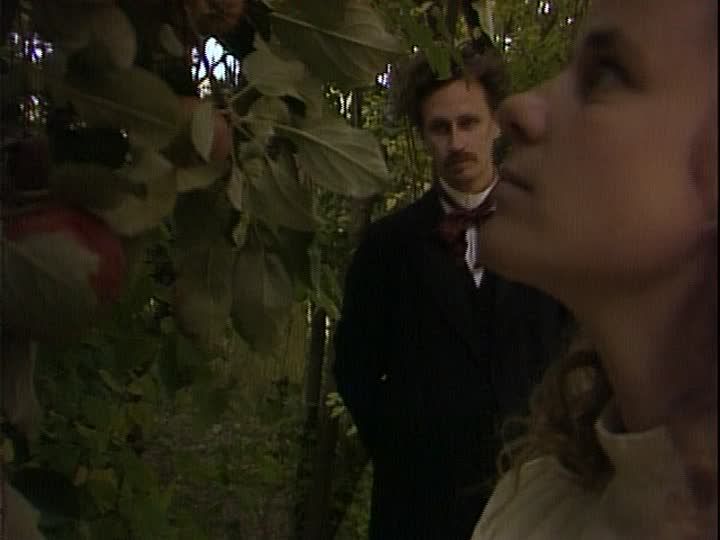
The film is nominally a biography of the Swedish playwright and author August Strindberg (Anders Mattsson), who Watkins sees as a non-conformist thinker whose radical ideas about history, religion and class caused his work to be suppressed and critiqued by the conservative institutions of his time. Watkins explicitly compares this treatment with the marginalization of his own work. It's very apparent that this examination of Strindberg's life and the conditions of late 1800s Stockholm is meant to parallel Watkins' own life and art, and what he sees as the suppression of his ideas by a mass media that has little patience for this kind of intellectual engagement.

The film is thus about its own conditions of production as much as it is about Strindberg's life and work. This is obviously a work made on a shoestring budget, in amateurish conditions. It was shot on video rather than film, and the imagery is often rough as a result, the colors muted, a long way from the grainy beauty of Edvard Munch. The sets are sparse and minimal, often looking like a bare theater stage with a few props scattered around the empty space. The dramatic scenes, both those taken from Strindberg's life and those enacted from his plays, are stagey and claustrophobic, with the camera hovering close to the actors, utilizing simple compositions that place the emphasis on the raw, heartfelt performances. This parsimonious style belies the structural and ideological complexity of the film, which is, typically for Watkins, a clear-eyed and intelligent examination of the intersections between art, life and society. As in Edvard Munch, Watkins applies a non-chronological, associative editing style that juxtaposes scenes from Strindberg's life with excerpts from his plays as well as contextual material involving contemporary political and social affairs in the world around him.


At several points, Watkins diverts from Strindberg's story to focus on the testimonies of Swedish working class people. A man working on a construction site complains that there's housing only for the rich, while the women working beside him note that they don't earn as much as the men even though they do the same work. In another scene, a family waits for a ship that will take them away from the poverty and lack of opportunities they find in Sweden, to the United States, where they hope to do better. One young woman turns towards the camera, sobbing, her face red, already regretting the necessity of leaving behind her homeland and some of her family and friends.

Such interludes help to ground Strindberg's story within the larger societal context of poverty, inequality, and unfairness, conditions that much of his work polemically rails against. Watkins adopts, as he often does, a pseudo-documentary style that speculates on what it might have been like if documentary camera crews had been on hand to question Strindberg about his ideas, to document his life and his relationships, to interview young radicals and grizzled workers in the streets about their complaints and their hopes.

At one point, Strindberg returns from exile to Sweden, facing criminal charges of blasphemy, and finds the streets full of exuberant young people celebrating his return and the boldness of his anti-orthodox ideas about religion and government. Watkins stages the scene so that it looks like a modern protest, like any number of post-1960s student movements that have taken to the streets in a celebratory mood to declare resistance. The only difference is the way the protestors are dressed. To underscore the point, Watkins inserts a title that reads, "On the same day that we filmed these scenes in 1993, the Danish police in Copenhagen opened fire on a crowd of unarmed demonstrators." The film is continually drawing such connections between past and present, suggesting that the upheavals and social changes that have taken place in the intervening years have been largely cosmetic, doing little to truly disrupt an underlying dynamic of power and control that remains solidly in place.
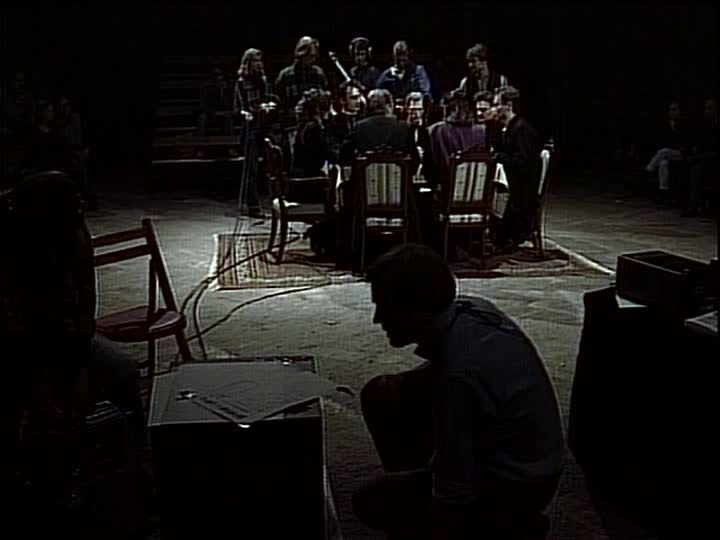

In one of the most remarkable sequences, a group of radical Swedish writers discuss the problems of their time and try to come up with a plan to address gender and income inequalities, both in their writing, and as a broad social reform program. They debate methods and priorities, trying to decide how best to excite public interest in child labor, women's suffrage and the plight of the poor. During this scene, Watkins inserts shots that pull back from the table around which the young writers are gathered to show the cameras, microphones and film crew clustered around them in the room, revealing the cinematic context of this discussion. Soon Watkins goes even further by shattering the film's reality entirely, placing himself onscreen in a discussion with the actors playing the Swedish writers. The actors remain in costume, but now instead of debating conditions in late 1800s Stockholm, they're addressing the modern world, the problems of the mass media, the apathy and lack of belief in progress that prevents modern reformers from having a real voice with which to reach people.

This transition neatly displays the parallels and differences between the two times, suggesting that today's problems are extensions of those of the past, part of the same struggle for equality and justice that has gone on in so many forms over the decade without the need for the struggle ever going away. The issues of the present — class inequality and control over the media — are the same ones that the radicals of Strindberg's time were interested in. In Strindberg's time, the newspapers were battlegrounds for ideas about social reform, with certain papers being sponsored by the rich and the monarchy to attack the ideas of those papers on the left. Even history itself was a site of struggle, as Strindberg's The Swedish People, which for the first time focused on the lives of common people in different eras, represented a challenge to traditional histories which focused on successions of monarchies and governments, wars and treaties, big events and big men. Predictably, Strindberg's history received almost unanimous bad reviews, because the newspapers were largely controlled by precisely the entrenched conservative interests who were threatened by a book that refocused the eye of history so radically and dramatically.
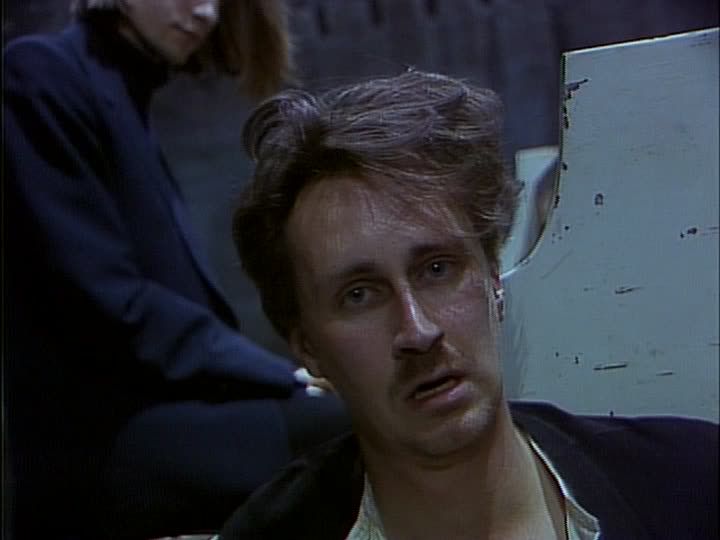

Much of the second half of the film is concerned with the contradictions of Strindberg's life and personality, particularly his late-in-life repudiation of his earlier support for feminism, and his increasingly bitter and contemptuous feelings for his first wife, Siri (Lena Settervall). One of the central questions of The Freethinker is the relationship between life and art, including the paradox that Strindberg often expressed ideas of freedom and equality in his writing that he seldom put into practice in his angry, troubled personal life. Watkins' associative editing style creates linkages between childhood incidents — particularly the cruel punishments of Strindberg's stern, overbearing father — scenes from Strindberg's dramas, and incidents from his long relationship with Siri, with whom he stayed for 15 years. During the second half of the film, Watkins also explores Strindberg's private life through confrontational staged interviews with the playwright, in which a modern interviewer, a member of the crew, hounds Strindberg about his treatment of his wife and children, provoking the writer while Strindberg repeatedly protests that there's more to it, that no one understands.

Indeed, this is a project about understanding, but Watkins grasps that it is impossible to fully comprehend a subject so remote from our own time. The film's analysis of Strindberg can only be built on the writings he and others around him left behind, the incomplete records of their thoughts and feelings and the events that shaped them. Watkins stages a group discussion of Strindberg and Siri in which an audience of men and women of all ages talk about the relationship between the playwright and his wife, grappling with the questions about feminism, creativity, gender and psychology brought up by this story. As one older man says, as a postscript to his own personal take on Strindberg, "there must be many views of Strindberg," many ways of understanding him and his work, many perspectives on the ideas he explored and the kind of man he was during his life.

This is the essence of Watkins' multifaceted approach to his subject, dealing with the complexities of Strindberg's persona and art, and the many possible ways of thinking about his life. The filmed discussion sessions represent an attempt to contextualize Strindberg in a modern setting, and to suggest the kind of active engagement that Watkins desires for his films: the in-film discussion is a model for the kinds of discussions that the film as a whole might prompt in its viewers, so that the discourse and analysis started by the film might continue afterwards.
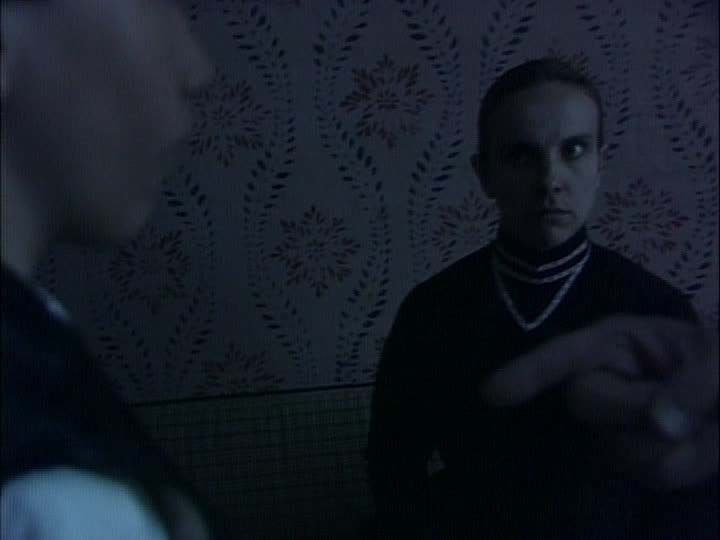

That spirit of discussion goes hand in hand with the intensely collaborative nature of the film. Watkins worked closely with the students from his class, and credits a few of them with writing and directing certain sequences of the film. The production process recalls the utopian collaborative spirit of 1960s radicalism, the student protests and communes, the attempts at creating art communally rather than individually. Those projects, like Godard's Dziga-Vertov Group, rarely lived up to the promise of true cooperation and communal creation that they espoused. But Watkins' work here is no mere leftist dream, he's actually putting into practice these ideals of collaboration, and the result is remarkable. The film employs a mix of amateur and professional actors, though most of the leads, notably Mattsson and Settervall, were not experienced actors; Mattsson was ordained as a priest after the film was finished. The performances are almost uniformly exceptional, especially since Watkins asks the actors to do more than simply play a role, but also to be present as themselves, commenting on the roles they're playing and the historical figures they represent. Mattsson and Settervall in particular often face the camera in intimate closeups, speaking about Strindberg and Siri in the third person, which makes it clear than in these sequences they are not "in character."

The Freethinker is continually working on multiple levels in this fashion, blending biography, literary criticism, sociopolitical commentary and media analysis. It's an amazing film that reflects Watkins' ideas about media hegemony and its connections to class imbalance, but most importantly its polemics are integrated into a larger whole that also wrestles with the nature of art and the relationship between the individual and his or her historical and social context. Even its cooperative production seeps into the film, providing an example of an alternative media model that skirts around the corporate mass media that currently dominates the distribution of information.

Friday, January 27, 2012

The Conversations #30: 3D


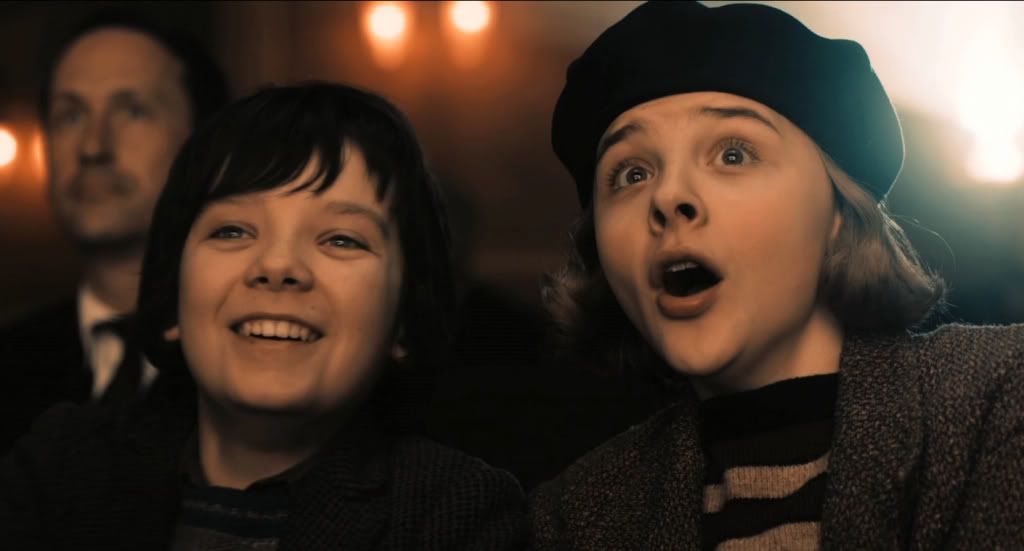
The latest conversation between me and Jason Bellamy is now live at The House Next Door. This conversation is a bit of a different approach for us, as this time we focus on the phenomenon of 3D film, discussing the technology and aesthetics of this popular and controversial format. We concentrate especially on two recent 3D movies by popular directors — Martin Scorsese's Hugo and Steven Spielberg's The Adventures of Tintin — along with the Werner Herzog documentary Cave of Forgotten Dreams. I know everyone has an opinion on 3D, so I hope we'll see some debate and disagreement in the comments section.

Join us at The House Next Door for the full conversation, and be sure to add your own thoughts.

Continue reading at The House Next Door

Thursday, January 26, 2012

The Domain of the Moment/Duplicity III/Murder Psalm


Stan Brakhage was always acutely aware of time in his work, even if only to disrupt it through layering and superimposition, the tools by which Brakhage frequently undercut the passage of time. Time works strangely in Brakhage's work: his editing is often fast, even frantic, and an image can last barely a second or two before being replaced with another, so the films seem to move very quickly, propelled forward by the perception of great speed. And yet time is also stretched and warped in his work, elongated through repetition so that a single moment can recur as Brakhage loops back to it again and again, returning obsessively to the same images and thus to the same moments in time. His layering, too, extends the sensation of time by erasing the distinctions of linear progress; all things happen simultaneously in his films, so that a Brakhage film becomes a timeless domain where one image follows another in space (the physical space of the film strip, on which in his later work Brakhage often painted or scratched directly) but not necessarily in time since the relationships between images are so blurred and destabilized. Time for Brakhage is malleable, no mean feat in a medium where time is precisely counted in twenty-fourths of a second.

Perhaps this accounts for the title of The Domain of the Moment, which is divided into four segments, each of them focusing on a different animal or animals from among Brakhage's pets. Animals, Brakhage seems to suggest, live in the moment, unaware of the passage of time, their lives built around repetition and instinct. Could there be any more perfect subject for one of his films? Brakhage opens the film with evocative, warm and beautiful images of a baby bird hesitantly staggering through some stalks of grass, pecking at food, crawling over a man's hand, running back and forth in a tank. The images are sensual and suggest the timeless, pattern-based routine of an instinct-driven animal, eating and playing and moving around, repeating the same actions over and over again. To reinforce the impression of experiencing the world as an animal, Brakhage maintains a low-to-the-ground camera that crawls among the stalks of grass with the bird, rarely showing the animal directly but instead capturing its feet, the fluffy textures of its feathers, the spikes of grass surrounding it. The intimate camera gives the impression that this scale is all there is, that a whole world is found in the modest artificial environment where the bird lives; the foliage around it is a jungle, the thin layer of dirt the earth, everything on the scale of a tiny creature.

Brakhage adopts a similar perspective for his examination of a hamster, then films an encounter between a shaggy white dog and an apparently domesticated raccoon, capturing the hesitance and lingering sensuality of the moment by endlessly drawing out the first moment of contact, with the raccoon lurking in the dark and the dog facing it expectantly. The bristly, spindly fur of the raccoon and the shaggy pile of the dog provide a study in textural contrasts, a theme carried over into the final section in which Brakhage films a snake. Its coiled, scaly body forms neatly geometric spirals that Brakhage then abstracts by blurring and overlaying them, turning those cleanly defined forms into a field of hazy rounded surfaces, sleek but finely textured at once, glistening slightly with light. Brakhage occasionally breaks away from his images of animals for painted segments that provide a very different example of sensuality and in-the-moment experience. It is as though Brakhage is acknowledging his metaphor here, making explicit the connection between his approach to art as a visceral, out-of-time experience, and what he imagines must be the similar experiences of animals with their instinctual consciousnesses.


Stan Brakhage often included images of children in his films as icons of innocence and play. His movies about children — his own and those of friends and family — reflect the spirit of domesticity and familial closeness that often runs through his work. Many of his films, as avant-garde as they are in terms of technique, have some resemblance in terms of themes and concerns to home movies, documenting private family moments, things happening around the house and in the community. Duplicity III is the culmination of a series of films titled Duplicity and Sincerity, made from 1973-1980. Duplicity III opens with images of children putting on costumes, getting ready to go trick-or-treating, which immediately suggests one meaning of the title: games, play, masking one's identity as an expression of childlike imagination. Later, he shows children dressing up for a school play, another outlet for imagination and games of "let's pretend." Often, the children are dressed as animals, and Brakhage overlays images of real animals, blurring the boundaries between signifier and signified, blending the coarse hair of a dog with a child's hair so that the two are difficult to separate. This juxtaposition suggests that a part of childlike play involves getting in touch with animalistic nature, playing at wildness and non-humanity.

There's also an element of theatricality in these games, which is especially obvious at the end of the film, when Brakhage superimposes ghostly silhouettes of kids playing parts on top of a plush red curtain on a stage. (But first, he superimposes a deer onto the stage, as though it too had a role to play as one of the original images from which all this dress-up is derived.) In his images of school plays, Brakhage is akin to a home movie documentarian, capturing childhood moments that would only be of interest to a parent. But Brakhage is not documenting a particular child's Halloween preparations or school play, he's using these images in a more abstracted way as general signifiers of childhood, and especially of the child's tendency to play with identity through disguise and role-playing. The specificity and personal significance of the home movie is expanded, in Brakhage's work, into ruminations on universal experiences and states of being.

This is a film about youth, or more precisely, it's about youth as idealized by adults. That's why the images of kids at play are so bright and joyous: at one point Brakhage shoots a little girl's hair with light shining through it so that she seems to have a frizzy halo floating above her head, making her look angelic in the sunlight filtering through her blonde hair. The pacing of the film is slow and sensuous, with a lot of leisurely cross-fades between images, layered atop one another. This layering and multiplication of images is another way in which Brakhage makes his personal documents universal, resonating far beyond a portrait of particular childhood memories. By blending together fragmentary scenes of children at play, mashing together different times, places and people, Brakhage takes the emphasis off of the individual image and puts it on the relationships and commonalities between images, the sensual qualities of light and color, the thematic continuities that drive each work.


In Murder Psalm, Stan Brakhage focuses on a largely abstract and elliptical depiction of the mysterious impulses that lead to violence. Much of the film is composed of sequences seemingly recorded off of a TV set, from news broadcasts or movies, the colors of the images dull and muted, caked in static and fuzz, so that only the vaguest outlines and impressions of the underlying image still show through. Brakhage seems more interested in the textures of the static and the flickering lines that pulse across the TV screen, so that the image beneath becomes subliminal, a projection from the unconscious. These hazy, unclear images are interwoven with outbursts of cheerful cartoon violence, clips from science lectures regarding the brain, autopsies that reveal the bloody reality beneath the skin, and a wordless psychodrama in which children wander through the woods, stare into a mirror, play and fight, nursing darker feelings beneath their childish innocence.

This is powerful stuff, slowly building a sense of dread and violence without overtly depicting the titular act of violence. The murder of the title seems continually on the verge of happening, burbling up from an unconscious mind full of images of wartime devastation, criminals and soldiers, and a child's casual, laughing cruelty towards other children. The images of brains, both models and real ones removed from dissected corpses, suggest that the origins of violent impulses arise in the mind, but the corporeal reality of the brain, bloody and covered in deep furrows, does little to probe the enigma of those violent thoughts. Thus the autopsy might diagnose the physical cause of death, but the tumultuous churning of the mind, overloaded with visual stimuli and a rush of conflicting ideas, is more elusive; the solidity of the brain barely hints at the mad processes that can go on within its neural pathways.

It's left to Brakhage's flood of imagery to suggest this violent, emotionally complex inner life, capturing the dark and murky thought process of an individual overtaken by thoughts of violence and murder. Brakhage, as usual, uses the title of his film to shade and inform the images that follow it, but this would be an undeniably dark film no matter what. Its darkness arises from the degradation of its images, the muddy, ugly quality of most of these images. Occasionally, scenes from everyday life shine out with crystalline clarity, but more often everything is vague and abstracted, the colors dull, the figures and settings obscured by the fog of TV static. Even the painted sections are wan and pale, restricted to lifeless grays and browns and dark blues, the paint thickly caked and shivering in abstract patterns that mimic the TV static. Many of the photographed segments are similarly dulled, bathed in a flat red filter that recalls not fresh blood but the caked, rusty scrapings of very old blood, evidence of an ancient murder only discovered many years after its occurrence. For Brakhage, this deliberate denial of the beauty and freshness of images is itself a form of violence, a visual equivalent of the sapping of life; the deadened colors and erasure of images in static is a filmmaker's act of murder.

Monday, January 23, 2012

How Green Was My Valley


John Ford's How Green Was My Valley is a gorgeous, achingly sad movie, a moving evocation of "the way things were" and the process by which the inexorable progress of industry and modernity slowly, steadily erodes the old ways, breaking apart the stability of family and shattering tradition. The film is steeped in the director's love of innocence and simple virtue, his rosy perspective on the past and its values. Because of this, the film is deliberately, lovingly old-fashioned in every way, paying tribute to a way of life that dies out one step at a time over the course of the film. The film even opens with an acknowledgment that the place and the time it is depicting is already long gone, changed forever, its emotions tinged with nostalgic regret and sorrow. In the opening voiceover, Huw (Roddy McDowall) prepares to leave home, packing his things while the sad voice on the soundtrack describes his memories of his home the way it used to be. The remainder of the film is set in the past, looking back wistfully at the glorious days of childhood happiness and familial closeness, and the slow disintegration of those virtues over many years of suffering and sadness.

Huw's family lives in a Welsh village in the shadow of a valley, and all the men work all day in the coal mine perched at the top of the valley, above the town, its smokestacks belching black clouds into the air above the town. Huw's memories stretch back to a time when he was a young boy, when the coal and the smoke had not yet stained the valley's green hills black. Huw's recollections of his boyhood begin in idyllic bliss, recalling the beauty of the valley, the love of his parents, Mr. and Mrs. Morgan (Donald Crisp and Sara Allgood), the fresh-faced beauty and sweet smiles of his sister Angharad (Maureen O'Hara) and sister-in-law Bronwyn (Anna Lee), the camaraderie of his four older brothers. The happiness of these memories is deliberately exaggerated, marinating in over-ripe sentimentality and down-home charm. Looking back, Huw remembers his early boyhood as a paradise, rooted in the stern but loving ritual of home life: deep-seated respect for his parents, religion, love and generosity. This life is strongly ritualized and formalized, with a set of encoded traditions that drive daily life. Every day, the men go off to work in the mornings, then return home in the late afternoon, winding through the streets singing while the women and children come out to watch. They deposit their daily earnings with the matriarch of the family, settle down to dinner after prayers, and eat heartily without speaking — "I never met anyone whose talk was better than good food," Huw says. Afterwards, the young men are given their spending money, sent off to have the nightly fun that their day of hard work has earned them. It's a simple and sometimes difficult life but a fulfilling one, and Ford purposefully spends some time establishing this traditional existence's appeal and its grace, because the rest of the film is concerned with the erasure of all this tradition and stability.


Over the rest of the film, Ford slowly reveals how these traditional values and ways of life have been corrupted and made irrelevant by the advances of modernity. The men working at the coal mines are increasingly subjected to more and more injustice: their wages are reduced as cheap labor becomes readily available, and men who have been toiling in the mine for many years are unceremoniously fired and replaced by younger, poorer men who can be paid less for the same work. Mr. Morgan largely takes these changes in stride at first, convinced that the old standards of fairness and decency will remain intact, but the younger generation is not so trusting, and they struggle to form a union that could help them fight against the mistreatment they receive at the hands of the rich mine owners. Ford increasingly provides little way out. Religion offers some comfort in the form of the pastor Mr. Gruffydd (Walter Pidgeon), but his kindly spirit and goodness are an anomaly in a church mostly ruled over by bitter old men. In one chilling scene, these older church dignitaries call a "meeting" at the end of mass to summon one poor young woman to stand in front of the congregation, where they castigate her for having a child out of wedlock, sneering angrily at her; Ford captures the wizened, shaking hand of one deacon in closeup, pointing an accusing finger at the woman. Scenes like this suggest that the goodness and kindness of the Morgan family is only one possible outcome of old-fashioned tradition, and that tradition can also be close-minded and judgmental, so stuck in its ways that there's no room for deviation.

This scene is a premonition of the way that Angharad — who is the only parishioner to storm out of the church, enraged by this display of cruelty disguised as religion — will later be treated by the town in which she grew up. Angharad loves Mr. Gruffydd, but their relationship is not meant to be, and instead Angharad marries the wealthy son of the mine owner and moves to South Africa. Her wedding is contrasted against the marriage of her brother Ivor (Patric Knowles) to Bronwyn earlier in the film. At Ivor and Bronwyn's wedding, the mood is joyful and ecstatic, with the bride and groom running through the town surrounded on all sides by revelers enthusiastically throwing rice, smiling and singing. At Angharad's wedding, the bride is grim and stoic, and her expression is matched by many in the crowd; though the groom at least is smiling, this is a joyless affair, and the singing only starts when Mr. Morgan shames the crowd, made up of men who have been beaten down and mistreated by the mine owners, into singing for his daughter's marriage. When Angharad later returns to town without her husband, it's no surprise, but she's not greeted with any joy then either: though no one cheered her marriage's beginning, they now flood the streets with vicious rumors about divorce, unfaithfulness and scandal centering on Angharad and Mr. Gruffydd, even though nothing has happened between them. There is another church "meeting," and again the viciousness and ugliness of traditional values are exposed.

Not that modernity offers anything better. Huw is the only member of his family to go to school, which Mr. Morgan at least sees as a path out of the family's poverty and lack of options. Mr. Morgan has already seen all of his other sons — except for Ivor, who dies in the mines — leave home for greater opportunities far away, and he recognizes that this is the inevitable fate of his family and his village, broken up by changes to which they are ill-suited to adapt. He hopes that Huw will be different, but at the regional school Huw encounters only prejudice and disdain, from his snooty teacher and his fellow students alike. He's beaten and abused, mocked for his old-fashioned ways and his relative poverty, while at home his mother has no patience for the abstract ideas and theoretical problems involved in education, seeing no practical applications for the things her son is learning. Perhaps influenced by his mother's pragmatism, as well as his boyish love for Bronwyn, when Huw finishes his education, he decides that all he wants is to work in the mines like the rest of his family rather than put his new knowledge of Latin and mathematics to use.


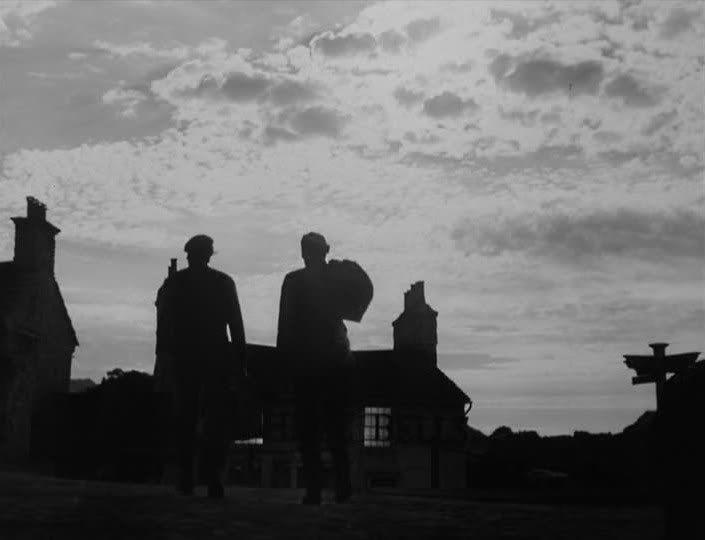
Cinematographer Arthur C. Miller's stark, dark black-and-white imagery contrasts against the aching nostalgia and sentiment of Ford's vision. The cinematography is darkly romantic, using a high-contrast style in which the blacks are rich and deep, occasionally broken by the bright, pure light shining through the valley. In the hills above the town, the trees cast latticework networks of shade across the rustling grass, while the town itself is brighter, with long shadows stretching across the roads winding along the rows of houses. The film's most beautiful images are inevitably the departures: images of the Morgan sons leaving home, two by two, for greater opportunities, their belongings slung across their backs, their silhouettes shrouded in darkness and the big country sky towering above them, tumultuous with clouds. This film's simple beauty perfectly captures the longing for home and tradition that inflects every minute of it. Even the mine, spewing smoke and ash across the countryside, is rendered with an awful beauty, a stark industrial simplicity that hovers above the town, slowly infecting it with a sickness that drains the village of its young people, its hope, its rock-solid reliance on a certain way of life.

This is sentimentality with real purpose behind it, sentiment and nostalgia honed into biting social commentary. Ford's vision is so pure, so direct, that it's near impossible to take his idealistic perspective on the old days at anything but face value. The film only occasionally stumbles, mostly because of the often lame accents. Also, Ford's decision to have Huw played by the young McDowall throughout the film becomes very strained later in the movie, when the boy begins working in the mine and living with his brother's widow — it's obvious that he is supposed to be a young man at this point, as he was in the Richard Llewellyn novel that Ford was adopting, rather than a little boy. This structural and casting misstep aside, How Green Was My Valley is a staggering achievement, a film of tremendous beauty and melancholy, a deeply sad but never despairing portrait of the way things were, and the way they'll never be again.