Wednesday, October 17, 2012

Le Doulos


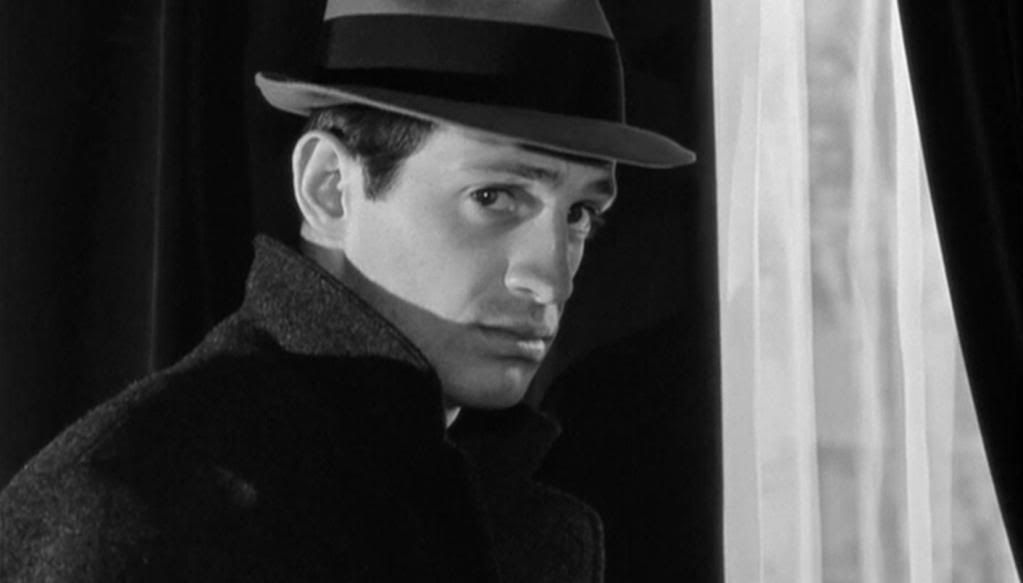
Jean-Pierre Melville's Le Doulos is a bleak, twisty crime film in which no one is what they seem to be, and loyalty and friendship can never be taken for granted. Moody and brilliantly shot, it's a powerful examination of betrayal and the twisted concept of honor among thieves. Style is everything for Melville: his crooks and criminals prowl around and scheme against one another in a perpetually foggy, dimly lit night that seldom gives way to day or sunlight. Men in trenchcoats and fedoras stalk through the shadows, visible only as silhouettes through windows, staring at their fragmented reflections in mirrors as cracked as their souls. Pistol shots sound as loud bangs in the night, and the bodies pile up as these criminals kill one another in the name of revenge, greed, friendship, and a warped concept of justice.

Maurice (Serge Reggiani) has just been released from prison, but he's already getting tangled up again with his old associates and his familiar criminal schemes. He's tying up loose ends, exacting revenge on a former friend in the opening scenes and then planning his next heist. When his plan goes wrong, he blames his friend Silien (Jean-Paul Belmondo), who everyone has always said was a snitch and an informer, so it shouldn't have been any surprise to Maurice if his friend turned on him. It's expected, so much so that it almost seems as though Maurice wants the job to go badly, wants to get caught or killed by the cops: he's repeatedly told that he's going to be informed on, and he suspects that it's all "too easy" and could be a trap like the job that sent him to prison years ago, and yet he does the job anyway. There's a sense of fatalism in Maurice, a resignation to things going bad, and he's not the least bit surprised when he sees the cops closing in on him just minutes into this job.

Things aren't always what they seem to be, however, and after this point Melville centers the narrative on the supposed snitch Silien, who's involved in a complicated and twisty scheme, the final purpose of which is anything but clear. Melville methodically, rigorously lays out Silien's plans and actions, watching as he seems to be playing everyone against one another, juggling multiple plots and pointing various players from among both the police and the criminals at one another. Throughout it all, his motivations remain cloudy, which is what makes the film so compelling and ambiguous. Is he helping a friend? Is he maneuvering to make a big score for himself? Is he aiding the cops or simply manipulating them into position for whatever his larger plan is? Melville, through Silien, finally lays it all out in a series of explanatory flashbacks towards the end of the film, and the narrative puzzle falls into place with the satisfying click of a well-constructed mystery.


What's interesting is that the mystery here is not a whodunnit but a whydunnit: everything that happens is utterly clear, though a few missing scenes are slotted in by the flashbacks at the end. What's up for dispute, for the most part, is motivation, the unseen thought processes behind the mysterious actions of this ambiguous antihero. It's a mystery of the mind, focusing on the ephemeral nature of loyalty and friendship: there's no way of knowing what's going on in the minds of those who claim to be friends, no way of knowing who's plotting betrayal and who's genuine. This is especially true for these underworld figures, who can trust no one, and for whom lifelong friendships often end in bloody murder — as evidenced, of course, by the opening scenes, in which it seems as though Maurice is betraying his own friend. Of course, nothing is as it seems here, and even that seemingly straightforward action is complicated by certain revelations later in the film.

Melville's high-contrast noir-influenced style adds to this sense of instability and shadowy motivations. Killers are always lurking in the shadows, holding pistols, their faces obscured beneath the brims of their omnipresent fedoras. The streets seem to be empty of anyone other than cops and criminals, which may be why there are never any witnesses to the film's many crimes, only people who say they saw someone, a vague silhouette perhaps, their accounts never lining up to the reality. As a result, the cops have to count on informers, as one detective complains during the stunning sequence where he pumps Silien for information, a scene that Melville stages in a single nearly ten-minute take, the camera restlessly circling the room as cop and criminal try to outmaneuver one another.

This is a man's world that Melville is documenting here. The women, like Maurice's girl Thérèse (Monique Hennessy) and Silien's girl Fabienne (Fabienne Dali), are simply used and abused by the men, manipulated as pawns in these games of betrayal and scheming. Though Silien is planning to run off with Fabienne, to get out of this criminal life and live a quiet life with her, everything he does is centered around Maurice; it's for the sake of masculine friendship, not love, that he does everything he does. Le Doulos is a stylish, compelling noir in which those bonds of male friendship are repeatedly strained, tested, and interrogated.

Monday, October 15, 2012

A Matter of Life and Death


A Matter of Life and Death is an utterly charming fantasy of mortality and the afterlife, as well as a cross-Atlantic romance that considers the essence of Britishness as juxtaposed with and contrasted against the essence of Americanness. This collaboration between Michael Powell and Emeric Pressburger, the Archers, is a moving, inventive surrealist love story that, as the introductory voiceover announces, has its feet firmly in two worlds, poised between life and death. Set during World War II, the film concerns a mistake on the balance sheets of Heaven, involving the RAF pilot Peter Carter (David Niven), whose plane is destroyed and his parachute shredded, his crew ejecting at his orders, leaving him behind to bail out without a chute, seemingly to certain death.

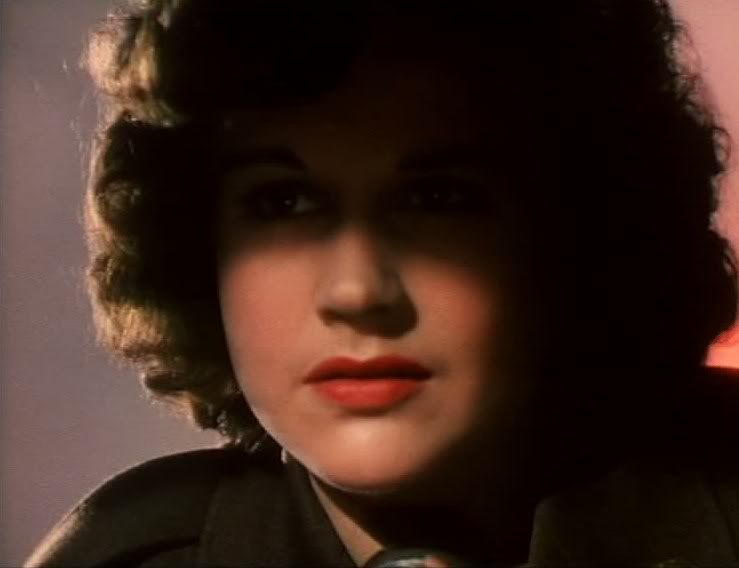
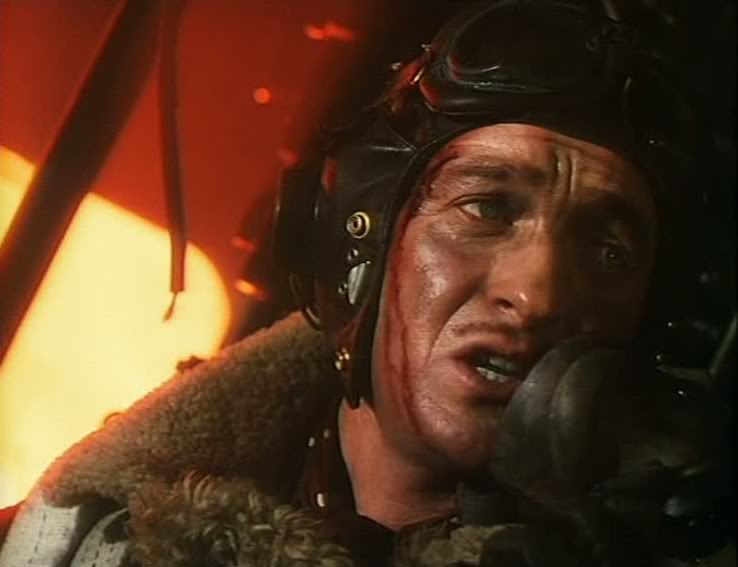
The opening scenes, in which Peter shares his presumptive last words over the radio with the American dispatcher June (Kim Hunter), are remarkable and affecting, with Powell and Pressburger cutting back and forth between the faces of June and Peter as they bond in the final moments before the pilot bails out. June, bathed in shadows and red light, tries to keep from breaking up as she realizes what's happening, her voice thick with emotion. On the other end of the line, Peter's face is lit by the glow of the flames consuming his plane, his face black with grease, but his bravado unaffected, his face illuminated by a charming grin. Their words fly back and forth in a rapid patter, Peter displaying an unflappable grace under pressure, a willingness to go his death with a smile on his face and a few flirtatious words going out over the wire to the American girl. This scene sets the tone for the whole picture, establishing a cavalier, flippant attitude towards the end, a stiff-upper-lip bravery that doesn't allow for any tears, any sadness, not from Peter at least, who prepares for his presumably fatal leap without the least bit of sentiment. Those moodily lit, sensuous closeups connect these two people at a crucial moment, and the unforgettable effect of this scene lingers over the entirety of the film.

Peter makes his leap into the choppy ocean below, but as it turns out, he doesn't die: the heavenly conductor (Marius Goring) meant to usher him into the afterlife loses him in the thick British fog, and Peter washes up on shore, briefly believing that he's actually dead, that he's woken up on a heavenly shore. Instead, he's washed up near the country house where June is staying, and they meet for the first time, instantly falling in love, their emotions primed by their deeply affecting radio contact. This creates something of a problem when the conductor finally tracks Peter down, since now Peter, who had been prepared to go to his death with a quip and a smile just hours before, has something to tie him to Earth, something to live for. Peter, suffering from headaches and other signs of a concussion, struggles in two worlds, facing an appeal for his life in a heavenly court as well as preparing for a brain operation under the worldly care of Dr. Frank Reeves (Roger Livesey).


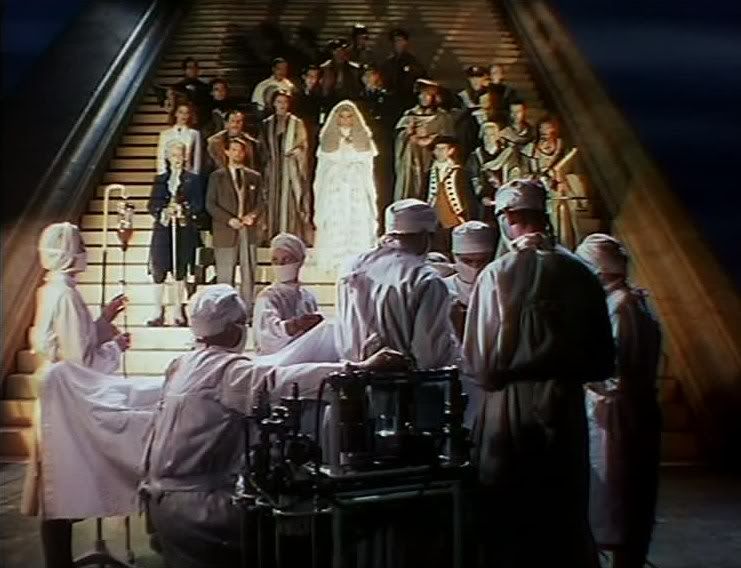
The film alternates between these two worlds, with the earthly scenes shot in sumptuous, brightly colored Technicolor and the surreal heavenly scenes in stark, plain black-and-white, which has the effect of rendering the real world vivid and sensuous, while Heaven has a no-nonsense logic to its management of souls — there's even a massive data center, managed by angelic clerks, with files on the living and the dead. Jack Cardiff's cinematography is gorgeous throughout, and the transitions between realms are handled with slow fades, color slowing returning to the world of the living as Peter funnels from life into the land of the dead and then back again. The imagery consistently reflects the ideas of two worlds that can interact. Dr. Reeves even has a camera obscura, a glowing oval in the darkness that he pans across the village as though watching a movie, gazing down from a heavenly perspective, providing a running commentary on everything he sees. When he opens his doors to let June in, the oval goes blank and a yellow light is cast over the room; light, as always in Powell and Pressburger's films, is used like paint.

At the crux of the film is the "special relationship" between America and Britain, one-time enemies who had become allies, an alliance particularly tested during the war that had just ended when this film was released. Powell and Pressburger don't miss an opportunity to tweak the cultural connections and differences between the two countries, as in the scene where a group of American servicemen with thick New York accents act out Shakespeare's A Midsummer's Night Dream, getting into their parts despite the accent disconnect. Peter's trial becomes a British versus American conflict, as his prosecutor is Abraham Farlan (Raymond Massey), the first American killed by the British during the American revolution. Hilariously, Farlan holds up a sleepy-sounding British cricket announcer as evidence of British cultural bankruptcy, while Reeves, acting as Peter's defense, counters with American jazz to demonstrate how out-of-touch Farlan is with what's currently happening in the world, and to show that the two countries are simply speaking different languages, culturally speaking, though they're unified in other ways. Reeves chooses a jury made up entirely of Americans, which turns out to be embodied as a series of stereotypes, demonstrating the melting pot of American culture. And the push/pull nature of American/British relations is encapsulated in the small touches too, like the way that, after Reeves cites the possibility of a British serviceman falling in love with an American girl, an American GI in the audience looks over at the rows of British nurses nearby and wistfully adds, "or vice versa." The film pokes fun at various cultural stereotypes — the lugubriousness of the British radio announcer, the gangster-type mannerisms of the Americans reciting Shakespeare, the series of multicultural clichés on the jury — in order to suggest that cultural differences and historical grievances can be set aside, both for the sake of true love, and on a larger scale in forming new national alliances that draw together countries that had started out being at odds with one another.

This is an utterly charming, whimsical film that's also infused with the complex emotions of a romance that's on the verge of being torn apart from the moment it begins. The film's melancholy, sumptuous beauty is perhaps best embodied in the poetic image of one of June's tears, preserved as a ripe dew-drop on the petal of a flower as prospective evidence in Peter's heavenly trial. Powell and Pressburger expertly weave this kind of sentiment together with the film's occasionally goofy comedic sensibility and the fantasy aesthetic of the Heaven sequences. The result is a bittersweet comedy with an overriding feeling of impending loss balancing its charm and its humor.

Friday, October 12, 2012

Bicycle Thieves


Bicycle Thieves is a deserved classic of the Italian neorealist movement. Made just a few years after World War II, Vittorio De Sica's melancholy masterpiece starkly captures the poverty and desperation of the post-war years. The film is all about the lack of jobs and money that afflicted so many working class families during the long, slow years of post-war recovery, with Europe in ruins, its economy struggling to rebuild and leaving many people floundering. Antonio (Lamberto Maggiorani) is one of these struggling men, out of work and unable to provide for his wife Maria (Lianelli Carell), their son Bruno (Enzo Staiola) and a baby. When he does stumble into a job, it comes with the caveat that he needs a bicycle, and he pawned his bicycle long before to get food for his family. He buys the bike back and is excited to finally be working again, but on his first day on the job, the bike is stolen and his hopes are dashed.

De Sica quickly establishes just how vital this bicycle is to this family's future, to Antonio's ability to provide for his family. The bicycle, which had been hocked to pay for food, is bought back by selling the sheets off their bed; every one of their meager possessions can potentially be traded to feed the family. A job is a near-miraculous stroke of luck, since the work is handed out by lottery with just a few jobs randomly distributed among eager crowds of men waiting for their chance to work.

Since the bicycle is necessary for this job, it is absolutely essential to the family, and De Sica creates nearly overwhelming tension in the scenes after they've retrieved the bike, simply by tracking and zooming so that the bicycle inches out of the frame, its form cut off as the camera moves. Every time the bike is out of view, one expects it to vanish for good, that the next time the camera tracks back to where it was, it will be gone. It's unnerving, this subtle formal play with the boundaries of the frame, because the bike has become a symbol of the family's economic stability, and its absence from the frame provokes an almost unbearable tension, particularly when Antonio leaves it sitting against a building, guarded only by some kids playing in the street, and walks inside. When Antonio comes back out again, De Sica frames the shot of him descending the stairs tightly, so that it seems as though the bike is no longer sitting in the doorway where he'd left it, until the camera pulls back a little and the frame expands so that the bike's handlebars poke into the shot at the bottom edge.


When the bike is stolen later, Antonio and Bruno head out into the city in a nearly hopeless attempt to find it. De Sica uses this very simple story, this desperate search for the bicycle, as a way of exploring the poverty and desperation of working class families in Italy. The film's cinematography is stark and bleak, suggesting the dreary existence of these people, most of whom have no steady work, no security or stability. De Sica frequently places Antonio and Bruno in long shots where they blend into the crowds in open-air markets or on streets crowded with laborers riding bikes to work. There's nothing exceptional about their lives, they don't stand out, and their search for the bicycle is no different from the desperation experienced by so many other families. In some ways, they're not even the worst off, as evidenced by the scene in which Antonio pursues an old man (who he thinks knows the thief) into a religious shelter for the extremely poor, where the mostly old residents are locked inside to attend mass before they can get some free soup.

De Sica's compositions are bleakly realistic, but they're also formally rigorous, with a striking sense of framing that's especially obvious in the way he explores the widening divide between father and son as they search together for the stolen bike. Bruno frequently trails behind his father, ignored as Antonio remains focused solely on the search. The irony is that he needs the bicycle, and the job, so much because they will allow him to provide for his family, but in his singleminded obsession with the search he loses track of his son again and again. In De Sica's wide shots, the boy is often separated from Antonio by a broad gulf of empty space, Bruno falling in the rainy gutter or nearly getting run over by traffic without his father seeing a thing. The desperation and poverty of their situation is creating this disconnection between them, making the father/son relationship secondary to the necessities of struggling for food and shelter and money.

That fractured paternal relationship is the film's real tragedy. Bruno is the film's most sentimental, moving figure, and the film's only source of sporadic comic relief, as when he opens up a confessional's curtain and gets smacked on the head by the angry priest inside. Just as often, though, his innocent face is clouded with melancholy, as in the heartbreaking scene where his father takes him to a restaurant and he looks jealously at an upper-class boy whose family is eagerly eating many dishes and courses, while Bruno feels guilty about wasting their scant money on a small order of bread with cheese. His touching, naturalistic performance is especially startling since Staiola, like the rest of the cast, was an amateur who had never appeared in a movie before. Bracing, beautiful, and almost unbearably sad, Bicycle Thieves is a moving portrait of the desperate, narrowly focused struggle that life is reduced to when abject poverty is so omnipresent and so difficult to escape.

Wednesday, October 10, 2012

Sex Is Comedy


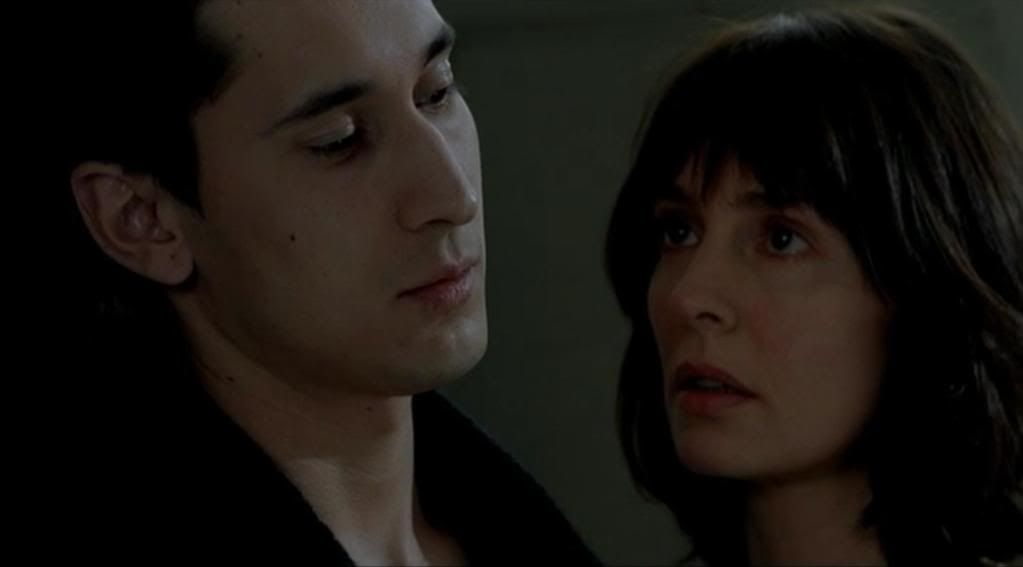
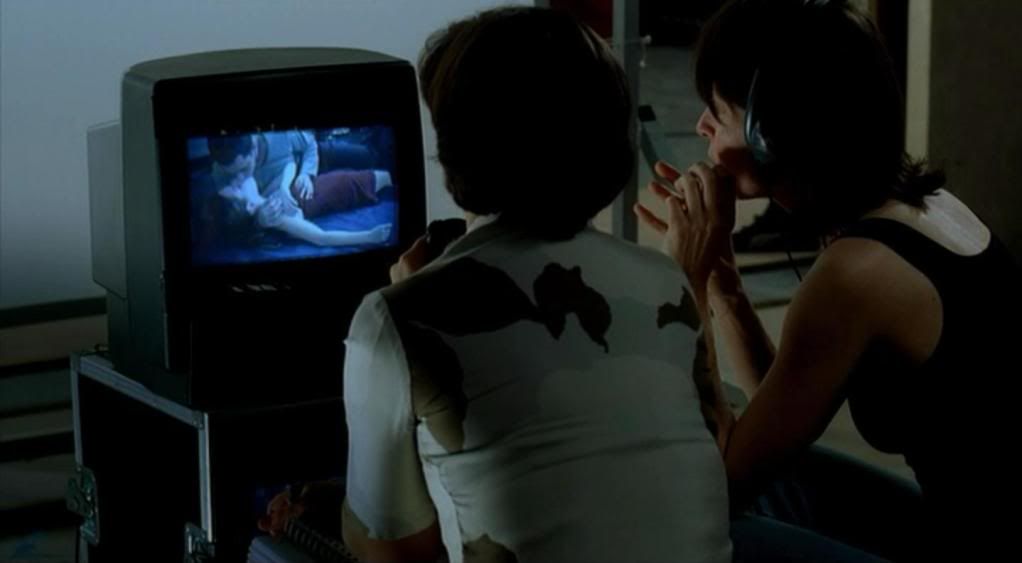
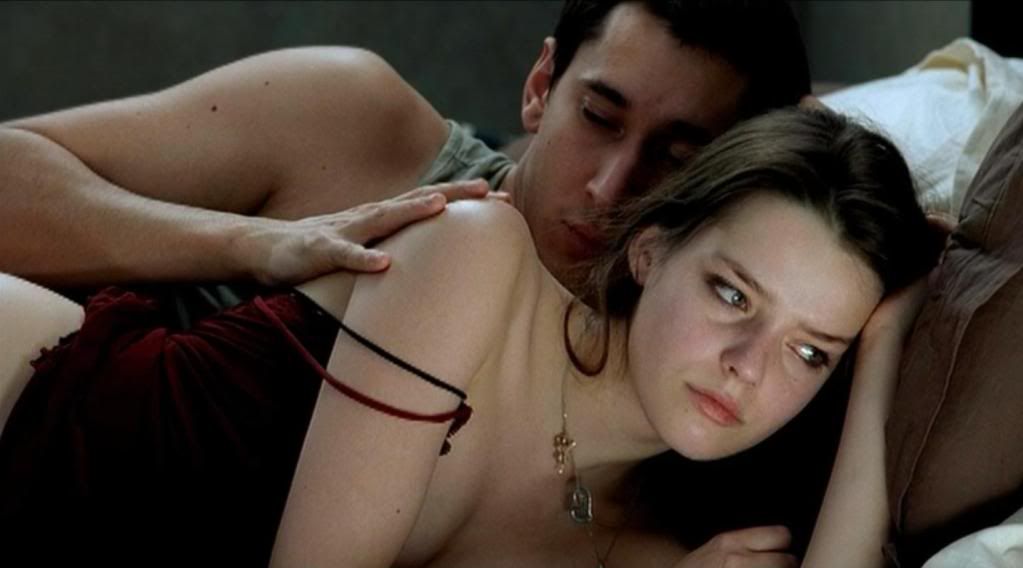
In Sex Is Comedy, Catherine Breillat lays bare the essence of her cinema in an especially direct way, making a metafictional, quasi-autobiographical film about a director making a film. Jeanne (Anne Parillaud) is a director very much like Breillat, a director whose work deals candidly with the antagonistic, push/pull, love/hate nature of male/female dynamics. Her latest film builds up to a scene of a young girl losing her virginity, but to capture onscreen the complicated emotions of this moment, she must overcome the resistance of her unreliable actors, who are never named but only called, somewhat pompously, the Actor (Grégoire Colin) and the Actress (Roxane Mesquida). As with much of Breillat's work, it's all too obvious that she's laying out a thesis and singlemindedly setting out to prove it.

It should come as no surprise to anyone who's seen the director's other films precisely what that thesis is. For Breillat, sex is a power struggle, love is a power struggle, virtually any relationship between a man and a woman can be boiled down to a power struggle. It's all a vicious game, which is why sex is comedy, although "sex is tragedy" would be equally apt. Jeanne, standing in for Breillat, stages love scenes like a war, and the behind-the-scenes glimpses this film provides into Breillat's working methods — the film is supposedly based particularly on her experiences while making Fat Girl — are fascinating. She's constantly looking for tension, for anxiety, arranging the actors into uncomfortable postures, the girl's elbow digging into the guy's ribs, or the girl putting her arm around his neck in a pose that's more like a wrestling headlock than an embrace. Jeanne is alternately tyrannical and tender on the set, and she has almost intimate, sexually suggestive relationships with both the actor and her assistant Léo (Ashley Wanninger), mirroring the relationship in the film she's making.


Unsurprisingly, Breillat finds, on the set, a neat parallel for romantic relationships in the power struggle between actor and director, each of them pushing at and pulling on one another by turns, fighting for control and dominance, arguing over every petty detail, like whether the actor will take his socks off or not for one scene. She recreates, with him, precisely the uncertain, will-she-or-won't-she vibe that she's trying to capture onscreen, and it's unclear if this relationship with the actor is "real" or simply a game, a way of getting the performance she wants out of him by keeping him destabilized even between takes.

That's one constant thread running through the film, a suggestion that this film's portrayal of faked intimacy between actors can be seen as a parallel for the games and power struggles that also go on in real relationships. The film's title encourages the comparison: sex is comedy, not only on a film set, but in the real world as well, where these same struggles and masquerades and fakeries go on without being acknowledged as explicitly as they are here.

Much of the film is dedicated to constant introspective meta dialogues, with everyone debating the nature of acting, the struggles of translating one's vision into cinema, the difficulties of filmmaking. It often feels as though Breillat is giving an interview, speaking through her characters about her own filmmaking process and her own ideas. It's interminably interesting and frustrating, and it exists mainly as a commentary on Breillat's other films, to the point where it's difficult to separate it from the rest of her oeuvre. It's a film where a director employs sexual manipulation in order to convey sexual manipulation onscreen, a tricky paradox that might just signify Breillat addressing or acknowledging the critics who have accused her of making exploitation films.


It all builds up to the moment when the actors finally perform their big love scene, and after some false starts they infuse the scene with genuine, harrowing emotion, particularly Mesquida, who's shivering and spasming and crying as Colin coaxes her character into letting him take her from behind. The scene is intense and shattering, though it doesn't even remotely capture the conflicted, complex layers of desire and reluctance that Jeanne had claimed to want from the scene — instead, typically of Breillat, the sex just looks unpleasant, like a rape or a near-rape, forced upon the unwilling girl by the insistence of the guy. It's strange that Jeanne is so insistent that girls both desire sex and are scared of, but all that comes across, here as in many of Breillat's films, is the fear, the pain, the unpleasantness, and none of the supposed desire. (One of the reasons that Breillat's more recent fairy tale films have been her best work yet is that they do embody the contradictory dichotomy that's only given lip service here.)

When the scene is over, the actress is still sobbing, and Jeanne, her own eyes red and her face overcome with emotion, embraces her and comforts her. The extra level comes from the awareness that Mesquida is playing an actress overcome by her part, leaving one to wonder how much of this is genuine, how much acted, and how closely the film within a film mirrors the film that Breillat actually made. In any event, it's a complex ending to a film that is otherwise only intermittently engaging for much of its length, even if it does add some crucial context to an understanding of Breillat's work.