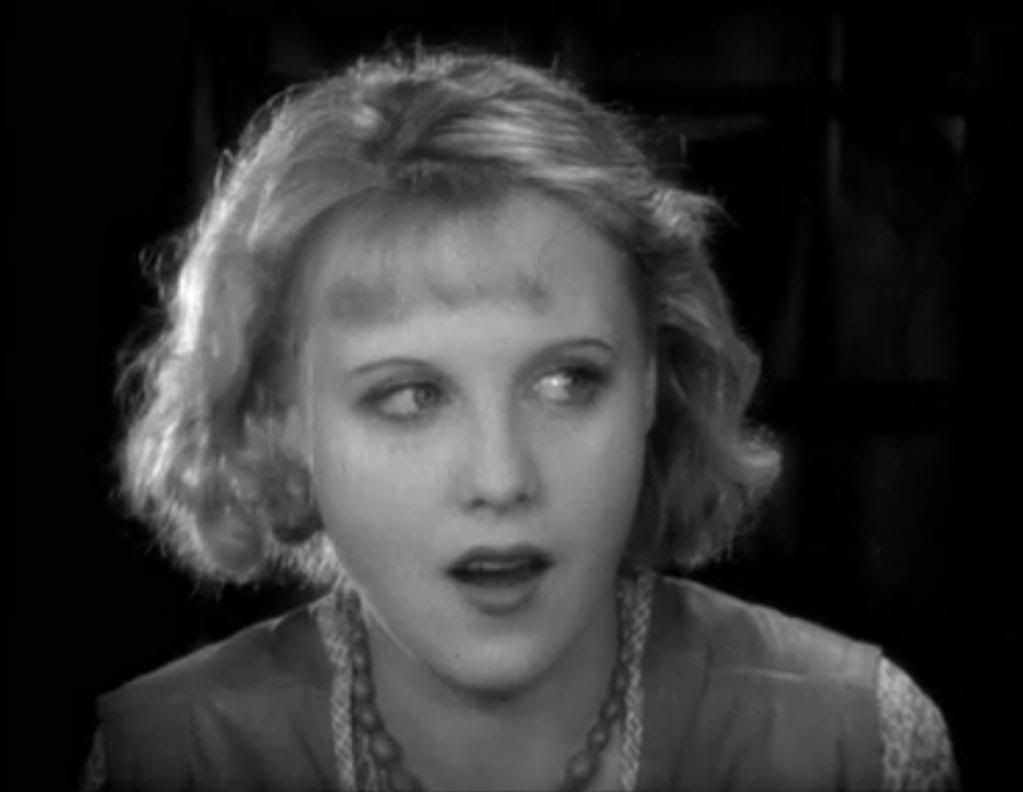
Showing posts with label 1929. Show all posts

Monday, November 26, 2012

Pandora's Box


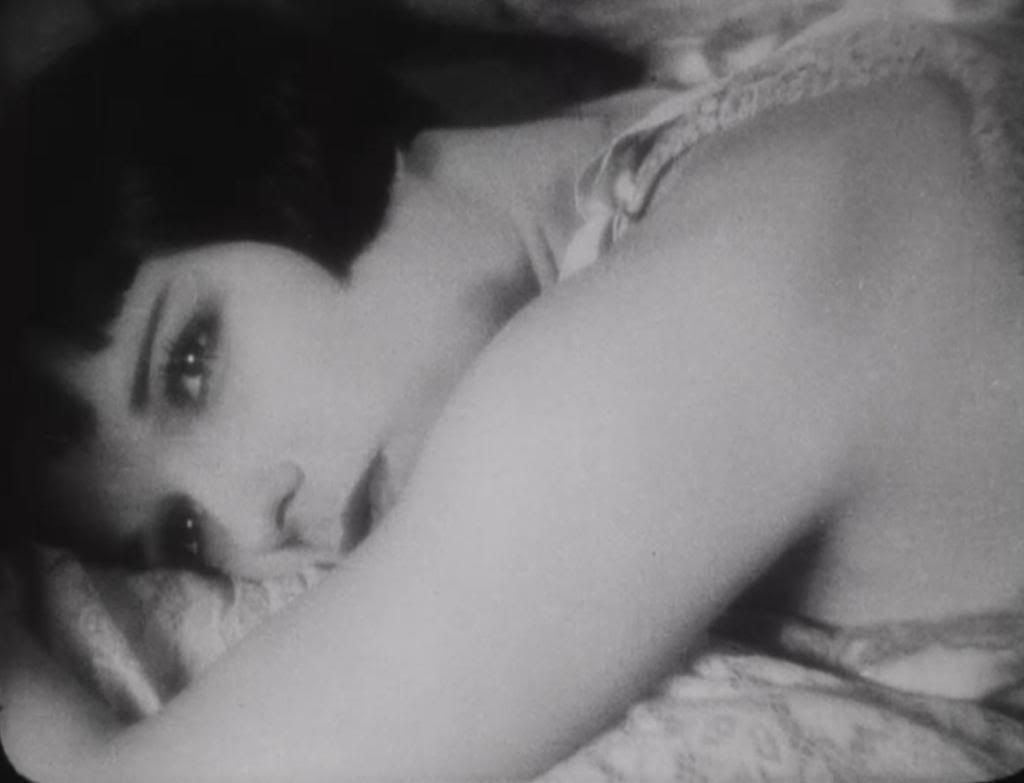
Pandora's Box was director Georg Wilhelm Pabst's first collaboration with actress Louise Brooks, who the director had discovered in Howard Hawks' A Girl in Every Port. As in that film, Brooks is a template for the femme fatale, a seductress who leads men into temptation and self-destruction while, strangely enough, retaining her own almost childlike innocence. Her character in Pabst's film, Lulu, was Brooks' most enduring and iconic creation, the part for which she will always be remembered. Pabst's film is built around her, and it succeeds almost entirely because Pabst is so adept at highlighting and channeling the actress' magnetic charm, her absolutely unparalleled ability to light up a screen with the sheer beauty and poignancy of her face.

Brooks' charisma is so vital to the film because Lulu could have been a very unappealing character if embodied by a less iconic actress. Lulu is a prostitute and aspiring dancer, a frivolous and cheery woman who's totally unconcerned with morals. When her latest wealthy lover, Dr. Schön (Fritz Kortner), tells her at the beginning of the film that he's getting married to someone else, she shrugs and tells him that's no reason not to kiss her. Lulu's all about pleasure, and about living in the moment: when she's with a man, her casual intimacy and ready smiles convey the impression that he's the only man in the world, but she's able to easily skip from one man to the next, turning that radiant charm on each in turn, without any compunctions about her amoral behavior. The film's opening scenes quickly convey what this woman is about, as she cheerfully parts with one of her clients, acting tender and accommodating with him until the moment that her beloved old "patron" Schigolch (Carl Goetz) shows up, at which point the client is forgotten as Lulu pours her affection onto her former pimp instead. And then, when Schön arrives, Lulu just tucks Schigolch in a corner and devotes herself to the doctor. The whole sequence is like seeing a microcosm of Lulu's serial bed-hopping, her whole life condensed into a few minutes.

Schön is a respectable upper-class man who knows all too well that his affair with Lulu is tainting his reputation, but he can't quite manage to disengage himself; even when he finally breaks off his affair with Lulu to marry a woman of his own class, he remains involved with Lulu's life, managing the variety show that marks Lulu's debut as a dancer. Schön repeatedly says that his affair with Lulu will lead to his death, driving home the foreshadowing of his end, and the knowledge of it weighs heavy on him, making him a lugubrious counterpoint to the sprightly and carefree Lulu.

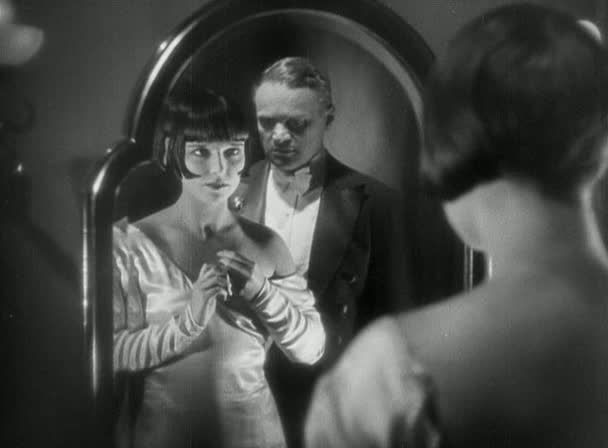
Indeed, Lulu can seem downright cold-hearted in her selfishness. After the film's central tragedy, Lulu returns to the house Schön had kept for her, and far from seeming distraught by what had happened, she's delighted to be reunited with her clothes and possessions, happily rifling through her closet and posing in front of a mirror. While she ignores the meaning of this place and what had happened here, Pabst keeps highlighting the tragedy by calling attention to a striking sculpture of a woman twisted into a pose of suffering and prayer, a piece of art that had hovered portentously in the background of the earlier scenes of tragic violence. The woman, with her short hair echoing Lulu's distinctive bob-cut, seems like a foreboding sign of what's in store for the film's heroine, though Lulu, despite being a victim as often as an instigator, rarely seems to suffer, not truly — most of the time, she uses her tears and her tantrums as a tool, a way to sway men to her cause.

Despite that calculating streak, Lulu never seems really evil, just self-absorbed, and at times genuinely unaware of the volcanic effect that she can have on men. When she's placed on trial halfway through the film, the prosecuting lawyer compares her to Pandora, beautiful and irresistible but possessing a box full of evil that she somewhat haplessly unleashes upon the world. It's an apt comparison, because Lulu doesn't fully understand what she's doing to those around her, in part because she's not thinking about them — she only cares about her own comfort and happiness. Because she laughs it off every time she's caught in an indiscretion, she expects everyone else to be similarly accommodating.

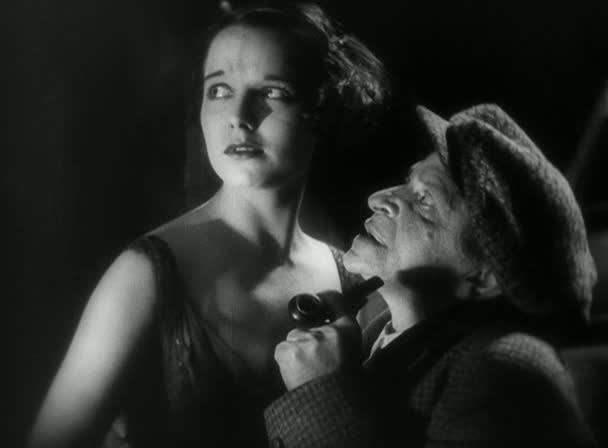
And yet there's also an undercurrent of deeper emotion within Lulu, whose childlike emphasis on constant pleasure seems to stem from a fear of what might have happened if she stopped having fun for a moment. There's a definite desperation to Lulu's constant pleasure-seeking, which is explained several times in terms of her difficult childhood. Her most poignant scene is probably her trial, in which Pabst and Brooks cleverly suggest everything about Lulu's mental state through her manipulations of the thin veil she wears. Lulu feels the eyes of the crowd on her and instinctively pulls her veil down over her face, hiding from them, for once unhappy to be the center of attention. Mere moments later, though, she stands and holds the veil away from her face to deliver an impassioned plea for her innocence, and then, in a remarkable shot, she lets the veil fall back over her face as she sits down, the veil fluttering around her face as she gracefully descends. This simple moment is utterly poetic and beautiful, abstractly suggesting the effect of this situation on Lulu. Pabst also locates a strangely melancholy, even almost romantic, vibe in the film's closing scenes, when Lulu encounters the sinister but handsome Jack the Ripper (Gustav Diessl) prowling the London streets. Lulu's appeal is so enticing that she even, for a time at least, calms the bloodlust of the notorious killer, and these scenes are infused with an unsettling tenderness, as though there's a deep and surprising connection between the notorious killer and the sweet, smiling prostitute who now seems sadder than ever behind her smile.

Pandora's Box is justifiably known as the defining role of Brooks' career. Pabst and Brooks would follow up this success with the equally great Diary of a Lost Girl, in which Brooks would play a more purely innocent suffering woman rather than the complicated mix of naïveté and conniving that she embodies here. Brooks' Lulu is a woman in trouble, a troubled woman, or maybe just trouble, but there's no question that she's utterly mesmerizing to watch, and Pabst perfectly captures her luminous qualities. The film's melodramatic narrative, which puts Lulu through a series of increasingly demeaning tragedies, is balanced by the combination of realism and stylized glamour in Pabst's aesthetic, making this one of the great collaborations between a director and an actress.

Thursday, May 31, 2012

Diary of a Lost Girl


Diary of a Lost Girl, the second of Georg Wilhelm Pabst's productive collaborations with Louise Brooks, is a potent and gorgeously stylized depiction of an innocent young woman's destruction at the hands of the not-so-innocent. Brooks plays Thymian, a beautiful and sheltered pharmacist's daughter whose dawning realization about the cruel ways of the world coincides with the loss of the security of her family. The opening of the film enacts a lurid symbolic struggle between innocence and sin, naïveté and knowledge. Brooks' Thymian, dressed all in white on the occasion of her confirmation, her eyes wide beneath the iconic ridge of her dark bangs, looks around her with a complete lack of guile, sweetly accepting presents from family and friends, glowing with courtesy and grace.

She seems entirely unaware of all the sexually charged glances being exchanged all around her: the exaggerated leer of her father's assistant Meinert (Fritz Rasp) who all but licks his lips and bulges his eyes like a cartoon wolf when he looks at her; her father's (Josef Rovensky) sexual liaisons with one maid after another; her aunt's (Vera Pawlowa) grim knowledge of these constant affairs; the knowing glances and raised eyebrows of the party guests when they see the new maid Meta (Franziska Kinz), who brazenly stares at her employer with an invitingly wicked smile that openly suggests that the cycle is going to start again. Everyone but Thymian seems to know exactly what's going on, but she is blissfully unaware of the sexual drama surrounding her.

In her pure white confirmation dress, a band of flowers wrapped around her head, she's a vision of innocence so pure and unstained that the mere realization that sin and sexual predation exist in her household produces a fainting spell, confining her to bed as though she's taken ill. She sees the corpse of her beloved maid — who'd committed suicide after being abandoned by Thymian's father — then runs up the stairs in a daze, sees her father with his arm already around the new maid, both of them staring at the camera in a frozen pose, a sly smile on the face of the new maid in contrast to the serene blankness of the dead girl downstairs, and in one fluid motion Thymian swoons to the floor, overcome by the taint of impurity infiltrating her home.


This is only the beginning of Thymian's suffering, as Meinert takes advantage of her vulnerability and rapes her. Pabst freezes the frame at the moment when the creepy druggist lowers Thymian's limp form into bed, and then immediately cuts to a baby carriage being taken out of Thymian's room, months later, carrying the fruit of that forceful union. Thymian's family casts her out, and she's sent to a reformatory, which she soon escapes with her friend Erika (Edith Meinhard), only to fall into a life of prostitution. The man she believes is going to save her, the disgraced and disinherited Count Osdorff (André Roanne), is actually a lazy and pathetic outcast who settles easily into a life of comfort at the brothel with Thymian and Erika. Pabst, though, doesn't portray the brothel as an entirely unpleasant life; the girls have fun and like each other, and Thymian certainly seems happier and better off there than she was under the care of the strict Christian moralists at the reformatory.

The reformatory is run by a stern mistress (Valeska Gert) whose usually stony face betrays an expression of ecstatic joy when whipping the girls through a frenzied gymnastics routine, and a bald-headed, looming movie monster giant (Andrews Engelmann) who first pops comically into the frame by standing up in front of a sign listing the many things that are "verboten" in this dismal place. This cartoonish giant delights in punishing the girls, grabbing them with a clawed hand at the scruff of their neck as though picking up a disobedient puppy, and his leering sadism is both creepy and hysterical — particularly when he runs a confiscated tube of lipstick across his own mouth, grinning impishly, then uses it to write a reminder to punish the girl he'd taken it from, a note signed with a heart to indicate his sadistic love of punishment.

Lesbian eroticism is another obvious subtext here, especially in the reformatory, where most of the girls have clipped, close-cropped boyish haircuts, and Erika introduces herself to Thymian by surreptitiously touching the new girl's leg with her foot and winking at her, echoing Meinert's leering winks. At bedtime, as Pabst pans down the line of girls getting ready for bed, two girls sit in the same bunk, giggling, and fall back into bed together. The scene where the matron tries to seize Thymian's diary is also loaded with suggestive intimacy, with the stern woman grabbing at Erika's bare legs, looking up at the two girls sitting in the top bunk, grasping at them with clawed hands. Later, when Thymian visits Erika at the brothel where she's staying, Pabst emphasizes the brothel's madame putting an intimate hand on the bare back of one of her girls — the gesture is repeated when the madame pushes Thymian together with a male client to dance — and then has Erika kneel before Thymian, taking off her shoes and undressing her, unbuttoning her demure reformatory blouse with its high collar to expose a V of flesh at her neck.


The film is steeped in this kind of sexual suggestiveness. Thymian's downfall has everything to do with sex and money, and sex and money come to be linked in very intimate ways for her. After her first night at the brothel, after she's spent the night with a man — swooning in his arms so that her limp form very much recalls her unconsciousness during Meinert's exploitation of her — the madame hands her an envelope of cash and makes it clear that it's from the man. Only then does the very naïve Thymian realize what's happened, and she recoils from the cash, which Pabst nevertheless emphasizes in a closeup. Much later, when her father dies and she receives an inheritance from Meinert for buying out the pharmacy, the camera glances from the pile of cash to Meinert's smug, cartoonishly grinning face, making it seem as though this too is a transaction, a belated payment for that long ago night when he'd taken her to bed.

It's not all grim tragedy here, though, and there's some limited comedy relief along the way. Among the humorous scenes is a very strange sequence where a goofy guy with a billy-goat beard (a possible anti-Semitic caricature) comes to see Thymian for "dance lessons," and she leads him in a bizarre calisthenic workout inspired by her reformatory exercise drills, while holding a drum protectively/suggestively over her crotch and beating it with a mallet in the way the reformatory mistress had done. The sexual symbolism is especially naked here, but those undercurrents are everywhere in this film.

The plot unravels a bit towards the end with a predictable tonal shift towards an optimistic, redemptive conclusion, seemingly foisted upon Pabst by censors eager to end on a positive note after all this barely coded sex. Even here, though, Pabst's emotional poetry shines through. The film is never less than beautiful, its style fluid and expressionist while also remaining grounded in social realism. And Brooks is just magnificent, with a beautiful and vibrant face that was perfectly suited to the silent cinema. When she smiles, the screen glows, and when she's suffering her eyes seem to contain unimaginable depths of feeling, often assisted by Pabst's very sympathetic photography of her, as in the stunning shot where she stares out a rain-streaked window, the raindrops on the glass standing in for her tears.

Tuesday, May 15, 2012

Blackmail

[This post is a contribution to the third annual For the Love of Film blogathon and fundraiser, which will be running from May 13-18. This year, hosts Marilyn Ferdinand, Farran Smith Nehme and Roderick Heath have dedicated the week to Alfred Hitchcock, whose early (non-directorial) work "The White Shadow" will be the beneficiary of any money earned during the event. Be sure to donate!]

Blackmail was the first British sound film, though it didn't start out that way. Alfred Hitchcock originally shot it as a silent before recutting it for sound, shooting new scenes and dubbing existing ones. The film is as rough as one would expect based on those origins, continually betraying its status as a hybrid in which many of the scenes were simply taken whole from the silent version and dubbed over. Sound enters the film only gradually, so that its first ten minutes provide a microcosm of the evolution from the silent era to the coming era of sound. The opening eight minutes are carried over from the silent version virtually unchanged: a pair of detectives visit a suspect, apprehend him, and interrogate him, and all of it plays out entirely without dialogue, even when they seem to be chatting profusely.

Hitchcock is saying goodbye to the silents that nurtured his talent, and saying it with panache, delivering unforgettable images like the detectives stoically staring at their target, slatted shadows laid across their faces, or the great zoom that shows the target catching a glimpse of the cops in a small shaving mirror. Slowly, bits of synchronized sound begin to appear, like a sound effect of footfalls when the prisoner jumps out of the paddy wagon. Soon, the detectives start to talk a bit, and then, when one of the detectives, Frank (Jack Longden), meets up with his girlfriend Alice White (Anny Ondra), the film bursts fully into sound.

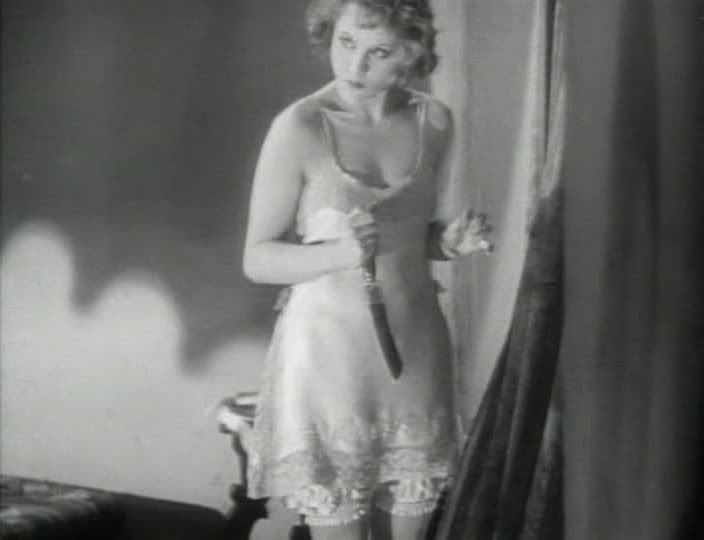
The film's rather basic plot revolves around Alice, who has grown bored of the hard-working, stolid Frank, so she makes a date with another man, an artist (Cyril Ritchard), instead. She goes back to the artist's flat one night, he tries to rape her, and she kills him in self-defense, fleeing the scene. She leaves behind a key piece of evidence, though, and it's recovered by the weaselly criminal Tracy (Donald Calthrop), who attempts to blackmail Alice and Frank as the police investigate the crime. Hitchcock, somewhat hobbled by the static cameras required by early sound film, often turns this limitation into an advantage by composing images that rely on subdivisions of the frame to create visual interest. The attempted rape and murder happen offscreen, signified only by the flapping of the bed curtains at the far right side of the frame, while Hitchcock holds a steady shot that's mostly negative space except for a bedside table stacked with cheese. Alice's hand desperately fumbles at the table, grabs a knife, and after a time, the curtains stop moving, and then the artist's hand flops out, lifeless. Alice then steps out from behind the curtains, shocked and stiff, holding the knife in her fist in front of her, her eyes wide and staring, looking down at the weapon in surprise and then slowly placing it on the table as though it takes great effort to let go of it.

Earlier in the same sequence, before the murder, Alice changes into a dress to model for the artist, and Hitchcock stages the scene with the artist playing piano on the left side of the frame, separated from Alice, who's stripping down to her negligee right behind him, by a dressing shade. The shot is composed so that, while the artist faces off to the left side of the frame, Alice directly faces the camera, displaying for the audience what she's so carefully modest to hide from the artist. It's a clever bit of voyeuristic framing that is playful at first and then becomes creepy after the artist drops his gentle coaxing of Alice and becomes overtly rapacious. Later, Hitchcock is similarly playful with framing and space in the crowded mise en scène of the Whites' general store, where Tracy, Frank and Mr. White (Charles Paton) have to squeeze past each other during the scene where Tracy forces his way into their parlor with subtle threats. The physical closeness creates subtle comedy that's tied up with the understated menace of this creepy blackmailer.


Hitchcock's cinematic imagination displays itself in several other key sequences here, including early signs of his keen grasp of sound. After the murder, Alice begins seeing reminders of her guilt everywhere she goes, like a neon sign that she imagines showing a hand stabbing a knife repeatedly downward. Most notably, she sees certain extended hand postures — a cop signaling traffic, a mannequin's lifeless claw, a bum's slouched posture — as echoes of the dead man's hand falling out of the bed curtains. Hitchcock cuts from a shot of Alice standing over the bum, transfixed by his extended arm, to a similarly composed shot of the landlady discovering the artist's corpse, with its hand stretched out in the same way. A shrill scream accompanies the cut, a jarring, perfectly timed sound that links Alice back to the man she'd killed.

Also striking is the famous chase sequence at the British Museum, in which Tracy, now the prime suspect in the murder that Alice committed, flees from the police through the rigid geometric layouts of the museum: long chains of doors that seem to stretch to infinity, rows of book shelves with corridors tucked away between them, a coiled maze of desks, display cases which the fleeing man ducks around with the cops in pursuit. Hitchcock filmed the sequence with a special process very similar to the matte backdrops that he would often deploy in his later films, using still photographs of the museum, which contributes to the slightly disconnected, artificial feel of the scene. Adding to the suspense, Hitchcock continually cuts back to static shots of Alice, anxiously waiting at home to hear what has happened.

The film isn't always so thrilling, and there are several long, indifferently staged dialogue scenes to suggest that Hitchcock hadn't fully gotten the hang of sound yet, despite the innovations with it that he already displays here. But those periodic dull stretches are redeemed by the master director's inventiveness and his wicked sense of humor, which often enlivens the film at unexpected moments. Probably the best humorous aside is a gossipy woman's tossed-off line about how it's better to murder someone with a brick to the head — "there's something British about that" — than with a knife.

Then, in the final scene, Hitchcock strikes a jaunty, broadly comical tone, as the police, satisfied that the case is closed, shrug off Alice's attempts to confess and turn herself in, laughing at her with the condescending implication that they think she's just a silly woman. She joins them in their cackling laughter, though the comic tone of this finale is slightly undercut by the reappearance of a painting of a jester that had been in the artist's studio. Hitchcock cleverly cuts to the painting while the laughter continues, so that it seems as though the painted figure is himself laughing, and then the painting moves, revealing that it's being carried away, a last piece of evidence being carted off into storage now that the case is over. This ending, rich in irony and tragicomic suggestion as it is, is a perfectly Hitchcockian conclusion, an inversion of his later "wrong man" template: in this one, the wrong man dies for the crime he didn't commit, while the murderess laughs it off with the boyfriend who's helped her cover it all up. What a great happy ending!

Monday, May 14, 2012

The Manxman

[This post is a contribution to the third annual For the Love of Film blogathon and fundraiser, which will be running from May 13-18. This year, hosts Marilyn Ferdinand, Farran Smith Nehme and Roderick Heath have dedicated the week to Alfred Hitchcock, whose early (non-directorial) work "The White Shadow" will be the beneficiary of any money earned during the event. Be sure to donate!]

The Manxman was Alfred Hitchcock's final silent film, since his next production, Blackmail, was belatedly transformed into a sound film part-way through its filming. This film is a rather conventional melodrama, centered around a predictable and rather bleak love triangle of the kind that was very popular in 1920s and 1930s melodramatic cinema. The fisherman Pete (Carl Brisson) and the lawyer Phil (Malcolm Keen) are childhood best friends who have stuck together for years, but their relationship is compromised when both of them fall in love with Kate (Anny Ondra), the daughter of the local tavern owner. They both love her, but Phil leaves his love unspoken and even grudgingly helps Pete woo the girl, at least until Pete sets off on an adventure, trying to make his fortune in foreign trade so that he can return, impress Kate's surly father (Randle Ayrton) and marry her. Predictably, while he's away, Phil and Kate fall in love, and when they get a message saying that Pete has died at sea, they think they're free to have their own relationship at last, even though Kate had somewhat frivolously promised herself to Pete before his departure. But of course Pete isn't dead, and when he returns Phil pushes his love back into the arms of the man she doesn't want, with predictably tragic results.

It's the typical kind of vaguely homoerotic love triangle film where the guys seem more interested in each other than the girl they're ostensibly vying for, the kind of story that Howard Hawks always infused with rich subtextual substance. Hitchcock doesn't seem as interested in that subtext, though of course it's readily available for plumbing anyway, intrinsic to the story and the constant emotionally charged glances between the two leads. The beats of the story are familiar and well-trod, with perhaps a few more tragic twists than usual.

The cast does little to set this rote melodramatic material apart from the countless similar movies made around this time. Brisson, especially, is dead weight, seemingly capable of little more than grinning into the camera, his eyes sparkling, his face broad and dumb. In comparison, Keen fares much better, overacting just a touch at times, and Ondra is charming and sprightly, bringing such a spark of mischief and playfulness to this girl that it's seldom clear if she's taking things seriously or not. This quality of her performance takes on a new and dark significance towards the end of the film, when, finally leaving Pete, she also leaves behind, unattended, their baby, which is laying in a crib by the fireplace when Pete returns home to find his wife gone.


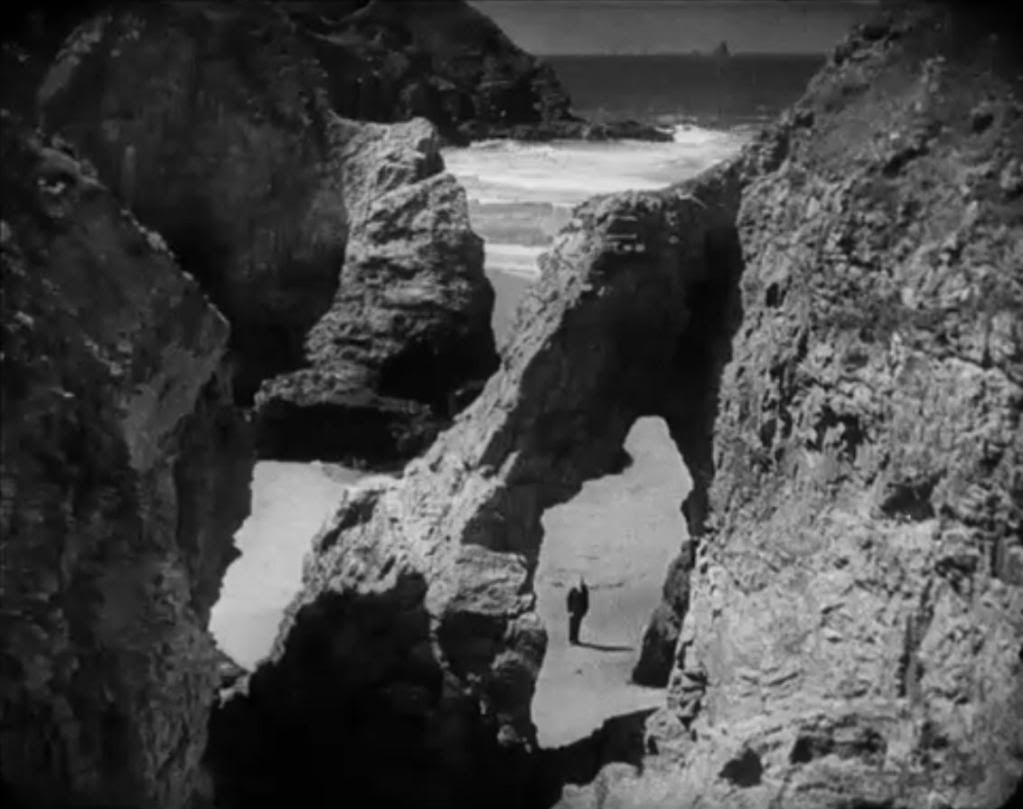
Working with a tired plot and a somewhat inconsistent cast, Hitchcock elevates the material a bit with his elegant style. When Phil first gets the news that Pete has died, he's walking through the darkness, the town's lighthouse periodically casting a spotlight across him as it revolves past, and suddenly Hitchcock dissolves from a shot of Phil alone to one of him surrounded by people, clustered in the darkness around the local tavern, the Manx Fairy. The dissolve makes it seem as though the others have suddenly materialized from nowhere all around him, infiltrating his privacy, their sudden appearance in the otherwise empty streets indicating that something has gone very wrong. Hitchcock also finds an incredible location to stage the scene where Phil tells Kate that Pete isn't dead after all, as the two lovers meet on a rocky beach. Kate scrambles over the rocks in a dramatic long shot, framed against the horizon with the sun peeking over the rocks behind her, and when she gets to the beach she looks down at Phil from a distance, framed by a striking oval rock formation that surrounds his tiny form. The ragged, harsh terrain separates the lovers, just as soon they'll be torn apart by Pete's return — which is signified, throughout this scene, by the steam emanating from a boat out on the water, carrying the lost seafarer back to break up this relationship.

Soon, Pete and Kate are getting married, mainly because Phil, ultimately more interested in his friend and his law career than the girl, pushes her away once Pete is back in the picture. Kate walks away from her engagement, dazed, leaving Phil and Pete in the background, and she faces the camera, turning her eyes heavenward, her lips moving, approaching the camera until her face goes out of focus and she passes out of the frame as a blur. Later in her marriage, Hitchcock deals in an interesting way with the revelation that she's pregnant, omitting any explicit title cards as she tells Phil the news, forcing the viewer to read between the lines — cleverly implying but not outright stating that she and Phil had been sleeping together before Pete's return. It's not until she tells her husband Pete that the news is broken in a title card, before Hitchcock shows Pete celebrating in the background, while in the foreground Phil and Kate stand side by side but with a gap of negative space between them, staring glumly at the camera like prisoners awaiting a mug shot. Even better is the subtle way Hitchcock stages the scene where the doctor delivers the baby, then comes bounding down the stairs looking for the father; Phil instinctively stands up, then seems to realize what he's doing and points at his friend instead.

Of course, it all ends in tragedy, with Phil transitioning subtly from the romantic hero to the villain of the piece. Hitchcock underlines this point towards the end of the film when, after a desperate Kate jumps off the pier, trying to kill herself, Hitchcock dissolves from the rippling water to a closeup of the ink well that Phil dips his pen into as he sits on the bench as a judge. Moments like that show signs of Hitchcock's future ingenuity, and though The Manxman as a whole is a rote melodrama with mostly unsatisfying performances, it's still interesting for these glimpses of the director's development.

Wednesday, July 1, 2009

Films I Love #36: Man With a Movie Camera (Dziga Vertov, 1929)


Some films are so revolutionary, so influential, that their sui generis originality and verve can still be felt even decades after their first impact, long after their innovations have been absorbed by subsequent generations. Dziga Vertov's Man With the Movie Camera is this kind of film, retaining much of its power and irresistable energy despite the nearly eighty years that have passed since its creation. Vertov created a moving portrait of city life in every sense of the word, both emotionally affecting and viscerally thrilling, built on the pulsing rhythms of its cutting and its perfectly calibrated shifts from frenetic passages to languid interludes. It's no accident that Vertov frequently returns to images of industrial mechanisms, since the rhythms of pumping pistons often drive this thoroughly modernist, industrial age film. The film encompasses an overview of the life of a city from its earliest spasms of wakening in the morning to the twilight calm of evening. Vertov was ambitiously trying to include images representing the entirety of human life and experience, from such mundane acts as getting up in the morning, going to the beach, going to work, to the big life-changing events of birth, death, marriage and even, cheekily, divorce. Vertov's film is a kaleidoscopic view of the life cycle itself, with so much detail and activity crammed into a twenty-four hour period, itself condensed into barely over an hour of images.

In order to represent such vitality and variety, Vertov was endlessly inventive with the formal properties of his fledgling artform. He superimposes images over one another, creating densely layered compositions in which the rhythms within the image are often as fast as the editing that joins images together. Some of Vertov's inventions are more playful — like the famous shot of a cameraman appearing to stand up from within a glass of beer — while others serve a propagandistic function, evincing Soviet principles about the nobility of labor and the proletariat. But mostly Vertov is concerned with composing his film as though it was a piece of music, thinking in terms of movements and rhythm rather than narrative.