Showing posts with label 1985. Show all posts

Wednesday, April 6, 2011

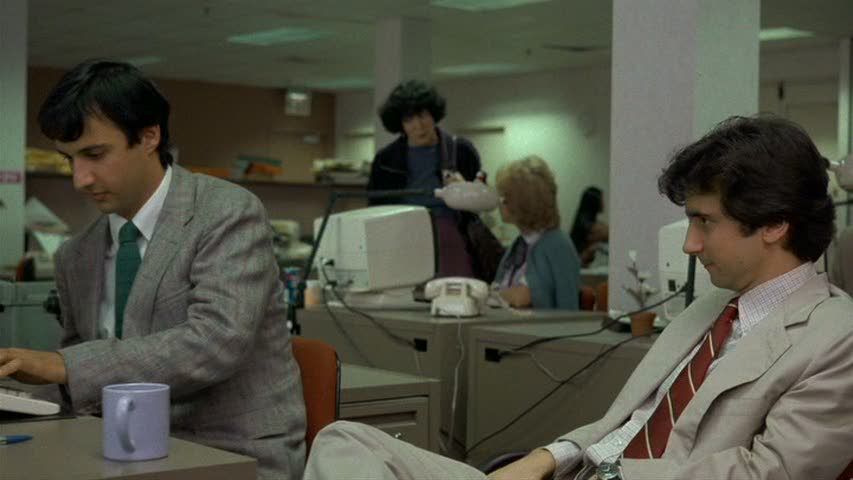
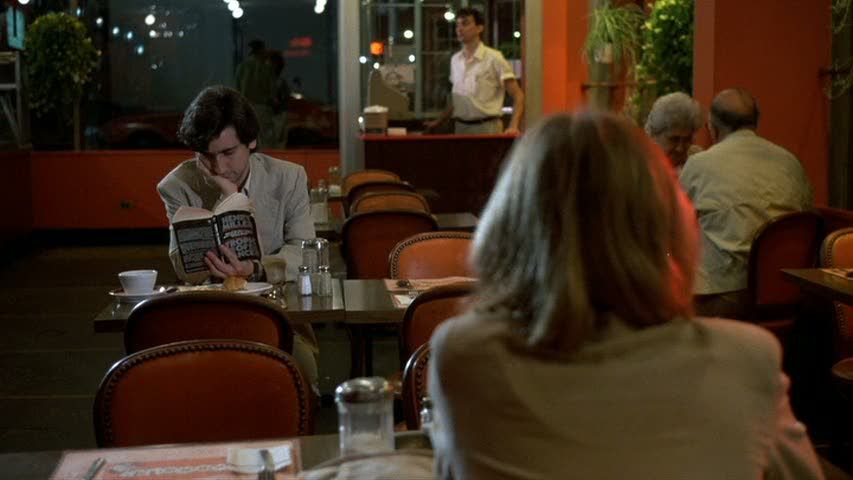
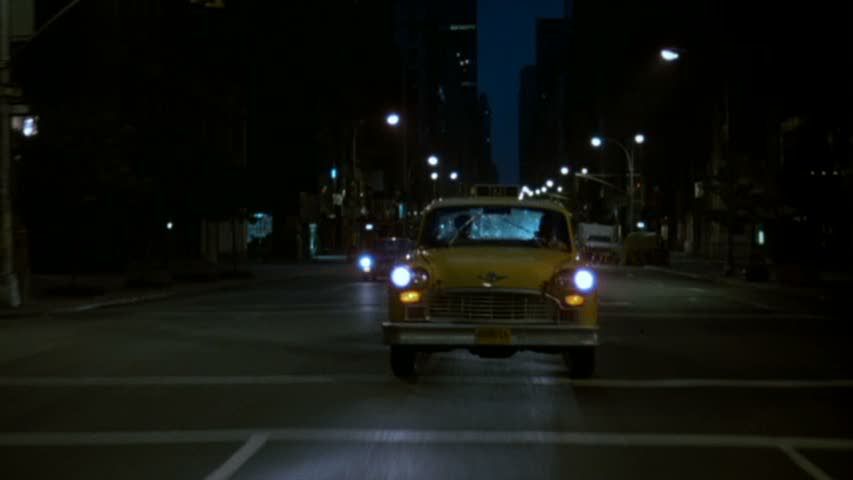
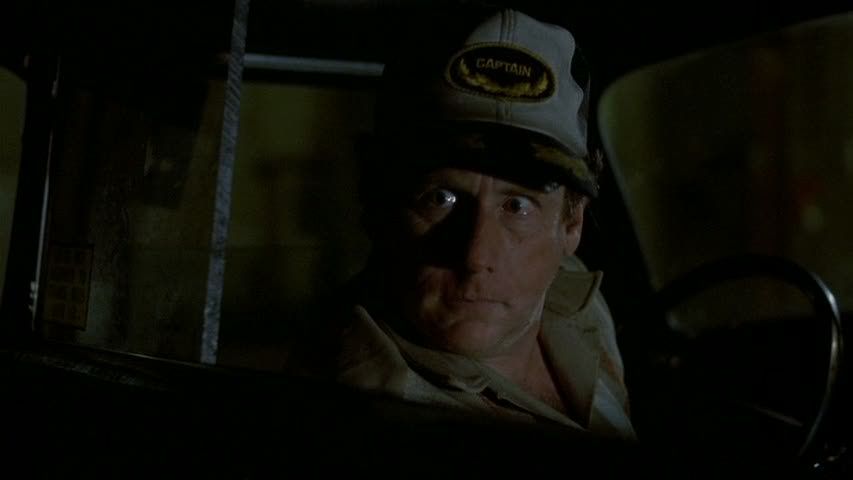
Films I Love #52: After Hours (Martin Scorsese, 1985)


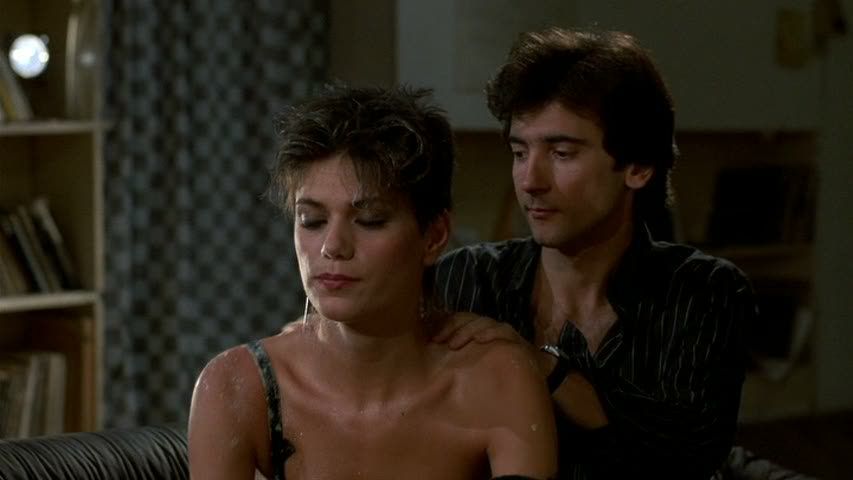
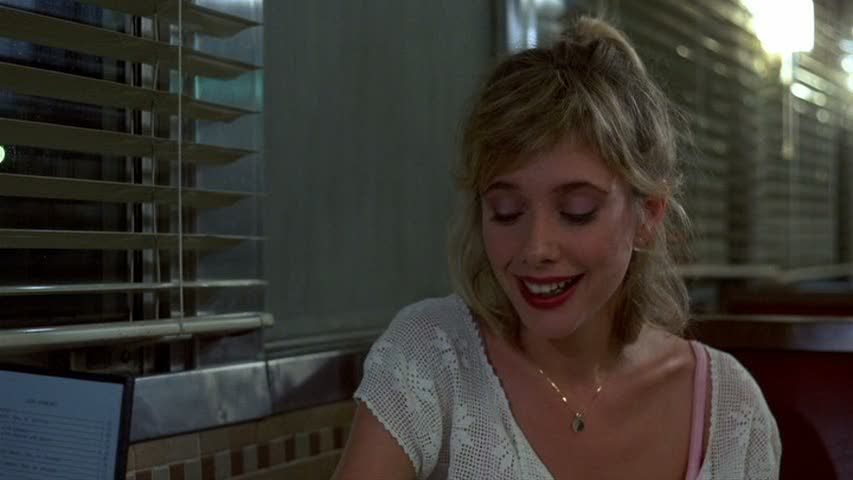
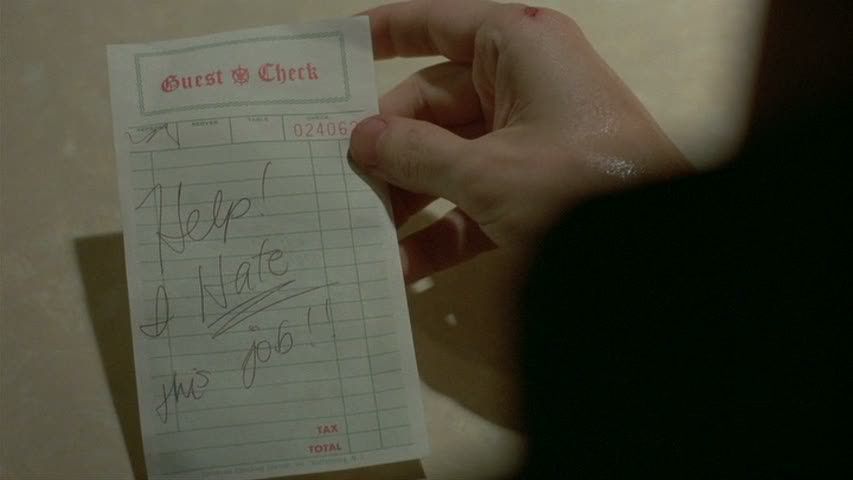
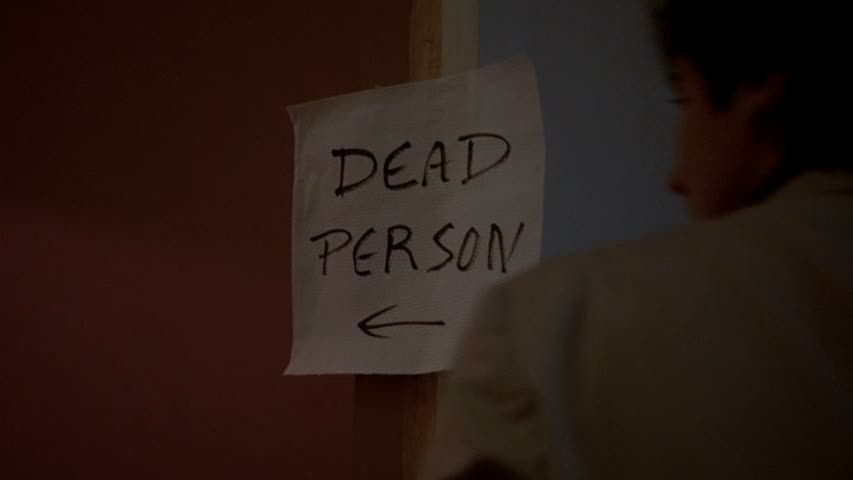
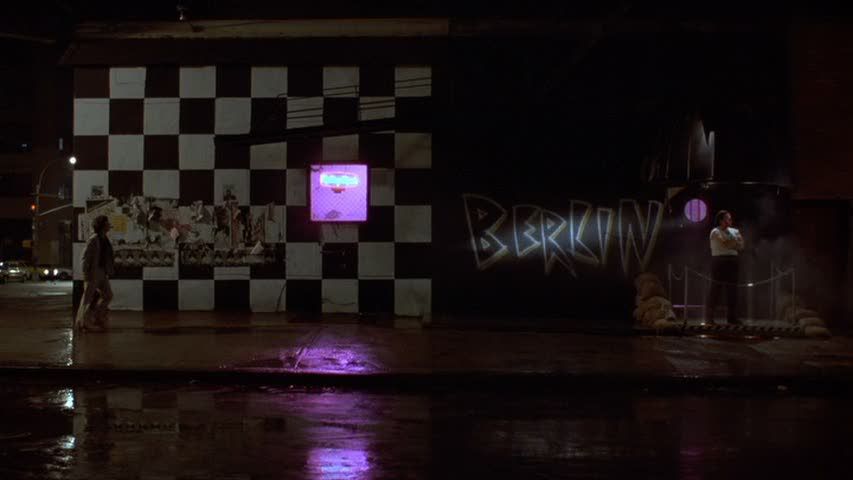
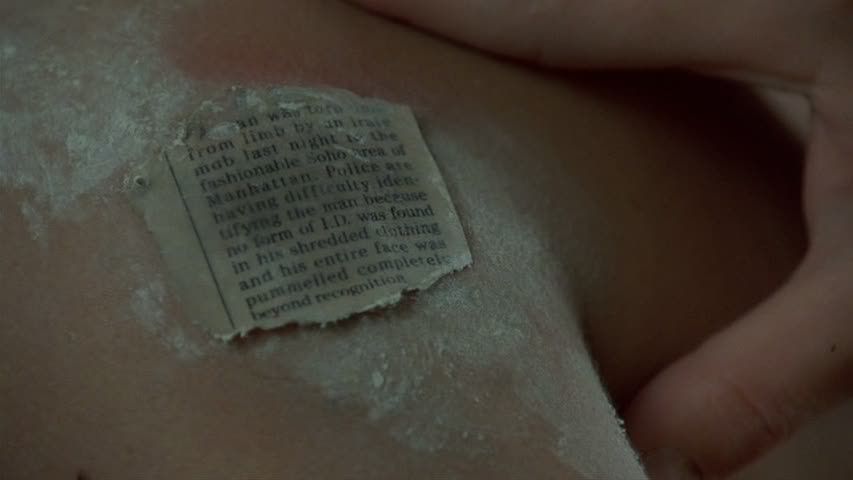
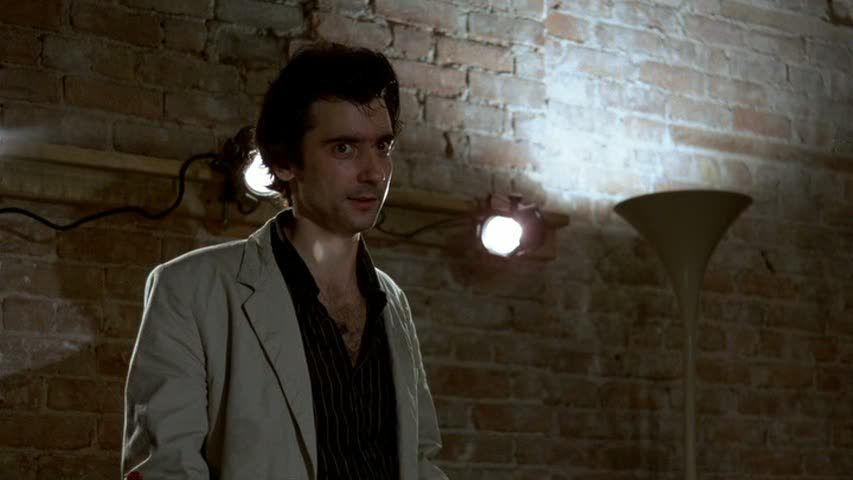
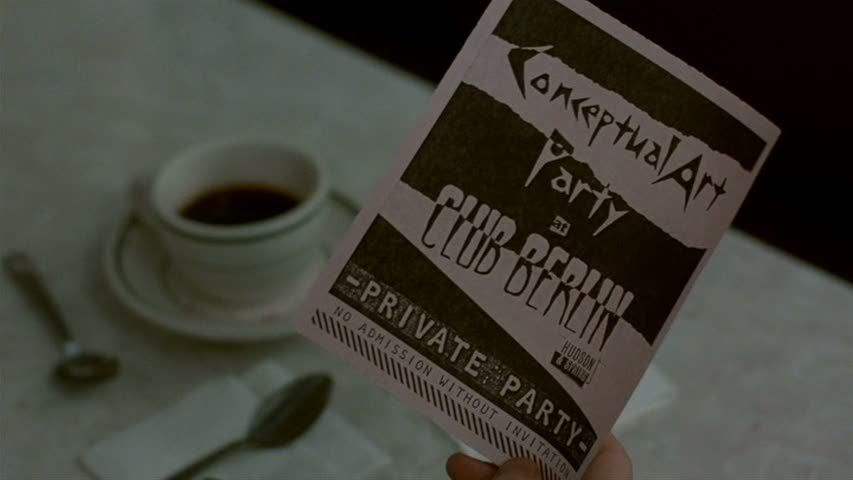
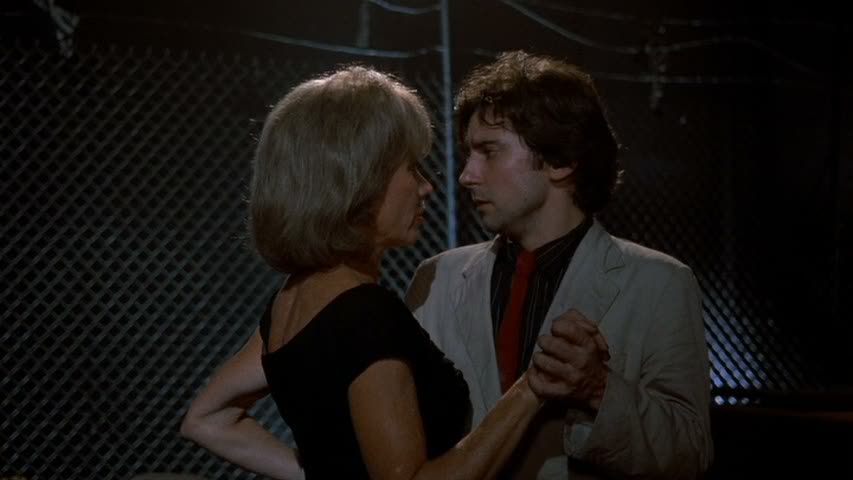
Martin Scorsese's After Hours is a wonderful and oft-overlooked film from the legendary director. In fact, it's every bit as much of a remarkable portrait of urban living as any of Scorsese's more famous New York stories. The film is a nightmare, the frenzied documentation of one night in the life of bored, prosaic office worker Paul Hackett (Griffin Dunne), who against his better judgment accepts the late-night invitation of Marcy (Rosanna Arquette), who he randomly meets at a diner. Paul's spur-of-the-moment but seemingly innocuous decision to go visit Marcy at her SoHo apartment, after midnight on the same night he first met her, turns out to be a down-the-rabbit-hole choice that sends Paul off on a wild and surreal journey of violence and sexual confusion. This is a dark, hysterical comedy of mishaps, misadventures and misidentifications, as Paul encounters one absurd situation after another. It's a kind of cautionary parable, as the staid, square Paul steps outside of the security of his comfort zone and finds himself utterly unprepared for the messiness and insanity of the world that exists outside his familiar circuit from office job to neat apartment.

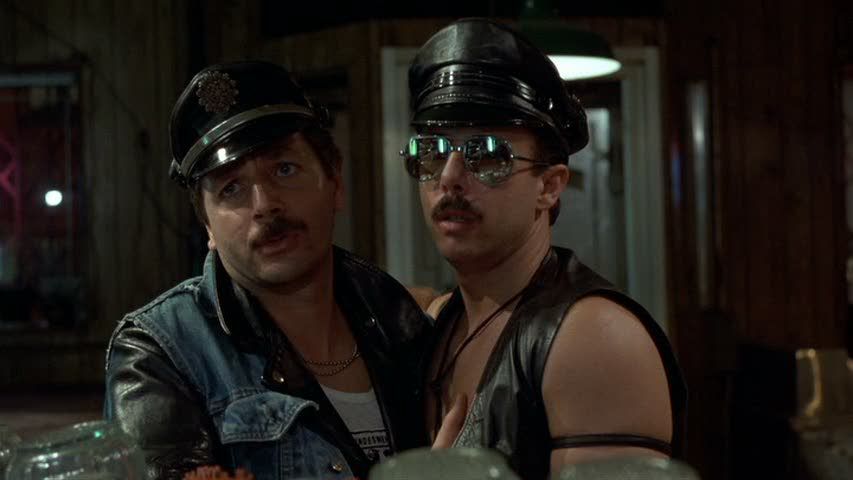
The result is a skewed vision of New York as a garish, jumbled, confusing maze, a place where chance meetings place Paul into close contact with all sorts of fascinating/frightening characters, from a clingy, desperate middle-aged waitress (Teri Garr) to the aggressive and provocative artist Kiki (Linda Fiorentino) to a gay guy who clearly thought he was picking Paul up, and finds out otherwise much to his disappointment, to Marcy herself, with all her unexpected hangups and eccentricities, to a pair of goofy crooks (Cheech Marin and Tommy Chong) who serve as the film's plot device delivery system. By turns poignant, harrowing and darkly hilarious, After Hours is one of Scorsese's masterpieces, a seemingly light film that in fact gives form to the fears and insecurities of those who would shut themselves off from life in order to avoid risk. In Paul's case, his skittishness turns out to be warranted, or perhaps — and this is quite likely — it's his very fears that, in a self-fulfilling prophecy, prompt the unsympathetic city to chew him up and spit him out, very much the worse for wear, the next morning, back at his job and his familiar life, back to a well-trod path from which he'll likely never deviate again.

Tuesday, November 24, 2009

TOERIFC: Mishima: A Life in Four Chapters


[This review is prompted by the latest discussion for The Oldest Established Really Important Film Club, which is about Paul Schrader's Mishima: A Life in Four Chapters this month. The discussion can be found at Krauthammer's blog Crips and Mutes; go there to read along and join the discussion with your own thoughts.]

The writer Yukio Mishima seemingly lived his life with a single possibility always in mind, an impossible ideal towards which he was always working. In Paul Schrader's evocative biopic of the influential Japanese author, this ethos is summed up with literary expressiveness as the desire to "turn your life into a line of poetry written with a splash of blood." Mishima: A Life in Four Chapters chronicles the author's continuing attempts to reach this ideal, to achieve his obsession with uniting art and action, words and the world. In order to reflect this goal, Schrader shifts fluidly between multiple layers of reality, memory, fantasy and fiction: the film is a collage of Mishima's final day on earth, flashbacks to his childhood and youth, and stylized enactments of stories from his novels.

Mishima's life famously ended with his attempt to trigger an army coup to restore the Emperor to power in Japan; when the coup failed, he committed ritual suicide, seppuku. Schrader's film opens with the writer (played as an adult by Ken Ogata) preparing for this attempt, dressing in a military uniform — the uniform of the private army society he'd founded and led — and meeting with his accomplices. Scenes from this important day, Mishima's last, weave throughout the film, providing a structuring foundation for Schrader's examination of the author's ideas, preoccupations and troubled life.

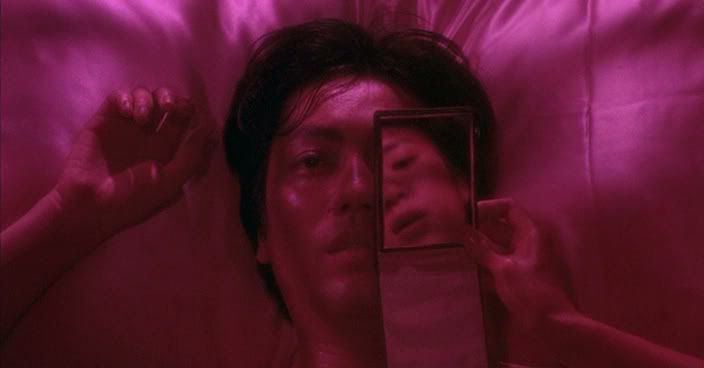
These scenes, filmed in flat, naturalistic color, are juxtaposed with flashbacks to Mishima's youth, filmed in black and white, and scenes from his novels, which are heavily stylized with bright neon hues and blatantly artificial, fragmentary sets. This structure creates a constant interplay between fiction and reality, between the past and the present, suggesting the ways in which Mishima's entire life led to its last moment, and the ways in which his art prepared him for his final act. Schrader selected three novels to work into his film in this way. The Temple of the Golden Pavillion is based on the true story of a stuttering, unattractive Buddhist acolyte (Yasosuke Bando) who, wishing to destroy something beautiful, burned down an ornate ancient temple. Kyoko's House combines the stories of four young men, and Schrader selects one of these, about a vain actor (Kenji Sawada) who becomes involved in a sadomasochistic relationship and eventually commits suicide with his lover. Runaway Horses is the most obviously prophetic of the three works, since it concerns a young man (Toshiyuki Nagashima) who leads an attempted coup to reinstate the Emperor to power; within the film, Mishima calls this book a rehearsal for his own final act.

The scenes from Mishima's novels are presented with a stylized, theatrical sensibility that emphasizes their unreality. These scenes are bathed in bright colors, often a hysterical, oversaturated pink hue. Frequently, the boundaries of the sets are revealed within the frame: jagged, disconnected interiors float within a sea of blackness, like abstract designs scrawled across the screen. These sets often have a staggered design like a lightning bolt, as triangular segments of walls or jail bars fan outwards from a center point at the horizon. This triangular uniformity perhaps suggests the quest of the film's hero towards purity and perfection, towards a clean, aesthetic ideal that seldom occurs in reality.

In fact, one of the film's prominent subtexts is the disconnection between art and reality, an assertion that Mishima was looking for the impossible. That's why the excerpts from Mishima's novels present a romanticized, obviously artificial dream, a fantastic idealization in which every action is dramatic and meaningful. The reality is more mundane, as the film's final chapter reveals: as Mishima's actual last act plays out, and his dream of fomenting a glorious samurai revolt comes to naught, it becomes clear that the "purity" he desired was achievable only in art, not in action. Schrader, though, gives Mishima his redemption at the moment of death, retreating back into the bright, beautiful world of fictional dreams, recalling the epic dramatic moments of the author's books. Mishima's life, and the sadness and pointlessness of his death, are merged with the beauty of his art, so that the film's final image is not the freeze frame on Mishima's agonized face as he cuts his stomach open, but a stately image of the golden sun rising into a red sky.


Schrader's film is thus not so much a direct biography as an attempt to come to terms with this man's life and death, to understand why he did what he did, what it meant for him. The flashbacks are not a straightforward life story but a series of incidents, elliptical and fragmentary, that trace the author's development: from a sickly, isolated boy in thrall to his overbearing grandmother, to a shy and literary young man, to a right-wing reactionary, yearning for the lost golden age of samurai honor. For Mishima, life and art were ideally unified, and in order to reflect this Schrader brings Mishima's art into vibrant reality while treating his past as a foundation for his art. Sometimes this is literalized in abrupt transitions from reality to fiction. A shot of the stuttering child Mishima cuts directly to the stuttering acolyte from The Temple of the Golden Pavillion, while later Schrader cuts from Mishima walking into a gym shower to a very similar image of the protagonist from Kyoko's House showering. The switch from black and white to lurid, pink-lit color is jarring and startling, while the continuity between the shots makes a connection between mundane reality and its dreamlike counterpart in Mishima's fiction. In this way, Schrader underlines the idea that Mishima's art was a glorious, oversaturated dream of what his own life could be.

What's especially interesting about this film is its complex structure, which as the title itself suggests, divides Mishima's life into "four chapters." Although the film's flashbacks do follow a general forward momentum, from childhood to adulthood, its four chapters don't neatly correspond to one segment of the protagonist's life. Instead, each chapter is organized around a central concept and its importance to Mishima: "beauty," "art," "action" and "harmony of pen and sword." These chapters deal with, respectively, Mishima's conflicted view of aesthetic beauty, his engagement with artistic pursuits, his increasing political mobilization, and finally his attempt to create a unified ideology in which his art, his politics and his life are one. The incorporation of the writer's works is similarly segmented, so that the first chapter, dealing with beauty, weaves in The Temple of the Golden Pavillion, an allegory about the intimidating effect of idealized beauty on human acts. Chapter two, "art," coincides with the story of the actor who makes his bruise-adorned body into physical art, while the third chapter's examination of "action" naturally works in Mishima's fictional "rehearsal" for his own political action. The final chapter, in which Mishima finally puts his ideas into practice, sheds this structure, relying only on real events without any recourse to fiction: it's only in Mishima's final moments, after his action has failed to accomplish what he intended, that he returns to the world of artistic expression in his last dreams.

Schrader's Mishima is a fascinating and sumptuous film, exploring the nature of artistic expression and the ways in which one man's life and art coexisted and bled together as he struggled to perfect the balance between them. Mishima was a contradictory and complicated figure, in his politics, sexuality and aesthetics. Schrader's film, in grappling with this complex artist, creates a complex and sensual artwork in its own right.

Wednesday, July 22, 2009

Flesh + Blood


Ugly, brutish and relentlessly bleak, Paul Verhoeven's Flesh + Blood is perhaps the director's idea of doing a realistic period picture, though of course with Verhoeven any concept of "realism" is entirely relative. The film is roughly made, with little concern for period detail or verisimilitude — in one shot, a soldier stabbed with a sword falls to the ground, the blade sticking out of his chest, and in the next shot he's clutching his bloodless chest, the sword gone altogether. The film is riddled with moments like this, evidence of a loose, casual approach to filmmaking. Verhoeven's realism is different: he's interested in including the details you don't normally see in period costume dramas. He wants to include all the grit, the ugliness, the grime and filth and rot. His actors are caked in dirt, and they perform with crass broadness; the performances are as messy and grandiose as everything else in this over-the-top film.

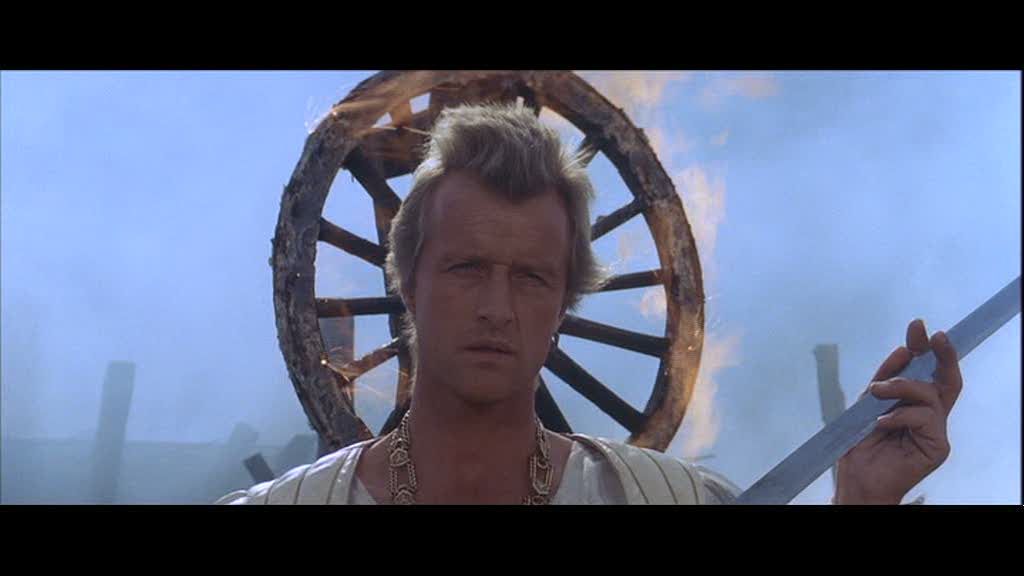
The film follows a group of 16th Century mercenary warriors led by Martin (Rutger Hauer). The mercenaries help the deposed lord Arnolfini (Fernando Hilbeck) regain control of his walled city, but once the job is done, Arnolfini has no more use for the looting, raucous mercenaries, and he has his warrior captain Hawkwood (Jack Thompson) drive the mercenaries away, disarmed and without pay. Martin won't tolerate this, so he leads his men back against Arnolfini, slaughtering the lord's guards and stealing his wagons, as well as kidnapping the virginal princess Agnes (Jennifer Jason Leigh), who was betrothed to marry Arnolfini's scientist son Steven (Tom Burlinson). Agnes is initially terrified, but in order to stay alive and relatively safe, she cozies up to Martin, seducing him and expressing her love for him, refusing to allow any of the other men in the mercenary gang near her.

The film is epic and nearly operatic in its melodramatic intensity, as Martin and his men careen across the medieval countryside, finally finding a castle which they clear of its inhabitants and take over. They settle in like lords of the manor, guided by the "signs" dictated to them by the half-mad priest Cardinal (Ronald Lacey), who believes they are being led by a statue of St. Martin, and that Martin is himself acting as an earthly incarnation of the saint. Of course, Martin helps nudge the statue into place to deliver the signs he wants the others to see, establishing himself as unequivocal leader and making sure he keeps Agnes for himself. The barbarians are on a parody of a holy quest, and once they take up residence in the castle, they also parody the manners of the elite they're displacing, spurred on by Agnes, who attempts to control Martin by showing him how to eat with a knife and a fork. There ensues a mad orgy in which the mercenaries attempt, clumsily and roughly, to mimic her courtly manners, shoveling massive pieces of meat into their mouths with their forks, chopping awkwardly at the food with dull knives.

The film makes every effort to separate these 16th Century barbarians from the present, to establish that this is a different time, a cruder and meaner time, a time guided by a different morality. None of these characters are likable, neither the mercenaries nor the soldiers, led by Steven and Hawkwood, who pursue them in order to rescue Agnes. If the mercenaries are brutish and violent and crude, Arnolfini's soldiers aren't much better. In fact, the film's opening attempts to align the audience's sympathies with the mercenaries, as they are betrayed by Arnolfini after loyally doing his bidding. Of course, the mercenaries are hardly sympathetic protagonists themselves, raping and pillaging their way through every city they come across. Even when Martin decides to surreptitiously help Agnes avoid the attentions of the other mercenaries, he does it not so much because he feels sorry for her, but because he seems to want to keep her for himself. He was won over into something like love when his attempt to rape her was met with feigned pleasure, the girl pumping her hips against him and urging him on the way she'd seen her maid do it in the bushes.


Throughout the film, Agnes remains an ambiguous figure. It's not at all clear if she's simply faking her devotion to Martin to keep herself safe, or if she's hedging her bets on which man will win out in the inevitable confrontation. She manages to secretly slip signs of her love to Steven to show him how she feels, but at the same time she aggressively pursues Martin, and it seems that at some point her charade slips into genuine feeling for the mercenary leader. She's an interesting character, seemingly another of the film's many sly critiques of religion. She was educated in a convent where, with access to the nuns' many books, she ironically learned more about the ways of the world than most other young, virginal girls could. She has, as Martin says at one point, an innocent face — he calls her an "angel" — but the rest of her is not so chaste. Even when she first meets Steven, she overcomes his initial reluctance to marry a girl he doesn't know with her bold, straightforward seduction. She wins his heart beneath the dangling corpses of two bloated, rotting hanged men, and at the climax of the scene Verhoeven switches to a wide shot of the kissing couple framed between the dangling bodies of the dead men. Ultimately, Agnes is only as innocent as she can be in an era like this, surrounded by death and brutality — she is unflappable and tough despite her exterior appearance, and she is willing to do what she must to survive and get what she wants.

The film is a typically excessive, sensually overwrought piece from Verhoeven, who has always brought his uniquely skewed sensibility to all manner of genre films. Here, he's made a lurid, bloody, outrageously sexual period piece, a film in which the barbarism and cruelty of these people is paraded around relentlessly. Verhoeven isn't concerned with making his characters likable, and he cheerfully revels in their amorality. Even Steven, the closest thing the film has to a genuine hero, becomes hard and cold after Agnes is kidnapped, viciously threatening Hawkwood in order to force him to help, and later purposefully infecting the mercenaries with the bubonic plague. The film's ending is thus a parody of the conventional "happy ending." The hero has rescued his bride-to-be and vanquished the villains, but it somehow doesn't seem like such a positive outcome. Steven's soldiers, taking over where the dead mercenaries left off, grab the mercenaries' surviving women to rape and sleep with them, while Hawkwood rides back to the half-mad former nun he keeps as his woman after nearly killing her in an earlier battle. The film isn't so much about a battle between heroes and villains, but a struggle between opposing sides of nearly equal amorality and ugliness; one can't root for any of them to win, and the film is unceasingly unpleasant and grim. This makes Flesh + Blood staggeringly ambiguous in its effect; all of this bloodshed and misery and hatred seems to have been over nothing, despite each side's conviction that God or justice were in their corner.

Monday, June 29, 2009

Poulet au vinaigre


[This is a contribution to the Claude Chabrol Blog-a-Thon currently running at Flickhead from June 21 to June 30. For the last ten days, Flickhead has been dedicated to the works of the French New Wave master, and I've been following along with many reviews of my own.]

Poulet au vinaigre is a quirky black comedy in which Claude Chabrol, always eager to skewer the bourgeois and expose their foibles, focuses on the shady business dealings, love affairs and murderous impulses of a group of small-town businessmen. This mess is all stirred up and brought out into the light, appropriately enough, by the investigation into the one crime these thieving, conniving monsters didn't commit — the accidental death of one of their number, the butcher and strongarm man Filiol (Jean-Claude Bouillaud), in a car accident after someone puts sugar in his gas tank. This incident brings the dogged inspector Jean Lavardin (Jean Poiret) to town, and he is not satisfied with simply investigating this car accident. Instead, Lavardin begins digging into the town's affairs, turning up all sorts of ancillary crimes and juicy rumors, most of which he seems much more interested in than in Filiol's death. One of the film's subtle running gags is how, whenever Lavardin appears, he is referred to as the detective investigating the Filiol case, usually right before he begins asking about something else entirely, probing into everything but the case he's really supposed to be solving. His methods are fierce, too, and probably not entirely legal: he beats suspects and dunks their heads in a sink full of water, breaks into apartments without warrants, and generally has little concern for paperwork or procedure. When someone tells him he can't get away with this, he replies, with a twinkle in his eye, "Ah, the police can do anything!"

This cheerfully brutal, fascistic personage is nevertheless Chabrol's stand-in within the film, and it must surely have been satisfying for Chabrol to turn the bourgeois' most dependable ally, the police, against them. Lavardin is a vicious bloodhound, a thug with little moral compunctions or respect for the law, and yet his doggedness, when turned against this town's most respected residents, manages to unearth their previously well-hidden crimes. It is appropriate, also, that the trigger for Lavardin's investigation is actually one of the town's less fortunate residents, the young postman Louis Cuno (Lucas Belvaux, who looks and acts like a French Michael Cena, all hangdog reserve and stumbling shyness). Louis lives in a dilapidated old house along with his crippled, half-crazed mother (Stéphane Audran), who still mourns the loss of her husband, who ran away twelve years ago. She jealously protects her home, guarding it against the real estate schemes of a trio of local businessmen: Filiol, the solicitor Hubert Lavoisier (Michel Bouquet) and the doctor Philippe Morasseau (Jean Topart). These unscrupulous crooks want to buy up the Cunos' land and move them to another house, for unspecified reasons; it's clear only that it would doubtless be a bad deal for the Cunos, and that something shady is up.

As a result, Louis' mother spends most of her time plotting and spying on their enemies; Louis, on his postal delivery routes, brings home any mail intended for the three businessmen so his mother can steam it open in the basement and read it before passing it along for delivery. But there's more than just shady land deals going on: Morasseau's wife Dominique (Josephine Chaplin, glimpsed only briefly during the opening credits) has disappeared, which makes her friend Anna (Caroline Cellier) suspicious. Chabrol deliberately muddies the water, creating complex webs of relationships and passing along much of the information about what's going on second-hand, through gossip and intercepted letters and photos that get passed around from person to person. Everyone's sleeping with everyone, everyone has secrets, and the nights in this town are a time for secret meetings, everyone skulking back and forth through the dark streets towards mysterious ends. It's both a parody of murder mystery conventions and a joyous fulfillment of the genre's requirements, even if in the end everything that's going on is exactly what one expected.


More than these mystery movie shenanigans, though, Chabrol is interested in the subtexts, both psychological and social, that are opened up by all these complicated plots and counterplots. Not least of these is the predicament of poor Louis, whose possessive, disturbed mother lives in fear of him leaving one day, like his father did, and thus discourages all girls as sluts trying to take her son away from her. This places Louis in an uncomfortable position between his mother, who he cares for with grudging love, and Henriette (Pauline Lafont), the voluptuous, perky girl he works with, who teasingly seduces him any chance she gets. There's an unspoken war between these two women, who never meet, over the young man who gets tugged back and forth between them, dealing with their ultimatums and their possessive demands, trying to keep both happy but knowing he can't. Poor Louis just gets kicked around by everyone — by Lavardin, by the town's businessmen, by his unpredictable mother — and that's probably why he's quietly seething inside, ready to explode with violence. When he gets some wine into him on a date with Henriette, he becomes someone else, confident and angry and defiant.

So on one level the film's about growing up, breaking free of the nest, escaping from the trap of the home to live one's own life: Louis faces this choice more explicitly than most at the film's finale, when he is framed in the center between his mother and his lover, having to choose which he'll go to. More than this, however, Chabrol is interested in what's going on around this teenage psychodrama. Louis, his mother and Henriette are important figures in the larger story, but they're also outsiders to it because they are of a lower class (though the Cuno home is big enough that, had Louis' father stuck around, it's obvious their situation would have been quite different; then they'd be a part of the bourgeois rather than its victims). They're part of the town's lower layer, providing basic services and doing all the real work that gets done in this film. Chabrol creates a fully functioning small town here, populating the fringes of the narrative with some of his regular troupe of actors, including the always hilarious Dominique Zardi as an obsessively punctual post office manager, Marcel Guy as a talkative barkeep, and Henri Attal as a morgue employee who's easily bribed with a stick of gum. All these characters drift around the outer edges of the film, adding to its complexity, creating the impression of a real town with all its cross-currents and linkages and intrigues.

Ultimately, Poulet au vinaigre takes some of Chabrol's characteristic themes and deals with them in a lighter context than usual, using this convoluted story of murder and deceit as a loose framework for the film's satirical and comedic digressions. It's all treated with an irreverent tone, a slightly askew sensibility that displays Chabrol's wry perspective on these characters.

Wednesday, June 3, 2009

Films I Love #34: The Angelic Conversation (Derek Jarman, 1985)


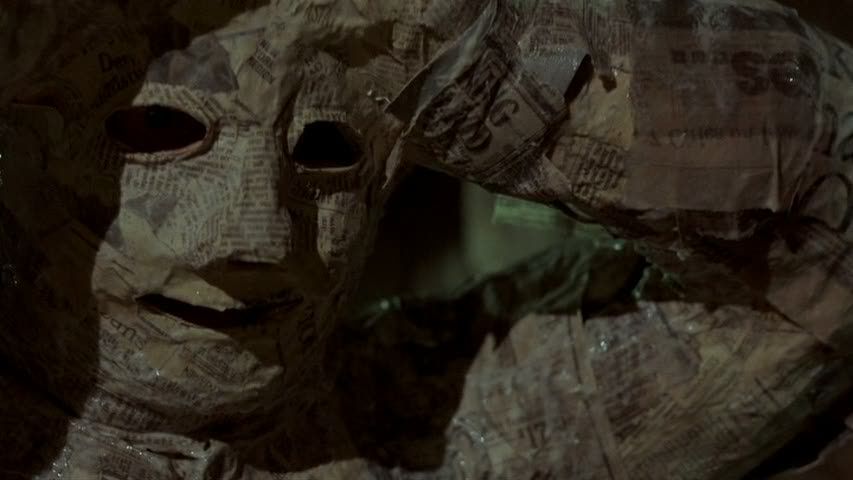
Derek Jarman's The Angelic Conversation is the purest and greatest of the filmmaker's experimental works, a lyrical, abstracted visualization of the love sonnets of William Shakespeare. Shakespeare's poems, long thought to have been addressed to an anonymous young man, are read aloud on the soundtrack by Judi Dench, accompanied by the expressive ambient industrial music of Jarman's collaborators in Coil, who intersperse their chiming electronic tones with sloshing water sounds and other field recordings. This music — my own introduction to the film, since as a Coil fan I owned the soundtrack long before I ever saw the film itself — is haunting and ethereal, a perfect complement to Dench's mannered readings and the ghostly beauty of Jarman's images. The film constantly suggests the outline of a story, but it is nevertheless largely non-narrative, simply following several young men meandering through desolate, rocky terrain or performing arcane rituals with fire and reflective metals. Jarman shot the footage on 8mm film stock and then blew it up to 35mm, giving everything a fuzzy, grainy, blown-out quality, with extreme contrasts between muddy shadows and blinding flashes of light and color.

The imagery is some of Jarman's most sensual and layered, gorgeous images in which nothing much is happening beyond the play of light on skin, the jittery slow motion that animates these figures, the mutations of a flickering flame played out in closeup frame by frame. The film is an ode to the sensuality and dark beauty of love, and particularly, unsurprisingly, of gay love. Torches flare and pulse in dark caves. Men walk through scorched, foggy landscapes carrying heavy burdens on their backs like Christ. Strange rituals are performed by men whose skin is turned a pale gray by Jarman's video processing; allusions to mythology and spirituality are encoded in these bizarre, stagey interludes. Violent wrestling and struggle slowly softens into caresses and embraces, hatred becoming love. This is a stunning, deeply affecting film, a masterful translation of Shakespeare's evocative sonnets into a series of abstract vignettes whose mystery and suppleness matches the evocative lyricism of the Bard's verse.

Monday, April 27, 2009

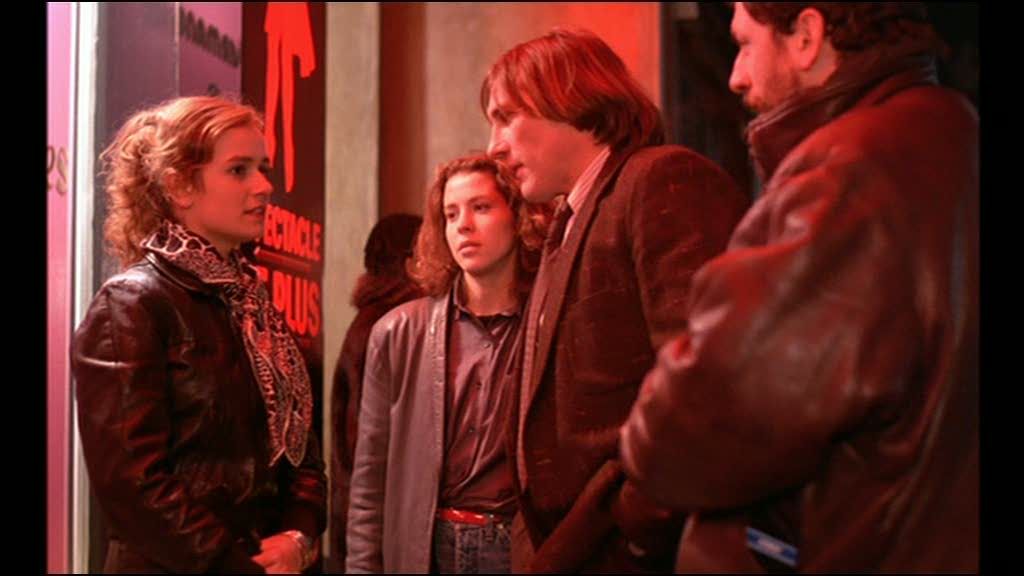
Police


The title of Maurice Pialat's Police announces itself as a certain kind of genre picture, a thriller, a policier, and for at least part of its length it seems to be fulfilling the conventions of its genre. It opens with the police detective Louis Mangin (Gérard Depardieu) getting turned on to a drug trafficking ring by the small-time crook Claude (Bentahar Meaachou), who has basically no choice but to turn informant or else get sent to jail himself. Mangin then pulls in the drug dealer Simon (Jonathan Leïna) and his girl Noria (Sophie Marceau), even though he has no more evidence on them than Claude's testimony, and a search of their apartment yields nothing. This drags into play a whole underground network of crooks and dealers and pimps and killers with their clandestine meetings and dirty deeds, all of them fighting and killing each other over the drugs and money being passed around within their insular, scary world. This is the set-up for a gritty crime drama, and its plot does indeed mix in plenty of guns, mysterious caches of money, night-time shootings and stabbings, and drugs hidden away in secret locations. And yet the film more or less uses these events and genre conventions as a background to its real concern, which is the interaction of its ever-widening cast of characters, its realist concern for the lives of people living on the edge of legality and crime in various ways. In the end, the term "crime film" is not its genre but its setting, its milieu. It's about people living life as though it was a crime film, people hiding out in grimy apartments and low-life bars, people with shifty eyes for whom lying is as natural as breathing. It's also about the marginalized status of Arab immigrants within French society, and the way that these Tunisian gangs form an entire alternative culture within their host country.

Many of these concerns doubtless originated with the film's script, conceived and co-written by the filmmaker Catherine Breillat, but it's Pialat's characteristic loose, improvisational style that really seems to drive the film. After the initial burst of crime drama clichés, the story settles down into an eventless pace, destabilizing genre expectations and blurring the usually rigid lines delineating hero from villain in these kinds of stories. There is no solid ground here, no definitive moral compass. Everyone is corrupt to one degree or another, and the cops are nearly as bad as the criminals, or maybe even worse. Mangin and his buddies certainly don't play by the rules. They're brutal and nasty and tend to presume guilt in everyone they see; sometimes they're right and sometimes they're wrong, but their methods are draconian and cruel. Mangin especially is violent and contemptuous of procedure. He beats on prisoners and even slaps Noria around. In the absence of actual evidence, he tries to bully suspects into confessing their crimes. At one point, the cops bring in a guy suspected of pulling a robbery at a jewelry store. But when the old lady from the shop not only fails to identify him, but specifically points him out as the one guy in the line-up who couldn't be the robber, the cops don't give up or set him free. Instead, they subject him to a battery of brutal interviews, berating him with questions and insisting that he's been identified as the robber, finally beating his head against a desk when he refuses to say he did it (he didn't, it seems).

Further blurring the line between good guys and bad guys is Lambert (Richard Anconina), a sleazy, amoral defense attorney who represents various underworld figures and proudly announces that he's not one of those lawyers who needs to believe in his clients' innocence to defend them: "I know all my clients are guilty!" Oddly enough, he's good friends with Mangin and frequently meets with his buddy after hours to compare notes or engage in some shady, semi-legal business together — like setting up a local pimp for some jail time because Lambert has his eye on the pimp's main girl Lydie (Sandrine Bonnaire). At the same time, Lambert doesn't want to do this forever; his ultimate career goal is to become a public prosecutor. It's not an unrealistic idea, either, because there's already so much fluidity between good and bad in this world: none of the good guys can escape corruption, just as none of the bad guys are without their redeeming qualities. Even among the Tunisian gangsters, there is a sense of familial loyalty and a code of honor that ties them together; Simon's bumbling, oafish brothers Maxime (Abdel Kader Touati) and Jean (Jamil Bouarada) are pretty rotten and stupid, but they love their brother and their mom, who seems to be in on their crime ring in some amorphous way.


As Pialat and Breillat dig deeper and deeper into this milieu, the film becomes less and less concerned with its ostensible thriller plot. Moreover, it starts to erase the distinctions between cop and criminal that set everything in motion to begin with. At some point around halfway through the film, the script elliptically skips over at least a few weeks without warning, and throws cops and criminals together in unpredictable arrangements. Noria has been released from jail thanks to Lambert's defense, though Simon has remained behind bars on equally flimsy evidence. But Mangin seems unconcerned, and the film's turning point comes during a night out on the town for dinner and dancing, with Lambert and Mangin being joined my Noria, Lydie and one of Mangin's colleagues, Marie (Pascale Rocard). The plot seems to have been forgotten, and Mangin, who is as vicious as a pit bull when he gets a suspect in front of him, couldn't care less if his detainees are released without charges later. His amorality extends even to his work ethic; he sees policework as just something to do, a job rather than a calling, and he disowns responsibility the minute his part in the process is complete.

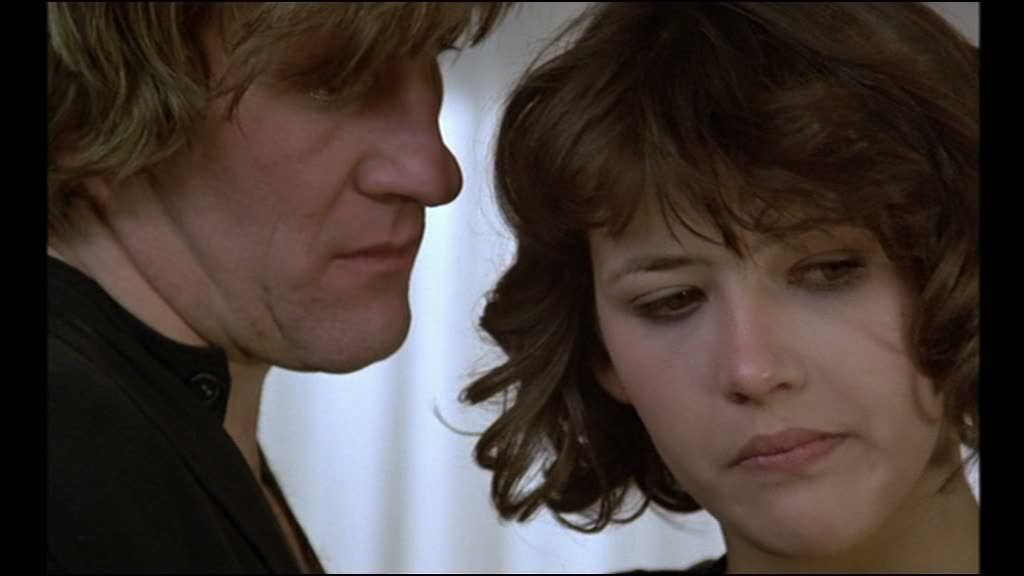
This is why Mangin can spend the night out with one of his former suspects, and even start to fall for her. The thrust of the film at this point becomes less about its crimes or suspense plotting than about the complicated relationships that develop between the cops, criminals and lawyers. The incestuous interweaving of the criminal elements with their pursuers results in various romantic and sexual liaisons forming and dissolving. These people are desperate for some kind of connection, even if it's just empty sex, and this is especially true of the lonely widower Mangin, who over the course of the film shifts subtly from a nasty, brutish jerk into a more complicated, even sympathetic character. It helps that Depardieu embodies both aspects of this character, with his hulking body and slumped posture, his darting eyes half-hidden beneath a shaggy mop of hair. He can be intimidating and also disarmingly gentle, almost like a shy little boy trapped in an oversize body. Marceau's Noria has virtually the opposite character arc, her initial blurry-eyed victim morphing gradually into a cold and habitually dishonest femme fatale, dropping lies without blinking. Marceau sells the transition well, and she seems especially conscious of how her character's deceit and coolness play off of her doe-eyed, cherubic beauty. But the way the film's second half treats the arcs of Noria and Mangin is somewhat disheartening and misogynist, rehabilitating the nasty, corrupt cop into a sensitive, lonely guy while his victim becomes a manipulative ice princess, cynically using men to dig her out of the trouble she's gotten into.

Still, it's to Pialat's credit that Police is ultimately more complicated than a surface description of its central relationship would suggest. Pialat's camera darts around, letting the relationships between the characters define themselves as their bodies interact with each other and with the camera's ragged motion. He cuts in for closeups, squashing faces together in cramped compositions, contrasting the lumpen Depardieu against the smooth, curving lines of Marceau or Bonnaire or Rocard. The camera frequently readjusts in small, barely noticeable ways, jigging slightly to the left, zooming in or out, as though refining the relationships within each frame, highlighting or eliding certain details through its minute adjustments. The camera's rough movements — it seems to be settling on its framings only after much trial-and-error experimentation — complements the raw, naturalistic acting of the cast. As always, Pialat's work seems to be tapping into deep, primal emotions, increasingly letting the film's genre conceits fade away into the background as the director focuses his camera with glaring intensity on the nastiness and ugliness of these people who are searching for something better even as they, almost unconsciously, hurt and betray one another. And the real betrayals here are not the noirish double-crosses involving bags of money and drugs — these plots are resolved, counter to expectations, with conversation and minimal bloodshed — but the painful, emotional betrayals of love and desire and human connections. This is a police drama where knife or gunshot wounds are much easier to deal with than the deeper emotional and psychological scars hidden within.

Sunday, February 22, 2009

Hurlevent (Wuthering Heights)

[All through the month of February, Jeremy Richey at Moon in the Gutter has declared a tribute to films that are "M.I.A. on Region 1 DVD." This post is a contribution to this series.]

Hurlevent is Jacques Rivette's stark, emotionally naked adaptation of Emily Brontë's Wuthering Heights. The story is of course familiar, and Rivette treats it, as a result, with an air of inevitability: these things are fated to happen, they are destiny, because they have been written. The film is split neatly in two, with an ellipsis of three years in between. In the first half of the film, brother and sister Guillaume (Olivier Cruveiller) and Catherine (Fabienne Babe) are living together on a crumbling estate after their father's death, along with the "foundling" Roch (Lucas Belvaux) who their father adopted. With the old man gone, Guillaume treats Roch like a hired hand or worse, a dog, beating and berating him at every chance he gets, locking him in his room or even in the kennels. Guillaume is a jealous, nasty brute, resentful of the love Roch earned from their father, and even more resentful of the strong bond of affection and love that exists between Roch and Catherine, who are so close, so intimate, that their love for each other seems to be a weird blend of sexual desire and sibling friendship. This bond, however, cannot survive Guillaume's insistent attempts to shatter it. Hemmed in on every side, constricted by the spiteful master of the house, unable to break free, Catherine finally flings herself at their wealthy neighbor Olivier (Olivier Torres), seeing him as her only way out. Roch, deeply wounded, disappears.

At this point, the film picks up three years later, with Catherine and Olivier married, living in Olivier's home along with his sister Isabelle (Alice de Poncheville). The trio have formed a new détente similar to the quasi-incestuous bond between Catherine, Guillaume and Roch. Isabelle and Olivier are as close, as intimately connected and harmonious, as Catherine and Roch, and their feelings for each other sometimes seem to be as far from chaste sibling bonds as Guillaume's jealous desire for his sister. Into the midst of this complicated tangle of feelings, Roch finally returns from his long absence, having shed his savage ways and dirty appearance, made his fortune somewhere and cleaned himself up. He proceeds to manipulate everyone around him, exacting his revenge for the way he was abused and rejected when he was younger. Rivette lets it all play out in his characteristic slow, patient long takes, his camera crawling and stalking through each scene as the characters stalk and circle one another. There is no escape for these characters, constrained by the written word to their preordained ugly ends, and yet Rivette is continually hinting at the ways out: the beauty of the countryside with its rolling hills, the way the contact between various characters keeps shifting fluidly from sensuous embraces to violent constriction, and most importantly the escape offered by dreams and fantasies.

Indeed, dreams recur at three key points in this otherwise solidly realist film, with little indication that they even are dreams until they're over. The dreams don't so much break with the reality of the film as offer alternate visions of its final outcome, as envisioned by each of the three central characters. The film opens with Guillaume's horrified dream in which he witnesses Catherine and Roch kissing passionately in the rocky hills surrounding their estate. He makes a move to attack them, but is suddenly pulled up short by a vision of his father, a reminder of what the dead head of the household would have wanted to happen. This dream, which offers a hopeful resolution to Catherine and Roch's love story, is answered by Catherine's much more regretful dream, positioned in the center of the film right at the pivot point of the story: Roch comes to her bedroom, leads her away, then collapses dead with his arms slit up the middle, his bloody handprints left behind on her white nightgown. In the film's final dream, and its final image, Roch is summoned by his lost Catherine from the window of his room, where her arm beckons to him from outside; he reaches for her but she disappears, leaving his hand clutching at air out the window. These dreams flow from out of the fabric of the film's reality, reflecting the acts of imagination in which life is subtly altered and reconfigured into more romantic, sensuous possibilities, even if it's just the longing for a ghost that Roch experiences in the finale.


Rivette also hints at other possibilities, at least in the first half of the film, in the gorgeous images of the rural countryside surrounding Guillaume and Olivier's estates. Catherine and Roch find escape, even if only briefly, in a free-spirited run through the rolling hills, with a marbled sky of dark clouds above them, shot through with patches of sunshine. The hills, curving upwards, seem to suggest the transcendence of the two would-be lovers over their mundane melodramatic story, the possibility that they might keep running up and up, joyfully escaping together into the beautiful open fields. Rivette accompanies these scenes of potentiality with the film's only non-diegetic sound, a selection of stunning pieces by the Bulgarian women's choir compilation Le Mystère des Voix Bulgares, music of such unearthly beauty that it is nearly alien, music that seems to emanate from (and yearn for) a world far beyond the corporeal plane. It is thus perfectly appropriate music for this story of perennially unfulfilled desires, and its startling ethereal quality is enhanced by the film's generally sparse soundtrack. Other than a scene in which Catherine plays records of classical music for a party, the only other sounds in the film are utterly mundane and diegetic: the distant howl of the wind, the clatter of farm equipment, the haunting calls of animals in the night. There's an eerie simplicity to the soundtrack, an emptiness, and the intrusion of these Bulgarian melodies, with their dense frameworks of interlocking voices and dissonant overtones, is thus doubly jarring and disorienting.

Despite this potent music, however, Catherine and Roch's dreams of escape must remain only dreams, and so much of the film is concerned with their dreary hopelessness that it begins to seem rather dreary itself. The second half of the film plays out like the inset melodramatic play-within-the-film sequences of Celine and Julie Go Boating, with the stiff, dissatisfied Catherine, Olivier, Isabelle and Roch wandering around Olivier's mansion. That's fitting: they're as hopelessly condemned to their fates as the characters in the earlier film, reliving a circular tragedy over and over again. And yet, without Rivette's characteristic wit and vivacity, Hurlevent begins to seem lifeless, its characters fenced in without the escape offered by Celine and Julie's playful interventions. This film is more of a kin to Rivette's flawed Merry-Go-Round, in which the alternate realities of fantasy and dream also provide the only escape for the characters from their damaging, manipulative relationships with one another. Hurlevent strips that film down even further, replacing its freewheeling improvisation and humor with a rigid, methodical structure to which the characters are pinned. This is, despite moments of beauty and grace, one of Rivette's bleakest films, an interesting, often enthralling, but ultimately dour formalist experiment.