Showing posts with label 1990. Show all posts

Monday, June 13, 2011

Close-Up


Abbas Kiarostami's Close-Up is a marvelously compelling documentary that, in the process of following the trial of a poor man accused of fraud, winds up delving into the nature of art and the relationship between fiction and deceit. The film is built around a real incident, the case of Hossain Sabzian, who impersonated the famous Iranian director Mohsen Makhmalbaf in order to ingratiate himself with the Ahankhah family, pretending that he was going to film a movie in their home with the family as actors. The family was initially trusting but came to suspect him more and more, finally exposing him by inviting over a friend of a friend, the journalist Hossain Farazmand, who knew the real director by sight and instantly recognized that Sabzian was a fraud. Kiarostami's film is partially a documentary of the resulting trial, and partially a reconstruction — using the real participants in the events as actors, including Sabzian himself and the family he conned — of the events preceding Sabzian's arrest.

The film opens with a re-enactment of the reporter taking a taxi to the Ahankhah house to arrest Sabzian. Farazmand and the taxi driver sit in the front, while two soldiers sit in the back, and during this lengthy opening sequence the men chat casually, talking about the case they're going to deal with, about film, about journalism, and about incidents from Iranian history that happened in the areas they pass through. The conversation is casual and seems unrehearsed, though this is a re-enactment of the real events that led up to Sabzian's arrest. Once the cab arrives at the house, Farazmand goes inside, but Kiarostami's camera remains in the cab, observing as the driver chats amiably with the two soldiers in the back seat, asking them about their families and their homes. Then the soldiers go inside too, and again Kiarostami remains outside with the driver, as the man gets out of the car, picks up some flowers from a pile of trash, sniffs the flowers, and kicks an aerosol can so it rolls noisily down the street. The can rolls along the concrete, and Kiarostami's camera pans after it, eventually following it as the can starts to drag sideways across the ground in an unnatural movement, presumably pulled along by an unseen string from off-camera.

In this way, the subtle naturalism and observational aesthetic of the opening scenes gives way to a sense that things are being tweaked by the filmmakers, that not everything is necessarily as it seems. It's a reminder that the film's re-enactments are only playing at realism; they are in fact carefully arranged and scripted, based on real events but not in themselves "real" or unmediated. The naturalism of the opening is further deconstructed when, after Sabzian's arrest, the reporter remains behind, frantically running from door to door in the neighborhood to ask to borrow a tape recorder. The scene is farcical and surreal, as Farazmand rings doorbells at random, introduces himself, and asks for a tape recorder. One starts to wonder what kind of reporter shows up for a big story like this, planning to do an interview, and then has to beg for a tape recorder from complete strangers. It's comical and strange, especially when Farazmand finally gets his tape recorder and goes scurrying off down the street, pausing just once to give the aerosol can lying in the road a savage kick that sends it flying into the air, coming down and once again rolling along as the reporter disappears down a side street. As the credits finally roll, ushering in the meat of the subsequent film, concerning Sabzian's trial, Kiarostami leaves the audience to wonder about this strangely unprepared reporter, about con men, about reportage, about lies and fictions.


The images of the trial itself, captured in grainy footage that contrasts against the crisp, clean images of the re-enactments, are focused on Sabzian and his explanations for what he did. Kiarostami had remarkable access in the surprisingly relaxed courtroom where the trial takes place — or else not all of the trial footage is genuine, which only further blurs the film's interesting perspective on reality versus fiction, truth versus lies. Kiarostami seems too involved, too active in the trial's progress, for all of this footage to be real, unless Iranian courts are significantly less controlled than Western courts. The judge sits across the room, asking questions of Sabzian and the Ahankhah family, but for the most part Kiarostami's camera remains focused on Sabzian's face. At the beginning of the trial, Kiarostami explains to the defendant that this camera has a close-up lens and will remain trained on Sabzian, to capture his reactions and to provide him with a way to speak his mind and make his ideas clear. Kiarostami is making explicit what this film is about: he wants to give Sabzian an opportunity to express himself, to help others understand why he did what he did. During the trial, Kiarostami frequently even intervenes (or seems to intervene) in the proceedings himself, asking Sabzian direct questions and prompting the defendant to speak at length about the feelings and ideas that were behind his actions.

These close-ups of Sabzian are astonishingly moving, especially since the defendant's words reveal that he was no simple con man, that he was not trying to bilk the family out of money or otherwise exploit them. He did what he did, he says, because it made him feel respected. He is a poor man, divorced from his wife because of his inability to provide for his family very well, and he still struggles, constantly in and out of work, living a very poor and simple life with few real pleasures. His only pleasure, it seems, is the stimulation provided by the cinema, by art: he goes to the movies, especially the movies of Makhmalbaf, and finds a voice dealing with the kind of "suffering" that he himself feels in his own life. He is especially moved by the director's film The Cyclist, about which he says, "It says the things I wish I could express." With Kiarostami's prodding, the trial becomes a discourse on the purpose of art, the ways in which art can reach into people's lives in surprising ways. It becomes obvious that Sabzian impersonated Makhmalbaf because he wanted to feel as though he could reach people in that way, that he could express the things he feels with such clarity and beauty. As he struggles to express himself, to explain his actions, the subtext is the idea that art communicates. Sabzian's halting but often poetic descriptions of his "suffering," his poverty and feelings of uselessness and desperation, are a form of art, shaped and crafted by Kiarostami in turn.

The film is not only a commentary on the purpose of art but a subtle piece of social commentary as well, suggesting the hopelessness of poverty and unemployment that affects so many people. Even the Ahankhah family, who seem reasonably well-off in their large house, are not unaffected, as they have two sons who went to school for engineering, only to find that neither of them could get a job in the field after graduation. Instead, one son works in a bakery and the other is still unemployed. Sabzian's inconsistent work and constant struggles with money are even more extreme, and in court one of the Ahankhah sons, forgiving the defendant at the end of the trial, says that he blames "social malaise and unemployment" for Sabzian's actions. Kiarostami doesn't draw quite that straight a line between cause and effect, but it's obvious that he too thinks that this odd story is at least partially about class and economic hardship. Sabzian didn't commit his crime for money, even though he did borrow some money from the family at one point. He wanted to be Makhmalbaf not to get money, but in order to escape from his pathetic real life. He was playing a part and relishing the attention and respect he earned from the family who believed him to be a famous artist.

As he says himself at the end of the trial, at Kiarostami's prompting, he was more of an actor than a director, though. He was playing a part, he says repeatedly, and the structure of Kiarostami's film reinforces the connection between lying and acting, between the art of fiction and the art of the con man. The re-enactments in Close-Up, bringing together the real participants in these events to play out their scenes again, insert a further layer of fiction and artifice. In the reconstructions, Sabzian is playing at playing, pretending to pretend, while the rest of the actors are engaged in the same deceit. They play at reality, staging seemingly casual conversations that in fact are anything but unmediated. It is the flipside of the film's idea that art can reveal truths and speak to people about their own lives: art is also lying and pretending, and in that sense Kiarostami's film makes a very moving, strangely beautiful artist of Hossain Sabzian.

Thursday, July 23, 2009

Total Recall


Total Recall was Paul Verhoeven's second movie in Hollywood, following up on the blunt, ultraviolent satire of RoboCop with an even loonier, more abrasive vision of totalitarian control. The film, loosely drawing its inspiration from a Philip K. Dick short story, imagines a future in which Mars has been colonized as a mining colony, producing a metal that is much in demand on Earth. The whole operation is presided over by the power-hungry Cohaagen (Ronny Cox), who maintains an iron grip on Mars by tightly controlling the air supply doled out to the inhabitants of the red planet, who live in specially controlled domes. If they want to live, they'll breath the air Cohaagen supplies — at a price, of course. It's a perfect situation for a would-be tyrant: complete control over people's very lives. His subjects need to bow to him just to survive, and there's no bargaining when it comes to a necessity like air, especially when Cohaagen's the only supplier.

As in RoboCop, Verhoeven is depicting a model for how a future authoritarian state might emerge — seizing control of natural resources, monopolizing the things people need, controlling the media to disperse only the information they want to get out, in this case propaganda about the "terrorist" rebels who resist. Not much information about Mars reaches the outside world, but one man becomes interested in the red planet when he begins obsessively dreaming the same dream over and over again, in which he is walking across the planet in a spacesuit with a mysterious woman. This man is Douglas Quaid (Arnold Schwarzenegger), and he seems to be perfectly ordinary: he's a construction worker, he's got a pretty wife, Lori (Sharon Stone), and he's never been off Earth. But his dreams persist, and he begins to want a solution to this mystery. He suspects maybe something is up. Of course, the audience knows long before he does that something's up. One of the film's most brilliant maneuvers is casting Schwarzenegger as a secret agent whose mind has been erased and his identity changed to that of an ordinary working man. This is Arnold we're talking about here, with his Bavarian lisp and his bulging, elephantine muscles. He looks absurd as a normal guy. He looks out of place in normal clothes, without a gun in his hand. He looks vaguely ridiculous kissing his wife goodbye as he leaves for work, as though he was a sitcom husband going through his daily routine. Today, he looks absurd too as a politician, but that's another story. The point is, it's obvious from the moment we see him that Douglas is not just some ordinary guy. He looks like a secret agent in disguise, a brawler, and it's no surprise when he's attacked and fluidly demolishes his assailants with a barrage of countermoves.

It turns out that someone's been messing with his mind, and his former self was a government agent working on Mars, an agent who had apparently switched sides to the rebels at some point. This is when the fun really begins. As a satire of totalitarianism, the film has its moments, but Verhoeven doesn't go nearly as far with the ideas as he did in RoboCop. But as a totally crazy, goofy sci-fi action movie, Total Recall is pretty hard to top. The explosive violence and gore of RoboCop is carried over here, and each fight scene is basically a collage of inventive ways of dispatching people, with Arnold in typical action hero mode, racing around, pounding bad guys, and tossing off his usual ludicrous one-liners. (His best, because it's simultaneously the cheesiest and the nastiest, is directed at his faux-wife Lori: "consider this a divorce.") The action scenes are occasionally clumsy, and there are several scenes where it's obvious that stunt actors are simply throwing themselves around to give the impression of a frenetic fight that just isn't actually happening, while in another scene everybody vibrates spastically to make it seem like the ground is shaking. Verhoeven's occasionally awkward with stuff like this, the big epic fight scenes so central to the film, though he also stages much of the violence with panache.

A bigger hurdle to enjoyment (except of the campy variety) is the lame dialogue and inconsistent acting. No one expects a real performance out of Schwarzenegger — the guy's most famous for playing a robot, with good reason — but the rest of the cast mostly seems to be acting down to his level. Cox especially hams it up as the villain Cohaagen, though his theatrical mustache-twirling fits the film's over-the-top B-movie tone well enough. Out of everyone in the cast, only Sharon Stone turns in an actual performance, in the small but crucial part of Lori. Her sexy-bitchy mannerisms and stop-on-a-dime transitions from seductive to icy seem now like a rehearsal for Basic Instinct's Catherine Tramell, and it's obvious why Verhoeven cast her in the part for his next film. As for Total Recall, despite its generic, pulpy dialogue and weak performances, for the most part the film is a visceral action showcase, and that's really all it tries to be. Verhoeven's political subtexts are increasingly overwhelmed by the wildly entertaining surface, which makes it a rare Verhoeven film where, in the battle between surface and subtext that always takes place in his work, the surface wins.


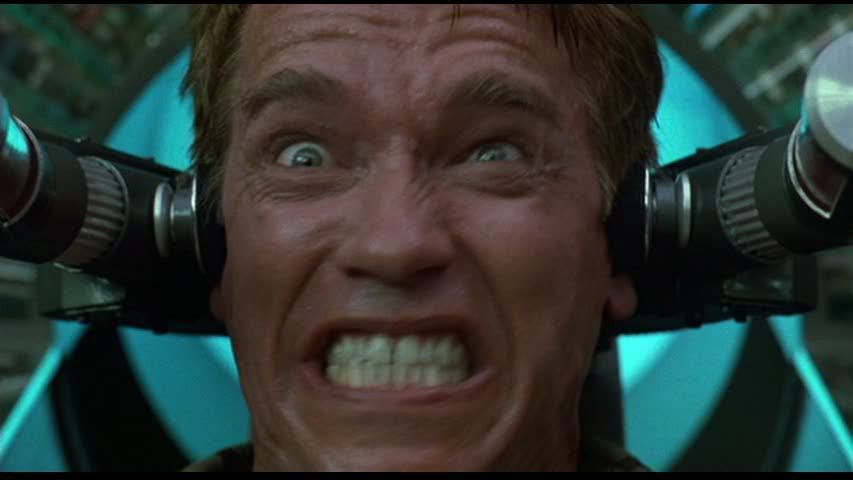
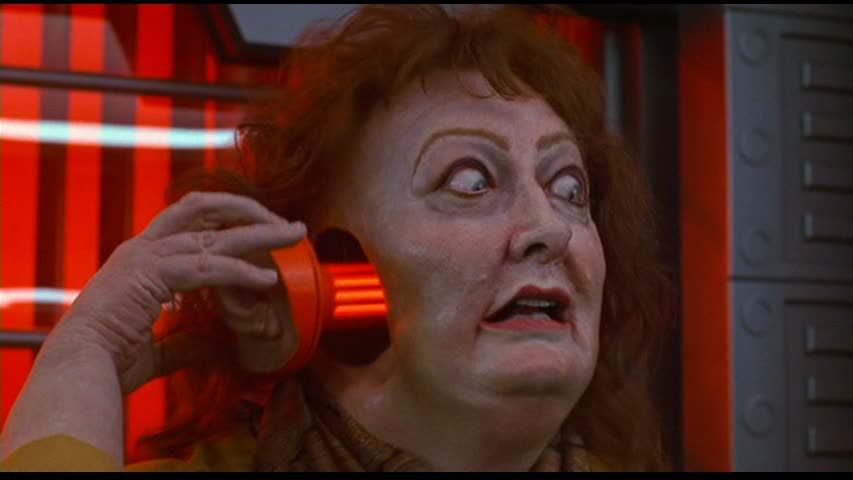
Still, it's a pretty entertaining surface. A lot of the credit has to go to the special effects work of Rob Bottin, who crams the film with inventive plastic and rubber effects. Most of the film's most memorable images are a result of this effects work: the bulging, cartoony eyes of Douglas as he flails about on the surface of Mars, gasping for air; the special robot suit that allows Douglas to disguise himself as a woman; the infamous three-breasted prostitute; the various deformed "freaks" who inhabit Mars' Venustown. These images have a sense of wonder, not because they seem futuristic, because they really don't, but because they're so tangible. They're not realistic by any means — in fact they're grotesque and deliberately exaggerated — but they nevertheless feel real. In that respect, the effects are reminiscent of the equally potent gore and viscera in David Cronenberg's 80s horror films, which seem like an important touchstone here. As in Cronenberg's work, the use of plastic effects rather than CGI grounds the film in a real, lived reality, even if in this case it's an absurd alternate future where three-breasted women and freakish mutants coexist, and where a mask of a woman's face can unfold itself like a flower opening to reveal Schwarzenegger inside.

These images provide much of the film's energy and vitality, particularly when Douglas finally comes face to... uh, faces with the rebel leader Kuato (Marshall Bell), a seemingly ordinary man who's hiding a baby-like tumor under his shirt, growing from his chest. This creature, which has psychic powers and leads the rebel army, is a stunningly grotesque puppet, slimy and very organic-looking. Such striking and memorably horrific images are a big part of the film's enduring appeal. Certainly, the creature and makeup effects have dated a lot better than the crude work done to create the surface of Mars itself; the red planet sometimes looks like an Earth desert tinted red, and sometimes looks like a blatant studio set with a painted backdrop. In a way, though, this artificiality only enhances the film's sense of unreality, as its protagonist tries to untangle his fractured mind. The plot races through multiple reversals and false detours, suggesting at various times that Douglas is delusional, that he's really a secret agent, that he's stuck in a virtual memory simulation gone wrong, that he just needs to swallow a red pill in order to wake up — presumably into The Matrix, which would eventually run with that particular idea. At the very end of the film, Douglas' last line even casually, jokingly suggests that maybe all of this was simply a dream, and he's about to wake up, at which point the sun flares in the distance, whiting out everything.

It's a telling little joke, because ultimately it doesn't really matter what's going on here. All of the material about multiple identities and the mind and memory are essentially red herrings, distracting from the real point. The film could be a paranoid delusion, it could all be happening in Douglas' head, but even if it isn't, it's always clear that the film is a fantasy in somebody's head, that it's unreal and ridiculous from the very beginning. It's Verhoeven's fantasy, basically, in which a capitalist nightmare — a monopoly run amok — is defeated through the efforts of freaks, outcasts and deviants. Verhoeven's touch shows through most clearly in the portrayal of these outcasts, who are both ogled as freaks — including a real dwarf mixed in amongst the makeup-enhanced mutants — and simultaneously treated as the only decent people in the film besides Douglas and his rebel girlfriend Melina (Rachel Ticotin). It's surely no coincidence that the film's rebels dwell in a section of Mars given over to sex clubs and exotic pleasures of all kinds. Even here, in probably Verhoeven's most impersonal film, the evidence of his overblown sensibility is everywhere. The film might be just a silly action movie at heart, but its anything-goes aesthetic propels the action along and gives the film its verve; Verhoeven is never content to simply show an image when he can rub it in the audience's face.

Saturday, May 9, 2009

Industrial Symphony No. 1


Most of David Lynch's feature films are of course well-known, even though Lynch himself has over the years passed in and out of the public eye as either a quasi-mainstream eccentric or a maker of outright art films. Lesser known is the director's rather large secondary oeuvre, one largely crafted outside of any widespread attention and consisting of a hodgepodge of short films, music videos, oddball art installation pieces and, in recent years, digital shorts and serials made especially for his member's only website and dribbled out in samples on various DVDs. There's a surprising amount of Lynch film and video work beyond his features, and these ephemera and peripheral works add to the overall impression of Lynch as a somewhat mad genius, a creative intelligence overflowing with ideas and images that pour out of him at an alarming rate. Many of these incidental pieces maintain connections to Lynch's other work, tendrils stretching both backward and forward in his filmography: key personnel reappear, themes and images repeat themselves, and ideas sketched out in a shorter work might be blown up into something grander in time. In recent years, Lynch has even begun directly recycling these "side projects" into his features; Mulholland Dr. was salvaged from a rejected TV pilot, while the sprawling INLAND EMPIRE integrated various bits and pieces of Lynch's website shorts.

The point is that while Lynch's secondary work is often rather minor and sometimes seems hastily thrown together in comparison to the carefully controlled surrealism of Lynch's features, these lesser works can also be resonant within the context of his career as a whole. Industrial Symphony No. 1 is an hour-long oddity, a showcase for a handful of songs that Lynch and his frequent composer Angelo Badalamenti wrote for the singer Julee Cruise. It's a strange film, opening with a brief and disconnected phone conversation in which Laura Dern and Nicolas Cage essentially reprise their roles from Wild At Heart. Cage's character drawls out a breakup spiel while Dern grows distraught and pleads with him not to leave her, and then the remainder of the film is supposedly the dream of this heartbroken woman following her lover's departure. Conceptually, it's therefore a very rough rehearsal for Mulholland Dr., though the film more directly looks forward to Lynch's TV series Twin Peaks. Cruise would of course appear on that show sporadically as a bar singer, and this unsettling dreamscape is also populated by Michael J. Anderson, who would play the mysterious dwarf in the Red Room on Twin Peaks.

So the film is a grab-bag of Lynch ideas, characters and visuals, but more than anything it's an extended music video, an opportunity to spotlight the suite of songs that Lynch and Badalamenti had written for Cruise. They're marvelous songs, too, aching and hypnotic, using Cruise's high, flute-like voice to create eerie melodies that seem to float like ghosts above the syncopated pop-jazz of the music. The music is reason enough to justify the film's existence, though the songs are just as lovely without the context of the film, as heard on Cruise's first two solo albums, Floating Into the Night and The Voice of Love. Indeed, other than the music, the film itself is only intermittently successful, alternating between genuinely powerful sequences and long stretches that consist of little but meaningless visual tics.


The entire film is set on a soundstage littered with junk: assemblies of steel girders, wrecked cars, hospital gurneys, catwalks up above. The set gives the impression of an abandoned factory, lit with an array of floodlights that sweep around continuously, giving the film a strobing quality as light and shadow interact. The evidence of the film production is everywhere. Lynch makes no attempt to hide the microphones used to gather on-set sound, and often incorporates them directly into the scene, and likewise the wires used to hold the actors aloft for long flying sequences are frequently visible and even accentuated by the lights. At one point, a video crew walks onto the set to film Cruise, projecting her face onto TV sets that sit at the front of a stage area. The artifice is minimal, the fourth wall easily shattered, and at times the production resembles an exceptionally bizarre theater piece rather than a film.

Much of the film is dedicated to non sequiturs and nonsense, and not even the compelling, idiosyncratic nonsense that breathes life into Lynch's best work. A topless woman (Lisa Giobbi) writhes amid the junk while a male dancer (Félix Blaska) spins through the air overhead. Michael J. Anderson saws wood and then repeats a deadpan transcript of the opening conversation between Dern and Cage, mocking Dern's inflections with a high-pitched, whiny voice. A giant stilt-legged red monstrosity is lifted off a gurney and allowed to stagger around for a few minutes before abruptly disappearing. Too much of the film is marred by vaguely silly, cheesy bits like this, and only Cruise's songs — stitched together via some brilliant sound design and bridged by sequences of industrial musique concrete — hold the film together.

Lynch's genius finally flourishes in the final stretches of the film, particularly for the last two songs Cruise sings. "Rockin' Back Inside My Heart" is one of the best songs Lynch and Badalamenti have written for Cruise, a dreamy faux doo-wop number with a propulsive lullaby rhythm and some of Cruise's most sweetly romantic vocals. Lynch pulls out all the stops for this number, projecting Cruise's pale white face onto TV monitors and surrounding her with a line of chorus girls and ballerinas swaying in time with the music, enacting a set of choreographed gestures to express the heartbroken sentiment of the lyrics. It's a beautiful sequence, edited together with an elegant series of fades and overlays, creating gauzy collages in which Cruise's over-exposed face floats in the darkness, surrounded by indistinct dancing forms. As the song fades out, the mood subtly shifts, and the dancers begin to panic as an industrial sound piece drowns out the sweet melancholy of Cruise's singing. But she then returns for the finale, a rendition of "The World Spins," the song she'd later sing on Twin Peaks, here given a simple visual treatment with Cruise floating through the air in a billowing white dress. This is by no means an essential Lynch film, but it's an interesting glimpse into his always fertile workshop, a fragmentary look at the development of various threads that would later be spun into some of his greatest works.

Monday, November 17, 2008

Films I Love #7: Sink Or Swim (Su Friedrich, 1990)


[This is cross-posted with the Film of the Month Club, where I have selected this film as November's topic of discussion. Comments are turned off here so that all the conversation can take place over there.]

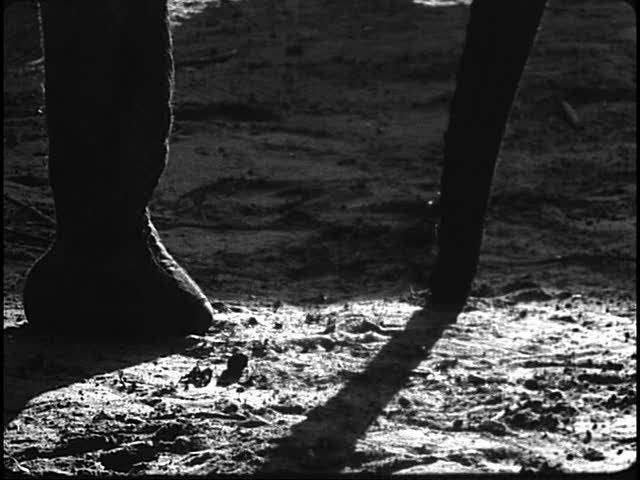
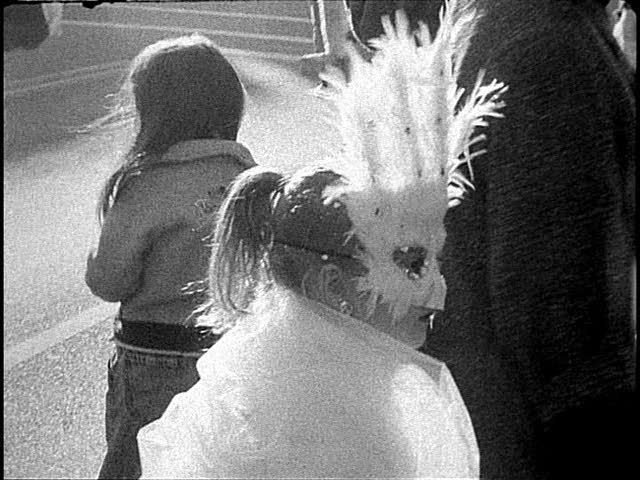
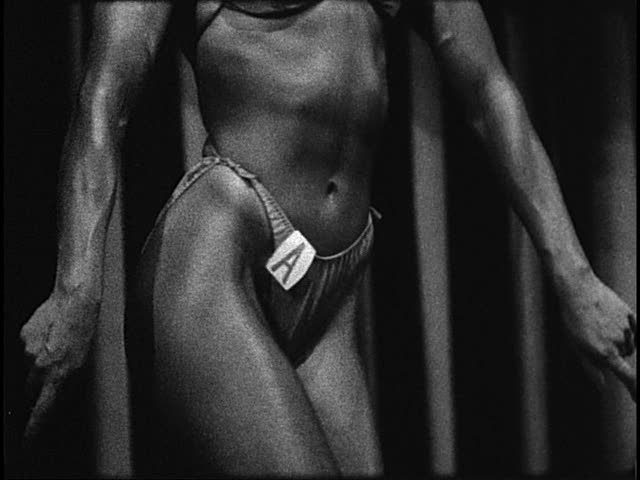
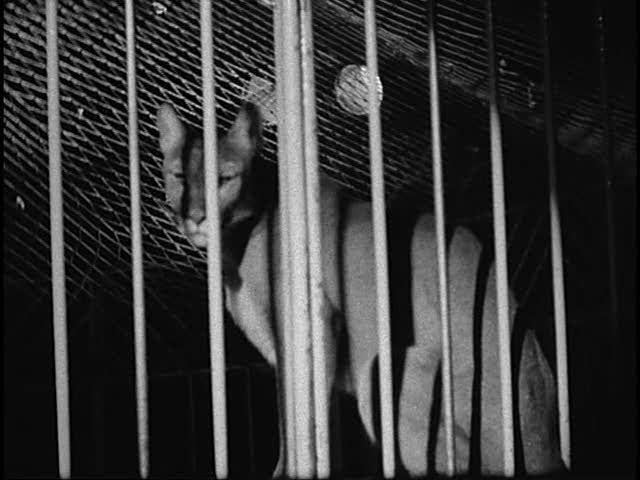
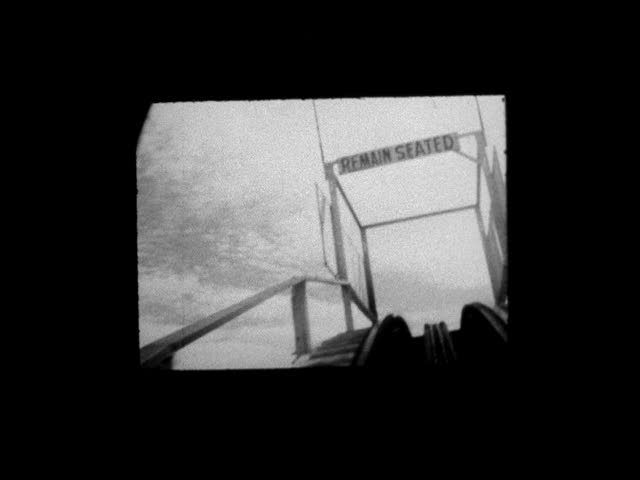
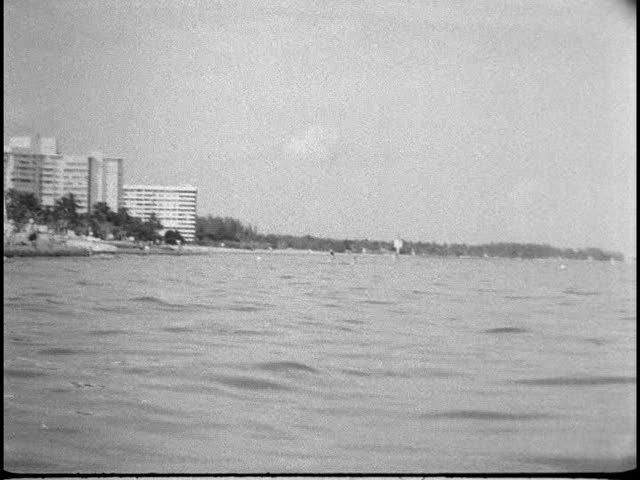
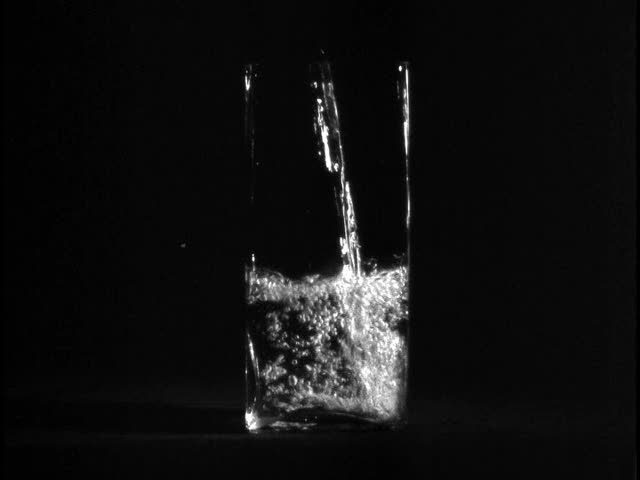
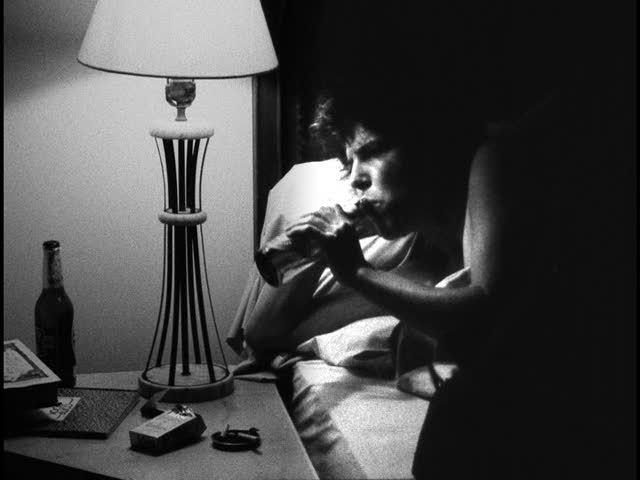
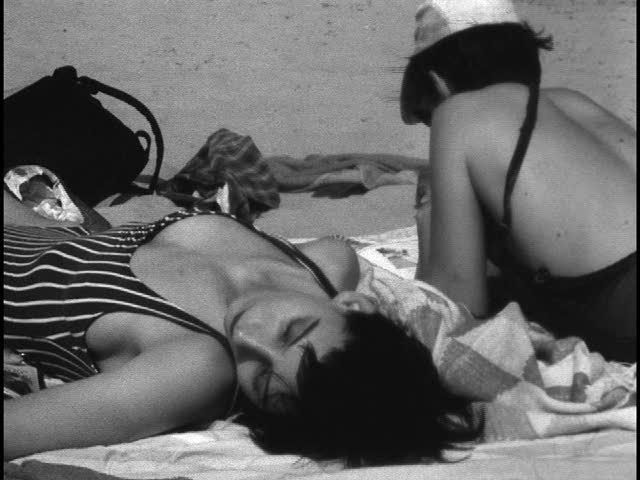
Sink Or Swim, Su Friedrich's experimental short in which she attempts to express, through a wide variety of techniques, her ambivalent experiences with and feelings for her often-absent father, has a rigorous formal structure driving its autobiographical narrative. The film consists of 26 sections, each one titled with a single word, the first letters of which count down through the alphabet. The film opens with a segment titled "Zygote" and ends with a section that has three titles, all from Greek mythology: "Athena," "Atalanta," and "Aphrodite." There is one screen capture here from each of the film's 26 alphabetical sections, mimicking the film's structure and demonstrating the discrete feel and methodology of each separate part in the film's whole. The titles sometimes consist of deadpan jokes or puns (the "X Chromosome" section is simply a sustained shot of an elephant's trunk, for obvious reasons), but more often the titles relate obliquely to the images they introduce. There is, in addition to the stories provided by the film's voiceover, a secondary narrative running through the film that is sustained wholly by the titles and their relationships to the images. Friedrich's lesbianism is brought in almost exclusively in this way, particularly in the sections entitled "Temptation" (images of female bodybuilders) and "Kinship" (in which, at one point, an image of a lesbian couple embracing in a shower is slowed down and manipulated with video processing). These subtexts largely go unspoken, so that the film becomes a story about desire developing, placed in opposition to the filmmaker's antagonistic relationship with her father.


Monday, November 10, 2008

Sink Or Swim


[This is cross-posted with the Film of the Month Club, where I have selected this film as November's topic of discussion. Comments are turned off here so that all the conversation can take place over there.]

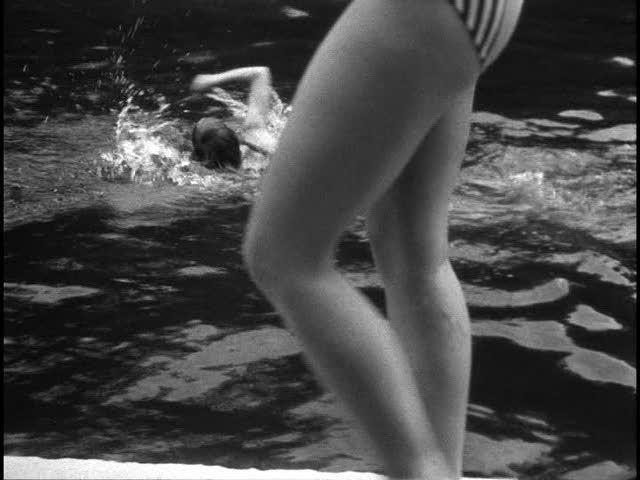
The title of Su Friedrich's autobiographical essay-film Sink Or Swim comes from the implied moral of one of the stories she tells about her relationship with her father, a robotically unemotional, distant, authoritarian figure for whom she holds very ambivalent feelings well into adulthood. In the story, she tells her father that she wants to learn how to swim, so he takes her to the deep end of the local pool, sits her down to explain the mechanics of swimming, and then simply throws her into the water to figure it out for herself. The lesson is obvious: learn to swim, or sink like a stone. This is a shocking story, a horrifying account of a father whose behavior towards his children at times verges on (or even crosses the line into) outright child abuse. And yet Friedrich presents the tale, as she does everything in the film, with a cool, even tone. The film is sporadically narrated by a young girl (Jessica Meyerson) whose childish, hesitant reading of the voiceover text gives the film the aura of a nostalgic ode to childhood, an impression that works against the sometimes horrific nature of the material being remembered. Friedrich deliberately distances herself from these intensely personal stories, searching for universality in her own life. The film is more than anything else an attempt to process and explore the ways in which childhood experiences shape a person's thoughts, attitudes, and outlook later in life.

The film is rigorously divided into twenty-six uneven parts, each of them corresponding to a letter of the alphabet, which proceed in descending order through the titles of the segments: "Zygote," "Y Chromosome," "X Chromosome," "Witness," and so on. This is the logic of childhood, attempting to arrange complicated events into nursery rhyme containers, a conceit that shows up in the soundtrack as well when the narrator murmurs sing-songy children's tunes or recites schoolyard poetry. The structure is complex and subtle, with texts and subtexts running in parallel through the visuals, the narration, and the one-word titles, which appear as onscreen text announcing each new section. The relationship between these three elements is complicated, sometimes coming together to enforce one another and enhance the overall point, while at other times the separate elements are telling different stories.

Early on, in a section titled "Utopia," the voiceover relates how Friedrich (always referred to as simply "the girl" from the film's third-person viewpoint) and her sister were not allowed sugar or TV as children, and how they got to indulge each of those luxuries once a week at a neighbor's apartment. There, the girls would get ice cream sundaes, sit in the dark and marvel at a televised circus. Friedrich accompanies this story, naturally enough, with circus images, but there is an undertone of forbidden sexuality in the images that is not present in the young girl's narration: a pair of circus performers, two shapely girls with horse tails and bare bottoms cavorting around; closeups on acrobats and strongmen whose form-fitting outfits emphasize their muscular bodies. This suggestion is carried over into the next section, "Temptation," which transitions naturally from the toned, athletic bodies of the circus performers to a closeup on the bikini-clad torso of a woman bodybuilder, while the voiceover describes the Greek myth of Atalanta and Hippomenes. The relationship between the images, titles, and voiceover in these two sections suggests an unspoken narrative beneath the text: the development of lesbian desire interwoven with a childhood fascination for mythology (those powerful, statuesque goddesses) and the carnivalesque. In this way, Friedrich explores the ways in which the child flows into the adult, without venturing into simplistic cause-and-effect chains. Rather, the film's unique structure allows her to view her life as a continuum, to see traces of various threads in her life as they develop through her personal obsessions and interests over time.


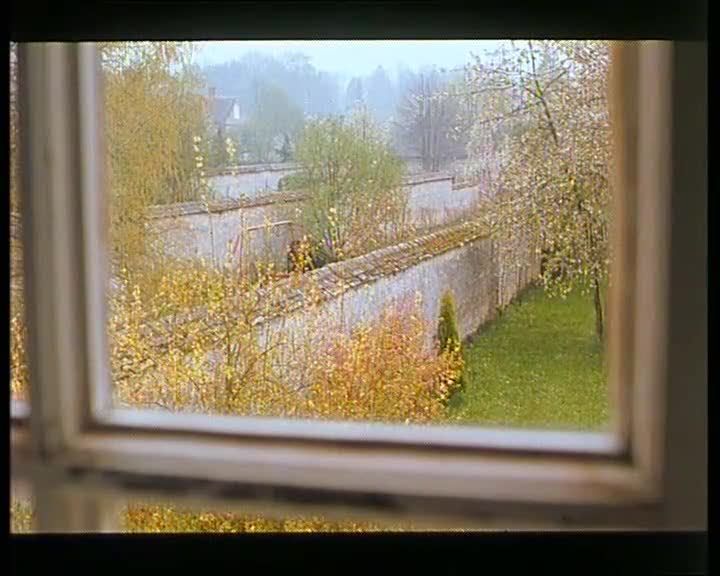
Among these, the most important thread is obviously her relationship with her father — and from that, the notion of fatherhood and parenthood as a generic concept. Friedrich explores this subject in many ways. Throughout the film, the voiceover returns periodically to stories about her childhood, usually illustrated with images that are only obliquely related to the story being told. The thrust of the film is to make its highly specific narrative more universal, to move away from this specific girl with her distant, somewhat abusive father (who ultimately leaves the family when Friedrich is around 11 years old). She is not talking about herself; she is talking about "the girl" and "the girl's father." And her images are often just as generic, just as timeless. She pairs the swimming anecdote with peaceful images of a community pool and the kids swimming in it. There is nothing to suggest the deadpan horror of the story itself. Later, after her father leaves, she describes her mother's erratic behavior, dispassionately recounting a scene where her mother placed Friedrich and her sister on a windowsill, high above the ground, and threatened their father, down below, that they'd all jump to their deaths. The father, true to his nature, simply stares at them, shakes his head, and walks away. This harrowing, unbelievable story (appropriately contained in a section called "Insanity") is accompanied by prosaic images of a hospital, suggesting the mental breakdown of Friedrich's mother following the divorce. When the story reaches its climax, the camera pauses, looking out a window, an unpopulated view substituting for the emotionally fraught content of the story.

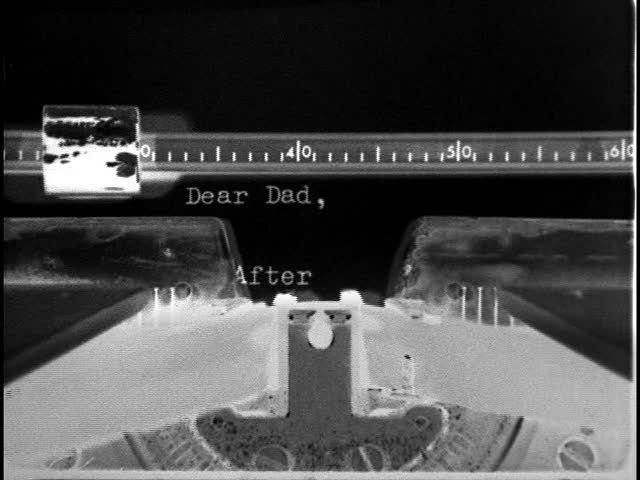
This distanced, objective approach reaches its logical endpoint in the section entitled "Ghosts," which consists entirely of a static shot, manipulated to be a negative image, of a typewriter as Friedrich writes a letter to her father. Since the image is a negative, her words show up white on black paper, accompanied only by the sound of the typewriter. This is the most direct section of the film, in many ways: the only one in which Friedrich uses the "I" and discards the third-person disguise of the narration, and also the only one in which there is some direct sound. Throughout the rest of the film, the soundtrack is almost clinically clean and polished; whenever the voiceover pauses, which is frequently, there is complete silence. There's an aesthetic purity to this approach, and Friedrich only rarely compromises the soundtrack's dichotomy between minimal speech and absolute silence: in the "Kinship" section, she accompanies images of travel and a lesbian shower scene with a Germanic opera piece that her mother loved, and in "Ghosts" the typewriter clicks and clatters above a backdrop of tape recorder hiss, an intrusion of noise into the film's austerity. The text in "Ghosts," typed rather than spoken, is more directly autobiographical than the voiceovers, shedding the artifice of "the girl" to speak directly about how Friedrich's mother reacted to the divorce. It is the film's most personal and unmediated segment, but it is also aesthetically remote, forcing the audience to actively read this story as the words appear one by one, rather than simply listening as they had to the others. Even while briefly stepping closer to the material of her story, Friedrich makes sure that she does not eliminate the artifice that constrains her autobiography into a form where she can explore and examine it at will.

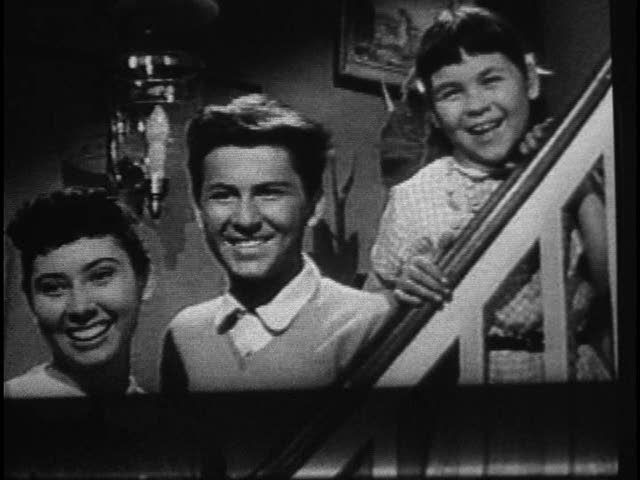
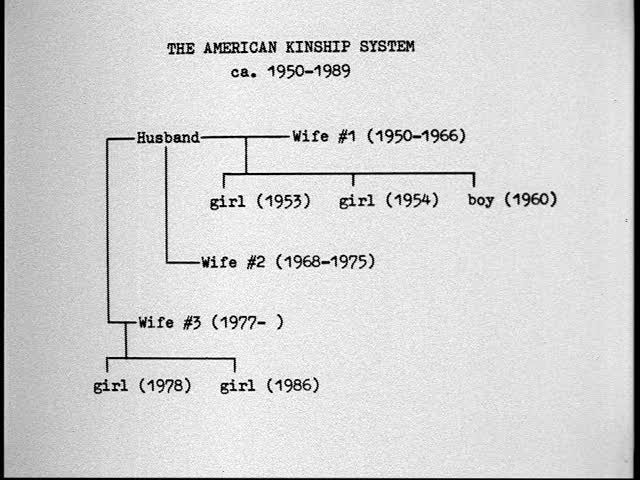
Throughout the rest of Sink Or Swim, Friedrich deals with her father's legacy in a more indirect, objective manner. One segment approaches him by discussing a book he wrote, which posited that the goddesses Aphrodite and Demeter, representing romantic love and motherhood, were once aspects of a single feminine diety, who was split in two because of men's discomfort with the dual nature of women. Friedrich cleverly illustrates this essay by alternating between pieces of art that could represent the two goddesses and their distinct aspects: for Demeter, Christian iconography showing the Madonna and child, and for Aphrodite, Japanese erotic prints. Friedrich subtly accentuates the surprising similarities between the two forms of art, bolstering her father's argument by transitioning from an image of the baby Jesus suckling at his mother's nipple to a much filthier image of a man nestling in his lover's breasts. In another scene, she attempts to understand her father in anthropological terms, filling the screen with a family diagram that traces her father's progress from Wife #1 to Wife #2 to Wife #3, but obviously explains little. Meanwhile, the sequence "Homework" is completely silent and consists only of images from 50s family sitcoms, showing a scrubbed, smiley vision of family happiness through a haze of static and video distortion. Friedrich lets these images sit without commentary, the media fantasies of fatherhood and family violently disconnected from her own experiences. The film fits all of these varied approaches and aesthetic techniques comfortably into its formal structure, as Friedrich uses all the means available to her to better understand and express the feelings and ideas brought up by thinking about her father.

Monday, August 25, 2008

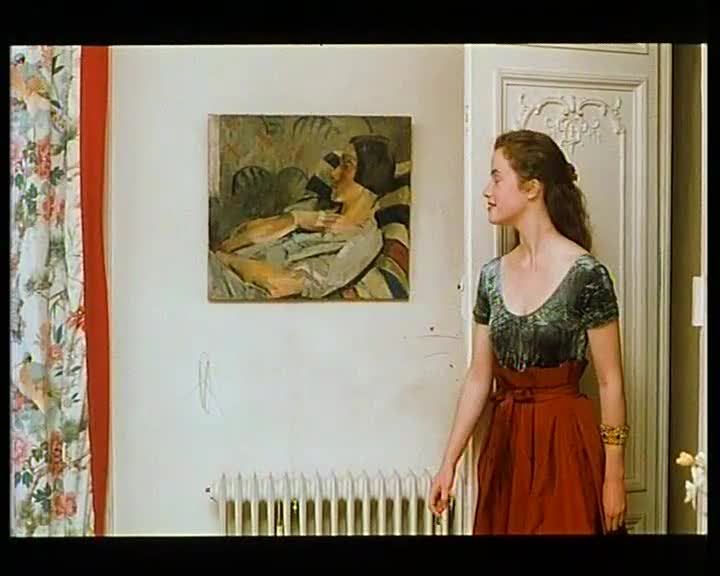
A Tale of Springtime


Eric Rohmer's A Tale of Springtime opens with a dialogue-free five minute stretch that is, from a director known for his endlessly talky, conversational films, notable for its quietude and simplicity. Jeanne (Anne Teyssèdre) drives to an empty, messy apartment, putters around briefly, and then leaves in apparent frustration after half-heartedly attempting to clean up. She next drives to another apartment, to which she also apparently has a key, and walks into a room as orderly and symmetrical as the previous room was disordered and chaotic. The first lines of dialogue after this leisurely, uninformative opening come from a young man who walks in wearing only boxer shorts, obviously flustered to see her. These first few minutes are puzzling, minimalist and austere even for a director whose films were once famously likened to watching paint dry. But the symmetry between the two scenes establishes immediately one of the film's key themes, the importance of space and place to the individual's identity. Jeanne, though, remains an enigma throughout these near-silent scenes and the subsequent ones in which she chats briefly with the young man, who turns out to be her cousin's boyfriend.

The importance of these opening scenes only becomes apparent slightly later, in a startling moment when an offhand analogy unexpectedly crystallizes another of the film's underlying themes. When asked why she came to a party for an old acquaintance, where she knows no one and is obviously ill at ease, Jeanne cites Plato's story of the ring of Gyges. Even if someone had worn this ring, which grants the bearer invisibility, and watched silently everything she said and did during the course of the day leading up to this point, she says that they would still not understand why she had done what she did. What she's describing, of course, is the opening of the film itself, and the ring of Gyges is an ingenious metaphor for the cinema: the audience, granted an invisible vantage point by Rohmer's camera, voyeuristically spies on this woman as she goes through her prosaic day, coming no closer to understanding her thoughts or the rationale behind her actions. The cinema, with its emphasis on surfaces, actions, and words, is necessarily as limited as the senses of sight and hearing themselves; we all rely on appearances and the truthfulness of words to understand our fellow beings.

It is certainly appropriate that Rohmer, always very concerned with the ways in which place affects character, has made a film in which place is the central dramatic device of the story. As Jeanne soon explains to Natacha (Florence Darel), a younger girl she meets at the aforementioned party, she is currently shuffling between apartments because of a set of complicated circumstances. She has lent out her own apartment to her cousin, because Jeanne normally does not stay there in the first place. She lives with her boyfriend, who is currently away on a trip, and in his absence, the compulsively neat Jeanne finds that she can no longer tolerate the messiness that she usually puts up with out of love. The result is that she finds herself feeling at home nowhere, not comfortable alone in her boyfriend's place, and unable to stay at her own place either. This is why she goes to a party that she doesn't really want to be at, and her situation is resolved when Natacha offers her a place to stay instead. Even then, the idea of one's own place remains important to the film. Rohmer has always been aware of the ways in which people jealously stake out and guard their own bit of personal space; he pays tremendous attention to the decoration of his characters' apartments and homes, hanging paintings on the walls and using color to convey moods and personality traits. In this film, especially, the small, quiet dramas that Rohmer traces arise from the characters' possessiveness and defensiveness of those spaces that they consider their own.

The apartment that Natacha decides to share with Jeanne actually belongs to her father, Igor (Hugues Quester), who is rarely there since he, in a bit of symmetry that recalls Jeanne's situation, mostly lives with his girlfriend Eve (Eloïse Bennett). The apartment bears evidence of Natacha's parents' divorce, in the form of a curiously designed kitchen that was installed by an architect who her mother was having an affair with. And Natacha's room also holds the evidence of her not-so-long-ago childhood, toys and mementos that keep her surrounded by the past. Jeanne, for her part, is uncomfortable occupying Igor's room, despite the assurances that he will not return — and she is even more embarrassed when he shows up anyway. Natacha is also especially concerned with the protection of a country house that her family rarely uses now, but which is nevertheless associated with her happiest childhood memories. For this reason, she dreads the idea of Eve (who she dislikes intensely) setting foot in this place. The film's plot, sketchy and breezy even by Rohmer's standards, revolves around such trivialities. The film is at its best when these petty dramas provide an excuse for subtle, charming conversations that touch on philosophical and emotional issues with the same light hand, and at its worst when the characters take it all too seriously, exploding with melodramatic anger and tears.


Fortunately, the former predominates, and as usual Rohmer manages to make quite a bit out of relatively little material. The relationships among Jeanne, Natacha, Igor, and Eve are allowed to develop naturally and slowly, with Rohmer's observational camera maintaining a polite distance. The film is continually pointing out the opaqueness of its characters, and of people in general, as they chat and occasionally argue and react to one another in unpredictable ways. In two separate scenes, positioned as rough mirrors of one another towards the beginning and end of the film, Jeanne sits listening quietly to a Schumann piece, her eyes gazing blankly at a point somewhere off to the side of the camera, Rohmer photographing her from an oblique angle rather than staring directly. In both cases, her expression is blank, not at all as animated and expressive as she often is in conversation. She is obviously lost in thought, a condition that Rohmer respects by allowing her the silence and unknowability of private space. In the first of these scenes, in fact, his camera even gracefully pulls back, creating further distance between the audience and the woman's thoughts. These scenes, like the silent opening of the film, reveal nothing but their own surfaces and appearances, with none of the emotional or psychological insight that one would normally expect from such a moment. Rohmer is subtly, but explicitly, rejecting the facile movie convention that people in deep thought reveal themselves through their faces. The thought in this film is resolutely internal and unseen, and Rohmer reveals only as much of these characters' thoughts as they themselves can (or want to) express in their fumbling, uncertain phrasing.

If A Tale of Springtime is generally interesting and enjoyable in its very Rohmer-like treatment of character and incident, it is less consistent on a cinematic level. Rohmer's films are often accused of having nothing going on visually, which is certainly not true, neither here nor even more so in his 70s and 80s work. His economical camera moves and crisp, often elliptical editing establish a very precise, well-defined aesthetic that only seems like an absence of style on first glance. The opening minutes of the film, with the subtle symmetry of the editing and the visual contrast between the apartment of Jeanne's boyfriend and her own place, cleverly use purely visual storytelling to set up both the central character and the everyday dramas that will occupy her throughout the film. In the penultimate scene, Rohmer plays with a visual rhyme between a pale green vase and Natacha's torso in a green blouse — the kind of subtle details that frequently enrich his mise en scène. Elsewhere, though, he employs a flat, even ugly aesthetic, making some scenes — particularly in the first third or so of the film — seem disinterested and slipshod. The scenes at the party where Jeanne and Natacha meet, as well as the subsequent conversation at Natacha's apartment, have a workmanlike, television gloss that would make it difficult to defend Rohmer as a visual craftsman to someone who had never seen, say, My Night at Maud's. Rohmer fares better when the scene shifts to the countryside, and the springtime colors of flowers and greenery give the film a warm, pastel glow that he exploits to its fullest, both outdoors and in the colorful wallpaper of Natacha and Igor's country home.

The film also suffers, in part, from the performance of Quester as Igor, who is variously described as "youthful" and something of a ladies' man, but who instead comes across as simply awkward and inscrutable. Rohmer's characters are often purposefully unlikable, or even annoying, but Igor doesn't even have that much depth. He's simply a cipher, self-consciously closing his eyes when he talks, scrunched up like a clumsy little boy when he finally gets the seemingly inevitable love scene with the calm, self-assured Jeanne. One suspects that when the characters call him "youthful," they didn't quite mean childish, though that's how he comes across. It's difficult to tell, in the context of the film, if this is a fault of the script, Rohmer's direction, or Quester's performance, but the character simply fails to fill the role that the dramatic arc clearly requires of him. The women fare much better, as is often the case even in Rohmer's best films. The friendship between Jeanne and Natacha develops quickly but believably, and they have a rapport and chemistry that's almost instant. Even Eve, in a relatively minor role, becomes a concrete presence in the film. She is introduced, before she is seen, by Natacha's mean-spirited, wholly negative description of her as "vampiric." It's to Rohmer's credit that once she actually appears on screen, he is able to draw out a nuanced and even sympathetic portrait of this woman without completely obscuring what Natacha sees in her. A Tale of Springtime may not be Rohmer's best or most consistent work, or even anywhere near the top, but this sensitivity to character and relationships keeps the film from being totally forgettable.