Showing posts with label 1999. Show all posts

Wednesday, September 12, 2012

Romance


"Love between men and women is not possible." So says Marie (Caroline Ducey) towards the end of Catherine Breillat's ironically titled Romance, and the film goes about methodically proving this thesis by examining Marie's feelings about sex and her relationships with various men. Marie is in a long-term relationship, a conventionally "romantic" relationship, with Paul (Sagamore Stévenin), a handsome but passionless model who no longer has sex with her, who doesn't even want her to touch him. His apartment, where they sleep together sexlessly every night, is pure white, and they both dress all in white, virginal, unstained, totally clean and tranquil. The walls are white, the bedsheets are white, the lights are bright fluorescent white, the furniture is white. Everything is clean, clinical, untouched, and it's no wonder that there's no sex within these spotless walls, no hint of passion or tenderness. Paul is reluctant to even take his (clean, white) shirt off in bed, and Marie says she feels like she's sleeping next to a ball of cotton.

This spartan cleanliness is contrasted against the dirtiness and messiness of the sex that the increasingly dissatisfied Marie seeks out with other men, first with the muscular, sexually voracious Paolo (Rocco Siffredi), his name so similar to Paul's that Marie starts forming an almost romantic attachment to him too, and then with her boss at her teaching job, Robert (François Berléand), with whom she engages in sadomasochistic games of bondage and restraint that wind up getting her more excited than actual intercourse. Notably, Robert's apartment is decorated in red, and when he first ties her up, his red shirt against her white dress seems like a stain, as though he's going to leave bloody smears all over her from the bright red of his home, with red curtains framing her like she's on stage as she's being bound and gagged. The second time she goes to see him, she's wearing a bright red dress with black underwear, the first time she's ever worn anything but shades of white and gray, and the effect is shocking — even more so when she returns in this red dress to Paul's white apartment, her presence there suddenly standing out from the surroundings rather than fading amiably into the walls.

Breillat is dealing with sex and desire, control and submission, but it's all so schematic, so deathly dull in its rote plodding towards foregone conclusions. Towards the end of the film, Marie imagines sex as a mechanistic whorehouse where her upper and lower body are separated from one another by a wall with a hole. On one side of the wall, Paul sits beside her, holding her hand and smiling lovingly at her, while on the other side of the wall "ape-like" naked men approach her spread legs with simian lust, waiting in line and taking turns to fuck her. The symbolism is so crushingly obvious as to barely qualify as symbolism: lust and love are separated from one another, the ideal of the monogamous romantic relationship clashing against the animalistic desires of men. It's a treatise delivered with all the finesse of the porn movies whose passionless imagery of sex Breillat is drawing on here. Men are either fey automatons like Paul — whose woman-chasing seems to emerge only from a sense of duty, a sense of what he's supposed to do as a man, and who's actually implied to be gay — or big dumb studs like Paolo or remorseless ladykillers like Robert, who boasts about having had 10,000 women, including Grace Kelly.
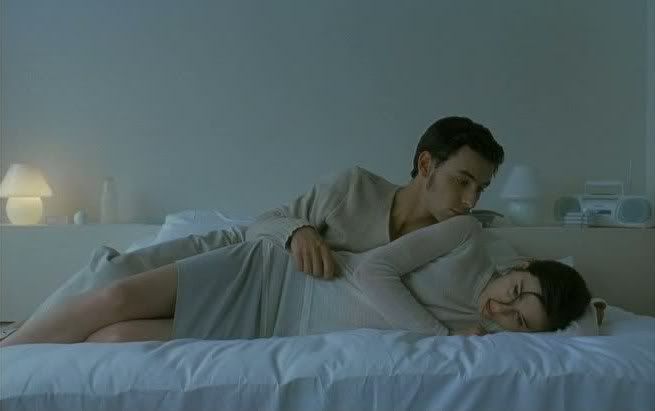

Breillat is depicting Marie as someone who's seeking pleasure for herself, trying to break free of the idea that women don't desire sex, that women don't have the same strong lusts as men — but at the same time so much of Marie's behavior dovetails with male desires, with male fantasies of female submission and degradation. Marie is trapped, but it's not always clear by what; in any event, she's always staring at the world through the prison bars of the few stray strands of hair that break free of her pulled back hair to lay across her face. Notably, in the scene where she goes to see Robert for a bondage session, dressed in red, she lets her hair down for the first time, but is she really free, being manipulated into position by this lothario who has such naked contempt for women?

Part of the problem is that Breillat depicts all the sex as equally unappetizing and passionless, whether Marie is supposedly getting off on it or not. Towards the end of the film, she goes for a gynecological exam and is felt up by a succession of medical students, each waiting a turn like the men in her pornish whorehouse fantasy, and this clinical examination is filmed with exactly the same slightly bored detachment as the scenes in which Marie is supposed to be enjoying herself. Maybe that too is part of Breillat's thesis, that all sex is unavoidably compromised and fucked up by these weird societal ideas about men, women, relationships, desire, and love. At one point, in a rare flash of humor from this mostly humorless film, Breillat cuts from a splash of semen spurting onto Marie's stomach to a shot of a doctor spreading gel on her stomach for an ultrasound examination. That about sums it up: all sex is clinical and emotionless, and one might as well visit a doctor as get into bondage.

Sunday, January 11, 2009

Films I Love #14: Eyes Wide Shut (Stanley Kubrick, 1999)


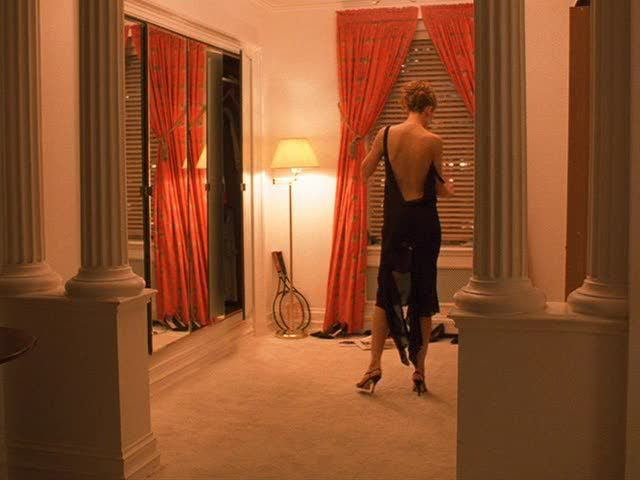
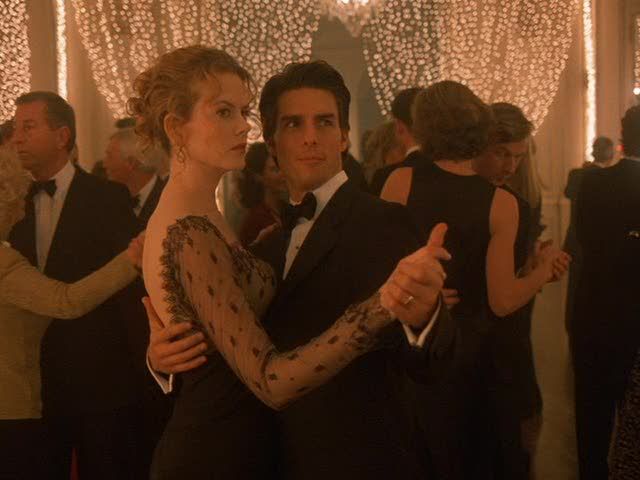
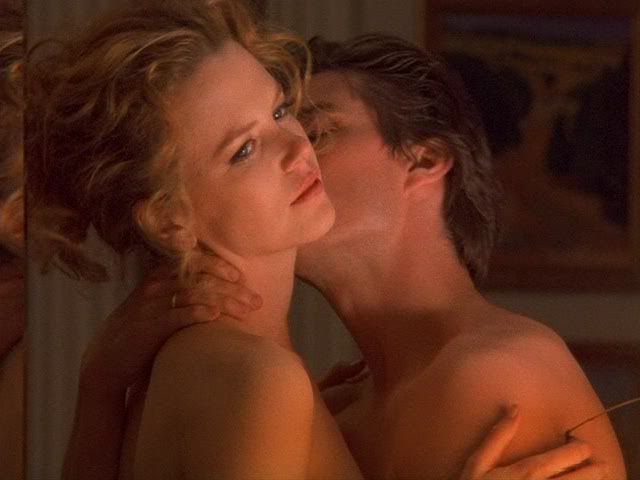
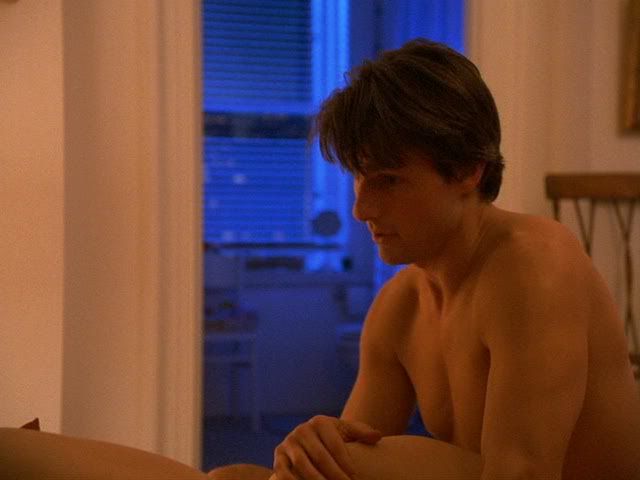
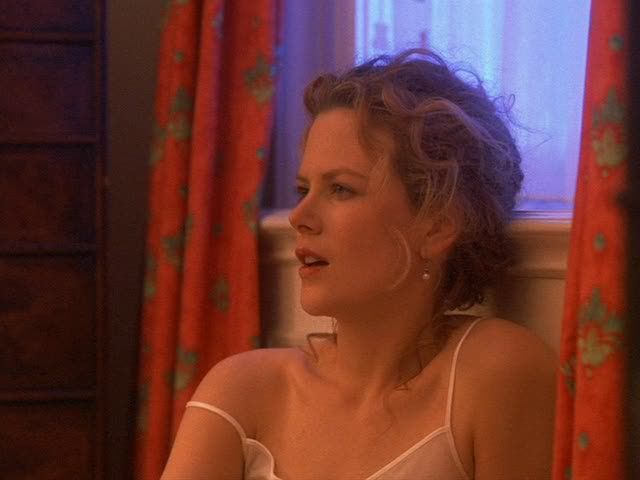
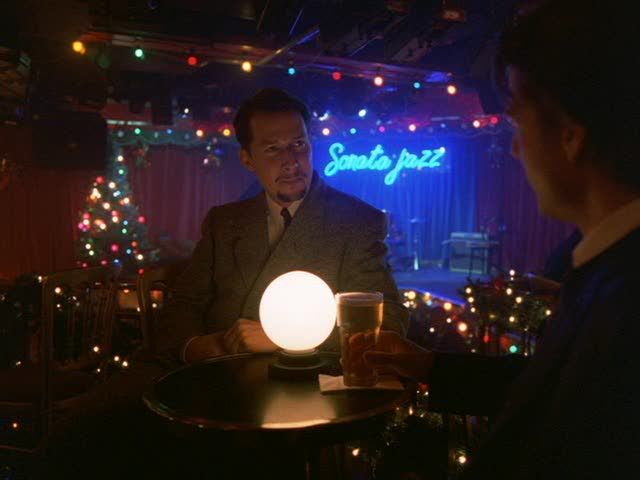
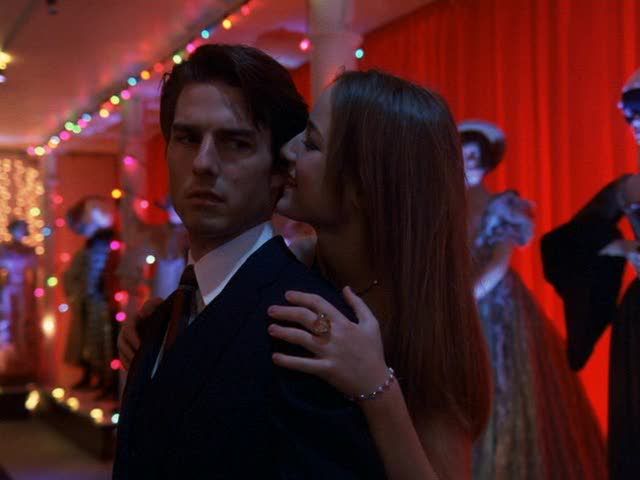
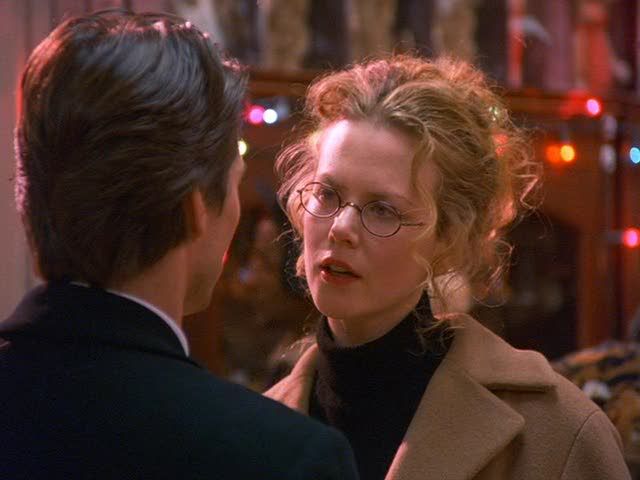
Stanley Kubrick's swan song, Eyes Wide Shut, is also his defining masterpiece, widely misunderstood upon release and only in retrospect re-evaluated as a sensitive and supple treatise on love, marriage, desire, jealousy, and fantasy. Kubrick cast (then) real-life couple Tom Cruise and Nicole Kidman as Bill and Alice, a doctor and his wife who undergo a marital crisis when Alice admits, while stoned, that she once entertained a vivid, powerful fantasy about a sailor. She never followed through on it and indeed never even met the man, but says that for a day at least the fantasy was so potent that she was ready to throw away her marriage for its sake. This revelation shocks and destabilizes the cocky, self-assured Bill, as much for what it reveals about the sexual nature of women in general as for the troubling implications for his own marriage. He is thrown off to discover that women, including his wife, have desires and fantasies, that women are sexual creatures as much as men are.

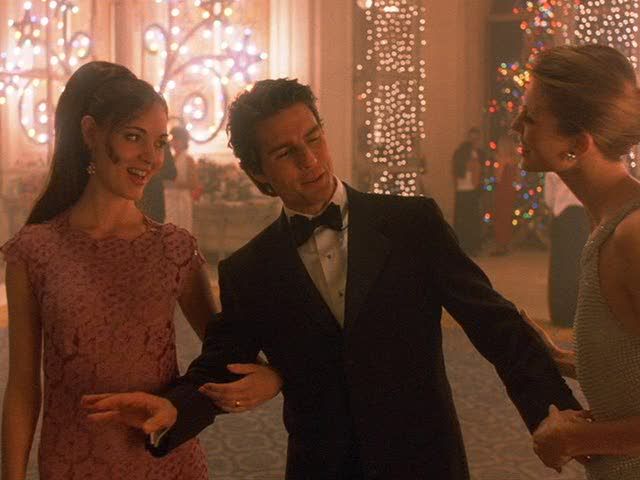
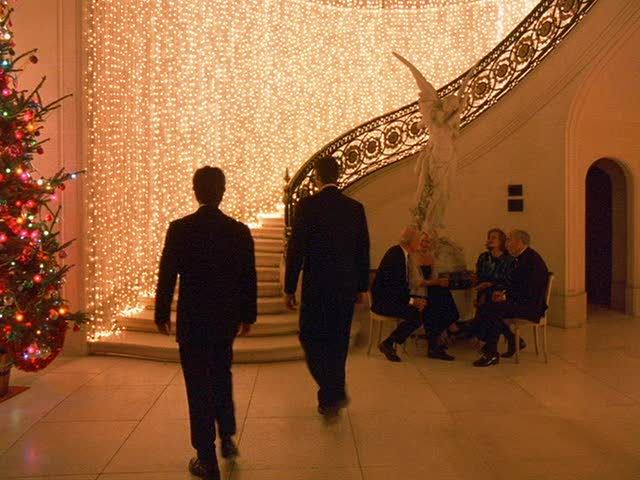
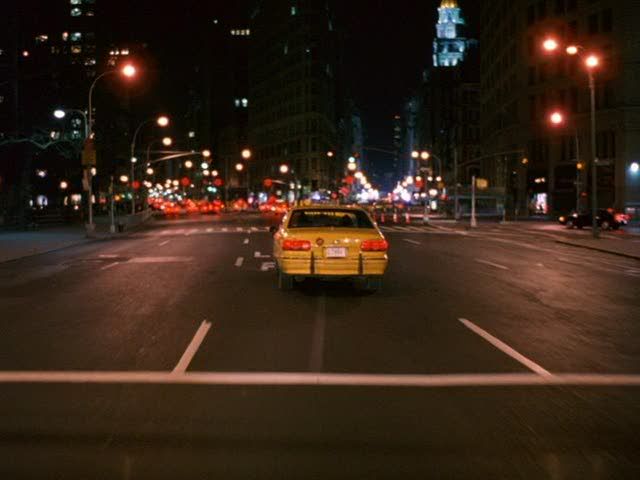
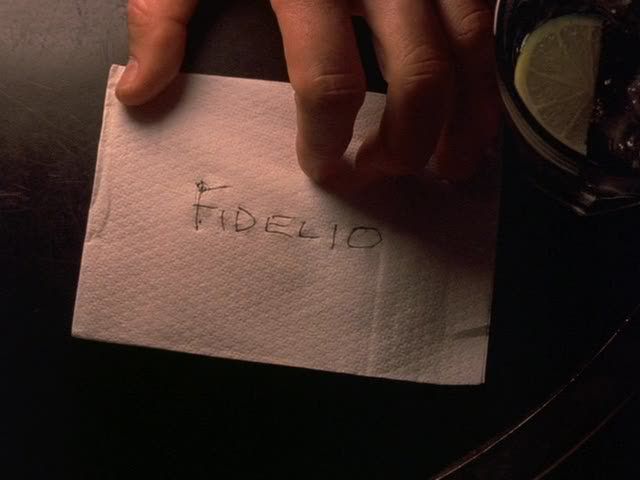
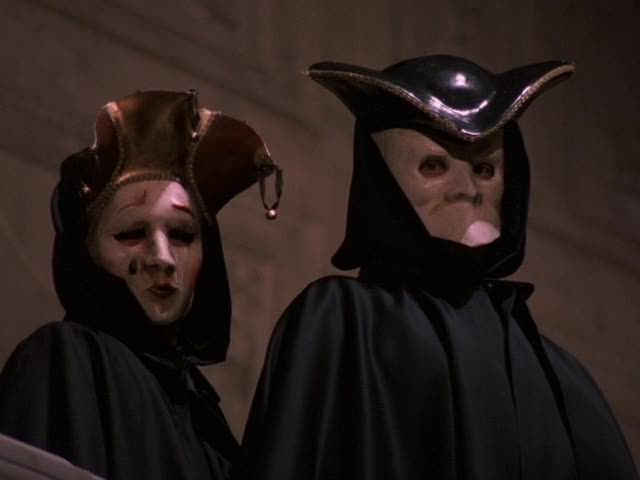
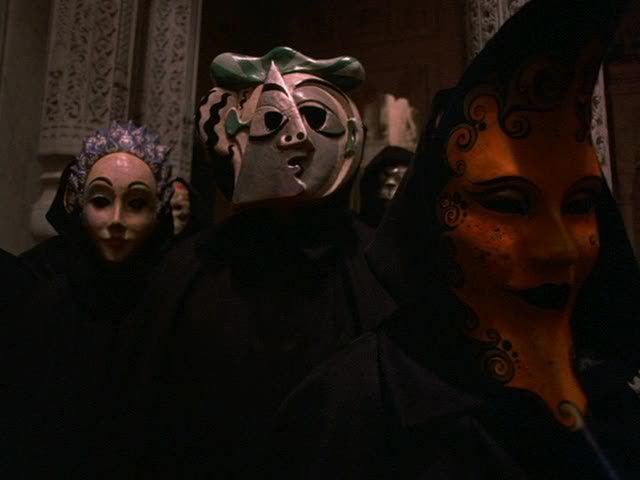
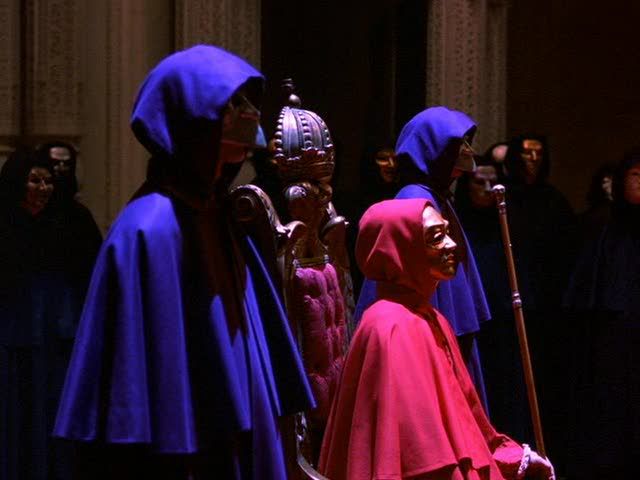
This seemingly prosaic realization sends Bill careening through the nighttime streets of Manhattan, on a sexual odyssey that's as fantastic and dream-like as his wife's imagined affair, which Bill replays in his mind in blue-tinted porn loops. At every turn, Bill encounters markers of sexuality: the daughter of a dead patient who comes on to him at the wake; a gang of drunk frat boys who shout homophobic slurs in the streets; a prostitute who he abandons before consummating a transaction; the Lolita-esque daughter of a costume shop owner who offers herself to all comers with an unreadable smile on her face. Bill is adrift, and his sexually charged journey culminates at a mansion outside town. There, he cons his way into a bizarre costumed orgy where masked, caped men couple with prostitutes amidst baroque ceremony. This is a turning point for Bill, after which he traces back the route of his sexual journey in reverse, with the tantalizing signs turned ugly and threatening — AIDS, forced prostitution, murder — warnings that the dangers of sex can be equal to its pleasures. Kubrick relates this tale with a warm, sensuous visual style that softens its hard edges and noirish touches. He emphasizes the fluorescent colors in his sets; it is the Christmas season and hardly a room in the film is not decorated with a brightly lit tree or festooned with multi-colored bulbs. The film is also, despite its reputation for the famously censored central orgy sequence, a lovingly rendered ode to marriage and reconciliation, which suggests that whatever wounds may be opened by fantasies and waking dreams, they might be healed with the sensual pleasures of love. Alice, who is the focal point of sympathy in the film even when she's offscreen for long stretches of time, gets the film's final word, providing the succinct, alluringly vulgar answer to the film's unspoken question.

Sunday, November 30, 2008

Sweet and Lowdown


Woody Allen had originally wanted his second film, his follow-up to Take the Money and Run, to be a dramatic fictional biopic of a 1930s jazz musician entitled The Jazz Baby. Needless to say, the idea didn't fly with studio execs of the time, who were expecting the young comic they'd just signed to turn out another comedy; he complied, and made Bananas instead. So when Woody revived the basic idea thirty years later as Sweet and Lowdown, it had had the longest gestation period of any of his films. The film takes the form of a documentary of fictional jazz guitarist Emmet Ray (Sean Penn), with Allen and a handful of jazz experts appearing as talking heads to narrate his story and introduce selected anecdotes from his rough-and-tumble life, the accounts of which are filled with inconsistencies and pure myth. Among other things, the film comments on the impossibility of constructing a definitive biography of a figure like this — the interweaving of a slim body of known facts with a healthy dose of speculation and outright rumor is reminiscent of the real-life history of blues guitarist Robert Johnson, whose biography as it's known today was constructed from a similar hodge-podge. At one point, the fabric of the story breaks down completely, and Woody provides three different mutually contradictory versions of the same event, with the caveat that in all likelihood none of them is "true."

Within this patchwork framework, Emmet develops as a hilariously unlikable protagonist who is nevertheless somewhat poignant. He's arrogant, nasty and demeaning to the women in his life, a drunkard, and notoriously unreliable whenever he has a gig, which is why he never keeps a steady job for long. And yet his arrogance is tempered by an acute awareness of the one man in the world who is a better guitarist than him: Django Reinhardt. Emmet's egotistical instinct is to declare himself "the greatest guitarist in the world," but even his ego can't prevent him from immediately qualifying himself by invoking Reinhardt. Sometimes he corrects himself, "well, at least in America," or he counts himself "one of the top two," always referring to "this gypsy guitarist in France," as he invariably calls the rival who he has never met, and whose playing makes him cry or faint whenever he encounters it. Emmet's constant qualification of his title comes to be downright funny, but there's also something sad and pathetic about it: this egotistical man who's forced to admit that his ego is not entirely justified, that he cannot call himself the best without endless fudging and backpedaling.

Penn's performance is excellent, giving a wry, blunt charm to Emmet, a crude lout who just so happens to be a musical genius as well. He does a lot of acting with his eyebrows, raising and arching them whenever he's playing the guitar. At moments like this, Emmet goes off into another place, the crudity and temper vanishes from his face, and his eyes seem to be far-off, his face comically contorting as his brow furrows and his eyebrows dance. He looks peaceful and content when he's playing, like this is what he's meant to be doing, and all the other nonsense in his life, the drinking, pimping, gambling, sloppy relationships and money problems, that's all just extraneous to whatever's going on inside him while he's playing. Woody keeps this mystery intact, the central mystery of creativity, despite the probing attempts of Emmet's wife Blanche (Uma Thurman) to investigate his soul.


Blanche is a debutante and a would-be writer, and she tends to view everyone she meets as though they're characters ready to be adapted into her work. She's drawn to Emmet for his harsh nature and his wild life, and she continually attempts to psychoanalyze him, to draw out his thoughts and feelings. She asks what he thinks about when he's playing music, and Emmet memorably responds, "that I'm underpaid, I think about that sometimes." Her questions get only blank, uncomprehending stares from her husband, who doesn't understand what she's getting at; he doesn't think, he just plays. When she asks him why he likes to watch trains so much, he gets it even less, and her psychosexual ramblings prompt him to deadpan, "it sounds like you want to go to bed with the train." This is a blunt, no-nonsense guy, and the film's central question, danced around but never answered or even asked outright, is where art comes from: if a guy like this can make great, beautiful art with his instrument, what does that mean for the more romantic notions that art comes from the soul, from the emotions?

In some ways, the answer to that question lies in the character of Hattie (Samantha Morton), who though never married to Emmet is the closest he ever gets to love in his life. She's something of an unlikely match for the guitarist, a mute laundress who's perhaps a little slow, with a childlike innocence and a shy, awkward nature. Woody reportedly told Morton to play Hattie like Harpo Marx, and she gives a phenomenal performance without ever saying a word: it's all there in her subtle gradations of smiles, her downcast eyes, her shuffling walk and the flapper hat pulled tight over her curls, partially shading the upper half of her face. Hattie is a genuine, sweet, loving young woman whose silence is remarkably communicative because of her expressive face. She becomes an unacknowledged anchor for Emmet, who resists being tied down to one woman and inevitably leaves her, though she continues to linger in his thoughts in a way that no other woman does. He says that Reinhardt haunts him, but Hattie is in some ways a more potent force in his life. When he loses the chance to be with her again, towards the end of the film, Woody and the other commentators step in to proclaim the music he made afterward the best of his career, making him finally an equal of Reinhardt.

Morton's Hattie is thus the film's heart and its soul, as well as the unspoken inspiration for Emmet's finest music. She is the answer to the riddle of how a seemingly unemotional and brutish man could produce such lovely and enduring art. It's typical of Allen that these foundational questions concerning the origins of art and creativity are hidden within a light, airy, cleverly constructed film that's essentially comedic in form. Sweet and Lowdown is a fine effort from Allen, a nod to his earlier period mock-documentaries like Zelig as well as to his idol Fellini, whose La Strada provides the domineering man/childishly innocent woman template for the relationship between Emmet and Hattie. Woody continues to be fascinated by the intersections of love, relationships, and artistic creativity, and these perennial subjects continue to drive his best films.