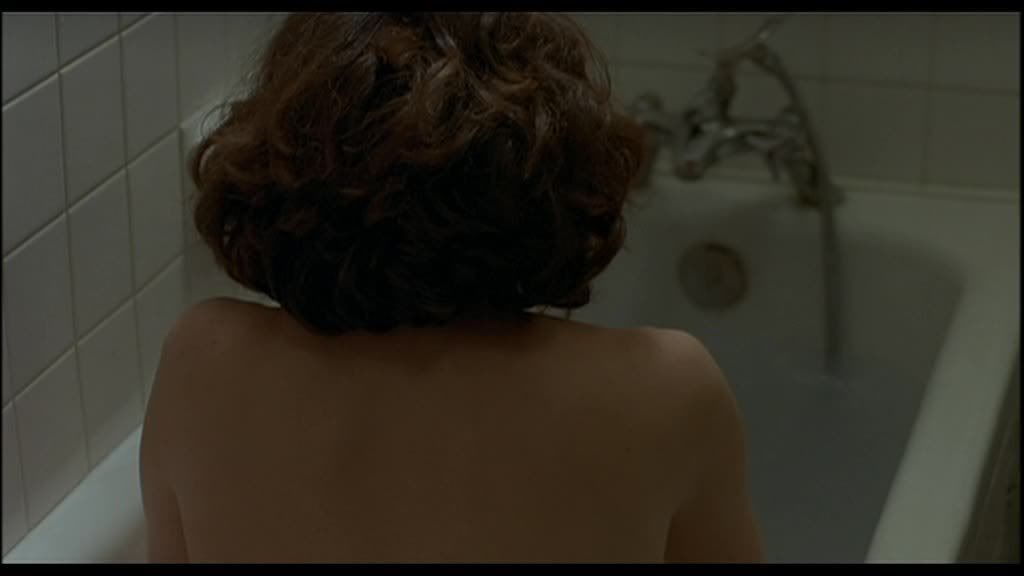
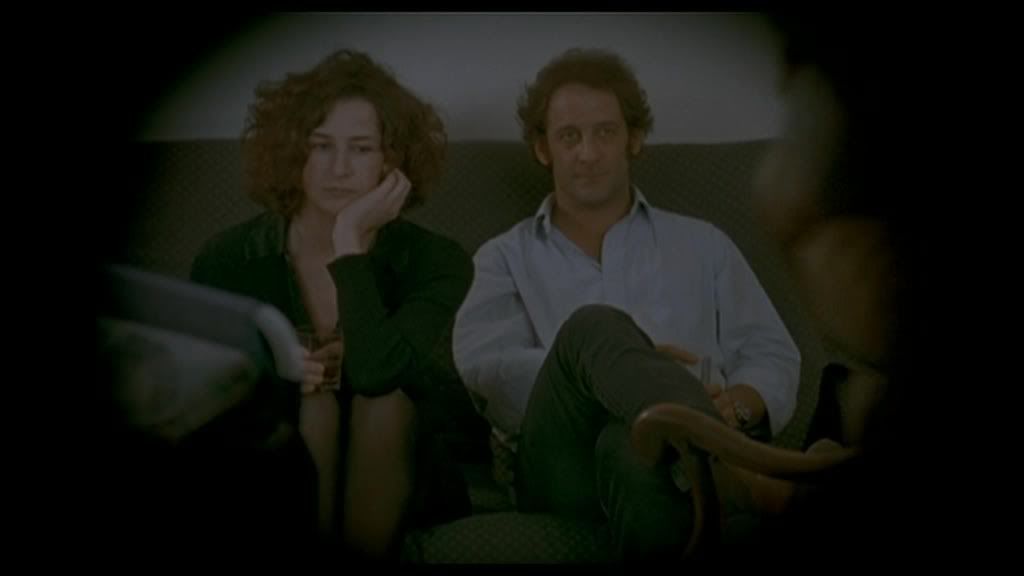
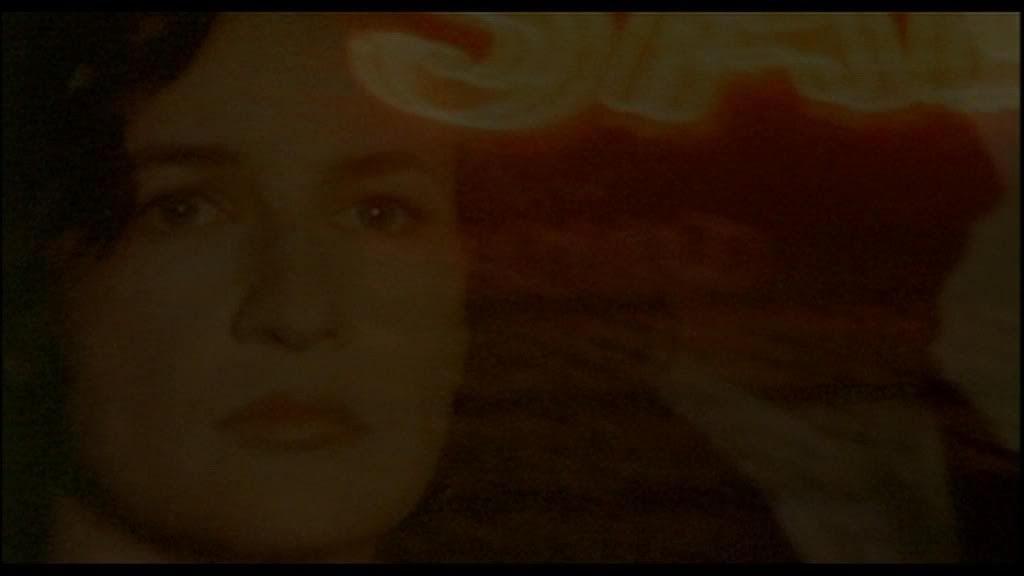
Showing posts with label 2001. Show all posts

Friday, April 15, 2011

Fat Girl


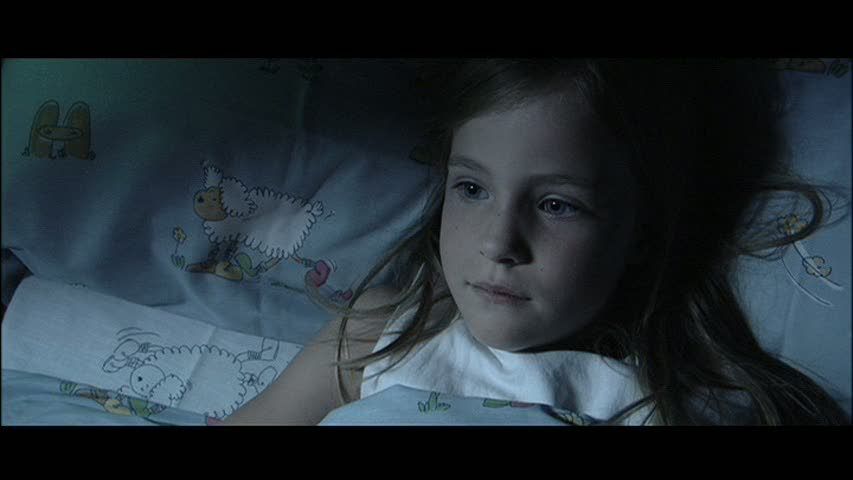
Catherine Breillat's Fat Girl is a chilling and disturbing movie, an in-your-face provocation that presents a devastating portrait of the kind of insinuating sexual exploitation that goes on everyday. It's a film that's deeply suspicious of the concept of "love" and the things that are done in its name, and it's all leading towards an unforgettable final line and final shot that forces the film's moral to snap into place with unavoidable clarity. The film focuses on the relationship of the young sisters Elena (Roxane Mesquida) and Anaïs (Anaïs Reboux), the former pretty and poised between girlish and womanly, the latter chubby and sullen. During a summer vacation, Anaïs watches as Elena gets an older boyfriend, Fernando (Lorenzo de Rienzo), and hesitates before losing her virginity to him.

The film's centerpiece is a very difficult-to-watch, discomfiting sequence in which Fernando relentlessly tries to convince Elena to have sex with him, while Anaïs watches from across the room in her own bed, pretending to sleep, covering her eyes then spreading her fingers apart to peek through. The scene is so disturbing because it's so real, so believable, and because it's pretty much rape. Elena keeps resisting, telling Fernando she doesn't want to, and he just keeps on verbally wearing her down, telling her it will be a "proof of love," telling her that if she doesn't give him what he needs, he'll have to go with another girl, someone he doesn't love like he loves her, and he doesn't want to do that. It's icky and scummy, and one wants to watch the way Anaïs does, half-covering one's eyes, wanting to turn away but unable to despite the burgeoning sick feeling that the scene inevitably produces. Breillat is as relentless as the boy, holding her camera on the duo as they awkwardly wrestle and turn around, Elena looking increasingly upset and confused beneath the barrage of Fernando's words. Her face suggests that she feels assaulted even before he actually does anything to her, and the contrast between her tormented visage and his smug smiles and flowery speeches is nauseating. It's a raw, unsentimental depiction of "love" as predation and exploitation, and it has the searing force of an uncomfortable truth.

This scene — in which Elena eventually relents, more or less, to anal sex, then feels ashamed afterward — reverberates throughout the entire rest of the film. Breillat is ultimately more interested in the relationship between the sisters, and especially in the lessons that Anaïs is learning by watching her sister's miserable introduction to sexuality. Anaïs, though younger, often seems more mature and cynical than her romantic older sister, who buys into Fernando's promises and professions of love completely. Anaïs isn't so sentimental, because she's watched her sister from a more objective viewpoint, outside of this relationship, and she sees how tawdry and ugly it all is. As she says at one point, the benefit of being the second child is that she gets to advance at a faster rate, to learn from the mistakes of the older child, and though she's talking about their parents' increased permissiveness with the younger daughter, her words also apply to her understanding of sexuality. She gets to learn about sex by watching her sister, and what she learns is that guys exploit girls for sex, that girls are often forced into doing things they don't want, that sex is somewhat violent. When Elena says that she's going to "give herself" to Fernando, Anaïs says that her expression is strange; it's likely that Anaïs, from her vantage point, sees the transaction as one where the guy takes rather than one where the girl gives.
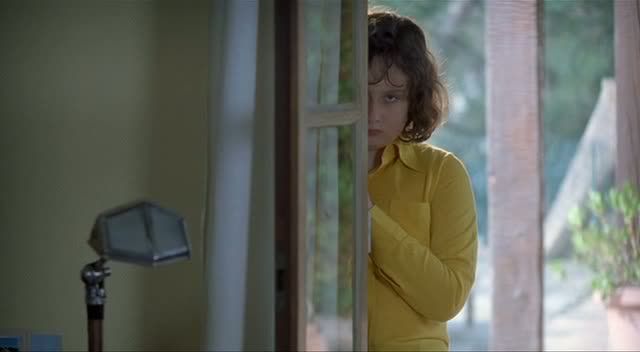

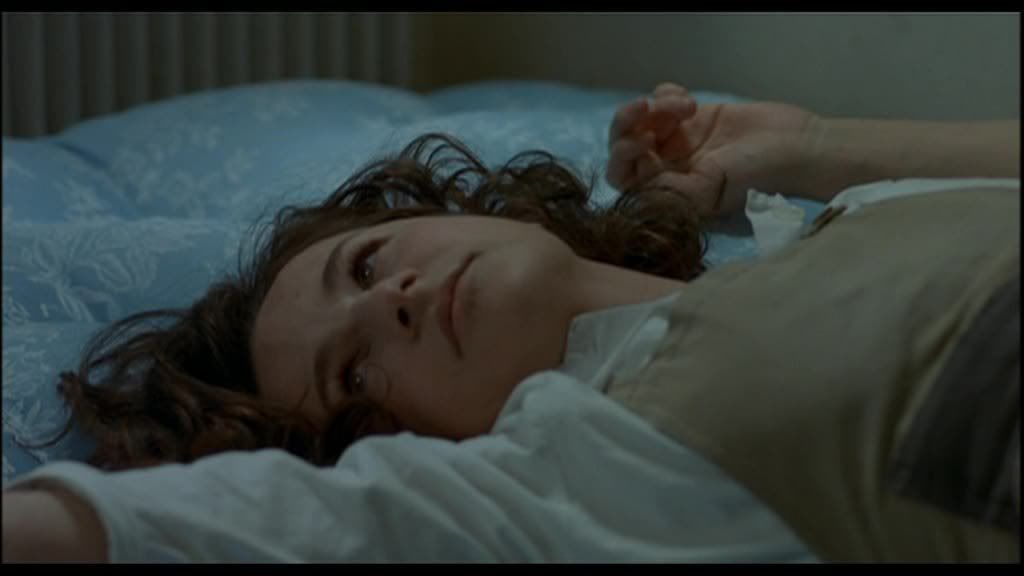
The relationship between the sisters is always at the center of the film, and Breillat presents them as opposites in many ways, but bound together by sisterly affection and rivalry, by equal parts love and hatred. There is a surprisingly touching scene in which the two girls lay in bed one night, their heads close together, talking and laughing, reminiscing about their childhoods and their fights, giggling like the little girls they are. It's the one moment when they really seem like children, with their girlish giggles and their innocent banter — elsewhere, they seem to be growing up very quickly. Anaïs spends much of the rest of the film quietly glowering from afar, watching everything with alert and somewhat angry eyes, her face locked into a permanent scowl, her features small and delicate within her moon-like face. It's rather poignant, and also cruel, when Breillat repeatedly films the two actresses with their faces pressed together, emphasizing the differences between them, calling attention to the gulf between the sexualized Elena (and Mesquida was nineteen at the time, but believably looks much younger, like a Lolita-esque little girl trying to be sexy and provocative) and the younger, asexual Anaïs.

The girls are left to learn their lessons on their own, as their parents (Romain Goupil and Arsinée Khanjian) seem totally disinterested in anything the girls do. When Anaïs breaks down crying at breakfast one morning, the girls' parents make a cursory effort to ask what's wrong, and then the father storms off in annoyance while the mother simply writes it off as "adolescence." They're totally incompetent parents, wrapped up in their own lives and ignoring their daughters completely, blind to what's going on. They even meet Fernando — who's obviously so much older than Elena — and chat with him as though he's simply a nice boy but then, later in the film, they act as though they're shocked and disgusted when they learn that Elena actually had sex with him. They blame the girls for everything and, in that case, the subtext is that guys are expected to act like this, that guys are expected to want sex and to do anything to get it, so it's the girl's fault if she gives him what he wants.

All of this unrelentingly ugly depiction of sexuality is leading towards the shocking ending, in which Anaïs finally gets to apply the lessons she's learned in an unexpected way. Breillat subtly builds the tension leading up to this climax, as she extends the long drive home from the vacation, with the mother, who hates driving, at the wheel and the teary, worn-out girls sullenly sitting in the car with her. The tension builds and builds as the mother drives angrily, and the uncomfortable silence in the car is occasionally broken by bouts of recrimination and tears, or by the mother's blasting of a glam David Bowie rocker. The highway, crowded with trucks and impatient speeders, adds to the tension, and several times Breillat's staging of the long drive suggests that the film is going to end with a car crash, with a horrible accident. Instead, it ends in a rest stop where the mother and her daughters are confronted with an even more blatant depiction of predatory male sexuality than Fernando had been, and in the final line, and the final freeze frame on Anaïs' chillingly empty face, Anaïs suggests that what she's learned from watching her sister is that a guy forcing himself on a girl is normal, to be expected, that in fact it's not even rape, really.

This is a film with a very clear point of view about sex, that it's something forced upon girls by the guys who claim to love them and simply use them instead. It is, of course, a pretty limited view of sex, but that's part of the point: the film is intended as a cautionary tale, as a film to excite fear and reprehension. It aims to teach a lesson, not the same lesson as Anaïs learns — to accept rape — but the lesson that the danger of a society in which Fernando's behavior is accepted and even considered normal is that rape will be accepted. In order to reach this conclusion, Breillat has to make everyone other than the two central girls either clueless or borderline sociopathic, and the startling violence of the final scenes especially feels somewhat contrived and artificial, on the level of the fearmongering everything-is-dangerous attitudes of the American Law and Order shows. Breillat, from her very radical feminist perspective, winds up treading pretty close to the conservative outlook on sex as dirty and shameful. Another way of looking at the film, however, is that it presents sex as dirty and shameful within this context, in this exploitative situation where guys force themselves on girls who have few real defenses and no one to turn to, especially not judgmental adults who don't want to hear about their kids having sex and are quick to place the blame on the most blameless party.

Wednesday, February 3, 2010

Gosford Park


In Gosford Park, Robert Altman revisits the territory of Jean Renoir's The Rules of the Game, examining the separate worlds — "upstairs" and "downstairs" — of rich society people and their servants at a country mansion. Altman takes an even more systematic approach than Renoir, designing the film in terms of alternations between masters and servants, cutting back and forth between the two worlds to reflect the yawning gap in class and privilege between these two sets of people. His camera, almost constantly in motion, seems to flow easily from one world to the other, its movements fluidly continuing even as he cuts from upstairs to downstairs or vice versa.

The film is set in 1932 at a hunting party, just as in The Rules of the Game, and like Renoir's film the dual centerpiece is a bird-hunting expedition and a murder. The party is hosted by Sir William (Michael Gambon) and his young wife Lady Sylvia (Kristin Scott Thomas), gathering together their family and friends. Right from the beginning, it's obvious that this is a complicated situation, with mutual resentments, suspicions and intrigues floating around between these nasty, corrupt society people. Altman's camera drifts through the estate's corridors, lingering to capture secretive conversations and exchanges of bitchy gossip. As usual, his dialogue is densely layered, different conversations overlapping to create aural pile-ups where key facts and snippets of talk rise out of the general morass. Various stories and histories are buried beneath the thin veneer of society, and Altman allows these complex plots to emerge gradually from the characters' chatter, their oblique hints and threats. Everyone here is plotting at something, involved in some ugly secret that everyone seems to know about anyway in a place where no gossip remains submerged for long.

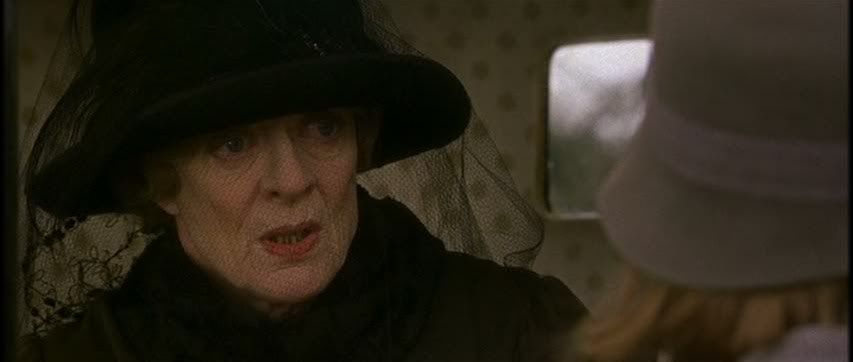
Some of those gathered here are looking to get something from the notoriously tight-fisted Sir William, as some among the family struggle to maintain the illusion of their status even as they're failing in business. In this context, class is actually divorced to some extent from money: what's more important than wealth is a good name, a family history, a status as one of the upper-class people. In fact, Sir William is supporting many of his supposedly high-society relations, including the elegant, self-possessed Constance Trentham (Maggie Smith), to whom he gives an allowance that he's now threatening to cut off. Sir William seemingly makes enemies with ease. His staff almost uniformly hates him. His daughter Isobel (Camilla Rutherford) resents his interference in her prospective marriage to Rupert (Laurence Fox), who's equally peeved that his attempts to marry into money and status are being foiled by William's resistance. Anthony Meredith (Tom Hollander) is enraged by William backing out of an important business deal — selling boots to shoeless Nigerians, an absurd touch that reveals Altman's wry sense of humor — that could have salvaged the ruined Meredith's livelihood. Meanwhile, Freddie Nesbitt (James Wilby) is bitter because he thought he was marrying into wealth, if beneath his station, by wedding dowdy, hapless Mabel (Claudie Blakley), who it turns out didn't have nearly enough money to balance out the embarrassment of having her for a wife.

These intrigues emerge organically as Altman's camera weaves through the estate. With such a large cast, a great weight falls on the actors to convey the essence of their characters economically, in small gestures and details, like the way Mabel, easily the most sympathetic character among the "upstairs" crowd, yearns for some genuine love and affectionate from her verbally abusive husband. Her face dawns with childlike excitement when the singer and actor Ivor Novello (Jeremy Northam) asks her to join him at the piano, and she looks both ways first, as though to say, "who me?" Small touches like this, conveying a sad woman's disbelief that someone's actually paying attention to her for some reason other than spewing insults, are everywhere in Altman's dense, cluttered mise en scène. Even throwaway details, like the usually dour, snooty Lady Trentham's disarming habit of saying "yummy yummy" when she enjoys a meal, add to the richness of Altman's portrayal.


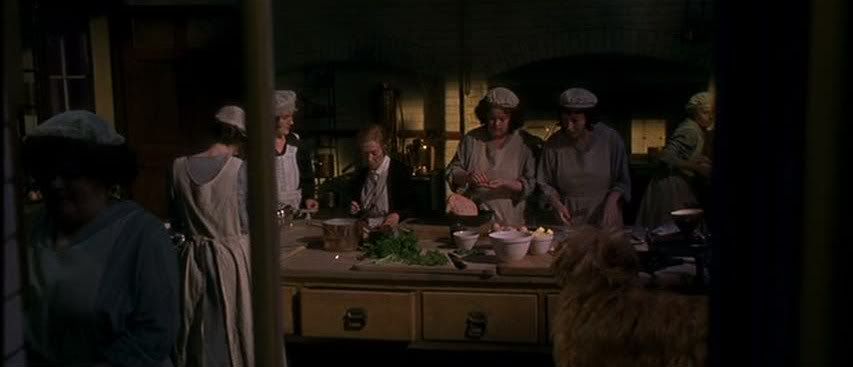
This is equally true of the "downstairs" servants, who have their own complex and richly developed world, entirely separate from that of the masters even though the two groups inhabit more or less the same space. Altman's handling of this division is brilliant, keeping the two worlds entirely distinct and yet subtly intermingled; his cross-cutting neatly separates the bustle of the kitchen from the stately low-key drone of the drawing room. And yet, in every scene "upstairs," the servants are present, quietly lingering in the background, unseen and ignored by the party's guests and thus only occasionally glimpsed by Altman's camera as it darts around the room. This separation, and the impression, constantly reinforced, that the servants are not to be noticed, makes the moments when a servant does break the barrier all the more startling. At one point, the maid Elsie (Emily Watson), who has a genuine affection for her employer (and lover) Sir William, speaks up indignantly to defend him against the insults of his family, blurting out a retort before realizing what she is saying and running away. It is an unthinkable breach, and Altman makes it as shocking for the audience as for the assembled guests. He had so thoroughly established the guidelines and boundaries separating these two worlds that Elsie's mistake feels absolutely devastating, as it must have for her and for the guests so used to unobtrusive, unobjectionable domestic help.

Lady Trentham's maid Mary (Kelly MacDonald) is the audience's surrogate in exploring the "downstairs" world of the film. She is an inexperienced young girl, nervous and shy, just becoming used to her profession and overwhelmed by the complex etiquette and rules governing special occasions like this one. She is thrown off, especially, by the insistence that, while she's here, she will be known as Trentham, thus entirely losing her identity to her employer even while among her own class equals. The servants are known, among themselves, only by the names of their masters, the ultimate submersion of their identities into their occupation. As the housekeeper Mrs. Wilson (Helen Mirren) says late in the film, as a good servant she has no life of her own, and it genuinely seems to be true. The other outsider amongst the servants here is Henry Denton (Ryan Phillippe), supposedly the servant of American film producer Morris Weissman (Bob Balaban, who is also co-credited with Altman for the film's idea). As the film goes on, Denton's cocky attitude and unsubtle curiosity about the estate's workings are revealed to be the symptoms of a ruse: he's not actually a butler, he's an actor studying for a part and, it's heavily hinted, also Weissman's gay lover (a situation presumably not permitted in this judgmental high-society context). His subterfuge thus allows him to be the only character in the film who traverses both worlds, though a maid tells him, after the deceit is revealed, that he "can't be on both teams at once," and once he's no longer a servant he's treated with the same aloof subservience as the other guests.

Altman's most sustained attempt to bring the two worlds together, however, comes during the pivotal scene where Novello sits at the piano to play and sing one night, while the various upper-crust guests scheme and bicker around him, and a murderer sneaks around the house in the dark implementing a violent crime. As Novello sings, the servants gather around the house, in darkened corridors, listening with expressions of satisfied awe on their faces; they are deeply moved by this music, by the beauty and humor of Novello's singing. Novello, too, is a bit of an outcast among these upper-class people; his status in the entertainment business makes him an object of scorn. At dinner one night, the guests had asked Weissman to describe the movie he was making, urging him even to give away the ending, since none of them will go see it anyway. Such things are beneath them, and though they had urged Novello to play the piano, to entertain them, they aren't happy with the entertainment they get, grumbling that they'd expected background music, easy to ignore, instead of these lively, emotional songs. Only the servants seem touched by the music, happy to have this rare opportunity to experience a great entertainer's work firsthand. These are some of the film's most beautiful scenes, capturing the servants standing in the dark, their faces illuminated by thin slivers of light emanating from the lit-up drawing room, dancing silently in back rooms out of sight. Nowhere else in the film is the concept of two separate worlds more poignantly expressed than here, as the "upstairs" people ignore and snicker about Novello's music while the "downstairs" folk, hidden away everywhere around the house, respond deeply to what they hear. Novello's true audience is the one he can't see, and his music has far-ranging effects he probably doesn't even suspect — it's a wonderful expression of the way art flows away from its maker to affect and touch the lives of others in ways the artist can't control or predict.

Such subtle subtexts flow through the film, especially once the central murder occurs and its aftermath stirs up all sorts of secrets about Sir William and his exploitation of his privilege and status, as well as his surprising connections to the servant Robert Parks (Clive Owen). The murder also occasions some of Altman's blackest dark humor, in the form of the inept investigator Thompson (Stephen Fry), who haplessly puts his fingers on everything at the crime scene and seems utterly disinterested when his deputy keeps bringing up all sorts of potential evidence. He's complicit in the upper-class insistence on keeping secrets, on not stirring up trouble; he puts on a show of being a hard-nosed interrogator, but his questions never lead anywhere. He must be utterly conscious, too, of the pressure on him to not cause trouble; he questions Mary in front of Lady Trentham, asking the girl questions about her employer that he has to know she can't possibly answer truthfully with the lady sitting right there. Status and class are ultimate barriers, keeping these people apart and preserving the status quo even through the most devastating of breaks; life resumes its normal course almost instantly for these people, who won't break from their routines and pretenses even for the sake of a murder. They are unruffled, and perhaps unruffleable, comfortable in their tradition and their empty decorum.

Friday, January 15, 2010

The Lady and the Duke


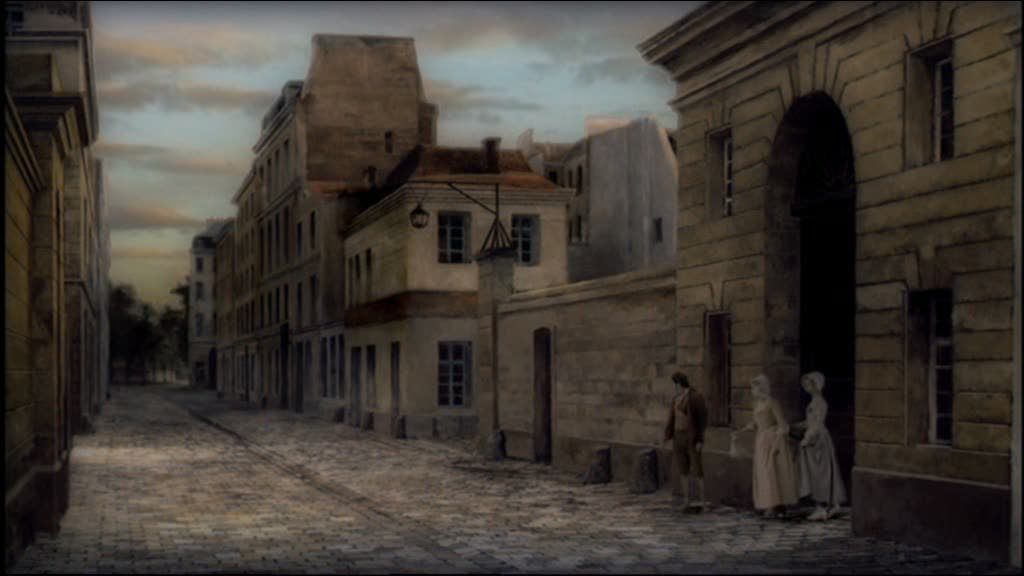
The Lady and the Duke is one of Eric Rohmer's atypical ventures into historical drama. The interesting thing about Rohmer's period films — like the theatrical, literary Perceval le Gallois or The Marquise of O... — is that they are generally far more overtly stylized and deconstructive than the modern romantic comedies for which he is known. It is as though the distance of the past, the abstraction of history, allows Rohmer the license to filter these events through extreme visual and aesthetic systems. In this film, he interprets the past specifically through the lens of its paintings. The film is set during the French Revolution, and Rohmer captures the feel of this era by digitally combining his sets and actors with paintings layered into the background. The effect is startling and strangely haunting. During the film's opening, onscreen text establishes the setting and the basic history of the revolution, while Rohmer collages together various paintings from the era. After this introduction, several of the paintings repeat, but this time the people within the paintings begin to move. Crowd scenes come to life, bustling with activity, moving within this static world. When Rohmer cuts to closeups, the texture of the brushstrokes within these canvases is even visible, reminders of the artificiality of his aesthetic.

Although the film's aesthetic and historical period sets it apart from much of Rohmer's other work, like his other films it is driven by talk, and by the ideological, philosophical and emotional undercurrents obscured by and encoded within this talk. The film focuses on the Scottish emigré Grace Elliott (Lucy Russell), a bold woman who was the mistress of many powerful men and who was brought to France prior to the Revolution by the older Duke of Orleans (Jean-Claude Dreyfus). She was his lover and, after their relationship ended, remained his friend and outspoken confidante, advising him about politics as the Duke became entangled in the Revolution. Even though Grace is a devout royalist, loyal to the King, while the Duke joins the Jacobins' revolt, they remain close even as things get worse and worse all around them.

At the heart of the film is, as usual with Rohmer, a moral inquiry. It's all about conscience and the willingness to acquiesce or go along with social horrors. The Duke is a weak-willed, basically foolish man, easily manipulated and convinced of his own rightness even when all evidence begins to pile up to the contrary. Despite his aristocratic status, he supports the Jacobins out of an idealistic belief that the common people of the country deserve equality and liberty that isn't offered to them under a monarchy. Even though King Louis XV is his cousin, the Duke opposes the monarchy and rallies behind the revolutionaries. In multiple visits with Grace, they argue about the politics of the time, and she attempts, mostly in vain, to convince him that the brutality and violence of the Revolution is not justified by his ideals, however well-intentioned they might be. Grace is a fearless and principled woman, unafraid to speak her mind even as her opinions become unpopular and even treasonous. While everyone around her tries to keep their opinions in check, maintaining the rules of decorum and tradition as though they were still living in polite society, Grace alone seems to understand how important it is to speak out, to try to sway the opinions of those who support the Jacobins even as they're shocked by the violence committed in the name of the Revolution. Grace preserves her nobility and class, and her status, but is too much of a determined, intelligent woman to play the role of the "good citizen."


Of course, the irony of the film's recurring dialogue about being a "good citizen" is that citizenship in this society requires a willingness to tacitly endorse inhumanity and horror. In one of the film's most striking images, a massed crowd marches while holding aloft a stake with the head of a noblewoman skewered on top. It's a stylized image like many in the film; the head is greenish and artificial-looking, with blood flowing from its ragged neck. It's a horrible icon of the Revolution's violence, and it affects the audience as viscerally as it does Grace, who witnesses it while trying to make her way through Paris to the home of a friend.

Images like this lend force to the film's moral thrust; Rohmer's allegiances are clear. He is suggesting that if platitudes about equality and freedom, about helping the working class, about overthrowing tyrants, lead to this, then the ideals are empty and hollow. He is not necessarily aligning himself with either the royalists or the rebels so much as he is taking a humanist slant on this material, evincing a concern for life and fairness that goes beyond abstract ideology. Towards the end of the film, Rohmer portrays the functioning of the Revolution's "justice" as a series of Kafkaesque absurdities, where suspicion furnishes its own proof and overzealous revolutionaries can levy accusations based on pure supposition and innocuous conversations. The film is a powerful critique of political violence and oppression, especially when it disguises itself in the form of a popular movement.

Of course, Rohmer explores all of these themes and ideas in his characteristic way, buried in the subtext of various conversations that dance around these issues rather than engaging with them directly. Grace and the Duke meet several times over the course of the film, and in between social niceties and exchanges of affectionate patter, they have brief outbursts of political sparring, which inevitably end with the Duke urging his former love to keep silent, not to talk politics. That's not Rohmer's way, though. Rohmer's films, where people inevitably talk about everything, support the idea that talk is the key to understanding and analyzing the substance of life, whether the conversations centers on love or spirituality, as they do in so many of Rohmer's films, or on the politics and events of the day. The Duke is essentially the film's villain because he is the enemy of such openness.

Rohmer's approach to this story is typically sensitive and probing, both ethically and aesthetically. His use of digital technology to tell this historical tale is frequently stunning; watching these paintings move and shift allows Rohmer to filter his view of history through the perspectives of the era's artists. He seamlessly integrates this art with the flat, mundane interiors, which are worn and grimy in comparison to the textured gloss of the painted scenes. These rooms look lived-in, and the props in Grace's home frequently intrude into the narrative and the mise en scène, like the way her letters and writing implements become important to the film's denouement. Rohmer's feel for nuanced emotions is as keen as ever, particularly in the scene where Grace and her maid stand on a distant hill, watching the execution of the king through a telescope. With a gorgeous painted landscape stretching off into the distance, Grace stands in all black, unable to look, seized with momentary false hopes before accepting the inevitable. The majesty of the composition, in which she and her servant are small figures within the grand scale of this painted countryside, puts her strong emotional reaction into the context of history, as one small response to the big events that change the world. For Rohmer, though, just because this story may be simply one small, provincial perspective on world-changing events, it is no less important; he privileges the individuals affected by history and the ideas they cherish and fight for.

Friday, October 30, 2009

The Conversations #10: Trouble Every Day


The tenth installment of the Conversations is here, just in time for Halloween. In this latest discussion, Jason Bellamy and I turn our attention to Claire Denis' Trouble Every Day, a startling and deeply enigmatic film about vampirism, lust, infidelity and addiction. As usual, our discussion is fairly lengthy and intensive, covering not only the film itself but also diverting into a debate about what constitutes the horror genre. We always hope with this series that our piece will be just the beginning of a larger conversation, so please stop by and weigh in with your own thoughts, either about this film or about horror in general.

Continue reading at The House Next Door

Wednesday, July 29, 2009

Films I Love #38: Sex and Lucia (Julio Medem, 2001)


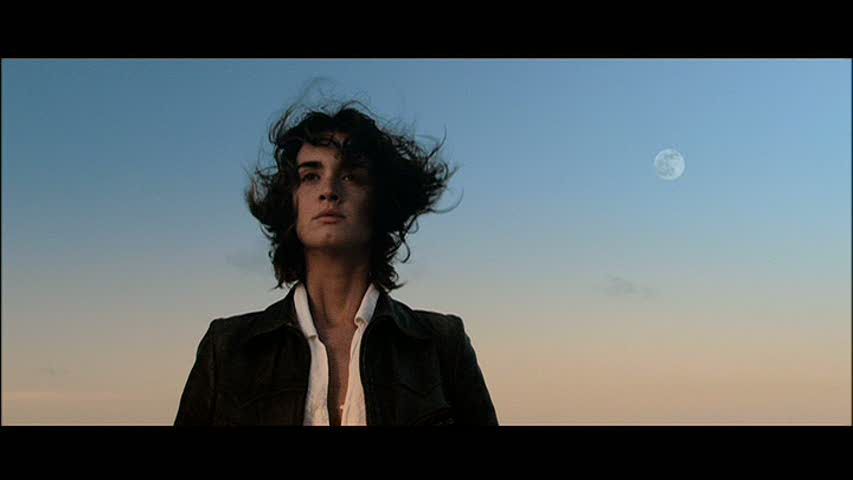
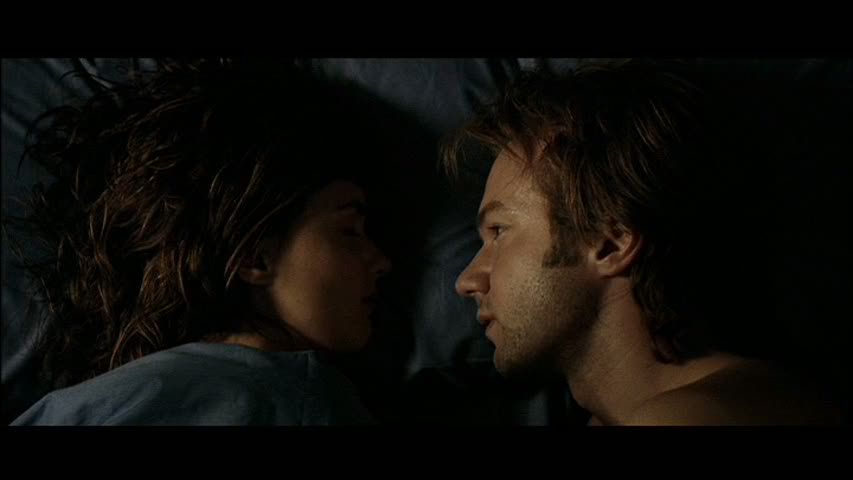
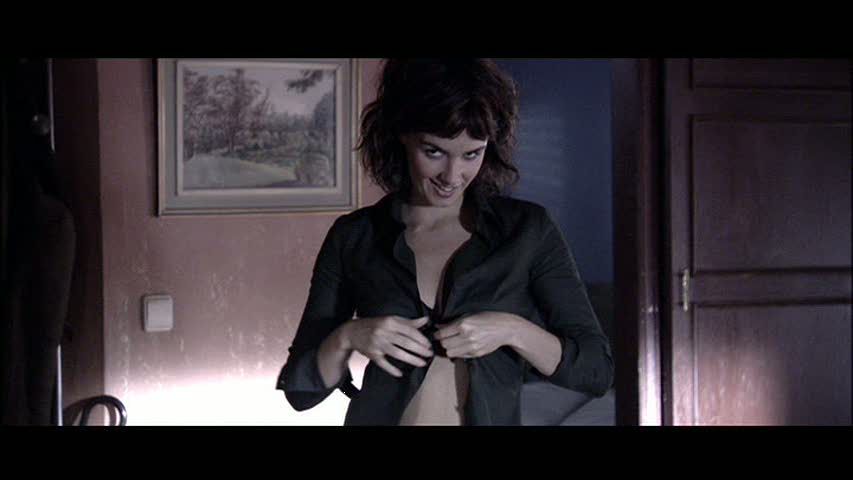
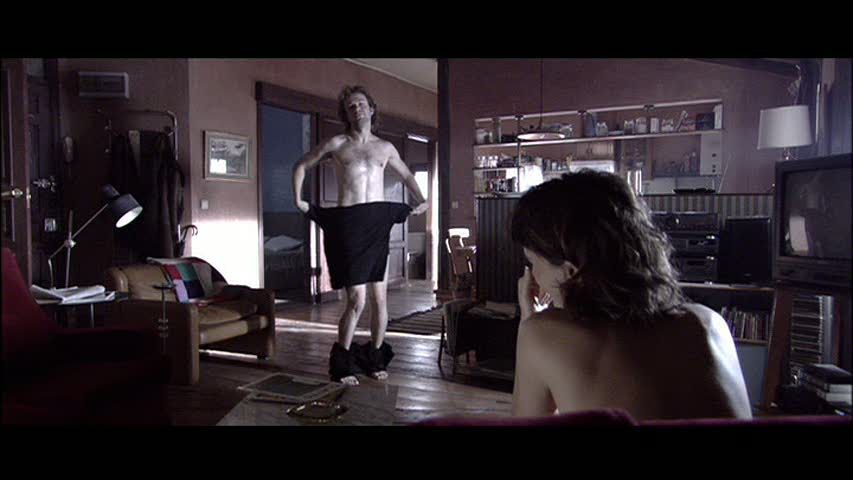
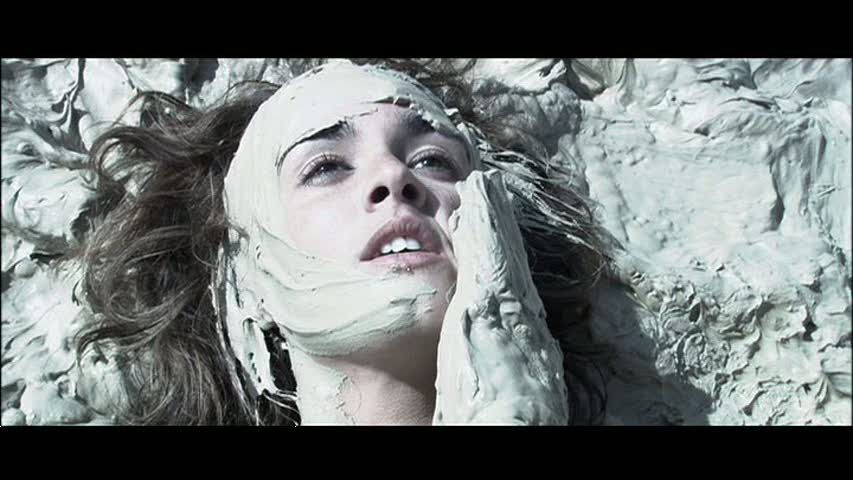
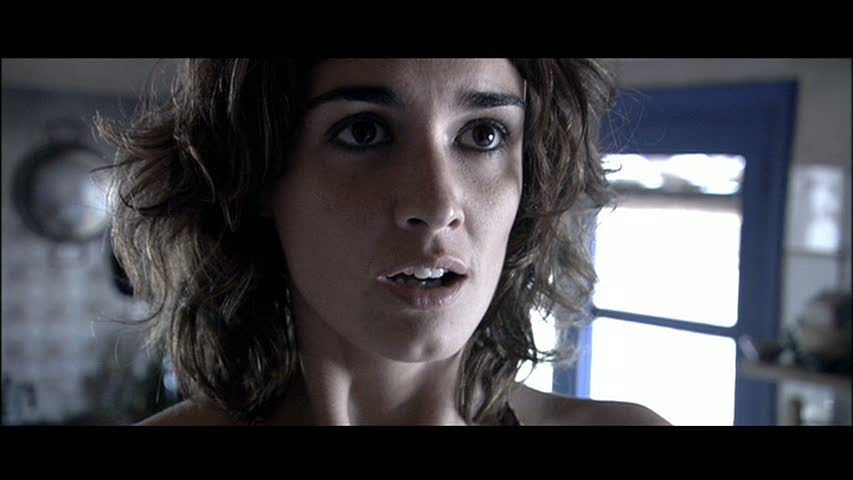
Sex and Lucia is Julio Medem's moving, sensually rich film about the titular Lucia (Paz Vega) and her attempts to understand, in retrospect, her troubled relationship with her writer boyfriend Lorenzo (Tristán Ulloa) after his disappearance and apparent suicide. The film shifts easily between scenes on a quiet island where Lucia goes to recover, and scenes from the past that blend Lucia and Lorenzo's real relationship with sequences that may be real or may be merely imaginative fantasies from the pages of Lorenzo's latest novel. The present-tense sequences on the island are shot in a high-contrast style where the sun seems to be blurring everything towards a pure white nothingness, giving these scenes an austere, drained visual aesthetic that's the opposite of the sensuality on display throughout the rest of the film.

Medem plays so cleverly with the line between fiction and reality that it's never quite clear what's real and what's not, and it hardly matters. What the film is really about is the power of desire and sexuality, the temptations of fantasy, and the comforts of a sustained relationship as opposed to the transitory but passionate release of a brief dalliance. There's a real darkness and emotional nakedness at the film's core, a sense of sexuality spiraling into death and confusion, but Medem is equally concerned with the joy and pleasure of sex. There are few films that represent sex on screen with greater beauty or sensitivity, capturing above all the fun of great sex. Most movie sex scenes are either sappy and shot with soft-porn stylization, or else gritty and unpleasant and degrading. Sex as visualized by Medem is profoundly happy and pure, with an intimacy and playfulness that establishes the real affection and connection between these characters. At the same time, Medem deals honestly and openly with sex, both its pleasures and its repercussions, and he doesn't flinch away from the uglier moments. He has made a film in which sex is no longer a dirty word but simply an essential part of life and love, a beautiful act that reveals certain truths about these people that can be seen no other way.

Friday, May 8, 2009

Invincible


When Werner Herzog made Invincible in 2001, he had not made a fiction feature in a full decade, since 1991's Scream of Stone; the director once best known for his features starring Klaus Kinski had, while making little distinction between fiction and documentary, increasingly dedicated himself wholly to the latter. As Herzog's return to the form of the fiction feature, Invincible is certainly a strange and awkward movie, a would-be epic in which nothing much actually happens even with a bloated running time of over two hours. It's a curiously inert and stilted film, with a rather graceless script, written by Herzog himself but without many traces of the grand, eccentric poetry that Herzog, a gifted writer, so often inscribes into his best work. Or maybe it's just that his lines, delivered by a cast consisting mostly of inept non-actors, are smothered by the hesitancy of the performers. In any event, this was an inauspicious return to the feature for a director whose work has remained powerful and relevant into his late career, even as his interest in and talent for the fiction feature seem to have abandoned him.

Nevertheless, the film's central character, Zishe Breitbart (real-life bodybuilder Jouko Ahola), is an archetypal Herzogian protagonist. He is a strongman, a powerful young man who is discovered as a blacksmith in a small, tight-knit Jewish town in Poland, where he lives with his family. He is enticed to leave this life behind and move to Berlin, where he gets a job as a stage performer at the occult theater of Erik Jan Hanussen (Tim Roth), performing feats of strength before appreciative audiences. The story is based on a real strongman, but Herzog has shifted the timeline so that Zishe is in Berlin as the Nazis are just gathering power: the streets and theaters are filled with men in Nazi uniforms and armbands, heckling Jews and expectantly awaiting Hitler's rise to power. Hanussen is another historical character, a hypnotist and clairvoyant who was closely associated with the leaders of the Nazi party in the years preceding Hitler's election. He is a fascinating figure, a Jew who posed as a Dutch aristocrat and entertained the Nazi elites, and the film's most compelling segments are the ones dealing with this strange and slightly sinister man. Roth plays him with a quiet intensity, nearly whispering much of the time, his voice rising and falling in a hypnotic wave-like cadence.

The rest of the cast are, unlike Roth, mostly amateur actors, and unfortunately it shows. Ahola's earnest awkwardness is sometimes appropriate to Zishe's character, his small-town shyness and unfamiliarity with the big city, but at other times it's all too apparent that the professional bodybuilder (who was declared "World's Strongest Man" in 1997 and 1999) is just stiff and uncomfortable on screen. The same is true of Anna Gourari, who plays the pianist at Hanussen's occult theater. Her scenes with Zishe are especially painful and labored, and it's hard to believe that Herzog, who once guided brilliant and precisely controlled performances from the notoriously difficult Klaus Kinski, was happy with these scenes. There's a strange indifference to many of the dialogue scenes, an odd clipped quality, and the pacing seems subtly off. Scenes end abruptly without reaching any obvious point or climax. This contributes to the weird stretching of time here: the elliptical editing gives the impression that quite a long time is passing by, but when Zishe returns to his family at the end it becomes apparent that he hasn't actually been gone very long.


Because of the inconsistent quality of the performances, some of the film's best scenes are the actual performances at Hanussen's club. Hanussen's demonstrations of his supposed hypnotic powers are staged as long closeups on the mystical guru's face as he speaks softly to his subjects, lulling them into a trance, Roth staring intently into the camera as though he was hypnotizing the audience as well (as Herzog once toyed with doing as an introduction to Heart of Glass). Herzog seems to love the vaudeville aspect of Hanussen's stage shows, and he indulges in some elaborately choreographed Busby Berkeley fantasias in which costumed showgirls dance themselves into complex patterns on the stage.

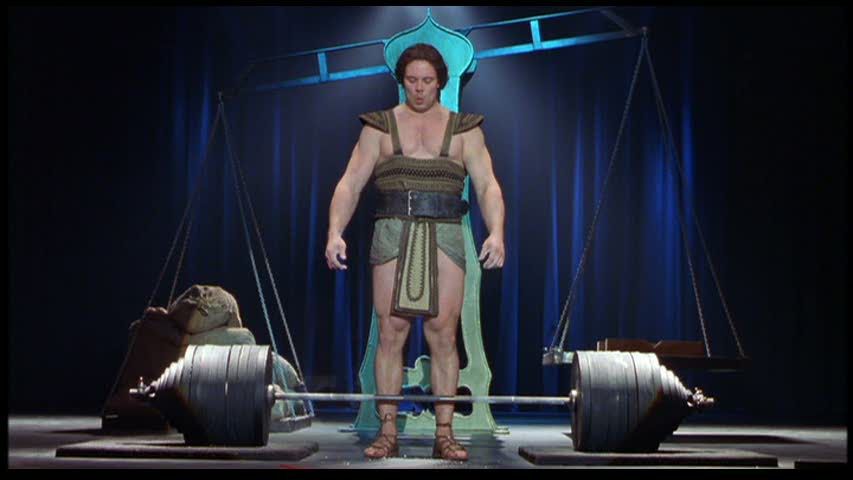
Zishe's own stage show is fascinating as an examination of issues of Jewish and Aryan ethnic identities and the developing tensions within Germany during the immediate pre-Nazi era. Hanussen, who hides his own Jewish heritage behind virulent pro-Nazi rhetoric, has Zishe appear in a blonde wig and ridiculous Viking armor as the Aryan hero Siegried. As he performs his feats of strength, he is applauded by the uniformed Nazis in the crowd, who embrace him as one of their own, cheering him as though his actions reflect well on the entire Aryan race. The irony is obvious, and Zishe soon enough reveals the truth, which outrages his former supporters but makes him a hero to the Jewish people. These tensions are interesting and potentially explosive, but Herzog never does enough with them, never pushes things far enough. The normally apolitical Herzog isn't really interested in doing a direct historical drama about the rise of Nazism in his home country, but nor does he find enough depth in the character studies of Zishe or Hanussen (the latter, one suspects, would have been a far more interesting protagonist for a film like this). The resulting film is uneven and rather aimless, with some of its best ideas and moments buried by the meandering plot and leaden acting.

Wednesday, April 29, 2009

Films I Love #29: Vendredi soir (Claire Denis, 2001)


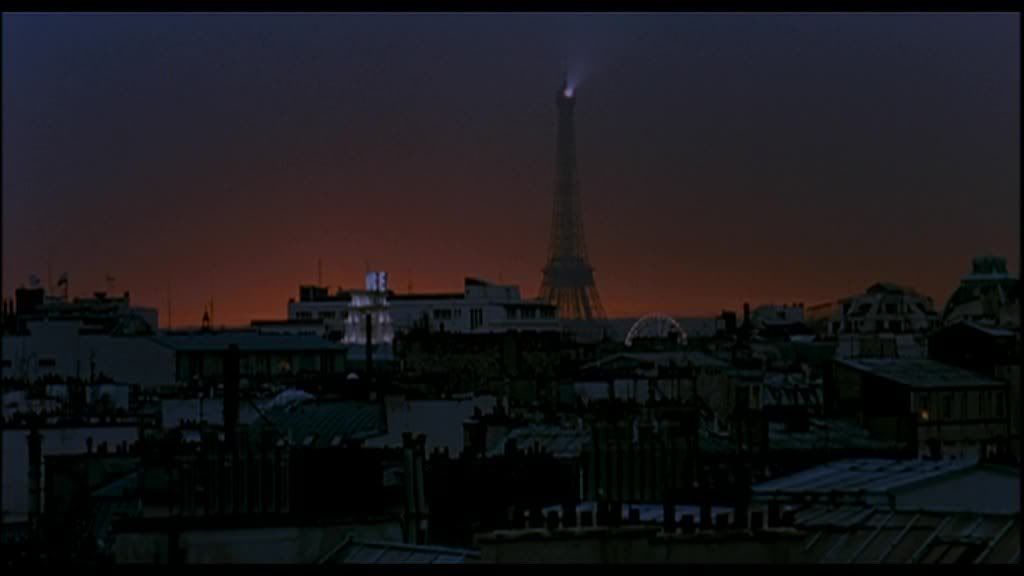
Vendredi soir is not French director Claire Denis' best known or most critically lauded film, but it is her sweetest, her warmest, her most romantic, her most stripped down and simple, a purely sensual ode to desire and sex. The images of Denis' long-time cinematographer, Agnès Godard, are always lush and colorful and sumptuous, and she outdoes herself here, creating a sensuous moving postcard of Paris on a cold, rainy, busy Friday night. On the eve of moving in with her boyfriend, Laure (Valérie Lemercier) finishes packing and then goes out to spend the evening with friends. But Paris is at a standstill, with a tremendous traffic jam keeping her near-stopped. Along the way, she picks up a stranger named Jean (Vincent Lindon), who joins her in the slowly moving car to stay out of the cold. The pair then spend the night together, having sex at a nearby hotel, eating dinner, exchanging laconic conversation but mostly remaining strangers, locked in their own worlds.

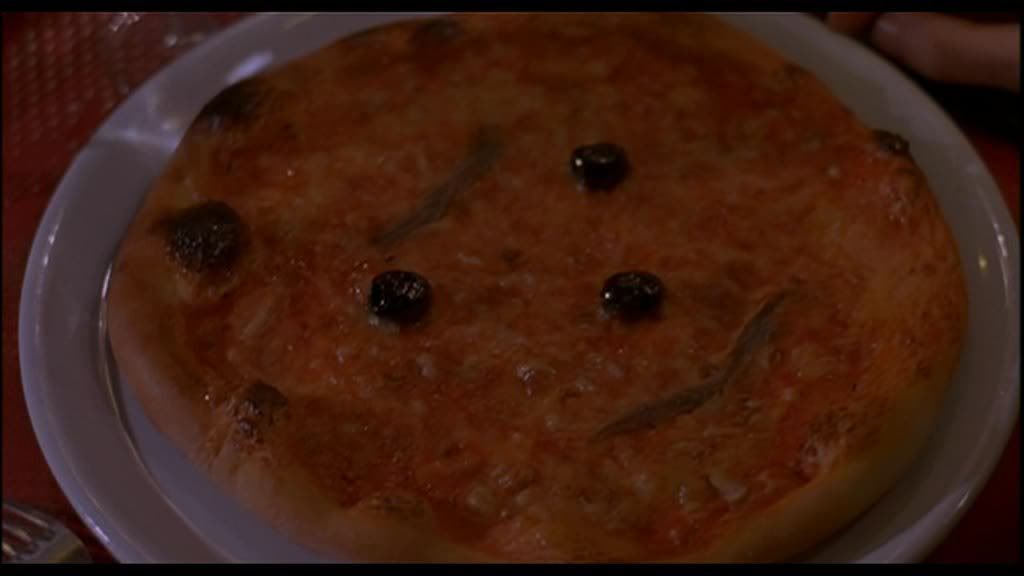
Denis never probes these characters psychologically, never provides any hint of why they sleep together, why they're drawn to each other. She never ventures into their heads, lingering instead on the surface. This is, in one sense, a kind of feminist statement, suggesting that women can initiate and enjoy casual sex for its own sake as much as men, but more deeply the film is simply a celebration of sex and sensual pleasure, period. Denis presents the encounter itself almost entirely in abstracted closeups: chests pressing together, fingers running along bare skin, feet rubbing together, legs crossing over one another, eyes peeking out from around the contours of the other's body. Denis surrounds the sex scenes with whimsical touches, bits of rough but clever animation, ways of opening up the night, the city, the rain, the traffic to the same level of sensual enjoyment as the sex itself. Bored in traffic, Laure playfully imagines the letters on a car's rear bumper rearranging themselves, a stray "S" dancing along the car's rain-streaked surface. At dinner, the toppings on a pizza form a smiling face. The film is all about sensual pleasure, the little joys of daily life, and Denis emphasizes small gestures, finding the beauty and poetry in everything from the lights of the city to the smoke curling from the tip of a cigarette to the act of making love.

Tuesday, February 17, 2009

The Conversations #2: Mulholland Dr.

[The second installment of the monthly feature The Conversations has now been posted at the great multi-author film blog The House Next Door. This series is a venue for Jason Bellamy and me to discuss a wide range of cinematic subjects: critical analyses of films, filmmaker overviews, and more. In this piece, we discuss David Lynch's Mulholland Dr., with tangential references to Lynch's Lost Highway and influences like Vertigo and Kiss Me Deadly. A brief teaser from my opening remarks is included below; click through to the House to read the full discussion.]

ED HOWARD: David Lynch is a filmmaker who has haunted my mind since the first moment I saw one of his films. This is especially true of Mulholland Dr. I vividly remember my confused, stunned reactions the first time I saw this film. It was in the afternoon, and when I stumbled outside afterward, into bright daylight, everything looked strange, somehow subtly changed. I'd spent over two hours in Lynch's world, and in the time I'd been lost there it was as though the real world had been infected with Lynch's unsettling aesthetic. It was a unique experience. I can't remember another film that shook me up and destabilized me so thoroughly, and I've returned to it, and to Lynch's work in general, compulsively ever since.

Continue reading at The House Next Door

Sunday, February 8, 2009

The Curse of the Jade Scorpion


The Curse of the Jade Scorpion is Woody Allen's tribute to the Hollywood films of the 1940s, the hard-boiled detective noirs and screwball comedies in which hapless men and tough-talking women sparred against each other. It's clearly a loving, affectionate tribute, a well-meaning attempt to capture the atmosphere of films that mean quite a lot to the director. But while there are moments of witty brilliance here and there, the film as a whole is too often awkward and overwritten, its tortured lines, written to be delivered at the amphetaminic pace of the best screwball farces, coming out slow and hesitant in the mouths of such definitively non-screwball actors as Helen Hunt and Woody himself. Woody's sense of humor is simply not the humor of the 40s comedies; he's too neurotic, too jittery, even at his wittiest too slow in his delivery to get across material like this. As insurance company detective CW Briggs — a nebbishy figure right out of Woody's beloved 40s noir Double Indemnity — Woody's sparring with his company's "efficiency expert" Betty Ann Fitzgerald (Hunt) comes off as flat and unfunny.

The dialogue is inert, dead, pulpishly overwritten: it might've seemed funnier on the page but both Woody and especially Hunt often seem to be tripping over it, struggling to get it all out. The lines lose their bite when delivered this way. Lines this purple and self-conscious need to be spit out in one long breath with the pauses all spliced out, like the way Cary Grant would handle the big ungainly chunks of dialogue he'd be given in a Howard Hawks movie, or the way Jimmy Cagney stomped his way through Billy Wilder's insanely funny One, Two, Three. Woody, even in his "early, funny ones," never had this kind of speed. He has always interspersed his more manic moments with comparatively laidback interludes, and often let his best one-liners slip out almost unnoticed from the casual flow of his schtick. Even his early comedies have a sense of deliberate pacing, as though he always wants to leave some air, some breath, in between the jokes. The Curse of the Jade Scorpion, if it were to be truly successful, would require a different treatment, one that Woody doesn't seem able to deliver; the result is a comedy that's all air, all breath, with few enough jokes.

To the extent that the film banks its success on the chemistry — both venomously hostile and, suppressed underneath, romantic — between Briggs and Fitzgerald, the film can only be a failure. Hunt is a fine actress, but she's badly miscast here, unable to make anything of her character's generic ambitions or the mostly ludicrous dialogue Woody gives her. Her parting shots at Briggs, meant to be funny because of the incredibly specific death wishes she spits at him, are always so flatly delivered that they never fail to kill the scene completely. It seems like Woody is striving for the kind of antagonistic relationship that so often drove the best screwball romances and their more serious counterparts, the noir hero's relationship to the femme fatale: Grant/Hepburn, Grant/Russell, Lombard/Barrymore, Bogart/Bacall. These classic duos had an easy, casual patter that belied the amount of dialogue they were throwing back and forth. They could toss around elaborately written lines, embedded with subtle jokes and sexual double entendres, and make it seem like they were just having a normal, perfectly laidback conversation. Woody doesn't quite have that knack here, and whether it's in the writing or the acting isn't always clear; either way, neither he nor Hunt is ever able to make this script sound the least bit natural or aesthetically satisfying as dialogue.


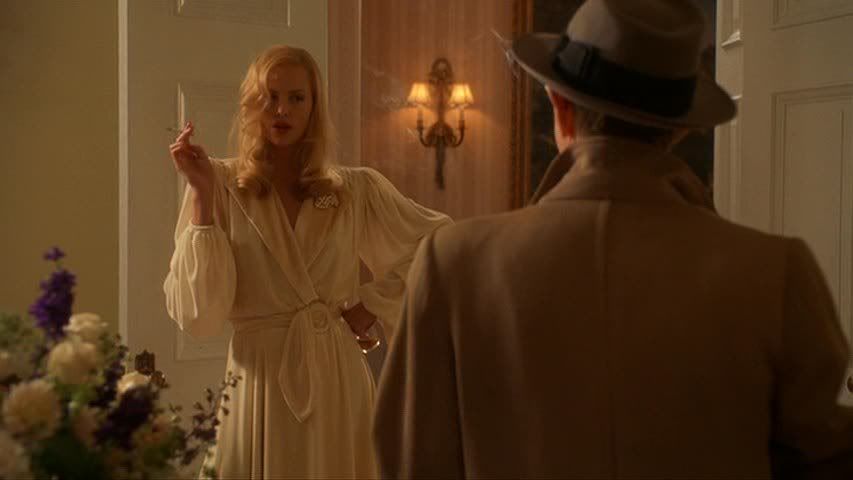
Woody makes much better use of Charlize Theron, whose cameo as the seductive heiress Laura Kensington recalls both her former hilarious bit turn as a nymphomaniac supermodel in Celebrity and the wild, sexy society heiresses played by Lauren Bacall and Martha Vickers in Howard Hawks' The Big Sleep, one of Woody's many obvious 40s touchstones here. Theron, at least, has a handle on the way this pulpy dialogue should be delivered: she drawls it out, with a sexual frankness that makes its artificiality irresistible rather than, as it so often is with Hunt or Woody, distracting. It helps, perhaps, that her character is the film's most blatant artificial construct, the archetypal noir femme fatale, with her performance especially derived from Bacall's onscreen persona. Theron gets it down perfectly, from the sultry way she smokes a cigarette to the wry, raised-eyebrow way she delivers her literary come-ons. Every second she's onscreen is a second spent imagining a much better, infinitely funnier movie centered around her character. Her cameo here, as in Celebrity, shuts down everything else for as long as she's around; she dominates the screen so easily that one wishes she got more work in comedies.

Theron's performance aside, the film has some amusing moments here and there (like the way Woody recontextualizes Hitchcock's famous fireworks kiss into an actual fireworks factory in Chinatown), but its fluffy plot and inert parody of screwballs and noirs drag it down. Even Woody himself doesn't get off a lot of great lines. Usually, the one thing that can be counted on in a Woody Allen comedy is plenty of quotable, witty dialogue, but when Curse's script isn't torturously overwritten, it's simply dull and generic, with a lot of dead space and unnecessary lulls. It spends much of its length evoking the much better films it's striving to pay homage to, but its awkward imitations inevitably make one wish one was watching The Big Sleep or His Girl Friday instead.

Thursday, December 11, 2008

Human Nature


Human Nature seems to be the forgotten film in the still-developing career of scriptwriter Charlie Kaufman: sandwiched in between two Spike Jonze-directed features, Being John Malkovich and Adaptation, it is saddled with a plot that, even by the outrageous standards of Kaufman's output, is frankly ridiculous. The film begins with an "opposites attract" love story between the repressed, lonely doctor Nathan (Tim Robbins) and the animalistic Lila (Patricia Arquette), who is afflicted with the rare condition of hirsutism, which causes her body to be covered in hair. Her condition causes her to embrace nature, where she lives as a beast, naked and free, until her desire for companionship drives her back to society and into Nathan's arms. She also winds up leading Nathan to a wild-man (Rhys Ifans), who was raised as an ape by his father, a businessman driven away from the human race after the Kennedy assassination ("apes don't assassinate their presidents, gentlemen!"). This apeman soon becomes Nathan's test subject in a series of experiments intended to instill civilization into a wild creature. This is an absurd premise, the kind of thing you'd expect from a Pauly Shore comedy rather than a Charlie Kaufman script; similar tropes have wound through countless brainless comedies over the years.

It is perhaps for this reason that the film is so often overlooked in discussions of Kaufman's work, even though it is also the feature film debut of director Michel Gondry. In all likelihood, it is Gondry's touch that makes the film work as well as it does, since his whimsy and playfulness is perfectly suited to this material; one struggles to imagine Jonze, who has brought a much darker sensibility to his two Kaufman-penned films, directing this deeply silly film. I do not use the phrase "deeply silly" lightly, either, since in Human Nature Kaufman mingles profundity and absurdity more thoroughly than in any of his other works. The film's premise sets up a number of simply ridiculous set pieces, sequences where it is impossible to watch without feeling mildly embarrassed for everyone involved. The spectacle of a fine actress like Patricia Arquette, wandering through the woods with her naked body cloaked in hair, acting like an ape, is very difficult to take seriously. Likewise, the Tarzan-like sequences of Lila and the apeman, dubbed "Puff," swinging through the trees in pursuit of one another against a patently artificial rear projection backdrop whose retro obviousness is a throwback to classic Hollywood aesthetics. Gondry completely embraces the script's silliness, investing scenes like this with a ludicrous matter-of-factness, diving into the humor and absurdity. Nowhere is this more apparent than in the early scene where Lila, living in the wilderness in idyllic communion with nature, abruptly bursts into song like the heroine of a Disney picture, which is exactly how Gondry stages it. He inserts cutaways to cutesy animals gathered in the bushes nearby, and shoots through a soft-focus blur that captures Lila as she twirls and dances through the foliage, singing about the joys of nature. The incongruity between the Disney musical staging and her hairy naked body is hilarious. To some extent, Gondry's visual inventiveness and lighthearted sensibility is able to make something enjoyable of all this idiotic farce.
What's especially interesting about the film, though, is the way that Kaufman uses this pulpy, low-brow material to address complicated and weighty themes, bringing in the ideas about identity, society, and the human brain that flow through all of his scripts. Yes, it's a movie about an apeman and a girl with hair all over her body. But it's also a movie that directly addresses questions of nature and nurture, as well as what exactly constitutes a "civilized" human. The process by which Puff is civilized is, of course, as ludicrous as anything else in the film. Gondry uses it as an opportunity for a staggeringly funny extended montage, in which Nathan teaches the wild-man which fork to use for salad, how to behave at the opera, how to order at a fancy restaurant, and how to read Moby Dick. Ifans is hilarious in these sequences, slowly adapting from a grunting neanderthal into a cultured, cultivated man — or at least, a 1950s sitcom version of a cultured man, complete with smoking jacket, jaunty pipe, and a prim manner. Nathan, who was beaten into shape as a child by a pair of manners-obsessed, overbearing parents (Mary Kay Place and Robert Forster), is basically transforming Puff into a mirror image of himself, using conditioning methods remarkably like those his parents exerted on him. It is a program aimed at complete repression of natural urges and animal behavior; at one point, Nathan tells his subject, "when in doubt, don't ever do what you really want to do." There's something poignant in the way Nathan is reenacting his own childhood torture here, and in the way that the formerly wild Puff comes to be grateful and pathetic, desperately seeking acceptance as a human. But the film largely concerns itself with getting the laughs, and the sight of Puff sitting in an opera box that Nathan set up within his cage is a great payoff.

Unfortunately, the jokey nature of these montages, as hilarious as they are, not only overshadows the emotional content of the story, but also elides some of the more interesting aspects of Puff's transition to civilization. The question of language and speech, seemingly at the center of this transformation, is curiously absent from the film, save for a few scenes of Puff learning how to repeat phrases by rote. This is, needless to say, no explanation for the eloquence he soon develops, and it's disappointing that the film never really addresses this question. Puff gets at it indirectly in an impassioned speech he delivers towards the end of the film, decrying words for their inability to communicate what he wants to say, but it's unfortunate that the film doesn't take this up as more of an issue. Kaufman and Gondry seem much more interested in the dichotomy between the animal and the so-called higher being within the human race. This is a recurring topic for Kaufman, who in his debut feature as a director this year, Synecdoche, New York, delves into human bodily processes and waste fluids with grim enthusiasm. He is fascinated by the commonality of humans with other lifeforms, a fact that human society as a whole is designed to gloss over. This is why the process of civilizing Puff largely consists of making him forget and repress his animal instincts, covering up his urges with external politeness.

To the extent that the film is able to explore these themes even amidst its strain of silly comedy, it is an interesting sophomore effort from Kaufman, as well as a transition from music videos to film for Gondry. The film is something of a failure nonetheless, especially when in its second half it increasingly descends into tired relationship drama, bringing in Nathan's faux-French assistant Gabrielle (Miranda Otto) to complicate the developing love quadrangle. The film especially falls apart in its last ten minutes, when the character motivation becomes convoluted and strained; these weren't particularly complex or well-developed characters to begin with, but the twists of the last few minutes make a mash of whatever consistency they possessed. Still, Human Nature is at least an intriguing failure, and even often an enjoyable one. There is enough humor and visual inventiveness in Gondry's treatment of this material that he is even able to overcome the script's faults and craft a light, confused, sporadically thought-provoking farce from a very unpromising premise.

Sunday, August 31, 2008

Films I Love #2: Mulholland Dr. (David Lynch, 2001)


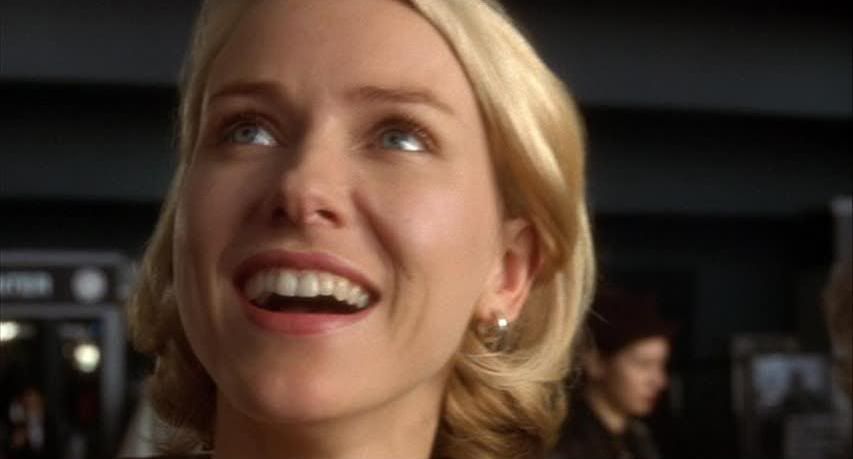
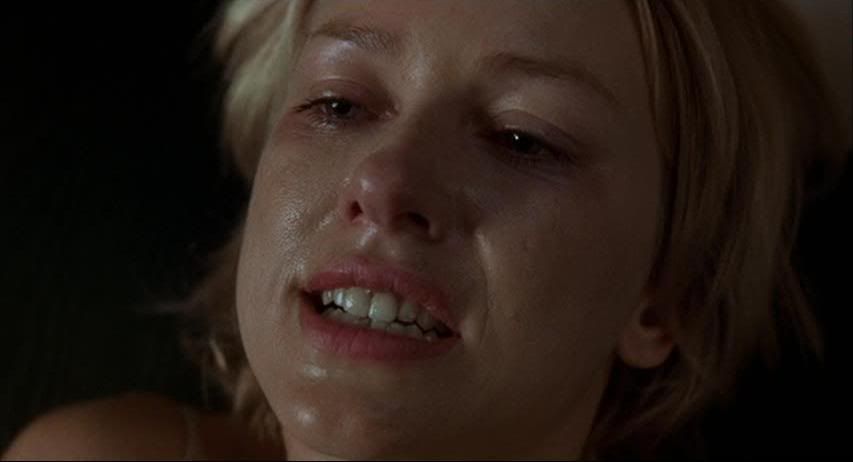
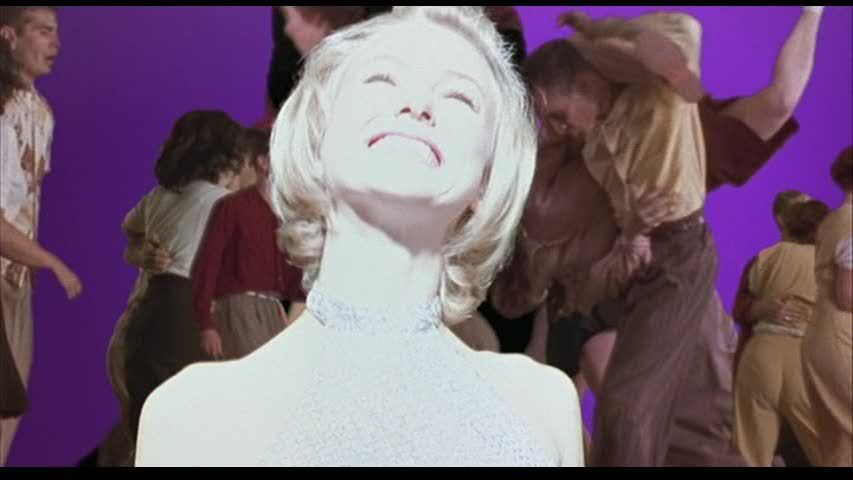
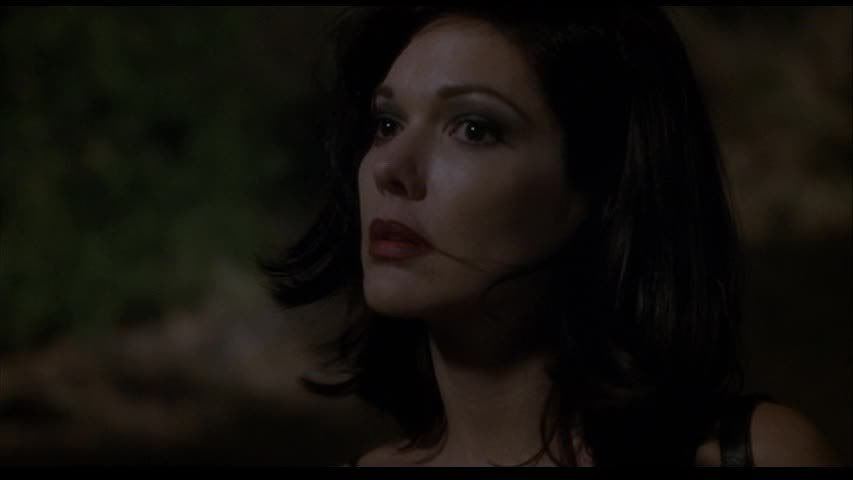
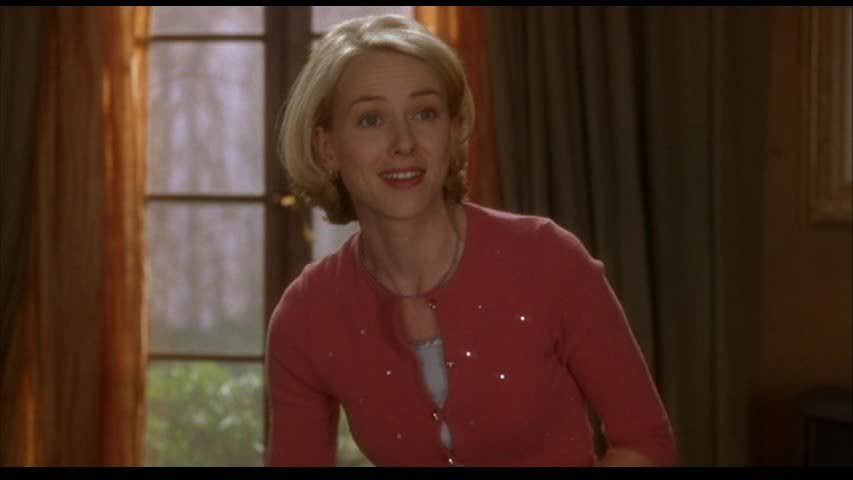
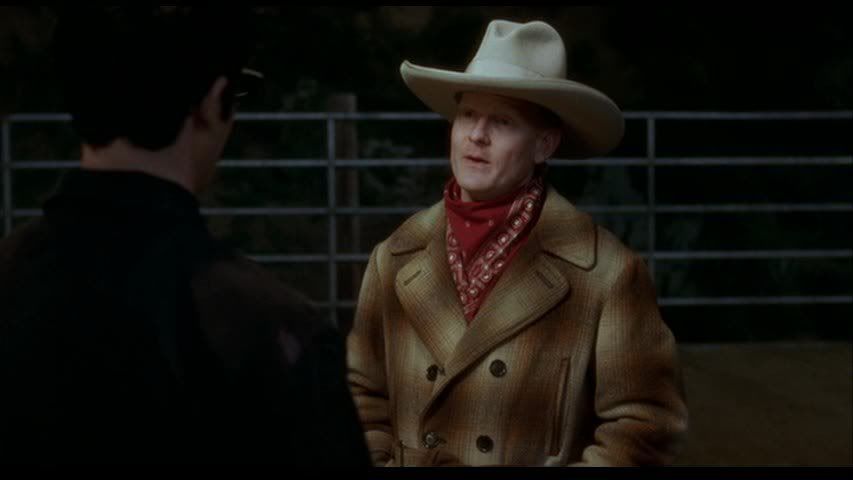
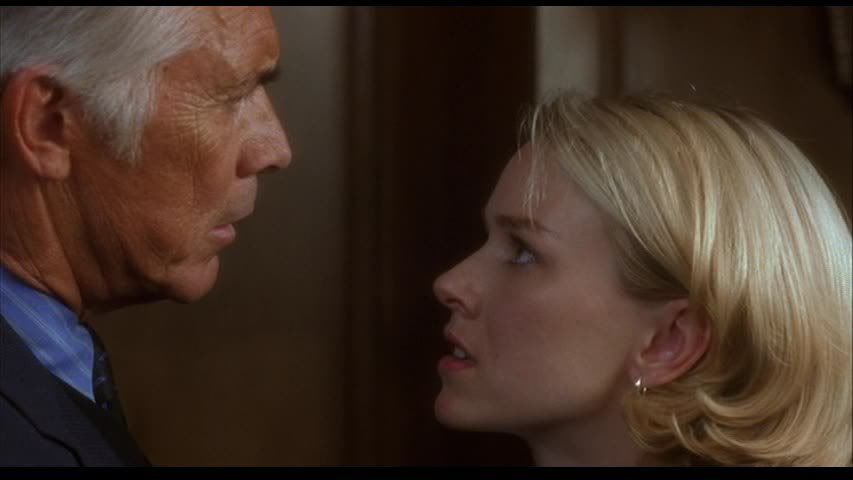
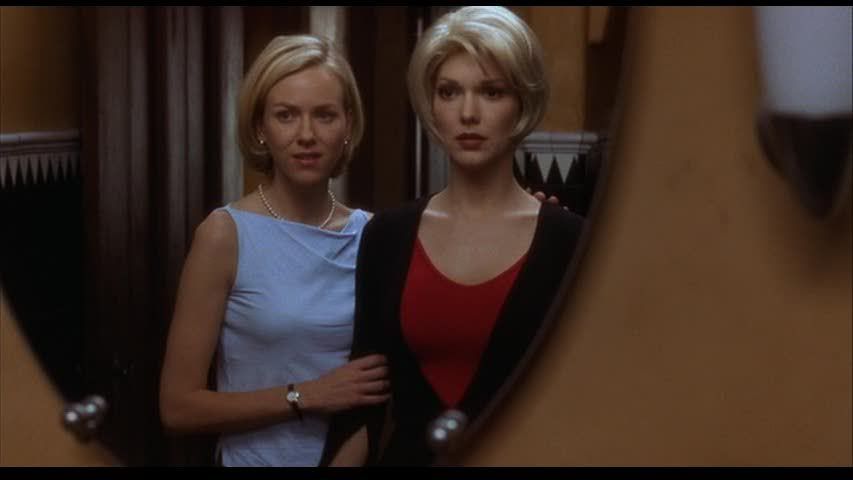
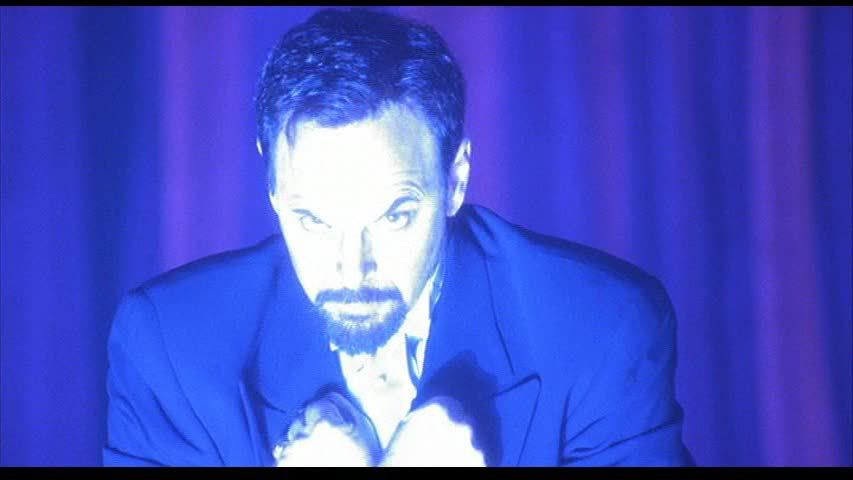
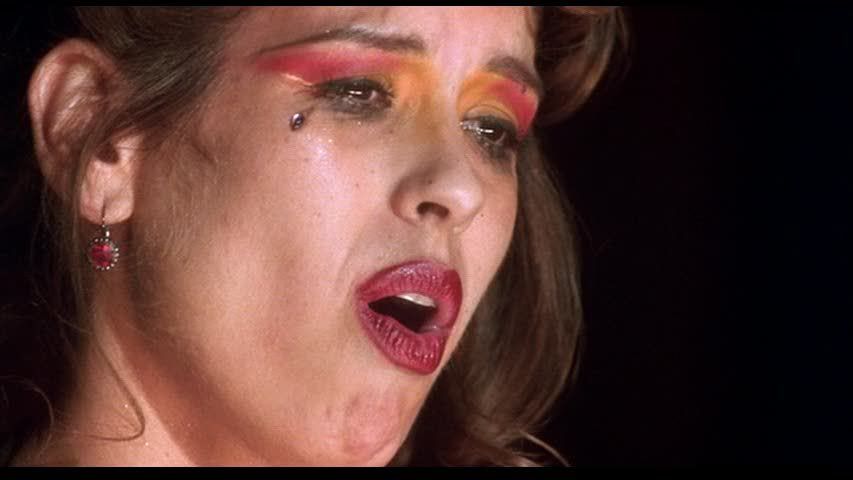
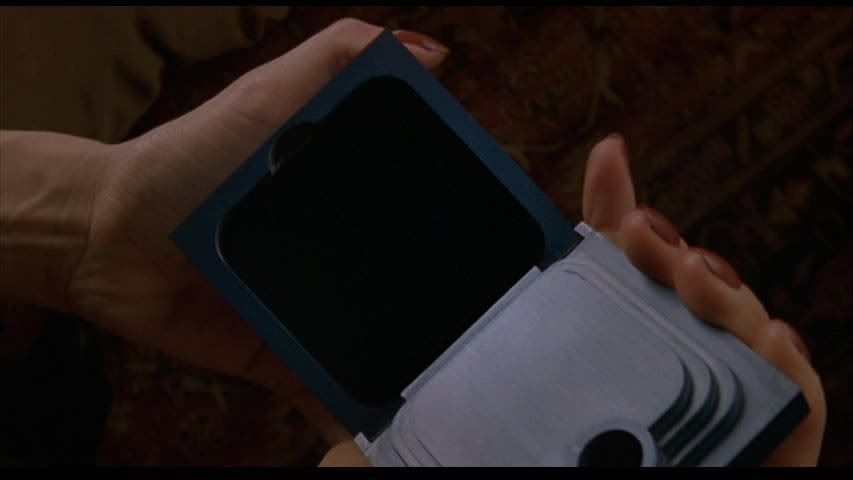
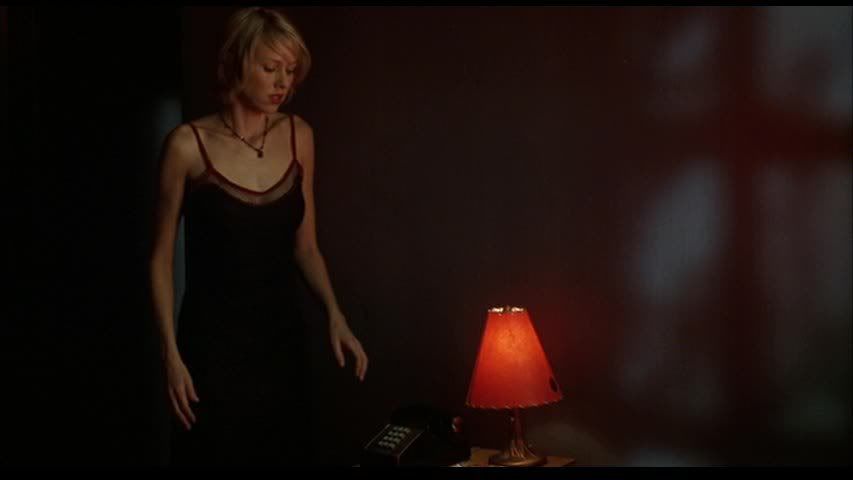
Mulholland Dr. is one of those films whose impact is so overwhelming for me that I hardly know where to begin when writing about it. When I walked outside after the first time I saw it, stepping out into a bright spring day, I felt disoriented, my entire way of looking at the world around me thoroughly, if temporarily, destabilized by the experience of this haunting, unsettling, deeply moving film. Referencing classic "double" films like Persona and Vertigo, David Lynch weaves an enigmatic tale of the cheery would-be actress Betty (Naomi Watts) and the amnesiac femme fatale Rita (Laura Elena Harding) — who later transform into Diane and Camilla, respectively. Before this happens though, Lynch blends together elements of film noir, shoot-em-up action, melodramatic romance, Westerns, mystery, slapstick comedy, exploitation pictures, and horror into a dense patchwork that's half Hollywood pastiche and half disorienting dream/nightmare. The Hollywood genre film, in all its myriad forms, is reborn with a twisted logic that allows scenes from very different genres to melt into one another — Hollywood's collective history reimagined as a feverish dream. It all spirals towards the awe-inspiring Club Silencio sequence, Lynch's masterpiece in miniature, a brilliant deconstruction of movie soundtracks and the "magic" of cinematic artifice. With this gesture, Lynch meditates on the profoundest mystery of the movies: how something we know to be "fake" and manufactured can nevertheless move us to our souls.