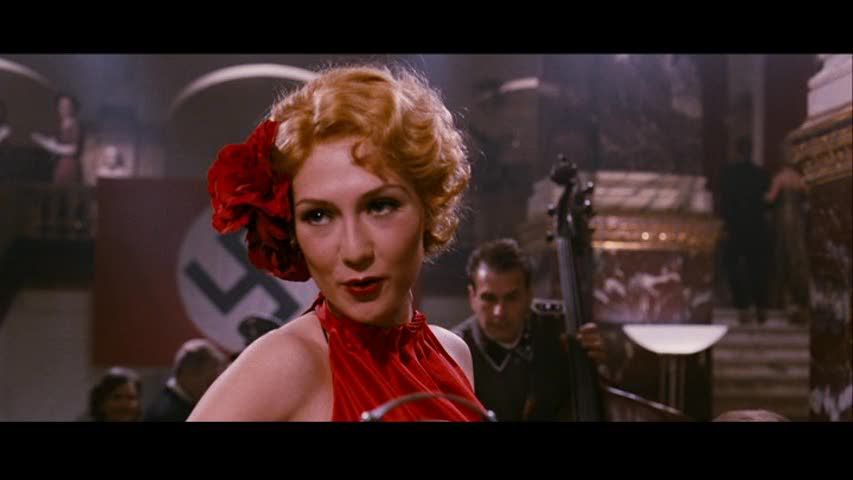
Showing posts with label 2006. Show all posts

Monday, April 15, 2013

Comedy of Power


Claude Chabrol's Comedy of Power is somewhat ironically titled, and knowingly so, because there's little that's funny about this deadpan chronicle of an investigation into the abuses of various politically connected businessmen and corrupt politicians. The film opens, disingenuously, with the usual disclaimer about the film's fictional nature, any resemblance to real people being a coincidence, and so on, when of course this film is thoroughly grounded in real world analogues. These corrupt businessmen are extremely recognizable from any number of real scandals, these men (always men, of course) who line their pockets, lavish company funds on their mistresses, funnel money off into foreign bank accounts, dodge taxes and bribe anyone who could potentially stand in their way.

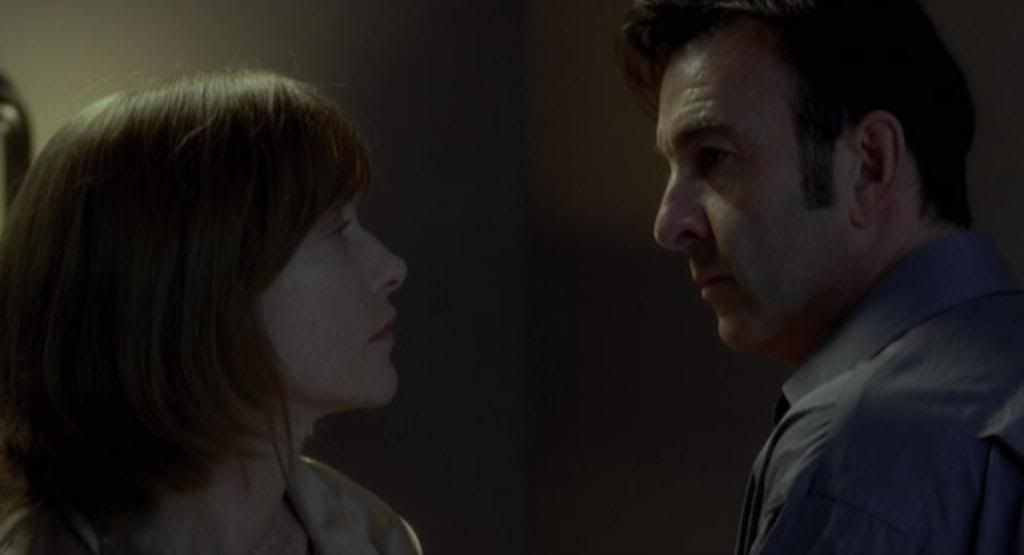
Investigating one of these scandals is Jeanne Charmant-Killman (Isabelle Huppert), a powerful judge who deposes various high-ranking corporate officers and political functionaries in an effort to trace a web of corruption and graft through the chambers of power, as high and as far as it goes. She starts with Humeau (François Berléand), the former chairman of a politically connected organization that operates in foreign countries, and she begins working up from him to more important figures in what seems to be a tremendous network of rich, powerful men. The film is very simple in form, consisting mostly of a series of conversations between Jeanne and her subjects, shot in intimate closeups that capture her brisk efficiency and their nervous, almost self-consciously boyish embarrassment at getting caught. Humeau is a mess, constantly scratching at his nervous skin condition, leaving splotchy red marks on his face as he withers under Jeanne's relentless questioning. Later, the smoother Boldi (Jean-François Balmer) confesses, chuckling shyly, that he's not used to squealing.


All these good old boys, these powerful men with their expensive lifestyles and mistresses and palatial homes, are being brought down and humbled by a petite, unassuming woman. As in many of Chabrol's late films, he's dealing with female archetypes and clichés: the victim (A Girl Cut In Two), the femme fatale (The Bridesmaid) and, here, the frigid career woman. Jeanne is a wiry bundle of nervous energy, seldom sleeping through the night, always getting up to check on some facts or think about her work. Her husband (Robin Renucci) is quietly detached from her, their marriage passionless. During interviews at work, she projects smug professionalism, asking sarcastically loaded questions and flashing quick, strained smiles that convey anything but mirth.

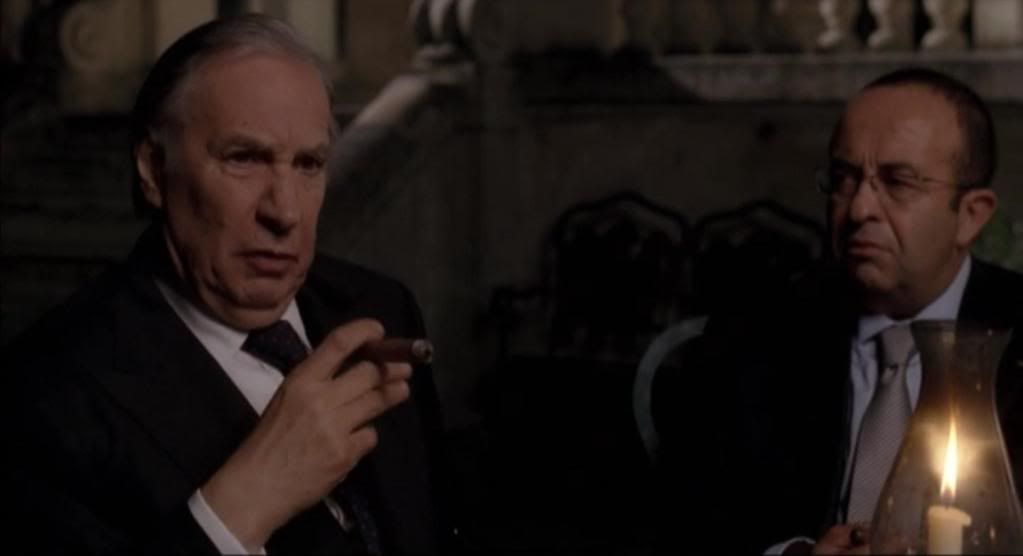
Jeanne is a bit of a stereotype, the cooly ambitious ladder-climbing bitch, but then the men she's opposing are every bit as stereotyped, because Chabrol is deconstructing this familiar male/female power dynamic, examining the ways in which male power is assumed and engrained in the very structure of society, while female power like Jeanne's is more ephemeral, requiring constant hard work to maintain, demanding every moment of her attention, and even then it can be taken away without warning at any time because she's not truly in power. The real power brokers meet in office suites with majestic views, smoking huge cigars, discussing their next move while Chabrol playfully accompanies their chats with outrageously sinister music, telegraphing their status as stereotypical big business movie villains.


Throughout the film, no matter how far Jeanne digs into these conspiracies and scandals, the business goes on as usual, the real powers untouched as the underlings and public figures take the fall and are seamlessly replaced by new, equally malleable figureheads. Towards the end of the film, these fat cats meet to analyze the damage done to their work by Jeanne's investigation and arrests, and they merely conclude, "the system held up well," that the overall structure remains intact no matter how many pawns are taken. Chabrol is powerfully conveying a sense of the fruitlessness of fighting against this kind of power from within: Jeanne dedicates her life to her work, to her sense of justice and her pride in her own competence, sacrificing private and familial happiness in the process, but what she ultimately accomplishes is a flashy show that does nothing to get to the core of the problem.

The real issue is international, and involves Western governments and businesses meddling in the Third World, as hinted at in the scene where several of these men meet with an African leader. Considering the real global stakes and the governmentally sanctioned exploitation of, as Jeanne says, countries where people routinely die of curable diseases, Jeanne's exposé of businessmen with mistresses and personal extravagances charged to corporate credit cards begins to seem petty and beside the point. If this is a "comedy of power," then the joke is on Jeanne, and it's probably being told in a smoke-filled private club by one of these untouchably powerful men.

Thursday, January 12, 2012

Paris, je t'aime


Paris je t'aime is an ambitious anthology film that compiles 18 short films by a multinational group of directors, each of them focused on Paris from many different angles. As is the nature with films like this, it's an uneven affair, packed with some bright spots, some total failures and a heaping portion of mediocre fare that passes by without leaving much of an impression one way or another. Perhaps even more than most other portmanteau films, this one suffers from the schizophrenic leaps from one short to the next, because there are just so damn many of them and as a result no director gets more than a few minutes to tell a simple story. Many of the best segments here work within those limitations, realizing that the best way to make something satisfying in such a short time is simply to craft a well-acted, cleverly written dialogue scene that stands alone, suggesting a larger untold story between the lines. A few directors attempt something more ambitious and a few take more experimental approaches, but most of the best work found here presents a self-contained, intimate single scene.

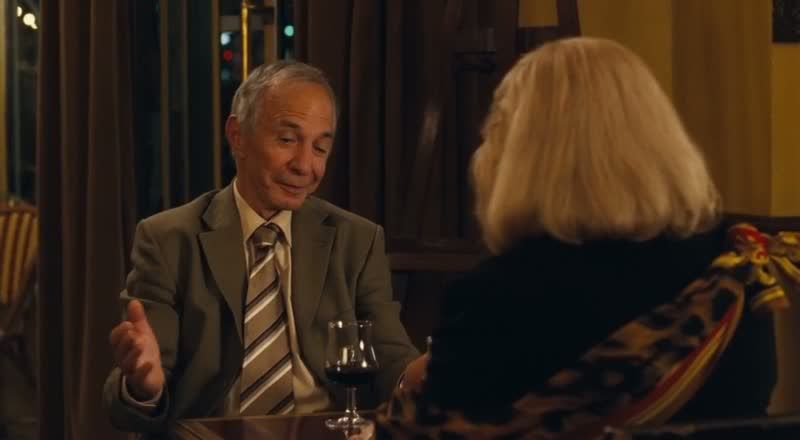
A good example is Frédéric Auburtin and Gérard Depardieu's Quartier Latin, which consists entirely of a conversation between a divorcing couple played by Gena Rowlands and Ben Gazzara. The segment gets by entirely on the charm of the actors, the casual way they trade gently barbed insults, smiling all the while, an affectionate older married couple who might even stay together if they weren't already so thoroughly on the path towards separate lives. The dialogue has a fizz and crackle that's especially well-suited to Rowlands' brassy bravado and razor-tongued wit, while fellow John Cassavetes veteran Gazzara radiates gravel-voiced aging machismo. It's a great piece that pays tribute to the two actors' careers and histories, providing an affectionate ode to the cinema of Cassavetes by casting two of his finest actors in roles that draw on their full, well-lived lives, on-screen and off. A similar tone inflects Richard LaGravenese's Pigalle, another showcase for and love letter to aging stars, in which Fanny Ardant and Bob Hoskins play an old showbiz couple who enjoy playing roles, acting out, talking through their troubled marriage in grand gestures, theatrical slaps and sexual gamesmanship. As in the Rowlands/Gazzara scene, this segment is at least in part about the stars themselves, their personae and their screen histories, and like Quartier Latin it's a charming, subtly funny piece with wit to spare.

That seems to be a key in this film, and the pieces that showcase witty writing and well-timed dialogue exchanges definitely stand out. Wes Craven, of all people, turns in a charming, low-key piece about an engaged couple whose relationship is salvaged by the intervention of the shade of Oscar Wilde (Alexander Payne). It's a slight little trifle, but it's redeemed by the pattering dialogue and the chemistry between the always delightful Emily Mortimer and Rufus Sewell. So many of the other segments aren't even this entertaining or memorable; where Craven offers a simple premise and a few smile-worthy lines, many other vignettes here are forgettable and bland. Walter Salles and Daniela Thomas' Loin du 16e is a stripped-down and nearly dialogue-free observation of a Hispanic maid dropping off her baby at daycare before going off to take care of a French woman's child. The irony is obvious, as is the parallel between the maid singing a sad lullaby first for her own child and then for the one she's taking care of, but it all just seems so slight and pat. A scene like this could be effective as part of a longer feature, a series of moments eventually accumulating emotional heft and context, but here it just feels like a disconnected sequence that abruptly cuts off.


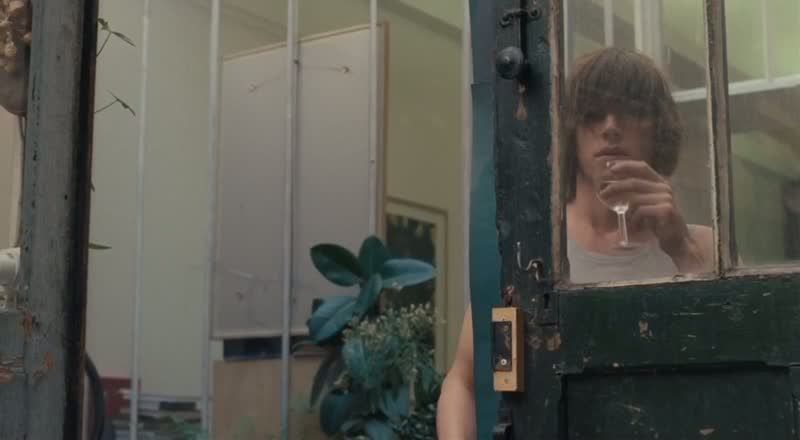
The same could be said for Gus Van Sant's short Le Marais, in which a man chatters in French to a quiet young man who, it turns out, doesn't understand French. Again, there's just not much to it. Van Sant's camera gracefully follows the nervously energetic tics and pulsations of the talkative guy coming on to the non-responsive guy he's just met, so it's visually elegant but doesn't lead anywhere. Van Sant's films, generally, accumulate weight through a succession of unshowy, casual scenes like this, but in isolation there's just not enough to it. Van Sant's meandering pacing and off-the-cuff aesthetics are poorly suited to this short of a time frame; he needs some canvas to stretch out on and here the scene just feels like a teaser for a fuller story that never comes.

Other shorts suffer, like the Salles/Thomas piece, for presenting some painfully unsubtle sociopolitical content. Gurinder Chadha's Quais de Seine is little more than a pat message about tolerance in which a young boy breaks away from his friends — who are shouting crude come-ons to passing women — to help a young Muslim girl who's stumbled in the street. Everyone else just laughs, and his friends later make nasty and stereotypical remarks about Muslims, but he is kind to her and earns the beautiful girl's friendship. A very touching lesson, for sure, but the seams are so obvious it might as well be an after-school special. Meanwhile, Christopher Doyle's baffling Porte de Choisy seems to have a similar policy of ethnic tolerance at its core — this time suggesting that Asians should avoid Westernizing their appearances and embrace their own cultural ideals of beauty — but it's hard to tell because the film is just so daft and wacky. The colorful, lively style that cinematographer Doyle has always brought to the films of Wong Kar Wai is apparent here, but the bargain-basement surrealism is far removed from Wong's much more assured aesthetics. Doyle engages directly with Western stereotypes about Asia by splattering the screen with kung-fu moves, eerily grinning beauty pageant contestants, Buddhist monks, busty girls in military uniforms, and Hawaiian hula dancers. It's hard to know what to make of this garish, confounding stew of clichés and avant-garde disjunctions, but it certainly stands out from the rest of the film, for good or ill.

Indeed, several of these pieces stand out by digressing from reality, usually not to the most inspiring effect. Vincenzo Natali's Quartier de la Madeleine is a wince-inducing silent vampire story filmed in a grayscale monochrome with bright red "blood" that's obviously just paint. Olga Kurylenko plays a vampiress who falls in love with wide-eyed Elijah Wood, and turns him into a vampire so they can gleefully feed on each other's necks, at which point the short ends with a heart-shaped iris-in. It's a bland piece made worse by its aesthetically tone-deaf blending of silent film homage with a slick, glossy visual style that makes the leads look like they're made of plastic. Also distractingly bad is Sylvain Chomet's short about a mime who is snubbed everywhere until he meets a female mime to share his antics with. The attempts at charm and whimsy seem forced, especially in the framing device in which the mime couple's chatty son introduces the story of how his parents met.

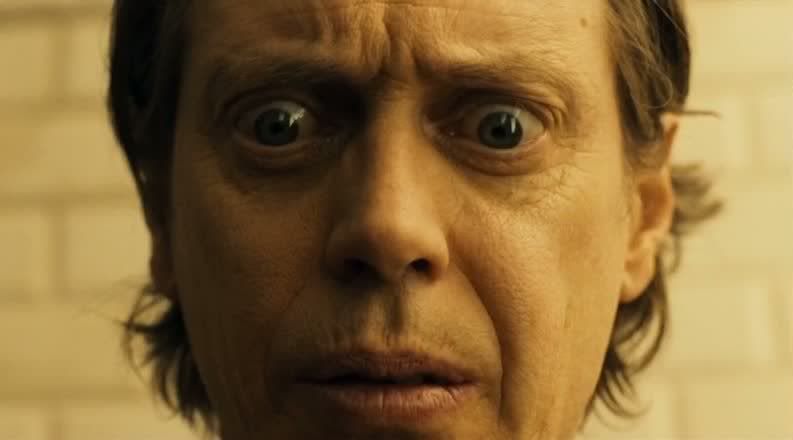
Other segments are diverting, with minor pleasures but nothing more substantial. The Coen brothers' decision to base their Tuileries around the face of Steve Buscemi is a brilliant comic choice, as the actor broadly mimes his reactions to a passionate French couple who include him in their tumultuous, violent way of teasing each other. Buscemi's bug-eyed mugging is always a pleasure to watch, and the Coens structure the sequence around his silent incomprehension of French, keeping the American actor silent while the French couple yells and chatters at him. The broad comedy of it works, and the aesthetics suggest that Buscemi's character is a silent movie hero in a sound world, telegraphing his confusion and frustration entirely through the expressions on his malleable face. Alfonso Cuarón offers up an even more rarefied pleasure: the gritty joy of hearing Nick Nolte speak. The actor's raspy drone is the real star of Cuarón's basic little short, which consists almost entirely of a tracking shot along a street as Nolte's character has a conversation with a younger woman (Ludivine Sagnier). Cuarón keeps the camera at such a distance, tracking along on the opposite side of the street from the actors, that the aural component has to drive the short, and Nolte's distinctive voice would make it obvious that it was him even if he wasn't onscreen at all. The short's conceit is too cutesy by far, keeping the relationship between the two people ambiguous through vague dialogue, and the lame little "twist" at the end is eye-roll-inducing, but Nolte and Sagnier's largely verbal and enjoyable performances prevent it from being a total loss.


One of the better shorts, unsurprisingly, comes from Olivier Assayas, whose Quartier des Enfants Rouges plays out like an excerpt from one of his features, a deleted scene, but somehow avoids feeling as incomplete or insubstantial as the similarly truncated Van Sant sequence. Assayas focuses on an American actress (Maggie Gyllenhaal) in Paris to shoot a costume drama, buying drugs and feeling a brief flicker of romantic feeling for her dealer. It's a simple piece that, typical of Assayas, is all about mood, and it gets across a wealth of feeling in its economical few minutes. So many of the usual Assayas tropes are there — the cluttered and drug-hazed parties, the hesitant connections and uneasy communication, the movie business milieu that makes this seem like a lost Irma Vep outtake — and it's a beautiful, affecting little short. Assayas' love of actresses carries over to his affectionate, sympathetic filming of Gyllenhaal, who turns in a subtle, quiet performance largely without dialogue, portraying a woman trying hard to have fun in a foreign land, but feeling lonely and craving some connection that she can't quite express.

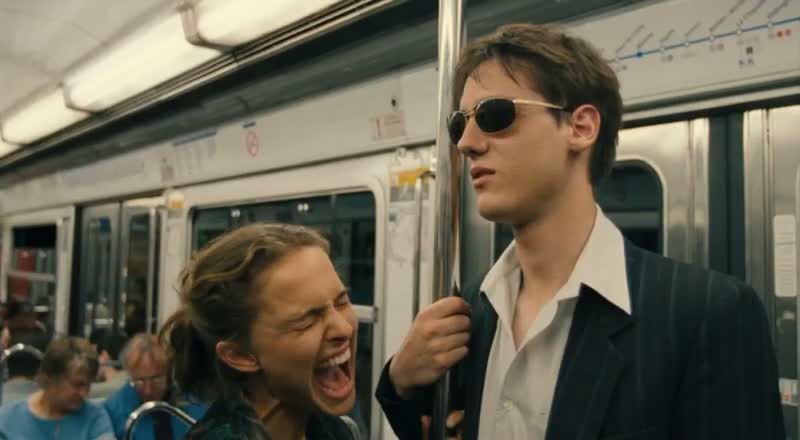
Tom Tykwer arguably takes the most ambitious approach out of any of the featured directors. His Faubourg Saint-Denis is about a blind young man (Melchior Beslon) who receives a phone call from his girlfriend (Natalie Portman) in which she seems to be breaking up with him. As a result, he flashes back through a sped-up summary of the entire history of their relationship, starting with their first meeting and then gradually speeding up to touch on significant moments in the rush of routine. A breathless voiceover recounts the ways in which their relationship gradually settles into familiar patterns, and the writing of this narration cleverly uses repetition and the gradually increasing frequency of certain words to suggest the shifts in their relationship. By the end, words that had appeared only occasionally in the voiceover come to dominate it, suggesting just how much this relationship has changed, mostly for the worse, over its course. From intimacy and excitement the mood changes to alienation and fragmentation, simply by altering the balance of how often certain events recur and the context in which they occur. The girl's screams chart the course of the relationship. They meet because she's screaming, rehearsing a part in a play, and early in the relationship he's charmed by her screams, by her playful habit of yelling on a subway or a shouted orgasm. Later, screaming signifies arguing, slamming doors, angry words, shifts into negativity. Tykwer defies his short allotted time by cramming the whole length of a relationship into this scant length, condensing this romance into key words and key events, providing a formalist breakdown of a possibly evaporating love. It's an affecting and aesthetically bracing piece, and Tykwer is one of the few directors here to really do something interesting with the short form beyond staging a quick little scene and getting out.


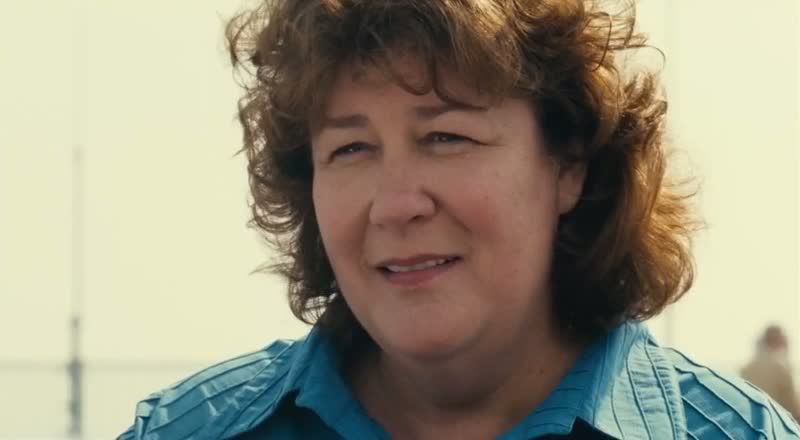
Alexander Payne's 14e arrondissement is also quite interesting, and very typical of Payne's unflinching observation of lonely or emotionally troubled people. It's the story of a middle-aged American postwoman (Margo Martindale) abroad in Paris for a vacation by herself. The short is narrated in this woman's awkwardly accented, faltering French, and it's a rather heartbreaking portrait of someone who's alone in the world but doesn't give in to despair, instead finding pleasure in exploring a foreign place by herself. There are signs of that condescension and nastiness that sometimes creep into Payne's treatment of middle American characters like this, as in the cheap shot where Payne cuts to an image of a greasy fast food burger in response to the narrator's disappointment that French food isn't as good as she'd expected. Surprisingly, that's one of the only moments where Payne takes that kind of mocking oh-those-silly-Americans tone. For the most part, Payne's perspective on this character is empathetic and warm, and the short (which is wisely sequenced last in Paris je t'aime) ends with a sweet moment in which the woman looks from children playing to lovers kissing to an elderly couple talking, as though seeing the entirety of a human life spread out across the lawn of a Parisian park.

Many of the other pieces here are just trite and forgettable. Nobuhiro Suwa wastes the excellent Juliette Binoche in a lame attempt to tug at heartstrings with a story of a mother grieving for her dead son. She runs into the street and encounters a cowboy — Willem Dafoe, channeling the infamous cowboy of David Lynch's Mulholland Dr. — who briefly reunites her with her son. It's pointless surrealism and pointless maudlin tripe, especially since it ends with the woman rapturously telling her husband that God has given her strength. Huh? God's a cowboy? I guess? Bruno Podalydès' Montmartre is just inoffensive and boring in comparison, a meet-cute in which a lonely man romances a woman who faints by his car. Oliver Schmitz's segment similarly suffers from its bland premise, in which a female paramedic cares for a man who's been stabbed, while flashbacks show that the events that led to this moment include the man's romantic obsession with the paramedic, who he'd pursued ever since randomly running into her in a parking garage some time before. It's an O. Henry-esque bit of irony that hardly seems earned by these inconsequential, ill-defined characters. In Bastille, Isabel Coixet uses voiceover narration to tell the compressed story of a man who is about to leave his wife until he learns that she is dying, at which point he devotes himself to her anew and falls in love all over again. The voiceover essentially provides a summary of what might have been an interesting movie if it had actually played out with some detail, some real scenes and real characters. As is, it's like a pitch for a movie rather than an actual story in itself.

As a whole, Paris je t'aime is unfortunately weighted down by more chaff than wheat. With so many shorts at just a few minutes each, more than a few of these segments feel like they required more room to stretch out and really develop something. (On the other hand, a few others are so slight they could barely sustain thirty seconds.) There are some real gems here and some other shorts that have their moments, but these sparks of vitality and interest are all too often overwhelmed by the many shorts that are barely remembered three segments later, let alone after the movie ends. All anthology films are flawed almost by necessity, and Paris je t'aime proves that the more fractured a portmanteau film is, the more different visions it attempts to cram into one container, the less satisfying it is in the end.

Monday, April 26, 2010

The Host


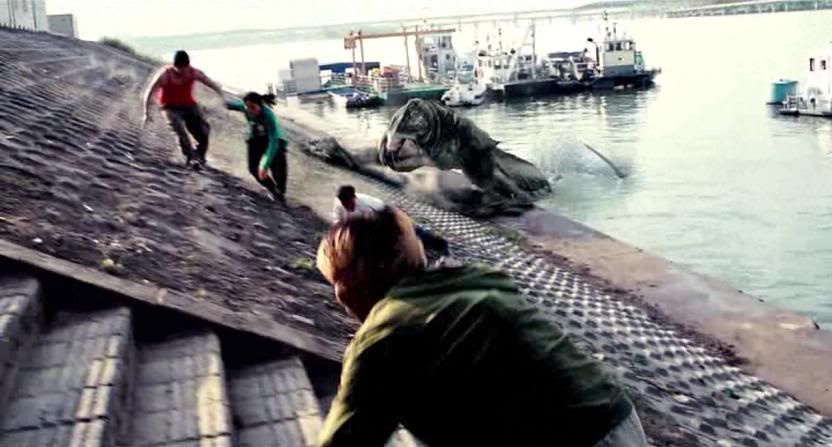
Joon-ho Bong's The Host is a delirious modern monster movie, a throwback to the classic era of the sci-fi monster: all those nakedly metaphorical beasts formed from radiation or other side effects of man's scientific progress. And much like the classic Japanese monster movies, this Korean film is aimed squarely at the fear and anger caused by a foreign target: the United States. The film opens with an awkwardly acted scene in English, in which an American researcher instructs his Korean assistant to pour a shelf of chemical bottles down the drain, despite the assistant's protestations that this will cause harm to the Han River. Cut to a few years later, and something odd is definitely going on in the river as a result. Bong's unveiling of the monster — a mutated, somewhat lame sea creature with numerous vestigial limbs and a massive, terrifying maw — is the film's best sequence, a frantic action set piece that's both absurd and terrifying.

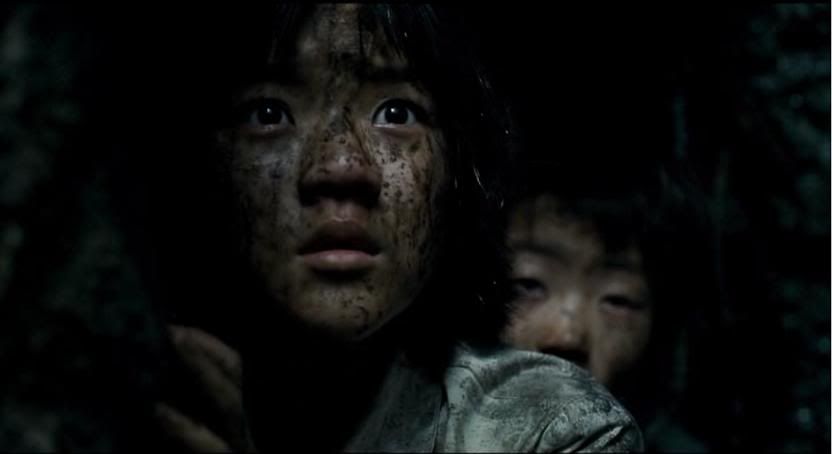
The monster appears abruptly, but before it does, it's just an ordinary day at a riverside park where Hie-bong (Hie-bong Byeon) runs a snack stand with his lazy, distracted son Gang-du (Kang-ho Song). Bong takes his time setting up the family dynamic here, because it's this family that's going to be at the center of the film once the monster does appear. Hie-bong has two children in addition to Gang-du: his educated but unemployed son Nam-il (Hae-il Park) and his athlete daughter Nam-joo (Du-na Bae), a professional archer who's just shy of being the best. When the monster shows up, Hie-bong, Gang-du, and Gang-du's daughter Hyun-seo (Ah-sung Ko) are watching Nam-joo lose a tournament on TV. Bong's presentation of the monster, interrupting this low-key domestic drama with its touches of comedy, is disarmingly offhand. The creature is an obvious CGI construction, with no attempt made to make it fit in naturally as an organic component of this otherwise realistic world: it stands out as something totally different, all glossy, slippery surfaces and distracting artificiality. As it rampages through the crowds gathered on the riverside, gobbling up some of the crowd and tossing others into the water with a flick of its tail, it is frightening and hilarious in nearly equal measures, this oddball CGI monster stalking across the riverbank as people scream and run. The artificiality of it all just makes it all the more disconcerting, especially since Bong approaches it with a goofy sense of humor, relishing the way limbs hang out of the monster's mouth after it eats up a victim, or the way the creature stumbles and somersaults down an embankment, moving awkwardly on its deformed limbs.

The human actors are, in their own way, equally stylized and artificial. They approach their parts with a broad comedic, satirical sensibility, purposefully over-emoting at every opportunity. A demonstration of grief, following the monster's assault, is a particularly good example, balanced as it is between devastating sadness and ludicrous exaggeration. The family rolls around on the floor, screaming and wrestling with one another, tearing at each other in grief and rage, and Bong switches to an overhead shot that shows them stretched out there on the ground, overcome by their feelings, expressing their loss in this embarrassingly naked way. Later, Bong's moments of political commentary are just as unfettered and raw; the film is a pretty clever, if not particularly subtle, jab at American dominance of international affairs, and the media's complicity in this dominance. Here, the Americans created the monster through their blatant lack of concern for the environment (especially the environments of the other countries they visit for cheap labor), then they invent the scare that the monster is causing a deadly disease, and then they insert themselves into the affair by offering a radical "solution" in the form of something called "Agent Yellow," a likely dangerous and carcinogenic chemical that they plan to unleash in Korea to kill the monster.


The film's guiding political concept is the idea that American foreign policy is exploitative and misguided, that the Americans oafishly cause problems and then make things even worse in trying to solve them. In this case, the terror over the supposed disease — which seems to have been made up through a combination of incompetence and a desire to cover up mistakes — creates an artificial panic that then allows the Americans to come in with a typically over-the-top, violent solution. Moreover, the Americans are deaf to concerns from other countries. In one of the film's most satirically biting scenes, Gang-du is confronted by an American doctor who takes Gang-du's insistence that his daughter is alive somewhere, imprisoned by the monster, as evidence of dementia, a sign that the disease (which he's starting to believe is fake, anyway) has taken over his brain. Gang-du cries out, in anguish, that they never listen to him, that they keep interrupting him and not letting him speak: "my words are words, too," he cries. It might as well be the filmmaker speaking, on behalf of all foreign peoples whose interests and concerns are trampled over by an intrusive, profit-motivated, military-industrial America.

Although this makes The Host sound like an unsubtle political screed, there's much more to the film than that, and the politics are approached with the same spirit of exaggeration and stylization as everything else in the film. Bong mashes together various tones and ideas with abandon, never settling into any one mode for long. The film's broad physical comedy, political satire, horror and action thus rub uncomfortably against one another, creating interesting frictions as multiple modes can coexist even within a single scene. It's all leading towards an action-packed climax in which this family, so divided and unhappy with each other, finally comes together, each of them adding their specific skills and qualities to the final confrontation with the monster. It gets to the heart of the film's implicit message: rely on family and community, ignoring the distractions and manipulations of politics. In the final scene, they turn off the TV, shutting down the American politicians using buzz words and euphemisms to absolve themselves of responsibility, and focus on enjoying the simple pleasures of family instead. It's a hard road to get to this point, though, through a lot of blood and gore.

It's a wild ride for the audience, too, thrown through the paces by Bong's free-wheeling sensibility of genre mash-ups. There are stunning action sequences, silly comedic bits with lots of slapstick falls and awkward chase scenes, moments of quiet family drama during the uncharacteristic pauses in the action, and of course the horror of the monster, who shows up every once in a while as though to remind the viewer what kind of movie this is at heart, no matter how many diversions into socio-political satire or absurdist comedy it takes along the way. The monster's most horrifying moment comes late in the film, when it suddenly stops simply slurping up victims and then spitting them out more or less intact in its sewer hideout. Instead, it vomits up a torrent of skulls and bones, the remains of its most recent victims, a seemingly never-ending stream of bodies denuded of all signs of flesh. It's all the more bracing and terrifying because Bong had avoided making the monster too bloodthirsty in the earlier stretches of the film.

In fact, there's something graceful about the monster, something even kind of poignant. It often swings through the girders beneath the bridge where it hides, doing gymnastic flips and swinging by its tail, gracefully leaping from one beam to the next. In one scene, its tail appears before it does, lazily turning in spiral patterns, strangely beautiful and hypnotic until the ungainly monster, all vicious-looking teeth and claws, comes careening out of the darkness. Even the monster's ultimate end is somewhat sad, as the creatures twists about in agony, wracked with pain, letting out a haunting cry as it turns on its back. This moment represents the ultimate victory of the family over its terror, but it's at the expense of this poor creature, deformed and mutated by circumstances beyond its control, transformed from an ordinary innocent sea creature into this monstrosity. Bong allows this ambiguity, this discomfiting affection for the monster, to linger throughout the final moments, preventing the obligatory defeat of the creature from being as entirely triumphant as one would expect.

Monday, March 8, 2010

Syndromes and a Century


Apichatpong Weerasethakul's Syndromes and a Century is a remarkable, mysterious work, a film that's constantly slipping away from the viewer. It's a warm, disarmingly playful mood piece, as ephemeral and sensual as wisps of smoke swirling around the black hole of a vent: a strangely eerie image that Weerasethakul spends several long moments lingering over towards the film's slippery, abstract denouement. But it takes a digressive, wayward journey to get to that sinister image of deep blackness swallowing up white fog. The film opens straightforwardly enough, in a hospital office where Dr. Toey (Nantarat Sawaddikul) is interviewing a new doctor, Nohng (Jaruchai Iamaram), who's come to the hospital from a stint in the army. She asks him a number of questions, some of them conventional and some of them more abstract and conceptual; their conversation seems to be a mix of an employment interview, a psychological evaluation and a whimsical series of non-sequiturs. Throughout most of the interview, Weerasethakul keeps the camera trained in a long, static shot on Nohng's face as he reacts with varying degrees of curiosity and puzzlement to these strange questions. At the end of the interview, a hospital orderly comes to fetch Nohng and Toey, and as the doctors walk outside, the camera pans away from them towards an open, grassy field, which Weerasethakul frames in a static shot as the opening credits roll and the doctors' conversation continues offscreen. This scene introduces a subtle disjunction between audio and video as the doctors move away from this field, going about their rounds, without the audio fading away or cutting off. It is as though Weerasethakul is subverting the narrative stability of the opening scenes, suggesting that something more is going on beneath the surface, that all is not as it seems — he drops a further clue as, towards the end of this offscreen conversation, the doctors stutter to a surreal, confused halt in what seems to be a metafictional acknowledgment that these are actors playing doctors.

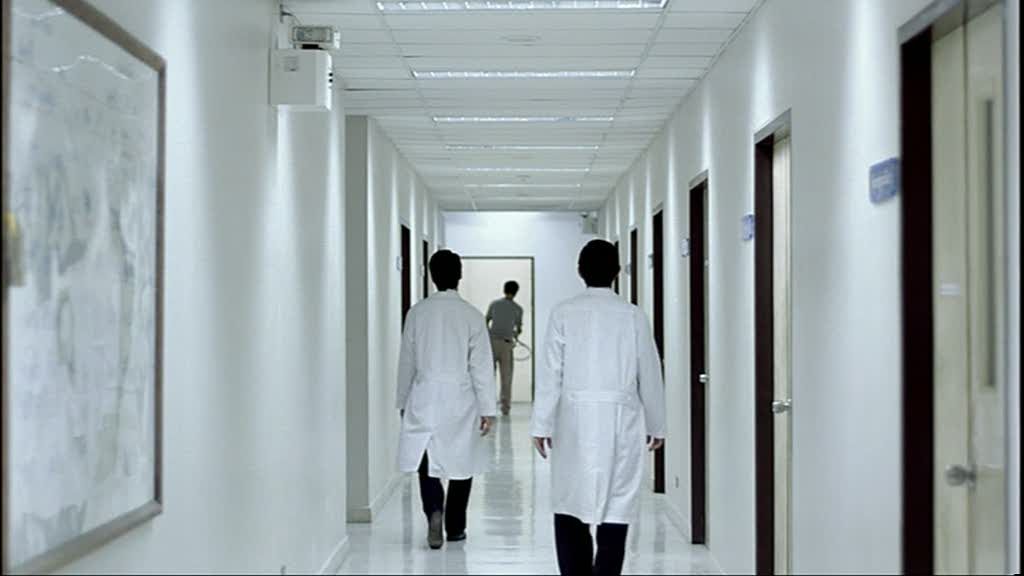
This opening, so destabilizing, by turns weirdly humorous and haunting, establishes the dominant mode of Weerasethakul's film, in which he's constantly toying with narrative cohesion only to pull back into moody diversions and puzzling interjections. Even so, there is a hint of a story running through the first half of the film. Toey is pursued by an admirer, who had been waiting for her throughout the opening sequence and who haunts her during her rounds, watching her from a distance and confessing his love to her. Nohng, meanwhile, adjusts to his new life in the hospital, and a dentist, Ple (Arkanae Cherkam) grows fascinated with a young monk named Sakda (Sakda Kaewbuadee). These disconnected stories and hints of stories weave through the film, at least until the halfway point introduces an even more disorienting disjunction: the opening scenes play out a second time, with slightly altered lines and situations, in a new context, an ultramodern hospital with clean, bright white corridors and antiseptic working conditions. If the first half centers roughly around Toey, the second half concerns itself more with Nohng, but otherwise the relationship between the two halves of the film is ambiguous. Perhaps one is the not-so-distant past (references to Star Wars possibly date it to the 80s) and one the not-so-distant future, or else they are both the present, representing the gaps in technology that coexist within modernity, or else they are alternate perspectives on the same set of characters, living the same stories over and over again with only minor tweaks.


There is a wonderful sense of ambiguity running through this film, as Weerasethakul simply strings together an elliptical series of events, anecdotes and moments, never drawing any firm lines connecting them to one another. It's a series of stories and non-stories, of moments both profound and prosaic: a monk playing the guitar, doctors drinking booze from a bottle hidden within a prosthetic leg, a solar eclipse, a picnic in the country, two lovers kissing by a window and, in the enigmatic finale, a large crowd exercising to the beat of an exuberant pop tune. It all fits together without quite forming a cohesive whole. The film is full of loose ends and lingering mysteries, characters who drift into the film for a few scenes only to disappear again.

An old monk (Sin Kaewpakpin) appears twice, once in the first half and once in the second, and each time tells a story about being haunted by dreams of chickens and falling out of bed as a result. But the subtle differences in the man's mood as he tells this story dictate the thematic throughline of his character (or characters): the first time he tells the story he is genuinely convinced that chickens are haunting him as a result of childhood cruelty towards the birds, and that they wanted revenge, while the second time he laughs the incident off as merely a dream. Linking these two perspectives is the chasm between superstition and rationality, between genuine belief in the supernatural and the mere recounting of it as folklore and legend. Is this, then, the true difference between past and present, between the country hospital depicted in the first half and the ultramodern facility in the second half, which seems to have been built atop the dilapidated earlier building?

It's unclear, but this conflict between tradition and modernity weaves through the film in sometimes surprising ways. In one scene, Ple is performing a dental exam on Sakda, and the two begin talking. The young monk confesses that he doesn't really want to be a monk but feels trapped in it, drawn to it by forces he doesn't understand. He'd really wanted to be a radio DJ or a comic book store owner, he says, and he loves "modern music," while the dentist is a bit of a pop singer himself in his off-hours. He begins singing for the monk, prompting the patient to ask if this is an exam or a concert. Who knows, and who cares? It's probably both, just as Weerasethakul's film vacillates between memory, abstract tone poem and narrative drama.


Later, banners billow in sinuous sine wave patterns in the wind above a stage as a Ple and his guitarist perform before a carnival audience. It's a wonderful moment, bathed in cool nighttime colors, subdued neon hues wafting through the night, as the song, an aching love ballad, drifts above the twang of the guitar. After the concert, Ple meets up with Sakda and gives him his newest CD, telling him, "Normally I only sing about teeth and gums, but this album is all love songs." It's like the set-up for an obscure joke: what does the dentist/pop singer say to the monk? And the punchline is as sublime as it is unexpected. One pictures it as a New Yorker-style gag cartoon, the monk and the dentist standing together by a balcony in a garden, the night alive with insect chirps all around them, and this deadpan caption set off against the poetry of the scene. The humor in this film is rich and often startling, burbling up from out of the framework of conversations that seem serious and poignant one moment, absurdly hilarious the next — Sakda and Ple transition from speaking about reincarnation and Ple's dead brother to this deadpan punchline. Even better, the line casts new light on the song Ple had been singing earlier, which is indeed a love ballad but which contained a line that seems puzzling and weird at first — a tribute to a girl's shining white teeth — but that makes sense once one realizes that the lyricist is a dentist, who can't help but return to his favored material even in the context of a love song.

The unlikely friendship between the dentist and the monk provides one possibility for the thematic implications of the film's halved structure. While the pair form a connection during a dental exam in the first half of the film, when this scene plays out again in the second half, it's in an antiseptic, blindingly white operating room, surrounded by rows of identical cubicals, with a nurse assisting the doctor. Patient and doctor don't talk here, except in laconic phrases about the mechanics of the exam itself. The gap between these two scenes suggests that the advances of modernity are fostering disconnection and increasing the distance between people, making it more difficult to form the kinds of human bridges that might allow a doctor and his patient to bond over pop music. Even so, Weerasethakul isn't making some simplistic point about the alienating effects of technology; this is simply one thread, and it is counterbalanced by the scenes in the second half between Nohng and a young patient he takes an interest in and tries to connect with.


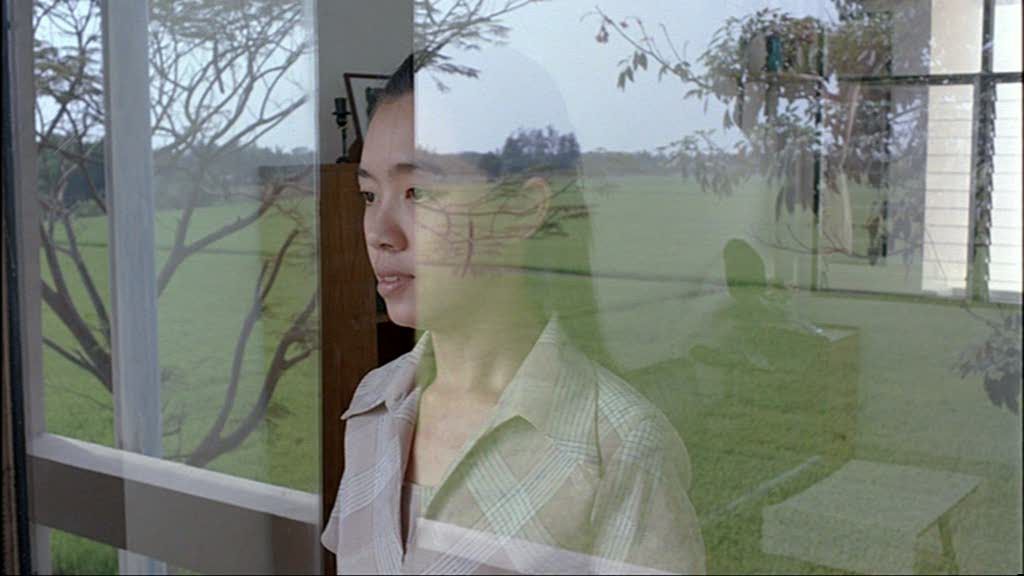
Of course, the most potent form of connection shown in the film is the lure of sexuality, which remains a barely articulated undercurrent until a late scene between Nohng and his girlfriend, where they stand by a window and kiss, then talk about him relocating with her, then kiss some more. The scene ends with Nohng laughing with embarrassment as he adjusts his erection in his pants, a moment of frank sexuality that startlingly brings sex to the forefront, if only for a second. Such pleasures are fleeting — the couple's situation is obviously precarious and they seem on the verge of a breakup — but no less real. This is indicative of Weerasethakul's method in general: he allows themes and moments to emerge organically, presented for their own sake rather than as components in a tightly knit narrative framework.

At one point, when Toey is pursued by her admirer, she distracts him from his anguished declarations of love by telling a lengthy story about an orchid grower (Sophon Pukanok) she meets in a market, and her subsequent unarticulated desire for this other man. This anecdote rambles along without resolution; it begins as a story she's telling to a new suitor, but then it drifts off into its own place, expanding into a sensual depiction of an afternoon spent at the farmer's country home. This story is interrupted once by the intrusion of the present-day scene, but after that it ceases to be a flashback and takes on a reality of its own, as though it is not a memory but something happening to Toey in real-time. Weerasethakul never resolves either the story of the orchid-grower or the story of the other admirer; the flashback cuts off after the farmer obliquely tries to tell Toey that he loves her.

This meandering approach to storytelling serves Weerasethakul well. Syndromes and a Century is a rich, lively film, packed with moments of sensuality, grace and beauty. When the spirit moves him, Weerasethakul will pause to observe a solar eclipse, or the pale blue of the sky as seen through a web of tree branches, or a dragonfly briefly alighting on the rippling surface of a pond, a magical moment caught almost accidentally within the camera's view and stitched into the film for its inherent beauty and mystery rather than for any import it might have for the characters or stories Weerasethakul is elliptically telling. This openness inflects every frame of this film, which is very much alive with possibility; the narrative itself seems to be constantly branching off, suggesting the potential to follow multiple paths, to see the same scenes from multiple perspectives. It's a film, also, about the possibilities of human connection, about feeling empathy for others, about wanting to heal pains both physical and emotional. It is, above all, a beautiful and moving film, a nearly overwhelming cinematic experience that is dense with ideas and with suggestive imagery.

Monday, February 8, 2010

Notes On Marie Menken

[This is part of a series of posts in which I explore the work of the Austrian DVD label Index DVD. This company has released a great deal of valuable European experimental cinema onto DVD, naturally focusing on the Austrian underground but occasionally branching out as well. Index's DVDs are distributed in the US by Erstwhile Records, so anyone intrigued by Index's catalog should take a look and support the fine work both these companies are doing for obscure and avant-garde cinema. I have also reviewed some of the short films included as extras on this disc, here and here.]


Marie Menken's importance to the early American cinematic avant-garde is often forgotten today. She was an abstract painter, a filmmaker, an inspiration to Jonas Mekas and Stan Brakhage, an important figure on the fringes of Andy Warhol's large entourage, appearing in his films and documenting some of the Warhol group's activities. Martina Kudlácek's documentary Notes on Marie Menken probes this rich legacy, examining Menken's life and art through her films and the memories of those who knew her. Menken was a very diaristic filmmaker, crafting small, nearly incidental works of observation and prosaic activity, chronicling the day-to-day and the ordinary with a sensibility that discovered surprise and beauty in such conventional sights as a flower garden, a sparkle of light off a shiny object, a person's face. Kudlácek pays tribute to this sensibility by making her own film a reflection of, a response to, Menken's own methods. In sensuous black and white images, Kudlácek interviews those who knew Menken: Mekas, Kenneth Anger, to whom Menken dedicated a film, Warhol assistant and filmmaker Gerard Malanga, Warhol Factory designer Billy Name, underground actress Mary Woronov, filmmaker Peter Kubelka and painter Alfred Leslie. These people weave a complex web of anecdotes and impressions, contributing to a portrait of a woman who was crucial to the development of the American avant-garde, and whose corpus of unassuming little films endures as an unshowy, private oeuvre. Menken's films, originally not meant for public consumption, were intended as documents of her observations and impressions, chronicles of the way she perceived certain moments in time. They are deeply personal, and Kudlácek's documentary maintains that sense of peeking into a private life, seeing the art and beauty in this woman's everyday life.

Kudlácek weaves together the interviews and reminiscences with excerpts from Menken's own films, as well as interludes in which Kudlácek follows her subject in capturing ephemeral moments on camera. At one point, while interviewing Mekas, her camera peers out a window, down at the street two stories below, where a group of kids are exchanging greetings and eager chatter, making plans and saying goodbye before they split up for the evening. Kudlácek watches them for a few moments before panning back inside onto the documents and film canisters on Mekas' desk. Such moments — like similar ones where Kudlácek lingers on the spray of water from a fountain or the skeleton-like designs on the backs of some fish in a pond or the twirling kaleidoscope of lights from a carnival ride — are the documentarian's way of paying tribute to Menken, who made such small and poetic details the substance of her oeuvre.

Kudlácek gathers a great deal of stories and information about Menken, who seems to inspire an almost aching nostalgia in many of these interviewees. When Kudlácek interviews Mekas and, especially, Malanga, one can see the warmth and love that these men felt for Menken, whose art and personality meant so much to them. Throughout the course of the film, Kudlácek deals with Menken's passionate but often troubled relationship with her husband Willard Maas (the couple were the inspiration for Edward Albee's Who's Afraid of Virginia Woolf?) and her interactions with the New York art scene of the time. But the real meat of the film, the real way in which Menken's essence is captured, is in the excerpts from her work. Kudlácek includes the full film Arabesque for Kenneth Anger, Menken's film made in Spain, set to a new score composed by John Zorn. Zorn contributes lyrical, low-key jazz throughout the film and here provides a lively, propulsive piece, derived from the ethnic melodies of his Masada group, to accompany Menken's fast-moving snatches of Spanish architecture and fountains. The film is contextualized by Anger himself, who accompanied Menken on the trip that produced this film and indeed was apparently standing right behind her while she made it. He describes how he was guiding her while she moved through the gardens and courtyards documented in the film, making sure she wouldn't fall. For Anger, and for many others who describe Menken's working methods here, she was dancing with her camera, fluidly moving so that the images she captured were an extension of her body, of her senses. Hers was a very physical cinema, but also a graceful one, and Anger's story, of the two of them dancing in tandem as she made this film in tribute to him, is moving and evocative of Menken's art.


Perhaps even more so than in her excellent, informative documentary on Maya Deren, Kudlácek really makes this material her own, finding her own way into Menken's life and art. Increasingly, in the second half of the film, Kudlácek seems to have discovered a peripheral story that she finds as interesting as Menken herself: Gerard Malanga, Warhol's assistant for so long, star of some of Warhol's most iconic films, a poet and photographer and filmmaker in his own right. The scenes with him, which form a substantial part of this film, are poignant and almost startlingly emotional, as the prospect of talking about Menken brings forth in Malanga a virtual torrent of nostalgic feelings and potent memories. This is especially true during a wonderful scene in which Malanga unearths a crusty old film strip that contains footage of Menken and Warhol. On his own small reel-to-reel machine, he begins playing the film, letting it pass slowly across an editing stage, excitedly picking out frames of interest that seem to trigger deep-seated emotional reactions in him. The film contains a "duel" between Menken and Warhol in which the two artists essentially danced around each other on a rooftop at sunset, the sky bright red behind them, as they filmed one another on handheld Bolex cameras. It is a fantastic scene, and the degraded quality of the filmstrip only adds to the poignancy of it all: the rot and decay of the years at times threaten to swallow the image whole, and then a few frames of Menken or Warhol with their cameras will abruptly emerge from the morass. As Malanga says, the film seems to be "resisting extinction." This is followed by some footage Menken shot, in her jumpy time-lapse style, of Warhol and Malanga walking through the city, creating some screenprints in a small apartment studio, and then returning home. It's the kind of time capsule moment that's invaluable, one great artist documenting another at work, and Kudlácek and Malanga both seem very aware of the historical import and beauty of these documents.

Kudlácek returns again and again to Malanga throughout this film, fascinated by his obviously emotional reaction to being reminded of Menken and Warhol and this whole scene that he was a part of. Menken, he says, was like a mother to him, and she thought of him as a son. His nostalgic recounting of private moments with her — going to visit her at her late-night shift at Time magazine, where they used the magazine's photocopiers and facilities to assist in their personal work — provides the film with an emotional heft that contextualizes Menken beyond her art, beyond her influence and importance, in the personal relationships she formed with those around her. It seems, for those who knew her, Menken herself loomed as large as the art she made. The pinnacle of this approach comes when Kudlácek goes with Malanga to the cemetery where Menken is buried. He goes first to visit his father, who he'd never really known but who happened to be buried in the same place, and then he goes to visit the woman who became virtually his surrogate mother. It could've been an exploitative, tear-jerking moment, but Kudlácek films it with a quiet, unassuming observational quality, so that Malanga's graveside visits with his real father and his spiritual mother are poignant rather than manipulative.

The way that Malanga's reminiscences merge his personal affection for Menken with the artistic inspiration he and so many others took from her provides the template for Kudlácek's own multifaceted tribute to the filmmaker. She excerpts liberally from Menken's rich oeuvre: the stop-motion animated paintings of Dwightiana, the lush light studies of Lights and Eye Music in Red Major (the latter introduced by Brakhage's blend of the mystical and the pseudo-scientific from one of his lectures), the diaristic observation of Andy Warhol or her portrait of Spanish monk gravediggers, the blurry rapidity of her New York fantasia Go! Go! Go!, the blend of home movies and theatricality in Midnight Maases. But Kudlácek goes beyond Menken's own images, her own films, to probe the artist's broader sensibility, and the image of Menken herself that endures in memory. Kudlácek's documentary includes the kind of moments that Menken herself would have loved to capture, like a wonderfully funny visual diversion while interviewing Billy Name, in which Kudlácek indulges in a close-up of Name's bushy beard, exploring its textures, bristly white like steel wool, as he talks about Menken and strokes the long beard's tip. Menken, one suspects, would have loved this image, simultaneously absurd and sublime, utterly prosaic and somehow also lyrically beautiful.

Monday, July 20, 2009

TOERIFC: Black Book


The films of Paul Verhoeven seldom deal with morality and appearances in conventional ways. Verhoeven's filmography represents a prolonged examination of the depths hidden beneath overly familiar surfaces; he often mines within genre templates for the emotional truths obscured by superficiality. And in his 2006 masterpiece Black Book, he turns to the question of historical truth, examining the history book truths we take for granted, exploring the vast gray areas that exist between black and white, good and evil, hero and villain. If Verhoeven was making a Western, most of his characters would wear gray hats. His is a morally ambiguous universe in the deepest sense, one with no easy answers, no pat moral conclusions.

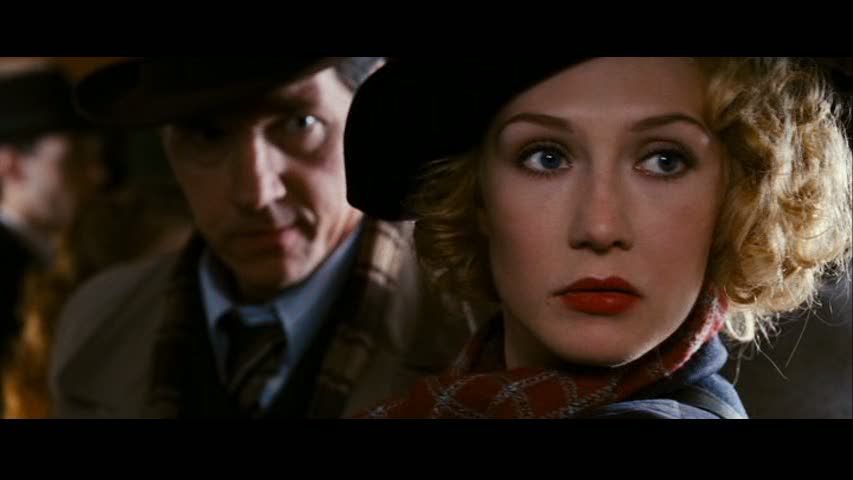
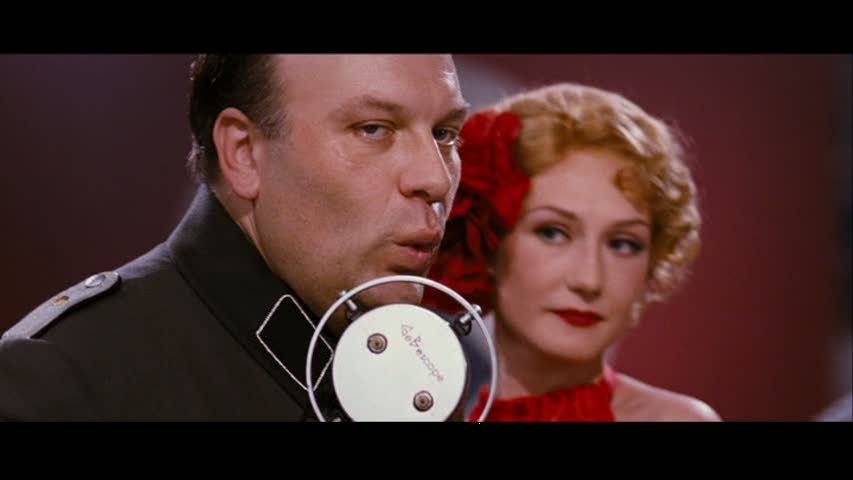
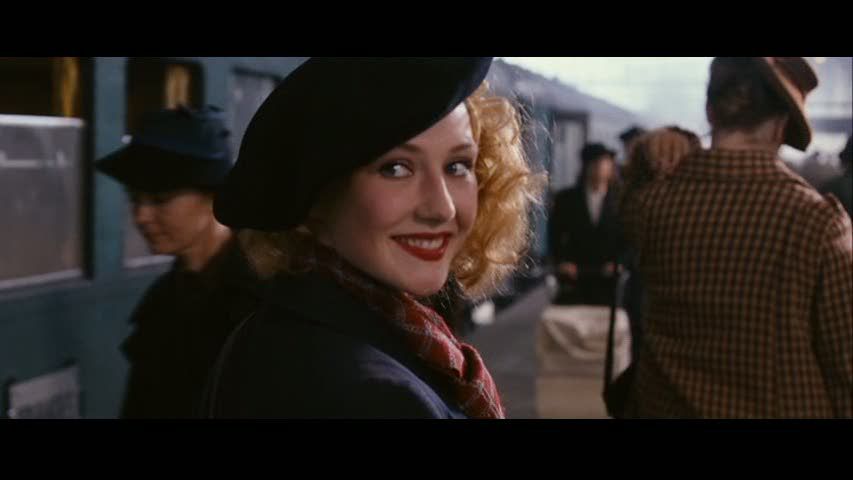
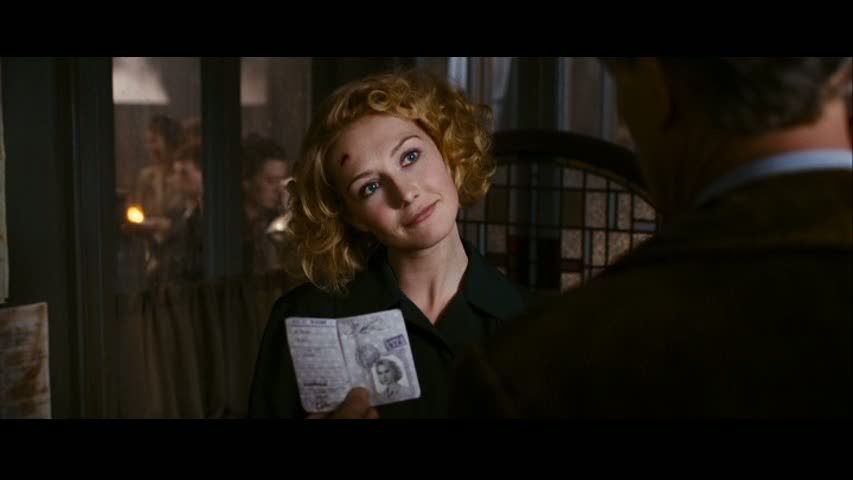
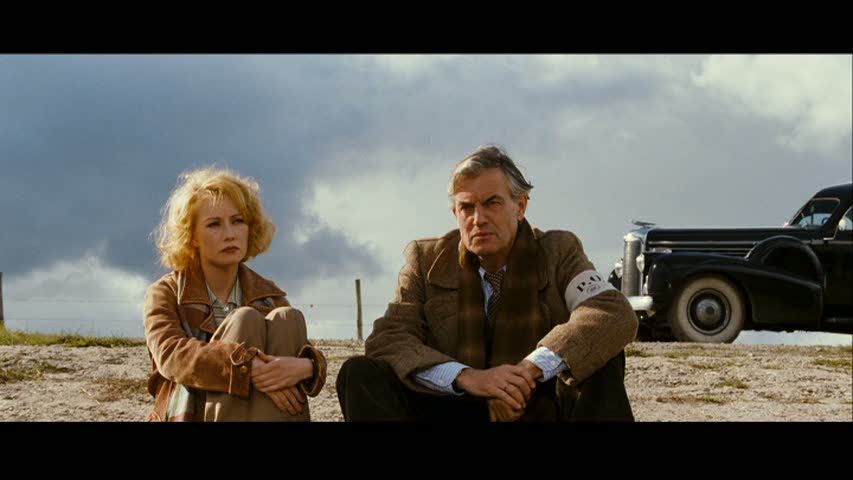
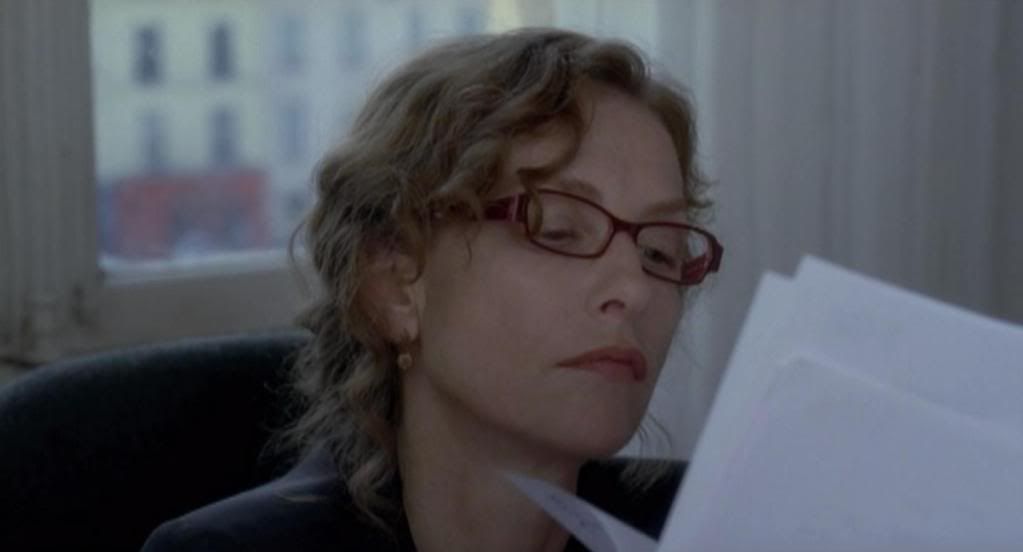
This perspective is especially challenging here because Black Book is about the end of World War II in the Netherlands, where in the final months of the war, the Nazis, Dutch collaborators and anti-Nazi Resistance fighters continued to fight, always thinking about what would happen once the war was over. The film's central character is young Rachel Stein (Carice van Houten), a Jewish woman who soon changes her name to Ellis de Vries as part of her disguise from the Nazis. When the film opens, she is living with a Christian family who begrudgingly shelter her, forcing her to faithfully recite Bible verses before she is allowed to eat (exactly the kind of self-righteous hypocrisy Verhoeven most loves to mock). When her shelter is destroyed by Nazi bombs and her identity discovered, she attempts to escape with her family, but instead she winds up the sole survivor after the sinister German officer Franken (Waldemar Kobus) ambushes the boat and kills everyone else. Now named Ellis, she falls in with a group of Resistance fighters and, at their behest, infiltrates the Nazi command by cozying up to SS officer Ludwig Müntze (Sebastian Koch).

Of course, the plot only grows more complex from there. The script, written by Verhoeven with his frequent collaborator Gerard Soeteman, is serpentine and epic, structured around the multiple twists, betrayals, moves and countermoves that characterize this tale of wartime spying and resistance. The film is lengthy, but with the exception of the brief framing segments in post-war Israel, its action covers only around a year or two, from the last few months of the war to the immediate post-war period, the time of liberation, revenge and readjustment. This brief time frame is packed with incident, however. Verhoeven has always known how to tell a story. In fact, he's often been picked on for this very skill, for his ability to work competently — even vigorously — within conventional storytelling modes. That's why he was such a good fit for Hollywood, at least for a time, despite his penchant for outrageous provocation and radical subtexts. He's a provocateur and a satirist, but even more than that he's a storyteller, an entertainer. Rather than using satire to undermine entertainment, the way so many covert satirists have, he allows the two strains of his work to coexist, to intertwine, so that in a Verhoeven film the excitingly sensual surface he offers up is inseparable from the cerebral and thematic undercurrents of his stories.


This means that his films are always rollicking good fun, if nothing else, and Black Book is no exception. His action sequences are thrilling and visceral, and the plot is a complex web of deceit and double-crosses, with new twists continually introducing complete shifts in the status quo. Of course, sexuality is also almost always an important factor in Verhoeven's films. In Black Book especially, however, Verhoeven's treatment of sexuality is far from simple exploitation or gratuitous titillation. One of the film's most important subtexts is its subtle revelation of the ways in which women are used and then punished for their sexuality, for their charm and beauty. Ellis seduces the Nazi Müntze only out of necessity, after the Nazis capture a shipment of weapons along with several Resistance fighters, including Tim (Ronald Armbrust), the son of the Resistance ring's leader Kuipers (Derek de Lint). She agrees to help by infiltrating the SS headquarters, planting a bug in Franken's office and generally providing information on what's going on, as the Resistance cell tries to figure out a way to free their captured comrades.

So Ellis uses her sexuality for the benefit of her friends; she is willing to sleep with Müntze, and even to expose herself to the unwelcome attention of the brutish Franken, the man who murdered her family. But she is not praised for her behavior; she is silently, implicitly judged. Before she goes undercover, the doctor and Resistance fighter Akkermans (Thom Hoffman) makes sure that he sleeps with her first, as though marking her before the Germans get ahold of her, claiming her as Dutch property. Her sexuality is a tool, a weapon, a resource, and also something to be fought over, but she is never treated as an equal, as someone to be respected in her own right. Even when she first joins the Resistance group, she is eager to help, but seems disappointed when she learns that all she has to do is pose as Akkermans' wife, kissing him to distract Nazi inspection parties as they smuggle underground materials from place to place. This assignment establishes the boundaries of what she will be asked to do as a part of this group, though her quick thinking when the mission nearly goes wrong indicates that she is more than just a pretty prop, that she can think for herself and ingeniously get her allies out of tight spots. Still, they do not respect her, and Ellis knows it.

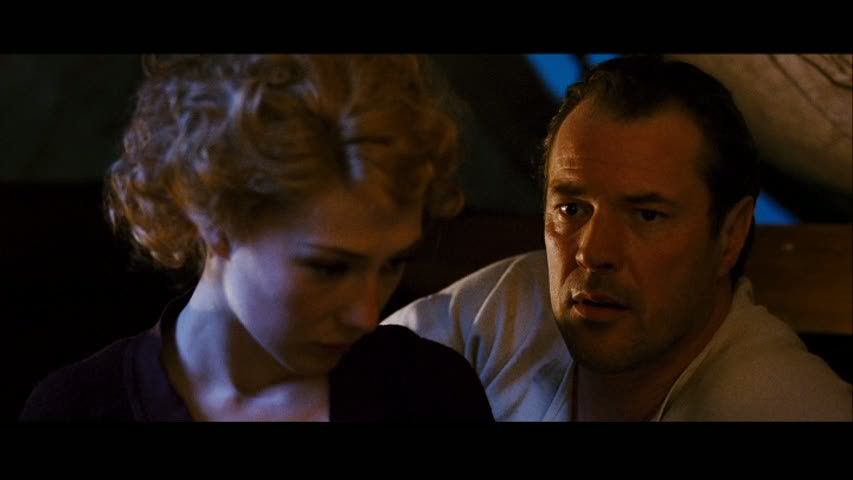
One of the key moments here comes when Ellis arrives at the Resistance's secret base while they are listening in on the microphone that Ellis planted. They hear Franken having loud, raucous sex with his secretary Ronnie (Halina Reijn), and the Resistance fighters are laughing wildly, mocking the lovers and especially the girl. They call her a whore and comment on how horny she must be, and they laugh uproariously. Ellis looks uncomfortable, her head bent down, her eyes averted from everyone else, certainly not laughing. She realizes that Ronnie, an ordinary and not very bright young woman, is just doing what she must to survive, that she's no Nazi or "Nazi lover" but only someone who knew, as Ellis did, that she could use her sexuality as a way to get by during a difficult time. And Ellis knows, too, that the others might just as easily say the same things about her. She's sleeping with Müntze just as Ronnie is sleeping with Franken. Ellis has a pretext for her actions, but in the end sex is sex.


Complicating matters even further is the fact that Müntze is not an unsympathetic character, and in fact he is portrayed as a relatively decent guy. He is an SS officer, but by this late point in the war, he has realized that his country is losing, and instead of reacting out of greed (as Franken does) or self-preservation (as so many others do), he attempts to calm down the violence in his own little corner of the war, negotiating with the Resistance to halt the hostilities on both sides. He knows the war is over in all but name, and sees little point in further death, further violence and horror. Moreover, he very quickly deduces that Ellis is a disguised Jew, and not long after discovers that she is a member of the Resistance. But in both cases he keeps her secret, protecting her and conspiring with her.

There is a hint of tension between them, of course, which bursts out in the wittily Freudian scene where Ellis thinks Müntze is getting an erection under the covers, only to find he's pointing a gun at her: underscoring the forced, duplicitous sexuality that thrust them together. Even so, the relationship between them is surprisingly tender and sweet, a true romance in the midst of so much deceit and treachery and violence. He is, perhaps, a good man who had been warped by the war, forced into his position by cowardice or some other motivation — it's never made clear how or why he became such a high-ranking SS officer, or what he must've done in the past. But with Ellis, he is loyal and kind, and their sex scenes have a warmth and passion that never feels like playacting.

This brings up the question of appearances and surfaces again, and of acting. Carice van Houten is asked to virtually carry the film on her tiny shoulders — she is its center and its heart, almost never offscreen — and she gives a phenomenal performance. In many ways, she is also playing an actress, a woman who must be able to disguise her true self completely. She must do this first as a Jew, dying her hair blonde and changing her name, shedding her Jewish roots. She even dyes her pubic hair, as though changing even her sexuality; Verhoeven shows her daubing between her legs with a brush, making art of her sex. Then her disguise becomes even more complex when she is employed by the Nazis. There is an extraordinary sequence when she first sees Franken and recognizes him as the man who murdered her family. The creepy, lumpen oaf is hunched over a piano, cheerfully singing a song and playing; he is as goofy and awkward here as he was cold and evil in the earlier scene. Ellis stares blankly at him, and runs from the room, retching and throwing up when she reaches the bathroom. But she takes a moment, cleans herself up quickly and pulls herself together, and when Müntze asks her what's wrong, she smiles and takes an eager swig of champagne, then goes out to sing a torch song with accompaniment from Franken, lewdly dancing and posing as she sings the sexually suggestive lyrics.

Van Houten is excellent at conveying these sudden shifts, the way Ellis' face can quickly and smoothly transition from a sour, numb expression into a bright and seemingly genuine smile. Verhoeven, with his concern for the relationship between appearances and reality, is especially interested in this fluid masking of emotions: at what point do Ellis' faked smiles become real? At what point does her façade of affection and desire for Müntze bleed into something deeper, more true? Such questions are at the heart of the film, and they go beyond Ellis' undercover theatrics, extending to every aspect of the story, to every character. Virtually all these people are wearing masks of various kinds, and they're all more than they appear to be on the surface. For one thing, the film rejects facile categorizations of "good guys" and "bad guys," suggesting that real evil is not always as easy to identify as the cartoonish Franken, who in any event is also capable of playfulness and good humor, and who seems to love making music. Moreover, Verhoeven is saying, often evil can be mistaken for good, and vice versa — not to mention the complications of most people combining the two within themselves.


Verhoeven explicitly mocks the moral absolutism that ignores such gray areas. This is especially obvious in the character of Theo (Johnny de Mol), a devout Christian who becomes hysterical after killing a man to protect Ellis. He believes that because he has committed murder, he is now "as bad as the Nazis," an absolutely absurd idea that demonstrates a complete inability to see moral gray areas. Verhoeven, by contrast, is interested only in the gray areas, in why people do what they do, in the complicated interactions of morality and practicality from day to day. For Verhoeven, morality never exists in a vacuum, but is integrated with people's situations: the choices available to them and the choices they make as a result.

What's also interesting about the film is its almost-complete emphasis on the kinds of stories not often told about World War II, the stories that are generally overlooked and glossed-over. Verhoeven has always been interested in this material, in the history of resistance and collaboration in his homeland. In 1977, he made the epic Soldier of Orange, which is similarly engaged with issues of collaboration and resistance, with the interesting ways in which wartime can warp or divert a person's character and destiny. In many ways, that film seems like a warm-up for Black Book, a first examination of the territory he'd return to here, now mining even deeper, digging even further into the ugly contradictions of his nation's past.

Those contradictions are laid bare here, particularly during the film's final hour, in which Ellis, suspected of collaboration with the Nazis, is forced into hiding along with Müntze, who's fleeing the dubious "justice" of the post-war regime. Verhoeven has often been accused of a lack of subtlety, and the final hour of this film could certainly provide copious material for anyone wishing to make that case. He heaps suffering and degradation on his poor heroine, who is misused and betrayed despite all her efforts to do what was right, to help her friends and exact revenge for what happened to her family. Instead, she is arrested as a collaborator, labeled a "Nazi whore" who sang for the Germans. She is, at one point, stripped and slathered in excrement, at a prison where drunken soldiers and prison guards abuse and humiliate the prisoners. And then she is betrayed again, nearly killed by the last person she thought she could trust, Akkermans himself, who turns out to be a genuine collaborator, the man who kept tipping off Franken to the locations of fleeing Jews.


Verhoeven undoubtedly makes things difficult for his heroine, and he also makes her plight difficult to watch — this Passion of Ellis is harrowing and often stomach-churning, both physically (the feces bath) and emotionally (the execution of Müntze). But no matter how much Ellis suffers, Verhoeven never strips her of her dignity: her warmth and passion, her energetic spirit, her honesty, her defiance. When the prison guards demand that she sing for them like she once did for the Nazis, she simply shakes her head: "not for you." She is an ordinary woman in extraordinary times, and she rises to the occasion in every way, molding herself to be tough enough for what she has to face.

And she always retains her idiosyncratic sense of humor, her playfulness — seen in tossed-off little moments like the one where she takes a bite of a carrot meant for a rabbit, then turns around to speak with the bite stuffed into her cheek like a chipmunk, or the scene where she brushes her teeth by gargling with champagne, then opens her mouth wide for inspection with a grin. Verhoeven obviously admires her cheekiness, and he admires his actress too, admires the versatility she brings to this role: compare the matronly, melancholy Rachel seen in the Israeli framing story against bold, blonde Ellis for some indication of the range and depth van Houten brings to this character.


Indeed, "range and depth" is a fairly good summation of Black Book as a whole as well. It's an extraordinarily complex and multi-faceted film, both narratively and thematically. Even as its plot continually subdivides and changes directions, Verhoeven probes deeper and deeper into the sexual, political and psychological subtexts of his story and characters. His style is direct and bombastic, with a subtle stylization to the way he groups other characters into two-shots with his heroine, tracing her varying relationships with the men she encounters. Ellis is always turning towards the camera, flashing it a smile or a penetrating gaze; Verhoeven makes it natural enough that it never quite breaks the fourth wall, though the technique does call attention to itself, and to the continual highlighting of the star.

I could certainly find a lot more to say about Black Book — it's a film I suspect I could write a book about, delving into each scene and giving it the careful consideration it deserves. It's that rich, that layered. For now, however, I'll simply open up the discussion for others to share their impressions of Verhoeven's film. What does everyone else think?

Sunday, April 19, 2009

The Fountain


Darren Aronofsky's The Fountain was an ambitious project, a major detour for the director whose previous two features (Pi and Requiem for a Dream) were decidedly small, introspective personal dramas. The Fountain is instead a time-spanning, mythological epic, a grand statement about tragic love and the desire to conquer death, in which stories from different times and different levels of reality — some of them undeniably "real," some of them possibly fiction or fantasy — interact to tell the story of the enduring love between Tommy (Hugh Jackman) and his dying wife Izzi (Rachel Weisz).

There are three layers of reality in this film. In the most tangible and focused of these, Tommy is a research scientist desperately trying to devise a treatment for brain tumors before his wife dies of the one affecting her. He performs surgery on a succession of primates, finally in desperation turning to an obscure medicine derived from the bark of a South American tree — a concoction that miraculously reverses the ape's aging but seems to leave its tumor untouched. This story is presented as the memories of a different, later version of Jackman's Tommy, a shaved-head mystical initiate floating through space in a bubble he shares with a patch of fallow earth and a dying, dried-out tree, the fabled tree of life from the Garden of Eden and also presumably the same tree that had such a stunning effect on that long-ago Tommy's research. Finally, there is a third story in which Jackman is a conquistador loyal to Spain's Queen Isabel (played by Weisz, naturally), who faces a rebellion from the evil, self-flagellating Grand Inquisitor (Stephen McHattie). The Queen protects a great secret, the location of a mythical tree in South America that may grant eternal life to all who eat of its bark, and she sends Jackman's conquistador off on a mission to locate the tree and bring its secrets back to her. This story is told by Izzi herself, a writer whose final book, left unfinished when she dies, is based on Mayan mythology in an attempt to come to terms with death. She leaves the final chapter unwritten, asking Tommy to finish the book after she's gone.

The film itself is in many ways a multi-faceted attempt to fulfill Izzi's request, just as the conquistador's tale recounts his ill-fated attempt to fulfill the Queen's orders, to return to her as Adam to her Eve and live forever together. The time-jumping structure repeatedly returns to the same junction points, as though trying to rewrite the story, to change the narrative in order to reach a happy ending. It's building towards a myth, towards the achieving of eternal life, and yet ultimately this happy ending folds in on itself, as Jackman's Tommy reaches towards a very different kind of enlightenment: the realization that death is a part of life, that death cannot be conquered and should instead be accepted, that what matters is not struggling violently against the end of life but enjoying the moments we have. The story ends, not with the tree of life in the Garden of Eden, not with a grand romantic gesture to achieve an endless love, but an acceptance of transitory, earthbound love. Life and love will end eventually for all of us, but they are no less sweeter for their brevity. This is what makes this film especially tragic, and especially intelligent: it incorporates our myths, our desperate need for stories about eternity, but it acknowledges that these are just our ways of dealing with death, of denying what we all know, that everything has an end.


Aronofsky has crafted a sublime, complex structure here, a wonderfully evocative expression of the human anxiety over death, which has over time migrated from the realm of myth and religion into the strivings of science to conquer disease, as though the human race is forever working towards eliminating our transitory status in life. Thus, Tommy's desperate efforts to save his wife exist along a continuum that stretches from his past incarnation as a conquistador in search of a mythical tree of life, to a future incarnation as a man who has eaten of that tree and thus lives forever.

This is a gorgeous film, achingly romantic and heart-breaking, and sumptuous in its visual style. Working on a tight budget after an earlier version of this film (slated to star Brad Pitt and Cate Blanchett) broke down, Aronofsky eschewed CGI and instead created organic effects by photographing chemical reactions in petri dishes. This technique gives a raw, dazzling beauty to the sequences of Tom floating through space, his form silhouetted in black against a field of pin-prick stars, or drifting into the heart of a glowing gold nebula that represents the Mayan underworld. It's also appropriate for a film about the processes of life and death that so many of its images from outer space evoke the swift foldings and fissions of cell divisions, of molecular structures forming and dissolving. It's as though the inside of the human body, the microscopic foundations of life and biology, have been writ large on the blank page of space itself, the micro blending into the macro, just as Tom and Izzi's story represents larger ideas about mortality and human impermanence.

The ethereal, haunting beauty of these images is matched by the pulsing, repetitive music composed by Clint Mansell for the Kronos Quartet and the Scottish post-rock combo Mogwai. The muscular, Krautrock-inspired rhythms of this music continually return to the same motifs over and over again, synced with the ouroboric enfoldings of the narrative. As the film goes on, the insistent drive of the music becomes overpowering, its cycling of motifs accelerating even as the tempo of the editing speeds up, blending together the film's three distinct stories into one, orchestrated by the man floating through space towards a final confrontation with mortality. It's at this point that Jackman's character definitively rewrites these stories, finally providing them with the endings that Izzi's book had lacked: all three endings constituting an acceptance of death as the endpoint towards which all our stories inexorably move.

Friday, November 14, 2008

A Prairie Home Companion


One cannot help but think of Robert Altman's final film, A Prairie Home Companion, as not only a loving tribute to the famed live country-western radio show which gave the film its name, but as a parting valedictory for Altman himself, who surely directed the film with the knowledge that it'd likely be his last. The specter of death lingers over the entire film, both figuratively (with Tommy Lee Jones as a corporate "axeman" sent to close down the show after one last performance) and literally, in the form of Virginia Madsen's angel in a white trenchcoat, a noirish avatar of death who Altman credits as the "Dangerous Woman" even though she's given an actual name in the film. The film is sanguine in the face of death, accepting it with casual good humor as a necessity of life. It's no accident that the film's bringer of death is repeatedly referred to as radiant and beautiful, fitting adjectives for Madsen, who glides around the set with a halo of bright gold hair curled tightly around her face, the stage lights reflecting off her pure white coat. She is a sensitive, empathic messenger of death, gently bringing the end even as she nurses her own obvious nostalgia for living.

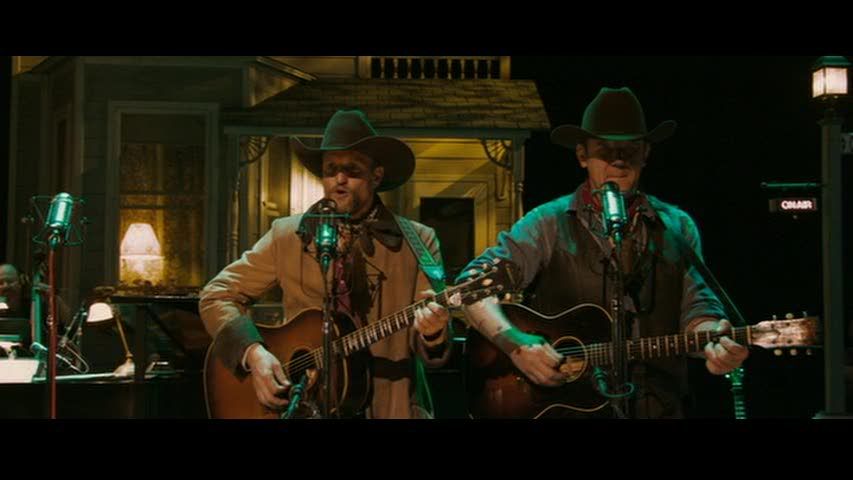
The final performance of a radio show may not be a literal death, but it is an ending nonetheless, and Altman treats this event with the momentousness and the bittersweet dignity it deserves. The script was written by Garrison Keillor, the real-life host of A Prairie Home Companion, who fictionalizes and mythologizes his own show (which is still running in reality), and plays himself as well. This script is perfectly tailored to Altman's approach, weaving subtly from backstage conversations among the show's performers and crew, to on-stage musical performances. The entirety of the film takes place in a single night, the show's last night on the air and on stage, and it encompasses a broad range of country performances, most of them performed by Altman's cast along with a handful of regulars from the original radio show. Much of the film's dramatic material centers around the family of Yolanda Johnson (Meryl Streep), her sister Rhonda (Lily Tomlin), and Yolanda's daughter Lola (Lindsay Lohan). The two sisters are the last stalwarts left in a family musical group that once also included two other sisters. Both Streep and Tomlin give remarkable performances, conveying the combination of happiness, resignation, and bitterness that they each hold for their eventful but only marginally successful lives. This is most obvious in the body language of the two sisters whenever they're on stage together, as Yolanda likes to delve into her family's rich history by regaling the audience with stories before each song, while Rhonda fidgets uncomfortably from side to side, unable to meet the audience's gaze; she looks like she's impatient for the song to start. It's in wonderful little touches like this that Altman encourages his actors to bring out their characters' many facets.

The dramatic material itself is slight and elliptical, mostly limited to a handful of brief conversations in which the history of this family is broadly outlined: a childhood of poverty followed by a musical career starting at a very young age, Yolanda's chance encounter with a young man who got her started on the path to radio and also became her husband. Later, hints of a brief romance with Keillor at some point, and many amusing anecdotes along the way. These stories come out in slow drips, and Altman frequently cuts away from these conversations to check out what's happening on stage at the same time, so that there remain gaps in the chronology. It's enough to suggest a long and complex history for these characters, who then draw on this deep well in their musical performances. Indeed, the film's greatest strength is the way that character is expressed through musical performance, a throwback to Altman's other great country musical, Nashville. Streep and Tomlin's sisterly affection, romantic regrets, and melancholy over the show's closing all come out in their songs, which are heartfelt and potent; they're not just singing, but acting as well. Similarly, the aging singer Chuck Akers (L.Q. Jones) delivers an achingly beautiful final song for his last appearance on the show, his voice cracking with emotion as he reaches the end of the number before he breaks out into a smile. It's a wonderful moment, an old man bowing out while still expressing himself with every last ounce of his vitality: it must have been an especially poignant and personal scene for Altman to film.


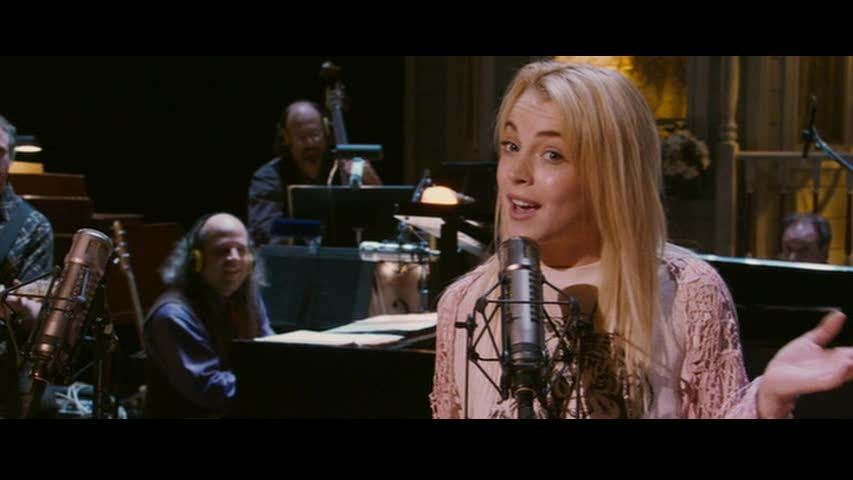
But the film's surprising showstopper is a late-in-the-game performance from Lohan, as Yolanda's shy, bookworm-ish, suicide-obsessed daughter. She is called upon to do a song towards the end of the show when it transpires that there is some extra time, and with no preparation she is thrust on stage, singing an old outlaw ballad to which she barely knows the words. This is an astonishing performance from a young actress all too often written off as insignificant, who performs here entirely while singing, her expressive face communicating the conflicting emotions of her excitement, nervousness, and the pleasure she feels in performing. As she gets to the third verse and forgets the words, she pauses only a beat before beginning to improvise with a smile on her face, stitching together bits of her morbid poetry and the folksy song she heard her mother and aunt singing earlier in the dressing room. Altman shows the entire performance from beginning to end, and it's great fun to watch this shy young girl growing gradually more and more confident, by the end belting out the lyrics, cocking her head and swaying her body. She starts the song insecure and withdrawn, looking uncertainly over towards her mother between verses, but by the end she is totally into it, closing her eyes and throwing her head back as she winds down towards the end. Lohan mostly stays in the background throughout the rest of the film, awkwardly chatting with Keillor and other cast members in a few scenes, setting up her character for this final moment of glory when she comes out of her shell.

The film also boasts a pair of great, bawdy performances from Woody Harrelson and John C. Reilly as the cowboy singers Dusty and Lefty, whose song "Bad Jokes" is basically a loose foundation for the two guys to riff on mildly dirty puns and stories. It's pretty funny, especially to see the delight these two roughnecks get from delivering this old-timey smut, and the indignation of the stage manager (Tim Russell) when sound effects man Tom Keith begins providing an improvised accompaniment to the cowboys' raunchy stories. Harrelson also provides one of the great off-stage moments, singing an outtake he doubtless judged too risque for the broadcast version: "I used to work in Chicago. I did but I don't anymore./ A lady walked in with some porcelain skin and I asked her what she came in for./ Liquor, she said, and lick her I did, and now I don't work there anymore."

Even the show's security man, former private shamus Guy Noir (Kevin Kline), gets his moment in the musical spotlight. Guy, adapted from a character Keillor often uses in sketches on the real-life Prairie Home Companion, speaks entirely in self-consciously hard-boiled patter and narrates the film like Bogey playing Marlowe, naturally becoming infatuated with Madsen's angelic femme fatale. He gets the film's melancholy finale before the credits' raucous group reunion, a solo song at the piano that bids farewell to the country-western show as the set is disassembled behind him. It's an appropriate touch; he is a character out of his time, an icon living past his era, just as Prairie Home Companion is a throwback to an earlier, folksier era. This is a moving, rambling, and musically joyous film, a perfect send-off for a director who was always looking for ways to capture the pleasures and contradictions of life in his cinema.

Monday, February 11, 2008

Black Book


Paul Verhoeven's Black Book is a brilliant slap in the face to the very idea of "tastefully" dealing with such important issues as the Holocaust or Nazi collaboration. When it first appeared, some critics derisively dismissed it as "Schindler's List meets Showgirls," an unwittingly apt description for a film that flinches away from neither the harsh realities of Nazi atrocities nor the perverse sexual adventures of the film's heroine, Rachel (Carice van Houten). The film is a blast of energy and enthusiasm, packing an emotional wallop that is in many ways much more genuine than the dour do-gooderism of Spielberg's famous Holocaust film. Verhoeven delves into the moral complications of resistance and collaboration in Nazi-occupied Holland, with van Houten as the central figure in a sprawling adventure epic largely set in the final months of the war. Van Houten is a wonder to behold here, gorgeous and sparkling with an intensity and depth that completely carries the film.

When the film starts, Rachel is a young Jewish woman hiding out at a farm house where the Christian family forces her to recite Bible verses, perfectly memorized, before she is served her dinner. This shining example of Christian hypocrisy, within a family that from outside would certainly seem to be exemplary in their sheltering of a fugitive, tips the viewer off early to Verhoeven's critical perspective in this film. His interest is not, per se, in the barbarity of the Nazi regime, which hardly needs pointing out these days — he's much more interested in the petty cruelties, manipulations, and quiet acquiescence to horror that takes place under the radar in everyday life, even among those on the "right" side. Rachel's life, following the bombing of this family's farm and her flight into the underground, becomes a neverending hellish descent, with Verhoeven battering the poor beleaguered girl until he is literally pouring shit on her. Her story takes a number of twists and turns, starting with the slaughter of her parents and brother during a failed attempt to sneak across the border, after which shetakes on a new identity and falls in with a group of resistance fighters. They soon ask her, though, to infiltrate the German gestapo headquarters as a singer, by seducing the garrison commander Müntze (Sebastian Koch), and as a result she's drawn into a complex web of deceit, treacheries, and machinations. The plot is structured as an escalating series of incidents and action, reminding me of a slightly calmer version of Emir Kusturica's frenetic masterpiece Underground, which similarly builds towards ever more harrowing evocations of wartime brutality, and similarly laces its horror with kitschy good humor.

Verhoeven has crafted this epic from some well-worn genre materials: the wartime spy thriller, the sexual noir, the campy Germanic cabaret film. But while the basic materials may be familiar, the ways in which they're combined and played out on screen are most certainly not. The trope of the female double agent who falls in love with the man she's supposed to be seducing is as old as the spy genre itself, but it somehow manages to acquire new life here, partly because van Houten infuses her role with such a winning combination of sexy playfulness and emotional investment. The cliché is further twisted by the fact that Koch makes his Nazi commandant a surprisingly sympathetic and multi-faceted figure, a man who has realized that his country has lost the war, and now only wishes to minimize the bloodshed in the final days before the inevitable defeat. The scenes between these two have a surprising electricity that's perfectly encapsulated by the scene where Rachel strips for Müntze, who's lying in bed, the bedsheets between his legs slowly tenting upwards as he watches her. Of course, he has a pistol down there, and in the following scene he caresses her breast with its metal tip as they smoothly segue between seduction and pumping one another for information.

If Müntze is a complex and very human Nazi, he's counterbalanced by the presence of his hulking, maniacally leering underling Franken (Waldemar Kobus), who's only missing a "stein" (the Jewish last name of the film's heroine, of course) to turn him into the monster he so clearly represents. He's a true movie Nazi, and Verhoeven seems very aware of it, taking cartoonish glee in this wholly artificial creation's outlandish evils. He's engaged in a plot to convince rich Jewish fugitives that they're fleeing with the resistance, when in fact they're being led into a trap where Franken can kill them and relieve them of their money and jewels. Franken may be a cartoon, but the evils he commits feel no less real, no less potent, for having been committed by this ridiculous figure, who in happier moments loves to pound on a piano and whistle along with Rachel's torchy crooning. In fact, Verhoeven's whole aesthetic purpose in this film might be summed up by the seeming contradiction between gritty realism on the one hand, and overt stylization on the other. He's equally committed to both narrative modes, and the film swings queasily back and forth between the two with little regard for stability.

Even more radically, Verhoeven extends his moral ambiguity to the resistance fighters, and in the scenes set after the war's end, implicitly questions the entire process of assigning blame and assessing collaboration versus resistance. The irony of high-ranking Nazi commanders being quietly assimilated back into society is juxtaposed against the even more unpalatable spectacle of the cruelties meted out by the victors against those dubbed collaborators. Most troubling is the treatment of women, which Verhoeven takes great pains to underline. Before the war is over, he has one of the resistance fighters explain what he'd like to do to the Nazi's women: shave their heads and dub them "Nazi whores" in acts of public humiliation before putting them against the wall. And sure enough, when the war ends, Rachel walks through the streets and comes across, in the midst of the celebrations, a display exactly as the resistance fighter described it, with tearful young women getting their heads shaved, signs saying "Nazi whore" hung around their necks. The undercurrent is a kind of sexual punishment and a sense of male entitlement about female bodies — the greatest offense is sleeping with the enemy, and when Rachel herself is branded with this crime, sexual humiliation (including a vat of feces poured over her naked body) is the primary punishment. Before Rachel first goes to seduce Müntze, she sleeps with the resistance fighter Akkermans (Thom Hoffman), who takes her as though she's his right, saying "at least I get to have you first" — who one sleeps with becomes a moral act in itself. Verhoeven's thrust in these scenes might even be called feminist, although his critique is complicated by the obvious delight he takes in sexualizing and fetishizing his protagonist's body right along with the characters on screen (and, by implication, bringing the audience along for the ride as well).

The implicit, unstated question underlying the entire film is the problem of assessing degrees of culpability, and degrees of brutality. This problem comes closest to being addressed explicitly by Theo (Johnny de Mol), a quiet, peaceable Christian member of the anti-Nazi resistance, and probably the film's most purely "good" and uncorrupted character. When he's forced by circumstances to commit a murder in order to save Rachel and his friends, he's wracked by guilt, and he melodramatically exclaims that he's "as bad as the Nazis." He seems incapable of making any moral distinction between wholesale genocidal mass murder and a single act of violence committed with more "just" goals in mind. He's a moral absolutist for whom murder is always murder, but Verhoeven doesn't necessarily take his side. In many ways, Theo's exclamation seems to be there as a not-so-subtle jab at the current prevalence of casual Nazi comparisons in political discourse, by which George W. Bush (among other targets) is declared to be "as bad as the Nazis." Verhoeven, by placing the statement in its original context, reveals the lie, and the laziness of such comparisons, while advocating for a moral attentiveness and an ability to make meaningful distinctions. Verhoeven presents a very muddled and ambiguous moral world, but his central characters must nevertheless make the best of the options open to them. The ambiguous ending, set 12 years after the main action at a kibbutz in Israel, serves as one last ironic comment on the place of morality in everyday decisions, as Rachel has set up a seemingly happy new domestic life for herself here, teaching schoolchildren, marrying and having a family. But in the film's final shot, Rachel and this happy family walk away into a barb-wire-protected compound, as explosions and gunfire and soldiers mobilizing on the ramparts signal the continuing war and brutality happening all around their oblivious domestic core.

This emphasis on moral choice and accountability is startling in a film that at times seems to revel in schlock, and Verhoeven walks a thin line between camp and verisimilitude. It's a film where the continuously thrilling, exciting, engaging surface narrative rapidly pulls the viewer into a deeper moral engagement with the material. Black Book works on its primary level as a lurid wartime spy thriller, infused with melodrama, eroticism, and action — it seems calculated for maximum visceral impact. But its sneaky insistence on never taking the easy way out of moral dilemmas, of never shrinking away from tough but important distinctions, propels it to a whole other level as a complex moral investigation. It's a film about corruption, greed, inhuman brutality, and, somewhat perversely, love and sexuality as well. Not to be missed.