Tuesday, July 28, 2009

Summer Hours


Olivier Assayas' Summer Hours is deceptively simple and undramatic, from its first moment (a lazy summer idyll, a family reunion) to its last (another summer party, this one a raucous gathering of youths). As these bookend scenes suggest, the film is about generational gaps, about the past and the future, about the breaking up of a family and its history, and the continuities and linkages that remain even after such fractures. The film is warm and gentle, its emotions mostly understated, its drama largely buried beneath the surface — there are only momentary bursts of harsh words, and wounds are quickly mended. It's a film dominated by quiet emotions, by melancholy, nostalgia, well-worn loves, regret, separation and reunion. It's the story of a family united around the strong core of an aging mother, Hélène (Edith Scob), and what happens to this family when she's no longer around.

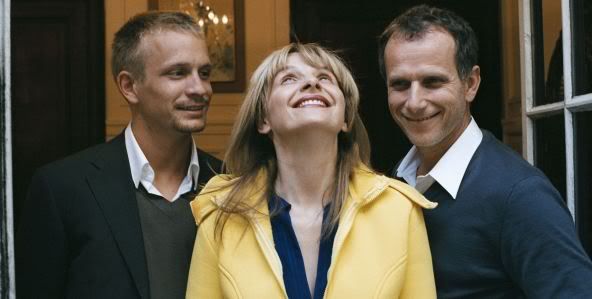
The film's opening scene is arguably the key to the entire film, a dense introduction to the elements, objects and ideas that will continue to weave throughout the rest of the film, their meanings gradually unfurling. The family has gathered at their childhood home for Hélène's 75th birthday, bringing together the oldest son Frédéric (Charles Berling), his younger brother Jérémie (Jérémie Renier) and their sister Adrienne (Juliette Binoche), along with the brothers' wives and children. It is an active, vivacious party, and Assayas' roaming camera captures the interplay of the various characters by remaining perpetually in motion, gliding through the corridors of the house or drifting among the lush greenery surrounding the estate, where the children's laughter echoes through the bushes. This family is reunited only sporadically, since work has taken both Adrienne and Jérémie far from home — she lives in New York, while he lives in China. Only Frédéric still lives in France, near enough to visit his mother more often, though one gets the impression that he still only sees her occasionally. They are a loving family, affectionate and comfortable with each other, but they have their own lives, their own problems and concerns, their own careers, which largely don't interest each other.

As for Hélène, she is absorbed in the past, in the memory of her uncle Paul, a famous painter whose legacy she has maintained since his death. Her home is a shrine to him, to the work of the other artists he collected, and to his own work as well. During these opening scenes, she takes her son Frédéric on a tour of the house, showing him antiques and works of arts, preparing him for her death — he doesn't want to hear about it, doesn't want to think about selling anything, about breaking apart this home in which so many memories reside. She knows, however, that it will have to happen, that her family is spread too far across the world to retain any nostalgia or use for her nostalgic home, with its many links to the past. These conflicting feelings are at the core of the film, which is torn between a melancholy longing for a lost past and a need to engage in the present, to avoid being overwhelmed by memories, weighed down by what came before. Frédéric shows his children some of the paintings in the house, telling them that one day these will be theirs, that they can pass them on to their own children as well, but the kids don't really care: "that's another era," it has nothing to do with their lives, their present.

This opening is lively and evocative, with these sad feelings of loss lingering just beneath the surface. There is a sense here of a tenuous balance between past and present: Hélène seems slightly out of sync with the bright, sunny aura of her own gardens, with her laughing grandchildren running everywhere, and her children who are loving and attentive but also lost in their own lives, not really attuned to her thoughts and concerns. For her birthday, they give her a complicated telephone system, and she picks through the box hesitantly, laughing, telling them they'll have to set it up for her, knowing that they'll probably forget (which they do). Her house is full of life for this one day, and perhaps she's remembering when her own children were young. She still keeps a plastic bag full of the shattered pieces of a valuable plaster statue her sons broke when they were children, and now she sees her grandchildren playing with similar abandon, disregarding warnings, running wildly around the spacious grounds. Assayas' filmmaking is subtle and supple, his camera agile, as he carefully creates a portrait of three generations of a family, their lives so different and yet bound together in small ways, with touches of affection, with shared memories.

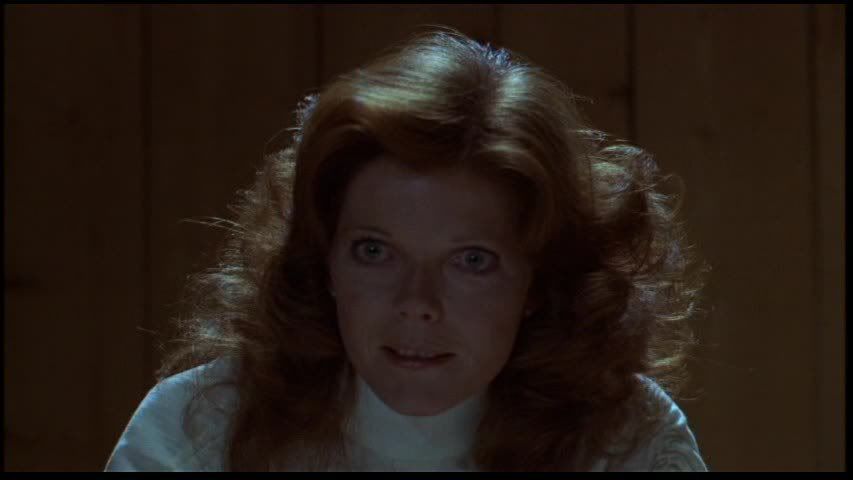
This sublime opening sequence ends with a chilling series of scenes after the rest of the family has gone home, and Hélène is left by herself. She watches her children and grandchildren drive away, returning to their busy lives, and then she walks up a set of stone steps, out of the bright sunlight of the party, hunching over as she ducks under an overhanging tree limb and into the shade. This darker, moody loneliness is carried over into the next scene, in which Hélène sits inside her house with the lights off, speaking with her loyal longtime housekeeper Éloïse (Isabelle Sadoyan), another old woman, someone she's perhaps closer with than she is with her own family. These scenes are as dark, claustrophobic and static as the opening was airy and fun. In contrast to the fluid cinematography of the opening scenes, here Assayas switches rhythmically between medium shots of the two women looking at one another and talking, Hélène bathed in shadows, the whole scene drenched in dark blues and browns. The autumnal chill of these interior scenes contrast against the lush greens of the party sequence, and it's obvious that Hélène is preparing to leave the world.

The film then leaps ahead in time, as the three siblings deal with the death of their mother some time later, as well as struggling with what to do with the legacy and possessions she left behind. Throughout the rest of the film, Hélène's house stands in for her, holding the summation of her life and work, everything she left behind, her memories encoded into the objects that surrounded her throughout her life, the art and furniture and fancy antique vases. Assayas imbues these objects with life, with great significance beyond their surface appearances. The children are concerned with breaking up their mother's estate, selling off some items, donating others to museums, avoiding heavy taxes, spreading around all the art she collected, everything that she had preserved so carefully in memory of her beloved uncle. The siblings are thinking about the value of these things in terms of money, but they are also conscious of the difference between monetary value and, as Adrienne says at one point, "sentimental value." Frédéric alone among the siblings does not want to part with his mother's possessions, but his sister and brother, living outside France, with little remaining connection to their home or their past, outvote him.

In its subtle way, the film is about the stories embedded in objects, the rich histories of the things we amass, and the emotional significance we attribute to such possessions. The opening established many of these meanings and connections for the things in Hélène's home, and throughout the film further meanings are uncovered, packed in layers around the home and the family's history. Assayas' storytelling is refreshingly straightforward and yet elusive, letting even the few potentially melodramatic revelations simply drop into the story without spreading too many disruptive ripples. Objects first introduced in the opening scenes are recontextualized throughout the rest of the film, acquiring new significance or reawakening old meanings. Adrienne especially has a connection to a certain silver plate with a leaf design, which once figured in a disturbing dream she tells her mother about at the beginning of the film. Later, when she finds the plate again, a broad smile spreads across her face: she is reunited with something important from her past, or perhaps, for a moment, with her mother, and the plate's reflective surface casts a pale white light onto her face, as though there were something magic in the moment.

This low-key, naturalistic magic flows through the entire film. Summer Hours is a marvelously self-assured film, a film entirely in control of its emotions and its dense network of associations. It's a film with a complicated relationship to the past, embracing the nostalgia of what came before without losing sight of the necessity for progress, for new things. The final scene thus provides an unexpectedly poignant closure for this complex film. In the final days before Hélène's house is to be sold, her grandchildren return to the now-empty estate with their friends, throwing a party on the abandoned grounds, where the rooms are eerily bare, stripped of the possessions that had so much meaning for Hélène. They are defiantly modern, drinking and smoking, doing drugs, blasting hip-hop and loud rock music through computers and stereo equipment, dancing and chatting. And yet Assayas is not making the obvious point one would expect, he's not suggesting that these loud, rowdy teenagers are disrespecting the past, trampling on something sacred. The scene is infused with subtle melancholy, in the sadness of Hélène's granddaughter Sylvie (Alice de Lencquesaing) as she remembers her missing grandmother, as she mourns the loss of this house she now won't be able to visit with her own children someday, as she once was promised. And then, grabbing her boyfriend's hand, she runs off through the tall grass, climbing a wall and skipping through the sunny fields. She is looking both forward and back, and so is this wonderful, remarkably rich film.

Tokyo!


Tokyo! is a multi-director anthology in which three directors — Frenchmen Michel Gondry and Leos Carax and Korean Bong Joon-ho — present three individual short films, linked only by their shared setting and their different approaches to odd, surrealistic storytelling. Gondry's film is first, a quietly moving short called Interior Design, based on the great short story "Cecil and Jordan in New York" by comic artist Gabrielle Bell, who co-wrote the film with Gondry. The film is about Hiroko (Ayako Fujitani) and her filmmaker boyfriend Akira (Ryo Kase), who go to Tokyo in order to screen Akira's low-budget film and to make a start for themselves in the city. When they first arrive, they move in with Hiroko's friend Akemi (Ayumi Ito), staying in her cramped apartment while trying to find a place for themselves as well. Things are difficult, however, since only Akira is able to get a part-time job, their car is ticketed and finally impounded, and every apartment they look at is tiny and miserable. Hiroko is increasingly aimless in the city, wandering around, growing frustrated, sensing Akira's growing distance from her (and attraction to her friend Akemi instead) and sensing also Akemi's aggravation that the couple has been taking advantage of her hospitality for so long.

At this point, Hiroko undergoes a startling change, turning into a plain wooden chair. She initially runs through the streets in a panic as her legs become thin wooden sticks, but she soon becomes used to her situation, accepting and even enjoying it. She's taken home by a young musician, and stays a chair at night when he's home, while transforming back into a girl during the day so she can do what she wants, puttering around his apartment. Gondry treats the offhand surrealism of the story with much the same attitude as Bell's original comic, in which the heroine's transformation into a chair is accomplished in three panels, accompanied by the casual narration, "and so I changed myself into a chair." Other than transplanting the characters from Brooklyn to Tokyo, Gondry expands upon the original story while keeping to its basic thrust. The actual initial moment of transformation is more dramatic here, with some stunning special effects to show Hiroko's gradual process of becoming a chair.

More importantly, however, Gondry fills in the subtexts of the original story, which is about loneliness and the feeling of being ignored. Hiroko feels like she is "just the girlfriend" to Akira, who isn't exactly a successful filmmaker but still gets more attention as an "artist," while Hiroko feels left out, useless, without purpose in her life. Her transformation is thus an attempt to become valuable, to become something with a concrete use. She becomes a chair, strictly utilitarian, essential and important and yet also ordinary. It's a bittersweet, clever little film, quiet in its emotions and subtle in the way it allows its metaphors to play out. The relationship between Akira and Hiroko is portrayed well by the two young actors, who laugh and joke with one another; their relationship seems to be built on in-jokes and goofing around. They're young and not yet taking life seriously. They turn everything into a game, even serious problems like checking their finances to see how they can afford an apartment. And they're ill-prepared to really talk to one another, particularly Akira, who's too tied up in his goofy art films to really pay much attention to his girlfriend.

Hiroko's transformation is thus an escape, from a life of being ignored, and also from a life of encroaching responsibilities. She has a childlike sense of play — she sits around cutting pictures out of magazines and making collages or awkward origami — and she doesn't want to lose her little "hobbies," which for her define what she wants from the world. She doesn't want to have "ambition," as Akira keeps urging her. She just wants someone to think she's useful; she wants to feel like she has a place in the world. By the end of the film, she does. This is a wonderful, affecting film, one that does justice to one of cartoonist Bell's best stories.


The second film in this anthology is Leos Carax's incredibly strange Merde. This short opens with the titular character (Denis Lavant), emerging from a manhole cover, filthy and wild-looking in a green suit, with frizzy hair, a milky white eye, and a red beard curving off to one side like a scythe's blade. He has been dubbed "the creature from the sewers," and like a true movie monster he terrorizes the city's inhabitants, initially in bizarre, amusing ways like grabbing their cigarettes, licking them, or stealing and eating flowers and cash. But Merde's reign of terror soon becomes much darker when he emerges from the sewers with a cache of grenades he discovered beneath the streets, and begins throwing them frantically around in the streets, killing and maiming dozens of people and destroying cars and property all around him. Merde is then captured and placed on trial, defended by a visiting French lawyer, Voland (Jean-François Balmer), who is his mirror image, with a milky white eye and curved red beard, and one of the only people in the world who actually speaks Merde's guttural, gibberish language.

This film is unsettling and ambiguous, making intentional references to Japanese monster movies and their relationship to Japan's history as the only nation to be hit with a nuclear bomb, as well as exploring obvious parallels to the modern American-led "war on terror." At one point, a news broadcast asserts that Merde had once been spotted at an Al-Qaeda training camp. At his trial, the audience is filled with people with burn marks on their faces, or their heads swathed in bandages, looking like Hiroshima survivors. The film is a dense collage of references and possible meanings, incorporating stereotypical Japanese images as conceived by a Westerner, like the people at the trial who wear surgical masks or the Japanese schoolgirl who drops her coat, revealing a skimpy outfit underneath, when Merde attacks her. These images are like fever-dreams of Japan, conceived in the West through the prism of the little Japanese culture — monster movies, anime and manga, J-pop — that's popularly visible outside of Japan.

This is fitting, because one of the film's primary themes is the disconnection that comes with multiple languages and multiple cultures. Throughout the second half of the short, the entirety of the dialogue is heard three times, once in Japanese, once in French, and once in the nonsense language spoken only by Merde and Voland. This constant translation and repetition is required for everyone to understand everyone else, and the process becomes even more complex when subtitles are incorporated for audiences who speak neither French nor Japanese. The film is at least partly about the difficulty of understanding others, of grasping the thought processes behind people who seem grotesque, threatening and unusual. Is Merde insane? Is he a "racist," as one Japanese lawyer calls him? Is he a misanthrope? Is he ugly, or is he, as he says his "gorgeous" mother called him, "a pretty little boy?" Carax leaves everything ambiguous and tonally confused, constantly vacillating between outlandish horror and offbeat dark humor. This is especially apparent in the bizarre ending, in which an intertitle, superimposed over an image of a five-dollar bill with Abraham Lincoln disfigured to resemble Merde, promises further adventures of Merde in New York: "Merde in USA," a deadpan riff on Godard's Made In USA. Carax's weird, open-ended short never settles its multiple allegorical meanings and ideas, but it's an interesting, unforgettable film nevertheless.


The final short here is the most traditional and straightforward, as well as the one short that engages in a serious way with the nature of Japanese culture. Whereas the first two shorts, both by Westerners, could probably have been set anywhere and made just as much sense, Korean filmmaker Bong Joon-ho's Shaking Tokyo is more explicitly a film about Tokyo and Japan as a whole. It's the story of a "hikikomori," a Japanese word for a recluse who lives off his parents and never leaves his house, keeping his garbage carefully organized in stacks, spending his time reading and doing nothing. The unnamed central character, played by Teruyuki Kagawa, has not left his apartment in eleven years. Every year he receives a wad of money from his father, and otherwise his only contact with the outside world is his limited interaction with the delivery people who bring food and other things to his home. He never looks anyone in the eyes, simply handing over money and getting a pizza or a package in exchange.

This changes when he happens to make eye contact with a pizza delivery girl (Yû Aoi) who comes to his apartment. While steadfastly looking down, handing over his money as he takes the pizza, he catches sight of her garter belt and the thin strip of bare leg below her skirt, and it startles him into looking up at her face. At this moment, as though this man's isolation was unable to withstand such bracing contact with another person, Tokyo suffers an earthquake that shakes some of the man's possessions out of their perfect arrangements, and causes the girl to collapse on the floor in his foyer. The film's first magical realist touch is the man's discovery that the collapsed girl, who can't be woken, has dotted her body with tattoos of various buttons, indicating moods and conditions: sadness, hysteria, fear. Intrigued, he discovers a button on her exposed thigh, the spot that had so distracted him from his usually resolute avoidance of eye contact, that is marked "coma." He presses the button and the girl promptly wakes up.

This event changes the man, who soon learns that the girl, after meeting him and seeing his compulsively neat apartment, his splendid isolation, has decided to become a hikikomori as well. He thus decides to break his eleven-year isolation and venture out amongst the people of Tokyo. Instead, he finds a surreally abandoned city, its streets empty, its people staying inside — only a smiley-faced robot, delivering pizza, is visible on the streets. The man sees a woman standing behind a frosted glass door and tries to speak with her, but she simply fades back into the darkness, her ghostly form dissolving behind the glass as she steps backward. The film is a low-key examination of the isolation and disconnection of people living in a big, impersonal city like Tokyo. It's a haunting vision of a city full of people who all decide, spontaneously and all at once, to withdraw from other people, to remain in their own self-contained spaces, to avoid the crowds and the sunlight and the noise of Tokyo when it's full of people. The man's journey through this deserted metropolis becomes an attempt to find some connection, some link with another person, a reason to leave the house.

This final film isn't as adventurous or unusual as the first two, and its ending threatens to be excessively cute and hokey, but it's still an interesting short, worthwhile for the way its clever touches of imagination blend with its deadpan chronicle of everyday routine. As a whole, Tokyo! is a great collection. Its three shorts have little to do with one another, and they don't exactly fit together into a comprehensive statement of any kind, least of all about the title city — but then, why should they? Taken individually, each of these shorts is intriguing and entertaining in equal measures, and that's more than enough.

Monday, July 27, 2009

Man's Favorite Sport?


Man's Favorite Sport? finds Howard Hawks revisiting and recycling situations and ideas from throughout his career, most obviously from the comedy of humiliation films he made with Cary Grant. Indeed, this film is a remake of Hawks' screwball classic Bringing Up Baby, and the director even wanted Grant and Katherine Hepburn to reprise their earlier roles. Instead, Paula Prentiss took the role of Abigail, the ditzy, slightly daffy girl who causes so much trouble for Rock Hudson's staid, stuffy Roger Willoughby. Roger's a fishing expert at a sportsman's store, but he hides a dirty secret: he's never actually been fishing and all his knowledge comes from listening to those who actually have. However, his secret is endangered when Abigail and her friend Easy (Maria Perschy), who work at a prestigious fishing tournament, get Roger entered into the tournament, thinking that such a well-known expert will bring publicity to the event.

Once he's in the tournament, it falls to the two girls to actually teach him how to fish so his secret won't be revealed. The result is a silly, low-key, occasionally awkward film, a retread of Hawks' earlier comedies without quite reaching the heights of comic genius he so often scaled in the past. Certainly, Hudson and Prentiss are no Grant and Hepburn, as far as romantic comedy couples go, and the antagonistic chemistry between them only sparks sporadically, while many scenes play out stiffly and uncertainly. There's actually much more vitality in the relationship between Abigail and her German friend Easy. The two girls have a very natural friendship, exchanging mischievous glances and smiles, trading off quips and virtually finishing one another's sentences — it's a playful, fun to watch friendship that brings to mind Hawks' treatment of Marilyn Monroe and Jane Russell in Gentlemen Prefer Blondes. Playing off of Perschy, Prentiss is relaxed and witty and fluid, while in her scenes with Hudson she often tries to affect a nervous energy that doesn't quite come off, especially when she slips into a deep-voiced purr to convey her excitement.

Hudson, for his part, isn't a born comedian, but he gamely plods through the film's slapstick gags and verbal sparring, and it's not really his fault if a lot of the physical humor seems flat and unfunny. At their best, the scenes of him trying to catch fish are fast-paced and frenetic, as the inept fisherman goes splashing around in the water, literally taking a flying leap to grab an escaping fishing rod or nearly backing up into a bear. At their worst, these scenes are stiff and extended for way too long, with Henry Mancini's bouncy score rather desperately trying to make the images seem humorous even if they're not.

Actually, though, the film's best scenes have nothing to do with fishing, which is just a pretext for another of Hawks' explorations of the way antagonism between men and women can be a prelude to love. Roger is continually subjected to one embarrassment after another on account of Abigail and Easy, as the girls put him into one tough position after another. Because of them, he falls upside down into a car, gets stuck in a sleeping bag, is trapped in a pair of inflatable waders that flip him upside down in the water, and gets put in a fake cast that makes him arm stick up in the air like he's permanently giving a salute. Many of these situations have a distinctly sexual component, as when he gets his tie stuck in the zipper on the back of Easy's dress (a scene recycled from Bringing Up Baby) or when he comes home to find Abigail asleep in his bed (a repeat of a scene from Hatari!). The girls, particularly Abigail, are constantly getting him into compromising situations, seducing him through humiliation without even seeming to realize it themselves. In one especially racy scene, the two girls are talking to Roger at a campsite during a rainstorm, their backs facing to the camera, and the water pouring down their backs makes their shirts see-through, revealing the lack of any bra underneath. Roger's stammering attempts to tell them what's happening are hilarious, as is the girls' nonchalance about their de facto nudity.


The film is especially great in the few scenes featuring Roger's fiancée Tex (Charlene Holt), who doesn't appear for more than a few minutes but makes quite an impression in her brief screentime. Her arrival is perfectly timed to cause the maximum problems for Roger: he's got Abigail sleeping in his bedroom, while he spent the night in a sleeping bag in the living room. When Tex walks in, Easy is there as well, trying to unzip him from his sleeping bag. Tex's bemused, chilly reaction is brilliant, maintaining a cordial smile, enjoying Roger's squirming discomfort, and casting bitchy double entendres at the German girl. "Oh, so you're Easy," she deadpans, her inflection leaving no doubt that she's aware of the double meaning. Even better is her retort to Roger's lame excuse for the situation: "Oh, just trying out some new equipment?" she drawls, casting a sidelong glance at Easy as she says "equipment." It's a subtly funny, delightfully naughty scene, encoding sexual puns into the dialogue, and Holt plays it perfectly; Tex seems to relish tormenting her wayward man, at least until Abigail stepping out of the bedroom makes the scene seem much less innocent.

Scenes like this have the energy and wit of the best Hawks comedies, even if other sequences show the director recycling old ideas or engaging in uninspired sight gags. The film is drastically uneven, and it's not helped by its relentlessly studio-bound aesthetic. After the gorgeous, unforgettable African vistas of Hatari!, it's disappointing for a Hawks film to look so flat. Its colors are bright and its compositions as perfectly framed as ever in Hawks' work, but there's still something off-putting about the film's artificiality, which seems to be of a piece with the occasional stiffness in the performances. The best Hawks films are driven by naturalism — not realism, because nobody used as much stylized dialogue as Hawks, but naturalism in the sense of the flow of the conversations, the way the characters interact with ease and wit. In a Hawks film, one believes in the various relationships between the characters because the words flow between them with such snap and verve. Here, this flow is often disrupted.

Still, the film remains interesting in the context of Hawks' continued fascination with male/female dynamics and sexuality. When Roger is talking on the phone with Tex, trying to make up with her, on her end she's wearing a filmy, flimsy bit of lingerie, looking unbelievably sexy, as though suggesting what Roger's going to miss out on. In contrast, Abigail looks awkward and ungainly in her night clothes; not unattractive, by any means, but somehow a little dorky, her long thin legs sticking out of very short pants, her slender body all angles and sharp corners. One of the film's main differences from its predecessor Bringing Up Baby is that in the Grant/Hepburn film, Grant's fiancée was distinctly unappealing, a businesslike secretary with no passion in contrast to Hepburn's wild unpredictability. Here, Tex is sexy and genuinely likable, possibly even more so than Abigail. Hawks deliberately plays up Tex's appeal even though the film's only possible outcome, really, is that the hero winds up with Abigail; it accentuates the unpredictability of love, its lack of logic or rationality. It's a film about a guy who falls in love with a woman who does nothing but aggravate and inconvenience him, but it doesn't have to make sense. It's just love, and when Roger and Abigail kiss Hawks cuts away to black and white footage of two trains crashing together. He outdoes Hitchcock's famous fireworks kiss by suggesting that love isn't just bright and pretty and exciting, it's as inevitable and as dangerous as a violent collision.

Saturday, July 25, 2009

Quiz Time!


Every so often Dennis Cozzalio of Sergio Leone and the Infield Fly Rule posts a massive quiz for other film bloggers to tackle. Here are my responses for his latest one.


1) Second-favorite Stanley Kubrick film.
Lolita (my favorite is Eyes Wide Shut).

2) Most significant/important/interesting trend in movies over the past decade, for good or evil.
The best trend is seeing various intelligent, visually sophisticated directors — David Lynch, Michael Mann, David Fincher — transition to digital video and use it in interesting ways.

3) Bronco Billy (Clint Eastwood) or Buffalo Bill Cody (Paul Newman)?
Definitely Buffalo Bill, from one of Robert Altman's most unfairly overlooked films. Newman turns in a fine performance, and the film itself is a thoughtful examination of showmanship, patriotism and the appeal of the frontier.

4) Best Film of 1949.
Tough and economical: The Set-Up.

5) Joseph Tura (Jack Benny) or Oscar Jaffe (John Barrymore)?
Twentieth Century is a masterpiece, probably Howard Hawks' least known screwball comedy but nevertheless deserving of a place among his best films. And Oscar Jaffe is a big part of the fun.

6) Has the hand-held shaky-cam directorial style become a visual cliché?
Of course, which doesn't mean that it can't also occasionally yield something interesting.

7) What was the first foreign-language film you ever saw?
Probably Kurosawa's Yojimbo, courtesy of a college roommate who loved samurai movies.

8) Charlie Chan (Warner Oland) or Mr. Moto (Peter Lorre)?
Pass.

9) Favorite World War II drama (1950-1970).
Hiroshima mon amour.


10) Favorite animal movie star.
The spider monkey who stares down Klaus Kinski at the end of Aguirre, the Wrath of God.

11) Who or whatever is to blame, name an irresponsible moment in cinema.
The helicopter disaster during the filming of Twilight Zone: The Movie.

12) Best Film of 1969.
My Night At Maud's.

13) Name the last movie you saw theatrically, and also on DVD or Blu-ray.
The last film I saw theatrically was Public Enemies, and on DVD was Hollow Man.

14) Second-favorite Robert Altman film.
I'm vacillating between whether I prefer The Long Goodbye or the much-underrated A Wedding, so I guess whichever of those ultimately loses out is my second favorite.

15) What is your favorite independent outlet for reading about movies, either online or in print?
I couldn't pick a favorite, but I voraciously read many, many, many movie blogs, which provide my main source for writing about movies.

16) Who wins? Angela Mao or Meiko Kaji? (Thanks, Peter!)
Beats me.

17) Mona Lisa Vito (Marisa Tomei) or Olive Neal (Jennifer Tilly)?
As much as I enjoy Bullets Over Broadway, Mona Lisa has to win out.

18) Favorite movie that features a carnival setting or sequence.
The famous funhouse mirror sequence at the end of Welles' Lady From Shanghai.

19) Best use of high-definition video on the big screen to date.
David Lynch's INLAND EMPIRE, which brilliantly uses digital video effects to heighten the disorienting terror of his vision.

20) Favorite movie that is equal parts genre film and a deconstruction or consideration of that same genre.
I've got Paul Verhoeven on the mind lately, and that sentence sounds like it's meant to describe him, with Showgirls and Starship Troopers as the most obvious examples.


21) Best Film of 1979.
This year has The Brood, The Third Generation and The Hypothesis of the Stolen Painting... and you want me to pick just one?

22) Most realistic and/or sincere depiction of small-town life in the movies.
For some reason, the example that's jumping to mind is the portrait of tranquil suburbia being invaded by a foreign threat in Paul Landres' horror classic The Return of Dracula.

23) Best horror movie creature (non-giant division).
Either The Creature From the Black Lagoon or Cronenberg's Brundlefly.

24) Second-favorite Francis Ford Coppola film.
Either the first or the second Godfather film, I suppose.

25) Name a one-off movie that could have produced a franchise you would have wanted to see.
North By Northwest could've spawned endless sequels as far as I'm concerned: who couldn't watch Cary Grant wittily escaping from spies in movie after movie?

26) Favorite sequence from a Brian De Palma film.
Pass.


27) Favorite moment in three-strip Technicolor.
The startlingly unreal, disorienting matte-painted backdrops in Black Narcissus.

28) Favorite Alan Smithee film. (Thanks, Peter!)
I don't think I've ever actually seen a Smithee film, but the best thing to ever feature Smithee was surely the wonderful and much-missed Directorama.

29) Crash Davis (Kevin Costner) or Morris Buttermaker (Walter Matthau)?
It's so wrong to even imply that Costner could conceivably ever be superior to Matthau.

30) Best post-Crimes and Misdemeanors Woody Allen film.
I'm probably one of the few people who thinks this a hard question because there are just so many good ones, but if pressed I'll go with the lovely, witty Vicky Cristina Barcelona.

31) Best Film of 1999.
These seem to be tough years: it's a toss-up between Eyes Wide Shut and Beau travail, both haunting masterpieces.

32) Favorite movie tag line.
I never pay attention to these.


33) Favorite B-movie western.
Ride Lonesome.

34) Overall, the author best served by movie adaptations of her or his work.
Raymond Chandler's a good enough writer that he doesn't really need the help, but he's had so many good films made from his books that it's hard not to pick him.

35) Susan Vance (Katharine Hepburn) or Irene Bullock (Carole Lombard)?
I like Lombard, but no one touches Hepburn.

36) Favorite musical cameo in a non-musical movie.
Rebekah Del Rio in Mulholland Dr., a scene that nearly brings me to tears every time I see it.

37) Bruno (the character, if you haven’t seen the movie, or the film, if you have): subversive satire or purveyor of stereotyping?
Neither, just entertainment.

38) Five film folks, living or deceased, you would love to meet. (Thanks, Rick!)
Jean-Luc Godard, Myrna Loy, Alfred Hitchcock, David Lynch, Jules Feiffer.