Tuesday, January 19, 2010

The Shining


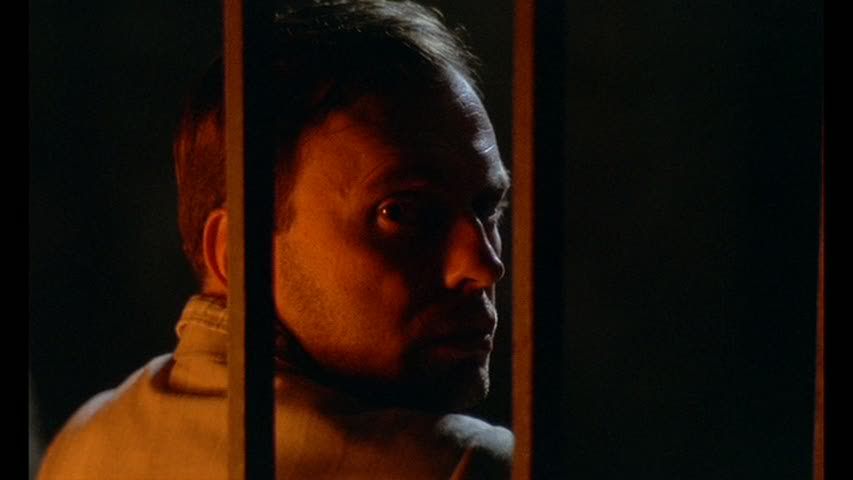
Stanley Kubrick's The Shining undoubtedly deserves its reputation as one of the cinema's creepiest, and most artful, horror films. Adapted loosely from Stephen King's novel about a hotel caretaker who loses his mind over the course of a long and isolated winter, the film is a bizarre and unrelenting experience, a slow pressure cooker that bears down on the viewer in much the same way as Jack Torrance's (Jack Nicholson) isolation affects him. Kubrick strips down the story to its bare core, as a study in slowly suffocating dread and terror. The film's pace is deliberate, and its plotting is minimal; Kubrick establishes the dominant mood through his evocative, distanced visuals and, especially, through the eerie soundtrack, with its pulsating heartbeat rhythms and sinister strings. In point of fact, it's easy to miss that not much actually happens here, that the film's actual horrific incidents are widely spaced and parceled out. More often, Kubrick lets the terror grow and grow, through lengthy and uncomfortable scenes that create the expectation of a horrible payoff, before abruptly cutting them off instead.

What's at the core of the film is the dysfunction of family, the bitter and ugly feelings that emerge from troubled father figure Jack. He's taken on a job as the winter caretaker at the Overlook Hotel, where he'll be snowbound for months with his wife Wendy (Shelley Duvall) and their son Danny (Danny Lloyd). While there, Jack, under the influence of the hotel's many ghosts or just his own unstable mind, begins to seethe with resentment and hate, feeling that his family is in some way holding him back or destroying his life. These sentiments are latent in Jack to begin with, as revealed by a story that Wendy tells to a concerned physician before the family heads to the Overlook. It seems that Jack had once been a drinker, and in an angry, uncontrolled moment had dislocated Danny's arm. This is a remarkable scene, staged almost entirely as a closeup on Wendy's face as she describes this incident, trying to put a positive gloss on it, to pretend that it was just an ordinary mishap. Kubrick captures her twitching smile, the way Duvall conveys the anguish and confusion lurking just below Wendy's chipper exterior. Duvall's performance here is extraordinary, as she bares her gums and her big buckteeth, while Kubrick holds the closeup, and holds it, and holds it, finally cutting to the skeptical, deadpan expression on the doctor's face, a stand-in for the audience, seeing right through Wendy's desperate cheerfulness. The scene perfectly conveys the multiple layers at work here, all in a simple memory that gets at the essence of this story's themes.

Wendy's insecurity about her potentially violent husband only worsens once the family is locked in at the Overlook, and this story about the dislocated arm lends queasy resonance to Jack's interactions with his family. At one point, Jack calls Danny over for a conversation, holding the boy in his lap and hugging him, asking him innocuous questions about how things are going and how he likes the hotel. It's a seemingly normal conversation on its face, but it's made creepy and strange by Nicholson's twitchy performance, and by the slowly escalating dread in the music. Kubrick treats everything this way; even the typewriter that Jack writes on is made an object of terror with a slow pan in towards its carriage, and of course later in the film this terror is revealed to be warranted when Wendy finally reads Jack's manuscript.


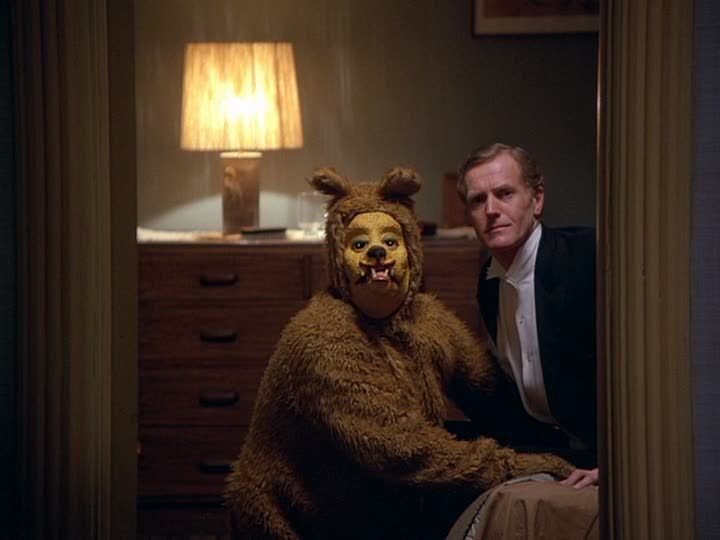
The Shining's particular form of terror is familiar by this point, even overly familiar, but it maintains its power because of Kubrick's subtlety, his decision to treat Jack's escalating madness as a surreal break with reality. The famous scene where Jack talks to the ghostly Lloyd the bartender (Joe Turkel) is a case in point. Jack walks into an empty ballroom and sits down at the bar, then Kubrick cuts to a closeup of Jack talking, presumably to himself, before cutting back to the longer shot of the bar, which is now stocked with bottles of booze and staffed by the suavely sinister Lloyd. The climax is even more startling in its disjunction from reality, as a frazzled Wendy staggers through the Overlook, catching glimpses of horrifying and puzzling sights, like what appears to be a man in a bear/pig mask giving head to a man in a suit. This famously inscrutable image, so unsettling in its effect, is a leftover from King's novel, where these characters had a story and a reason for being. Here, in Kubrick's film, without this context, it's simply a destabilizing surrealist break, a non-sequitur without any possibility of explanation or understanding.

Kubrick makes it absurd, and scary, and unfathomable, just as he strips much of the psychological rationalization from Jack. Kubrick keeps Jack's pathology at a distance, not only shooting everything in alienating long shots, but refusing to show the process by which Jack transforms from a slightly troubled family man into a raging lunatic. Instead, Jack's madness is shown from his family's point of view, as unexplainable and abrupt outbursts, as mood swings and sudden fits of rage without any clear cause. By the time Jack actually starts seeing ghosts — like his encounters with Lloyd and the hotel's former caretaker Grady (Philip Stone), who'd murdered his family many years before — he's already become violently angry. Nicholson's portrayal is of a man who is always just barely balancing on the edge of murderous rage to begin with, since Nicholson is almost naturally kind of creepy, with his sarcastic drawl and crooked smirk. Even before the family arrives at the Overlook, Jack tells his son about the Donner Party, taking such obvious satisfaction in freaking out the kid that he already comes across as a bit of a sadist.

Kubrick isolates this distasteful character within the Overlook's oversized rooms, not delving into his character but simply showing his disintegration from a distance. Wendy and the psychic Danny are shown at a similar remove, and Wendy's characterization is particularly limiting, as she is mostly just a weepy, insecure woman who sticks by a potentially abusive and nasty man. She nearly falls apart by the end of the film, and it's only Duvall's gape-eyed performance that gives Wendy some much-needed depth beyond her repetitive terror and crying. Ultimately, Kubrick makes the limitations of his archetypal characters into virtues, as the film is more about an abstract feeling of dread and the threat of violence than it is about a particular family and their horrific experiences. This is especially obvious in the character of the hotel cook Hallorann (Scatman Crothers), a stereotypical "magical Negro" character who can hear Danny's psychic cries. He shows up at the hotel after a lengthy struggle through the snow to get there, and just as suddenly gets an axe in his chest for his troubles. It's essentially a macabre joke from Kubrick, as he spends so much time chronicling Hallorann's journey to the Overlook only to abruptly destroy the pat hope represented by this rescue attempt. This is the film's essence, this reminder that hope and rescue can't come from outside: it's only Danny's cleverness during the final hedge maze sequence that ultimately saves him and his mom.

Friday, January 15, 2010

The Lady and the Duke


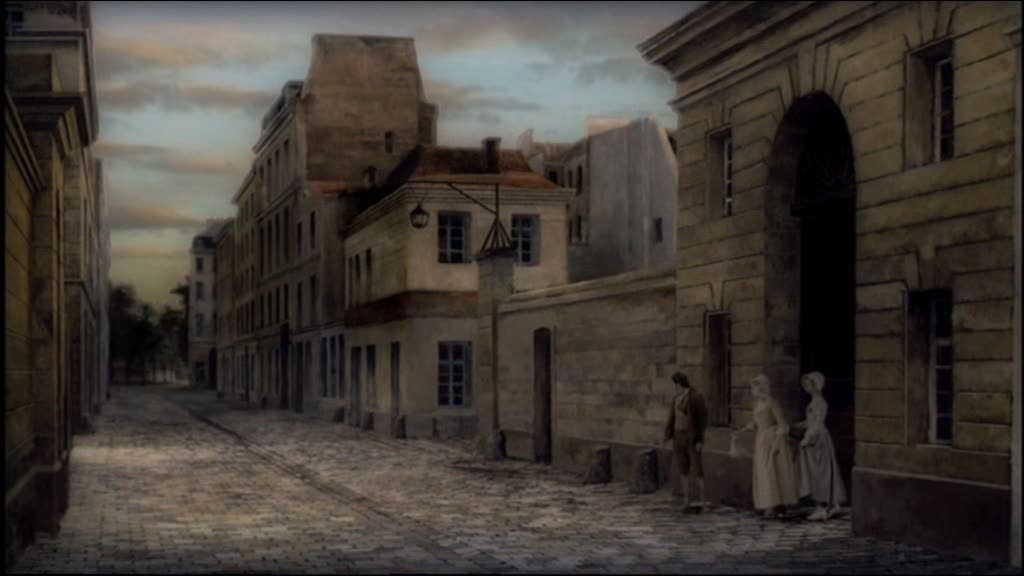
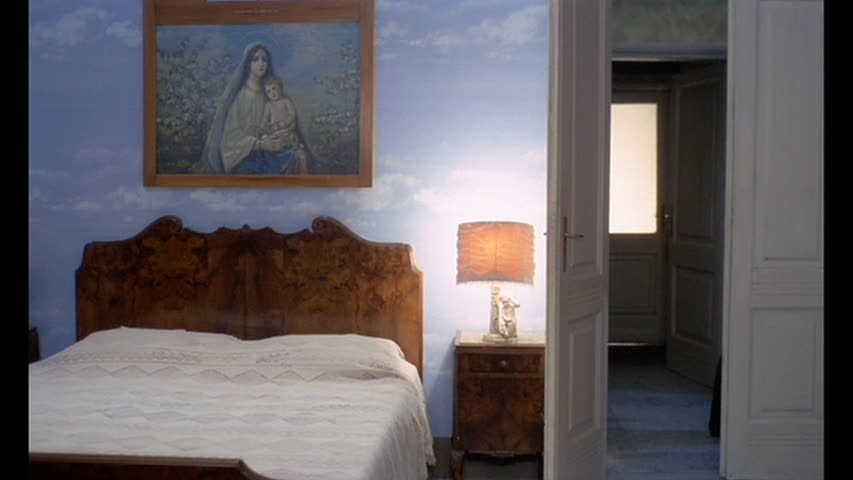
The Lady and the Duke is one of Eric Rohmer's atypical ventures into historical drama. The interesting thing about Rohmer's period films — like the theatrical, literary Perceval le Gallois or The Marquise of O... — is that they are generally far more overtly stylized and deconstructive than the modern romantic comedies for which he is known. It is as though the distance of the past, the abstraction of history, allows Rohmer the license to filter these events through extreme visual and aesthetic systems. In this film, he interprets the past specifically through the lens of its paintings. The film is set during the French Revolution, and Rohmer captures the feel of this era by digitally combining his sets and actors with paintings layered into the background. The effect is startling and strangely haunting. During the film's opening, onscreen text establishes the setting and the basic history of the revolution, while Rohmer collages together various paintings from the era. After this introduction, several of the paintings repeat, but this time the people within the paintings begin to move. Crowd scenes come to life, bustling with activity, moving within this static world. When Rohmer cuts to closeups, the texture of the brushstrokes within these canvases is even visible, reminders of the artificiality of his aesthetic.

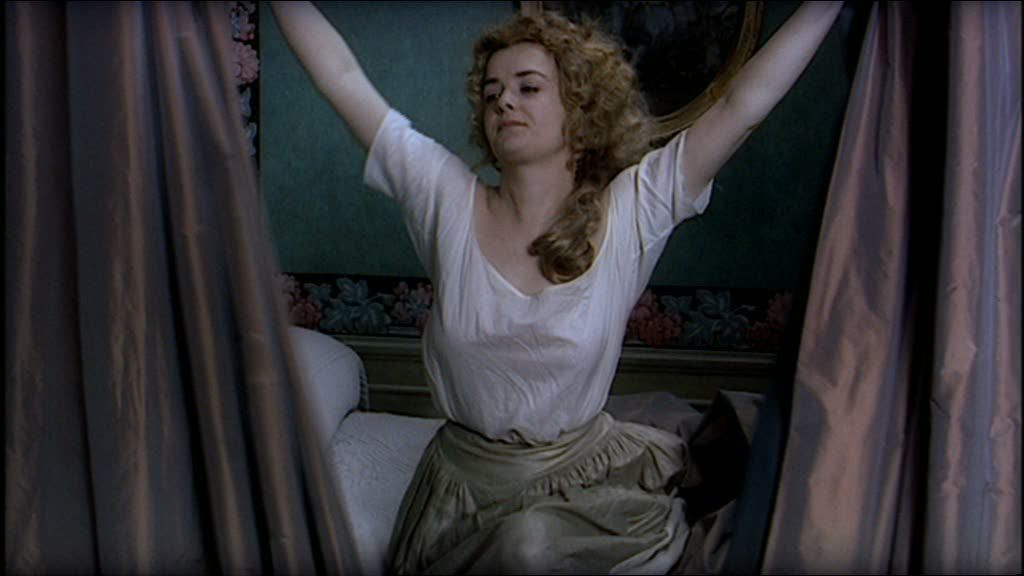
Although the film's aesthetic and historical period sets it apart from much of Rohmer's other work, like his other films it is driven by talk, and by the ideological, philosophical and emotional undercurrents obscured by and encoded within this talk. The film focuses on the Scottish emigré Grace Elliott (Lucy Russell), a bold woman who was the mistress of many powerful men and who was brought to France prior to the Revolution by the older Duke of Orleans (Jean-Claude Dreyfus). She was his lover and, after their relationship ended, remained his friend and outspoken confidante, advising him about politics as the Duke became entangled in the Revolution. Even though Grace is a devout royalist, loyal to the King, while the Duke joins the Jacobins' revolt, they remain close even as things get worse and worse all around them.

At the heart of the film is, as usual with Rohmer, a moral inquiry. It's all about conscience and the willingness to acquiesce or go along with social horrors. The Duke is a weak-willed, basically foolish man, easily manipulated and convinced of his own rightness even when all evidence begins to pile up to the contrary. Despite his aristocratic status, he supports the Jacobins out of an idealistic belief that the common people of the country deserve equality and liberty that isn't offered to them under a monarchy. Even though King Louis XV is his cousin, the Duke opposes the monarchy and rallies behind the revolutionaries. In multiple visits with Grace, they argue about the politics of the time, and she attempts, mostly in vain, to convince him that the brutality and violence of the Revolution is not justified by his ideals, however well-intentioned they might be. Grace is a fearless and principled woman, unafraid to speak her mind even as her opinions become unpopular and even treasonous. While everyone around her tries to keep their opinions in check, maintaining the rules of decorum and tradition as though they were still living in polite society, Grace alone seems to understand how important it is to speak out, to try to sway the opinions of those who support the Jacobins even as they're shocked by the violence committed in the name of the Revolution. Grace preserves her nobility and class, and her status, but is too much of a determined, intelligent woman to play the role of the "good citizen."


Of course, the irony of the film's recurring dialogue about being a "good citizen" is that citizenship in this society requires a willingness to tacitly endorse inhumanity and horror. In one of the film's most striking images, a massed crowd marches while holding aloft a stake with the head of a noblewoman skewered on top. It's a stylized image like many in the film; the head is greenish and artificial-looking, with blood flowing from its ragged neck. It's a horrible icon of the Revolution's violence, and it affects the audience as viscerally as it does Grace, who witnesses it while trying to make her way through Paris to the home of a friend.

Images like this lend force to the film's moral thrust; Rohmer's allegiances are clear. He is suggesting that if platitudes about equality and freedom, about helping the working class, about overthrowing tyrants, lead to this, then the ideals are empty and hollow. He is not necessarily aligning himself with either the royalists or the rebels so much as he is taking a humanist slant on this material, evincing a concern for life and fairness that goes beyond abstract ideology. Towards the end of the film, Rohmer portrays the functioning of the Revolution's "justice" as a series of Kafkaesque absurdities, where suspicion furnishes its own proof and overzealous revolutionaries can levy accusations based on pure supposition and innocuous conversations. The film is a powerful critique of political violence and oppression, especially when it disguises itself in the form of a popular movement.

Of course, Rohmer explores all of these themes and ideas in his characteristic way, buried in the subtext of various conversations that dance around these issues rather than engaging with them directly. Grace and the Duke meet several times over the course of the film, and in between social niceties and exchanges of affectionate patter, they have brief outbursts of political sparring, which inevitably end with the Duke urging his former love to keep silent, not to talk politics. That's not Rohmer's way, though. Rohmer's films, where people inevitably talk about everything, support the idea that talk is the key to understanding and analyzing the substance of life, whether the conversations centers on love or spirituality, as they do in so many of Rohmer's films, or on the politics and events of the day. The Duke is essentially the film's villain because he is the enemy of such openness.

Rohmer's approach to this story is typically sensitive and probing, both ethically and aesthetically. His use of digital technology to tell this historical tale is frequently stunning; watching these paintings move and shift allows Rohmer to filter his view of history through the perspectives of the era's artists. He seamlessly integrates this art with the flat, mundane interiors, which are worn and grimy in comparison to the textured gloss of the painted scenes. These rooms look lived-in, and the props in Grace's home frequently intrude into the narrative and the mise en scène, like the way her letters and writing implements become important to the film's denouement. Rohmer's feel for nuanced emotions is as keen as ever, particularly in the scene where Grace and her maid stand on a distant hill, watching the execution of the king through a telescope. With a gorgeous painted landscape stretching off into the distance, Grace stands in all black, unable to look, seized with momentary false hopes before accepting the inevitable. The majesty of the composition, in which she and her servant are small figures within the grand scale of this painted countryside, puts her strong emotional reaction into the context of history, as one small response to the big events that change the world. For Rohmer, though, just because this story may be simply one small, provincial perspective on world-changing events, it is no less important; he privileges the individuals affected by history and the ideas they cherish and fight for.

Wednesday, January 13, 2010

Films I Love #47: The Conformist (Bernardo Bertolucci, 1970)


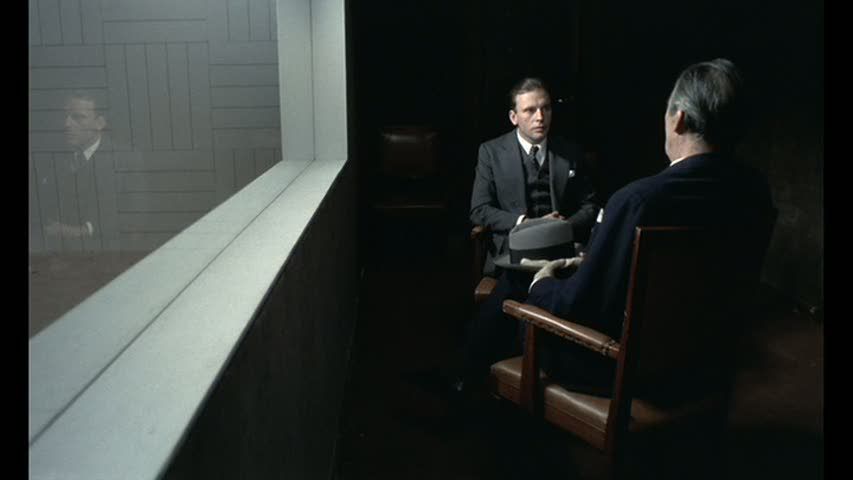
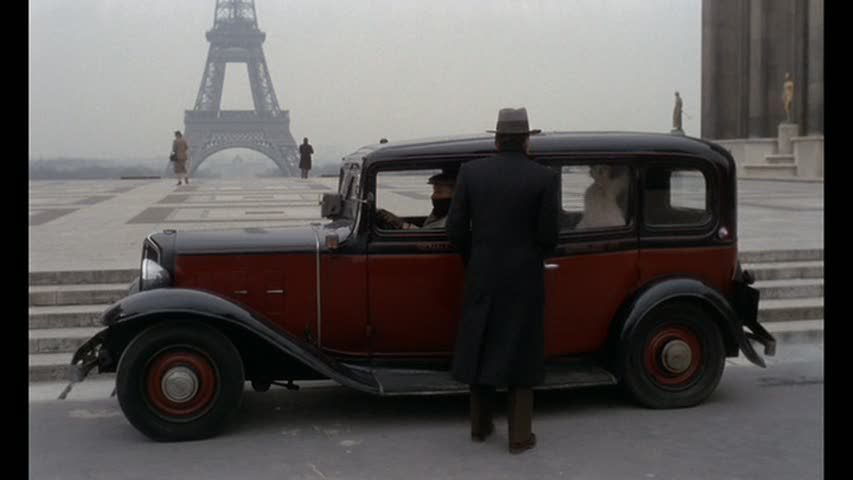
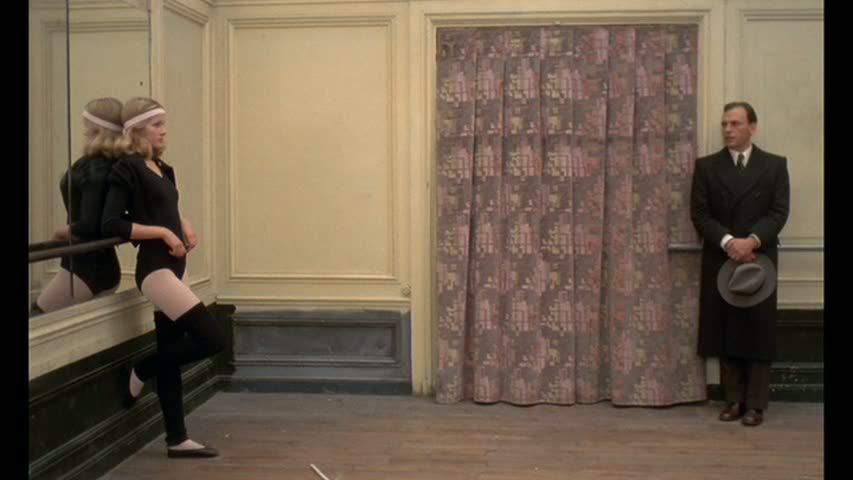
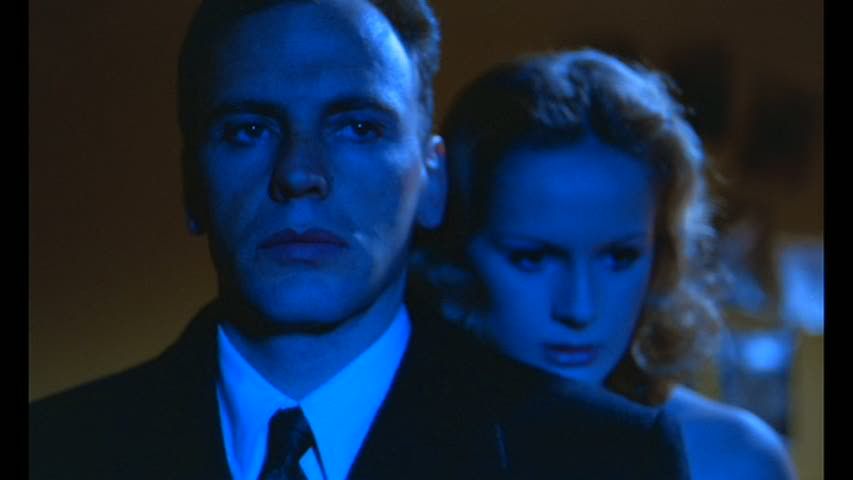
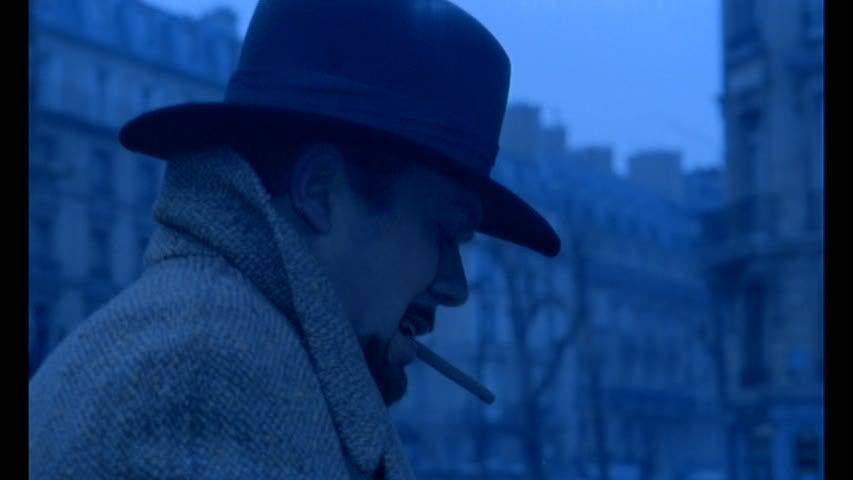
The Conformist is Bernardo Bertolucci's melancholy, lovingly crafted portrait of Italy's fascist era, and the pressures forcing individuals to accede to oppressive political regimes. Marcello (Jean-Louis Trintignant) is a weak man whose only desire is to fit in, to be accepted; he is the conformist of the title. In Mussolini's Italy, he conforms by serving the state, agreeing to turn his honeymoon with the lovely but empty-headed Giulia (Stefania Sandrelli) into a cover for an assassination assignment. His mission is to go to Paris and track down his former professor, Quadri (Enzo Tarascio), who had fled from the Italian fascists. Instead, the continually dithering and uncertain Marcello gets tangled up in an affair with Quadri's wife Anna (Dominique Sanda) and finds his conformist resolve shaken by Quadri and Anna's idealism.

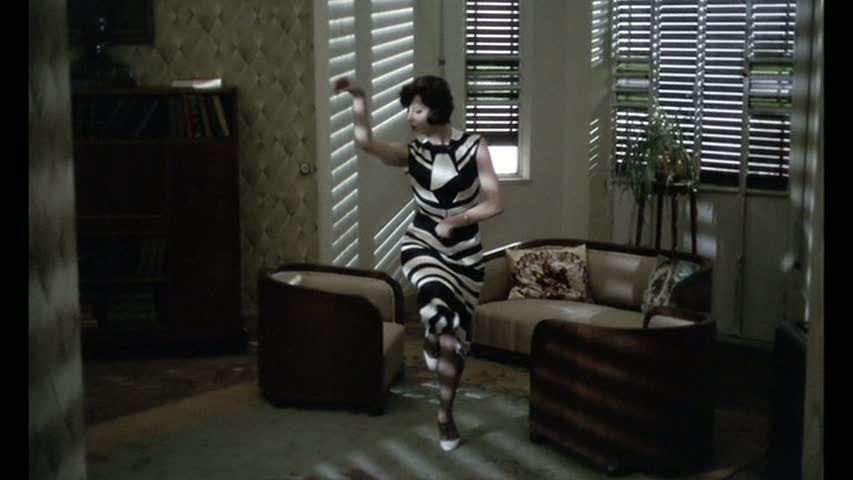
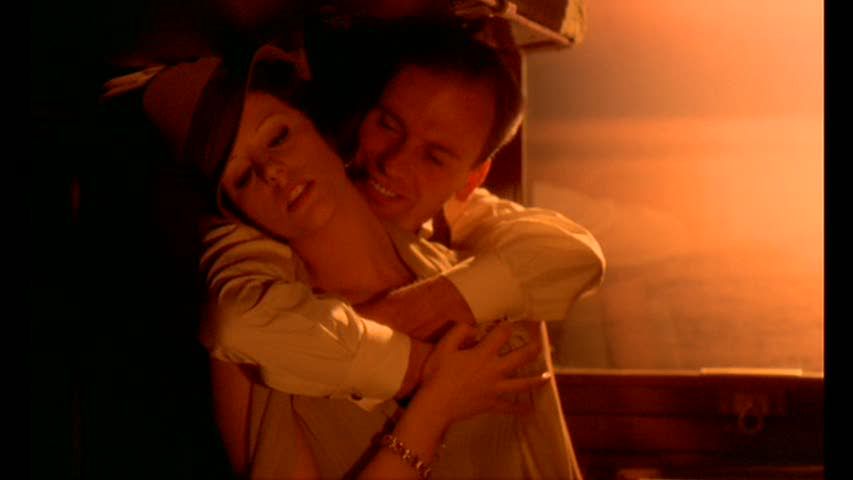
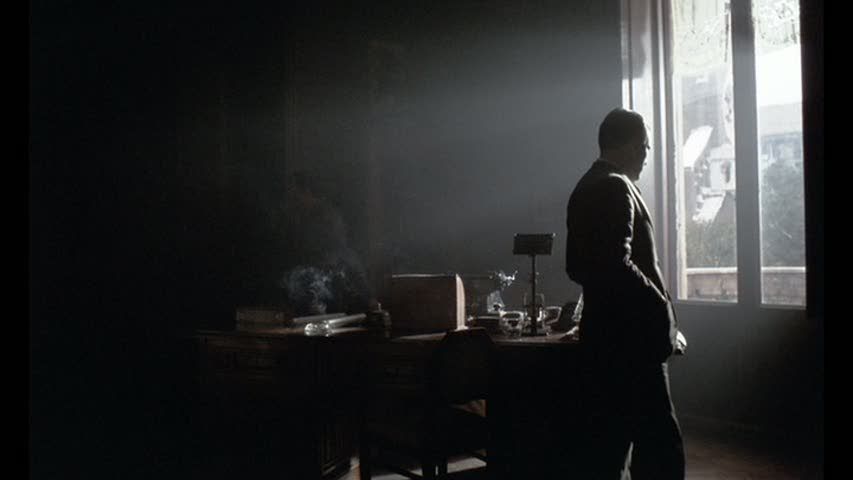
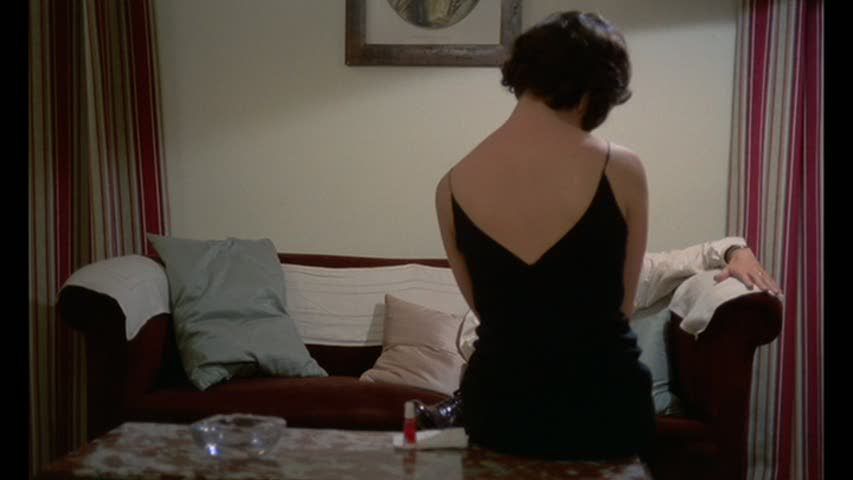
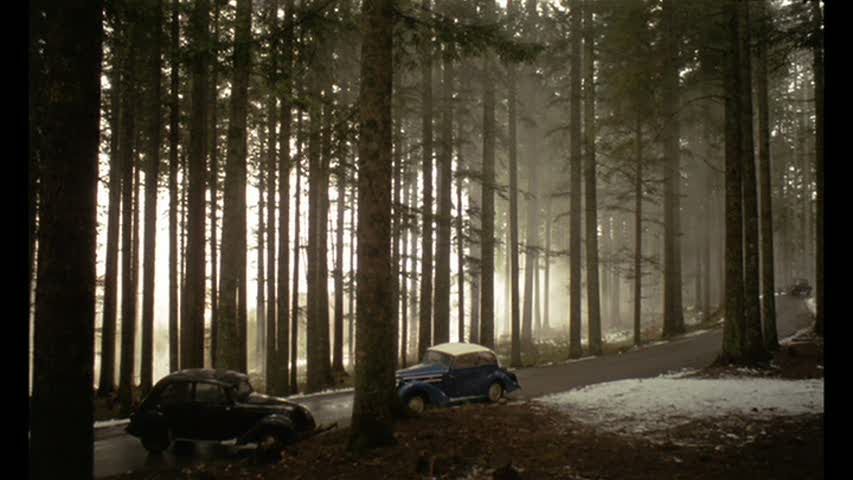
This is a visually stunning film, with each scene a study in color and light. Bertolucci's images have a certain pristine formalism that both abstracts the narrative and dramatizes its morality: characters shift between darkness and light, and slatted shadows fall across the characters as though they were being imprisoned by their choices. In one of the most striking scenes, Giulia's black and white striped dress visually rhymes with the light filtering in through the windows of her house as she dances around the room. The images, and the moral imperatives, are derived from the grammar of the film noir, and Marcello in his fedora hat and long coat is a misplaced noir antihero wandering through a vibrant color world. Like a noir hero, his weaknesses — sexual confusion, malleability, willingness to compromise — doom him from the start. The film is a clear-eyed examination of his failure, as well as the failures of all those like him whose collaboration allows fascism and brutality to flourish.

Monday, January 11, 2010

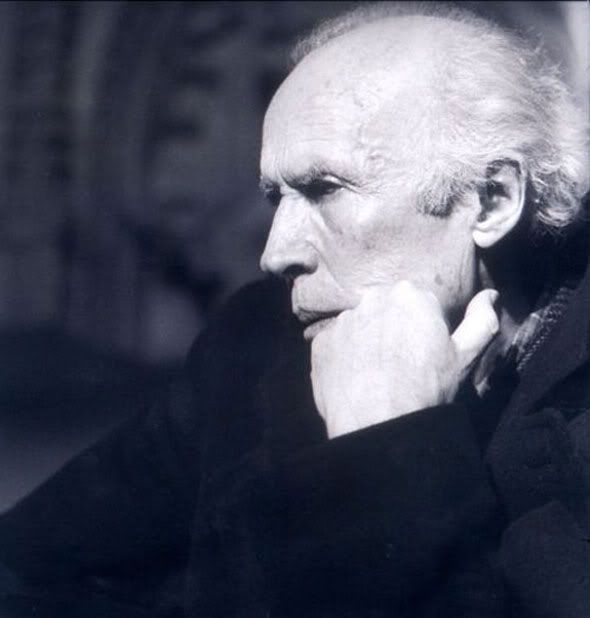
Eric Rohmer, 1920-2010


It is with great sadness I report that the French New Wave auteur Eric Rohmer has died at the age of 89. One of the greatest careers in the cinema has come to an end after 25 theatrical features and numerous short films, documentaries and TV productions. Rohmer's aesthetic, his reliance on subtle dialogue and restrained emotions, his seeming visual straightforwardness, has often led to him being misunderstood as a maker of boring talkfests. Even the BBC's obituary calls his work "completely devoid of action," as though he should have inserted more explosions or car chases into his patient, acutely observed films. As though Rohmer wasn't simply concerned with different kinds of action.

In fact, Rohmer was one of the most sensitive and intellectually probing of directors. He had an ear, not only for the way people talked, but for the ways in which their words related obliquely to their inner states. His films require careful attention and a willingness to read between the lines, to become attuned to the emotional and intellectual undercurrents of his scenarios. For Rohmer, as for many of his protagonists, life is something that should be considered and analyzed as well as simply experienced. Though he was not immune to sensual pleasures — the sand and water in Pauline at the Beach, the romantic interlude that opens A Winter's Tale, the lushly green park at the center of The Aviator's Wife — he was also always conscious of the multiplicity of thoughts and decisions that constitute human consciousness. His cinema was moral, but not moralistic; his parables are open-ended and ambiguous, suggesting that the decision, the judgment, belongs to the viewer alone.

In film after film, Rohmer returned to his favored topics, namely the formation, maintenance, and disintegration of love and relationships, ethics and spirituality, the natural world, the gap between thought and action, between imagination and reality. Many of his protagonists set out with an ideal in mind, seeking to make it real, and Rohmer both respects their determination and highlights their absurdity. Sometimes, these protagonists seek some seemingly unattainable romantic perfection, as in The Green Ray and countless other films, while in Perceval le gallois Rohmer's determined hero is a knight who clumsily integrates his ideals and theories with the real world. Rohmer's cinema, despite its unearned reputation for dreary chatter, could be funny, uplifting, deeply romantic, ironic, bittersweet, playful. He loved youth, and beauty. He loved love itself. He will be truly, sadly, missed.


I have not written as much as I would have liked about Rohmer here. He has long been one of my favorite directors, but as with other favorites I've watched and digested much of his work long before starting this site. I hope to write, in the coming weeks, about a few of his later films I haven't yet caught up with, as a way of saying goodbye to this cherished auteur. In the meantime, I direct you to my writeups of his Four Seasons cycle (A Tale Of Springtime, A Winter's Tale, A Summer's Tale, Autumn Tale), his uncharacteristic and delightful Perceval le Gallois, his historical spy thriller Triple Agent, and one of my favorites from his lengthy career, the charming The Aviator's Wife.

Also, for those who might see this as a reason to become acquainted, or reacquainted, with the work of this French master, might I suggest, in addition to some of the above, a few of his very finest films: Pauline at the Beach, My Night At Maud's, La collectionneuse, Claire's Knee and My Girlfriend's Boyfriend. The best way to honor Rohmer, and to remember him, is to watch his films.