Thursday, January 19, 2012

Clean


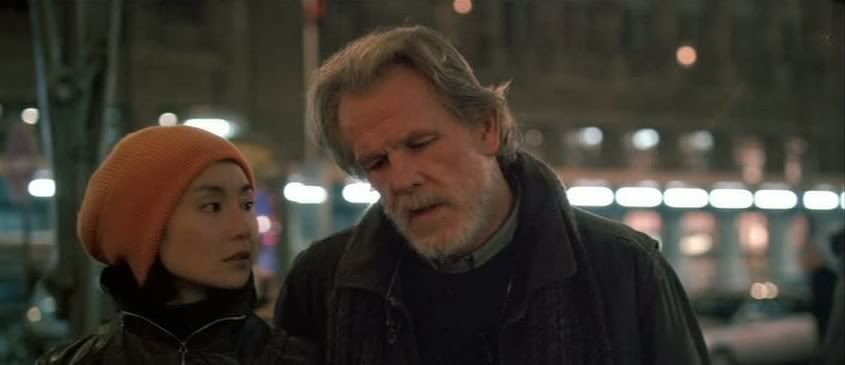
Olivier Assayas' Clean is a low-key, unassuming film that nevertheless accumulates great power as it traces the up-and-down trajectory of Emily Wang (Maggie Cheung), a former early-MTV-type celebrity and girlfriend of washed-up rock star Lee Hauser (James Johnston). When Lee dies of a drug overdose, Emily staggers on without him, struggling to get her life back in order, to get off the drugs, adjust to normal life, and get back her son Jay (James Dennis), who's living with Lee's parents, Albrecht (Nick Nolte) and Rosemary (Martha Henry). Obviously, this is a story with intense and unsettling emotional stakes, but Assayas, typically, resists the impulse for melodrama, instead crafting a quiet and gently paced film that puts the emphasis on day-to-day life and the ordinary dramas of getting through each day in the wake of a life-shaking tragedy.

It's a film all about grief and guilt, and Assayas places Cheung's subtle performance front and center. Her expressive face, surrounded here by a halo of frizzy, punky unwashed hair, conveys the full range of her feelings as she struggles to make a new life without Lee, and without the aura of low-level fame that she was accustomed to. Lee's old rock star friends and associates — including drum-and-bass producer Tricky, one of several real musicians playing himself — now want nothing to do with her, and the press eulogizes Lee with more praise than he ever got in life while condemning Emily as the cause of his addiction and death. The patterns are familiar: dead rock stars suddenly become geniuses, while rock stars' girlfriends are always blamed, like Yoko Ono, for all the ill that befalls the men. Assayas is taking all the old rock n' roll clichés and digging into them, trying to reveal the less sensational human truths behind the music magazine headlines and rhapsodic essays. In one scene, Lee's parents, reviewing a reissue project of their son's music, read the CD liner notes which portray their son as a romantically tragic figure, self-destructive and tormented. They lament that these notes present such a one-dimensional portrait of a man who they knew had so much more to him, and then they laugh, because they know that Lee would laugh, too, bemused to be turned into such a poetic martyr.

It's a striking scene because it's unlike almost anything else that usually appears in cinematic portrayals of rock n' roll tragedy. The rock star dying of a drug overdose, leaving behind a strung-out girlfriend and a son neither of them could ever deal with? This is familiar. The rock star's parents sighing over the excessive imaginations of music journalists is something that only Assayas would think to include. Just as Irma Vep dealt with questions of identity and race by wandering around the fringes of a film set, Clean lingers at the edges of the music industry, populated with people who were once famous or had mildly famous bands or are known in certain insular scenes. Emily is peripheral to this milieu herself, not quite famous on her own merits, sometimes remembered for a TV show she had, mostly remembered, unfairly but predictably, as the woman who destroyed a rock star's life. Surrounded by phoniness and spite — Rivette regular Jeanne Balibar appears as a former friend who's too self-absorbed to help — Emily is trying to clean up, to readjust, taking low-level jobs in restaurants and clothing stores. Worst of all is an interview with a store manager who remembers her TV show, making her attempt to get a job as a salesgirl especially humiliating. When she returns to her friend Elena (Béatrice Dalle) after this interview, she admits that she isn't sure if this new life, this attempt to get a normal job and clean up, is better or worse than being a junkie — it's a devastating admission.


Though the film's focus remains almost entirely on Emily, Assayas occasionally cuts away to Lee's parents, who are also dealing with the aftermath of Lee's death and trying to raise his son. Nick Nolte delivers a quiet but intense performance as Albrecht, a gruff man whose wife is sick and, he begins to suspect, dying. He sits in a hospital by her side, waiting through endless barrages of tests, or in a hotel room with the precocious Jay. As Albrecht confesses to Martha, he'd never paid much attention to his own son when he was a child, because he doesn't know what to do with young children. He is a somewhat emotionally aloof man, his face often unreadable behind his beard, his raspy voice seldom betraying much of what he's feeling. But he's clearly shaken by his wife's slow decline, and by the prospect of being left alone with his grandson, so he reaches out to Emily, trying to get her to clean up, to reforge the broken connection with her son.

It's a touching story, and Assayas tells it with simple grace and not even a hint of sentimentality or falseness. As is often the case in his films, the story hops around the globe, from Canada to London to Paris to San Francisco, with his cinematography giving a distinct feel to each place even as his habit of cross-cutting between countries and continents conveys the ease of international travel, of a community of people whose human connections and family bonds transcend borders. It is perpetually nighttime in Assayas' Paris, moody and lit with the golden glow of street lamps and traffic, and he contrasts this romantic urban image with the institutional austerity of a London hospital, the forlorn and decaying motels of a fading rock tour passing through a small town, the noise and chatter of a crowded club, everyone talking and drinking while the band plays. Assayas has always had a real feel for music and performance, and the film's soundtrack is memorably scattered with snippets of Brian Eno, shoegazer ballads, and Maggie Cheung singing her own songs that sound like slightly accented Sonic Youth. Assayas films several musicians performing, most memorably an appearance by the Canadian indie rock outfit Metric: the camera glides seductively up and down the body of singer Emily Haines, admiring the short hem of her skirt and the legs below it, capturing the jittery, sexy energy of a rock star performing, projecting her whole body into the pulsing post-punk rhythms of the band's song "Dead Disco."

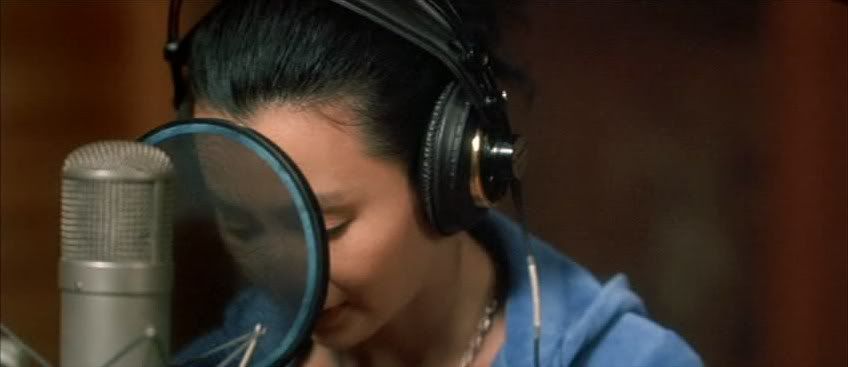
In the film's final scenes, Emily records a song, while the camera drifts in elegant half-circles around her, her face often hidden or half-hidden behind a microphone. She gets an ambivalent reaction from her producer, chats with her collaborator, cries and then skips out onto a patio outside, smiling as the camera pans up and away from her, taking in a hazy view of San Francisco's hills, the bridge in the distance. It's a perfect encapsulation of the film's emphasis on life slowly, steadily going on, with heartache and happiness tangled together, modest joy and lingering pain coexisting in equal measures.

Monday, January 16, 2012

Bush Mama


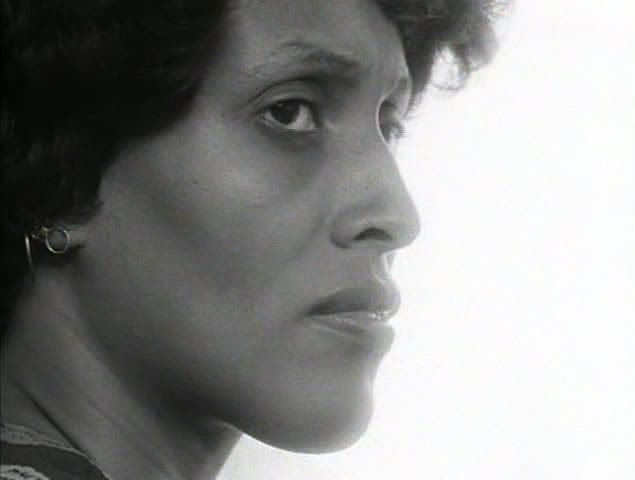
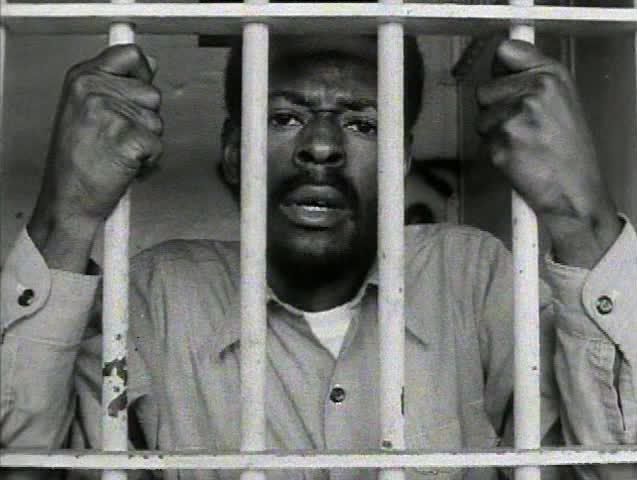
Bush Mama is director Haile Gerima's raw, potent depiction of poor black life in 1970s Los Angeles. Shot in grainy black-and-white, the film is a blend of near-documentary street scenes, raw amateur acting, and avant-garde techniques. The loose narrative focuses on Dorothy (Barbarao), a jobless woman who subsists on welfare to raise her daughter after her husband T.C. (Johnny Weathers) is sent to prison for a crime he didn't commit. With nothing to do and no hope of finding a job — she waits in the unemployment office for hours only to be told there's nothing for her — she simply wanders the neighborhood, reads letters from T.C., and talks with other neighborhood women. She's pregnant with her second child, but because she's on welfare and her husband isn't around, she's under constant pressure from government officials to have an abortion. The letters she gets from T.C. reflect his increasing radicalization and his desire to overthrow a system that seems stacked against blacks in so many ways. She hears some of the same ideas around the neighborhood, particularly from a woman who brings her radical posters from rallies, depicting an African woman with a baby on one arm and a gun in her other hand (the "bush mama" of the film's title) and another poster showing the hole-filled body of a man who'd been shot 25 times by the police.

Dorothy doesn't really understand these radical ideas, though she feels some sympathy for them on a gut level. However, she's often swayed by the brash Molly (Cora Lee Day), who has nothing but mockery and contempt for radical ideas about "togetherness" or African identity. Over the course of the film, in between scenes of ordinary domestic life, Dorothy grapples with this debate over radicalization, vacillating between those who want to do something to fight an oppressive system and those, like Molly, who can't think beyond the day-to-day. By the end of the film, Dorothy, facing the camera in front of the poster of the African mother, has been fully awakened — through a harrowing and horrific series of events — to the necessity of systemic change. She's been radicalized, and to reflect this transition she's finally removed the bushy wig that she wore throughout the film, revealing the sparse, tightly coiled dreadlocks hanging off her scalp underneath. The symbolism is obvious: she's no longer hiding anything, she's embraced her true self, which is why Gerima shoots her in closeup with the "bush mama" poster behind her. He racks the focus, so that first Dorothy's face is in focus, and then the poster is, and then he freezes the shot, while on the soundtrack Dorothy reads a passionate letter she wrote to T.C., telling him that she's finally ready to hear and understand what he's been telling her.

Gerima relates this tale of one woman's gradual awareness of her place within a larger societal struggle with a loose, eclectic style. The film has an elliptical collage structure in which conversations, monologues addressed to the camera, and everyday moments are stitched together with connective scenes of Dorothy walking around the neighborhood or sitting at her window, lost in thought. The soundtrack is also a collage, combining snippets of dialogue and music into an associative portrait of ghetto life: bits of dialogue or radio broadcasts are looped and repeated, and the occasional song with lyrics reflects the events of the narrative. The opening of the film consists of several minutes of slice-of-life footage from around the neighborhood — the police arresting a man, people walking, a purse-snatching kid — accompanied by a dense soundtrack of street sounds, pulsing music and loops of detailed questions excerpted from welfare interviews.


Throughout the film, there are sporadic bursts of violence — men being beaten or shot down right in the streets by the police — that seem as ordinary as anything else that happens in the streets. It's just another part of the backdrop, not exactly accepted but certainly expected. Again, Gerima shows some progress in Dorothy's reactions to these events, so that by the end of the film, the sight of a black man being gunned down in the street outside her home causes her to bury her head and sob, whereas earlier she'd shown little emotional involvement at all in these routine bursts of violence. These scenes are also setting the groundwork for the absolutely devastating final act of the film, in which the violence of the streets and the police directly infiltrates Dorothy's home.

This is an intense and emotionally draining film that's all about the toll that systemic racial oppression and poverty take on those who live within this system. Some of the most poignant, poetic moments come from T.C.'s letters to Dorothy, which he reads aloud while facing the camera, speaking to the audience as though addressing Dorothy. In one of these letters, he laments the way that prison is sapping the vital, lively parts of his personality that he once treasured: "every time I crack a joke, to test if that part of me is still alive, I never can make it." Even humor is destroyed by the injustice that families like T.C. and Dorothy's must endure. It's especially cruel that T.C. is arrested, early in the film, right before a promising job interview that they'd hoped would finally change things for their family. One moment, T.C. and Dorothy are enthusiastically talking about finally having some money, maybe being able to move somewhere nicer, and then Gerima cuts to T.C. being led through the prison by a guard. The circumstances of his arrest, which are predictably unfair, aren't explained until the very end of the film, which only enhances the sense of how arbitrary it all is.

Gerima's greatest accomplishment with Bush Mama is making a deeply political, angry, even polemical film that rarely feels like merely a collection of slogans. The film's politics are rooted in the circumstances of everyday life, in the injustices that occur daily in poor black neighborhoods. The film has a real political/social message to send, contained in its dialogues and monologues about black togetherness and radicalization, but it delivers this message primarily by focusing on the tangible emotional and physical effects of racial prejudice, police violence, and systemic poverty.

Thursday, January 12, 2012

Paris, je t'aime


Paris je t'aime is an ambitious anthology film that compiles 18 short films by a multinational group of directors, each of them focused on Paris from many different angles. As is the nature with films like this, it's an uneven affair, packed with some bright spots, some total failures and a heaping portion of mediocre fare that passes by without leaving much of an impression one way or another. Perhaps even more than most other portmanteau films, this one suffers from the schizophrenic leaps from one short to the next, because there are just so damn many of them and as a result no director gets more than a few minutes to tell a simple story. Many of the best segments here work within those limitations, realizing that the best way to make something satisfying in such a short time is simply to craft a well-acted, cleverly written dialogue scene that stands alone, suggesting a larger untold story between the lines. A few directors attempt something more ambitious and a few take more experimental approaches, but most of the best work found here presents a self-contained, intimate single scene.

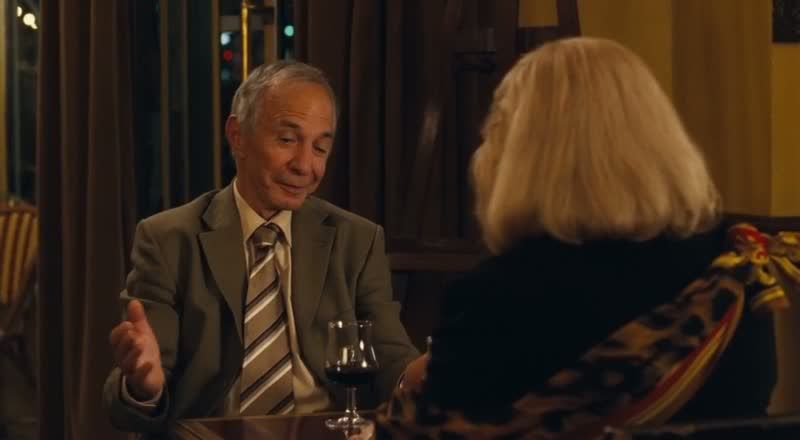
A good example is Frédéric Auburtin and Gérard Depardieu's Quartier Latin, which consists entirely of a conversation between a divorcing couple played by Gena Rowlands and Ben Gazzara. The segment gets by entirely on the charm of the actors, the casual way they trade gently barbed insults, smiling all the while, an affectionate older married couple who might even stay together if they weren't already so thoroughly on the path towards separate lives. The dialogue has a fizz and crackle that's especially well-suited to Rowlands' brassy bravado and razor-tongued wit, while fellow John Cassavetes veteran Gazzara radiates gravel-voiced aging machismo. It's a great piece that pays tribute to the two actors' careers and histories, providing an affectionate ode to the cinema of Cassavetes by casting two of his finest actors in roles that draw on their full, well-lived lives, on-screen and off. A similar tone inflects Richard LaGravenese's Pigalle, another showcase for and love letter to aging stars, in which Fanny Ardant and Bob Hoskins play an old showbiz couple who enjoy playing roles, acting out, talking through their troubled marriage in grand gestures, theatrical slaps and sexual gamesmanship. As in the Rowlands/Gazzara scene, this segment is at least in part about the stars themselves, their personae and their screen histories, and like Quartier Latin it's a charming, subtly funny piece with wit to spare.

That seems to be a key in this film, and the pieces that showcase witty writing and well-timed dialogue exchanges definitely stand out. Wes Craven, of all people, turns in a charming, low-key piece about an engaged couple whose relationship is salvaged by the intervention of the shade of Oscar Wilde (Alexander Payne). It's a slight little trifle, but it's redeemed by the pattering dialogue and the chemistry between the always delightful Emily Mortimer and Rufus Sewell. So many of the other segments aren't even this entertaining or memorable; where Craven offers a simple premise and a few smile-worthy lines, many other vignettes here are forgettable and bland. Walter Salles and Daniela Thomas' Loin du 16e is a stripped-down and nearly dialogue-free observation of a Hispanic maid dropping off her baby at daycare before going off to take care of a French woman's child. The irony is obvious, as is the parallel between the maid singing a sad lullaby first for her own child and then for the one she's taking care of, but it all just seems so slight and pat. A scene like this could be effective as part of a longer feature, a series of moments eventually accumulating emotional heft and context, but here it just feels like a disconnected sequence that abruptly cuts off.


The same could be said for Gus Van Sant's short Le Marais, in which a man chatters in French to a quiet young man who, it turns out, doesn't understand French. Again, there's just not much to it. Van Sant's camera gracefully follows the nervously energetic tics and pulsations of the talkative guy coming on to the non-responsive guy he's just met, so it's visually elegant but doesn't lead anywhere. Van Sant's films, generally, accumulate weight through a succession of unshowy, casual scenes like this, but in isolation there's just not enough to it. Van Sant's meandering pacing and off-the-cuff aesthetics are poorly suited to this short of a time frame; he needs some canvas to stretch out on and here the scene just feels like a teaser for a fuller story that never comes.

Other shorts suffer, like the Salles/Thomas piece, for presenting some painfully unsubtle sociopolitical content. Gurinder Chadha's Quais de Seine is little more than a pat message about tolerance in which a young boy breaks away from his friends — who are shouting crude come-ons to passing women — to help a young Muslim girl who's stumbled in the street. Everyone else just laughs, and his friends later make nasty and stereotypical remarks about Muslims, but he is kind to her and earns the beautiful girl's friendship. A very touching lesson, for sure, but the seams are so obvious it might as well be an after-school special. Meanwhile, Christopher Doyle's baffling Porte de Choisy seems to have a similar policy of ethnic tolerance at its core — this time suggesting that Asians should avoid Westernizing their appearances and embrace their own cultural ideals of beauty — but it's hard to tell because the film is just so daft and wacky. The colorful, lively style that cinematographer Doyle has always brought to the films of Wong Kar Wai is apparent here, but the bargain-basement surrealism is far removed from Wong's much more assured aesthetics. Doyle engages directly with Western stereotypes about Asia by splattering the screen with kung-fu moves, eerily grinning beauty pageant contestants, Buddhist monks, busty girls in military uniforms, and Hawaiian hula dancers. It's hard to know what to make of this garish, confounding stew of clichés and avant-garde disjunctions, but it certainly stands out from the rest of the film, for good or ill.

Indeed, several of these pieces stand out by digressing from reality, usually not to the most inspiring effect. Vincenzo Natali's Quartier de la Madeleine is a wince-inducing silent vampire story filmed in a grayscale monochrome with bright red "blood" that's obviously just paint. Olga Kurylenko plays a vampiress who falls in love with wide-eyed Elijah Wood, and turns him into a vampire so they can gleefully feed on each other's necks, at which point the short ends with a heart-shaped iris-in. It's a bland piece made worse by its aesthetically tone-deaf blending of silent film homage with a slick, glossy visual style that makes the leads look like they're made of plastic. Also distractingly bad is Sylvain Chomet's short about a mime who is snubbed everywhere until he meets a female mime to share his antics with. The attempts at charm and whimsy seem forced, especially in the framing device in which the mime couple's chatty son introduces the story of how his parents met.

Other segments are diverting, with minor pleasures but nothing more substantial. The Coen brothers' decision to base their Tuileries around the face of Steve Buscemi is a brilliant comic choice, as the actor broadly mimes his reactions to a passionate French couple who include him in their tumultuous, violent way of teasing each other. Buscemi's bug-eyed mugging is always a pleasure to watch, and the Coens structure the sequence around his silent incomprehension of French, keeping the American actor silent while the French couple yells and chatters at him. The broad comedy of it works, and the aesthetics suggest that Buscemi's character is a silent movie hero in a sound world, telegraphing his confusion and frustration entirely through the expressions on his malleable face. Alfonso Cuarón offers up an even more rarefied pleasure: the gritty joy of hearing Nick Nolte speak. The actor's raspy drone is the real star of Cuarón's basic little short, which consists almost entirely of a tracking shot along a street as Nolte's character has a conversation with a younger woman (Ludivine Sagnier). Cuarón keeps the camera at such a distance, tracking along on the opposite side of the street from the actors, that the aural component has to drive the short, and Nolte's distinctive voice would make it obvious that it was him even if he wasn't onscreen at all. The short's conceit is too cutesy by far, keeping the relationship between the two people ambiguous through vague dialogue, and the lame little "twist" at the end is eye-roll-inducing, but Nolte and Sagnier's largely verbal and enjoyable performances prevent it from being a total loss.


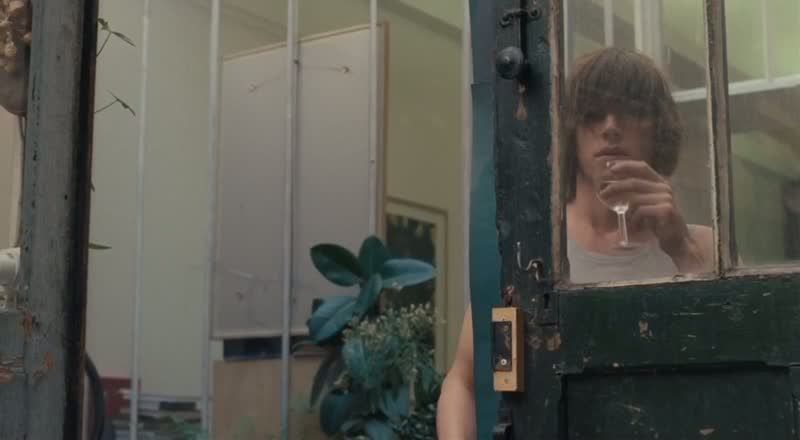
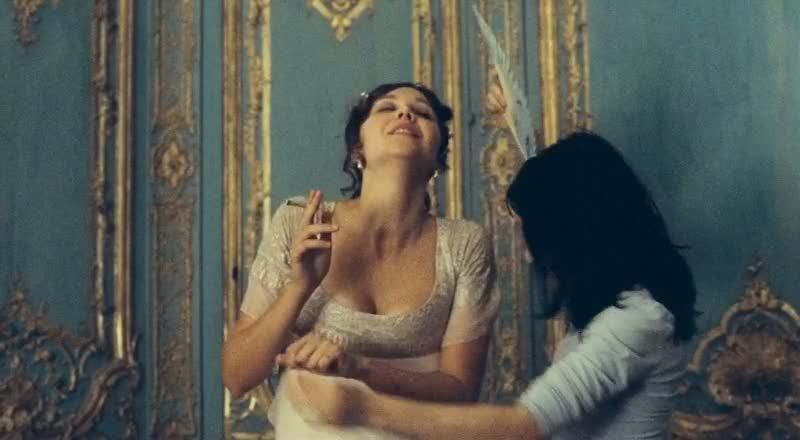
One of the better shorts, unsurprisingly, comes from Olivier Assayas, whose Quartier des Enfants Rouges plays out like an excerpt from one of his features, a deleted scene, but somehow avoids feeling as incomplete or insubstantial as the similarly truncated Van Sant sequence. Assayas focuses on an American actress (Maggie Gyllenhaal) in Paris to shoot a costume drama, buying drugs and feeling a brief flicker of romantic feeling for her dealer. It's a simple piece that, typical of Assayas, is all about mood, and it gets across a wealth of feeling in its economical few minutes. So many of the usual Assayas tropes are there — the cluttered and drug-hazed parties, the hesitant connections and uneasy communication, the movie business milieu that makes this seem like a lost Irma Vep outtake — and it's a beautiful, affecting little short. Assayas' love of actresses carries over to his affectionate, sympathetic filming of Gyllenhaal, who turns in a subtle, quiet performance largely without dialogue, portraying a woman trying hard to have fun in a foreign land, but feeling lonely and craving some connection that she can't quite express.

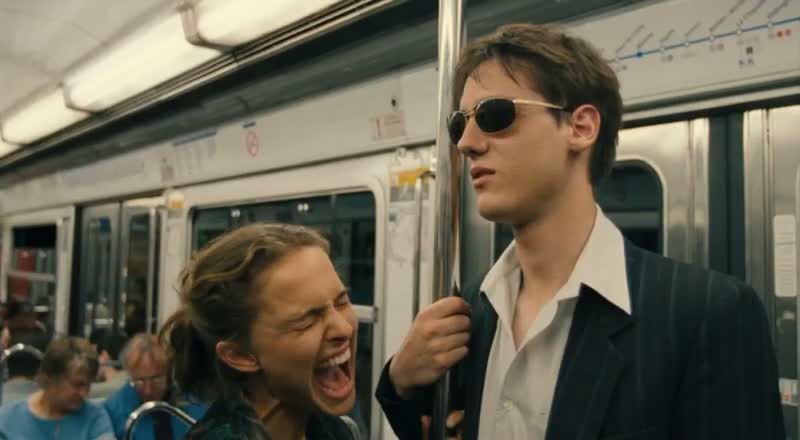
Tom Tykwer arguably takes the most ambitious approach out of any of the featured directors. His Faubourg Saint-Denis is about a blind young man (Melchior Beslon) who receives a phone call from his girlfriend (Natalie Portman) in which she seems to be breaking up with him. As a result, he flashes back through a sped-up summary of the entire history of their relationship, starting with their first meeting and then gradually speeding up to touch on significant moments in the rush of routine. A breathless voiceover recounts the ways in which their relationship gradually settles into familiar patterns, and the writing of this narration cleverly uses repetition and the gradually increasing frequency of certain words to suggest the shifts in their relationship. By the end, words that had appeared only occasionally in the voiceover come to dominate it, suggesting just how much this relationship has changed, mostly for the worse, over its course. From intimacy and excitement the mood changes to alienation and fragmentation, simply by altering the balance of how often certain events recur and the context in which they occur. The girl's screams chart the course of the relationship. They meet because she's screaming, rehearsing a part in a play, and early in the relationship he's charmed by her screams, by her playful habit of yelling on a subway or a shouted orgasm. Later, screaming signifies arguing, slamming doors, angry words, shifts into negativity. Tykwer defies his short allotted time by cramming the whole length of a relationship into this scant length, condensing this romance into key words and key events, providing a formalist breakdown of a possibly evaporating love. It's an affecting and aesthetically bracing piece, and Tykwer is one of the few directors here to really do something interesting with the short form beyond staging a quick little scene and getting out.


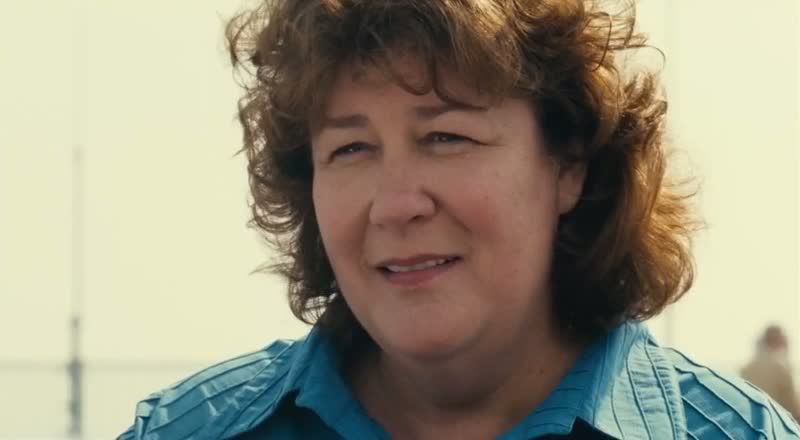
Alexander Payne's 14e arrondissement is also quite interesting, and very typical of Payne's unflinching observation of lonely or emotionally troubled people. It's the story of a middle-aged American postwoman (Margo Martindale) abroad in Paris for a vacation by herself. The short is narrated in this woman's awkwardly accented, faltering French, and it's a rather heartbreaking portrait of someone who's alone in the world but doesn't give in to despair, instead finding pleasure in exploring a foreign place by herself. There are signs of that condescension and nastiness that sometimes creep into Payne's treatment of middle American characters like this, as in the cheap shot where Payne cuts to an image of a greasy fast food burger in response to the narrator's disappointment that French food isn't as good as she'd expected. Surprisingly, that's one of the only moments where Payne takes that kind of mocking oh-those-silly-Americans tone. For the most part, Payne's perspective on this character is empathetic and warm, and the short (which is wisely sequenced last in Paris je t'aime) ends with a sweet moment in which the woman looks from children playing to lovers kissing to an elderly couple talking, as though seeing the entirety of a human life spread out across the lawn of a Parisian park.

Many of the other pieces here are just trite and forgettable. Nobuhiro Suwa wastes the excellent Juliette Binoche in a lame attempt to tug at heartstrings with a story of a mother grieving for her dead son. She runs into the street and encounters a cowboy — Willem Dafoe, channeling the infamous cowboy of David Lynch's Mulholland Dr. — who briefly reunites her with her son. It's pointless surrealism and pointless maudlin tripe, especially since it ends with the woman rapturously telling her husband that God has given her strength. Huh? God's a cowboy? I guess? Bruno Podalydès' Montmartre is just inoffensive and boring in comparison, a meet-cute in which a lonely man romances a woman who faints by his car. Oliver Schmitz's segment similarly suffers from its bland premise, in which a female paramedic cares for a man who's been stabbed, while flashbacks show that the events that led to this moment include the man's romantic obsession with the paramedic, who he'd pursued ever since randomly running into her in a parking garage some time before. It's an O. Henry-esque bit of irony that hardly seems earned by these inconsequential, ill-defined characters. In Bastille, Isabel Coixet uses voiceover narration to tell the compressed story of a man who is about to leave his wife until he learns that she is dying, at which point he devotes himself to her anew and falls in love all over again. The voiceover essentially provides a summary of what might have been an interesting movie if it had actually played out with some detail, some real scenes and real characters. As is, it's like a pitch for a movie rather than an actual story in itself.

As a whole, Paris je t'aime is unfortunately weighted down by more chaff than wheat. With so many shorts at just a few minutes each, more than a few of these segments feel like they required more room to stretch out and really develop something. (On the other hand, a few others are so slight they could barely sustain thirty seconds.) There are some real gems here and some other shorts that have their moments, but these sparks of vitality and interest are all too often overwhelmed by the many shorts that are barely remembered three segments later, let alone after the movie ends. All anthology films are flawed almost by necessity, and Paris je t'aime proves that the more fractured a portmanteau film is, the more different visions it attempts to cram into one container, the less satisfying it is in the end.

Tuesday, January 10, 2012

Matador


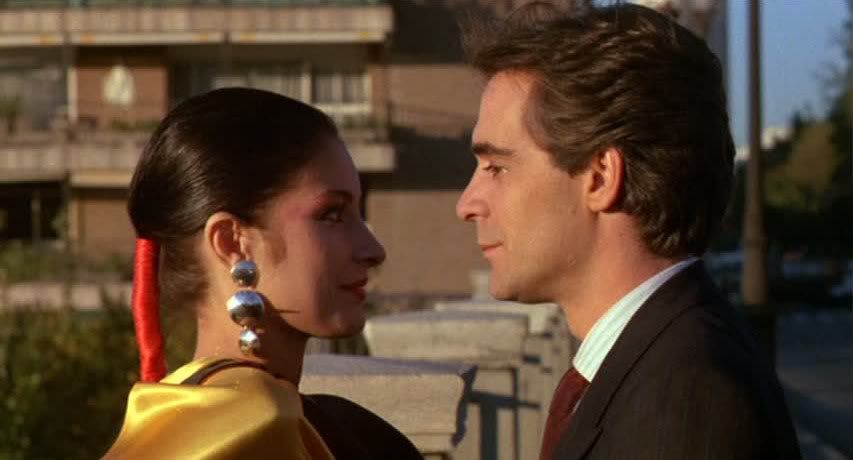
Pedro Almodóvar's Matador opens with a man masturbating while watching grisly, garish murders clipped out of trashy slasher movies. Almodóvar alternates between closeups on the face of former bullfighter Diego Montez (Nacho Martínez) and the grainy movie clips, in which one woman after another is killed in particularly gory and often sexualized ways. It's a bold opening scene that immediately establishes the film's central theme, the mysterious connection between sex and death, and especially the ways in which movies often display murder with a sensationalized, exploitative sexual component. In the following scene, Diego teaches a class about bullfighting — attentively watched by the naïve young student Ángel (Antonio Banderas) — and Almodóvar cuts between the class and a seduction scene in which the lawyer María Cardenal (Assumpta Serna) leads a man to his sexual death at her hands. Diego's words about killing a bull neatly parallel María's interactions with her victim, as she guides him into her arms like a matador leading the bull on, pulling him in by his belt, letting her clothes unfurl from off her body like the matador's cape, then mounting him and pulling a slender pin from her hair, stabbing the man in the back of the neck at precisely the spot where a matador stabs the bull at the end of a fight. The parallel editing unites Diego and María even before they've met, the former matador and the active matador, dancing and twirling gracefully around her victims before she brings them down.

Later, Diego and María will meet — pulled together by Ángel's Catholic guilt and urge to confess to crimes he hasn't even committed — and the parallels of the opening will become even more pronounced. Diego, it turns out, has been unable to give up the thrill of the kill even after a goring that ended his bullfighting career; "I didn't know you were still a matador," María coos, excited and aroused, when she learns that Diego has been killing young girls. The film is an amour fou romance, a love story about two death-obsessed killers who find their perfect match in one another, whose mutual worship of the art of killing makes it certain that they'll end up in one another's arms, knives held to each other's necks. At around the midpoint of the film, Diego follows María into a movie theater showing King Vidor's Duel in the Sun, and together they watch the climax in which the doomed lovers mortally wound each other, then embrace and kiss, declaring their love as they die. It's obvious then that this will also be the trajectory of Diego and María, that they are fated to follow the same path and end up in the same romantically morbid position.

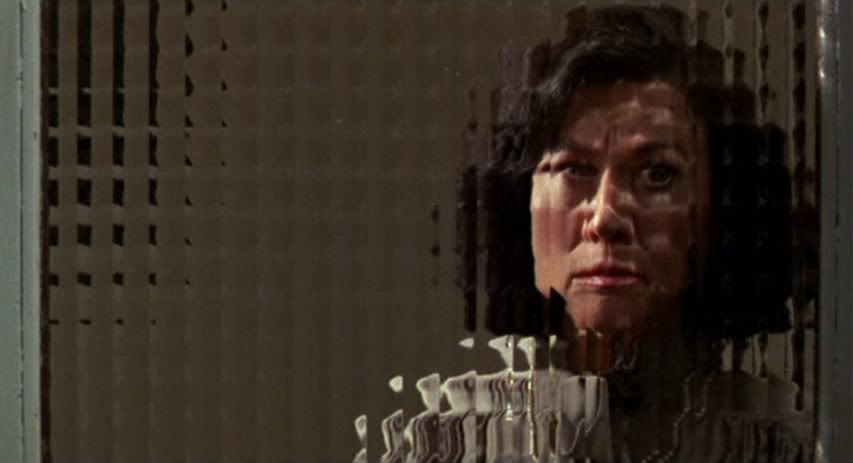
Around this central romance, Almodóvar weaves a number of subplots and themes that deal with sexuality and gender. Ángel is a sexual innocent who says he has never been with a woman, which prompts Diego to wonder if his pupil is gay. Ángel, determined to prove that he's not, goes out that night and attempts to rape Diego's girlfriend, Eva (Eva Cobo), an act that only proves that he has little conception of sexuality at all. His sexuality is tied up with his admiration for his teacher, his simplistic worship of Diego's masculine bravado and ease with women. Ángel is a deeply confused character, raised by an overbearing, religious mother (Julieta Serrano) who watches his every move with suspicion and contempt. At one point, while Ángel sits naked on the edge of the tub, about to take a shower, his mother appears at the bathroom door, her face distorted by frosted glass, peering suspiciously in at him, telling him to stop looking at himself in the mirror and just take his shower already. The tiled glass breaks her face into abstracted mosaic cubes, a fragmented vision of motherly disapproval. Immediately after this scene, Almodóvar cuts to a closeup of her bare leg, propped up as she ties a garter around her thigh, while her son sits at the dinner table nearby, watching her. Everything becomes freighted with sexual import in this film, even the troubled relationship between mother and son.


Ángel's mother is a vicious caricature of insane piety, and she snipes incessantly at Ángel, perhaps influenced by her obviously negative feelings about her dead husband. Every time she mentions Ángel's father, she reflexively adds, "may he rest in peace," her voice dripping with bile and scorn, and there's even a subtle suggestion that she may have killed him — her son faints at the sight of blood, and in that, she says, he's not like her at all. Domineering mothers and absent fathers are the rule in this film. Eva's mother Pilar (Chus Lampreave) is similarly overbearing, always lurking by her daughter's side, leaning over her shoulder to dispense advice, constantly expressing her disapproval. Eva's father is nowhere to be found, either, and his absence — dead or simply gone, it hardly matters — has made Pilar bitter and distrustful, urging her daughter not to rely on love.

These are broadly stereotyped roles, drawing on familiar clichés about single mothers and asshole fathers. In fact, the film is very much concerned with gender roles and the pressure to conform to them. Ángel's desire to prove his masculinity to his teacher, to rebut the insinuation that he's gay, is what leads him to rape Eva — and when she tells the police that he didn't actually rape her, that he came before he could even penetrate her, he seems embarrassed and humiliated more than anything, his guilty feelings mingled with a shameful suspicion that he has only confirmed his lack of masculinity. In fact, Almodóvar shoots the scene where Ángel goes to the police to confess like it's gay cruising, with Ángel and the detective (Eusebio Poncela) exchanging charged glances from across the police station, separated from one another by a glass divider. Later, the detective watches one of Diego's bullfighting classes and Almodóvar inserts closeups on the crotches of the male students in the class as they twist and turn, practicing their killing moves. The detective, gathering evidence, is observing the bulges in their pants, as though they're half-excited as they twirl their capes and thrust with their swords.

Another subtext in the film is the question of proper roles for women. Rape is treated very curiously, almost cavalierly, by Eva and her mother. They seem resigned to it, and unwilling to do anything about it. They don't want to talk about it with the police, even after Ángel confesses, and when they're dragged down to the police station they refuse to press charges. Eva's mother says that the girl has been raped several times before — she can't even remember if it was three or four times — and neither of them seems especially surprised by it. It's as though they think it's just a part of life, something to be expected if you're young and attractive and walking around outside, attracting the attention of men. Later in the film, Eva, dressing up to go see Diego, tells her mother she's going out; "no wonder they're always raping you," her mother groans, as though the simple act of going out for a walk in a nice dress is an invitation for a sexual assault.


In many ways, this film is Almodóvar's darkly humorous satire of the treatment of women in a society obsessed with masculinity, violence, and death. When María takes on Ángel's case as his lawyer, a newscaster, breaking her objectivity, accuses María of "repugnant cynicism" for daring to defend a man accused of crimes against women. It's a strange conception of feminism that scolds her for not doing what's expected of her, for not keeping her distance as a show of solidarity. In a way, María defies expectations with her murders, too: the male slasher/female victim trope is so dominant, both in the cinema and in real life, that it's a shock to see a woman deploying the same template against male victims. That's why the revelation that María kills because she's obsessed with Diego is such a big disappointment, making her just another female stalker basing her life on a man's actions. She would have been a far more interesting figure if she had killed for her own mysterious reasons, driven by her own inner drives just as Diego is, rather than simply following his example. It's a disappointing twist that somewhat undercuts the much more complex and ambiguous psychosexual currents in the film.

Despite this bow to conventionality, Matador remains a provocative and fascinating film, a lurid examination of sex and death and the ways in which they're entangled with cultural expectations and engrained gender roles. It's over-the-top and melodramatic, as expected from Almodóvar, but that only makes its raw, violent emotions even more powerful. It's a conflicted film that never quite settles the question of how we should feel about these characters and their mad urges. It's a film about the loss of control, the inability to resist the desires and passions that bubble up from within, consuming these lovers in murder and sexual bliss.