Monday, January 10, 2011

My 2010 In Culture, Part I: Film

With 2010 now behind us, I'd like to take this opportunity to take a look back at my year in music and film. As usual, I've done a pretty scattershot job of keeping up with what's new, so these lists, in both areas, will be fairly incomplete and random. These posts are more about touching on things I've enjoyed and been challenged by rather than delivering definitive "best of" pronouncements. My music list, which will appear on Wednesday, will at least be limited to genuine 2010 releases. My film list, below, will include a few 2010 theatrical films but will mostly consist of my favorite films from among those I saw for the first time this year, regardless of the year they were originally released.

As we begin a new year, I'd like to offer a big thanks to everyone who's read and commented on this blog during the past year. There are too many great friends, fellow bloggers and readers to mention individually, but you all make writing here fun and rewarding. I started this blog in 2007 and I can't say I ever really expected it to continue for as long as it has, but now I can't imagine not writing it. In large part, that's thanks to the community of intelligent film fans and writers who comment here, and whose own blogs are invaluable sources of film discussion and commentary. I'd like to offer a big thanks in particular to Jason Bellamy, my partner in the Conversations series at the House Next Door. Writing those pieces with Jason is without a doubt the most rewarding, enjoyable, challenging writing experience I've ever had, and I'm excited to continue that project in 2011.

Anyway, this first post concerns my year in film. As is often the case, I didn't get out to the theaters very much this year to see new movies, so this list is not a true best-of for the year. Instead, a few exceptional 2010 films are placed alongside the older masterpieces that I discovered for the first time this year. The list is in alphabetical order and contains 21 great films. Each entry in the list is linked to my review and includes an excerpt from my writings about the film.


4 Adventures of Reinette and Mirabelle (Eric Rohmer, 1987) - "an especially rich film, with a wealth of substance and depth in the way it explores a burgeoning relationship and all the moral, political and philosophical ideas that flow between these two intellectually curious and lively friends. Rohmer focuses on his titular heroines in a playful way, reflected in the primary colors that flow through the film, often in the girls' clothes — most often bright red and blue — and the striking static compositions. The film's visual aesthetic shifts from the warm natural palette of the opening scenes, with fields of tall grass swaying in the wind and thin veils of drizzling rain, to the more minimalist austerity of the city, where the girls, in their simply colored outfits, are often set off from the bare white walls of their apartment. Above all, the film is a quiet delight, possessing a more directly humorous sensibility than Rohmer usually displays."

The Bad Lieutenant — Port of Call: New Orleans (Werner Herzog, 2009) - "Herzog's supposed remake, made with absolutely no knowledge of [Abel] Ferrara's original and with only the most tenuous of connections — there's a lieutenant! and he's bad! — takes the basic premise of a corrupt cop and spins it out into a ludicrous (a)morality tale about the delicate balance between good and evil that exists within this addled New Orleans cop... [Nicholas] Cage's performance is something truly strange and unique, the work of an actor pouring all of his seemingly worst qualities into a character and really making him come alive."

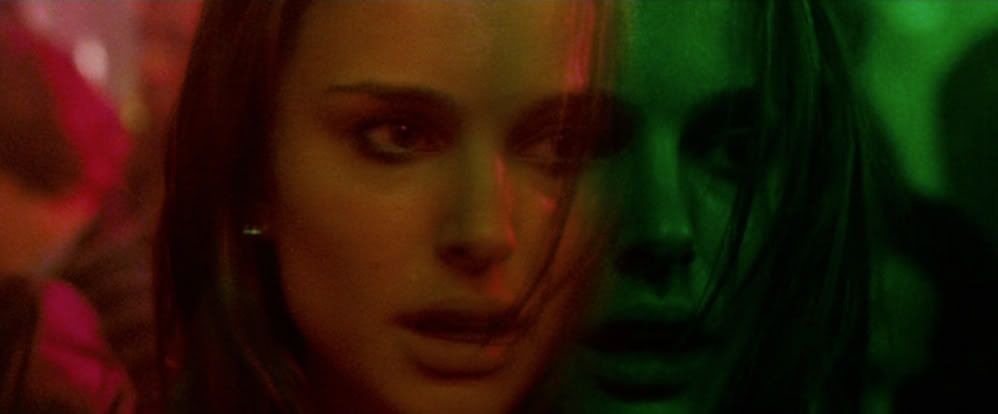
Black Swan (Darren Aronofsky, 2010) - "Black Swan exists within the continuity of Aronofsky's career, and yet there's something bold and loose and appealingly ragged about the way Aronofsky mashes together his thematic and stylistic concerns here. Part of it is the film's destabilizing approach to reality; Aronofsky's first three films frequently diverged into fantasy, or blended the real and the unreal, but never so startlingly as here, where Nina often seems to be leaping jarringly from one form of hallucination into another. There's also the fact that Aronofsky increasingly seems like a realist director who can't help rendering fantasy and illusion with a realist's eye for detail."
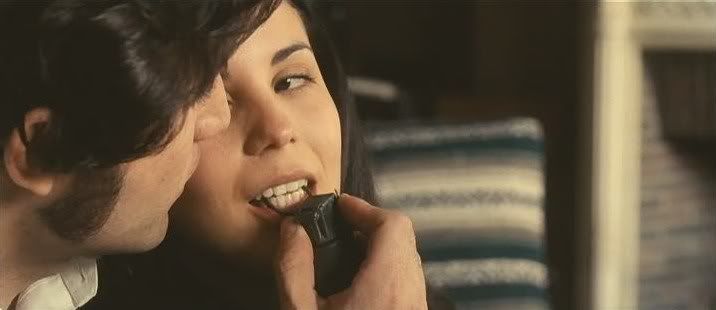
Carlos (Olivier Assayas, 2010) - "a probing, fascinating epic, a sprawling, admittedly fictionalized biography of the Venezuelan-born socialist terrorist Ilich Ramírez Sánchez, who went by the nom de guerre of Carlos (Édgar Ramírez)... The film is a profile of one man and his actions, but more than that, it is a sweeping portrayal of terrorism, diplomacy, the shifting alliances of convenience and ideology that define global relations, the back-door dealings and maneuvers in which state action and anti-state terrorism exist as part of a single, densely connected network. It is an epic in the true sense of the word, a film that attempts to present a coherent portrait of this single terrorist's actions and, in the process, to examine the struggles of the Cold War and the struggles that continue to define the world today."

Cave of Forgotten Dreams (Werner Herzog, 2010) - "Rather than simply documenting the images and the research going on in this cave, Herzog is after something more metaphysical and existential. He's interested in the way that such artifacts provide a link with the past, a way to travel back in time in a limited way — though, as he describes it at one point, it's more like having a phone book listing... Which doesn't stop Herzog from being fascinated anyway, wondering what these paintings say about humanity's understanding of and place in the world. He nudges gently at these themes in his voiceovers... and in his interviews with scientists who seem especially cognizant of the deeper implications of their work."

Desert (Stan Brakhage, 1976) - "Desert is a phenomenally sensual, evocative film from Stan Brakhage. It is an examination of literal and metaphysical deserts, extracting the essence of the desert and exploring both the physical place and its abstract equivalent — red-hot sun, hazy heat-blurring, hallucinatory mirages, wavery color fields that suggest the horizon line dividing sand from sky. It is a film about deserts both external and internal, in keeping with Brakhage's insistence on the continuity between sensation, mental processes and the world outside."

El Dorado (Howard Hawks, 1966) - "The film is packed with... bravura performances, which is good because even more than Rio Bravo itself this is a true hangout movie, a movie about dialogue, about the easygoing exchange of barbed witticisms... The cast may be different, but the dynamics are startlingly familiar, so the pleasures here are in seeing how Hawks and company weave variations on the formula they'd established."

Film Socialisme, Take 1 and Take 2 (Jean-Luc Godard, 2010) - "dense and challenging, beautiful and provocative, allusive and elusive, bursting with so many ideas and suggestions that it defies the possibility of the kind of complete reading that one generally expects from a movie. In its very structure, the film is making a statement, more even than any Godard film before it, that the idea of complete understanding is an absurd joke."

Graduate First... (Maurice Pialat, 1979) - "Pialat's observational style, lingering around the edges of these friendships and love affairs and loose groupings, captures the uncertainty of youth, the sense that these young people are making decisions that will affect the rest of their lives, and yet they have no real guidance, no real idea of how to proceed... Pialat is a profound chronicler of working class life. These struggles, these uncertainties, seem real and potent. There is no exaggeration, no melodrama, only the quiet realization that life, which seems so limitless and fun as a child, is somewhat tougher and sadder once one progresses into adulthood. No wonder these kids... want to prolong their immaturity as long as possible. Love is exciting, of course, and Pialat captures beautifully the fresh wonder of love, the breathless exchanges of kisses, the wonder of being close to another person. He also captures, with equal candor, the way such exchanges quickly become routine, the way these young people are constantly searching for something new once the spark dies down."

Haut bas fragile (Jacques Rivette, 1995) - "The film is a musical — or at least, it increasingly becomes one, as the scenes of muscial interruption and performance become more and more frequent over the course of the narrative, transforming what had at times threatened to become a portentous drama into a playful subversion of this drama. Whenever the characters fight or argue, as they often do, their movements become formalized and graceful, striking poses in the midst of the fight, extending their limbs and becoming cat-like in their motion, until the music suddenly erupts and the argument has become a dance, often a dance of flirtation and seduction. It's through the dance, through music and movement, that the characters in the film fall in love and forge friendships, dancing around each other even as Rivette's camera, a playful third partner in these dances, dances around the actors."

Irma Vep (Olivier Assayas, 1996) - "There is magic in this film, cinematic magic of the kind that only shows up in films made for 'intellectuals,' the word that the film's journalist uses so derisively, as a marker of elitism and anti-populism. There's magic in the film's celebration of its lead actress [Maggie Cheung], who is radiant and exciting and who drifts through the film with poise and strength, even adrift as she is in a strange culture."

I Was Born, But... (Yasujiro Ozu, 1932) - "an utterly charming, hilarious silent comedy of childhood by Yasujiro Ozu, displaying the lighter, more playful side of his sensibility. The film concerns itself almost exclusively with the child's point of view, focusing on the perspective of young brothers Keiji (Tomio Aoki) and Ryoichi (Hideo Sugawara)... The film's genius is the way Ozu keeps unceremoniously cutting away from the film's adult dramas — the father's desire to advance at work and make a good impression on his boss — to follow the kids instead. It's like there are two entirely separate worlds coexisting here."

Joan the Maid, Part I and Part II (Jacques Rivette, 1994) - "[a] five-hour, two-part portrayal of the life and death of Joan of Arc, in which Rivette strips away much of the epic legend surrounding this figure and makes her a quieter, more graceful kind of hero. As played by Sandrine Bonnaire, Rivette's Joan is a simple country girl, raised far from the centers of power, unable even to read or write; she says that she would be more content sewing at home with her mother than having to thrust herself into battle in service to God and country. She is a simple girl driven by something mysterious within her, a power and force that emanates from her during every second of Bonnaire's tremendous performance. Bonnaire's Joan is quiet, reserved, and self-assured, at least in public, though in private moments she often struggles with God's will, utterly confident that she has a purpose but not always sure exactly how to go about it. It is no mystery, though, why she motivates people, why she is so eagerly accepted as a savior, as a woman of God: her eyes flash with reserves of inner strength, and her hard peasant's face is a mask of determination."

The Lady Eve (Preston Sturges, 1941) - "Sturges has concocted such an irresistible con woman — and embodied her, wisely, in the slinky toughness of [Barbara] Stanwyck — that one is constantly rooting for her to succeed, to get the hapless and, at times, brainless Charles [Henry Fonda] in her clutches, to do with as she pleases. That she predictably falls in love with the guy and winds up wanting him for more than his money is expected but almost incidental to the plot. Whether she's looking for love or squeezing another con, we're rooting for her to get her man. The implicit undercurrent of the film, in these scenes of wooing and seduction, is that love is a con like any other."
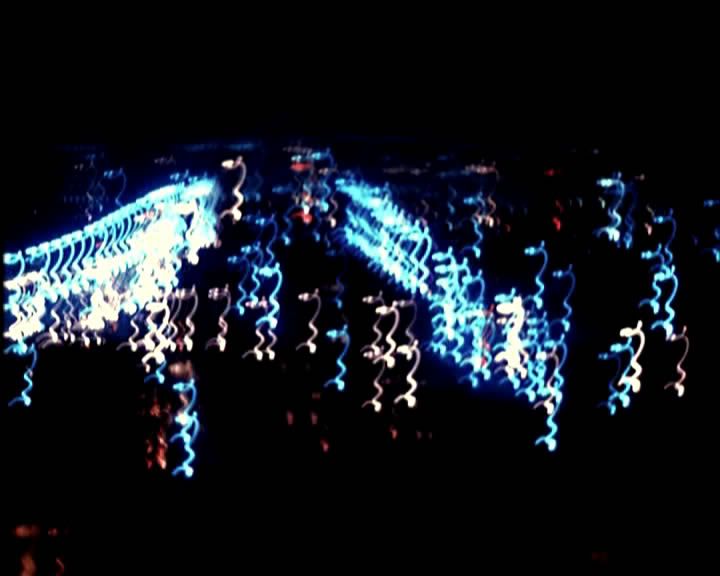
Lights (Marie Menken, 1966) - "As the pace picks up, Menken ventures further and further into abstraction, layering multiple exposures and reducing all the light and motion to cryptic calligraphic marks in the darkness, squiggles and check marks and amorphous suggestions of form. Tight clusters of these marks seem to dance across the frame, as though performing some arcane choreography, a Busby Berkeley number as performed by a chorus line of neutrons and electrons, a subatomic musical extravaganza taking place in a silent vacuum."

La nuit du carrefour (Jean Renoir, 1932) - "Renoir builds this atmosphere brilliantly. His storytelling is extremely elliptical, marked by diversions that give the editing an abrupt, choppy rhythm... The night, and the fog hanging low over the tree-lined dirt roads, also serve as punctuation... The missing reel can only explain so much; at some point it becomes obvious that Renoir just doesn't seem especially concerned with narrative clarity. It's seldom clear who's shooting at whom until the obligatory parlor scene at the end, when the detective explains the film's events with such coherence and detail that one wonders how he managed to get all that out of this strange string of events."

Peeping Tom (Michael Powell, 1960) - "Powell went solo for Peeping Tom, and audiences of the time proved unprepared for its psychosexual darkness, its ugliness and brutality, its stark frankness about the sexual thrills of murder experienced by a shy, quiet young man working in a film studio... It is still an extraordinarily tense, raw film, dealing with some nasty and discomfiting emotions in a very open way, laying bare the despicable violence that lurks within the impulse to voyeurism, including or especially the voyeurism of the movie theater. The voyeuristic murders in Peeping Tom are explicitly linked to the cinema, and Powell places his audience in the position of the voyeur, admiring the victim through the lens, thrilling on the expressions of fear and revulsion that pass across the faces of the young women about to be killed."

The Social Network (David Fincher, 2010) - "Like Fincher's Zodiac before it, The Social Network is a historical film, but a historical film that is set a mere seven years in the past. It is, nevertheless, history, and Fincher is as deliberate and detail-oriented in recreating the feel of an early 2000s college campus as he was in capturing the feel of 70s San Francisco. The campus at night, bathed in eerie yellow lights and accompanied by the moody music of Trent Reznor (whose effective score, in collaboration with Atticus Ross, alternates between low-key background buzz and bursts of dancey pop-industrial), becomes as powerful a presence in the film as the dangerous nighttime vistas of Zodiac. And the film's detours into college parties — from the glitzy, privately catered affairs of the elite frats to cheesy theme nights and rowdy, drug-fueled house parties — resonate with telling details."

Syndromes and a Century (Apitchapong Weerasethakul, 2006) - "a remarkable, mysterious work, a film that's constantly slipping away from the viewer. It's a warm, disarmingly playful mood piece, as ephemeral and sensual as wisps of smoke swirling around the black hole of a vent: a strangely eerie image that Weerasethakul spends several long moments lingering over towards the film's slippery, abstract denouement. But it takes a digressive, wayward journey to get to that sinister image of deep blackness swallowing up white fog."

The White Ribbon (Michael Haneke, 2009) - "a searing, enigmatic allegory, a depiction of horror and cruelty overtaking a small German town on the eve of World War I. The film is powerful and quietly moving, slowly building a sense of pervasive dread as the town's routine business is disrupted by explosions of horrifying violence and brutality, by incidents that expose the everyday nastiness lurking beneath the rural calm that the town presents on its surface. What makes the film so effective as an allegory is that, as in Caché, Haneke withholds all easy answers and all resolutions; the film is a mystery with no solution, leaving its ultimate meaning to the viewer. It is also perhaps Haneke's most emotionally rich film, built around a large cast of complex, ambiguous characters, people beaten down and made cruel by the harsh surroundings and morally fallow ground of the countryside."

World On a Wire (Rainer Werner Fassbinder, 1973) - "Fassbinder underlines the film's central theme of perception by continually distorting and reflecting his images, emphasizing how what we see is dependent on the angle from which we're looking... To this end, Fassbinder inventively packs his film with mirrors and distortions. In his melodramas, such devices are stylized routes into character, picked up from Sirk, a way of positioning characters in abstracted relationships to one another, capturing two reactions in the same frame. Here, the perpetual mirroring emphasizes how fragile vision is, how easily it is subjected to distortions."

Wednesday, January 5, 2011

Film Socialisme (take 2)


Take 2, because take 1 was not enough. Because this latest film of Jean-Luc Godard defies interpretation at every step. Because Godard released Film Socialism with "Navajo English" subtitles in the English-speaking world, defying Americans to glean some meaning from the minimal, fragmented translations that reduce this film's at times complex texts to disconnected strings of verbs and nouns, at times run together into compound words. Not that seeing the film with more complete translations in the subtitles completes the picture: there are still gaps, still confusions, still whole sections where that signature Godard logic is fully comprehensible perhaps only to the filmmaker himself. The film, grandiosely titled as the document of (or monument to) an entire political philosophy, is a summation of Godard's relationship to commerce, quotation, politics and nationalism. As such, it can only be as gnomic and digressive as Godard's whole career has been. The document of a journey now lasting over 50 years, the journey of a filmmaker who's always been interested in questions of art, commerce, political action and inaction, history with its repetitions and echoes, and of course his own role as an artist in dealing with these subjects, and our role as the audience in watching him deal with them, trying to follow him. That's what the film is, a game of "follow me," with the implied dare being "if you can."

This intellectual gamesmanship is bracing and enthralling, even when the film remains baffling and unapproachable despite multiple viewings and multiple attempts to get closer to it. At one point, one of the characters, a young woman trying to trace the various losses of socialism like a detective of history, suggests that not everything is comparable (and thus comprehensible?), that sometimes "the incomparable can only be compared to the incomparable," a paradox that Godard applies to the machinations of history, the march from Hitler and Stalin to the current global capitalist status quo, where such flashy dictators have been replaced by the dominance of gold and money. That's why, perhaps, this woman is trying to discover the truth behind the various robberies that define the past: money stolen from Spain, from Palestine, by the West and by the supposed representatives of Communism alike. The gold funneled out of national banks by businessmen and capitalists: this, it is implied, is the foundation for the modern order, for the opulence of the cruise ship and the culture that revels in such luxuries.


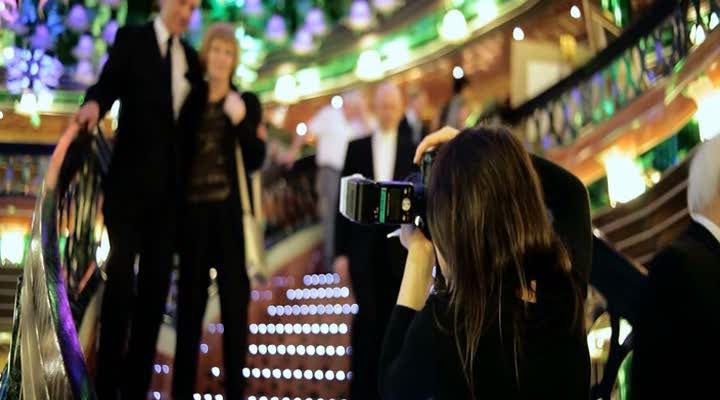
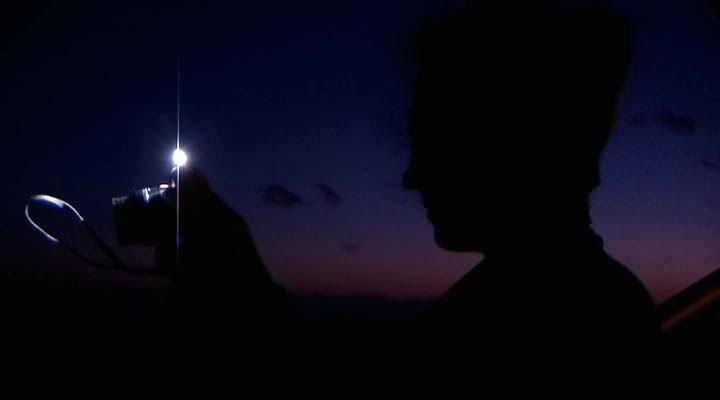
Photographs are important in this film, as Godard examines the relationship between reality and the document of reality. A discourse about the imperialist history of the West's involvement in Palestine ends on the revelation of "the first photo of the Bay of Haifa," which segues into an image of the cruise ship photographer snapping pictures of partying tourists, then an image of an Arab woman looking at a photo, presumably the already mentioned imperialists' document of the West's arrival in the Middle East. The implication is that a photo is not just a document, not just a representation of what is seen. There is a story behind each photo. Just as a photo of a cruise ship passenger tells a story about luxury and privilege, a photo of a Middle Eastern location, from the vantage point of arriving imperialists, tells a story about a history of conquest and exploitation. That's why so many shots in this film show people using cameras, taking photos, documenting their surroundings and documenting, in the process and perhaps unconsciously, their relationship to those surroundings. The importance of the camera is asserted again in the film's second half with the presence of the TV journalists, whose cameras are never present during the intimate, private interior moments where the family discusses their ideas and their emotions. The TV cameras are only present outside the house, and mostly glimpse people rushing back and forth, trying to avoid the camera's gaze. Only Godard's camera, which exists outside the diegesis, can capture the more private moments that really count.

The second segment is Godard's return to the territory of his 1975 film Numéro deux, an examination of the political foundations of the family, dealing with the question of how ideas are passed from one generation to the next. The parents try to make a connection, to forge a mutual understanding, but they frequently falter, struggling to pass on their understanding of a world they don't really understand themselves. This is a near-constant undercurrent in Film Socialisme, this struggle to make sense of history and the present, which is the current endpoint of history, the situation that everything before had led towards and created. Politics and family life interweave, as the outside world unavoidably intrudes upon the domestic status quo, influencing the relationships that form between parents and their children, influencing business and daily life alike.


In the first scenes of this segment, first the family's father and then the mother are questioned from offscreen by their children, an interview technique that references Godard's frequent use of such dialogues dating back to Masculin féminin. In these unbalanced conversations, the children want to understand, while the parents just want to be loved and appreciated. Godard spaces out these dialogues amidst the quiet stasis of daily living. The pacing of these pastoral scenes of home life is exquisitely slow and meditative. Godard holds shots for a long time, watching as these people brush their teeth, or as the daughter rests her head on her father's shoulder in the dark, or the mother washes the dishes. There's a casual domesticity to such moments, and Godard purposefully infuses political dialogue and considerations of history and the image into this context. He's suggesting that such concerns are not — or should not be — separate from daily life or daily concerns. There is no disconnect between the home life and the political life, as the journalists hang around the family's home trying to create a political documentary, filming these domestic moments while shouting out questions that never get answered.


The film is, like many of Godard's films, about culture, though not in the obvious way of Passion, where he posed his characters like figures from classic paintings, nor of King Lear, where the search for Shakespeare provided the foundation for all manner of ruminations on culture and art and meaning. The young blonde son of the film's second segment is an avatar of culture, recreating the paintings of Renoir, moving with the rhythms of classical music and dreaming jazz. Godard's relationship to art has always been complex; he both loves beauty and is suspicious of it. He seems to be suggesting that art, rather than providing a commentary on reality and a way of expressing ideas about the world, has become an escape, a refuge from reality. A voiceover says, "We have only books to put into books. But what if we have to put reality into books?" Art feeds into art, creating a cultural conversation that is abstracted from the real world, from the experience of life as it is lived. That is why Godard subtly shifts the emphasis onto domestic routine, onto the peripheral tasks of the cruise ship's maids and waitresses as they do their work, onto brief scenes of Arab women talking and doing daily work.

In the final section of the film, culture becomes both a document and a warning, as Godard tries to develop an alternate understanding of art as essential, as intimately connected to life as it is lived. As Godard visits several European and Middle Eastern locales in turn, he finds the lessons of history in culture, and particularly the cycle of war and violence that has defined both world history and the depictions of it in art. The constant warring of Greek mythology and Greek tragedy, the emphasis on mortality in Egyptian art, the endurance of the Odessa Steps as a site of dramatized bloodshed: all of these markers are for Godard signs of the continuity between current situations and the grand tragedies of the past.

Monday, January 3, 2011

Film Socialisme (take 1)


Take 1, because Film Socialisme is not a film that offers up its ideas easily, because Jean-Luc Godard, in his latest film and first feature since 2004's Notre musique, is typically opaque and elusive. Take 1, also, because Godard, trickster that he is, released this latest opus to the English-speaking world in a way deliberately designed to make it even more difficult for those who don't speak the film's many languages. The film's dialogue and monologues are in French, Russian, German, Arabic, and other languages, but only an occasional isolated phrase of English. And Godard's chosen subtitles are in what the director has playfully dubbed "Navajo English," minimalist strings of disconnected words, not so much translating the dialogue as providing snippets of meaning, hints at the full meaning of what's being said. The subtitles are less translations than messages to the audience, enigmatic epitaphs that translate not speech but the deeper subtexts of Godard's cinema. The subtitles are a kind of passive-aggressive joke on American audiences, because America and its influence is the film's subtext — for the most part, Godard avoids explicitly mentioning America so assiduously that it becomes the unspoken ghost within the film, the driving force for everything that happens, the hidden target of so many of the film's satirical jabs.

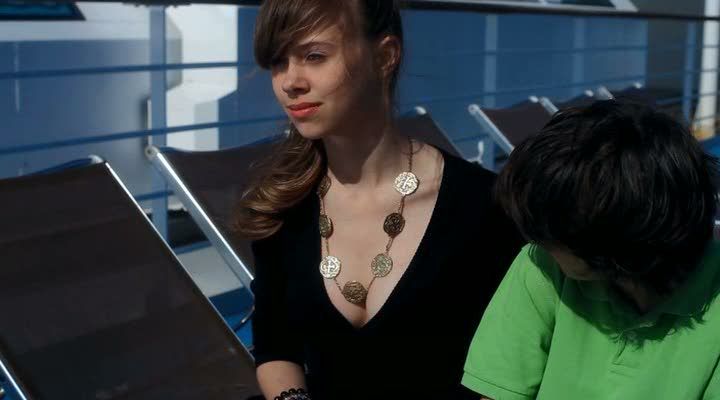
And what is this but a satire? A satire of America, of capitalism, and also of the whole idea of cinematic storytelling. The film is divided into three segments. The first is set on a cruise ship, visiting various locales that have resonance to Godard — Barcelona, Naples, Odessa, Hellas ("Hell As," and also hélas, as in "alas," as in Godard's Hélas pour moi), Egypt, Palestine ("Access Denied," the onscreen text simply reads at this last port of call) — and never venturing beyond the superficial surfaces of anything. The images are glossy and pristine, bright and beautiful, parodies of cinematic splendor that are both jaw-droppingly sublime and yet somehow empty, suggesting how little beauty counts for amidst all this silly opulence. The film is obsessed with gold, with money. The cruise passengers play slots, their mechanically pumping arms highlighted against a gorgeous seascape. A Christian mass is held in a dining room with a bar nearby and a crystal ball rotating overhead, projecting fragmented mirror images of the ceremony. Snatches of conversation, partially translated or not, are concerned with business deals, with history (Hitler, Stalin, Communism, wars civil or otherwise), with seeming plots and spy maneuvers.

This baffling, elliptical verbal chatter is juxtaposed against the images of the cruise ship's conspicuous consumption: dance clubs where the music is distorted into a noisy clamor, passengers watching workout videos and cinematic images of Arabs interchangeably, people lounging around, eating, staring out at the sea. What better place than a cruise ship for Godard to document the victory of capitalism and the death of socialism: it is a place where capitalism's virtue is assumed, where every image, every setting demonstrates the capitalist's ascendancy. To the extent that there are distinguishable characters in this section of the film, they are symbols and metaphors rather than actual individuals. So Godard pays special attention to the glowing glamor of this setting, but does so in ways that call attention to power relations and the subtexts of the capitalist system as it's incarnated here. One shot from early in the film shows a couple of passengers posing for a photo on a typically glitzy staircase, surrounded by bright lights. But the image is out-of-focus; only the photographer in the foreground, presumably a cruise ship employee, is in focus, while the rest of the image is deliberately blurred and indistinct, an abstract image of privilege and success rather than a concrete portrait of two particular people. The composition calls attention to the worker taking the picture rather than the photo's ostensible subjects.


The film's second section shifts to a rural setting and focuses more concretely on a single family. The fragmentary pacing and flashy aesthetics of the cruise ship segment give way to a slower, more patient pace and an emphasis on domesticity and routine. This family, the Martins, owns a gas station and is apparently involved in an important election. They are dogged by a pair of journalists with a movie camera, who hover around the gas station accosting anyone who walks by, trying to get interviews and images. The fragmentary dialogue of the film's first part is replaced by lengthier dialogues, which makes the incomplete "Navajo" translation more of an issue: during the cruise ship passage, the Navajo subtitles mirrored the jumpy editing and the collaging of hi-definition digital images with grainy video footage. Here, the subtitles really do feel like out-of-context fragments ripped out of a larger whole, and it becomes even more apparent that Godard intends for language-deficient Americans to understand only incompletely, to be denied the full meaning of the dialogues.

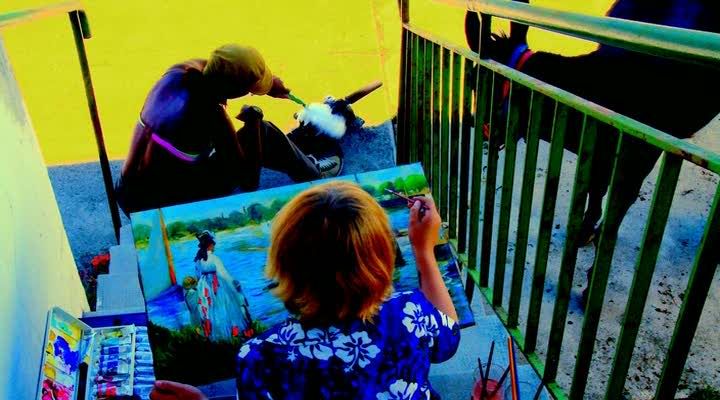
But this confrontational pose is balanced by moments of humor and playfulness, particularly in the form of the Martins' young blonde son, a sprite who incarnates Godard's still-youthful sense of humor. This boy, dressed in a red CCCP shirt decorated with the Soviet hammer and sickle, conducts the classical music of the soundtrack, wildly swinging a lead pipe through the air in response to the music. Later, in his sleep, the movements of his mouth and the twitch of his fingers respond to — or perhaps produce — the plucking bass of a jazz tune. This boy chases off the TV reporters with his pipe, swinging it like a sword, playing pirate. He feigns blindness and runs his hands along his mother's body, creating an image of her in his mind with his fingers. He paints a Renoir masterpiece, and Godard's camera looks over his shoulder, distorting the image with digital color manipulation, as the boy looks at the young black camerawoman in her bikini top but paints a Renoir scene of pastoral beauty. The manipulated, blown-out colors make the whole image look like a painting, artificial and distancing.


Godard seems to be suggesting that art distorts, art lies, art dodges reality: the disconnect between what the boy is looking at and what he's painting suggests that the art of the past, like Renoir's landscapes, is a way of avoiding engagement with the present, with what's directly in front of us. What we need is an art of the present, an art that engages with reality as it really is. Earlier, on the cruise ship, one of the wealthy passengers wound through a gallery crowded with paintings, all of them for sale, all of them representing a classical style from the past, and images from the past. The glorification of the past, the obsession with masterpieces and masters, is interwoven with commerce, with the value of art in terms of money. Godard's more interested in the present, in images that are aware of history but point towards people and things that are happening now. Thus the second section, with its emphasis on the slow rhythms of daily life — brushing one's teeth, reading a book, children playing, halting conversations between members of the family — locates Godard's ideas within the context of the family, the context of prosaic reality rather than the stylized confines of art.

In the film's final section, Godard adopts an essayistic style to return to the locales of the cruise ship's journey: Egypt, Palestine, Hellas, Naples, Barcelona. For the cruise ship, these were simply destinations, brief stopovers, their rich histories obscured by the tourist's gloss. Godard returns to them here by pulling images from newsreels and films, images of art and photographs of history mashed up alongside cinematic excerpts. He's examining the disjunctions between past and present, nowhere so obviously as when he cuts between the Odessa Steps sequence from Eisenstein and the modern-day Odessa Steps, a tourist attraction where groups of schoolchildren gather on the steps that were once the site of both a real massacre and its cinematic representation. It's during this section, especially, that Godard's insistence on denying meaning and translation render any understanding of the film conditional and ephemeral.


But, one suspects, that is the nature of the film in general, even for those rare individuals who "understand" all its many languages perfectly, who don't require any translation. Film Socialisme is dense and challenging, beautiful and provocative, allusive and elusive, bursting with so many ideas and suggestions that it defies the possibility of the kind of complete reading that one generally expects from a movie. In its very structure, the film is making a statement, more even than any Godard film before it, that the idea of complete understanding is an absurd joke.

Take 2, of perhaps many more, follows here. Understanding will come, if at all, much later.

Tuesday, December 28, 2010

The Red Shoes


The Red Shoes is Michael Powell and Emeric Pressburger's film about a ballet company and its new star, Victoria Page (Moira Shearer), who is torn between her love of dancing and her love of the composer Julian Craster (Marius Goring). Victoria has always dreamed of being a great dancer, and with the famous ballet director Boris Lermontov (Anton Walbrook), she gets her chance, catching the notoriously picky Lermontov's attention and increasingly becoming the company's star performer. At the same time, Lermontov has hired the aspiring young composer Julian, and he too becomes a star within the company, composing original new music that impresses everyone who hears it. The only catch is that Lermontov has an obsession with dancers committing their entire lives to their art — he is furious when his previous star announces that she's getting married — and since it's inevitable that Victoria and Julian will eventually fall in love, their success seems very tenuous.

The film is about the ballet, of course, but more than that it's about the untenable position of women in a world that forces them to choose between ordinary domestic pleasures — love, marriage, family — and the ability to express themselves creatively or professionally. By the end of the film, Victoria is positioned between two men, Lermontov and Julian, neither of whom will allow her to build a balanced, happy life for herself. Both men demand that she choose one or the other. The final confrontation is structured like the showdown of a love triangle, the two men verbally dueling over the woman they both want, even though Lermontov has no sexual or romantic desire for Victoria; he wants only for her to dedicate herself entirely to dancing. In between them, Victoria can only cry, being asked to choose when it's obvious that she both loves Julian and loves dancing, and wouldn't want to give up either. (Though why she'd ever want Julian, who's made up like a wispy 30s Hollywood leading man and who's as much of an arrogant, unyielding jerk as Lermontov, is a question the film can never quite answer.) The film is positively progressive in its examination of Victoria's dilemma, even if it's only in tragic terms, with no way out for her, no solution to resolve these tensions tearing her apart.

But that's the nature of this film. It's an overwrought melodrama and it knows it — it revels in it, in fact. The performances, with the exception of Shearer's supple, subtle turn as Victoria, are uniformly over-the-top, both onstage and off. At one point, the choreographer Ljubov (Léonide Massine) dances around Lermontov while arguing with him, as though dancing a part in a ballet; a spotlight even follows Ljubov around as though he were still rehearsing. This scene, with its light comic undertones, suggests that these people live the ballet, that onstage and off they're prone to dramatics and overstatement, to grand gestures that could be seen way up in the last rows of the theater. They're always projecting, and so their histrionics work within the context of their characters. This is especially true of Lermontov, who despite his backstage role always seems to be acting, to be projecting the image of the demanding, tyrannical director that he believes he should inhabit. Walbrook's performance is such great fun because of this artificiality, this note of hysterical overacting that infuses everything Lermontov does. After he finally convinces Victoria to return to dancing towards the end of the film, when she leaves the room he shakes his arms around, clasping at the air, grandly declaring his excitement at his victory to the empty room.


Powell and Pressburger match the story's melodramatics with lush, patently artificial imagery that enhances the film's underlying themes: as is so often the case in their cinema, the film seems to take place in a surreal dreamworld of painted backdrops and lavish sets that stand in for such glamorous locales as Monte Carlo. Onstage and offstage are united in artificiality, suggesting that for these artists, under Lermontov's guidance, life and art are unified, with the latter overshadowing the former. Nowhere is this more apparent than during the sublime 15-minute sequence in which Victoria performs the ballet The Red Shoes for the first time. It is one of the finest sequences in the cinema, a beautiful and remarkably playful melding of the cinema and the theater, and an ode, not to the power of ballet but to the power of Powell and Pressburger's own chosen art.

Once the performance starts, Powell and Pressburger deliberately and playfully erase the boundaries and limitations of the theatrical stage, leaping into the realm of the cinema. When Victoria's character in the ballet sees the red shoes in a shop window, she imagines that she sees herself dancing in the window, turning pirouettes. It is an idea that's all but impossible to convey purely through dancing, on a stage: it is internal, a moment of imagination that can only be conveyed cinematically. So Powell and Pressburger superimpose an image of Victoria dancing in the window, as she stands outside, looking in and imagining this scene. Although the moment ostensibly occurs during a real theatrical performance of the ballet, before an audience, Powell and Pressburger instead stage the sequence with a cinematic sensibility that could never be translated to the stage in this way. When Victoria first dons the red shoes, she does so by leaping forward into them, and in a closeup on her feet, the shoes change, in an instant between frames, from her plain white ones to the bold red ones. It is, again, a moment that purposefully shatters the illusion of a ballet taking place on a stage — in a theatrical performance, the dancer would have to go backstage and change her shoes at this point, but Powell and Pressburger elide the costume change through the magic of editing.

Again and again, the filmmakers are calling attention to the differences between the cinema and live theater, using every cinematic trick at their disposal to transform this ballet into a fluid, magical sequence. Victoria turns and leaps across the stage — and the wooden boards of the floor keep reminding one that this is a stage — and dances in long straight lines that would be impossible to maintain on a real stage without dancing into the backstage area. Indeed, at one point, after a lengthy sequence in which Victoria dances through a succession of narrow corridors and between buildings, Powell and Pressburger cut back to a long shot of the entire stage, which reveals Victoria emerging from the rear of the stage, where she would have just been dancing for a long time completely unseen by a theater audience. Only the camera is able to follow her back there, its graceful tracking following the fluid lines of her movement. The subsequent sequence of Victoria being taken away by the power of the red shoes relies heavily on superimposition to lend a ghostly, translucent quality to the dancer as she hops and twirls through eerie nighttime vistas and, finally, enters a free fall that's familiar from cinematic dream sequences but would, again, break the constraints of reality on a real stage. Still later, she dances with a wisp of paper that transforms briefly into a man, her own costume changing between shots, before the man again fades away into a newspaper blowing in the breeze.

Towards the end of the performance, Powell and Pressburger finally insert a high shot looking out towards the audience beyond the row of lights at the front of the stage, the first time since the very beginning of the performance that the presence of the audience or the stage borders are revealed. But at this moment the audience is replaced by a superimposition of a churning sea, and the sound of the waves blends subtly with the sound of applause, suggesting that Victoria is seeing everything through her character and the story of the ballet, seeing everything around her transformed and made real through the magic of creative expression. It is a stirring, thrilling sequence, and one feels both Victoria's joy in the dance, and the joy of the filmmakers in shaping and directing her dance. That joy, both in front of the camera and behind it, is the joy of creativity and art, and even when this film is at its most tragic and heartrending, that joy is the feeling that comes through most strongly.