Showing posts with label '1940s. Show all posts

Wednesday, November 21, 2012

Shoeshine


Shoeshine was the first of Vittorio de Sica's postwar films and among the first major works of Italian neorealism. A moving, tragic drama about the effect of postwar poverty on Italian children, the film is bleak, affecting and, without being too overt or polemical, very much socially and politically engaged. This simple, stripped-down expression of melancholy and outrage focuses on two shoeshine boys, Giuseppe (Rinaldo Smordoni) and Pasquale (Franco Interlenghi), who are practically brothers. Pasquale has no family, living on the streets and supporting himself by providing shoeshines for American soldiers and doing any other odd jobs he can pick up. Giuseppe's family is still alive, but in many ways he seems just as independent as his friend, fending for himself on the streets and scraping together whatever he can.

The two friends are saving, improbably, to buy a horse, and their desire for money leads them to get involved in a scam organized by Giuseppe's brother. They quickly wind up in jail, separated from one another and played off against each other by the police in the hopes of getting a confession out of them. De Sica's portrait of the juvenile prison where the kids are sent is scathing, depicting the cruel living conditions to which these boys — many of them arrested merely for the crime of vagrancy, a rampant condition in the rubble of postwar Italy — are subjected. The place is presided over by an uncaring warden who sees the boys only as criminals, little monsters, rather than victims of the poverty and desperation that are plaguing the country. The boys languish in prison for months without even being charged, they're fed disgusting soup and stale bread, and they sleep in cells crawling with bugs.

Prison also tears apart the previously inseparable friends, first isolating them from one another physically by placing them in different cells, and then trying to trick them into separately confessing and identifying Giuseppe's brother and the other men involved in the robbery scam. The boys entered prison more or less as innocents, but once they're inside they become involved with the criminal culture of the much more violent, experienced offenders among their new cellmates and friends.
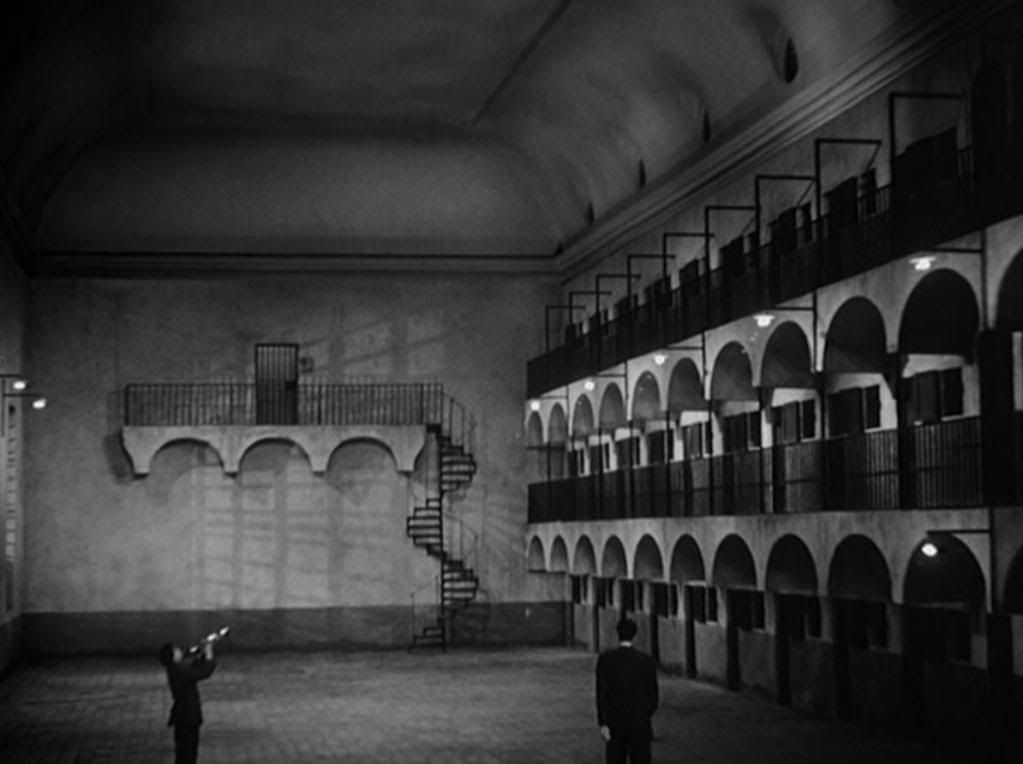

De Sica relates this sad story with a loose, semi-documentary aesthetic. The film opens with a disclaimer attesting to its fictional narrative and characters, but it always feels real, from its exposé of prison conditions to its poignant story of the relationships between these boys, who are being hardened and toughened by both their jail experiences and the lives they'd already been living on the streets. The cinematography has a casual, shadowy beauty, particularly in the frequent long shots of the prison cellblock that de Sica periodically returns to throughout the film. These images are almost noirish, all stark iron bars and shadows, with a large empty courtyard that fills most of the frame with white space, shunting the actual cells off to the side. The imagery subliminally connects these young delinquents and street urchins with the hardened criminals of prison escape movies and crime flicks, a comparison that's confirmed in the tragic finale.

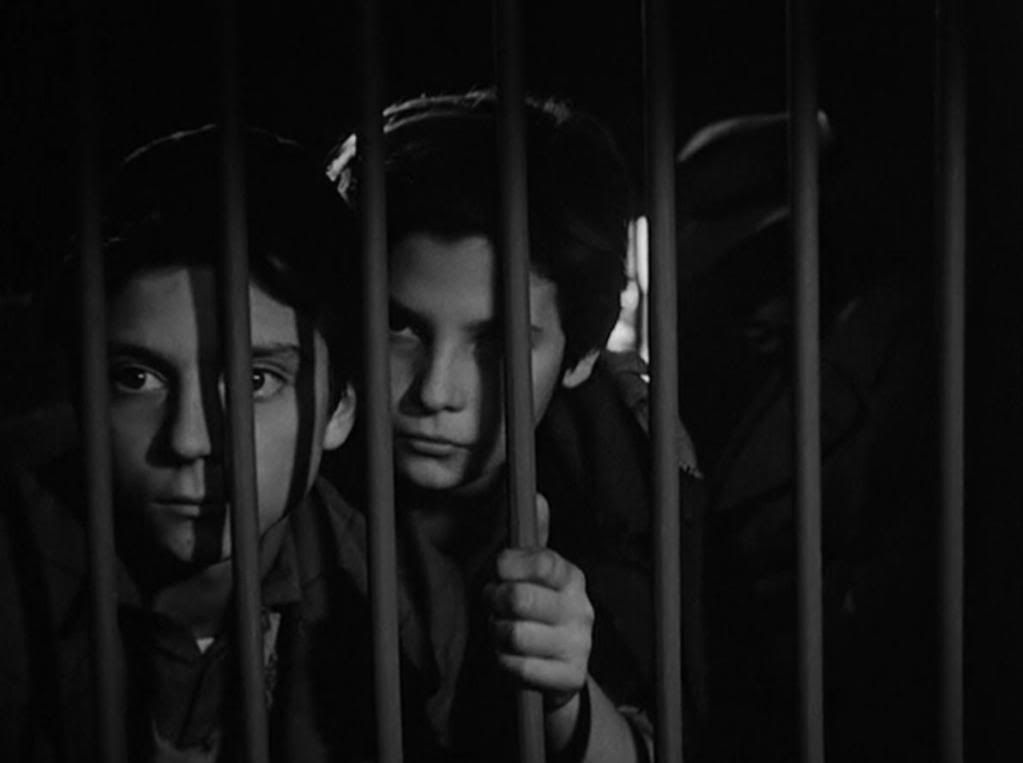
De Sica also displays great sensitivity to the performances of his child actors, which are touching and raw. He captures them in tight, emotionally charged closeups, particularly Giuseppe and Pasquale, whose increasingly fractious relationship is embodied in their alternately enraged and tearful faces. As the boys split off into opposing gangs in their respective cells, de Sica also captures the enforced intimacy and camaraderie of the cellmates, who cluster together in these tight spaces, with no space to separate them when they sleep.

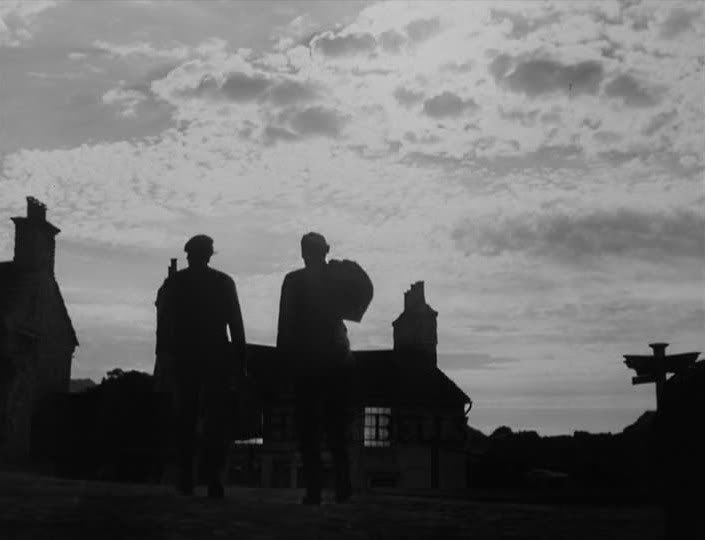
The film's patient, naturalistic accumulation of details gradually builds to the frenzied, despairing final act, in which movie night in the prison turns into a fiery conflagration and a desperate escape attempt. And then there's the moody gray of the final sequence, on a rural road where the film's last tragedy strikes, and the final image of a horse trotting away into the night provides the sad conclusion to this poignant drama. De Sica would, two years later, craft one of the defining works of neorealism with his even more socially engaged Bicycle Thieves, but the emotional intensity and naturalism of his work were already apparent in this, his first major statement.

Monday, October 15, 2012

A Matter of Life and Death


A Matter of Life and Death is an utterly charming fantasy of mortality and the afterlife, as well as a cross-Atlantic romance that considers the essence of Britishness as juxtaposed with and contrasted against the essence of Americanness. This collaboration between Michael Powell and Emeric Pressburger, the Archers, is a moving, inventive surrealist love story that, as the introductory voiceover announces, has its feet firmly in two worlds, poised between life and death. Set during World War II, the film concerns a mistake on the balance sheets of Heaven, involving the RAF pilot Peter Carter (David Niven), whose plane is destroyed and his parachute shredded, his crew ejecting at his orders, leaving him behind to bail out without a chute, seemingly to certain death.

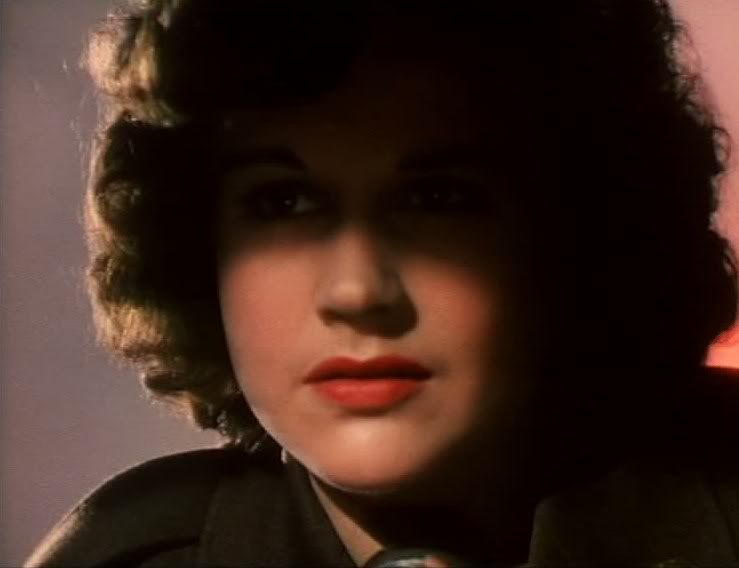
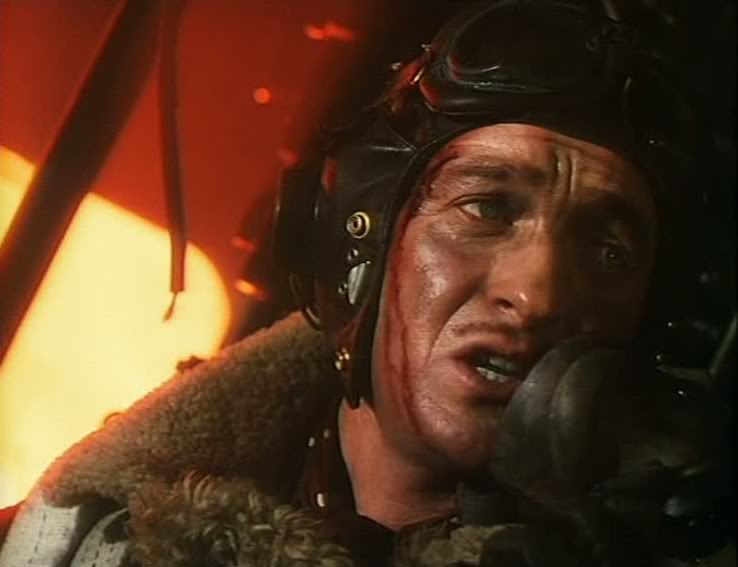
The opening scenes, in which Peter shares his presumptive last words over the radio with the American dispatcher June (Kim Hunter), are remarkable and affecting, with Powell and Pressburger cutting back and forth between the faces of June and Peter as they bond in the final moments before the pilot bails out. June, bathed in shadows and red light, tries to keep from breaking up as she realizes what's happening, her voice thick with emotion. On the other end of the line, Peter's face is lit by the glow of the flames consuming his plane, his face black with grease, but his bravado unaffected, his face illuminated by a charming grin. Their words fly back and forth in a rapid patter, Peter displaying an unflappable grace under pressure, a willingness to go his death with a smile on his face and a few flirtatious words going out over the wire to the American girl. This scene sets the tone for the whole picture, establishing a cavalier, flippant attitude towards the end, a stiff-upper-lip bravery that doesn't allow for any tears, any sadness, not from Peter at least, who prepares for his presumably fatal leap without the least bit of sentiment. Those moodily lit, sensuous closeups connect these two people at a crucial moment, and the unforgettable effect of this scene lingers over the entirety of the film.

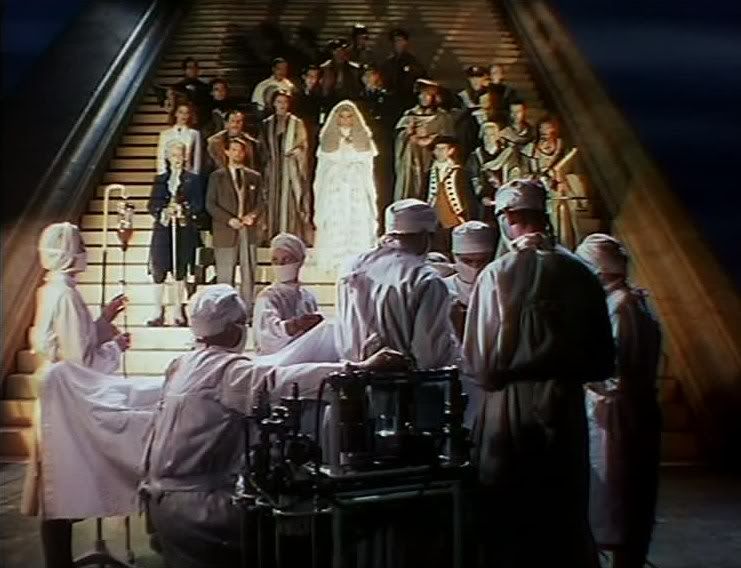
Peter makes his leap into the choppy ocean below, but as it turns out, he doesn't die: the heavenly conductor (Marius Goring) meant to usher him into the afterlife loses him in the thick British fog, and Peter washes up on shore, briefly believing that he's actually dead, that he's woken up on a heavenly shore. Instead, he's washed up near the country house where June is staying, and they meet for the first time, instantly falling in love, their emotions primed by their deeply affecting radio contact. This creates something of a problem when the conductor finally tracks Peter down, since now Peter, who had been prepared to go to his death with a quip and a smile just hours before, has something to tie him to Earth, something to live for. Peter, suffering from headaches and other signs of a concussion, struggles in two worlds, facing an appeal for his life in a heavenly court as well as preparing for a brain operation under the worldly care of Dr. Frank Reeves (Roger Livesey).


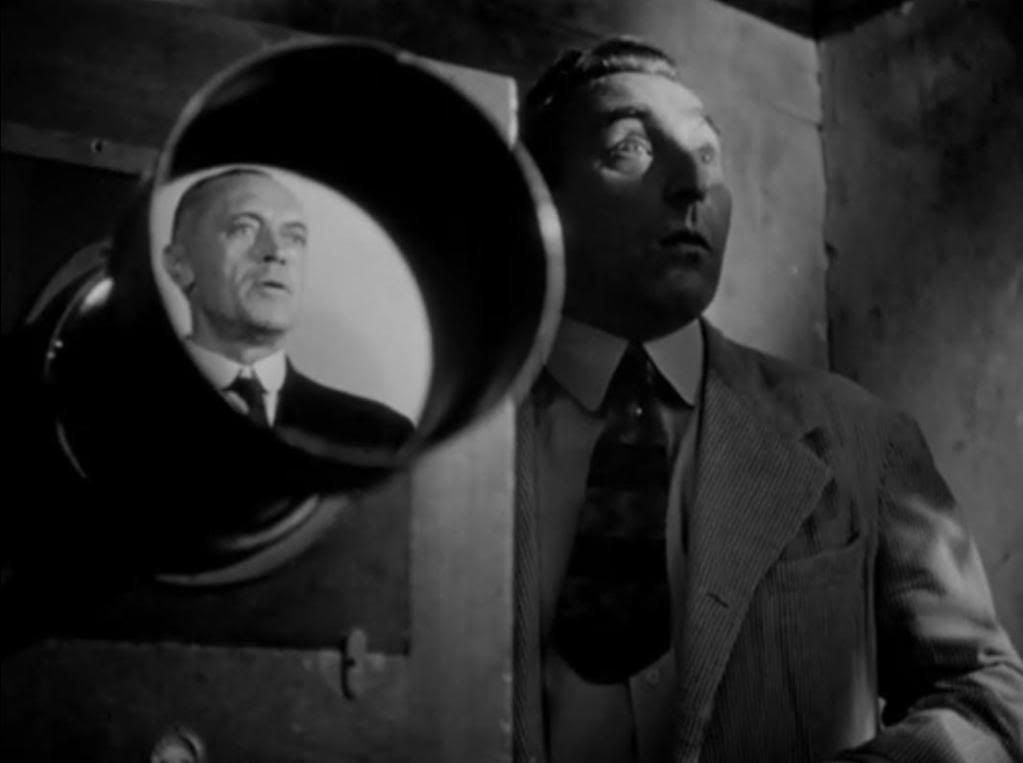
The film alternates between these two worlds, with the earthly scenes shot in sumptuous, brightly colored Technicolor and the surreal heavenly scenes in stark, plain black-and-white, which has the effect of rendering the real world vivid and sensuous, while Heaven has a no-nonsense logic to its management of souls — there's even a massive data center, managed by angelic clerks, with files on the living and the dead. Jack Cardiff's cinematography is gorgeous throughout, and the transitions between realms are handled with slow fades, color slowing returning to the world of the living as Peter funnels from life into the land of the dead and then back again. The imagery consistently reflects the ideas of two worlds that can interact. Dr. Reeves even has a camera obscura, a glowing oval in the darkness that he pans across the village as though watching a movie, gazing down from a heavenly perspective, providing a running commentary on everything he sees. When he opens his doors to let June in, the oval goes blank and a yellow light is cast over the room; light, as always in Powell and Pressburger's films, is used like paint.

At the crux of the film is the "special relationship" between America and Britain, one-time enemies who had become allies, an alliance particularly tested during the war that had just ended when this film was released. Powell and Pressburger don't miss an opportunity to tweak the cultural connections and differences between the two countries, as in the scene where a group of American servicemen with thick New York accents act out Shakespeare's A Midsummer's Night Dream, getting into their parts despite the accent disconnect. Peter's trial becomes a British versus American conflict, as his prosecutor is Abraham Farlan (Raymond Massey), the first American killed by the British during the American revolution. Hilariously, Farlan holds up a sleepy-sounding British cricket announcer as evidence of British cultural bankruptcy, while Reeves, acting as Peter's defense, counters with American jazz to demonstrate how out-of-touch Farlan is with what's currently happening in the world, and to show that the two countries are simply speaking different languages, culturally speaking, though they're unified in other ways. Reeves chooses a jury made up entirely of Americans, which turns out to be embodied as a series of stereotypes, demonstrating the melting pot of American culture. And the push/pull nature of American/British relations is encapsulated in the small touches too, like the way that, after Reeves cites the possibility of a British serviceman falling in love with an American girl, an American GI in the audience looks over at the rows of British nurses nearby and wistfully adds, "or vice versa." The film pokes fun at various cultural stereotypes — the lugubriousness of the British radio announcer, the gangster-type mannerisms of the Americans reciting Shakespeare, the series of multicultural clichés on the jury — in order to suggest that cultural differences and historical grievances can be set aside, both for the sake of true love, and on a larger scale in forming new national alliances that draw together countries that had started out being at odds with one another.

This is an utterly charming, whimsical film that's also infused with the complex emotions of a romance that's on the verge of being torn apart from the moment it begins. The film's melancholy, sumptuous beauty is perhaps best embodied in the poetic image of one of June's tears, preserved as a ripe dew-drop on the petal of a flower as prospective evidence in Peter's heavenly trial. Powell and Pressburger expertly weave this kind of sentiment together with the film's occasionally goofy comedic sensibility and the fantasy aesthetic of the Heaven sequences. The result is a bittersweet comedy with an overriding feeling of impending loss balancing its charm and its humor.

Friday, October 12, 2012

Bicycle Thieves


Bicycle Thieves is a deserved classic of the Italian neorealist movement. Made just a few years after World War II, Vittorio De Sica's melancholy masterpiece starkly captures the poverty and desperation of the post-war years. The film is all about the lack of jobs and money that afflicted so many working class families during the long, slow years of post-war recovery, with Europe in ruins, its economy struggling to rebuild and leaving many people floundering. Antonio (Lamberto Maggiorani) is one of these struggling men, out of work and unable to provide for his wife Maria (Lianelli Carell), their son Bruno (Enzo Staiola) and a baby. When he does stumble into a job, it comes with the caveat that he needs a bicycle, and he pawned his bicycle long before to get food for his family. He buys the bike back and is excited to finally be working again, but on his first day on the job, the bike is stolen and his hopes are dashed.
De Sica quickly establishes just how vital this bicycle is to this family's future, to Antonio's ability to provide for his family. The bicycle, which had been hocked to pay for food, is bought back by selling the sheets off their bed; every one of their meager possessions can potentially be traded to feed the family. A job is a near-miraculous stroke of luck, since the work is handed out by lottery with just a few jobs randomly distributed among eager crowds of men waiting for their chance to work.

Since the bicycle is necessary for this job, it is absolutely essential to the family, and De Sica creates nearly overwhelming tension in the scenes after they've retrieved the bike, simply by tracking and zooming so that the bicycle inches out of the frame, its form cut off as the camera moves. Every time the bike is out of view, one expects it to vanish for good, that the next time the camera tracks back to where it was, it will be gone. It's unnerving, this subtle formal play with the boundaries of the frame, because the bike has become a symbol of the family's economic stability, and its absence from the frame provokes an almost unbearable tension, particularly when Antonio leaves it sitting against a building, guarded only by some kids playing in the street, and walks inside. When Antonio comes back out again, De Sica frames the shot of him descending the stairs tightly, so that it seems as though the bike is no longer sitting in the doorway where he'd left it, until the camera pulls back a little and the frame expands so that the bike's handlebars poke into the shot at the bottom edge.


When the bike is stolen later, Antonio and Bruno head out into the city in a nearly hopeless attempt to find it. De Sica uses this very simple story, this desperate search for the bicycle, as a way of exploring the poverty and desperation of working class families in Italy. The film's cinematography is stark and bleak, suggesting the dreary existence of these people, most of whom have no steady work, no security or stability. De Sica frequently places Antonio and Bruno in long shots where they blend into the crowds in open-air markets or on streets crowded with laborers riding bikes to work. There's nothing exceptional about their lives, they don't stand out, and their search for the bicycle is no different from the desperation experienced by so many other families. In some ways, they're not even the worst off, as evidenced by the scene in which Antonio pursues an old man (who he thinks knows the thief) into a religious shelter for the extremely poor, where the mostly old residents are locked inside to attend mass before they can get some free soup.

De Sica's compositions are bleakly realistic, but they're also formally rigorous, with a striking sense of framing that's especially obvious in the way he explores the widening divide between father and son as they search together for the stolen bike. Bruno frequently trails behind his father, ignored as Antonio remains focused solely on the search. The irony is that he needs the bicycle, and the job, so much because they will allow him to provide for his family, but in his singleminded obsession with the search he loses track of his son again and again. In De Sica's wide shots, the boy is often separated from Antonio by a broad gulf of empty space, Bruno falling in the rainy gutter or nearly getting run over by traffic without his father seeing a thing. The desperation and poverty of their situation is creating this disconnection between them, making the father/son relationship secondary to the necessities of struggling for food and shelter and money.

That fractured paternal relationship is the film's real tragedy. Bruno is the film's most sentimental, moving figure, and the film's only source of sporadic comic relief, as when he opens up a confessional's curtain and gets smacked on the head by the angry priest inside. Just as often, though, his innocent face is clouded with melancholy, as in the heartbreaking scene where his father takes him to a restaurant and he looks jealously at an upper-class boy whose family is eagerly eating many dishes and courses, while Bruno feels guilty about wasting their scant money on a small order of bread with cheese. His touching, naturalistic performance is especially startling since Staiola, like the rest of the cast, was an amateur who had never appeared in a movie before. Bracing, beautiful, and almost unbearably sad, Bicycle Thieves is a moving portrait of the desperate, narrowly focused struggle that life is reduced to when abject poverty is so omnipresent and so difficult to escape.

Monday, August 27, 2012

I Know Where I'm Going!


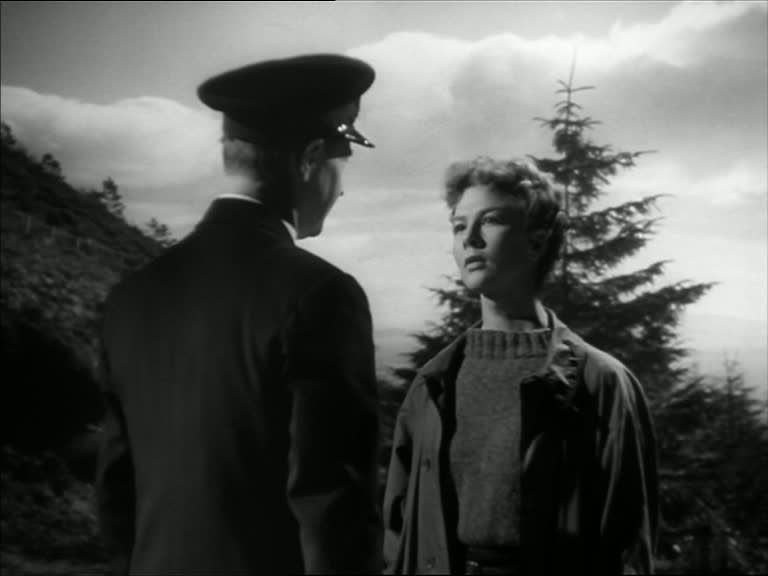
Moving, romantic, and utterly magical, I Know Where I'm Going! is one of the great collaborations of the Archers, writer-directors Michael Powell and Emeric Pressburger. This is a delightful romance of the Scottish isles, totally charming and sweet, shot with an eye for the natural poetry of the land, the beauty of sea and sky even in their darkest, most threatening moments. This charming love story concerns the determined, materialistic Joan (Wendy Hiller), who knows precisely where she's going in life. As the opening credits whimsically show, she's wanted things ever since she was a baby, and she's always gotten them eventually, thirsting for silk stockings and fine dinners. She has plans for her life, and she's about to fulfill them by marrying the wealthy industrial magnate Bellinger. She's traveling to the Scottish island of Killoran for her wedding, but when a bad storm strands her for several days on the nearby island of Mull, she begins falling in love with Torquil (Roger Livesey), a local lord who's rich in titles but poor in cash, something that is decidedly not in her plans.

There are signs even before this that Joan isn't necessarily as happy as she pretends to be with her well-planned life and her cunningly ambitious impending marriage. On a train journey, as she sleeps, Powell and Pressburger project her dreams onto the plastic wrapping of her wedding dress, hanging nearby, with the crinkly plastic overlaying her dream images, as though she's surrounded in it, trapped by it, about to be preserved or suffocated in plastic. Voices chattering about her wedding and the plans surrounding it are synced up with the chugga-chugga rhythm of the train's wheels, a manic clatter of voices that seem to be mocking her with their talk of schedules planned down to the minute. She's haunted by the rigidly planned life she has ahead of her, everything planned out, everything safe and scheduled, a life seemingly dedicated only to getting the wealth and prestige she'd always thought she'd wanted. Later, when she's getting off the train, Powell and Pressburger mock the stuffed-shirt assistants who greet her by segueing from one man's top hat to a shot of a train's smokestack, so that the smoke briefly seems to be erupting from the top of the man's head. Even before the storm delays her, Joan seems to be having second thoughts, she's just too stubborn to ever admit it.

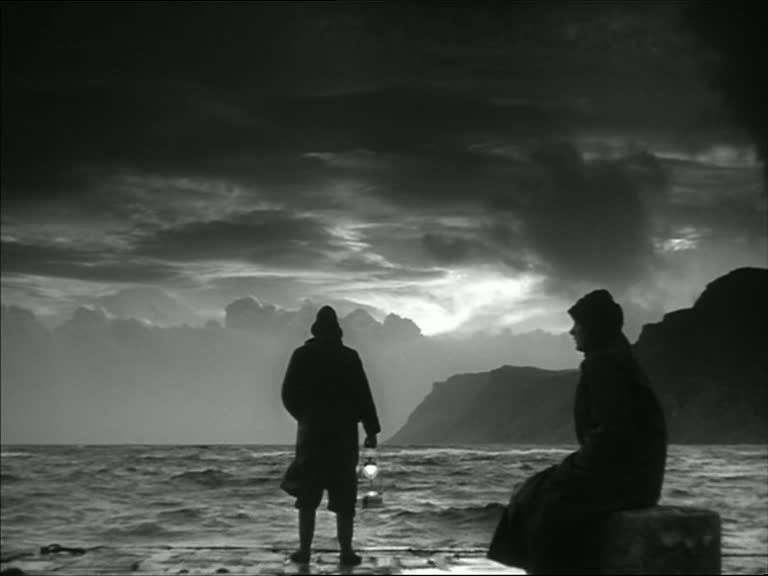
When Joan arrives at the island of Mull, a gorgeous, moody atmosphere settles over the film, with voices calling through the fog, and men silhouetted on the rocky shore, set off against the tumultuous waves of the sea. None of Joan's stubbornness and determination can overcome the weather, and though she insists on standing by the water waiting for a boat that, it's obvious, is not coming, she can't will the wind to stop blowing or the sea to calm. She might know where she's going, but she's finally confronted something she can't control; the winds and waves are as stubborn as she is. And then she meets Torquil, with whom she immediately forms a warm and obvious bond, even though her standoffish instincts keep trying to reassert themselves. Even if Joan herself thinks she knows where she's going, the audience knows she'll be going somewhere else altogether. The pleasure lies in the grace and beauty with which Powell and Pressburger document this blossoming love, juxtaposing it with the majestic rural expanses of the Scottish islands and the foreboding splendor of the overcast weather.


The film powerfully captures the feel of Scottish culture, steeped in the Gaelic language, with its mysterious sounds and cadences, so like music. One of the film's loveliest scenes is the anniversary celebration that Torquil and Joan attend, leaving behind the stuffy society bridge game of Bellinger's friends to listen to music and watch the dancing of the servants. The floor shakes, and the bagpipers play, and the dancers couple off and swap partners, laughing and drinking and have a great time, such a far cry from the lame tea party upstairs, where one woman kept interrupting any potentially interesting conversation with questions about when they were going to play bridge. The film continually contrasts the folksy ways of the island dwellers against the high society manners of the crowd that Joan is soon going to be marrying into. The people of the island, Torquil says, are "not poor, they just haven't got any money," which he insists isn't the same thing, though Joan doesn't see it — what Torquil means, of course, is that they just don't need any money.

When Joan first arrives on the island, her buttoned-up manners and assiduous politeness are contrasted against the local woman Catriona (Pamela Brown), who makes a grand entrance preceded by her wet, shaggy, exuberant dogs — contrasted later against the sedate true-breeds of the rich folk — with the woman herself bounding into the room with the same enthusiasm, her hair wet, her eyes fiery and a broad grin on her face as she embraces her old friend Torquil and exclaims her welcome in Gaelic. Catriona is so different from the prim and proper Joan; when Joan says that she and Torquil should eat lunch at separate tables, he says that she's the most proper girl he ever met, which she decides to take as a compliment even though there's more than a note of irony in his tone.

The film deals broadly with the theme of rural decency versus elite sophistication, with Joan's stubbornness set off against the locals' familiarity with nature and connection to the earth and the sea, and against the local legends that add mystery and myth and a sense of history to their lives. In contrast, Joan's prospective husband tells her over a radio that only one family in the area is worth knowing: a family of elitist snobs just like him, of course. He's not interested in communing with nature or learning about local history, and Joan is ultimately seduced as much by the land, the people, the culture, as she is by Torquil himself.

Wednesday, August 22, 2012

The Great Dictator


Charles Chaplin resisted the coming of sound more successfully than any other filmmaker of the silent era, making a pair of mostly silent masterpieces after the rest of Hollywood had completely converted to sound. The Great Dictator was his first true sound picture, but even more more notably, it was the first American film to so directly mock and satirize Hitler and the Nazi regime before Pearl Harbor triggered the USA's entrance into World War II. It's a bold and daring film, an expression of defiance against dictatorship, hatred, violence and prejudice. The full extent of what was going on in German concentration camps and ghettos wasn't yet broadly known, at least when production on the film started in 1937, so some of Chaplin's comic set pieces are simultaneously unsettling and eerily prescient, dealing candidly and potently with the persecution of the Jews.

It's a viciously funny movie, a devastating satire that dares to make evil look ridiculous. Chaplin plays twin roles: the nasty and stupid dictator Adenoid Hynkel and an unnamed Jewish barber who seems like a last echo of the Little Tramp character who Chaplin had officially retired with the end of the silent era. While Hynkel, an egoist for whom power is the only goal, spreads war and persecution, the barber just wants to be left alone, to be free to live in peace and run his shop. Wounded in the first war and left in a coma, he slept through Hynkel's rise to power and wakes up as stormtroopers charge through the ghettos, painting the tag "Jew" on Jewish shops and homes, beating people and stealing from them.

The barber doesn't understand, and this is the most richly, deeply sad part of the film, this encounter between the innocence of the barber, this cinematic descendant of the Little Tramp, and the vile hatred of the Nazis. Chaplin's barber confronts the ideology of hate with genuine bafflement, confused as to why these people he's never seen before are harassing him in this way for no reason. He even mistakes a Nazi soldier for a cop, asking him to arrest another soldier. As the barber, Chaplin's voice is soft and whispery, an expression of gentleness and decency, the exact opposite of the blustery speechifying of Hynkel and the barked orders of the Nazis as they attack the Jews. The barber and the other Jews depicted in the film seem totally out of step with the rage and bile of the era; they just want to be left alone, to live their lives in peace.


The barber's disconnection from his era is epitomized right from the beginning of the film, in which he serves as a soldier during World War I. The opening scenes provide a general satire of warfare and military discipline, with Chaplin's hapless draftee stumbling through the fog of the battlefield, stoically following orders as they push him from one absurd scenario to another. Smoke drifts across the frame, swallowing up all the soldiers on both sides so thoroughly that at one point Chaplin falls in line with the enemy troops. This all plays out in an eerie hush that recalls the silent visual aesthetics of Chaplin's earlier films, a style he had by no means abandoned with his delayed acceptance of the sound era. The minimalism and starkness of this opening enforces the film's theme, highlighting the absurdity and ugliness of war so that when Hynkel appears, stirring up the people with an ideology that's committed to more war, to a constant state of war, his foolishness is very apparent.

Chaplin's Hitler caricature has a strange, childlike grace, like an overgrown little boy. Moved and chilled by his minister's grand dreams for the dictator's future conquests, Hynkel bounces straight up in the air and climbs the curtains, hanging there, and then he performs a remarkable dance with a globe balloon that he balances on his palm, light as air, gleefully letting it fly high up into the air. Chaplin plays the scene as silent pantomime, a brilliant parody of the dictator's fantasy of himself as a world ruler, both utterly absurd and chillingly, strangely beautiful. When the balloon pops, he breaks down and sobs like a little boy whose toy has been taken away.

The film is often most powerful in the scenes that rely on this kind of silent comedy performance. At one point, Chaplin's barber, overcome with terror, loses his voice and pantomimes an elaborate series of hand signals about the approaching Nazi stormtroopers — in times of great stress and emotion, he reverts to the silent era's method of communicating. Perhaps for that reason, the film is full of callbacks to earlier Chaplin films. The barber attacks a Nazi soldier with a paintbrush at one point, swiping white paint across his face, referencing the manic slapstick of Chaplin's early shorts. Hynkel's gibberish speech at the beginning of the film, delivered with uncanny mockery of Hitler's cadences although the language is a nonsense pidgin-German, recalls the nonsense song that Chaplin had sung in Modern Times, thus connecting the dictator's rhetoric to the singing waiter's silly tune. Chaplin's casting of Paulette Goddard as the barber's love interest Hannah also provides some continuity with Modern Times, especially since when she first appears her dirty face and raggy clothes seem like echoes of her "gamine" from the earlier film. It's as though Chaplin and Goddard's poor characters had been transplanted to Nazi Germany, crushed down by the fascist system even more virulently than they'd been crushed by the modern, industrialized society of Modern Times.

Indeed, Chaplin explicitly links the Nazi ideology to modernity and mechanization, calling the Nazis "machine men with machine minds and machine hearts" in the stirring speech that he delivers at the end of the film, breaking character for an extraordinary monologue in which Chaplin seems to be directly addressing the film's audience, pleading for sanity and decency rather than hatred and violence.

Monday, July 23, 2012

Macbeth (1948)


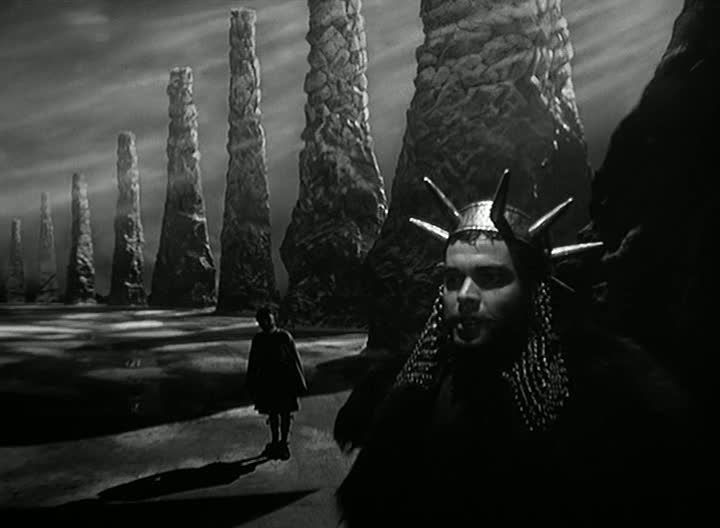
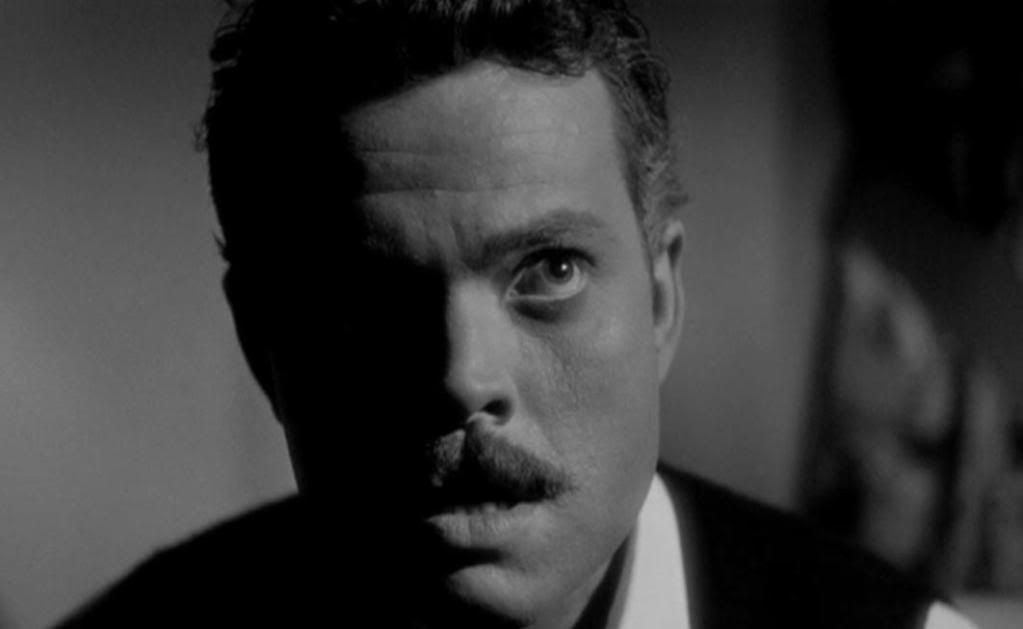
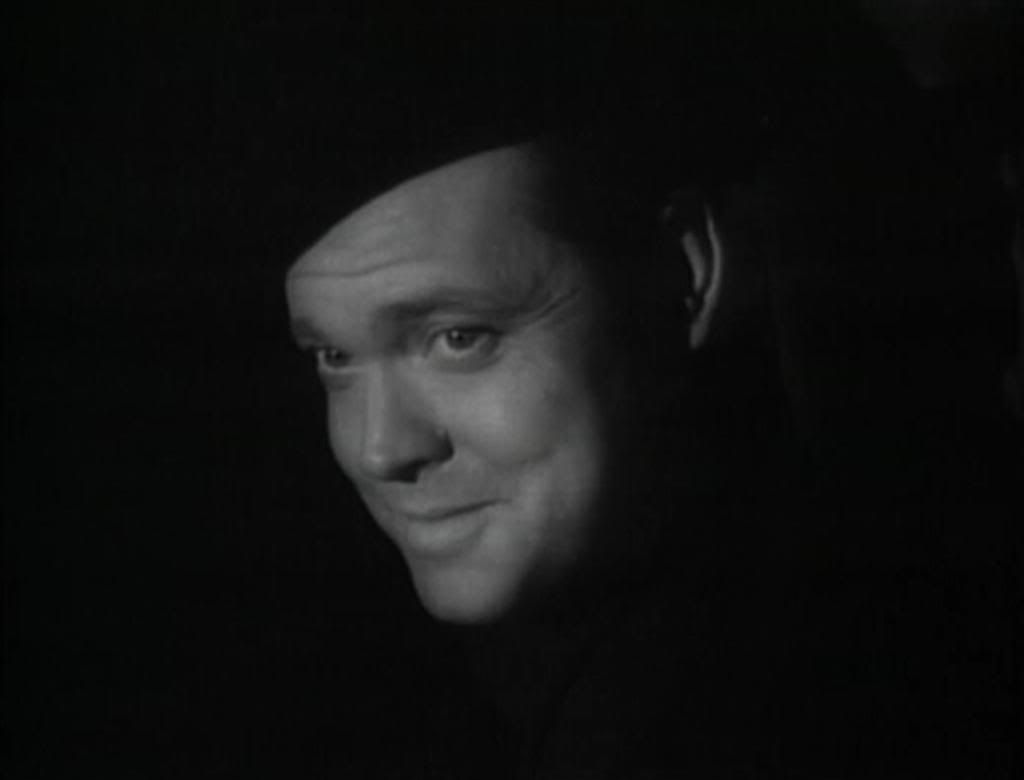
Orson Welles' expressionist, visually stunning version of Macbeth was the director's first attempt at a cinematic adaptation of Shakespeare. Shot quickly and cheaply, the film makes a virtue of its budget minimalism by setting the familiar play within a spartan, eerie wasteland of fog and bare rock. Welles surrounds this bleak, violent parable of power and ambition with swirling fog, twisted trees devoid of leaves, stark expanses of vague nothingness in which only the light-sculpted features of the play's protagonists stand out, as though they are declaiming into a void, spitting out their tormented speeches while already engulfed in the hell that awaits them for their vile deeds.

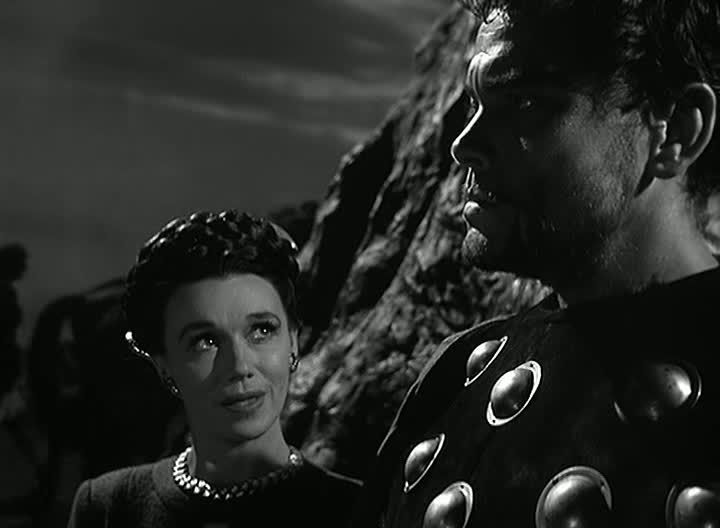
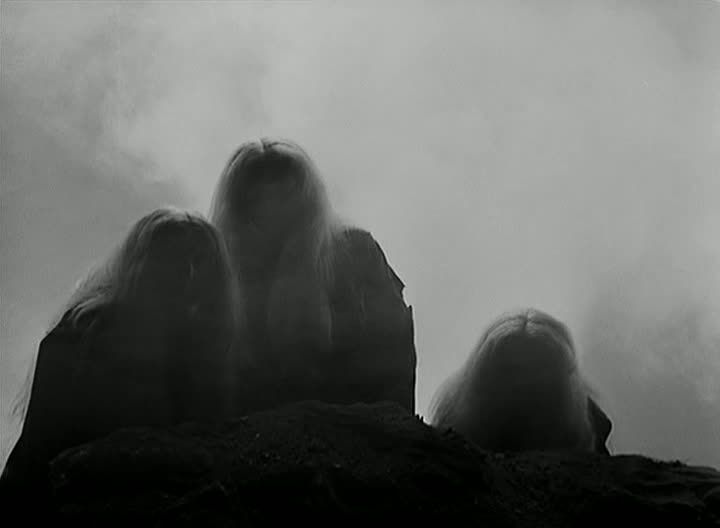
Welles is mostly faithful to the text of Shakespeare's play, shifting some words and characters around here and there, and somewhat emphasizing the religious subtext of the story, but mostly remaining true to the language and the story. Macbeth (Welles) is moved to murder the king by a prophecy given to him by three witches, further encouraged in the deed by his scheming, ambitious wife (Jeanette Nolan). His crime gets him the crown, but he's overcome by paranoia and madness, growing ever more bloodthirsty and reckless as he desperately defends his ill-gotten title. The story is a classical study of the corruption of power, and Welles revels in the blustery speeches and stormy psychological subtexts, all of it delivered with the familiar disembodied sound that often characterized Welles' approach to dialogue — he recorded all of the speech separately, so that the actors are simply mouthing their words, and the dubbed, echoing quality of the sound contributes to the film's strange, haunting feel.

It's visually that Welles really makes his mark on this material. The chintzy sets and shoddy theatrical props of this production were doubtless necessitated by budgetary limitations, but Welles uses his limited means with purpose. The castle through which Macbeth stalks looks more like a cave, the bare rock walls warped and full of holes in which all light disappears, the ceilings low and craggy overhead. The film's atmosphere would be well-suited to a horror movie, with fog draped around the dark, minimal set, reducing visibility to a small circle of empty space in which Macbeth paces like a trapped rat, his face often blown up in dramatic closeups that capture every bead of sweat dripping from his skin, every quiver of his lips and every wild, bulging expression in his eyes. The backgrounds are blurry and sketchy, a few warped trees sticking up out of a wasteland, crudely carved rock everywhere, while the faces of the actors are crisply delineated with bold, high-contrast lighting, their eyes often shining out of the darkness of their shadowed faces.


The frequent close framing of the actors places the larger-than-life emotions of Shakespeare's text front and center. Even the minimal scenery, so gloomy and gothic, seems to reflect the warped inner psychology of Macbeth and his wife, their paranoia and evil writ large upon their surroundings. Welles poses Lady Macbeth as a seductress, a femme fatale, urging her husband on to his murderous, treacherous deeds. In the crucial scenes where she convinces him to kill the king, Welles frames Macbeth in the foreground with his wife slyly positioned to his side, whispering in his ear, casting charged glances his way. She's Eve and the serpent all rolled into one form, her last-act attacks of conscience notwithstanding, and at one point her face glides into the frame at the fringes, behind a towering closeup of Macbeth, like a sinister sprite perched on his shoulder, whispering evil in his ear.

The minimalist aesthetic at times seems to mock the protagonist. When Macbeth is crowned king, a silly-looking square crown, at once flimsy and bulky, is placed upon his brow, with his glowering face beneath it. He marches out before his assembled troops and subjects for the first time as their king, and the music too mocks him, accompanying what should be his grand entrance with a jaunty tune more suited to a court jester than a king. Later, at the climax of the film, as Macbeth's foes amass beneath his ramparts to unseat him, the king runs back and forth across the bare stone of his courtyard in a crown designed to resemble the Statue of Liberty's spiked headband, thus ironically juxtaposing the vicious tyrant with the symbol of American democracy.

Macbeth's famous final act soliloquy — "full of sound and fury/ signifying nothing" — is delivered against an abstract image of smoke roiling and spinning in slow motion, a foggy void that's set to devour the murderous king, to end his time of strutting upon life's stage. Welles' visual interpretation of this material is often subtly clever like this, expanding the text with a truly cinematic sensibility. Welles cuts from Macbeth looking at a twisted tree branch and musing about crows to the image of the two murderers who Macbeth has sent after Banquo, crouched on a tree limb, their shadowy forms looking very bird-like as they wait for their victim to pass by so they might descend on him. The sound design is also exceptional, with Welles ascribing piercing, harrowing import to a few key sounds on the otherwise hollow, disembodied soundtrack: after the king's death, especially, the loud knocking of Macduff (Dan O'Herlihy) at the castle door reverberates impressively, a foreboding sound of doom, and there's a similar force to the screech of the owl that so frightens Lady Macbeth that she grasps at her chest as though she's been stabbed by the sound. Welles' Macbeth was not appreciated in its time, but in fact it's a stunning and visually inventive adaptation.

Monday, May 28, 2012

Under Capricorn


Alfred Hitchcock's Under Capricorn is one of the director's more divisive films, but it certainly doesn't deserve its unflattering reputation. This lavish period melodrama, set in 1800s Australia, might be deliberately paced, but it's as emotionally, psychologically and formally complex as any of the director's best work. The core of the film is a twisted three-way relationship that develops between the wealthy ex-convict Sam (Joseph Cotten), his disturbed, alcoholic wife Hattie (Ingrid Bergman), and Charles (Michael Wilding), who had known Hattie as a boy in Ireland and claims to Sam that he can awaken Hattie from her self-destructive, near-insane mental state. Indeed, the charming Charles is able to shake Hattie out of her stasis and mental collapse, but he also preys on her, seducing her away from her husband even as he cures her. Sam watches this situation unfold, glowering and brooding, under the watchful eye of his maid Milly (Margaret Leighton), who obviously desires Sam and resents his wife. There's a dark history here that slowly, patiently unfurls, but the emphasis throughout is not really on narrative, past or present, but on the churning, potent emotions of the protagonists and the engulfing visual style that Hitchcock springs like a trap around the characters.

Hitchcock made this film immediately after the long-take formal experiment of Rope, and he applies a similar aesthetic here, albeit not quite as rigorously. This was Hitchcock's only collaboration with Powell/Pressburger cinematographer Jack Cardiff, whose sumptuous use of color and glossy, unreal aesthetic is a perfect complement to Hitchcock, and especially to the particular qualities of this lush period drama. Using the unbroken take style of Rope, Hitchcock and Cardiff hold shots for minutes at a time, the camera unmoored, drifting around the rooms of Sam's palatial home, its gentle movements subtly but definitively defining the relationships between the characters. Who's in the frame and who's not means everything in this film, particularly in terms of the central love triangle, as Charles' friendship with and seduction of Hattie increasingly pushes her own husband out of the picture, shunting him off to the side.

In the first scene where Charles and Hattie meet, she wanders, drunk and dazed, into one of her husband's dinner parties and sits down at the head of the table. Charles holds her chair for her and then sits next to her, leaving his own spot at the table. Once Charles sits down by Hattie's side, it's as though there's no longer anyone else at the table; Hitchcock maintains a two-shot of them as she reminiscences about the past, occasionally glancing across the table, presumably at her unseen husband, but Hitchcock doesn't cut away, doesn't show the reaction of the others to this immediate intimacy, doesn't show anyone else or have anyone else even talk again until Hattie stands up and the camera tracks to follow her, past the others at the table, as Charles walks her to the staircase leading back to her room.


Later, when Hattie dictates a letter to Charles' sister, Hitchcock again keeps the camera on the two of them, Sam forgotten outside the frame, until the camera begins tracking away from Charles and Hattie, past her husband's now abandoned place setting, through the empty room, finally finding Sam, walking away, his back to the camera, in the hallway, as the image fades to black. It's as though, when Charles and Hattie are together, everything else fades away, forgotten, the triangle becoming a two-shot, the room emptying off-camera. Hitchcock and Cardiff have a way of shooting the scenes between Hattie and Charles so that even if someone's standing right next to them, it feels like they're all alone.

In a subsequent scene, Milly, who'd been fired, returns while Charles and Hattie go out to the ball together, again leaving Sam behind. Hitchcock holds a very long and mostly static take as the maid chatters away, delivering her passive-aggressive patter about Hattie, her voice full of gossipy insinuation. The frame slowly constricts and expands as Sam wanders in and out of view, sometimes glowering in the background, sometimes strolling towards the camera, his face dark. All the while, Milly's barely disguised bile dominates the soundtrack, and she remains the visual center of the shot, but it's Sam's darkening expression and stalking walk that actually serve as the scene's viscerally felt focus even when he's peripheral or outside the frame altogether. Only at the very end of the scene, the end of the shot, does Sam finally step forward into the foreground of the frame, and Milly's voice fades away, his anger finally blotting out her words.

There's another fantastic long take when Hattie tells the story of her past with Sam. The camera maintains a medium distance as she paces around the room, and the camera glides with her, often with Charles' head in the foreground of the frame, placing the spectator in his position as he listens to her. She often resists facing him, though, showing the camera her profile more than her full face, which makes the sudden closeup, when she confesses to shooting her brother, all the more startling: the camera suddenly floats upwards and presses in at precisely the moment when she steps forward and leans into the shot, nearly facing the camera for her confessional moment. It's especially striking because immediately afterward she returns to avoiding this direct, forward-facing manner, turning her profile to the camera or turning away altogether, looking up, down, anywhere but straight-on.


This patient, elegant style pays off especially well in the final act, when all the long-bubbling resentments and conflicted emotions come to the surface in an eerie, dreamlike climax. Hattie, returning to her drunken hysteria after a series of dramatic twists and turns, sinks back into her isolation, terrified of the horrifying things she imagines seeing around her room. As Sam tucks Hattie in and comforts her, there's a long, rumbling roll of thunder that sounds like a blown-out speaker, and it continues to roar throughout the nightmarish scenes in which Hattie discovers a ghoulish shrunken head in her bed and collapses, with Hitchcock suggesting the passage of time afterwards with a gorgeous image of a rain-streaked window superimposed over the unconscious woman's face. This whole sequence is haunting and gorgeous, with every detail heightened: the single beaded tear glistening on Hattie's cheek, the tracking shot along the rough terrain of the pillowcase and bedsheets, the continued rolling of the thunder, the sinister tinkling of Milly's keys as she creeps around the room, the light glinting off the poisoned glass that's so resonant of other sinister drinks in Hitchcock's oeuvre.

It's a dream, a nightmare, and the subsequent scenes in which the plot begins reversing gears to move inexorably towards a happy resolution have the feeling of waking up from a dream, finally shaking off the narcotized slumber that afflicted these characters and kept them trapped in a recurring cycle of self-destruction and recrimination. Under Capricorn is a stylish and beautiful movie, its aesthetic seductive and hypnotic, with a psychological complexity that makes it enthralling throughout.

Wednesday, May 2, 2012

Scarlet Street


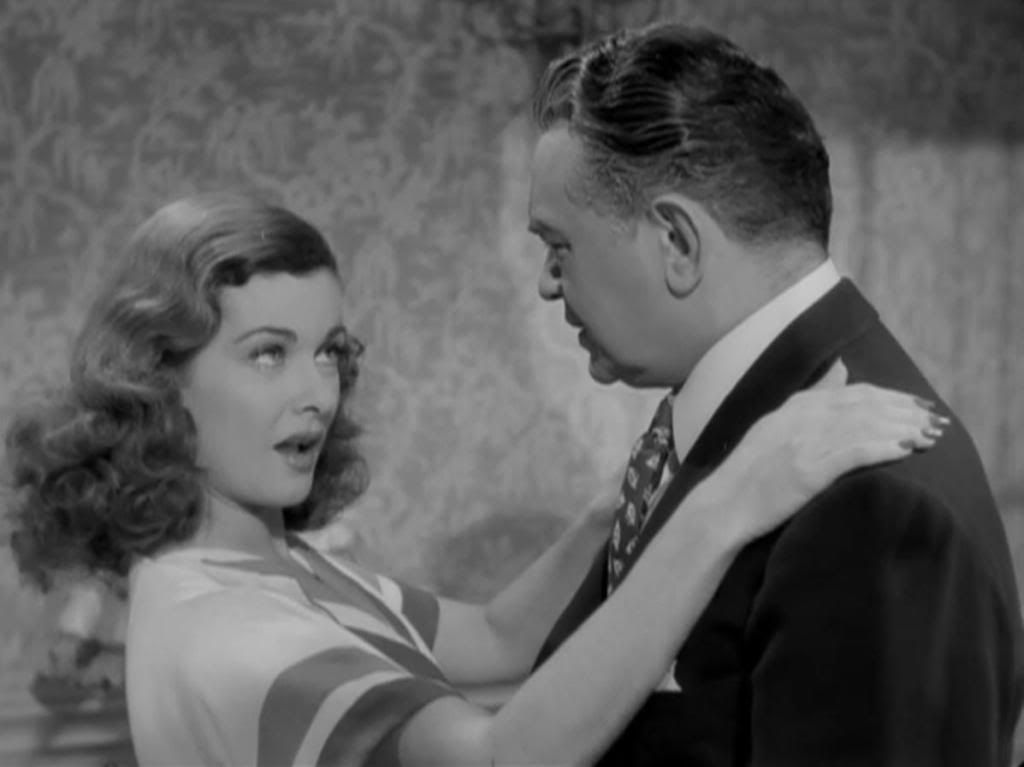
Fritz Lang followed The Woman in the Window by reuniting the same cast — Edward G. Robinson, Joan Bennett and Dan Duryea — for a second noir, Scarlet Street, a remake of Jean Renoir's classic La Chienne. This second collaboration with these actors is, if anything, even better than the first, presenting another shadowy fable of a man's downfall at the hands of a woman. Chris (Robinson) is a middle-aged cashier and Sunday painter who's given up on any hope of real happiness until he meets Kitty (Bennett), who thinks he's a successful painter and latches onto him at the urging of her leech of a boyfriend, Johnny (Duryea). This is a triangle of misplaced feelings: Chris loves Kitty, while she pines for Johnny, who seems happier when he's punching her than when he's kissing her. They're a perfect couple, in a way, because he's a sadist and she's a masochist, only attracted to a brutish man like Johnny; she can't stomach Chris' kisses, and says she'd like him better if he was crueler to her.

Bennett's Kitty is a traditional femme fatale in comparison to the more innocent character she played in Woman in the Window; whereas in that film she led Robinson's hapless protagonist to his doom without even meaning to, as though she couldn't help it, in Scarlet Street she's a knowing seductress, even if she has to be prodded into it by Johnny. She projects sex and danger from the first moment she appears on the screen, a see-through raincoat clinging to her body, a sly smirk on her face as she introduces herself with a playful bounce in her voice: "call me Kitty." She's a tough girl, casually sexy, even when she gets a drink with Chris and talks to him with a straw dangling from between her lips. When Johnny accuses her of being obsessed with sex, she immediately spits back, her voice deep and sincere, "what else is there to think about?"

In contrast, Chris is repressed and oppressed, unhappily married to a shrew (Rosalind Ivan) who he's never loved, who he married only out of a sense of desperate loneliness. When he's arguing with his wife about his paintings, he tells her, "I never saw a woman without any clothes," to which she huffily responds, "I should hope not," a perfect encapsulation of their sexless, miserable marriage. The film is full of moments like this; Dudley Nichols' screenplay crackles with clever dialogue and charged exchanges in which sex and violence are hidden within every line. The film is drenched in sex, its tension arising from the friction between the simmering repression of Chris and the over-ripe sensuality of Kitty. He asks to paint her and instead she reclines on the bed and sticks out her leg at him, stretching her foot out and telling him to paint her nails: "they'll be masterpieces." In another scene, Johnny wakes up after a drunken night and looks around the room, the camera panning over the scattered clothes and possessions of Kitty, strewn across the floor, the woman herself stepping out of an adjacent room in lingerie and an open robe.


That naughty undercurrent of sexual abandon is juxtaposed with the constant threat of violence and murder. In one darkly funny scene, Chris casually reads his wife a newspaper story about a man killing his wife, recounting the details with obvious relish, and when he adds that nobody ever gets away with it, he seems genuinely regretful. He's constantly insinuating that he's going to kill her, and in one scene she bursts in on him, yelling at him as usual, while he's carving meat. He has on an apron — a symbol, as it would be again in Nicholas Ray's later Rebel Without a Cause, of submission and emasculation — and he's holding a knife, almost reflexively pointing it towards his wife as she comes in, walking towards her with it pointed threateningly and unconsciously in her direction.

Robinson and Bennett both deliver visceral, powerful performances, and Robinson especially is fantastic as this weak-willed man who finally sees an opportunity for happiness and pleasure in his miserable life, and grabs desperately and clumsily for it. Lang examines this dark comedy of exploitation and manipulation with a rigorous, cynical eye, his camera slowly tracking in and out, catching glimpses of the characters divided, from each other and within themselves, in segmented mirrors.

The ending is especially great, as Lang abandons most of the darkly comic class subtext from Renoir's La Chienne in favor of a bleak, ironic ending that seems like a deliberate subversion of the Hays Code's ideas about crime, punishment and morality. Lang hints at a traditional Hays-era moralist reversal at the last minute, having a newspaper reporter step in to deliver a preachy monologue about how nobody gets away with murder, not really. But this doesn't lead to justice being done or order being restored, but to something even darker and more tragic, a suggestion that getting away with murder may be the worst punishment of all. The haunting final shot shows Chris walking down a snowy Christmas-time street, the crowds around him fading away until he's all alone, isolated and abandoned, plodding hopelessly away into the night, haunted by the memories of what he's done and by the illusory happiness he'd once felt before it was so violently fractured.

Wednesday, April 4, 2012

The Woman in the Window


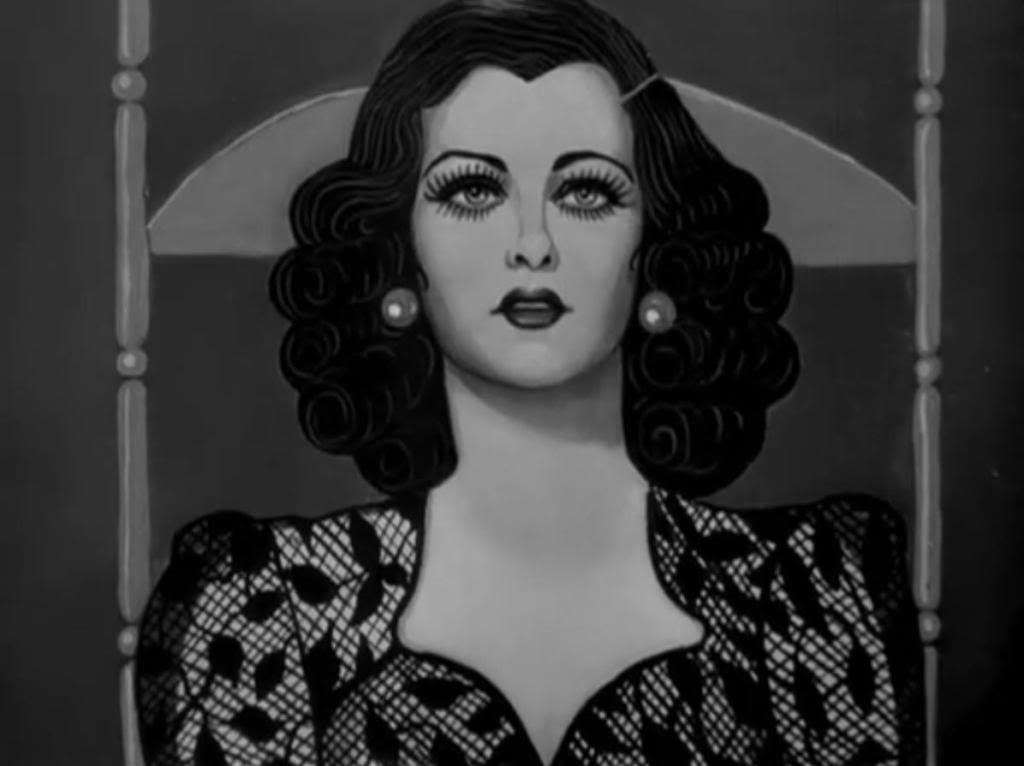
Fritz Lang's 1944 noir The Woman in the Window is in many ways a meta-noir that examines the tragic allure that draws so many doomed noir heroes into situations that are bound to end up in murder and worse. The aging professor Richard Wanley (Edward G. Robinson) is a pretty unlikely noir hero, and he seems to know it. He's settled into routine and domesticity, and even when his wife and children go away on vacation, leaving him on his own, he doesn't have anything planned beyond drinking quietly at his club, reading and smoking cigars. Naturally, he's going to be shaken out of this routine in a rather startling way, and in true noir fashion his downfall is practically preordained from the moment he sees a painting of a lovely, elegant woman in a gallery window adjacent to his club. He and his friends cheerfully discuss the woman in the painting, their infatuation with her virtually the only outlet for the sexual feelings of these thoroughly domesticated middle-aged men.

Wanley's conversation with his friends at the beginning of the film lays on the foreshadowing pretty thick, with his friends warning him that they're now too old for adventures, while Wanley insists that he has no interest in anything but going to bed early. He even tempts fate by saying that, should he encounter the beautiful woman from the portrait in the window, he'd walk right by, not even letting her sway him from his quiet, eventless night. It's of course immediately obvious what destiny has in store for Wanley, so it's no surprise when he walks outside, peering at the portrait one last time before he goes home, only to have the woman herself appear, reflected in the window. Lang telegraphs what's going to happen long before it does; even the framing and composition of the shot as Wanley looks in the window seems to be primed for the woman's inevitable appearance. Her face floats in the reflection in the glass, hovering in the blackness right next to her painted doppelganger, two alluring images superimposed. She briefly exists only as this hazy, wavering ghost image, her reality uncertain, before Lang's camera turns, with Wanley's gaze, towards the flesh-and-blood woman.

This woman, Alice Reed (Joan Bennett), leads Wanley, in total innocence, into a shadowy nightmare of murder, suspense and intrigue. The pair spends an innocent, pleasant night together, their flirtations barely edging past politeness — Wanley is married and scrupulous — when suddenly one of Alice's lovers bursts in, immediately flies into a rage, and begins strangling the shocked professor. Of course, it's the other man who ends up dead, and Wanley and Alice must dispose of the body, covering up their crime before morning comes. Lang draws out the process of cleaning up after this accidental murder, not skimping on any details, emphasizing what a difficult, physical, tense procedure it is. Every moment is loaded with the possibility of getting caught: lugging the body, wrapped in a sheet, out to the car in the rain, then driving out to the country to dump the corpse in the woods. The empty, rainy nighttime streets are eerily quiet and empty but seem loaded with danger, like a taxi dropping off a passenger just as Wanley is about to carry the body outside, or all the cops who suddenly pop out of nowhere, threatening to pull the professor over and discover his sinister cargo. One cop actually does pull him over, before Wanley has picked up the body, and sneers suspiciously at the professor's ethnic origins, in a sequence that surely must have resonated with the immigrant Lang: "Wanley, huh, what's that, Polish?" "No," Wanley replies, "it's American."


This attention to detail enhances the film's nightmarish atmosphere. Wanley is a man who's totally unprepared for this kind of intrigue, and Lang rigorously emphasizes each step of the process, as well as calling attention to all the little details of the evidence trail that Wanley leaves behind. After the murder and cover-up, the film becomes an interesting kind of forensic mystery in which the hero is the killer, watching his friend, district attorney Frank Lalor (Raymond Massey), piece together the clues and form a startlingly accurate picture of the crime. Throughout the film, Wanley's conversations with his friends, especially Lalor, keep him updated on the inexorable progress of the police, who uncover more and more evidence, all of which would point directly to Wanley if they ever got on his track. Moreover, these conversations work on a meta level to signal future plot points in an almost playful way: when his doctor prescribes Wanley medicine for nerves but warns him not to take too much, Wanley exclaims, almost excited, "poison!" It's as though he can't wait to see who will inevitably be getting poisoned via this new plot device, and neither can the audience.

This meta playfulness is carried over into the series of ironic twists that constitute the finale, with the last of these twists purportedly forced on Lang by a studio displeased with the director's original tragic ending. The studio-favored ending might seem like a cop-out if it weren't also so consonant with the film's theme of a man chasing his modest fantasies into danger and ruin. The film is a dreamlike journey through the dark side of the American city — in that respect, it would make an ideal double feature with Martin Scorsese's later After Hours — only to pull back at the last moment into safety, security, and a lack of risk. The urban environment and young women like the lovely Alice embody excitement and danger, contrasted against the stability and the safety, but also the boredom, of the nuclear family. At a key moment towards the end of the film, Wanley receives a phone call from Alice about another problem with their plans, and Lang shoots him sitting in an armchair with photos of his wife and two children prominently placed on a table beside him, reminders of everything he stands to lose, but also everything he was running away from into this dark fantasy.

The Woman in the Window is beautifully shot, bathed in shadows, with exceptional performances and witty dialogue. Robinson and Bennett make a great central couple, with Robinson playing a restrained, sophisticated man slowly being overtaken by fear, while Bennett radiates femme fatale glamour. Also notable is Dan Duryea as a sleazy blackmailer who seems to be constantly talking out of the side of his mouth. Lang shoots with precision and formal rigor, his camera constantly tracking either in or out of a scene, as though continually alternating between psychological intimacy and the forensic observation of distance. At one point, he shoots Wanley and Alice walking alongside an iron railing, the metal bars falling across their figures like prison cell doors, a familiar noir visual shorthand for a trap closing in, that's nevertheless effective nearly every time it's used. This is a potent noir that writes the subconscious psychological desires of the protagonist onto the dark, lonely city streets, suggesting that one's fondest fantasies can also be — and often are — traps. The shy, sly smile of a woman in a painting can be an invitation to adventure and romance, but also an invitation to be swallowed whole by the city's deep pools of darkness.

Friday, March 9, 2012

The Boy With Green Hair


The Boy With Green Hair is a moving, unique fable that deals with the aftermath of World War II through the perspective of a young boy whose life had been irrevocably altered by the war. Peter (Dean Stockwell) was orphaned by the war, although nobody bothered to tell him; he was passed from one relative to another, each of them eventually having some reason why he could no longer stay with them, all of them perpetuating the illusion that someday his parents would return from Europe and he'd be reunited with them. Finally, he goes to stay with Gramp (Pat O'Brien), not his real grandfather but some older relation or friend of the family, one more place for Peter to live, for however long. With Gramp, Peter finally starts to settle down, to realize that he might have a semi-permanent place to stay and be happy: Gramp is a perfect companion for a little boy, a former entertainer who's always cheerful and always has far-fetched, fanciful stories to tell. But the war's grim reality still haunts the boy, and when he finds out that his parents are actually dead, that he's a war orphan just like the poor children that his school class has been helping with donations and fliers, it shakes him and changes him in a strange way.

He wakes up one morning and his hair has turned green. The film then becomes a parable dealing with the effect of war on children, as Peter faces ridicule at school and fear from adults, who wonder if the effect is contagious and might spread to their own children. Peter has been marked out as different, because subconsciously he wants to be noticed, he wants people to know that he's different, that he's a war orphan, someone marked in a very profound way by the war. At one point, he imagines that he is haunted by other war orphans — obviously projections of his own mind — who tell him that it's good to be noticed, that it's good to have people paying attention to him. Because, of course, so many of these tragically affected boys and girls are not noticed, their plight forgotten. Peter cannot be ignored in this way, and though he's initially horrified by the green hair, he soon comes to think of it as a sign with great meaning, a visible reminder of the horrible effects of war.

This was the first film for director Joseph Losey, an unlikely but also somehow appropriate start to his career. This bright, blunt children's movie is unique in that it focuses so intensely on the perspective and inner life of a child, privileging his reactions and his thoughts about his own experiences. The adults in the film, even the well-meaning Gramp and a kind teacher (Barbara Hale), try to understand but can't fully grasp what this boy is struggling with, and eventually even Gramp, who tries to put a good spin on the new hair color at first, gives in to the community's pressure and encourages the boy to shave his head. This is a great betrayal, a failure to recognize how much this symbol means to Peter, how much it means for him to be able to embrace his difference and use it to spread his anti-war message. The head-shaving scene is staged with the townspeople anxiously looking on, and the mood is tense and melancholy, with each lock of green hair that falls from Peter's head increasing the somber mood in the observers, who seem deeply ashamed of what they've done by the time Peter's scalp has been shorn to a shiny bald cleanness.


The film's message is bluntly delivered but nonetheless affecting, perhaps because the war was still so fresh when Losey made this in 1948. In one scene, Gramp and Peter reflexively flinch when they hear a plane go rattling by overhead. Gramp reassures the boy by saying that it's just a mail plane that must have a heavy load, but he doesn't seem so sure, and his words hide the fear, rational or not, that the plane's cargo is actually a bomb. In another extraordinary scene, Peter, before his hair turns green, goes to the grocery store and overhears two women talking about the war and their fears that there will be more wars to come. As is often the case in this film, the adults are filmed from the shoulders down, so that Peter, below their level, can't see their faces. It's a good way to convey the child's eye perspective of a boy scurrying about, unnoticed, while the adults converse, unmindful of the effect their words are having on Peter. It's as though they don't even know he's there, but their terror about nuclear war and more young people being sent off to die is affecting him deeply, especially when they explicitly reference him, expressing their fear that his generation will also grow up to be sent off to war. Peter, startled by this grim speculation about his future, drops the milk bottle in terror, but the adults don't realize what has happened, and they only laugh affectionately at his clumsiness.

This adult obliviousness is a big part of the film. Peter, in his youthful naïveté, wants to break through the adults' seeming certainty that war is inevitable, to convince them that there's no reason to go to war and kill more young people and their parents. He's the logical one, the one who reacts to the horror and losses of war with the common-sense proclamation that there shouldn't be any more wars, but he's met with head-patting condescension and blank stares when he delivers this message. He can't understand: why does nobody else seem to agree with him that war could or should be stopped?

The film's polemics provide a hint of what was to come for Losey, who would never flinch from politically engaged cinema, a fact that would send him into exile following the McCarthyite purges of Hollywood. But The Boy With Green Hair was different, both from Losey's later work and from virtually everything else in Hollywood, because it was so focused on these issues as they pertain to children. Because of that focus, it can approach complex, emotionally fraught issues with the simplicity and directness of a child. The film's aesthetics mirror that simplicity, cutting away the excess to emphasize Stockwell's naïve performance in tight closeups. Stockwell delivers a very charming performance, capturing the extreme shifts in mood that the confused Peter goes through; in a more unguarded moment, he makes funny faces in the mirror, but more often he's overcome with wide-eyed fear. As a children's parable about war, loss, and hope, The Boy With Green Hair is a memorable and moving work that uses its surreal central conceit to explore some surprisingly weighty emotional subtexts.

Wednesday, February 29, 2012

The Stranger


The Stranger is an unusual and somewhat awkwardly realized noirish thriller that was the third proper directorial feature of Orson Welles. It's a post-war suspense film about an escaped Nazi who disguises himself as an ordinary high school teacher in a small town in Connecticut. An officer for the war crimes commission, Wilson (Edward G. Robinson), is tasked with tracking down the elusive Franz Kindler (Welles), a mastermind of the concentration camps who, in the aftermath of World War II, has erased all trace of his identity and settled into suburban conformity. He's even marrying local girl Mary (Loretta Young), a naïve beauty whose father is a well-respected judge. Wilson arranges for the release of a lower-level Nazi prisoner, Meinike (Konstantin Shayne), in the hopes that the underling will lead them to the otherwise vanished Kindler. In the film's briskly paced but evocative opening — which Welles had wanted to be much longer, but the footage got cut by the studio — Wilson's detectives track Meinike through a South American port, where deep shadows are populated by silhouetted figures smoking on balconies, and mysterious women weave through back alleys passing messages between the men who hide in the shadows. This exotic opening sequence is a bit of clever misdirection, though, because at the end of it, Meinike finally gets in touch with the contact he'd been seeking, and finds out that Kindler is not hiding in some grimy, out of the way South American town, as so many Nazis did after the war, but is in fact in the quiet, normal little town of Harper, a place as quintessentially American as any place can be.

Welles immediately cuts from South American intrigue to North American small town life, creating a jarring disjunction in mood and style between the expressionist shadows of the opening and the brightly lit streets of Harper, a place that seems to have nothing to hide, no shadowy errands being conducted within its pleasant borders. As Mary says, cheerfully getting ready to walk home alone one night, "in Harper there's nothing to be afraid of." That's a big part of the film's essence, the infiltration of American suburban safety and security by the sinister evil of Nazism. Kindler's presence in this cheery, sunny little town is an affront to the idea that there's nothing to fear on America's pleasant home town streets.

As compelling as this theme is, the script is often clumsy in conveying it, and as with a lot of Welles' post-Kane studio-compromised works, the film has a lot of rough edges. Mary is the biggest problem, and Young is not given much to do with her performance. She remains loyal to her husband even as she starts learning troubling details about this man she loves, and starts seeing indications of the violence he's capable of. She reacts to each new revelation with renewed dedication to him, so her part basically consists of weepy declarations of love and devotion, until later in the film she begins breaking apart, shrieking and fainting constantly. At one point, after learning that the man she knew as Charles Rankin is actually the Nazi Franz Kindler, she runs through the nighttime streets, tearfully insisting, "he's good, he's good," locked into denial. It's an unfortunately one-note role that limits the woman in the story to either blind devotion or hysteria.


Welles and Robinson have much meatier parts, and the film focuses on the tense battle of wills between these two titanic actors. Though the script sometimes tends towards moral speechifying, their performances are strong enough to overcome the blunt nature of the words they're delivering. The real pleasure, though, comes from a few of the quirky bit parts. Meinike, the Nazi underling who kicks off the whole plot, is a fascinating figure, a sinister-looking creep who has, apparently, found religion while awaiting trial for his war crimes. He's tracking down his old boss hoping to convert him, it turns out, and the scene where he drops to his knees in the woods with Kindler and prays is oddly striking. Welles also gets some folksy humor out of Mr. Potter (Billy House), the rotund general store owner who puts on a visor to denote his seriousness every time he plays a game of checkers with his customers.

The film's most memorable scenes are the ones in which Welles and cinematographer Russell Metty allow an expressionist, shadowy noir style to infiltrate the mundane town of Harper. Hoping to shake Mary out of her delusions about Kindler, Wilson shows her footage of the concentration camps on a projector, and Welles includes real images from the camps — the first time this was done in an American film. Welles only shows selected shots from the camps, mostly keeping the cameras trained on the faces of Mary and Wilson, the flickering light from the projector flashing on their faces. The emphasis is on their reactions, the haunted look in Mary's eyes as she sees the horrifying piles of bodies and the evidence of the gas chambers. At one point, Wilson stands in front of the screen, casting his silhouette over the images, and then Welles cuts in for a closeup in which the images are eerily laid across his face. At a pivotal moment at the end of the scene, the tape stops with a loud clicking noise, startling Mary out of her awed reverie — and likely the film's audience with her.

Welles also makes inventive use of the town clock tower, which is an important locale because Kindler has a hobby — Wilson describes it as a "mania," because even the hobbies of Nazis must be creepy — of fixing antique clocks. Once Kindler repairs the long-malfunctioning clock, the deep, chiming bells that go off every once in a while sound a foreboding note, an aural signature, a reminder of the Nazi mastermind's presence in the town. The clock tower is also the site of the brilliant, chaotic climax, in which Wilson and Mary confront Kindler inside the tower, leading to an unforgettably prolonged death scene for the Nazi mastermind, who gets impaled on the sword of an angelic figure who makes the rounds of the clockwork mechanism, chasing a gargoyle-like devil. The symbolism and the irony are obvious, but the result is still affecting and haunting. The same can be said for the film as a whole, which is clunky and uneven but still deeply fascinating and, as usual with Welles, inventively staged.

Wednesday, February 22, 2012

Germany Year Zero


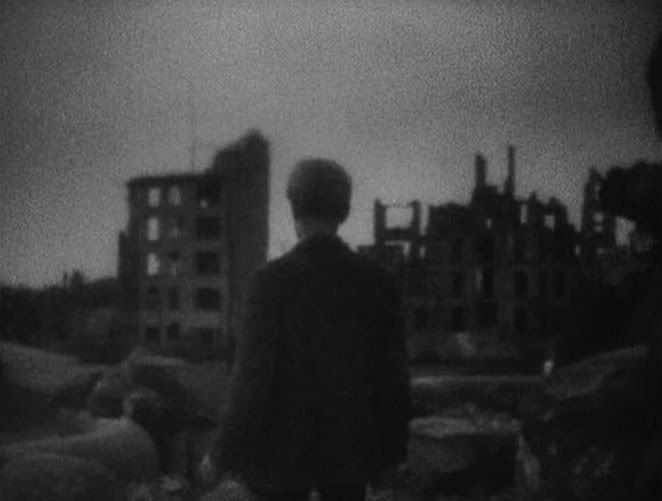
The final film of Roberto Rossellini's post-war trilogy continues his examination of World War II's effects on ordinary people living in the devastation of a bombed-out, battered Europe. While Rome Open City and Paisan focused on Rossellini's post-war Italy, with Germany Year Zero he heads to Berlin, divided by the victorious Allies and wracked by poverty. As with the previous two films, this one is an intense and raw drama that draws on the wreckage of the post-war streets and the rough conditions of life for those who survived the war. Rossellini shot on cheap film stock in the actual streets of Berlin, which gives his film a real documentary appeal. Everywhere, there are piles of rubble and damaged buildings, pavement cratered by bombs, and whole families living in cramped one-room quarters. They subsist on minimal rations, there's hardly any work to be found, and prices are high for even the most essential foodstuffs. A hearty black market thrives, but it's full of crooks eager to take advantage of people's desperation to sell off their most valued possessions in return for a few cans of food.

Rossellini uses these dismal, desperate conditions as a backdrop for the potent story of one boy and his family struggling to survive in the aftermath of the war. Edmund (Edmund Moeschke) is just 12 years old, but he bears a lot of the responsibility for his family. His father (Ernst Pittschau) is too sick to work or even to leave his bed most of the time, while his sister Eva (Ingetraud Hinze) does what she can by going out every night — much to Edmund's disgust and confusion — with Allied soldiers so she can acquire cigarettes and trinkets. Worst of all, Edmund's brother Karl-Heinz (Franz-Otto Krüger) does nothing, because he served in the army during the war and is in hiding, fearing that he will be identified as a war criminal. He hasn't registered for food coupons, can't work, and simply loafs around the house all day while Edmund and Eva scrape together what few supplies they can gather for the family.

There are ambiguous intimations that Karl-Heinz could have involved in some atrocities during the war — he says he's afraid he'll be arrested when the authorities find out what unit he was in, an ominous suggestion — but he's only one sign of the more sinister undercurrents still threading through post-war Germany. The de-Nazification efforts cleanse the most overt displays of Nazi sympathies, but more subtle remnants are as ubiquitous as the rubble. By chance, Edmund encounters his old teacher Mr. Henning (Erich Gühne), who had been an organizer for the Hitler Youth during the war, and who now seems to be involved in some very shady activities. While walking around town, Henning casually trades words with an old acquaintance, who seems wistful for the days when they were "men, National Socialists," instead of just disgraced former Nazis. Moreover, Henning, whose solicitous, seductive manner towards the oblivious Edmund is skin-crawlingly pedophilic, lives with a secretive group of people, watched over by a mysterious and domineering man who has the air of an officer. Henning has vinyl records of Hitler's speeches, which he has Edmund sell to American and British GIs eager for a souvenir, but the group he shares a big house with seem to be secretively plotting something much bigger than black market sales. The whole icky vibe is of a shadow society of former Nazis still hidden within the ruins of the city, some of them slipping seamlessly back into society and some of them carrying out their vile plots at the fringes.


Though Rossellini certainly acknowledges the legacy and horrors of Nazism in sequences like this, the film's focus is not on the war criminals and evil masterminds of the Reich, but on the ordinary German citizens who lived through the war, some of them serving in the army, some of them simply staying at home while the bombs dropped all around them. In one of the film's most pointed political moments, Edmund plays a record of one of Hitler's speeches, and the words reverberate through a bombed-out building, before Rossellini cuts away to show more wrecked buildings, rows of houses missing their roofs, rubble and destruction everywhere. Hitler's stirring words about victory and glory seem so empty, so foolish, when played back atop these images of what Hitler's plans did to his people and his cities.

That's what this film, like Rossellini's other post-war street-level dramas, is really about: the human toll of war, the cost paid by the ordinary people who are simply trying to live quietly and provide for their families. It's a heartbreaking film, as Edmund's increasing desperation drives him to the edges of crime and corruption, trying to do anything he can to help his struggling family. He's just a boy, he barely understands so much of what's going on, but he hears the snide remarks from neighbors about his lazy brother and his "whore" sister, and he hears his father moaning about wanting to die, to relieve the family of the burden of caring for a sickly old man. It's chilling to see what Edmund is driven to by these circumstances, to feel his confusion and horror at the pitiless situation he finds himself in. In a typically understated shot, Rossellini holds Edmund and his father in a composition as the boy stoically, expressionlessly watches his father drink a poisoned cup of tea.

Germany Year Zero is a harrowing and heartrending film that holds a deep, tender humanism within its depiction of harsh, cruel realities. The film is raw and roughshod, the acting often shrill or stiff, and the music's bombast and melodrama is ill-suited to the ragged images that Rossellini found on these real war-torn streets. But this roughness and jaggedness is just a part of the film's greatness, adding to the impression that the director has captured the essence of day-to-day life for so many poor people just barely holding on in the aftermath of Europe's defining war.

Monday, January 23, 2012

How Green Was My Valley


John Ford's How Green Was My Valley is a gorgeous, achingly sad movie, a moving evocation of "the way things were" and the process by which the inexorable progress of industry and modernity slowly, steadily erodes the old ways, breaking apart the stability of family and shattering tradition. The film is steeped in the director's love of innocence and simple virtue, his rosy perspective on the past and its values. Because of this, the film is deliberately, lovingly old-fashioned in every way, paying tribute to a way of life that dies out one step at a time over the course of the film. The film even opens with an acknowledgment that the place and the time it is depicting is already long gone, changed forever, its emotions tinged with nostalgic regret and sorrow. In the opening voiceover, Huw (Roddy McDowall) prepares to leave home, packing his things while the sad voice on the soundtrack describes his memories of his home the way it used to be. The remainder of the film is set in the past, looking back wistfully at the glorious days of childhood happiness and familial closeness, and the slow disintegration of those virtues over many years of suffering and sadness.

Huw's family lives in a Welsh village in the shadow of a valley, and all the men work all day in the coal mine perched at the top of the valley, above the town, its smokestacks belching black clouds into the air above the town. Huw's memories stretch back to a time when he was a young boy, when the coal and the smoke had not yet stained the valley's green hills black. Huw's recollections of his boyhood begin in idyllic bliss, recalling the beauty of the valley, the love of his parents, Mr. and Mrs. Morgan (Donald Crisp and Sara Allgood), the fresh-faced beauty and sweet smiles of his sister Angharad (Maureen O'Hara) and sister-in-law Bronwyn (Anna Lee), the camaraderie of his four older brothers. The happiness of these memories is deliberately exaggerated, marinating in over-ripe sentimentality and down-home charm. Looking back, Huw remembers his early boyhood as a paradise, rooted in the stern but loving ritual of home life: deep-seated respect for his parents, religion, love and generosity. This life is strongly ritualized and formalized, with a set of encoded traditions that drive daily life. Every day, the men go off to work in the mornings, then return home in the late afternoon, winding through the streets singing while the women and children come out to watch. They deposit their daily earnings with the matriarch of the family, settle down to dinner after prayers, and eat heartily without speaking — "I never met anyone whose talk was better than good food," Huw says. Afterwards, the young men are given their spending money, sent off to have the nightly fun that their day of hard work has earned them. It's a simple and sometimes difficult life but a fulfilling one, and Ford purposefully spends some time establishing this traditional existence's appeal and its grace, because the rest of the film is concerned with the erasure of all this tradition and stability.


Over the rest of the film, Ford slowly reveals how these traditional values and ways of life have been corrupted and made irrelevant by the advances of modernity. The men working at the coal mines are increasingly subjected to more and more injustice: their wages are reduced as cheap labor becomes readily available, and men who have been toiling in the mine for many years are unceremoniously fired and replaced by younger, poorer men who can be paid less for the same work. Mr. Morgan largely takes these changes in stride at first, convinced that the old standards of fairness and decency will remain intact, but the younger generation is not so trusting, and they struggle to form a union that could help them fight against the mistreatment they receive at the hands of the rich mine owners. Ford increasingly provides little way out. Religion offers some comfort in the form of the pastor Mr. Gruffydd (Walter Pidgeon), but his kindly spirit and goodness are an anomaly in a church mostly ruled over by bitter old men. In one chilling scene, these older church dignitaries call a "meeting" at the end of mass to summon one poor young woman to stand in front of the congregation, where they castigate her for having a child out of wedlock, sneering angrily at her; Ford captures the wizened, shaking hand of one deacon in closeup, pointing an accusing finger at the woman. Scenes like this suggest that the goodness and kindness of the Morgan family is only one possible outcome of old-fashioned tradition, and that tradition can also be close-minded and judgmental, so stuck in its ways that there's no room for deviation.

This scene is a premonition of the way that Angharad — who is the only parishioner to storm out of the church, enraged by this display of cruelty disguised as religion — will later be treated by the town in which she grew up. Angharad loves Mr. Gruffydd, but their relationship is not meant to be, and instead Angharad marries the wealthy son of the mine owner and moves to South Africa. Her wedding is contrasted against the marriage of her brother Ivor (Patric Knowles) to Bronwyn earlier in the film. At Ivor and Bronwyn's wedding, the mood is joyful and ecstatic, with the bride and groom running through the town surrounded on all sides by revelers enthusiastically throwing rice, smiling and singing. At Angharad's wedding, the bride is grim and stoic, and her expression is matched by many in the crowd; though the groom at least is smiling, this is a joyless affair, and the singing only starts when Mr. Morgan shames the crowd, made up of men who have been beaten down and mistreated by the mine owners, into singing for his daughter's marriage. When Angharad later returns to town without her husband, it's no surprise, but she's not greeted with any joy then either: though no one cheered her marriage's beginning, they now flood the streets with vicious rumors about divorce, unfaithfulness and scandal centering on Angharad and Mr. Gruffydd, even though nothing has happened between them. There is another church "meeting," and again the viciousness and ugliness of traditional values are exposed.

Not that modernity offers anything better. Huw is the only member of his family to go to school, which Mr. Morgan at least sees as a path out of the family's poverty and lack of options. Mr. Morgan has already seen all of his other sons — except for Ivor, who dies in the mines — leave home for greater opportunities far away, and he recognizes that this is the inevitable fate of his family and his village, broken up by changes to which they are ill-suited to adapt. He hopes that Huw will be different, but at the regional school Huw encounters only prejudice and disdain, from his snooty teacher and his fellow students alike. He's beaten and abused, mocked for his old-fashioned ways and his relative poverty, while at home his mother has no patience for the abstract ideas and theoretical problems involved in education, seeing no practical applications for the things her son is learning. Perhaps influenced by his mother's pragmatism, as well as his boyish love for Bronwyn, when Huw finishes his education, he decides that all he wants is to work in the mines like the rest of his family rather than put his new knowledge of Latin and mathematics to use.


Cinematographer Arthur C. Miller's stark, dark black-and-white imagery contrasts against the aching nostalgia and sentiment of Ford's vision. The cinematography is darkly romantic, using a high-contrast style in which the blacks are rich and deep, occasionally broken by the bright, pure light shining through the valley. In the hills above the town, the trees cast latticework networks of shade across the rustling grass, while the town itself is brighter, with long shadows stretching across the roads winding along the rows of houses. The film's most beautiful images are inevitably the departures: images of the Morgan sons leaving home, two by two, for greater opportunities, their belongings slung across their backs, their silhouettes shrouded in darkness and the big country sky towering above them, tumultuous with clouds. This film's simple beauty perfectly captures the longing for home and tradition that inflects every minute of it. Even the mine, spewing smoke and ash across the countryside, is rendered with an awful beauty, a stark industrial simplicity that hovers above the town, slowly infecting it with a sickness that drains the village of its young people, its hope, its rock-solid reliance on a certain way of life.

This is sentimentality with real purpose behind it, sentiment and nostalgia honed into biting social commentary. Ford's vision is so pure, so direct, that it's near impossible to take his idealistic perspective on the old days at anything but face value. The film only occasionally stumbles, mostly because of the often lame accents. Also, Ford's decision to have Huw played by the young McDowall throughout the film becomes very strained later in the movie, when the boy begins working in the mine and living with his brother's widow — it's obvious that he is supposed to be a young man at this point, as he was in the Richard Llewellyn novel that Ford was adopting, rather than a little boy. This structural and casting misstep aside, How Green Was My Valley is a staggering achievement, a film of tremendous beauty and melancholy, a deeply sad but never despairing portrait of the way things were, and the way they'll never be again.

Wednesday, December 14, 2011

The Third Man


Harry Lime. Harry Lime. Harry Lime. The name is spoken so frequently in Carol Reed's The Third Man that it becomes a mantra, a way of signifying the continuing importance of a man whose absence defines the film and drives its plot. The war is over, and as the pseudo-documentary introduction describes it, the city of Vienna is in turmoil, bombed-out and divided, split into sectors by the victorious Allied powers (just getting ready for the colder war to follow) and rife with corruption and black market dealings. The pulp fiction writer Holly Martins (Joseph Cotten) arrives in the city at the behest of his friend Harry, who has offered him a job, but virtually the first thing that Holly learns when he arrives in Vienna is that Harry is dead, the victim of a strangely suspicious traffic accident. Harry's left behind Anna (Alida Valli), the beautiful girl who loves him, plus a string of business associates who seem very shady and evasive, and a dogged police inspector (Trevor Howard) whose interest in Harry's illegal activities hasn't quite faded now that the man himself is beyond his jurisdiction.

So Holly — who Anna instinctively and repeatedly calls Harry, evidence of Harry's ubiquity and also a suggestion that she's already beginning to think of this newcomer as a possible replacement — stumbles into a shadowy, foggy Vienna where sinister dealings are obviously happening down every dark alley and in every night club. The people Holly meets, his friend Harry's former associates, like the solicitous "baron" Kurtz (Ernst Deutsch), radiate menace and sinister intentions, drawling out seemingly banal dialogue that barely disguises the unspoken threats and insinuations hiding just behind their friendly surfaces. It's instantly obvious that something strange surrounds Harry's mysterious death, something much more sinister than the traffic accident that everyone insists it was, and Holly becomes particularly obsessed with discovering the identity of an unknown "third man" who carried his friend's body away from the accident along with the baron and his fellow conspirator Popescu (Siegfried Breuer).

Interestingly, this mystery, which gives the film its title, ultimately seems incidental to what's really going on here, and isn't even resolved explicitly within the film. The film's first half is driven by mystery and investigation, but the specifics of this mystery don't seem nearly as important as the general sense of tension and intrigue generated by Holly's attempts to discover the truth. The script, adapted by Graham Greene from his own novel, crackles with suggestive, potent dialogue, particularly in the exchanges between the mourning Anna and Holly, who is clearly falling in love with his dead friend's girlfriend even as he probes deeper and deeper into the sordid truth about Harry Lime. Although Harry himself is the central, unseen presence for much of the movie, Anna and Holly (with his strange name so resonant with Harry's) get most of the screen time, dealing with Harry's absence and trying to make sense of life now that he's gone. In one great scene, a tearful Anna asks Holly to tell her things about Harry when he was younger, and Holly tells a series of incomplete, faltering stories that amount to moments and glimpses rather than full scenes in themselves. It seems even when he was alive, Harry was a somewhat enigmatic figure, difficult to understand or describe. (Much like the "third man," who is described by the one person who saw him as entirely normal and non-descript.)


Of course, in the movie's final third it turns out that everything is not as Holly and Anna had thought, and after being an unseen presence/absence for over an hour, Harry Lime himself finally makes his first appearance, incarnated in the smug smirk and cheery eyes of Orson Welles. Harry's first appearance is iconic and unforgettable, first as a shadow in the night, a pair of shoes standing in the shade of a doorway, the rest of his body vanishing into the surrounding shadows. Then a light comes on and illuminates his face, and there's that playful smile, those twinkling eyes, devilish and rakish, a sinister face hovering in the darkness. Having an actor as powerful and iconic as Welles play Harry, and holding back his first appearance for so long, really intensifies the effect. The audience is as stunned as Holly is, in a way, because just as Holly is shocked to find his friend alive, the audience, who might have suspected as much, is simply shocked by the impact of Welles' arrival and the oversized charm that he brings to Harry.

That's even truer in the subsequent scene, later in the film, where Harry finally gets his first lines — and is revealed not as the loving boyfriend idealized by Anna or the fun, steadfast friend described by Holly, but an amoral sociopath who willingly snuffs out lives just to make some money. Harry feels no guilt that the black market medication he was selling killed many and drove others mad. As he and Holly ride a ferris wheel, he looks down and speaks as though he's a god, as though other people are simply abstract dots to him, their lives and deaths of no import to his schemes. Harry is a real product of the war, a lowlife echo of the Nazi indifference to life and the god-like delusions that drive some men to believe their desires are more important than the very lives of others. Harry is a demon, a charming demon, and the sinister vibe of his friends is echoed in his own demeanor. His first conversation with Holly is infused with just-barely-unspoken threats and telling looks. He maintains a casual air as he opens the ferris wheel's door and tells his good friend that he has a gun, that he could eliminate him if he wanted to. And then, when Holly tells Harry that the police have dug up the latter's grave and found the man buried inside it — essentially telling Harry that his problems wouldn't end by getting rid of Holly — Harry's demeanor changes entirely, and he once again becomes solicitous and charming, the menace in his voice replaced by syrupy good cheer and friendly offers. He's good old Harry again, the merry prankster Holly had earlier described in those fragmentary stories from the good old days.

The film climaxes with a crawl through the sewers, in which the witty dialogue and insinuations are replaced by a nearly dialogue-free chase sequence in which Harry is pursued by an army of police with dogs and flashlights, with Holly accompanying them. The sewer sequence is a marvel of noir style, all striking angles and shadows, occasionally pierced by the blinding white light of the pursuers. Harry's face, now not so dashingly confident, is striped by shadows in the dark of the sewer, his eyes wide with fear as he runs this way and that, hemmed in and cut off everywhere, attempting with mounting desperation to find a way out. His earlier smirk is replaced by a grimace of terror. In the sequence's most unforgettable image, a wounded, crawling Harry reaches for a sewer grating, and Reed cuts away to the street above, where Harry's fingers stick up through the grate, waving around like stalks of grass in the wind, which whistles by on the soundtrack, the eerie only noise. It's a haunting ending for a legend who was disappointingly revealed as just another corrupted man, a sad echo of the war's evils.