Showing posts with label Charles Chaplin. Show all posts

Friday, November 9, 2012

A Woman of Paris


Charles Chaplin's A Woman of Paris was a very conscious departure for the writer/director/comic. Chaplin had just begun making features, and now he was ready to expand beyond comedy, for the first time making a film in which he did not star, and which was a serious drama with virtually no humor whatsoever. It was also an attempt to provide a showcase for Edna Purviance, who had been Chaplin's most prominent leading lady since his Essanay period; Chaplin wanted to make her a dramatic star rather than just his comic foil. Chaplin was very aware that this change might not be welcomed, and he defensively prefaced the film with a letter handed out to audience members, warning them not to expect a typical farce with the Little Tramp. It didn't help: the film was a flop, and Purviance never became the silent star that Chaplin had wanted to make of her.

It's not hard to see why the gambit failed: under the weight of expectations, A Woman of Paris couldn't help but be a disappointment, or at least a shock to the system. It's a straightforward, subtly acted romantic melodrama that veers into tragedy several times over, with little in common with the famous Tramp's other films to that point. Taken on its own merits, though, it's a fine example of this kind of 1920s moralist tragedy, simple and direct and boasting a number of especially nuanced portrayals. It's only by comparison with the rest of Chaplin's oeuvre that one feels something missing, the supple balance of comedy and sentiment that characterized his best works, here with the comedy removed to focus exclusively on darker emotions.

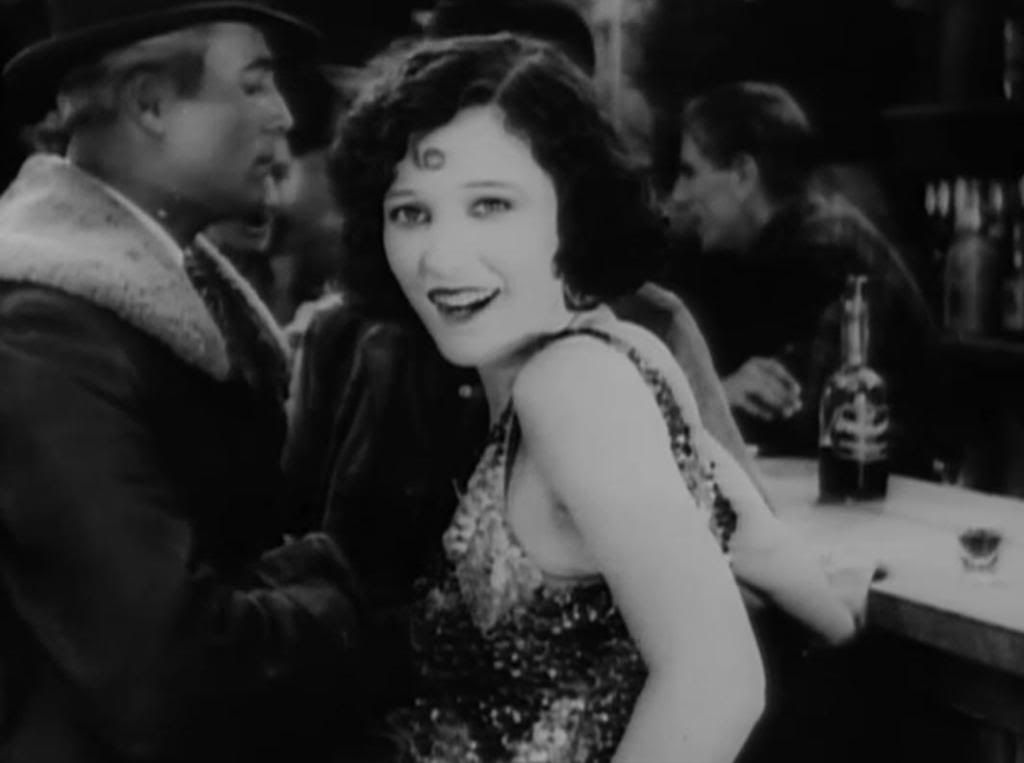
Purviance plays Marie St. Clair, a young woman preparing to run off to get married with her sweetheart Jean (Carl Miller), a young artist, even though their parents disapprove of the affair and try to keep them apart. Their hopeful young love is shattered, though, when a tragedy prevents their elopement, and they wind up going separately to Paris and living very different lives. While Jean lives with his mother as a starving artist, Marie becomes the mistress of the playboy Pierre (Adolphe Menjou), who keeps her in a luxurious apartment and gives her a life of leisure and pleasure, even though he's due to marry someone else. She's a fallen woman now, but interestingly, Chaplin makes this life look fun, and Menjou delivers a surprisingly sympathetic performance as the corrupt, decadent ladies' man. There's real affection between them, maybe even something like love, and the chemistry between them complicates the film tremendously, pushing it beyond its moralistic melodrama.
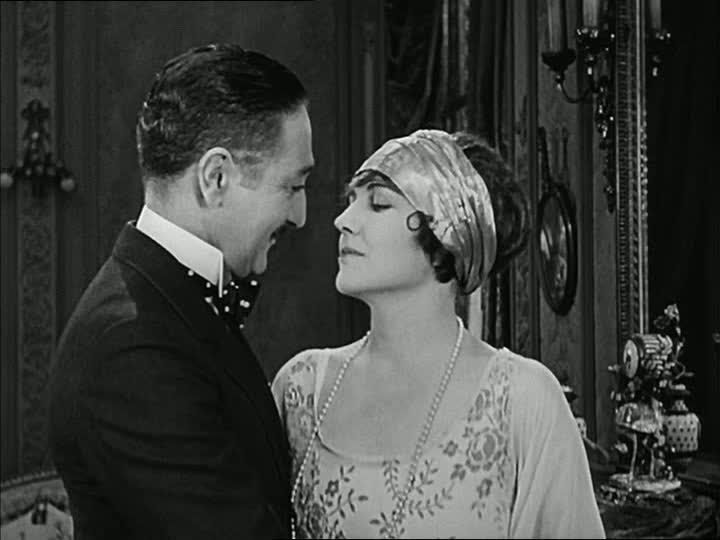

The performances in the film are naturalistic and subtle, creating real pathos for these characters. The film may not have made Purviance a star, but it probably should have. She has a warm, unstudied humanity to her that was always evident in her work with Chaplin but is especially apparent here, where she finally gets a spotlight all to herself. Her character reacts to the twists and turns of her life with a laugh and a shrug, trying to project an aura of carefree indifference, but Purviance always lets the woman underneath the flapper shell shine through, more upset and hurt by the men in her life and their cruelties than she ever lets on. And yet Marie tries to make the best of it all, even when she's reunited with Jean and is torn between her life of comfort and the possibility of rekindling what they once had, if it's even possible. Marie is an interesting character, and only at the end of the film is she finally confined to the conventions of the 1920s melodrama, forced to pay for the misunderstandings that had ruined her life, giving up her partying for an existence dedicated to service, caring for orphans to replace the family that she might've once had with Jean if things had gone differently.

Before this disappointingly pat ending, and despite the more melodramatic contrivances of the script, Chaplin does a fine job of exploring the subtle, contradictory emotions at the heart of the film's relationships. Aided by the exceptional performances of Purviance and Menjou in particular, the film is awash in sadness and loss. It's not surprising that Chaplin, chastised by audience disinterest, returned immediately to comedies, and Purviance's career unfortunately all but ended here. It's not quite a shame — there's no question that Chaplin's comedies would always be his most enduring works — but A Woman of Paris represents a different and rather interesting side of Chaplin's art, focusing on the emotional richness that also always made his comedies so distinctive.

Wednesday, August 22, 2012

The Great Dictator


Charles Chaplin resisted the coming of sound more successfully than any other filmmaker of the silent era, making a pair of mostly silent masterpieces after the rest of Hollywood had completely converted to sound. The Great Dictator was his first true sound picture, but even more more notably, it was the first American film to so directly mock and satirize Hitler and the Nazi regime before Pearl Harbor triggered the USA's entrance into World War II. It's a bold and daring film, an expression of defiance against dictatorship, hatred, violence and prejudice. The full extent of what was going on in German concentration camps and ghettos wasn't yet broadly known, at least when production on the film started in 1937, so some of Chaplin's comic set pieces are simultaneously unsettling and eerily prescient, dealing candidly and potently with the persecution of the Jews.

It's a viciously funny movie, a devastating satire that dares to make evil look ridiculous. Chaplin plays twin roles: the nasty and stupid dictator Adenoid Hynkel and an unnamed Jewish barber who seems like a last echo of the Little Tramp character who Chaplin had officially retired with the end of the silent era. While Hynkel, an egoist for whom power is the only goal, spreads war and persecution, the barber just wants to be left alone, to be free to live in peace and run his shop. Wounded in the first war and left in a coma, he slept through Hynkel's rise to power and wakes up as stormtroopers charge through the ghettos, painting the tag "Jew" on Jewish shops and homes, beating people and stealing from them.

The barber doesn't understand, and this is the most richly, deeply sad part of the film, this encounter between the innocence of the barber, this cinematic descendant of the Little Tramp, and the vile hatred of the Nazis. Chaplin's barber confronts the ideology of hate with genuine bafflement, confused as to why these people he's never seen before are harassing him in this way for no reason. He even mistakes a Nazi soldier for a cop, asking him to arrest another soldier. As the barber, Chaplin's voice is soft and whispery, an expression of gentleness and decency, the exact opposite of the blustery speechifying of Hynkel and the barked orders of the Nazis as they attack the Jews. The barber and the other Jews depicted in the film seem totally out of step with the rage and bile of the era; they just want to be left alone, to live their lives in peace.


The barber's disconnection from his era is epitomized right from the beginning of the film, in which he serves as a soldier during World War I. The opening scenes provide a general satire of warfare and military discipline, with Chaplin's hapless draftee stumbling through the fog of the battlefield, stoically following orders as they push him from one absurd scenario to another. Smoke drifts across the frame, swallowing up all the soldiers on both sides so thoroughly that at one point Chaplin falls in line with the enemy troops. This all plays out in an eerie hush that recalls the silent visual aesthetics of Chaplin's earlier films, a style he had by no means abandoned with his delayed acceptance of the sound era. The minimalism and starkness of this opening enforces the film's theme, highlighting the absurdity and ugliness of war so that when Hynkel appears, stirring up the people with an ideology that's committed to more war, to a constant state of war, his foolishness is very apparent.

Chaplin's Hitler caricature has a strange, childlike grace, like an overgrown little boy. Moved and chilled by his minister's grand dreams for the dictator's future conquests, Hynkel bounces straight up in the air and climbs the curtains, hanging there, and then he performs a remarkable dance with a globe balloon that he balances on his palm, light as air, gleefully letting it fly high up into the air. Chaplin plays the scene as silent pantomime, a brilliant parody of the dictator's fantasy of himself as a world ruler, both utterly absurd and chillingly, strangely beautiful. When the balloon pops, he breaks down and sobs like a little boy whose toy has been taken away.

The film is often most powerful in the scenes that rely on this kind of silent comedy performance. At one point, Chaplin's barber, overcome with terror, loses his voice and pantomimes an elaborate series of hand signals about the approaching Nazi stormtroopers — in times of great stress and emotion, he reverts to the silent era's method of communicating. Perhaps for that reason, the film is full of callbacks to earlier Chaplin films. The barber attacks a Nazi soldier with a paintbrush at one point, swiping white paint across his face, referencing the manic slapstick of Chaplin's early shorts. Hynkel's gibberish speech at the beginning of the film, delivered with uncanny mockery of Hitler's cadences although the language is a nonsense pidgin-German, recalls the nonsense song that Chaplin had sung in Modern Times, thus connecting the dictator's rhetoric to the singing waiter's silly tune. Chaplin's casting of Paulette Goddard as the barber's love interest Hannah also provides some continuity with Modern Times, especially since when she first appears her dirty face and raggy clothes seem like echoes of her "gamine" from the earlier film. It's as though Chaplin and Goddard's poor characters had been transplanted to Nazi Germany, crushed down by the fascist system even more virulently than they'd been crushed by the modern, industrialized society of Modern Times.

Indeed, Chaplin explicitly links the Nazi ideology to modernity and mechanization, calling the Nazis "machine men with machine minds and machine hearts" in the stirring speech that he delivers at the end of the film, breaking character for an extraordinary monologue in which Chaplin seems to be directly addressing the film's audience, pleading for sanity and decency rather than hatred and violence.

Thursday, July 26, 2012

The Circus


Charles Chaplin's fourth feature, The Circus is also one of his funniest and liveliest, a dazzling comic showcase for the tramp's antics at their best. Like Chaplin's previous film, The Gold Rush, this delivers one fast-paced, irresistibly funny gag after another, with barely a pause for breath. It's also one of Chaplin's most focused features, set almost entirely in a single location, generating its jokes — and its subtle but genuine pathos — from the tramp's interactions with a small circus troupe.

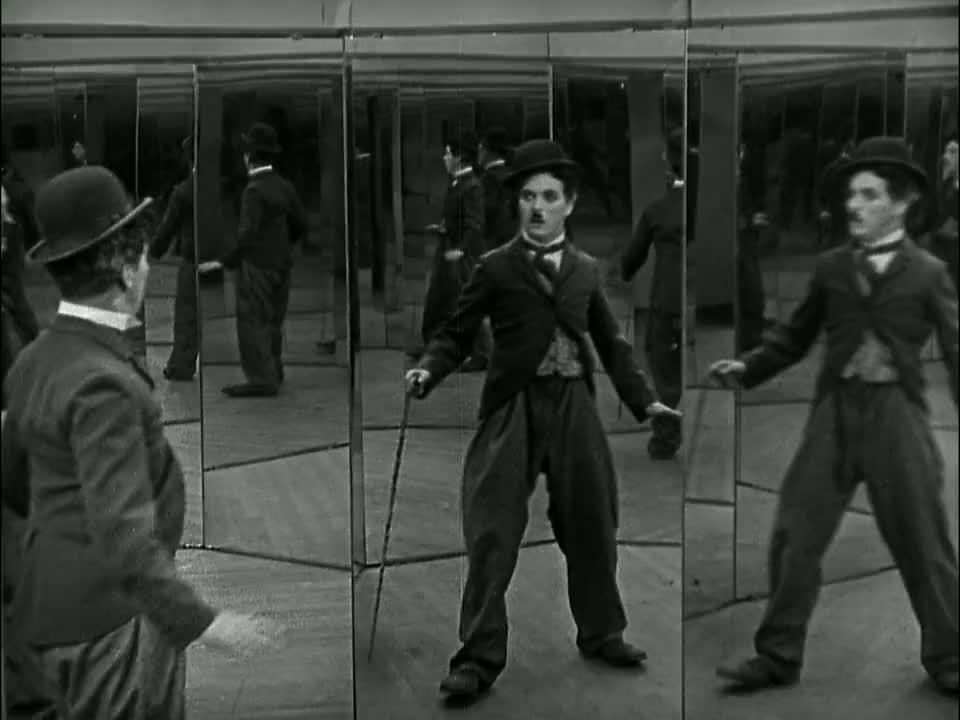
Chaplin arrives at the circus through one of the greatest set pieces in his oeuvre, a manic chase in which he's mistaken for a pickpocket and pursued by both a cop and the actual pickpocket, who wants to get back the wallet he planted on the tramp. This chase leads into a hall of mirrors and pretty much just stays there because Chaplin has so much fun playing with the prism-like reflections and multiple tramps running around the screen in different directions. It's brilliant, and brilliantly minimal, because Chaplin has managed to capture the feel of a chase sequence while mostly remaining in one very small confined space, conveying the impression of a complex labyrinth through the refracted doubles of himself packed within the frame. He's interacting with himself, bumping into his doubles and politely doffing his cap, and in one hilarious bit of pantomime, he drops his bowler hat and keeps trying to retrieve one of its reflections before finally hooking the real thing with his cane. When he throws in other characters to further complicate this fragmented composition, it just becomes even more delightfully mad.

He finally escapes the funhouse and races into the circus, where he becomes an accidental hit with the crowds by running around the ring, fleeing a donkey that hates him on sight and getting mixed up in a magician's disappearing act. There's a lot of spatial fun here, as Chaplin and the magician's assistant continually switch places under a sheet and in a large box, running back and forth through trap doors to take each other's place on one side of the stage or the other.


There is also a strong element of melancholy running through the film, as the tramp falls in love with the circus ringmaster's (Al Ernest Garcia) mistreated stepdaughter (Merna Kennedy). The tramp witnesses the ringmaster's brutality towards the girl, beating her and denying her dinner when she doesn't master the tricks for her acrobatic performance. Chaplin, sweet and empathetic as always, slips the girl some food — hilariously, in one scene, by throwing it up to her as she sits in the rings above the big top — and cares for her. But as is often the case with the romance in Chaplin's films, the tramp is not destined to get the girl; he's too much of an outsider, an eccentric comic figure rather than a romantic hero, and soon enough the girl's fallen in love, not with the tramp, but with a dashing tightrope walker (Harry Crocker).

Thus there's a touching, heart-rending sadness to the final act of the film, even as Chaplin's antics become more and more frenzied when he stands in for the tightrope walker during a high-wire performance. The film closes with the tramp gracefully stepping aside, foregoing his own romantic ambitions to take on more of a fatherly role, the kindly and compassionate father that the girl hasn't had. There's a beautiful, aching quality to the final images, as the tramp brings the couple together and restores them to their place in the circus before stepping aside. The circus pulls away without him, the caravans leaving one by one until the tramp is left behind in an empty field. It's a sublime image of loneliness and isolation, with the tramp choosing not to stay with the circus, not to remain in the company of others but to head off on his own again. The final image, an iconic shot of the tramp heading off alone towards the horizon as the black irises in around him, is both tragic and jaunty, because the tramp's independence, his selflessness and goodness, are also what keep him lonely and isolated, left behind in the dust as the circus leaves town.

Monday, July 9, 2012

The Kid


Charlie Chaplin's first feature film, The Kid, opens with what might well be a statement of purpose for the master silent comic as he embarked on his feature career. The film's first title card — indeed, one of the very few titles, and maybe the wordiest, in a sparsely titled movie — introduces The Kid as, "a picture with a smile — and perhaps, a tear." That combination of humor and pathos, already apparent in many of Chaplin's previous shorts, would become the driving force for his subsequent features, and is already fully in flower in this sweet, sentimental film about Chaplin's tramp discovering an abandoned child (Jack Coogan) and raising him as his own.

The child is abandoned by a woman (Edna Purviance) "whose sin was motherhood," a title card informs, and through a series of mishaps it's the poor tramp who finds the baby. Notably, Chaplin eases into the sentiment, as his tramp is at first anything but caring for the little tyke: he tries to dump the baby on several unsuspecting passers-by before getting stuck with it, sitting on the curb with the kid in his lap, and in a hilarious/unsettling bit of pantomime, he briefly considers dropping the baby down a sewer drain. It's easy to forget that Chaplin's tramp, so often considered the embodiment of comic sentimentality, started out as a rough-and-ready scrapper in his early Keystone shorts, and there are still traces of those more unsentimental beginnings here, in that moment with the sewer drain and the later scene where he fights with a burly fellow bum.

In any event, the tramp thinks better of discarding the kid, and Chaplin cuts to five years later, when the pair have become a de facto family. Coogan, who plays the kid as a five-year-old, is a great screen partner for Chaplin, a miniature version of the tramp, shrugging and shuffling in his oversized and raggy clothes, joining in with Chaplin's petty crimes. The pair create a ramshackle domesticity in the tramp's small flat, where the bedsheets are full of holes and they cheat the gas meter by reusing the same quarter over and over again. They go out together to "work" by having the kid break windows with rocks, whereupon Chaplin ambles up, not-so-coincidentally carrying a rack of glass panes ready to repair the damage for a fee. This sequence leads to some charming interplay with a beat cop who casually foils the pair's plans by simply strolling up and looking on suspiciously. Best of all is the scene where Chaplin, without realizing it, pulls his scam at the cop's own house, and is still there, flirting with the policeman's wife, when the cop returns and peers out the window above their heads, scowling down at them.


The second half of the film amps up the sentimentality of the relationship between the tramp and his adopted son, as Chaplin's custodianship of the kid is challenged and some officials try to take him away to an orphanage. This leads to a fantastic sequence in which Chaplin bounds across rooftops, escaping from a cop, to catch up with the truck taking the boy away. When he finally catches up, he leaps off the roof into the back of the truck — a stunt more reminiscent in its physicality of fellow silent star Buster Keaton than Chaplin's usual pantomime — and fights off the sinister, snooty orphanage representative to save the kid. It's great stuff, especially when Chaplin caps off the sequence with an emotionally exhilarating closeup of Chaplin and Coogan pressing their faces together.

The reunion is short-lived, though, once the boy's mother learns that the tramp's boy is actually her son, who she'd regretted abandoning, and offers a reward for his return. Throughout the film, Chaplin presents an idealized and romanticized image of the mother's suffering and her inherent goodness despite her troubled circumstances — he even explicitly compares her to Jesus and gives her a saint's halo in one shot. That heavyhanded idealization of the mother — which Chaplin himself mostly edited out for the 1971 re-release — is one of the film's few weaknesses, an example of Chaplin's sentimental streak run amok. In any event, it's inevitable that the boy will be returned to his mother by the end of the film, with Chaplin eventually joining them to create a new de facto family, the mother's role restored to the father-and-son dynamic.

Also interesting is the lengthy dream sequence that precedes this familial happy ending, with Chaplin's tramp dreaming that his rundown neighborhood has been remade as a heavenly, idyllic place where everyone's dressed as angels. A few devils sneak in and introduce the idea of sin, disrupting the peacefulness of the place by exciting the residents to adultery and jealousy and violence. It's a fun sequence, kinetic and energetic, with Chaplin in angel wings flying through the air — along with a similarly flying dog — and finally crashing to ground, his wings molting and feathers scattered around him, like Icarus after his fall. It's a strange sequence, rather disconnected from the rest of the film except in its religious imagery, simply providing an extended pause to delay the final scene's touching reunion. Chaplin would go on to make more sophisticated and substantial features after this, but The Kid already provides the template for the signature mix of comic mayhem and humanistic warmth that were always the defining attributes of the tramp at his best.

Tuesday, May 22, 2012

Modern Times


Modern Times was the last of Charles Chaplin's "silent" movies, made after the silent era was over for everyone else, with pretty much only Chaplin hanging on — and Chaplin only able to hang on because of his special clout and fame. Like its predecessor City Lights, this isn't a true silent film, since it has a synchronized musical score (written by Chaplin himself) with sound effects and even, in this case, some actual speech. This is Chaplin's affectionate goodbye to the silent era, one last great masterpiece of silent aesthetics, with only a few small concessions to the sound pictures that had taken over the rest of Hollywood. Virtually all of the actual intelligible dialogue in the film is delivered through machines: the boss' voice barking orders over the intercom, a radio news report, a robot voice that delivers a sales pitch even as the salesmen stand silently nearby, miming along with the recorded voice. This suggests Chaplin's suspicion about the coming of sound in the movies, treating the voice as disconnected from the speaker, always with a mechanical layer between the source and the sound.

That suspicion of the modern and the mechanical runs through the film, which is a brilliant satire of modernity, with a jaundiced eye cast on the unemployment and misery of the Depression, as well as the supposed improvements of modern factories and technology. Chaplin plays a factory worker on an assembly line, unable to pause in his repetitive tasks for a moment without falling behind. This is a society that seeks to mechanize and automate everything, including even eating, thus eliminating one of the only breaks the workers get and turning it into just another step in the assembly line process. It's no wonder that this poor worker suffers a mental breakdown, unable to tolerate these oppressive conditions any longer. Chaplin, wrenches in hand, sees nuts everywhere, including in the buttons on the back of a secretary's skirt or across the breast of an older woman's suit; he's so compulsively locked into the rhythms of the assembly line that even his sexual responses are mechanical, a woman's body reduced to a series of machine parts to tighten and manipulate.

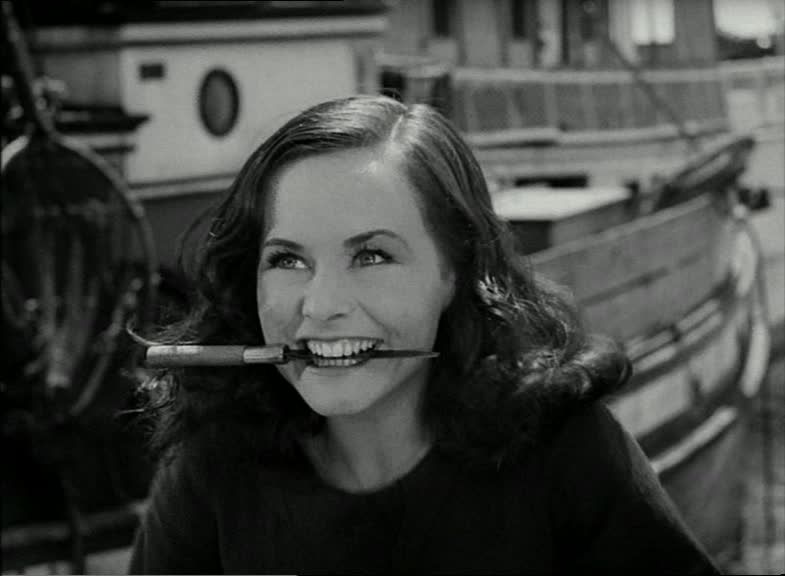
Now out of work, Chaplin's happier in jail, where he at least gets a comfortable place to sleep and some food — laced, in one outrageous scene, with cocaine from a drug dealer — than on the streets, where he's simply a poor bum. Once he gets out of jail, he's joined by Paulette Goddard's "gamin," a young orphan girl who remains a sprightly free spirit despite her life of poverty and deprivation. She is positively feral and ferocious from the moment she first appears on the screen, baring her teeth in a wild grin, a knife clamped between her jaws like a pirate as she steals bundles of bananas for the other poor kids of the waterfront. She's a magnetic and vivacious presence, with an electric smile that lights up the screen, and she's every bit Chaplin's equal, perhaps the only one of his leading ladies about whom that could be said.


Together, Chaplin and Goddard embody the determined spirit of the Depression's poor, locked out of jobs, unable to provide for themselves, living on the streets and scratching together whatever scant food and shelter they can get. And yet they never give up, and their spirit is infectious, their enthusiasm and boundless optimism propelling the film forward into one inspired comic set piece after another, the humor always tinged with the harsh truths of poverty and struggle. Chaplin is continually bouncing in and out of jail and getting fired from one job after another despite his well-intentioned but bumbling attempts to get by. He stumbles into countless comic situations, at one point accidentally leading a Communist rally by picking up a red flag from a passing truck. The rally's quickly broken up by cops, as is a later strike by factory workers — in fact, there's very little that the cops don't break up, and the film is rather contemptuous of these authority figures who can only endlessly arrest and chase those who are just trying to ease their hunger in any way they can.

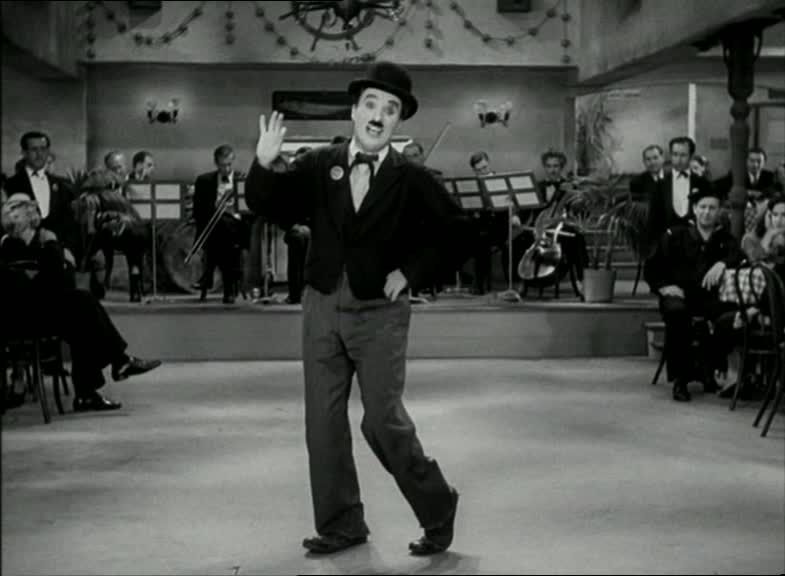
Towards the end of the film, Chaplin returns to tweaking the new talking pictures, with a sequence in which Goddard gets Chaplin a job as a singing waiter. Chaplin seems to be preparing for his entry into the sound era, teasing the audience with the prospect, at long last, of his voice being heard on film. He rehearses a number, having Goddard write out song lyrics on his cuffs, but he rehearses silently, mouthing the words and dancing, and when he finally does sing, he's forgotten the words, so he just makes up a nonsense song that's mostly pseudo-Italian dialect, gibberish and an occasional recognizable English phrase. It's a wonderful way of ushering Chaplin into the sound era without having him actually communicate anything intelligible, and the film as a whole provides one last visually, viscerally eloquent expression of Chaplin's privileging of image over sound.

The film's conclusion is justly famous, with a stunning final shot of Chaplin and Goddard walking off down a long road into the future, arm-in-arm, Chaplin duck-walking besides his beautiful partner. It's optimistic and exhilarating and utterly gorgeous, a perfect ending to a film that is often cynical about the mechanization of the modern age but is celebratory of the human ability to resist this dehumanization, to fight back with song and dance and silliness and determination and, perhaps most importantly, love. After all, this is undoubtedly a love story, one of the rare Chaplin films where the tramp doesn't give up his great love at the end; when he strolls away into the distance this time, for once he's not doing so by himself. Chaplin was in an off-screen relationship with Goddard at the time he was shooting this, and it's easy to see that romance in her onscreen radiance and the absolute adoration that's implicit every time Chaplin turns a camera on her. He's in love, and seems determined to communicate that love in every image of his costar; the result is that it's nearly impossible to watch the film without falling in love with her along with Chaplin. Romantic, hilarious, beautiful, and endlessly inventive, Modern Times is one of Chaplin's greatest works, an ode to the irrepressible human spirit and its capacity for love and invention.

Friday, May 4, 2012

City Lights


City Lights was an anachronism when it first appeared, a new silent production from Charles Chaplin, one of the masters of silent comedy, at a time when the rest of Hollywood was eagerly embracing the arrival of sound. Released in 1931, when silent film was all but dying out, the film opens by immediately mocking the talking pictures, with a scene where a group of local dignitaries deliver speeches commemorating the unveiling of a statue. As they speak, the synchronized soundtrack (Chaplin's one modest concession to the new technology) features muffled nonsense noises, as though Chaplin is making a point, up front, of how irrelevant and silly so much dialogue is — as Norma Desmond would say in Sunset Blvd., it's all just "talk, talk, talk," and Chaplin for one doesn't need it.

In fact, City Lights has only what is absolutely necessary; it's a tightly constructed and incessantly funny flick that's also a moving love story between Chaplin's Tramp and the blind flower seller (Virginia Cherrill) with whom he falls in love. Though the Tramp, as ever, is broke and destitute — in the opening scenes he's sleeping curled up in the arms of a statue — he is determined to help the struggling blind girl and her grandmother (Florence Lee), who face eviction from their apartment while dealing with the girl's poor health. Obviously, this is a story about class, as with many of Chaplin's greatest works, and underneath the film's gentle humor and its romantic warmth lies a bittersweet awareness of the struggles of the working class. In the very first scene between the Tramp and the flower seller, he buys a flower from her, scrounging around in his pockets for the money to give her, and not accepting any change back. As they're talking, an obviously wealthy gentleman runs by, not even glancing at the Tramp or the flower girl, as though they're invisible to him, with no possibility of registering in his mind as he gets into his fancy car. Though he could certainly afford a flower, it would never occur to him to pause and buy one.

Chaplin develops a similar dynamic with the character of the millionaire (Harry Myers) who the Tramp befriends by saving the distraught rich man from killing himself over his divorce, in a very funny and fluidly paced slapstick scene in which the two men not only repeatedly fall into the water, but more importantly, continually teeter on the edge of falling in. (Chaplin knows well that so much of comedy is about restraint and teasing, as when he has the Tramp continually stepping just to the edge of a hole that opens up in the sidewalk, unseen, behind him. We expect the Tramp to fall in but somehow it's even funnier that he doesn't, at least not right away.) The Tramp and the rich man provide another of the film's allegories on wealth, because when the rich man is drunk, he considers the Tramp his best friend for saving him, but whenever he sobers up, he completely forgets about the homeless wanderer who'd rescued him. Thus he alternates between embracing the Tramp as a friend and ordering his servants to kick Chaplin out of his mansion, which the snooty servants very eagerly do.


This commentary on class awareness runs all through the film. The flower girl mistakenly believes the Tramp to be a rich gentleman, and when, in the film's justly legendary final scene, she learns his true identity, Chaplin simply inserts a laconic title card with a rich double meaning — "yes, I can see now" — before Chaplin's endearing final grin. That scene is all about the closeups, the faces, Chaplin hiding his mouth with a flower before finally showing his toothy smile for the final image, the flower girl letting so many emotions ripple across her face as the full import of the Tramp's charity towards her really hits home. Cherrill delivers a wonderful, charming, moving performance, and Chaplin's closeups of her, throughout the film, never fail to be tinged with an element of rapturous awe, something spiritual in the way he idealizes her as an avatar of goodness and purity and feminine beauty — which of course is the way the besotted Tramp sees her.

Of course, the film is also stacked with one delightful comic set piece after another, delivered with the sure hand of a director and performer at the very peak of his talent. Especially marvelous is the boxing match, which has a fluidity and grace to it that couldn't be more different from the crude slapstick violence with which Chaplin started his career at Keystone Studios; here, the boxers really seem to be dancing, a three-way dance that involves a referee who insists on sticking himself right in between the fighters, who trade blows by craning their arms around the other man. The sense of movement here is exhilarating, as the boxers twirl around, sometimes changing "partners" so that one of them is actually squaring off against the referee instead of one another.

City Lights is a marvel of the cinema, a warm and funny classic bursting with the simple humanity of Chaplin's Tramp. Its ending, with its rich emotional complexity and ambiguity, provides one of the most eloquent proofs of the enduring power and beauty of silent film, because with just a few words and those glorious closeups of the leads, Chaplin says so much without actually saying a word aloud.

Thursday, March 22, 2012

The Gold Rush


There's a reason Charles Chaplin's The Gold Rush is still such an enduring comedic masterwork, almost 90 years after it was made. It's a delightful, charming, irresistible movie, as funny today as it was when it first made audiences roar with laughter. It's a near-perfect movie, with not a wasted moment, balancing its cleverly staged humor with the pathos of Chaplin's little tramp character suffering because of his poverty, his decency, and his large capacity for love.

The tramp is an iconic figure, an everyman for the lower classes, with his beaten-up bowler hat, his cane, and his bedraggled clothes. Despite his impeccable sense of humor, Chaplin's tramp is a melancholy figure, wandering a hostile environment that offers him scant nourishment. He duck-waddles around, his gait uneven, one shoe swaddled in rags so that he seems to have a misshapen foot. He's constantly coming up with tricks to get by on his minimal means, stealing drinks in a bar or feigning frostbite to get a friendly stranger to feed him a hot breakfast and some coffee. Chaplin's tramp seems especially out of place in the context of The Gold Rush, roaming across the tundra as "the lone prospector," trying to make his fortune in the frozen North — though curiously enough Chaplin never actually does any prospecting. He's never less than funny, but he's also desperate and downtrodden, and later in the film, his romantic longing for the beautiful but casually cruel Georgia (Georgia Hale) is downright heartbreaking.

Before that plot is introduced, though, it's just the tramp alone in the cold, soon to throw his lot in with two other lonely souls, the newly successful prospector Big Jim (Mark Swain) and the brutish outlaw Black Larsen (Tom Murray). This trio gets locked into a cabin together during a bad storm, and the antics that ensue constitute some of the best, purest comedy in the cinema. The scene where Chaplin first arrives at the solitary cabin is a masterpiece of formalist physical comedy, using the two doors of the cabin as a wind tunnel which sends Chaplin, Big Jim and Black Larsen flying through the air, whipping them out of the room only to have them come crawling and trudging back through the snow. Chaplin's playfulness with space provides the scene's comedy, with perfect timing of doors opening and closing, unleashing the wind that propels the scene's constant movement and reversals of position.


Geometry is often the locus of comedy for Chaplin, as in the brilliant sequence where Jim and Larsen wrestle over a shotgun, while Chaplin scurries around the room, the barrel of the gun following him wherever he goes, always angled directly at his head whether he's ducking under a table or comically trying to climb the walls. The invisible line from the gun's bore to Chaplin's head, the prospective path of a bullet if the gun should go off, is never broken no matter how much Chaplin darts back and forth or the other two men struggle, which is quite a feat of choreography as well as a grimly comic bit of business.

That playful use of space returns in the later scene where a starved Big Jim stalks Chaplin with an axe — because his fevered brain sees the tramp as a giant chicken — while Chaplin fends him off with a shotgun. They dart in and out, from door to door, circling the cabin inside and out. Best of all is the way Chaplin begins slamming into wooden beams and walls, rapidly spinning around to point his gun at empty space, careening back and forth across the cabin. These confusions continue as he struggles with Big Jim over the gun, Chaplin's face covered with a blanket so that he doesn't realize when Big Jim flees the cabin, a black grizzly bear taking his place, with Chaplin hanging off his leg. Chaplin's double take when he sees this is priceless, as is his baffled look when the fur-clad Jim returns, as though for a moment Chaplin is wondering if he'd just imagined the bear.

Naturally, when the tramp and Big Jim return to the cabin towards the end of the film, it is once again the site of spatially precise comedy that hinges upon geometry and the locations of the two characters. An avalanche pushes the cabin to the edge of a cliff, teetering on the brink, and the whole cabin see-saws drunkenly as the two prospectors obliviously walk around inside. Chaplin, a master of staging and movement, extracts sublime comic suspense from the way the men walk back and forth across the cabin, balancing each other's actions for a time so that the cabin remains stable, but of course it's inevitable that they'll soon end up on the same side and send the cabin tipping over. Chaplin even playfully stutter-steps at one point, briefly suggesting that he's going to double back and join Jim on the side of the cabin that's hanging over the ledge, before continuing the opposite way to keep the balance.

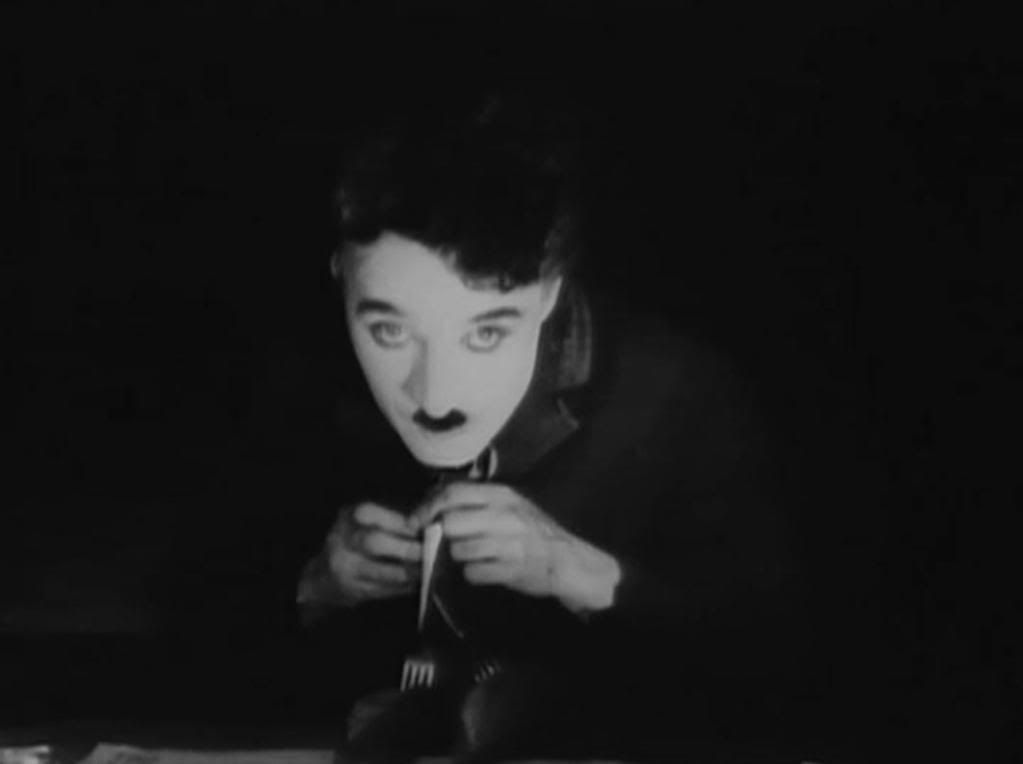
The film has too many funny scenes to mention; Chaplin's keen sense of timing and feel for visual humor is present in both his performance and his direction. One of the film's most iconic moments is the scene where Chaplin "dances the Oceana Roll" for Georgia, piercing a pair of dinner rolls on forks and playfully dancing them across the table. This tabletop choreography is dazzling enough, but what's really mesmerizing about the scene is the subtler choreography of Chaplin's eyes, rimmed with black and somewhat feminine, rolling and flitting from side to side in counterpoint to the rolls' footwork. There's a lot of choreography in Chaplin's comedy; another great scene involves the tramp, dancing with Georgia, accidentally tying a dog's leash into his belt so that the dog follows the couple around the dance floor. A film of great formal precision that nevertheless gives the impression of being breezy and loose, The Gold Rush is one of the finest comedies the cinema has produced.