Showing posts with label Otto Preminger. Show all posts

Sunday, May 3, 2009

The Fan


The Fan is an early melodrama from Otto Preminger's long and fruitful 1940s residence at Fox Studios. Loosely based on Oscar Wilde's Lady Windermere's Fan, the film moves fluidly from past to present and back again, using a framing story in which the auction of a delicate, finely crafted fan prompts the reminiscences of the elderly Mrs. Erlynne (Madeleine Carroll), who then tracks down her old acquaintance Lord Darlington (George Sanders). Together, they travel back into the past, lingering on the follies and pleasures of their youth, when they were attractive and fun-loving and both irrepressible adventurers. Though the bulk of the film is set in this past, Preminger does not treat the framing story with the disdain that such conceits usually receive. In these kinds of frothy Hollywood concoctions, the framing story is usually just a slim pretext for telling some other story, but Preminger is interested in these people not just when they're young and witty and good-looking, but when they're old and feeble and forgetful as well. The film becomes as much about the nostalgia of old age as it is about the passionate loves and scandals and betrayals of youth.

In Preminger's hands, this is a prime melodrama, the story of a pure, loving, devoted couple: Lord Arthur Windermere (Richard Greene) and his pretty young wife Margaret (Jeanne Crain). They've been married a year and are deeply in love, but their seemingly idyllic marriage is threatened when the slightly older and notorious Mrs. Erlynne arrives in London. She's a self-described "adventuress" and delights in shocking people by lighting up a cigarette — which gives one some idea of just how easy it is to shock the people in this film's exclusive society circle. The rumors spreading around town about Arthur and this woman provide the perfect excuse for Darlington, who had long admired and desired Margaret and now saw his opportunity to take her away from her husband, who he assumed was being unfaithful anyway. In fact, as is so often the case in these kinds of fairy tale melodramas, all is not as it seems on the surface, and Preminger ably handles the twisty, lurid material, which could have easily boiled over in lesser hands.

His style of languid tracking shots and careful pacing is well-suited to this mannered drama, in which polite words and stylized gestures disguise the barbed insults and insinuations of these upper-class gossips. The disgraced and downtrodden Mrs. Erlynne only wants to make a name for herself in high society, and she's quite willing to resort to dishonesty and trickery to do so. She's conniving and manipulative, and she soon wraps the bumbling, stuttering Lord Augustus (Hugh Dempster) around her little finger. Carroll, the star of early Hitchcock features The 39 Steps and Secret Agent, is fantastic here, in her last film role before a brief fading-away in TV work. It's a shame that there has never been more call for roles like this, which take advantage of an actress' middle age rather than simply discarding her in favor of younger girls.


The subtleties of Carroll's great performance become clear in the scene when Augustus comes to call on Mrs. Erlynne for the first time. She's brusque and remote with him when he arrives, treating him with a thin gauze of manners that marks him out as just one in a long line of callers that day; her courtly façade is starting to wear away. But the minute she realizes that Augustus actually has something of substance to offer her, that because of his status he could be important to her, her entire manner changes. She becomes open and ingratiating, her smile becomes genuine rather than simply polite, and her eyes begin to sparkle. It'd be easy to sell a scene like this broadly, to make it theatrical and overt, and in that case it would be comedy: the beautiful shark taking advantage of a nebbishy bit of chum, and everyone knows it except the poor victim himself. Preminger is too clever for such broad strokes, though, and the performance he gets out of Carroll is more naturalistic and subtle. She makes the scene into character-based drama rather than comedy; instead of laughing, the audience learns more about her character, about what she's willing to do to get what she wants.

The film is packed with such moments. Mrs. Erlynne is a complex character, deceitful and tricky but also decent and good-hearted, self-serving but capable of tremendous acts of self-sacrifice. The central couple of Arthur and Margaret is naturally less interesting, since they provide an idealization of romantic love rather than a pair of convincing characters; they're symbolic and unspoiled while Mrs. Erylnne and Darlington are flawed, realistic characters. Still, Crain gives a warm and sweet performance as the lovestruck woman whose confidence and trust in her husband is shaken by rumors and suspicions. Her pinnacle comes in a striking shot of her and Mrs. Erlynne towards the end of the film, as the older woman tries to convince the younger one to go back to her husband. Preminger stages it as a deep-focus two-shot with Margaret in the foreground, slightly out-of-focus, her blurry features distorted by tears and anguish. Mrs. Erlynne is slightly behind her, her face focused into crisp detail so that the lines of her face are accentuated, calling attention to the age difference between the women.

With scenes like this, Preminger finds unforgettable images in a story that would be all too transitory in the hands of another director. The story is a trifle of a melodrama, silly and contrived, and driven by the oldest of soap fiction inventions, the return of the missing parent. Preminger wisely downplays the narrative's more sensational ideas and mines the more understated and genuine emotions at play here. This has the effect of shifting the focus away from the syrupy romance of the central couple and onto Carroll's world-weary Mrs. Erlynne and Sanders' aging cad Darlington, the former repeatedly beaten down but never broken, the latter maturing into a raffish old goat, still haunted by the great unconsummated love of his past. The dialogue is understated and dotted with Wildean bon mots (especially from Martita Hunt as a chattery duchess), and Preminger's flowing, gracious style complements the delicate emotions and memories at the story's core.

Friday, April 3, 2009

Whirlpool


Otto Preminger's weird, disjointed Whirlpool is an intriguing mess of a film, part film noir, part psychological case study, an unflinching examination of marriage, fidelity and the ways in which rigid ideas about gender and propriety can cripple and deform relationships. Ann (Gene Tierney) is seemingly a model wife to her psychiatrist husband Bill Sutton (Richard Conte). She's pretty, loving and devoted, and he's proud to be married to her — and even prouder, he tells her, when he sees how people gape at her at parties, awed by her beauty and envious of him for being her husband. For her part, she feels grateful just to have him, and is sorry that she can't do more for him. She regrets that she isn't intelligent enough to have a conversation with him about his work, and he just pats her paternally on the head and tells her he wouldn't change a thing about her — a condescending gesture that's also sort of an insult, an acknowledgment that he agrees she isn't on his level intellectually. Their marriage, so admirable and loving on its surface, is warped by an inability to communicate, by Ann's desperate desire to maintain this illusion. Beneath her façade, she's miserable. Feeling constrained and hemmed in, she asserts her freedom through acts of kleptomania, shoplifting even though she and her husband have more than enough money to buy almost anything she could want.

Unfortunately, Ann's shoplifting brings her to the attention of the disreputable hypnotist and con artist David Korvo (José Ferrer), who uses her weakness to gain control of her, worming his way into her life. Ann believes she's sick, but unwilling to go to her husband and shatter his perfect image of her, she turns to Korvo to cure her of her kleptomaniac outbursts, her headaches, her insomnia. Tierney plays Ann like a blank slate, a vacant Barbie doll just waiting to have her head filled with anyone else's ideas. Even before Korvo begins hypnotizing and manipulating her, she is in a sleepwalking daze, her pretty face as inexpressive and blank as a doll's, her eyes staring off vaguely into the distance. She seems completely devoid of substance or vitality, her every movement and facial expression carefully studied and deliberate, her face a mask. She is crafted from something hard and cold and inanimate, anything but flesh.

This is a strikingly cynical portrait of the "happy" marriage: the husband mainly concerned with how jealous other men are of him, the wife trying her best to maintain the public image of their ideal union. This fragile situation makes it very easy for the sinister Korvo to use Ann towards his own ends, namely to dispose of his troublesome former lover Theresa (Barbara O'Neil), who has been threatening to expose his crimes. His complicated plot to frame Ann for Theresa's murder is where the film begins to fall apart, where the threads of the screenplay start to fray. The whole thing is so obviously ridiculous, so convoluted and yet transparent, that it requires a prodigious ability to suspend disbelief just to go along with it on even the most superficial of levels. Korvo's a fine villain, slippery and slimy, and Ferrer's performance is appropriately despicable. He slithers into Ann's life, insinuating himself into a position of power over her with his sinister grin and thin, rodent-like face.


This makes it doubly unfortunate that the film wastes such a good villain on such a shaky plot. For a guy who's supposed to be a clever manipulator, it's bizarre that his scheme includes planting crucial evidence against himself at the crime scene, hypnotizing Ann into hiding it when he could have just as easily made her destroy it. By the same token, his alibi for the murder — a gall bladder surgery — seems clever when one suspects that he's faking it, or that he's hypnotized a doctor into giving false evidence. It becomes less clever once one realizes that Korvo actually subjected himself to a genuine operation, and that his brilliant scheme requires him to hypnotize himself into not feeling pain, so that he can sneak out of the hospital to perform his nefarious deeds. The script is a mess, one of those absurd Hollywood concoctions that provides only the barest of rational explanations for its twisted narrative. Even at the finale, it's by no means clear that Ann has actually been cleared of Korvo's crimes, but the kindly police inspector acts as though everything's been resolved and she's free to go. By that point, so much other ludicrous business has been required by the plot that this seems like a relatively minor logical hole.

The fractured, often nonsensical plot is a large hurdle to get over in enjoying this film, but Preminger's typically calm, assured direction smooths out some of the more egregious wrinkles. His darting, swooping camera helps define the relationships between the characters, as in the scene where Ann is first hypnotized by Korvo, and the camera makes a slow rightward move, a short arc that ends with a perspective looking past Korvo's shoulder and slightly down at the staring, distant Ann. The camera calls attention to what's happening, to Korvo assuming a dominant position over Ann, looming above her as he takes control of her. In a later scene, Preminger signals Korvo's tightening grip on Ann by literally tightening the shot, slowly inching the camera in until the two are packed closely together within a constrictive frame, their intimacy forced not only by Korvo's shady maneuvers but by the borders of the image itself. Preminger's formalist sensibility continually asserts itself, his purposeful blocking delineating the ideas and relationships within the film even as its script collapses into incoherence.

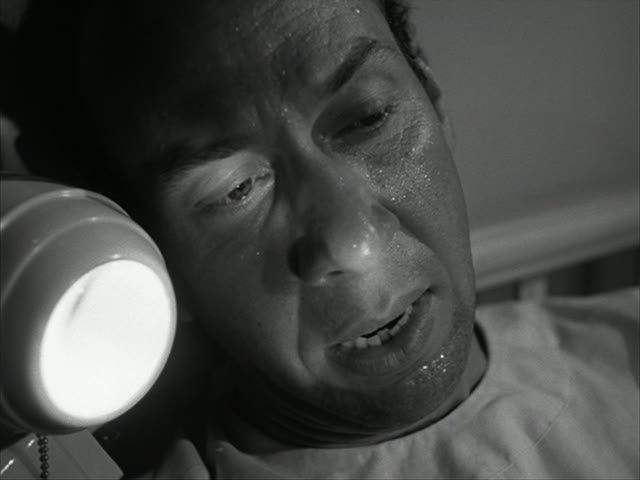
He's at his best in visualizing that which goes unstated, the emotional underpinnings of the story lingering beneath the surface. This tortured script doesn't actually leave much unsaid, but Preminger's subtle sensibility is still present. There's a wonderful short scene in which the police lieutenant (Charles Bickford) wakes up in the middle of the night, unable to sleep from thinking about the case. It's a simple scene — the lieutenant just calls his precinct and gives out an order — that for another director would be a practical formality, a quick, necessary transition. Preminger sees more in it, sees the policeman's grief over his dead wife and the direction in which his sadness might lead his thoughts. Preminger carefully frames the shot to accentuate the photo of the wife in the background, her presence just behind the policeman calling up the unspoken undercurrents of his decision to allow Ann and Bill a chance to prove her innocence and redeem their marriage.

All the same, this is undoubtedly minor Preminger, one of the weakest films of his stint at Fox. The film starts with an interesting premise, and it's fascinating to watch Ferrer's sinister Korvo interacting with Tierney's blank-faced portrayal of a blank non-entity. The ending's confused jumble is weirdly compelling partly because Ann doesn't actually seem to have changed much: she has the same blank stare, the same zombie-like intonation, when she's coming out of her trance as when she went into it. This injects an element of uneasiness into the ending's supposed marital reconciliation, suggesting that the only changes are on the surface, while the deeper problems remain. The film is a failure as a whole, but its disarmingly frank subtextual commentary on marriage and appearances, along with Preminger's crisp visual treatment of the material, makes it at least worth a look.

Friday, March 20, 2009

Daisy Kenyon


Daisy Kenyon is a surprisingly quiet, understated melodrama, slow-moving and restrained when it could just as easily be torrid and unsubtle. There's a certain coolness to it, likely the result of director Otto Preminger's iron hand — Preminger may have been a notorious tyrant on the set but he rarely allowed hysterics to disrupt the placid surfaces of his films. This is a love story in which logic and rationality eventually win out over heated passion, which is rare enough in any romance, let alone in a weepy big screen melodrama. Preminger bathes the film in deep shadows, giving the film the visual texture of a noir and doing such a good job of it that he apparently convinced Fox that it is a noir — the studio recently released the film on DVD under their noir banner. But Daisy Kenyon is not a noir, its shadows are more lushly romantic than ominous, and its title heroine, beautifully portrayed by Joan Crawford, is hardly a femme fatale. Instead, she's a working woman, a professional illustrator, as well as the unhappy mistress of big-time corporate lawyer Dan O'Mara (Dana Andrews), who, it's increasingly apparent, will never leave his wife for her despite his declarations of love. Daisy wants to leave him, but can't quite bring herself to do it until she finds herself being improbably drawn to the troubled World War II vet Peter Lapham (Henry Fonda), who's still haunted by the death of his own wife and the things he saw in Europe. When Peter proposes to her, Daisy somewhat unexpectedly accepts, trying to make a clean break with her past and hoping that the two of them, both still in love with unattainable others, can love and help each other instead.

The love triangle between Daisy, Dan and Peter drives the film, with the two men in Daisy's life representing opposite emotional extremes. Dan is explosive and passionate, prone to lose his temper or be overcome by strong feelings of grief, desire, rage, depression or love. He's an open philanderer, coolly making the situation clear to his wife Lucille (Ruth Warrick), who stays with him more or less so as not to rock the boat. And he adores and coddles his two daughters (Peggy Ann Garner and Connie Marshall), who worship him in return. Peter has his own emotional troubles, but they mostly tend to boil beneath the surface, hidden from view, and he's capable of being surprisingly lucid and rational about his feelings. One of the film's key exchanges between the two men is when Dan, after asking the boat designer Peter to describe the reason why a boat is made a certain way, says that he doesn't trust logic: "anything logical makes me want to fight for some reason." The mathematically inclined Peter's capacity for calm, rational discourse about complicated emotions is infuriating and sometimes puzzling, but Fonda does an excellent job of dealing with the subtleties of this complex man, who is capable of caring deeply while outwardly seeming disinterested.

In fact, the film's acting is uniformly extraordinary, and is one of the crucial factors in elevating it above a conventional melodrama. Andrews and Fonda are scintillating as the opposite corners of this love triangle, mostly because they consistently underplay the tensions between them. They even seem to like each other, and their rivalry over Daisy is friendly and courteous rather than fierce; they play games of oneupsmanship but maintain a respectful aloofness. In fact, despite the heavy topics in this film — divorce, child abuse, multiple love affairs and reversals and reconciliations — the overall emotional register of the material is strikingly cool and calm. Another director would have simply gone with the story's natural tendencies, encouraging the actors into emotional breakdowns and over-the-top histrionics at every point; there are more than a few scenes that seem to call for such fireworks. Instead, Preminger gets a trio of sensitive, supple performances from his main actors, letting the emotions arise naturally and slowly rather than simply bursting out in messy spasms. This has the paradoxical effect of increasing the film's emotional impact, since its moments of catharsis are all the more moving for the general restraint that surrounds them. At one point, after seeing his daughter with a bad earache, Dan abruptly remembers that his distraught wife had hit the girl while upset over her philandering husband's long affair with Daisy. For the first and only time in the film, Dan quietly cries for a few moments, realizing what he's done to his family, the ways he's hurt his beloved daughters, both mentally and physically.


Even Crawford, seldom known as the most subtle actress, is here disarmingly low-key, allowing her character's indecision and confusion to come through without overacting. She's a woman who doesn't quite know what she wants, who is controlled by the men in her life, men who, despite their genuine feelings for her, sometimes seem to be maneuvering and bargaining for possession of her without so much as consulting her first. Daisy is also, to some extent, slighted by the script, which permanently traps her between the two men and gives Crawford little chance to create any substance for Daisy's character beyond her romantic relationships. She says that her illustration career is important to her, but based on how often she's seen actually doing any work in the film, the audience has to simply take her word for it. Even her non-male connections seem transitory: she has a dog who disappears with no explanation halfway through the film, never to be seen again, and a best friend (Martha Stewart) with whom she shares paltry screen time. Daisy is defined by her romances, by her men, which is of course typical of a melodrama but especially sad in a film whose theme purports to be a woman trying to break of such dependencies.

Nevertheless, though Daisy Kenyon suffers from occasionally trite plotting and a hesitant approach to the story's drama, the film remains affecting and enjoyable. Its quiet, simple emotions and shadowy beauty convey a mood of bittersweet melancholy; in its aftermath, the film leaves behind only the ghostly afterimage of its autumnal emotions, suspended between the fiery heat of a summer romance and the icy chill of a love affair's end. Daisy Kenyon is not about passion or hatred but about more ordinary and transitional feelings: the slow development of love over time, the cooling down of lingering lustful desire into friendship, the tension between professional goals and personal emotions. Preminger locates in these small-scale dramas a much more interesting dynamic than the usual melodramatic tendency to inflate, to blow up, to explode outward. Instead, Preminger's characters burrow inward, exploring themselves; it's a film about introspection, about finally coming to terms with one's own self.

Sunday, September 7, 2008

Films I Love #3: Bonjour Tristesse (Otto Preminger, 1958)


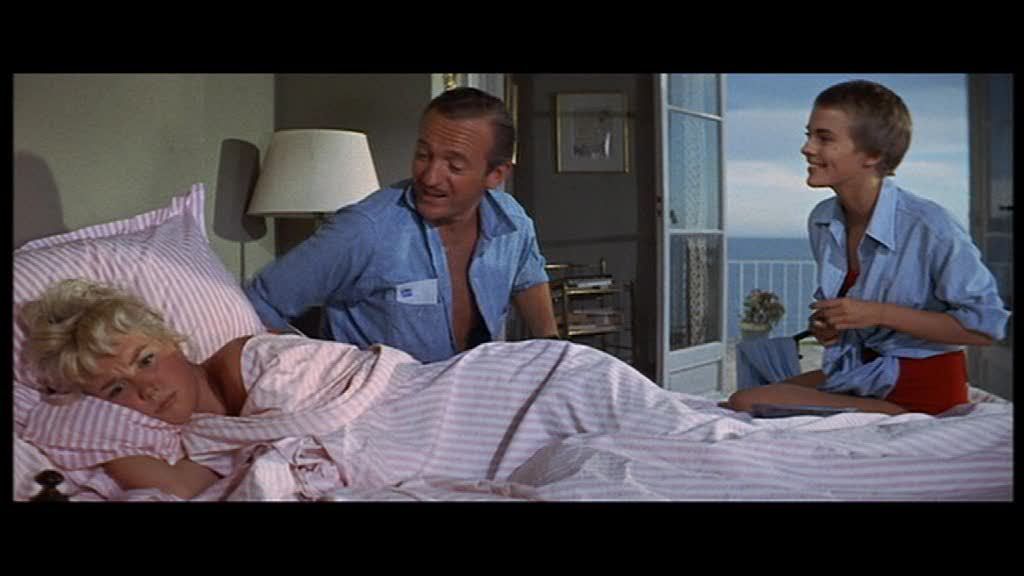
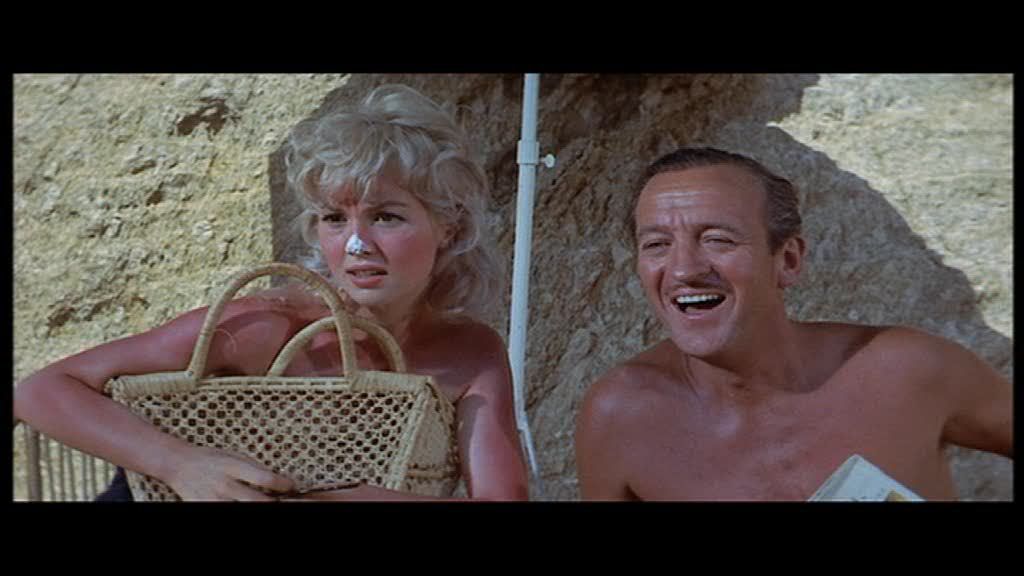
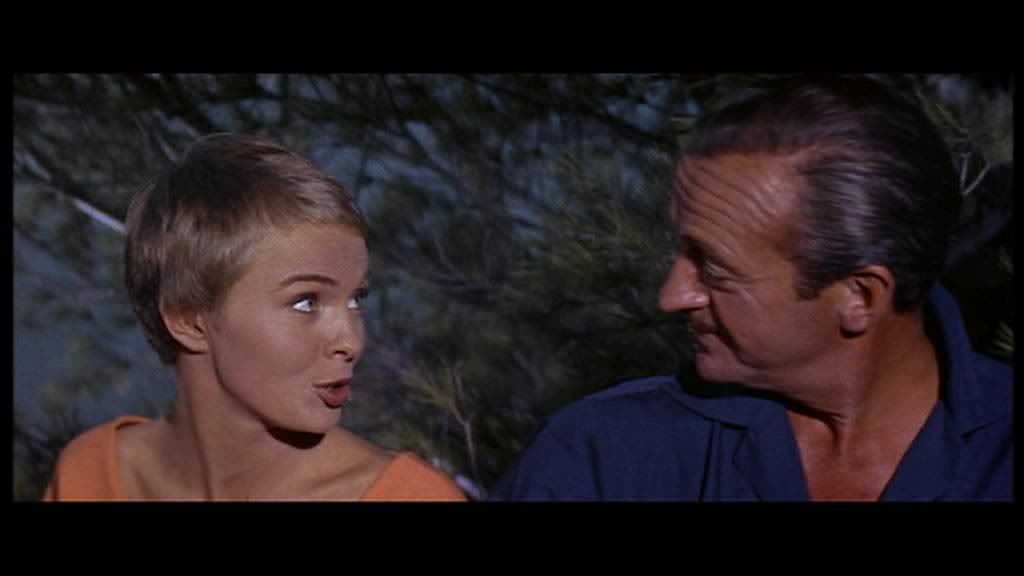
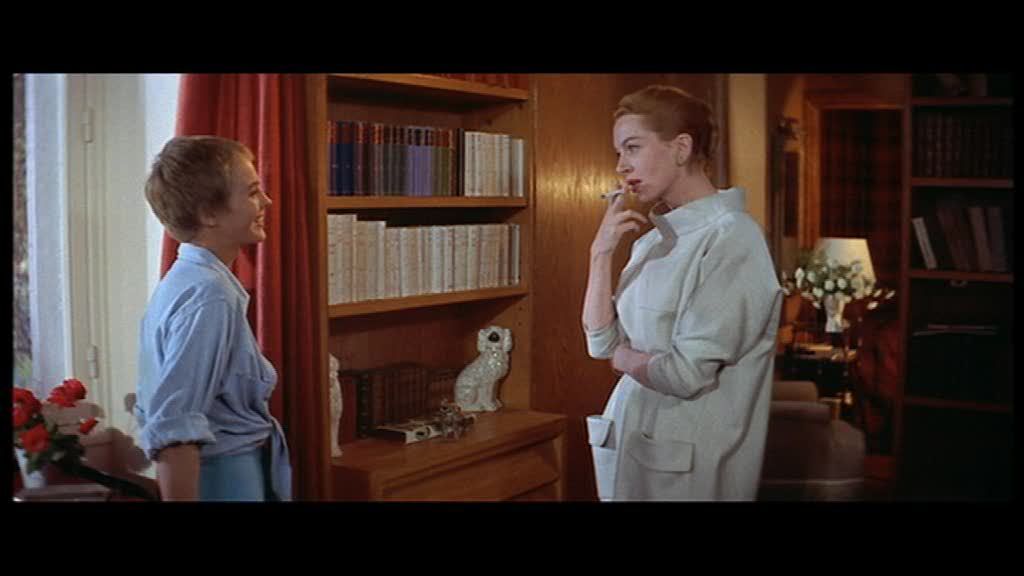
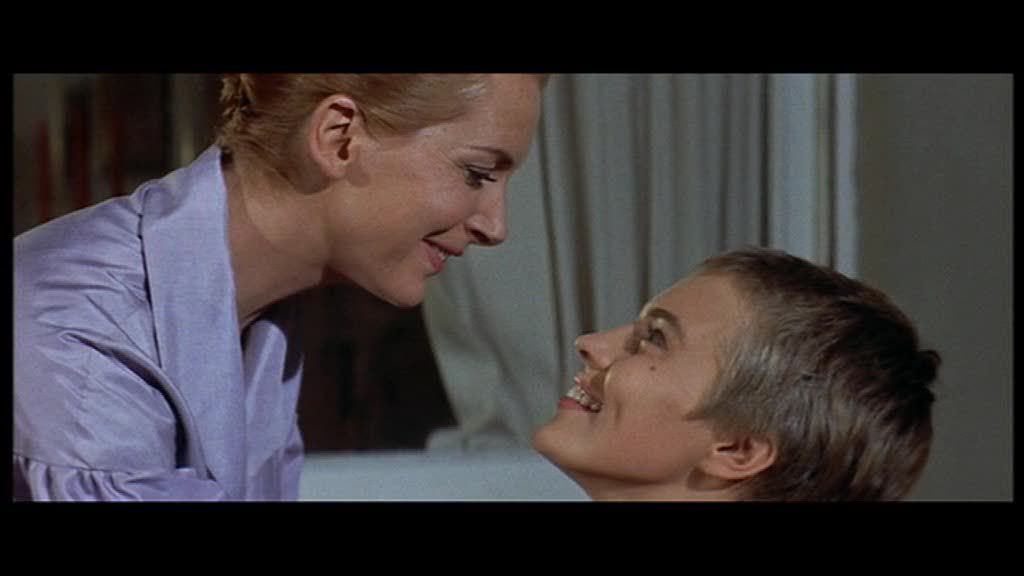
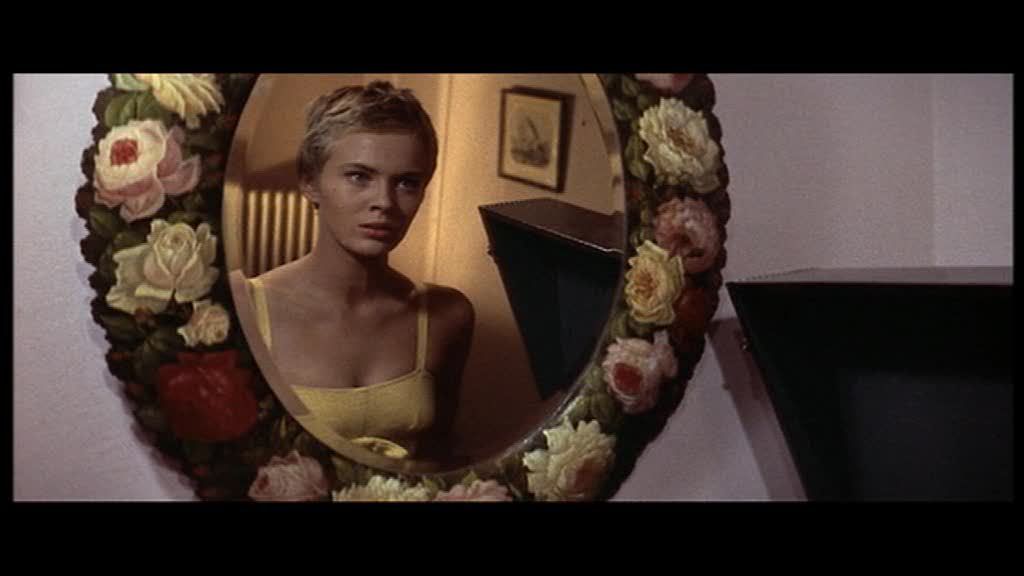
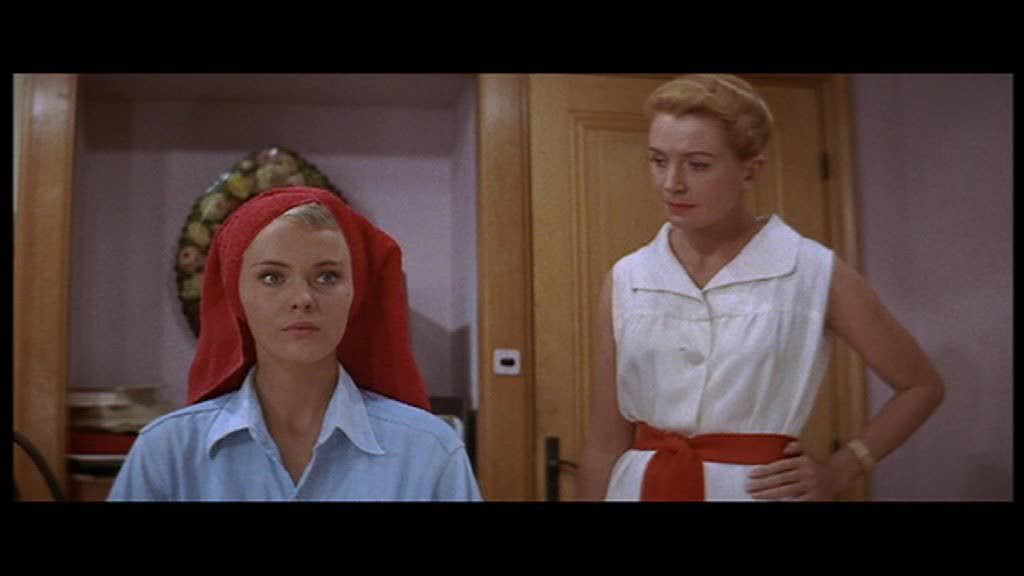
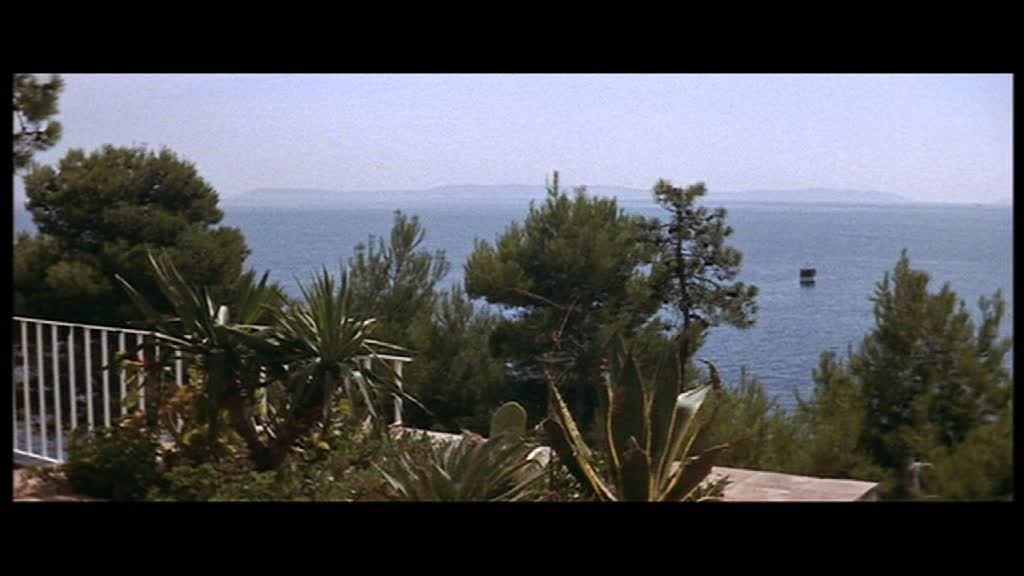
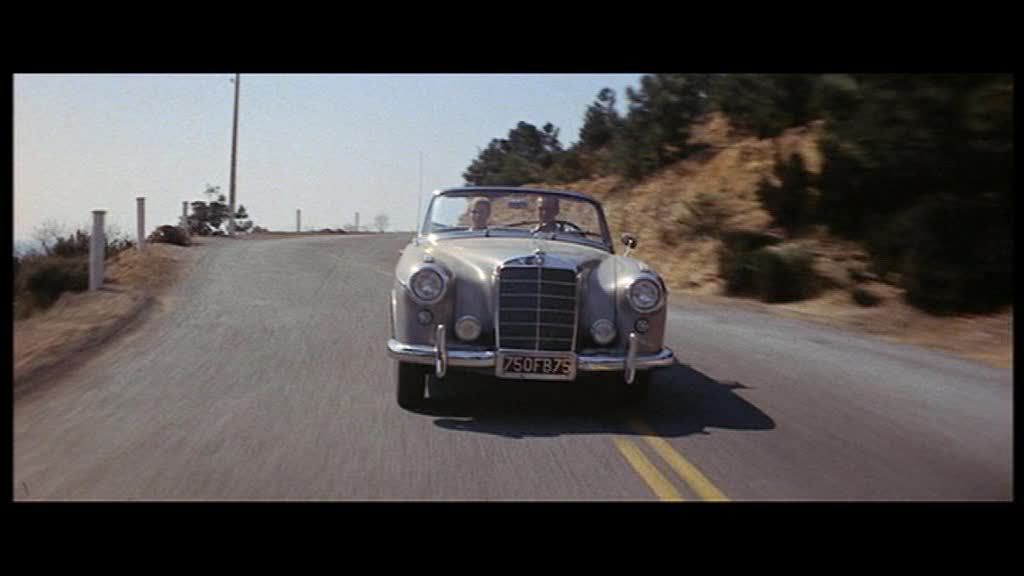
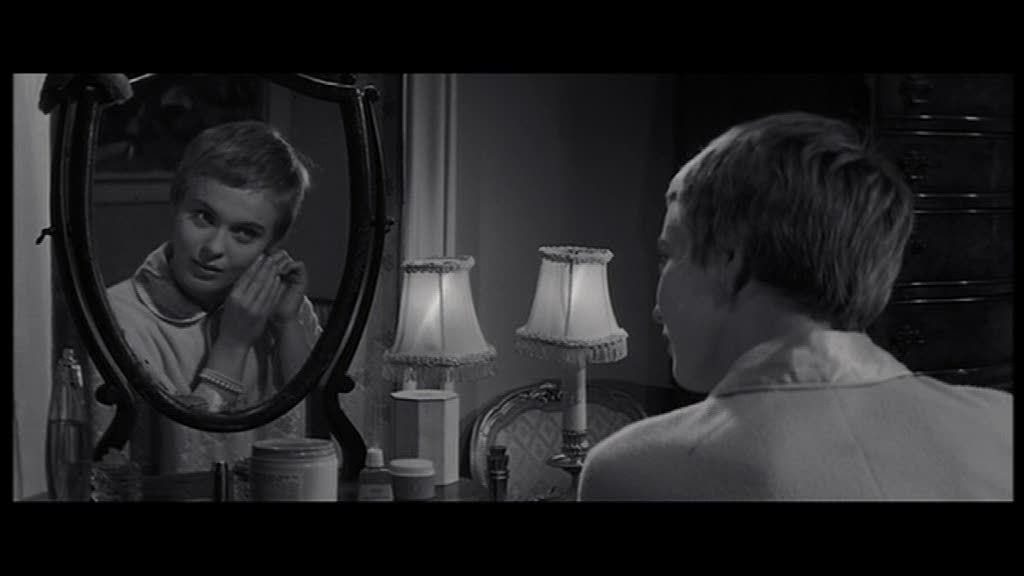
Bonjour Tristesse is, like many of Otto Preminger's films, an extended exercise in toying with the problems of audience identification and tone. The film shifts, in its first ten minutes, from a somber black and white prologue in which Cecile (Jean Seberg) and her father Raymond (David Niven) seem subtly discontented in their upper-crust lifestyle, to a gorgeous Technicolor flashback in which everything is breezy, carefree, and fun for the pair and Raymond's latest fling Elsa (Mylène Demongeot). Preminger injects the color into the film slowly, fading in some blue ocean waves over Cecile's shoulder as she dances, then irising out from the center of the image with a burst of color. The shift to Technicolor highlights the contrast between the two Ceciles we see, one numb and disconnected, the other vibrant and almost relentlessly sunny. The film tracks Cecile's downfall as her father abandons his carefree ways to marry the matriarchal Anne (Deborah Kerr), who immediately assumes a domineering, motherly attitude towards the defiantly flighty Cecile. Preminger's brilliance lies in the way he gets the audience irrevocably on Cecile's side — it's hard not to love Seberg's smiley, unrestrained performance and to sympathize with her desire for freedom — only to pull the rug out as he delves more and more into the selfish, willful, and vengeful aspects of this charming girl's personality. The film remains ambiguous, right up to its final black and white closeup of Seberg's agonized face, as to whether Anne or Cecile is the real victim in this battle of wills.

As always, Preminger's direction is fascinating, his distinctive roving camera framing and reframing the characters in various couplings and trios, emphasizing Anne's intrusion on Cecile's carefree life by placing her in dominant positions within the frame, always looming over the younger girl. And yet Preminger hardly makes her an unredeemed "evil stepmother" character, infusing her with unexpected pathos while Kerr plays her as a complex, well-meaning woman who is simply ill-suited to the morally loose, privileged existence enjoyed by Cecile and Raymond. The film also provides a dazzling showcase for Seberg in her second role, which Preminger conceived as a comeback attempt after she was roundly mocked for her debut in his Saint Joan the year before. The American critics mostly didn't bite this time either, but Seberg's wide-eyed naivete and cheerful bombast made her a curiously effective Joan of Arc, and an even better Cecile. Of course, at least some French critics caught on to what Preminger and Seberg are up to here, and her performance in Bonjour Tristesse directly brought the young actress to the attention of Jean-Luc Godard, who immediately cast her in his own debut feature. Godard picked up on the film's purposeful tonal ambivalence and Seberg's deftness in conveying a character who is at once charming and ruthless. He famously said that Seberg's Patricia in Breathless was a continuation of Cecile's arc: "I could have taken the last shot of Preminger's film and started after dissolving to a title, 'Three Years Later.'"