Showing posts with label Dutch cinema. Show all posts

Monday, July 20, 2009

TOERIFC: Black Book


The films of Paul Verhoeven seldom deal with morality and appearances in conventional ways. Verhoeven's filmography represents a prolonged examination of the depths hidden beneath overly familiar surfaces; he often mines within genre templates for the emotional truths obscured by superficiality. And in his 2006 masterpiece Black Book, he turns to the question of historical truth, examining the history book truths we take for granted, exploring the vast gray areas that exist between black and white, good and evil, hero and villain. If Verhoeven was making a Western, most of his characters would wear gray hats. His is a morally ambiguous universe in the deepest sense, one with no easy answers, no pat moral conclusions.

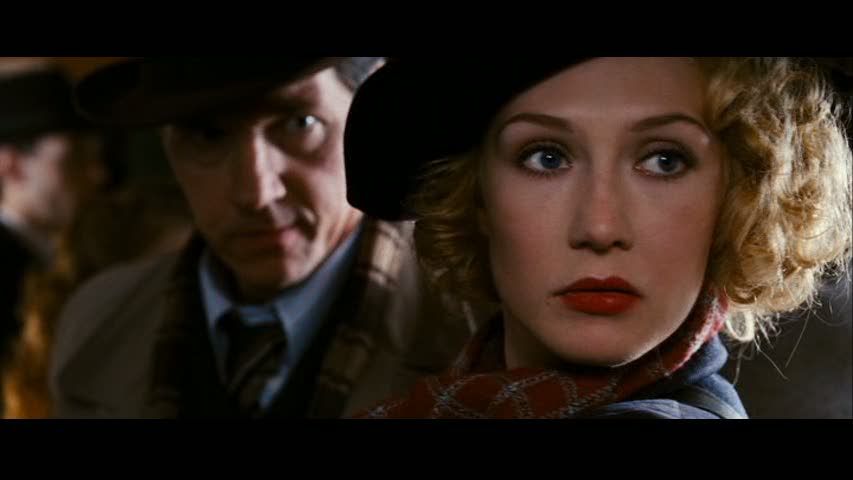
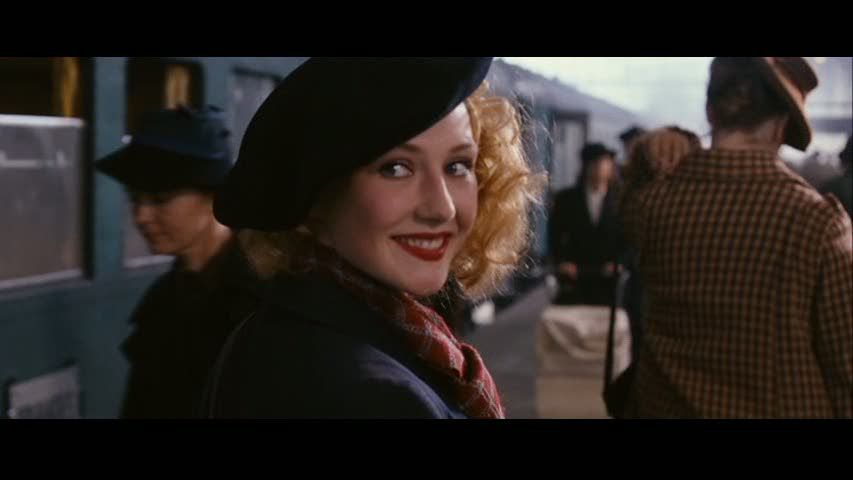
This perspective is especially challenging here because Black Book is about the end of World War II in the Netherlands, where in the final months of the war, the Nazis, Dutch collaborators and anti-Nazi Resistance fighters continued to fight, always thinking about what would happen once the war was over. The film's central character is young Rachel Stein (Carice van Houten), a Jewish woman who soon changes her name to Ellis de Vries as part of her disguise from the Nazis. When the film opens, she is living with a Christian family who begrudgingly shelter her, forcing her to faithfully recite Bible verses before she is allowed to eat (exactly the kind of self-righteous hypocrisy Verhoeven most loves to mock). When her shelter is destroyed by Nazi bombs and her identity discovered, she attempts to escape with her family, but instead she winds up the sole survivor after the sinister German officer Franken (Waldemar Kobus) ambushes the boat and kills everyone else. Now named Ellis, she falls in with a group of Resistance fighters and, at their behest, infiltrates the Nazi command by cozying up to SS officer Ludwig Müntze (Sebastian Koch).

Of course, the plot only grows more complex from there. The script, written by Verhoeven with his frequent collaborator Gerard Soeteman, is serpentine and epic, structured around the multiple twists, betrayals, moves and countermoves that characterize this tale of wartime spying and resistance. The film is lengthy, but with the exception of the brief framing segments in post-war Israel, its action covers only around a year or two, from the last few months of the war to the immediate post-war period, the time of liberation, revenge and readjustment. This brief time frame is packed with incident, however. Verhoeven has always known how to tell a story. In fact, he's often been picked on for this very skill, for his ability to work competently — even vigorously — within conventional storytelling modes. That's why he was such a good fit for Hollywood, at least for a time, despite his penchant for outrageous provocation and radical subtexts. He's a provocateur and a satirist, but even more than that he's a storyteller, an entertainer. Rather than using satire to undermine entertainment, the way so many covert satirists have, he allows the two strains of his work to coexist, to intertwine, so that in a Verhoeven film the excitingly sensual surface he offers up is inseparable from the cerebral and thematic undercurrents of his stories.

This means that his films are always rollicking good fun, if nothing else, and Black Book is no exception. His action sequences are thrilling and visceral, and the plot is a complex web of deceit and double-crosses, with new twists continually introducing complete shifts in the status quo. Of course, sexuality is also almost always an important factor in Verhoeven's films. In Black Book especially, however, Verhoeven's treatment of sexuality is far from simple exploitation or gratuitous titillation. One of the film's most important subtexts is its subtle revelation of the ways in which women are used and then punished for their sexuality, for their charm and beauty. Ellis seduces the Nazi Müntze only out of necessity, after the Nazis capture a shipment of weapons along with several Resistance fighters, including Tim (Ronald Armbrust), the son of the Resistance ring's leader Kuipers (Derek de Lint). She agrees to help by infiltrating the SS headquarters, planting a bug in Franken's office and generally providing information on what's going on, as the Resistance cell tries to figure out a way to free their captured comrades.

So Ellis uses her sexuality for the benefit of her friends; she is willing to sleep with Müntze, and even to expose herself to the unwelcome attention of the brutish Franken, the man who murdered her family. But she is not praised for her behavior; she is silently, implicitly judged. Before she goes undercover, the doctor and Resistance fighter Akkermans (Thom Hoffman) makes sure that he sleeps with her first, as though marking her before the Germans get ahold of her, claiming her as Dutch property. Her sexuality is a tool, a weapon, a resource, and also something to be fought over, but she is never treated as an equal, as someone to be respected in her own right. Even when she first joins the Resistance group, she is eager to help, but seems disappointed when she learns that all she has to do is pose as Akkermans' wife, kissing him to distract Nazi inspection parties as they smuggle underground materials from place to place. This assignment establishes the boundaries of what she will be asked to do as a part of this group, though her quick thinking when the mission nearly goes wrong indicates that she is more than just a pretty prop, that she can think for herself and ingeniously get her allies out of tight spots. Still, they do not respect her, and Ellis knows it.

One of the key moments here comes when Ellis arrives at the Resistance's secret base while they are listening in on the microphone that Ellis planted. They hear Franken having loud, raucous sex with his secretary Ronnie (Halina Reijn), and the Resistance fighters are laughing wildly, mocking the lovers and especially the girl. They call her a whore and comment on how horny she must be, and they laugh uproariously. Ellis looks uncomfortable, her head bent down, her eyes averted from everyone else, certainly not laughing. She realizes that Ronnie, an ordinary and not very bright young woman, is just doing what she must to survive, that she's no Nazi or "Nazi lover" but only someone who knew, as Ellis did, that she could use her sexuality as a way to get by during a difficult time. And Ellis knows, too, that the others might just as easily say the same things about her. She's sleeping with Müntze just as Ronnie is sleeping with Franken. Ellis has a pretext for her actions, but in the end sex is sex.
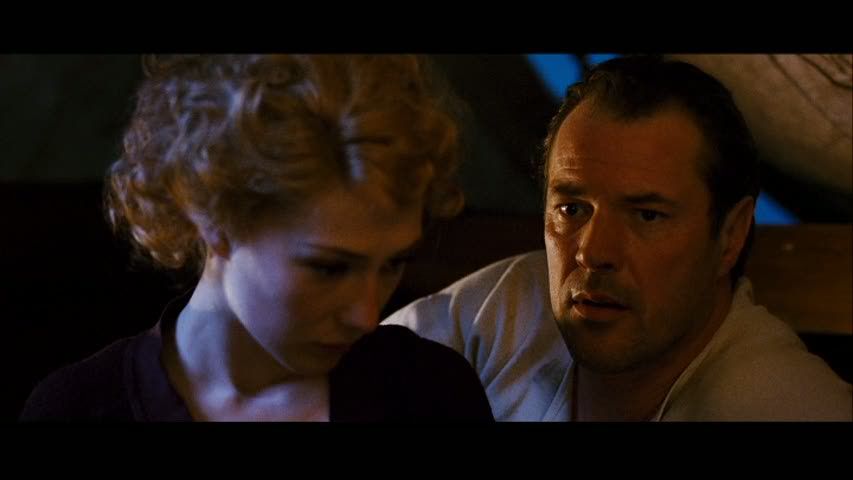

Complicating matters even further is the fact that Müntze is not an unsympathetic character, and in fact he is portrayed as a relatively decent guy. He is an SS officer, but by this late point in the war, he has realized that his country is losing, and instead of reacting out of greed (as Franken does) or self-preservation (as so many others do), he attempts to calm down the violence in his own little corner of the war, negotiating with the Resistance to halt the hostilities on both sides. He knows the war is over in all but name, and sees little point in further death, further violence and horror. Moreover, he very quickly deduces that Ellis is a disguised Jew, and not long after discovers that she is a member of the Resistance. But in both cases he keeps her secret, protecting her and conspiring with her.

There is a hint of tension between them, of course, which bursts out in the wittily Freudian scene where Ellis thinks Müntze is getting an erection under the covers, only to find he's pointing a gun at her: underscoring the forced, duplicitous sexuality that thrust them together. Even so, the relationship between them is surprisingly tender and sweet, a true romance in the midst of so much deceit and treachery and violence. He is, perhaps, a good man who had been warped by the war, forced into his position by cowardice or some other motivation — it's never made clear how or why he became such a high-ranking SS officer, or what he must've done in the past. But with Ellis, he is loyal and kind, and their sex scenes have a warmth and passion that never feels like playacting.

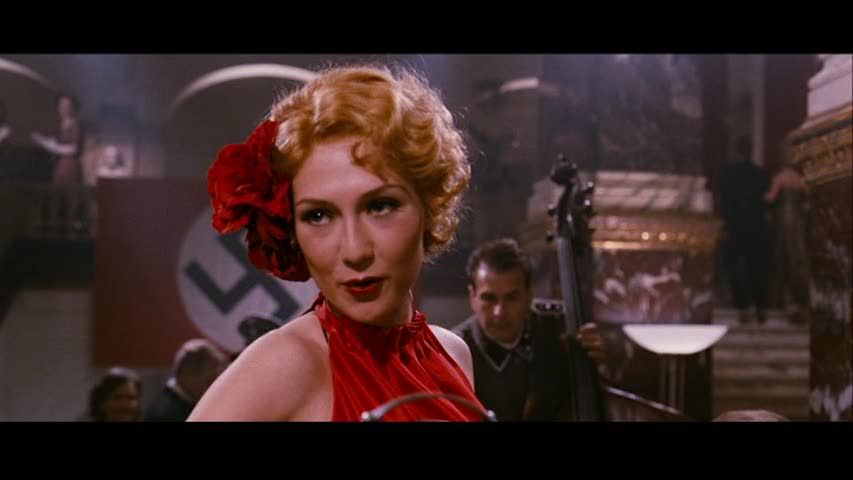
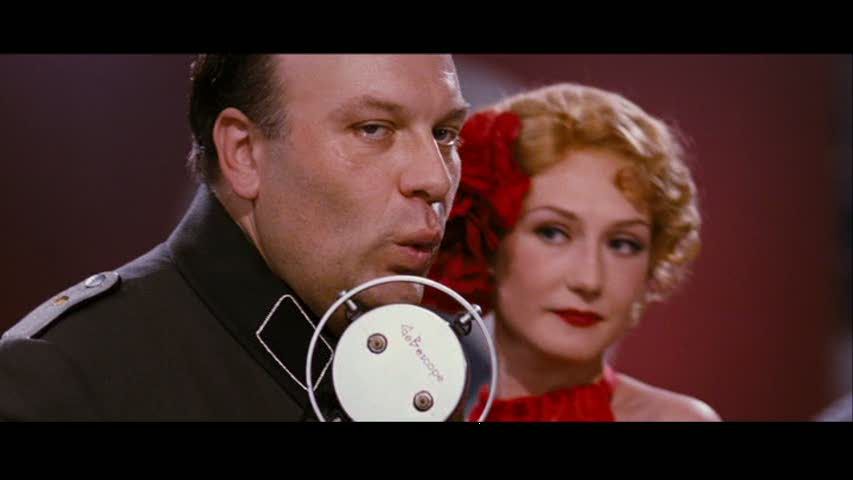
This brings up the question of appearances and surfaces again, and of acting. Carice van Houten is asked to virtually carry the film on her tiny shoulders — she is its center and its heart, almost never offscreen — and she gives a phenomenal performance. In many ways, she is also playing an actress, a woman who must be able to disguise her true self completely. She must do this first as a Jew, dying her hair blonde and changing her name, shedding her Jewish roots. She even dyes her pubic hair, as though changing even her sexuality; Verhoeven shows her daubing between her legs with a brush, making art of her sex. Then her disguise becomes even more complex when she is employed by the Nazis. There is an extraordinary sequence when she first sees Franken and recognizes him as the man who murdered her family. The creepy, lumpen oaf is hunched over a piano, cheerfully singing a song and playing; he is as goofy and awkward here as he was cold and evil in the earlier scene. Ellis stares blankly at him, and runs from the room, retching and throwing up when she reaches the bathroom. But she takes a moment, cleans herself up quickly and pulls herself together, and when Müntze asks her what's wrong, she smiles and takes an eager swig of champagne, then goes out to sing a torch song with accompaniment from Franken, lewdly dancing and posing as she sings the sexually suggestive lyrics.

Van Houten is excellent at conveying these sudden shifts, the way Ellis' face can quickly and smoothly transition from a sour, numb expression into a bright and seemingly genuine smile. Verhoeven, with his concern for the relationship between appearances and reality, is especially interested in this fluid masking of emotions: at what point do Ellis' faked smiles become real? At what point does her façade of affection and desire for Müntze bleed into something deeper, more true? Such questions are at the heart of the film, and they go beyond Ellis' undercover theatrics, extending to every aspect of the story, to every character. Virtually all these people are wearing masks of various kinds, and they're all more than they appear to be on the surface. For one thing, the film rejects facile categorizations of "good guys" and "bad guys," suggesting that real evil is not always as easy to identify as the cartoonish Franken, who in any event is also capable of playfulness and good humor, and who seems to love making music. Moreover, Verhoeven is saying, often evil can be mistaken for good, and vice versa — not to mention the complications of most people combining the two within themselves.

Verhoeven explicitly mocks the moral absolutism that ignores such gray areas. This is especially obvious in the character of Theo (Johnny de Mol), a devout Christian who becomes hysterical after killing a man to protect Ellis. He believes that because he has committed murder, he is now "as bad as the Nazis," an absolutely absurd idea that demonstrates a complete inability to see moral gray areas. Verhoeven, by contrast, is interested only in the gray areas, in why people do what they do, in the complicated interactions of morality and practicality from day to day. For Verhoeven, morality never exists in a vacuum, but is integrated with people's situations: the choices available to them and the choices they make as a result.

What's also interesting about the film is its almost-complete emphasis on the kinds of stories not often told about World War II, the stories that are generally overlooked and glossed-over. Verhoeven has always been interested in this material, in the history of resistance and collaboration in his homeland. In 1977, he made the epic Soldier of Orange, which is similarly engaged with issues of collaboration and resistance, with the interesting ways in which wartime can warp or divert a person's character and destiny. In many ways, that film seems like a warm-up for Black Book, a first examination of the territory he'd return to here, now mining even deeper, digging even further into the ugly contradictions of his nation's past.

Those contradictions are laid bare here, particularly during the film's final hour, in which Ellis, suspected of collaboration with the Nazis, is forced into hiding along with Müntze, who's fleeing the dubious "justice" of the post-war regime. Verhoeven has often been accused of a lack of subtlety, and the final hour of this film could certainly provide copious material for anyone wishing to make that case. He heaps suffering and degradation on his poor heroine, who is misused and betrayed despite all her efforts to do what was right, to help her friends and exact revenge for what happened to her family. Instead, she is arrested as a collaborator, labeled a "Nazi whore" who sang for the Germans. She is, at one point, stripped and slathered in excrement, at a prison where drunken soldiers and prison guards abuse and humiliate the prisoners. And then she is betrayed again, nearly killed by the last person she thought she could trust, Akkermans himself, who turns out to be a genuine collaborator, the man who kept tipping off Franken to the locations of fleeing Jews.
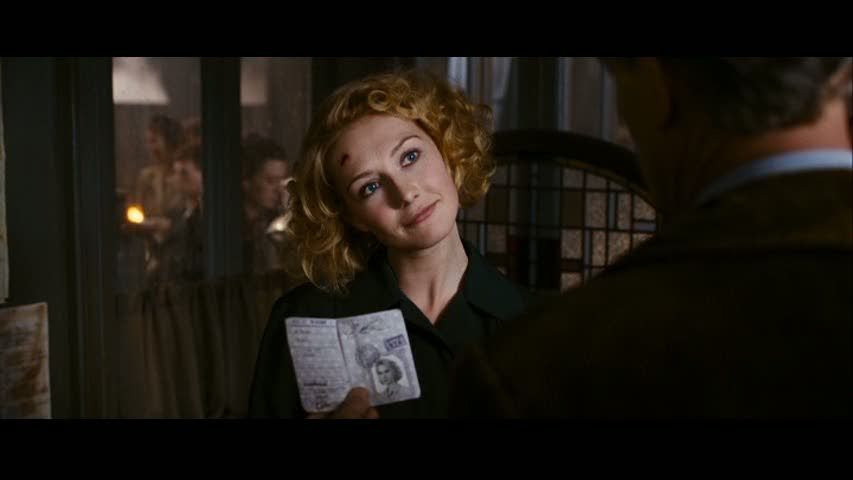

Verhoeven undoubtedly makes things difficult for his heroine, and he also makes her plight difficult to watch — this Passion of Ellis is harrowing and often stomach-churning, both physically (the feces bath) and emotionally (the execution of Müntze). But no matter how much Ellis suffers, Verhoeven never strips her of her dignity: her warmth and passion, her energetic spirit, her honesty, her defiance. When the prison guards demand that she sing for them like she once did for the Nazis, she simply shakes her head: "not for you." She is an ordinary woman in extraordinary times, and she rises to the occasion in every way, molding herself to be tough enough for what she has to face.

And she always retains her idiosyncratic sense of humor, her playfulness — seen in tossed-off little moments like the one where she takes a bite of a carrot meant for a rabbit, then turns around to speak with the bite stuffed into her cheek like a chipmunk, or the scene where she brushes her teeth by gargling with champagne, then opens her mouth wide for inspection with a grin. Verhoeven obviously admires her cheekiness, and he admires his actress too, admires the versatility she brings to this role: compare the matronly, melancholy Rachel seen in the Israeli framing story against bold, blonde Ellis for some indication of the range and depth van Houten brings to this character.
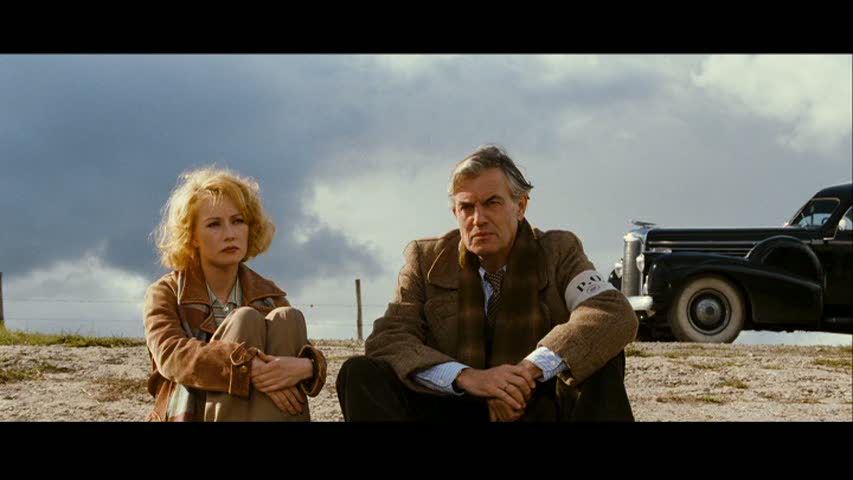

Indeed, "range and depth" is a fairly good summation of Black Book as a whole as well. It's an extraordinarily complex and multi-faceted film, both narratively and thematically. Even as its plot continually subdivides and changes directions, Verhoeven probes deeper and deeper into the sexual, political and psychological subtexts of his story and characters. His style is direct and bombastic, with a subtle stylization to the way he groups other characters into two-shots with his heroine, tracing her varying relationships with the men she encounters. Ellis is always turning towards the camera, flashing it a smile or a penetrating gaze; Verhoeven makes it natural enough that it never quite breaks the fourth wall, though the technique does call attention to itself, and to the continual highlighting of the star.

I could certainly find a lot more to say about Black Book — it's a film I suspect I could write a book about, delving into each scene and giving it the careful consideration it deserves. It's that rich, that layered. For now, however, I'll simply open up the discussion for others to share their impressions of Verhoeven's film. What does everyone else think?

Friday, June 12, 2009

Business Is Business


Business Is Business was Paul Verhoeven's feature film debut, and it definitely proves that, if the controversial and notoriously raunchy auteur's aesthetic was not quite developed from the start, then at least his signature themes and concerns were there all along. This rough-edged but entertaining debut clearly points the way towards Verhoeven's later work, which would continue dealing, in deeper ways, with this film's themes of sexuality, exploitation and the pressures placed on male/female dynamics by society. Verhoeven's satirical wit would be sharpened in subsequent films, as would his ability to carve compelling, multi-layered characters out of the material of cliché and melodrama. Here, his talents are more raw, less focused, and his humor is broader. Usually, the laughs in a Verhoeven film are double-edged, always threatening to stick in one's throat; he tends to lace his humor with a touch of bitterness and rage. But this story of a pair of prostitutes doesn't really delve beneath the surface in this way. Verhoeven seems content to simply mine the situation for as much humor as he can, treating it as a series of anecdotes loosely strung together.

On these broad terms, the film is certainly enjoyable. If nothing else, Verhoeven was always a consummate entertainer, and even his first feature is never less than a blast to watch. It opens with a hilarious race from the airport as a man, newly returned from a long stint in Africa, away from female companionship, rushes to the home of the prostitute Greet (Ronnie Bierman). Once there, he's in a desperate hurry to get started, and eagerly agrees as she keeps adding to the price for every little concession she makes — want my coat off? that'll be another 50. After all this build-up and haggling, the deed itself finally lasts all of a second, and Greet immediately goes to the closet, where she mechanically ticks off his bill on an adding machine and prints him a receipt. It's a great introduction of the film's central character, this staunchly capitalist prostitute for whom her job is really just another business, with little connection to her sexuality. Greet is fortunate that she can be this cavalier about her profession. Her friend Nel (Sylvia de Leur) seems to be less cut out for this line of work, and she additionally suffers at the hands of her abusive, domineering boyfriend Sjaak (Jules Hamel), who takes her money and goes fishing all day while she sells herself.

The subject naturally lends itself to social commentary of a sort, but for the most part Verhoeven doesn't seem to be interested. There are hints of themes he'd develop more substantially in his later work, like the ways in which men and women use sexuality as a weapon against one another, and the double bind of the woman's place in society, where she is punished for being a sexual creature but punished in different ways if she refuses or holds back her sexuality. Mostly, though, this is all very surface level, and there's barely even much of a plot. Nel yearns to escape from Sjaak, and from the life of prostitution in general, and eventually she finds her escape route in the form of the cleaning salesman Bob (Bernard Droog) — she's not much happier as a mundane housewife with this boring schlub, but it's a life anyway. Meanwhile, the seemingly unflappable Greet finds the same desires stirring in her, and briefly believes that she's found love with the married Piet (Piet Römer), who she sleeps with without even charging him. The film's melodrama all seems a little undigested, especially in comparison to what Verhoeven would achieve just two years later with his masterful second feature Turkish Delight, in which he twists and warps melodramatic conventions into an epic of sexual perversity and societal dysfunction.


In Business Is Business, Verhoeven's aims are more modest. Mainly, he produces a parade of eccentrics and sexual deviants to mock and satirize. The film's anecdotal structure mostly consists of one visit from a "client" after another, with each john stranger and goofier than the next. One guy likes to dress up like a schoolboy and get lectured (and spanked, naturally) by the teacher and schoolmistress. One guy likes to get naked and then have the girls scare him by donning a creepy witch mask, screaming and banging on things. Another wants a fake surgery performed on him. Another has a thing for dressing up in high heels and a maid's outfit and cleaning Greet's apartment, with her berating and spanking him for not doing a good job. Most memorably of all, one odd duck comes with a suitcase full of feathers, covering his own body with them and giving some to the girls, who proceed to run around clucking like chickens. What all of these clients have in common is that almost none of them seem to want actual sexual intercourse of any kind — they get excited by debasing themselves, by being humiliated, and all the girls have to do, generally, is play along with the game. They're as much actresses as prostitutes.

This succession of oddities and bizarre fetishes are trotted out one by one simply for Verhoeven to make fun of; each of these guys is so exaggerated, so caricatured, that there's no possible response but to laugh. And indeed the film is frequently funny, even if Verhoeven's swinging at the easiest possible targets to hit. The humor is goofy and light, not at all what one expects of a director who, though always working in debased genres, often burrows deep into the heart of clichés and conventions in order to get at the deeper essences lurking within generic stories. This is not the case here. Even when the story integrates more dramatic material — the fights between Sjaak and Nel are truly harrowing and disturbing, and Nel's meek returns afterward are a startlingly true depiction of domestic violence's ugly cycle — Verhoeven doesn't generate the tension he usually sparks from juxtaposing his films' trashier elements against the more emotionally volatile moments. Instead, the two elements within the film simply sit uncomfortably together: the emotional impact of scenes like this is undeniable, but never bleeds over into the funnier scenes, which dominate the film.

On the whole, Business Is Business is an interesting but uneven debut for Verhoeven, who would quickly progress beyond this shaky dark comedy into much more sophisticated explorations of similar territory. This film remains relevant primarily for Verhoeven fans looking for a glimpse of the Dutch auteur's roots. As such, the seeds of his later work are clearly visible, but no more; it would take until Turkish Delight for these seeds to bear real fruit.

Wednesday, May 20, 2009

Soldier of Orange


Paul Verhoeven's Soldier of Orange was the film that started him on the path to Hollywood, the film that made no less than Steven Spielberg take notice of the Dutch talent. It's not hard to see why: it's an epic, masterfully made film, a brisk, constantly moving wartime adventure about friendship, betrayal and the ways in which people can stumble upon their principles. The film traces the lives of a group of rowdy friends between 1938 and 1945, from their time at a Dutch university to their entanglement in World War II, as their home country is dragged into the conflict by Hitler's invasion. These youths are initially far from interested in the war or Germany or anything else. They expect their country to remain neutral, as usual, and if anything many of them are sympathetic to Germany, nursing some of the same anti-Semitic sentiments as Hitler and his followers. So they play tennis, and go to parties, and compete over women, oblivious to the impending chaos about to engulf Europe. When Britain declares war against Germany, a few off them are troubled, but most don't care: they simply switch off the radio and return to their tennis match and their gaiety. This only changes when Germany actually invades Holland, bombing civilian targets and sending in soldiers.

What Verhoeven's interested in here is defusing the usual war movie clichés: the over-the-top patriotism, the stoic heroes, the girl loyally waiting back home. He signals his subversive intent, subtly, in the opening scenes. After a mock-newsreel introduction of the Dutch Queen returning to her own soil after the war, greeted by an extravagant welcome, the first scene of the film proper is a noisy, chaotic sequence in which a group of shaved-head young men are berated, beaten and mocked by neatly dressed men who order them around like drill sergeants. The film's subject, and its opening (with a credit sequence accompanied by the Dutch flag), prime the viewer to interpret this scene through the filter of World War II history: the shaved heads, the shouted commands, the sniveling men who seem to be prisoners. Actually, it's a particularly brutal fraternity hazing, and its end result is to forge a lasting friendship between new recruit Erik (Rutger Hauer) and the fraternity president Guus (Jeroen Krabbé).

Verhoeven patiently explores the pre-war life of these young men, upper-class boys studying to be lawyers and take their place in society. Their lives are disrupted by Hitler's bombs, and the German invasion forces them to make difficult choices, to choose sides. Guus and Erik will join the underground resistance against the Nazis, along with friends like the Jewish boxing champion Jan (Huib Rooymans), the resourceful organizer Nico (Lex van Delden), and Robby (Eddy Habbema), who runs a transmitter sending messages to England. Erik's friend Alex (Derek de Lint), who has a German mother and thus sees the situation somewhat differently, joins the fascist army and goes to fight in Russia. Others, like Jack (Dolf de Vries), simply lay low and wait out the war at home, secretly completing his degree and preparing for post-war life even while the bombs are falling and his countrymen are dying and fighting back. Verhoeven doesn't want to present a simplistic portrait of patriots fighting for their country: these are real people, with complex relationships and complex reasons for what they do. The film is based on the real story of Erik Hazelhoff Roelfzema, the aide to Queen Wilhelmina whose book about his experiences provided a starting point for Verhoeven's film.

Indeed, Erik is a hero, but he arrives at it only slowly, even reluctantly. He dabbles in the resistance, but his efforts are wasted, and he sees his friends and allies dying and being captured, seemingly betrayed. The Germans strategically allow him to overhear that they have a spy in London, a man named Van der Zanden (Guus Hermus), then they release him. So when Erik gets the chance to escape to London, he does so, along with his friend Guus, intending to help out in any way he can and especially to expose the traitor who may have been compromising the Dutch resistance. As usual with Verhoeven, such things are more complex than they seem at first. The supposed spy turns out to be a staunch ally of the Queen, and the traitor within the midst of the resistance has his own reasons for doing what he does. Robby turns out to be the weak link in the organization, agreeing to help the Germans when they threaten to take his Jewish fiancée Esther (Belinda Meuldijk) to a concentration camp.


The emotions in this film are complicated and subtle, especially for a war epic with action taking place on a grand, international scale. Verhoeven never forgets about the human dramas, never leaves behind the characters and their smaller stories in favor of the big picture. What's striking, then, is that everything that happens here amounts to so little, does so little to affect the outcome of the war either way. These people and their struggles are peripheral to the main thrust of the war, as the British officers themselves acknowledge: they're using the Dutch fighters mainly as a distraction, throwing Erik and his compatriots at the Germans in order to waste the enemy's time, to draw their attention away from more important matters. Verhoeven's storytelling is taut and his action sequences are suspenseful and perfectly conceived, and yet by the end of the film it's obvious that virtually nothing has been accomplished by all these intrigues and missions: Erik presumably does much more in his mostly unseen bombing runs than he did throughout the entire rest of the film. Verhoeven is interested in history, but he's interested in it largely as it happens on the ground, as it affects individuals and their small, historically minor lives. He is bringing historical footnotes to life, investing their stories with all the grandness and nuance and detail usually reserved for major players in these struggles. Despite the opening, in which Verhoeven skillfully blends faux-period footage of Hauer in with genuine newsreel footage, this is not a Forrest Gump kind of historical movie, in which the characters wander through major historical events. Instead, this film is all about unraveling the tightly knit story of abstracted history into the individual threads that comprise it, each small strand insignificant in itself but each adding to the cumulative experience of a time and place.

This is rich stuff. Verhoeven, so often thought of as a director of big, bold gestures and over-the-top stylization, is actually just as capable of subtlety and restraint. He largely hints at the deep emotional bonds linking Erik to his friend Robby's fiancée Esther. The two have a halting, infrequent affair, succumbing to passion for one another at times of stress, but Verhoeven communicates their longings largely through glances, through silent moments in which a great deal seems to pass between them. There is a wonderful, perfectly staged scene late in the film, when Erik begins to suspect that Robby is a traitor when he sees all the nice things that Esther has at their house, at the peak of wartime in Holland. She tells him that Robby gets all these things for her, things that Erik couldn't even get in England, through his friends in the resistance. But when Erik asks her if she really believes that, she pauses and simply shakes her head, just once, from side to side, her face steeled but her eyes sad. There is so much in that gesture, the resignation and defiance and the knowledge that her man has betrayed his principles, betrayed even his friends in order to keep her safe, and that even though she is torn up by it she has gone along with it, has allowed him to do it and allowed him to think that she doesn't know. This all happens beneath the surface, again in the exchange of looks between Erik and this woman who he loves, but who various circumstances have kept from him.

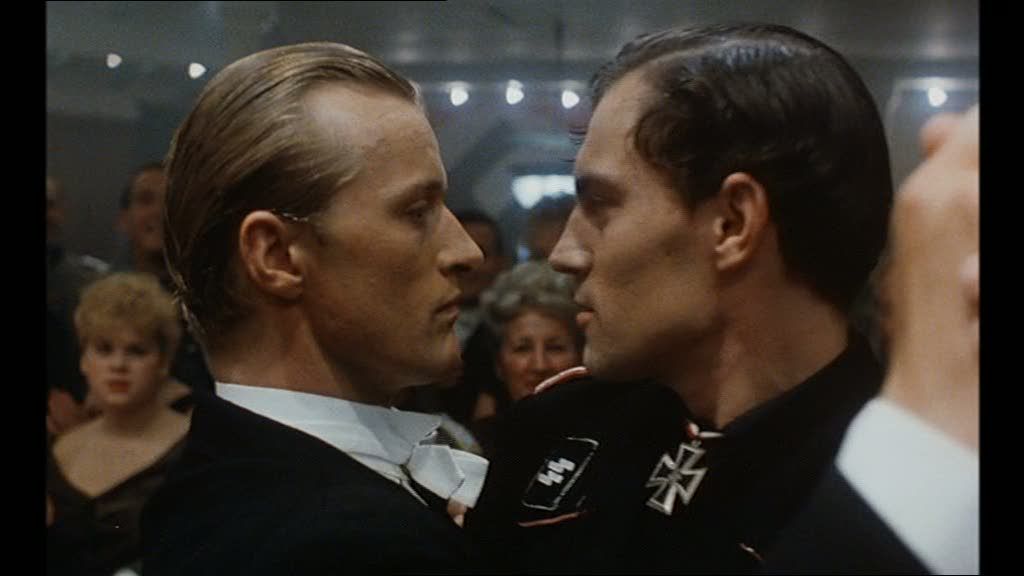
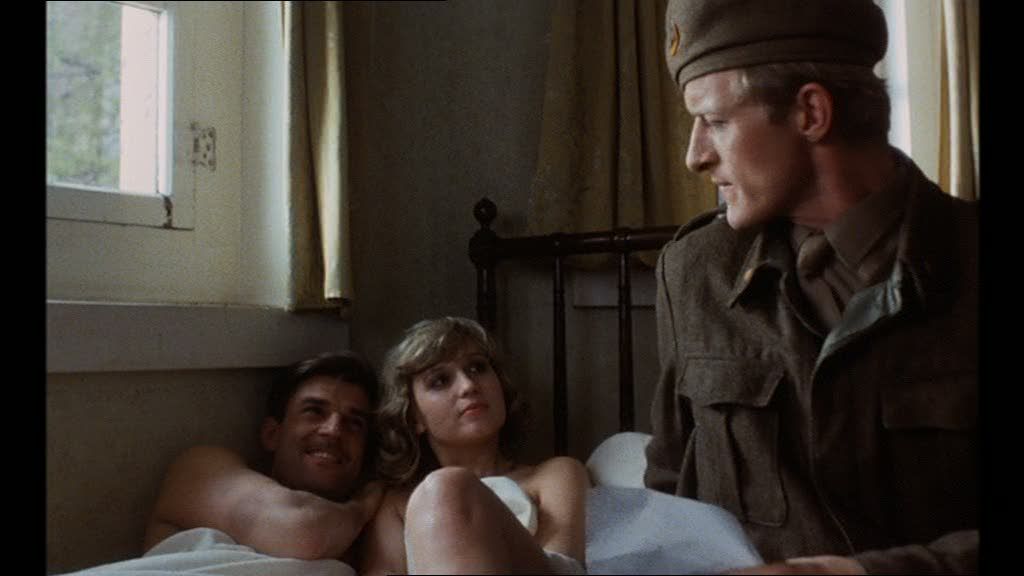
There is a similarly great dynamic at work in London, where Guus and Erik engage in a friendly rivalry to bed down the pretty English military secretary Susan (Susan Penhaligon). Again, a lot happens between the lines, as Susan flirts with both men, inviting Erik under the covers to join them after she and Guus have had very public sex in a second floor window, with Erik down below hilariously trying to prevent the Queen from getting an eyeful. Verhoeven allows a great deal of ambiguity in the way Susan manages the rivalry of these men for her affection: when she conspires to have Guus and not Erik sent on a dangerous mission, is she trying to maneuver the man she wants closer to her, or trying to make the man she already has a hero? Also implicit in these scenes is the homosocial love of Guus and Erik for one another, a love that transcends their sparring over Susan, even when she lays naked in between them. Later, this kind of love between men will bridge even the opposing sides of the war. One of the film's most memorable sequences is the extended tango that takes place between Erik and the fascist soldier Alex, when Erik stumbles undercover into a party for the Nazis. The two men dance together, their faces just inches apart, their hard profiles seemingly on the verge of a kiss, and discuss the vagaries of history that have made them enemies rather than friends.

Soldier of Orange is a typically dense, potent epic from a director who consistently manages to find the difficult and powerful emotions within blockbuster material. This is a deeply personal and contemplative war epic, even as it moves at a brisk, thrilling pace. It satisfies every expectation of its genre, packing its lengthy running time with battles and betrayals and suspense sequences — like the indescribably tense climax on a Dutch beach guarded by the Germans — and yet it is also subtle and humanistic. It's a film about the tight interplay between choice and fate in determining the flow of a person's life during times of upheaval. And it's also a visceral, rousing action picture. Verhoeven is one of the few directors who is able to have it both ways, while compromising neither.

Thursday, April 23, 2009

Keetje Tippel


Keetje Tippel, based on the life of the prostitute, artists' model and socialist author Neel Doff, is a typically bracing, emotionally complex melodrama from director Paul Verhoeven. As is often the case with Verhoeven, he's working within the confines of a familiar genre, the period drama in this case, and even within the structure of a familiar story: the commoner who aspires to a higher level and gets transformed into a member of high society. It's a Cinderella story, in other words, and one of the film's characters even refers to the titular heroine Keetje (Monique van de Ven) as Cinderella. She's one daughter in a large and miserably poor family who have moved to Amsterdam in the hopes of finding better opportunities. But once there, the family continues to struggle, living in a horrible, rat-infested house that floods when it rains, with each of them trying without much luck to find and hold a steady job. Keetje's father (Jan Blasser) is a cheery, expansive guy, obviously a decent sort, but he's unable to keep a job for very long, and deeply feels the guilt of being unable to provide for his family. Keetje's bratty, lascivious sister Mina (Hannah de Leeuwe) helps provide for the family by working in a brothel — at least until she gets kicked out for drinking too much — but Keetje is too proud to sell her body, and tries to get more honest work.

This proves not to be easy. One of Verhoeven's most consistent themes is the humiliation and degradation that society heaps on the innocent and pure-hearted, and Keetje cannot escape this fate. She is a beautiful girl, but this only makes it harder for her: everywhere she goes, men want her, lust after her, and look at her poverty as a vulnerability they can exploit. She tries to work in a factory, washing clothes in poison chemicals that burn her hands and throat, but the horrible conditions there, coupled with the antagonism of the other women, quickly drive her away. A stint in a hat shop lasts a little longer, but she's not much happier. Her attempts to show some pride in her handiwork, to engage with her work as something more than a dumb drone, are stifled by her bosses, who don't want creativity. This is textbook Marxist commentary. Keetje is alienated from the results of her labor, forbidden from taking credit for what she's made with her own two hands, treated as simply an inhuman cog in an assembly line. Worse, the shop's owner has her stay late one night and, predictably, rapes her, a scene staged with a typically lurid Verhoeven touch: Keetje, always playful and whimsical, is making shadow puppets on the wall when her play is interrupted by a phallic shadow as the boss, naked and lustful, enters the room.

Keetje's humiliations only begin here, but throughout her often miserable adventures, she retains an unquenchable thirst for dignity and pleasure, and an indomitable spirit that never gives in. A great deal of the credit for this wonderful heroine must rest with van de Ven, an actress who Verhoeven had previously discovered for his film Turkish Delight. She has an impish smile and bright eyes, a waif's face that gives her a girlish, innocent appeal. It is obvious from the first moment she appears on screen that she does not belong in rags, filthy and laboring in a factory; she's too bright and charming, too kind-hearted. She wants the best for her family, and tries to protect them from predators, though it turns out that they mostly do not want protection and respond with spite. But when her family pushes her into prostitution, with her mother hovering outside during her visits with johns, waiting to snap up the money afterward, Keetje does not hesitate to finally abandon them when she gets a chance. She falls in with a crowd of painters and socialists and intellectuals, among them the banker Hugo (Rutger Hauer) and the socialist agitator Andre (Eddie Brugman). These men are able to raise Keetje out of her poverty, giving her fine clothes and, in Hugo's case, moving her into his house.


But Hugo, as it turns out, is actually only a few rungs up the social ladder from Keetje, and the strain of supporting her in a grand lifestyle proves to wear on him — he eventually abandons her for the promise of marrying his boss' daughter, moving up in status and wealth through this match. The film is continually driving home the ways in which poverty and class insecurity affect people even at the level of their one-on-one relationships. In this film, and in these people's lives, class is not an abstract concept, not the proletariat rhetoric of the Communists, but a concrete factor in everyday reality. Class and status are what they must escape, what they must struggle against in order to eat, in order to sustain their families. Life at the bottom is brutal and harsh, as Keetje knows well. She is beaten by the police for stealing bread for her hungry little brother. She is sexually exploited whenever she simply tries to find decent work for herself. Her family seems to grow every time she sees them, inexplicably gathering more children, which suggests that either Verhoeven is elliptically passing over long periods of time, or he's employing a subtle surrealist touch to emphasize the hopelessness of Keetje's family. Every day their family seems to be larger and harder to feed. So Keetje knows all about class, and knows about it from firsthand experience rather than conceptual reading. When Andre and his friends are admiring a painting, praising the pride and nobility of the way the workers are depicted, she corrects them, saying that the workers aren't proud but hungry.

And Keetje is hungry, too, and determined to get what she wants. In one of the film's best scenes, Andre and Hugo take her out to dinner at a fancy French restaurant, where she is oblivious about such niceties as how to order and how to use her utensils. This is a typical scene for this type of movie, a cliché even, but van de Ven plays it with such exuberant energy that it becomes fresh and exciting all over again. With her toothy smiles, her awkward way of shoving her spoon all the way into her broad, rubbery mouth, her easygoing adaptation to any circumstances, she's charming and fun even when she's being somewhat oafish and silly. She manages to make even her greed charming: she's been denied everything for so long that she feels no shame about taking what she can get, when she can get it. Verhoeven has great sympathy and affection for this woman, great respect for her refusal to be cowed or broken. She takes everything that the world can throw at her and simply shakes it off, smiles, moves on.

This is a quality that Verhoeven prizes in his protagonist, a kind of paradoxical joie de vivre in spite of the harsh conditions she faces. The film itself reflects this appreciation for the finer things in its hazy, brightly colored imagery, with many of the exterior scenes seemingly shot at the "magic hour," the many-hued glory of the sky hovering just between day and night. This is a vibrant, powerful film, frequently difficult to watch in its exacting portrait of lower class degradation. But the purity and grace of its heroine, and the fluid visual style of Verhoeven, make it a bittersweet delight as well.

Tuesday, March 31, 2009

The Fourth Man


The Fourth Man, Paul Verhoeven's final Dutch-language film before his sojourn to Hollywood to direct films like RoboCop and Basic Instinct, is a typically delirious fantasia from this gleefully controversial director. Awash in lurid Christian symbolism and a fluidly multisexual eroticism, the film is a nightmarish adventure that would do David Lynch proud: a man's dreamlike, elliptical journey into strange territory, guided by a possibly deranged imagination that finds unexpected patterns and recurrences in his experiences. The writer Gerard Reve (Jeroen Krabbé) travels to a distant town in order to give a lecture. Once there, he meets the mysteriously alluring but icy Christine (Renée Soutendijk) and spends the night with her, having sex with her while praising her for her boyish body. In the morning, Gerard plans to leave but is stopped by the discovery that Christine's regular lover is a young man named Herman (Thom Hoffman), who Gerard had previously seen and desired during a brief encounter at the train station. In the hopes of seeing more of Herman, Gerard stays on, supposedly working on his next novel but mostly just drinking and bouncing around within Christine's palatial home, which is adjacent to her lucrative beauty salon.

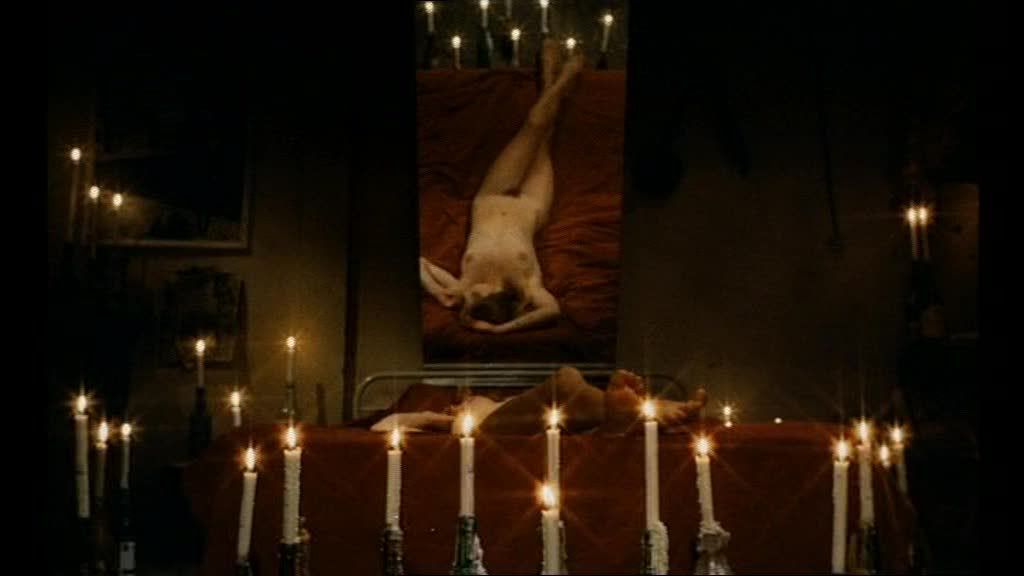
Christine, it turns out, is a "black widow," a precursor to Basic Instinct's Catherine Trammell, another icy blonde with a predilection for devouring her mates. Just in case Christine's deadly undercurrents aren't apparent from the sinister, gloating smile she displays when she realizes Gerard is going to stay with her, Verhoeven layers on the unsubtle symbolism: the opening credits feature a nasty-looking spider crawling across Christian iconography and wrapping its victims in a web cocoon, while the sign for Christine's "Sphinx" beauty parlor keeps flashing out to read "spin" instead, the Dutch word for "spider." The film is so packed with tongue in cheek visual symbols like this that half the fun is in spotting the references and unraveling the densely tangled webs of meaning. Gerard's story is a confused mingling of Christian sin/redemption and gay fetishism, no more so than in the hilarious sequence where Gerard goes to church and finds a vision of Herman, clad only in a speedo, nailed to a cross like Christ and waiting for Gerard to unclothe him.

Indeed, Gerard's entire story is driven by dreams and visions, by his writer's imagination, which can't help but spin out wild variations on whatever is in front of him. He's obsessed with death. As soon as he steps off the train, he encounters a funeral party that he's at first convinced is for him: the letters on a wreath seem to spell out "Gerard" until the funeral director unfolds the banner, revealing an entirely different name. Later, Gerard makes the same mistake with a letter to Christine, baffled to find it seems to be from him until he smooths out the paper and finds it's from Herman. Throughout the film, appearances can be deceiving, and often the illusory surface falls away to reveal something else. In one of Gerard's dreams, a woman (Geert de Jong) who keeps appearing in both his dreams and his waking life seems to be pointing a gun at him, but then turns the "barrel" to the side to reveal it as a harmless key instead. At another point, a door Gerard sees in his dream, with a distinctive cross-shaped design, is mirrored in a cabinet at Christine's house, which holds film loops chronicling her three dead husbands. Later, Gerard stumbles upon the real door and location from his dream, discovering that it is the crypt where the ashes of Christine's husbands are kept. Dreams and reality weave into one another: a literal resting place, a grave, is echoed in a film vault, which also retains the traces of dead men.


Gerard's portents and nightmares, his outlandish fantasies, lead him through the film, slowly discovering the truth about Christine even as he tries to seduce her lover. This writer's rich fantasy life provides Verhoeven with ample opportunity for visual indulgence, and there are several marvelous tour de force scenes, packed with overt Freudian symbolism and references to the director's cinematic forebears. Early on, Gerard is pulled into a poster in a train car, a photo of a hotel: he wanders into the photo, steps into the eerily empty hotel and walks through its corridors clutching a key, looking for his room number. When he gets to his room, however, the number on the door turns into an eye which stares at him for a moment before oozing out of its socket with a trail of blood and slime behind it — foreshadowing the film's gory conclusion. The whole sequence is reminiscent of Kubrick's The Shining, with its haunted hotel and endless tracking shots down creepily barren hallways. The connection becomes particularly apparent when Gerard is snapped out of this disquieting fantasy to the realization that the poster he was staring at has been streaked with blood — or, actually, tomato juice leaking from a woman's bag in the overhead compartment.

Later, during an even more horrifying sequence, Gerard wanders down a tree-lined path in pursuit of a woman wrapped up in a cloak — the same woman from the train and elsewhere, who he comes to think of as the Virgin Mary, sent to save him. She gives him a key and leads him into a crypt where three slaughtered pigs hang above buckets, their blood dripping out of their flayed carcasses. Finally, Gerard seems to wake up in bed only to experience an even more Freudian nightmare: he is literally castrated, his organ snipped off with Christine's scissors. The scene recalls both the most excessive moments of Fassbinder's oeuvre — especially the slaughterhouse sequence of In a Year With 13 Moons and the hallucinatory epilogue to Berlin Alexanderplatz — and the languid, dreamlike imagery of Maya Deren's avant-garde classic Meshes of the Afternoon. These disparate influences bubble through the film, much like the blending together of ordinarily incompatible elements like religious allegory, dark comedy and the sexual thriller genre.

Of course, this confusion of moods is typical of Verhoeven: he's definitely a genre director but is seldom content with mining just one genre at a time. The Fourth Man is a fun, ridiculous farce, a self-referential loop of a movie that revels in the blasphemous, erotic chaos of its imagery. The film evokes a multitude of potential readings, dealing as it does with gender confusion, male fears and insecurities about women, the complicated intersections of sex and religion and the ways in which ideas about death color and inform all of these things. Verhoeven irreverently throws all these loosely developed ideas together, allowing them to flutter like ribbons through his colorful, visually sumptuous and unforgettable entertainment. Verhoeven defies the usual template of the genre director who smuggles his themes into his films beneath the cover of surface thrills and shocks. With Verhoeven, surface and subtext are flamboyantly united: the ideas of his films are impossible to miss, scrawled as they are with the brightest possible crayons right on the most apparent layer of his films. Verhoeven is not a smuggler, preferring instead to amplify his subversive subjects, to make them entertaining in themselves. In Verhoeven's best work (a long list which surely includes this stunner) he is able to take the subversive and mold it into something garish, beautiful, exciting and viscerally entertaining. He takes the dark undercurrents of other films and lets them out into the sunlight to play.

Wednesday, July 23, 2008

Spetters


The motorcycle racing drama Spetters follows a similar pattern to many of director Paul Verhoeven's films, which often start with the basic elements of a trashy genre film and transform it into something much deeper, richer, and stranger. That's certainly the case here, as Verhoeven worms his way into this pulpy exploitation tale about a trio of arrogant young dirt bike racers striving to make it big and get out of their small town rut. Rien (Hans van Tongeren) is the most promising of the bunch, an ace driver who's on his way to becoming the king of the underground racing circuit, just a short step away from mainstream success. Eef (Toon Agterberg) is his mechanic, a sullen hood in a leather jacket who's mainly trying to buck the influence of his overbearingly religious parents. Finally, the goofy Hans (Maarten Spanjer) is the trio's loser buddy, perennially in Rien's shadow, with a bike that only starts half the time because Eef's more interested in maintaining the winner's motorcycle. This trio, with their girls and hangers-on, spend the first half of the film largely goofing around, going through an array of teen comedy moments with the usual Verhoeven flair.

The film earnestly takes on this milieu, wallowing in the cheesy fun of an early 80s disco, where Eef does his best imitation of John Travolta in Saturday Night Fever, before being outdone by a black guy with better moves. Travolta looms large over the film, sometimes literally, as when a poster-sized blow-up of his face fills the frame before Verhoeven zooms out to show what else is in the room. These kids are living in a wholly imitative culture, grooving to Blondie and Michael Jackson on dance floors that might've been modeled on New York City disco clubs. Verhoeven takes real pleasure in depicting what these kids get up to for fun, and he diligently checks off the requisite scenes: the disco, the motocross race, the fight where the outnumbered but defiant teens manage to outwit the big, tough motorcycle gang. It's all cheesy, kitschy fun, rendered with Verhoeven's typical appetite for such purplish material. But through it all, there's something more going on beneath the fun and the nods to genre clichés.

For one thing, Verhoeven's characters are developed with much finer strokes than the typical pulpy teen adventure. Even from the very beginning, these characters have a tinge of desperation lurking beneath their outward cheekiness; there's a very real sense in which these motocross races represent the teens' only chance to make something of themselves. In a town with very few opportunities — Eef works in a gas station, Hans and Rien as carpenters — these seemingly uneducated guys only dream of stardom and success, an escape from the various things they want to run from. As usual, Verhoeven also explores the subject of sex, which is both something of a status symbol for the kids and a sore spot in terms of their limited means. One definition of success for them might be having a nice place to bring their girls to get laid, something Rien gets a taste of whenever his parents leave town, while the other guys have to settle for distinctly un-sexy abandoned buildings and grassy fields. Even so, there's more than a hint that the guys go through the motions of sex not for its own sake but because it's an expected communal ritual. There's a hilarious scene where Eef and Hans, in adjacent rooms, aren't having sex but convince their girlfriends to fake it anyway, moaning and screaming until they fake cumming. The guys immediately break away and join up, bragging about how good it was, the homoerotic undertones in this kind of buddy movie coming to the fore here (and more explosively elsewhere) as sex becomes just a way to bond with the guys.

More subversively, sex also comes to the fore in the way that Verhoeven treats homophobia and various forms of prejudice and hatred. One way in which his film defiantly departs from its pulpy inspirations is that the main characters are depicted as hateful, obnoxious bigots and homophobes, getting their kicks by torturing others. At one point, Rien sneers about "nigger and Chinese" doctors, while in an earlier scene the group berates and tortures a gay couple, smearing one boy's mouth with lipstick and beating him. Still later, Eef takes up the habit of spying on and robbing gay hustlers, watching them perform their services and then beating them up afterwards to steal their money. He is fascinated and drawn to this scene even as he's repelled by it, and the money seems less like a motivation than an excuse. This cover-up is complicated by the fact that he's ostensibly stealing in order to win the favor of the fickle Fientje (Renée Soutendijk), who only sleeps with men who have either money or the promise of earning it someday soon.


Fientje has a lot in common with the three motocross kids, in that her one overriding motivation is a desire to better herself, to move up in life. She's sick of selling cheap fried food from the traveling stand she runs with her brother, hitched to the back of their car. She wants a man who can give her security and a fur coat, and to that end she'll kiss any guy with promise and screw any guy with money. She's a caricature of the shallow, socially ambitious slut, looking with her teased blonde curls and expressionless painted face like a trampy doll. Verhoeven revels in exaggerations of this sort, making Fientje an unapologetic slut and status-seeker to play off of Rien's more complex girlfriend Maya (Marianne Boyer), who cares about him in a far deeper way. It's not so much a virgin versus whore dilemma, since both girls are more than willing to sleep with Rien, but a question of why they want him and what they see in him. Ultimately, the shallow Rien picks the girl who's a makeup-caked mirror image of himself — Fientje shares his ambition, while all Maya can offer him is love and caring.

Throughout the first half of the film, Verhoeven does an excellent job of making these characters both interesting and profoundly unlikeable. They're self-centered jerks, vain thugs with no respect for their women and no tolerance for anyone different than themselves. Their idea of a fun night out involves boozing, dancing, gay-bashing, and having sex, this last a triumphant capper to the night's excitement. Despite all this, Verhoeven never allows them to become mere villains, and he sympathizes with their ambitions and camaraderie even when he detests their prejudices and attitudes. This complicated stance towards his protagonists pays off in the film's increasingly devastating second half, which departs more and more from its genre origins into deeper tragedy. As the film progresses, the initially inseparable trio are driven apart into diverging storylines, each pursuing his own fate as Verhoeven crosscuts between them, using rigorous, systematic parallel editing to emphasize this separation. The characters are deprived of all their grounding, as the motocross racing milieu becomes less and less important to the film, its status as a symbol of success replaced by a much more open and desperate thrashing about.

Spetters is a typically complex film from Verhoeven, not as harrowing or as fully developed as his earlier Turkish Delight, which treads some similar ground, but still a fascinating deconstruction of some particularly lightweight trash genres. This is a motocross film, a disco film, and a teen comedy all wrapped into one, though each of these elements is pushed into the background as the story progresses. Its second half, with its tragic narrative arc and shocking, brutal scenes of sex and violence, is a natural development of the film's negative worldview, in which the best that can be hoped for these kids is a life of compromise and willful self-deceit, always looking for more. Verhoeven's pulpy tribute to a degraded genre delivers the requisite motorcycles, sex, and leather, but he also delivers so much more.

Friday, June 6, 2008

Turkish Delight


Paul Verhoeven's Turkish Delight is, it seems, the notorious Dutch director's idea of a Hollywood-style love story. Boy meets girl, they fall in love almost immediately, they marry. This is a very basic narrative, except that Verhoeven is determined to undermine, question, and indeed vomit all over the expectations, generic conventions, and emotional limitations inherent in this kind of story. For one thing, the boy/girl story as described above is not the entire arc of the film, as it would be in most romantic comedies. The film opens with a lengthy sequence of disturbing violence and sexuality, a raw, rapidly edited assault on the senses that establishes the protagonist, Erik (Rutger Hauer) as a thoroughly unlikeable, vicious, frightening, possibly murderous lecher. And the film ends with a long descent into tragedy and melodrama, in which this despised figure becomes instead an object of sympathy and surprising affection. The rom-com arc, complete with the "cute meet" (she picks him up as a hitchhiker), thus forms only the film's central segment, sandwiched improbably in between much darker territory. Verhoeven's major theme here is mortality, which makes it fitting that his narrative continually bypasses any and all conventional "endings," driving home the point that movie endings are at best artificial, at worst deceptive.

The film's structure sets up certain expectations right from the start. It opens with Erik at his self-destructive worst, wallowing in his trashed apartment and engaging in violent fantasies even as he has rough, dismissive, demeaning sex with countless women who he picks up casually on the streets. The film then flashes back two years, to the start of his relationship with the lovely Olga (Monique van de Ven). Conventional plotting expectations would lead one to believe that this story will, in true circular fashion, lead directly back to the opening scenes, which would promptly resolve themselves along with the film. Verhoeven, though, has no interest in convention except as something to subvert and twist. Not only is the flashback mid-section much more involving than one would expect, with a sweetness, warmth, and emotional complexity barely imagined from the opening, but by the time Verhoeven brings the narrative back around to the opening segment, the story is not brought to a hasty conclusion, but keeps going long beyond this expected ending point. Verhoeven sets up a kind of "origin of tragedy" story, in which events in a flashback lead up to a miserable present briefly glimpsed at the beginning of the film. It's a conventional cinematic storytelling device, one which Verhoeven subverts by extending the film long after the flashback catches up with the present again, pushing the characters through still more emotional states, more scenarios. By doing so, Verhoeven rejects artificial plot constraints and makes his film more like life itself, in which chains of causality are not so neat, and in which the messiness of living and relationships often spill over in unexpected ways.

This is not the only way in which Verhoeven's film is messy. The director has a fascination with bodily processes, with sensuality in all its forms, and at its most giddy moments the film is one of the most potent, irresistible tributes to the pleasures of the sensual life. Erik's love scenes with Olga, in stark contrast to the often brutal ones with unnamed women earlier in the film, are surprisingly tender, passionate, and even sweetly romantic in their own crude way. Verhoeven doesn't shy away from such things, batting his eyes coyly as conventional rom-coms do, but splatters the screen with the messiness of human bodies smashing against each other. His idea of sweetness is often shot through with crudity, with rage, with sadness, with humor, scatological and otherwise, and even sometimes with violence. The romance of Erik and Olga is troubled by many things, not least of which are Erik's budding misogyny and temper, Olga's flighty nature and attachment to her shrewish mother (Tonny Huurdeman), and the fact that these two really don't even know each other by the time they get married. This last bit is something of a subversion of rom-com conventions itself, in that Verhoeven presents a dramatically truncated version of the love story arc. Olga and Erik are fucking and declaring their love within less than a minute from the time they first appear onscreen together. Their whirlwind romance happens so fast, in such a blur of images and short scenes, that it isn't until the wedding is over and the couple is left alone together, that the audience begins to realize the extent to which they are ignorant of everything about each other. They came together on the sheer force of physical, sensual attraction, and everything else is somehow incidental.

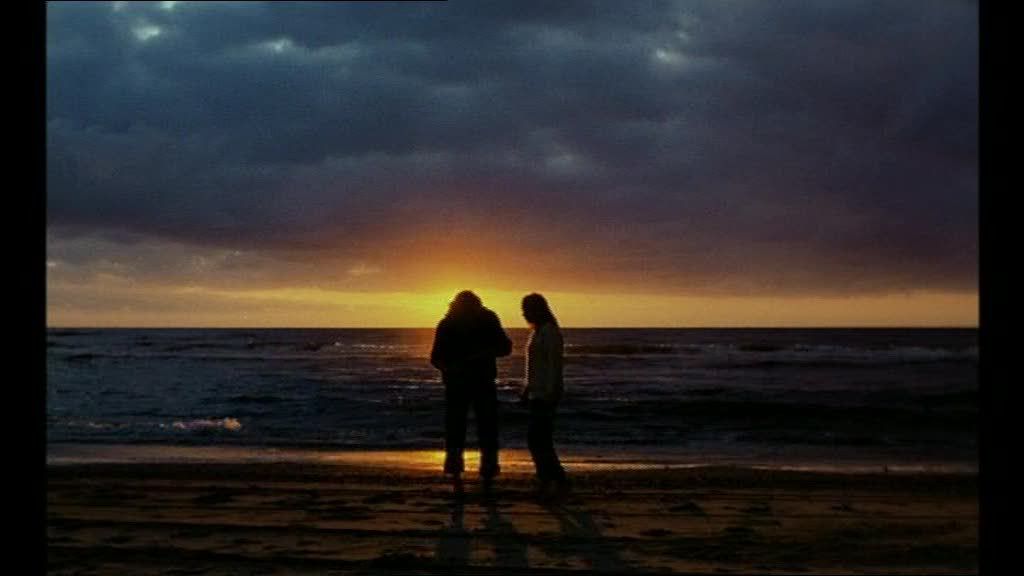
As a result, the film's best scenes are the ones in which Verhoeven documents the heady but not frictionless early stages of this relationship. A scene where the pair walks across the beach at sunset parodies and mirrors similar scenes in countless other love stories, but Verhoeven films it with such energy, with such reverence for the colors of the sky and the running, laughing silhouettes of the lovers, that it is a poignant and powerful moment nonetheless. Even better is the scene where a lovers' quarrel turns into a reconciliation in the middle of a downpour, the couple sitting on the curb in the middle of the rain, their clothes soaked through, laughing and drinking wine and embracing. Its the kind of genuine, sensual moment that can be seen in diluted form in countless films; Verhoeven gives the scene its rightful power by allowing the actors to really stretch out with a range of emotions, from rage and overpowering sorrow to the most ebullient joy. This emotional openness, so often leveled off and subdued in Hollywood variations on this plot, gives scenes like these the joy and beauty that they should have in a love story.


Verhoeven is a director who thinks emotionally in terms of his images, and his characters often express their emotions not only through the subtleties of performance, but in physical, visual ways. In a stunning scene where Erik learns that Olga is cheating on him, at a drunken dinner party worthy of Fassbinderian melodrama, the orange hue of the lights turn the entire assembled cast into an undifferentiated mass of laughing faces, all subtly ridiculing Erik right to his face, flaunting his lack of control over Olga's desires. At the end of the scene, Erik stands and literally vomits all over his wife and mother-in-law, spewing his emotional reaction to their betrayal in the most physical way possible. This visceral fascination with bodily processes and waste carries over throughout the film, as defecation recurs as an image again and again. In an earlier scene, Erik picks through Olga's feces to reassure her that she is not bleeding; this is, again, Verhoeven's idea of tenderness and love, a love that doesn't even flinch at getting down and dirty with the waste products from the lover's body. Shit is also a harbinger of death, though, its red color signifying for Olga that she may have cancer like her mother did. When her father (Wim van den Brink) is dying, the extent of his sickness is signaled by the bodily fluids, shit and piss, all leaking through the bottom of his soaked-through bed into metal pans arranged below, filling the room with a stench of death.

Later in the film, Erik watches his mother-in-law's dog take a shit by a tree stump, after which the old lady dutifully wipes the dog's rear with a tissue, in a scene that seems entirely unmotivated beyond its exposure, yet again, of the universality of bodily processes. No matter the differences, Verhoeven seems to be saying, in these crucial ways humans and dogs are exactly the same: they eat, they shit, they fuck, they die. To this end, animals comprise a small but important role in the film. There's also a dog who eagerly licks up the fluids left behind when, at Erik and Olga's group wedding, one of the brides goes into labor and has to rush off, leaving behind a puddle and a bloody stain down the back of her white dress. And after the couple's breakup, Erik cares for and rears back to health a seagull who he accidentally hits with his car, a process that includes the decapitation and gutting of fish for food, which Verhoeven shows in closeup of course. These images are given a nearly equal footing with the film's depictions of equally messy and sloppy human body functions, emphasizing the continuum of nature and our place in it.

This includes, of course, mortality, and Verhoeven doesn't flinch away from candid depictions of death and our reactions to it, any more than he does from sex or scatology. In that respect, the long sequence that deals with the death of Olga's father is one of the film's most important stretches, with Verhoeven's typically earthy interest in the process of dying, and his wry, darkly comic commentary on the ways in which bourgeoisie society attempts to deal with death. In this, as in many other respects throughout the film, Olga's mother is Verhoeven's main vehicle for his satirical jabs at the hypocrisies and moral blind spots of polite society. In a hilarious and ridiculous scene, this woman has many pictures taken of her husband as he lies in his coffin, then asks for one more, posing by his side and mugging for the camera as though they were just a couple of tourists getting their picture snapped. The ridiculousness of this scene is compounded when it transpires that this last snapshot, printed up in tasteful black and white, is handed out at the end of the funeral service as a souvenir. Of course, it's Erik who angrily rejects this disrespectful offering — he prefers more meaningful and earthy souvenirs in general, snipping bits of hair, pubic or otherwise, from all his sexual conquests — and it's Erik who also seemingly senses the greater significance of the funeral service itself. In the midst of it, when the coffin is solemnly descending into the floor on a mechanical lift, he imagines Olga's father, a fun-loving and energetic old man, perched on top of the coffin in his armchair, belting out a song and drumming his hands on the side of the chair. Erik, a sensualist to the last, recognizes that a funeral for such a vibrant man should never be turned into such a maudlin, dreary affair.

If this is one side of Verhoeven's examination of death, the other is the fascination with death's imagery, and especially the idea of decay and recycling, as epitomized by images of both maggots and trash. The maggot's role in death is first broached in an early scene where Erik is commissioned as a sculptor to create religious statutes, including a representation of Jesus' resurrection of Lazarus from the dead. Erik carves this statute with such realism and such attention to detail that visible on Lazarus' legs are the maggots crawling from his dead flesh. When confronted with this excessive detailing by the irate project supervisor, Erik refuses to change his work, declaring that Lazarus was dead, and he was only being true to the reality of what would've happened. Later, Olga receives a call that her father is dying, interrupting a playful love scene with Erik in which he'd been rubbing a bouquet of flowers across her naked chest. After the phone call, when he lifts the flowers from her skin, they leave behind a trail of writhing, squirming maggots and worms slithering across her breasts. The worms recur again, after Olga leaves and Erik is wasting away in his apartment, where open jars and pieces of meat fester and teem with maggots. And just as the maggots represent the recycling processes at work on dead flesh in nature, the film's final shot presents the man-made equivalent, the recycling of the trash heap and the grinding gears of a garbage truck, mashing up the last remnants of a life lost.

Turkish Delight is, as I've come to expect from Verhoeven, an incredibly complex film in the way it deals with its characters and their emotions. It's a film that virtually challenges the audience to find a proper reaction, and the emotional tenor changes so frequently that one can never stabilize one's response. The "proper" reaction is exactly what Verhoeven intends to subvert, along with the easy judgment, preferring a more spontaneous, visceral response. This film requires thinking with the gut as well as the brain. Erik in particular is a very problematic and complicated figure, a despicable man in many, many ways — he even commits a shocking rape — but he's also at times a remarkably sympathetic character, especially in the film's final act, in which his demeanor mellows from overpowering rage and brutality into melancholy and quietude. The fact that Verhoeven stays with the narrative to this point, that he allows his characters to keep going beyond the circumscribed arcs of conventional love stories and melodramas into richer emotional ground, is the most obvious evidence of the film's commitment to its program of subversion. The contrast of emotions, the wild tonal shifts from dark comedy to harrowing violence to warm and sexy love story to tear-jerking tragedy, keep the audience constantly off-balance. It's a stunning film, shocking even more for its raw, messy emotionality than for the copious sex and nudity spread across its frames.

Monday, February 11, 2008

Black Book


Paul Verhoeven's Black Book is a brilliant slap in the face to the very idea of "tastefully" dealing with such important issues as the Holocaust or Nazi collaboration. When it first appeared, some critics derisively dismissed it as "Schindler's List meets Showgirls," an unwittingly apt description for a film that flinches away from neither the harsh realities of Nazi atrocities nor the perverse sexual adventures of the film's heroine, Rachel (Carice van Houten). The film is a blast of energy and enthusiasm, packing an emotional wallop that is in many ways much more genuine than the dour do-gooderism of Spielberg's famous Holocaust film. Verhoeven delves into the moral complications of resistance and collaboration in Nazi-occupied Holland, with van Houten as the central figure in a sprawling adventure epic largely set in the final months of the war. Van Houten is a wonder to behold here, gorgeous and sparkling with an intensity and depth that completely carries the film.

When the film starts, Rachel is a young Jewish woman hiding out at a farm house where the Christian family forces her to recite Bible verses, perfectly memorized, before she is served her dinner. This shining example of Christian hypocrisy, within a family that from outside would certainly seem to be exemplary in their sheltering of a fugitive, tips the viewer off early to Verhoeven's critical perspective in this film. His interest is not, per se, in the barbarity of the Nazi regime, which hardly needs pointing out these days — he's much more interested in the petty cruelties, manipulations, and quiet acquiescence to horror that takes place under the radar in everyday life, even among those on the "right" side. Rachel's life, following the bombing of this family's farm and her flight into the underground, becomes a neverending hellish descent, with Verhoeven battering the poor beleaguered girl until he is literally pouring shit on her. Her story takes a number of twists and turns, starting with the slaughter of her parents and brother during a failed attempt to sneak across the border, after which shetakes on a new identity and falls in with a group of resistance fighters. They soon ask her, though, to infiltrate the German gestapo headquarters as a singer, by seducing the garrison commander Müntze (Sebastian Koch), and as a result she's drawn into a complex web of deceit, treacheries, and machinations. The plot is structured as an escalating series of incidents and action, reminding me of a slightly calmer version of Emir Kusturica's frenetic masterpiece Underground, which similarly builds towards ever more harrowing evocations of wartime brutality, and similarly laces its horror with kitschy good humor.

Verhoeven has crafted this epic from some well-worn genre materials: the wartime spy thriller, the sexual noir, the campy Germanic cabaret film. But while the basic materials may be familiar, the ways in which they're combined and played out on screen are most certainly not. The trope of the female double agent who falls in love with the man she's supposed to be seducing is as old as the spy genre itself, but it somehow manages to acquire new life here, partly because van Houten infuses her role with such a winning combination of sexy playfulness and emotional investment. The cliché is further twisted by the fact that Koch makes his Nazi commandant a surprisingly sympathetic and multi-faceted figure, a man who has realized that his country has lost the war, and now only wishes to minimize the bloodshed in the final days before the inevitable defeat. The scenes between these two have a surprising electricity that's perfectly encapsulated by the scene where Rachel strips for Müntze, who's lying in bed, the bedsheets between his legs slowly tenting upwards as he watches her. Of course, he has a pistol down there, and in the following scene he caresses her breast with its metal tip as they smoothly segue between seduction and pumping one another for information.

If Müntze is a complex and very human Nazi, he's counterbalanced by the presence of his hulking, maniacally leering underling Franken (Waldemar Kobus), who's only missing a "stein" (the Jewish last name of the film's heroine, of course) to turn him into the monster he so clearly represents. He's a true movie Nazi, and Verhoeven seems very aware of it, taking cartoonish glee in this wholly artificial creation's outlandish evils. He's engaged in a plot to convince rich Jewish fugitives that they're fleeing with the resistance, when in fact they're being led into a trap where Franken can kill them and relieve them of their money and jewels. Franken may be a cartoon, but the evils he commits feel no less real, no less potent, for having been committed by this ridiculous figure, who in happier moments loves to pound on a piano and whistle along with Rachel's torchy crooning. In fact, Verhoeven's whole aesthetic purpose in this film might be summed up by the seeming contradiction between gritty realism on the one hand, and overt stylization on the other. He's equally committed to both narrative modes, and the film swings queasily back and forth between the two with little regard for stability.

Even more radically, Verhoeven extends his moral ambiguity to the resistance fighters, and in the scenes set after the war's end, implicitly questions the entire process of assigning blame and assessing collaboration versus resistance. The irony of high-ranking Nazi commanders being quietly assimilated back into society is juxtaposed against the even more unpalatable spectacle of the cruelties meted out by the victors against those dubbed collaborators. Most troubling is the treatment of women, which Verhoeven takes great pains to underline. Before the war is over, he has one of the resistance fighters explain what he'd like to do to the Nazi's women: shave their heads and dub them "Nazi whores" in acts of public humiliation before putting them against the wall. And sure enough, when the war ends, Rachel walks through the streets and comes across, in the midst of the celebrations, a display exactly as the resistance fighter described it, with tearful young women getting their heads shaved, signs saying "Nazi whore" hung around their necks. The undercurrent is a kind of sexual punishment and a sense of male entitlement about female bodies — the greatest offense is sleeping with the enemy, and when Rachel herself is branded with this crime, sexual humiliation (including a vat of feces poured over her naked body) is the primary punishment. Before Rachel first goes to seduce Müntze, she sleeps with the resistance fighter Akkermans (Thom Hoffman), who takes her as though she's his right, saying "at least I get to have you first" — who one sleeps with becomes a moral act in itself. Verhoeven's thrust in these scenes might even be called feminist, although his critique is complicated by the obvious delight he takes in sexualizing and fetishizing his protagonist's body right along with the characters on screen (and, by implication, bringing the audience along for the ride as well).

The implicit, unstated question underlying the entire film is the problem of assessing degrees of culpability, and degrees of brutality. This problem comes closest to being addressed explicitly by Theo (Johnny de Mol), a quiet, peaceable Christian member of the anti-Nazi resistance, and probably the film's most purely "good" and uncorrupted character. When he's forced by circumstances to commit a murder in order to save Rachel and his friends, he's wracked by guilt, and he melodramatically exclaims that he's "as bad as the Nazis." He seems incapable of making any moral distinction between wholesale genocidal mass murder and a single act of violence committed with more "just" goals in mind. He's a moral absolutist for whom murder is always murder, but Verhoeven doesn't necessarily take his side. In many ways, Theo's exclamation seems to be there as a not-so-subtle jab at the current prevalence of casual Nazi comparisons in political discourse, by which George W. Bush (among other targets) is declared to be "as bad as the Nazis." Verhoeven, by placing the statement in its original context, reveals the lie, and the laziness of such comparisons, while advocating for a moral attentiveness and an ability to make meaningful distinctions. Verhoeven presents a very muddled and ambiguous moral world, but his central characters must nevertheless make the best of the options open to them. The ambiguous ending, set 12 years after the main action at a kibbutz in Israel, serves as one last ironic comment on the place of morality in everyday decisions, as Rachel has set up a seemingly happy new domestic life for herself here, teaching schoolchildren, marrying and having a family. But in the film's final shot, Rachel and this happy family walk away into a barb-wire-protected compound, as explosions and gunfire and soldiers mobilizing on the ramparts signal the continuing war and brutality happening all around their oblivious domestic core.

This emphasis on moral choice and accountability is startling in a film that at times seems to revel in schlock, and Verhoeven walks a thin line between camp and verisimilitude. It's a film where the continuously thrilling, exciting, engaging surface narrative rapidly pulls the viewer into a deeper moral engagement with the material. Black Book works on its primary level as a lurid wartime spy thriller, infused with melodrama, eroticism, and action — it seems calculated for maximum visceral impact. But its sneaky insistence on never taking the easy way out of moral dilemmas, of never shrinking away from tough but important distinctions, propels it to a whole other level as a complex moral investigation. It's a film about corruption, greed, inhuman brutality, and, somewhat perversely, love and sexuality as well. Not to be missed.