Showing posts with label Index DVD. Show all posts

Monday, March 25, 2013

Three Kurt Kren shorts, 1969-1982

[This is part of a sporadic series in which I explore the work of the Austrian DVD label Index DVD. This company has released a great deal of valuable European experimental cinema onto DVD, naturally focusing on the Austrian underground but occasionally branching out as well. Index's DVDs are distributed in the US by Erstwhile Records, so anyone intrigued by Index's catalog should take a look and support the fine work both these companies are doing for obscure and avant-garde cinema. The three films reviewed here appear on the Kurt Kren collection Which Way To CA?.]


Underground Explosion is Kurt Kren's approximation of the feeling of being frazzled and high at a rock concert. Kren was recording a performance by Krautrock band Amon Düül II at a 1969 underground music festival, but the recording is anything but a straightforward documentation. Instead, the frenzied, fragmentary nature of the film captures the drug-fueled, hazy nature of the music itself, communicating the confused, confusing sensation of this music and these kinds of experimental 60s festivals. The images are shaky and rapidly collaged together so that the action is often unclear: lights, mobs of people, a stage full of musicians, men slow-dancing with one another, performers stripping down at the microphone, a guitar, someone singing. Only sporadically does the frantic flow of images slow down, and then as often as not it's only to photograph some near-empty corner of the auditorium, the camera not settling down on anything in particular. The jagged pace of the editing is what really counts, the shapes and colors that go flying by, rather than the actual content.

Similarly, the soundtrack seldom provides much of a clue as to what the band actually sounds like, their spiky, dissonant rock jams only occasionally coming through clearly. Most of the time, the sound is as unpredictable as the images, giving the impression not of listening to a rock band but of listening to their bassy, distorted pulses through thick walls in a room next door to where they're actually playing. The soundtrack is muted, distorted, sometimes seemingly even reversed and manipulated, the sound occasionally fading out almost entirely to a dull headache-like throb at the edges of awareness.

Like Andy Warhol's famous deconstructive portrait of the Velvet Underground, this film is unsatisfying as a concrete document of a performance, but very satisfying indeed as a blurry, subjective suggestion of the feeling of being there.


Auf der Pfaueninsel is a devilishly simple conceptual joke told with Kurt Kren's characteristic deadpan wit. The film is a minute and 21 seconds long, which consists of a solid minute of methodically displayed credits followed by a few short snippets of "home movies" showing members of the Vienna Aktionists and family members at leisure. The joke is one of expectation, as Kren's opening credits lists the names of Günter Brus and the other Aktionists who will appear in the film. One expects something like Kren's other Aktionist films, a frantic collage of horrifying excerpts from the group's scatological, provocative performances.

Instead, Kren shows the provocateurs offstage, outside of the theater, as family and friends. They're taking a walk, visiting the zoo, goofing around a bit. Brus sees a van with some writing on the side and uses his hands to cover up some of the letters so that it spells "Brus," the kind of goofy, self-conscious joke that anyone would do in a home movie made while hanging around with friends. The other shots in this quick flash of footage are even more mundane, showing the members of the performance art troupe standing around looking at zoo enclosures or just walking along; most of the people named in the credits are never even seen clearly, just appearing from behind as they stroll with their family and friends. It's a very simple gag but a very clever one as well, a way of interrogating the public/private divide. Just because this is a film introduced with a cast list, does that make it every bit as much a performance or a piece of art as the Aktionists' usual displays? Or is it merely a "home movie" like any other?


Getting Warm was the third and best of the three self-described "bad home movies" that Kurt Kren made on a 1981-82 trip to the United States (the other two films in this trilogy of three-minute shorts were Which Way To CA? and Breakfast im Grauen). Shot in New England and Austin, Texas, this is the only one of the three films to be in color, and the change in film stock makes a big difference, giving the film a sensual, evocative quality very different from the dull, quotidian, washed-out grays of the other two films. Kren has said that these films are purposefully more amateurish than real amateur movies, the joke of the "bad home movie" description being that even amateur home documentarians usually edit their tapes a little, whereas Kren leaves in everything he shot. All the banal moments are left in, creating a home movie that simply captures a string of disconnected, soundless, usually quite unassuming moments. At one point, Kren even leaves in a shot in a room where it's too dark to see anything, and the frame goes entirely black for a few moments, the darkness too a document of something that happened, something seen and experienced and captured for posterity on film.

At another point, Kren cuts from night to day and back to night again, with three consecutive shots of a Safeway sign, glowing an eerie neon blue in the darkness, one of the only points of light, but rendered ordinary and unremarkable again in the light of day, in the daytime shot sandwiched in between those two quick slices of neon-lit night. Similarly, a television set flickers and glows, sometimes a square of light surrounded by black, sometimes just a focal point for the bored gaze of a reclining man on the nearby bed. Kren cuts in different views, different times of day and different lightings, to show how ordinary objects can shift and change depending on context, sometimes acquiring a weird prosaic kind of beauty for a few brief moments before a cut.

Wednesday, February 10, 2010

Lights

[This is part of a series of posts in which I explore the work of the Austrian DVD label Index DVD. This company has released a great deal of valuable European experimental cinema onto DVD, naturally focusing on the Austrian underground but occasionally branching out as well. Index's DVDs are distributed in the US by Erstwhile Records, so anyone intrigued by Index's catalog should take a look and support the fine work both these companies are doing for obscure and avant-garde cinema. The short film discussed below is one of four included on Index's DVD of the documentary Notes on Marie Menken; that film is reviewed here and the other shorts are reviewed here.]


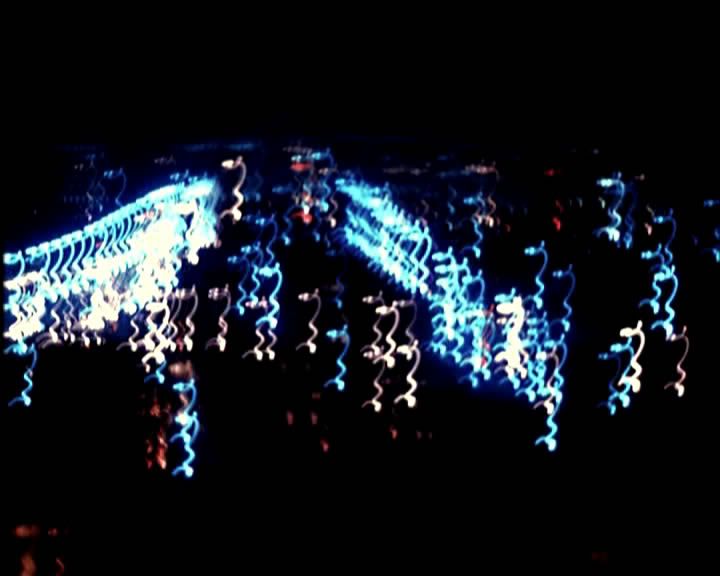
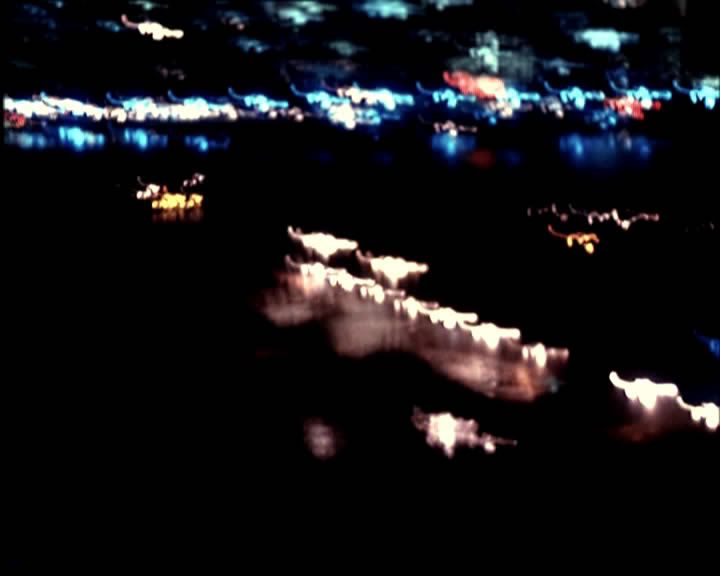
Marie Menken's Lights is a film of such joy, such pure sensual beauty, that it is breathtaking and overwhelming. In just seven minutes, with a breakneck sequence of abstract, colorful images of lights floating in a black nighttime field, Menken delivers an intoxicating visual experience. It's an abstracted vision, like the work of Stan Brakhage, a celebration of light and color in which each frame is alive with furious scribbles of blurred light and tangled rainbow beams. It's as though Menken is drawing with light by shaking her camera, unleashing small hash marks of white light and amber curlicues that twist around each other. Through Menken's expressive stylization, the marks and lines of these lights become a form of handwriting, an abstract language inscribed in the twists and turns of motion-blurred neon, car brake lights and Christmas decorations. The film was assembled over the course of three years, during which Menken shot Christmas window displays and other seasonal decorations, working mostly late in the night, when she could be alone in the darkness with these vibrant beacons.


The resulting film is truly a visceral experience like no other, matched only by the best of Brakhage's light works. Menken molds and shapes light into alien structures, destabilizing the familiar into a blur of fleeting sensory impressions. The film opens with shots of multi-colored Christmas lanterns hanging in a tree. Menken's camera at first patiently pans across these lights, capturing their vibrant glow, their definite shapes: bell-like cups when viewed from the sides, becoming sun-shaped circles with white-hot centers when viewed from below. Then her camera begins to shake, to disrupt the stability of these images, transforming the concrete into the ephemeral. Little white dashes dance across the frame, moving parallel to the motion of the camera, sometimes darting sideways across the frame, sometimes falling like rain. Menken's moving camera creates designs by stretching out a single point of light into a line, as though tracing with a white pen across a black sheet of paper.

From this dazzling abstraction, Menken steps back to reveal the source of these light patterns, as she twirls her camera around to make the giant Rockefeller Center Christmas tree do a 360-degree turn through the night, and then sets off on a whirlwind tour through the city's streets. Everywhere, there is light. A church is defined by the lights at its borders, the black foundation of the building seemingly a negative space surrounded by crisp rows of circular lights. Menken captures momentary hints of religious sentiment amidst all this bombast: a cross in lights, glowing palely in utter darkness, a rapid tracking shot across a nativity scene where Mary and the wise men are bathed in a gaudy Las Vegas neon aura emanating from somewhere nearby. These are ephemeral reminders of the origins of this celebration, the reason for all this festivity and brilliance. Blink, and you'll miss it: a recurring theme in Menken's fast-paced, sensually exciting work, of which this film is quite possibly the apex.


From here, she's back out into the streets: images of cars, their brake lights glowing red, set off against blue dots the origins of which are more obscure. And then she shatters even this hint of the familiar, further blurring the speeding traffic into curving, bouncing lines, a trail of red lights tracing across one side of the frame with shaky white lines staggering across the other. As the pace picks up, Menken ventures further and further into abstraction, layering multiple exposures and reducing all the light and motion to cryptic calligraphic marks in the darkness, squiggles and check marks and amorphous suggestions of form. Tight clusters of these marks seem to dance across the frame, as though performing some arcane choreography, a Busby Berkeley number as performed by a chorus line of neutrons and electrons, a subatomic musical extravaganza taking place in a silent vacuum.

Increasingly, Menken abstracts the imagery even as she incorporates more recognizably photographic exposures. A star field in which gray scratched lines hover like graphite scrapings or stalks of spiky grass. A skeletal outline of a metal globe, gray spirals, splotches of red like blood or paint, dots of light in the dark. A long view of the city skyline from across the water, with strange UFO-like bursts of light floating in the darkness.


These images are haunting and beautiful, and Menken's approach makes Lights a kind of sensory fever dream. She makes these external phenomena — the properties of light as it is refracted and processed by her camera — internal and introspective, dream images dancing across the inside of the viewer's closed eyelids. It is a deeply subjective perspective, utilizing objective phenomena, like the way light behaves when it is photographed in certain ways, to create a complex inner landscape. And in its off-kilter beauty, it is a surprisingly moving film, discovering pathos and warmth in its brilliant abstractions. I was originally planning on writing about this film as part of yesterday's post about four other Menken shorts, but I thought it deserved its own separate tribute. Plus, as you can no doubt see, I just couldn't stop grabbing screen captures; the visual imagination and beauty of this film is simply inspiring.

Tuesday, February 9, 2010

Four Marie Menken shorts

[This is part of a series of posts in which I explore the work of the Austrian DVD label Index DVD. This company has released a great deal of valuable European experimental cinema onto DVD, naturally focusing on the Austrian underground but occasionally branching out as well. Index's DVDs are distributed in the US by Erstwhile Records, so anyone intrigued by Index's catalog should take a look and support the fine work both these companies are doing for obscure and avant-garde cinema. The short films below, with the exception of Go! Go! Go!, are included on Index's DVD of the documentary Notes on Marie Menken; that film is reviewed here and Menken's other short Lights is reviewed here.]


Marie Menken was an influential early pioneer in experimental film, a key figure in the development of the American avant-garde. Visual Variations on Noguchi, originally made in 1945, was her first film, a study of a set of sculptures by Isamu Noguchi. These sculptures are smooth, rounded abstract forms, and Menken impressionistically runs her camera along the curved surfaces of these sculptures, infusing movement into the static forms through her explorations. She examines the surfaces and shapes of these sculptures in patient pans across their surfaces, occasionally honing in on the detail of a textured curve, and montaging everything together with a loose, ragged aesthetic that contrasts against the fluidity of the forms. The jump-cuts and quick montage of Menken's aesthetic creates a jagged impression that works against Noguchi's amorphous blobs and graceful limb-like extensions.

Menken also added, for a 1955 re-envisioning of this film, a bold soundtrack created by Lucia Dlugoszewski. This clanging, clattering free improv is composed of pounding piano, trashy drums, scraped string feedback and occasional outbursts of talking, listing off names. The jittery, abrasive music clashes against the smoothness of the sculptures, further adding to the film's sense of opposites careening off one another. Menken made this new soundtrack version the definitive cut of her film, and with good reason. The music is one more contrasting element in a film where everything clashes against everything else: Menken is bringing together different aesthetics and sensibilities into a single space, allowing diverse artistic ideas to collide and enrich one another. Thus the simple, graceful forms of Noguchi's sculptures ricochet against Menken's rapid editing and the cacophony of the score. It is this sense of opposition, of contrast, that lends weight to Menken's precise, intimate examination of the sculptures.


Glimpse of the Garden is a simple, unassuming observational film. In this brief film, Marie Menken carefully probes the layers of a lush garden, shifting from the macro to the micro and then back again. She collages together images that nudge into the hidden details within the greenery that surrounds her. Extreme closeups of garden plants and insects alike reveal details and textures, thin hairs, protrusions, ridges and stalks that transform this hidden micro world into a whole universe. She accompanies these images with a soundtrack consisting of processed bird and insect noises: reedy trills vibrating in clustered rhythmic pulsations. The slightly off-kilter bird calls resonate with the imagery, in which natural elements are made to seem strange and alien, as Menken peers into the center of a flower or pans her camera up a stem, examining the bumps and grooves in the plant's flesh.

As always in Menken's cinema, the editing is crucial to the effect. Her sense of pacing is intuitive, as she delivers a constant barrage of colorful, sensuous imagery, shifting from streams of foliage that rush by so fast that individual images can hardly be grasped, to moments when she slows down to observe the flowers more closely. She also delivers a gorgeously dark, haunting final shot of what appears to be a watery midnight-blue sky rippling above a black filigree of tree branches. It's a mysterious, beautiful image, a fitting capper to a film that unexpectedly locates the mystery and strangeness within the ordinary. The film has the air of a home movie, a stripped-down and simple work, and this casual, amateur mood lends it a certain laidback charm that makes its more abstract imagery all the more striking.


Arabesque for Kenneth Anger is Marie Menken's tribute to her fellow avant-garde filmmaker, Kenneth Anger, whose influence obviously looms large over this expressive, evocative short. The film, shot in a Moorish palace in Spain over the course of an afternoon, is concerned, as Anger always was, with light and color, and especially with the ways in which forms could be made to interact with the tempos of music and cutting. The film is set to a lively score by composer Teiji Ito, who combines Spanish guitar and castanet motifs with Japanese-influenced reeds, resulting in a driving, vivacious score that's perfectly suited to Menken's imagery. Although the score was made later, to fit the short, the film sometimes seems to move with the tempo of the music, as when the circular ripples in a puddle dance to the beat of the snapping castanets. Even better is a wonderful section where the film takes on the stuttery rhythm of the percussion as the frame seems to jump and skip, giving the illusion of a sideways motion through a courtyard but in fact repeatedly returning to the same spot again and again. The black edges of the frame take on the function of cutaway walls, so that the viewer is faked out into believing that the camera is moving from one room to the next. It's a compelling image of being in constant motion while never quite going anywhere; the camera is essentially running in place.

With its driving rhythms and free-associative editing, the film is a fitting tribute to Anger, who Menken also nods to with repeated shots of fountains, the streams of water glistening and letting off a crystalline spray of droplets. It's an obvious visual homage to Anger's gorgeous Eaux d'artifice, in which blue-tinted images of a garden and its fountains create a sumptuous tribute to light reflecting off of water. Elsewhere, Menken intersperses a rapid time-lapse montage of gargoyle heads, and picks out random architectural features, lingering over the curves and textures of the concrete. Menken loves these details; she seems to think of "detail" in the artistic sense of the word, presenting a fragment of an arch or a roof's peak as a detail selected from a larger canvas. She explores these fragments as representative of larger forms and as textural, aesthetic forms to be admired in their own right as well.

Menken's talent lies in her mastery of editing, of pacing. Her images move and breathe, achieving a delicate balance between static observation and visceral kinetic flow. At one point, she lingers on an image of star-like lights floating in a field of black, swirling with that swoony, choreographed quality that infuses Anger's short experiments like Puce Moment. It's an abstractly beautiful shot, and a fitting tribute to Anger.


Go! Go! Go! is a time-lapse film shot in New York City, a familiar subject that Marie Menken infuses with enough energy and vitality to make it somehow feel fresh. Her camera races along through the city streets, in tracking shots that seem to have been taken from out the window of a moving car. So it's all about travel, about motion, and in terms of subtext, about how fast it all goes by, how fleeting everything in life is, how ephemeral each moment, each sensation, can be. She shows an entire graduation ceremony massively sped-up, with endless processions of black-robed students marching across the frame like lemmings, disappearing at the edge. This manic parade becomes poignant as the students stutter across the frame and seem to vanish at the edge, fading out of existence as though a life lasts only the width of a film cel; blink and you'll miss it.

Some of the film's best scenes show sped-up processes from a distance so they take on qualities of abstract design: cars and pedestrians locked into traffic patterns at a city intersection, industrial vehicles moving crates across a shipping yard, boats tracing semicircular paths on a roiling sea. Shot from above, with everything moving so fast, the cars and boats are geometric forms rather than tangible objects. As Menken continues to explore the city at hyper-speed, her frantically edited montages acquire an odd poignancy, as she accentuates the rapid pace of life. In a way, her time-lapse film mimics the form of memory, the way the past is just this indistinct blur with certain moments sticking out with utter clarity. To that end, Menken captures a beach scene where the shake and jitter of her camera eliminates individual personalities and faces, leaving only the sensual impression of youth, lust, vibrancy, play, desire: the essence of a summer day distilled in blurred images of bare limbs and bright skies and sand.

Monday, February 8, 2010

Notes On Marie Menken

[This is part of a series of posts in which I explore the work of the Austrian DVD label Index DVD. This company has released a great deal of valuable European experimental cinema onto DVD, naturally focusing on the Austrian underground but occasionally branching out as well. Index's DVDs are distributed in the US by Erstwhile Records, so anyone intrigued by Index's catalog should take a look and support the fine work both these companies are doing for obscure and avant-garde cinema. I have also reviewed some of the short films included as extras on this disc, here and here.]


Marie Menken's importance to the early American cinematic avant-garde is often forgotten today. She was an abstract painter, a filmmaker, an inspiration to Jonas Mekas and Stan Brakhage, an important figure on the fringes of Andy Warhol's large entourage, appearing in his films and documenting some of the Warhol group's activities. Martina Kudlácek's documentary Notes on Marie Menken probes this rich legacy, examining Menken's life and art through her films and the memories of those who knew her. Menken was a very diaristic filmmaker, crafting small, nearly incidental works of observation and prosaic activity, chronicling the day-to-day and the ordinary with a sensibility that discovered surprise and beauty in such conventional sights as a flower garden, a sparkle of light off a shiny object, a person's face. Kudlácek pays tribute to this sensibility by making her own film a reflection of, a response to, Menken's own methods. In sensuous black and white images, Kudlácek interviews those who knew Menken: Mekas, Kenneth Anger, to whom Menken dedicated a film, Warhol assistant and filmmaker Gerard Malanga, Warhol Factory designer Billy Name, underground actress Mary Woronov, filmmaker Peter Kubelka and painter Alfred Leslie. These people weave a complex web of anecdotes and impressions, contributing to a portrait of a woman who was crucial to the development of the American avant-garde, and whose corpus of unassuming little films endures as an unshowy, private oeuvre. Menken's films, originally not meant for public consumption, were intended as documents of her observations and impressions, chronicles of the way she perceived certain moments in time. They are deeply personal, and Kudlácek's documentary maintains that sense of peeking into a private life, seeing the art and beauty in this woman's everyday life.

Kudlácek weaves together the interviews and reminiscences with excerpts from Menken's own films, as well as interludes in which Kudlácek follows her subject in capturing ephemeral moments on camera. At one point, while interviewing Mekas, her camera peers out a window, down at the street two stories below, where a group of kids are exchanging greetings and eager chatter, making plans and saying goodbye before they split up for the evening. Kudlácek watches them for a few moments before panning back inside onto the documents and film canisters on Mekas' desk. Such moments — like similar ones where Kudlácek lingers on the spray of water from a fountain or the skeleton-like designs on the backs of some fish in a pond or the twirling kaleidoscope of lights from a carnival ride — are the documentarian's way of paying tribute to Menken, who made such small and poetic details the substance of her oeuvre.

Kudlácek gathers a great deal of stories and information about Menken, who seems to inspire an almost aching nostalgia in many of these interviewees. When Kudlácek interviews Mekas and, especially, Malanga, one can see the warmth and love that these men felt for Menken, whose art and personality meant so much to them. Throughout the course of the film, Kudlácek deals with Menken's passionate but often troubled relationship with her husband Willard Maas (the couple were the inspiration for Edward Albee's Who's Afraid of Virginia Woolf?) and her interactions with the New York art scene of the time. But the real meat of the film, the real way in which Menken's essence is captured, is in the excerpts from her work. Kudlácek includes the full film Arabesque for Kenneth Anger, Menken's film made in Spain, set to a new score composed by John Zorn. Zorn contributes lyrical, low-key jazz throughout the film and here provides a lively, propulsive piece, derived from the ethnic melodies of his Masada group, to accompany Menken's fast-moving snatches of Spanish architecture and fountains. The film is contextualized by Anger himself, who accompanied Menken on the trip that produced this film and indeed was apparently standing right behind her while she made it. He describes how he was guiding her while she moved through the gardens and courtyards documented in the film, making sure she wouldn't fall. For Anger, and for many others who describe Menken's working methods here, she was dancing with her camera, fluidly moving so that the images she captured were an extension of her body, of her senses. Hers was a very physical cinema, but also a graceful one, and Anger's story, of the two of them dancing in tandem as she made this film in tribute to him, is moving and evocative of Menken's art.


Perhaps even more so than in her excellent, informative documentary on Maya Deren, Kudlácek really makes this material her own, finding her own way into Menken's life and art. Increasingly, in the second half of the film, Kudlácek seems to have discovered a peripheral story that she finds as interesting as Menken herself: Gerard Malanga, Warhol's assistant for so long, star of some of Warhol's most iconic films, a poet and photographer and filmmaker in his own right. The scenes with him, which form a substantial part of this film, are poignant and almost startlingly emotional, as the prospect of talking about Menken brings forth in Malanga a virtual torrent of nostalgic feelings and potent memories. This is especially true during a wonderful scene in which Malanga unearths a crusty old film strip that contains footage of Menken and Warhol. On his own small reel-to-reel machine, he begins playing the film, letting it pass slowly across an editing stage, excitedly picking out frames of interest that seem to trigger deep-seated emotional reactions in him. The film contains a "duel" between Menken and Warhol in which the two artists essentially danced around each other on a rooftop at sunset, the sky bright red behind them, as they filmed one another on handheld Bolex cameras. It is a fantastic scene, and the degraded quality of the filmstrip only adds to the poignancy of it all: the rot and decay of the years at times threaten to swallow the image whole, and then a few frames of Menken or Warhol with their cameras will abruptly emerge from the morass. As Malanga says, the film seems to be "resisting extinction." This is followed by some footage Menken shot, in her jumpy time-lapse style, of Warhol and Malanga walking through the city, creating some screenprints in a small apartment studio, and then returning home. It's the kind of time capsule moment that's invaluable, one great artist documenting another at work, and Kudlácek and Malanga both seem very aware of the historical import and beauty of these documents.

Kudlácek returns again and again to Malanga throughout this film, fascinated by his obviously emotional reaction to being reminded of Menken and Warhol and this whole scene that he was a part of. Menken, he says, was like a mother to him, and she thought of him as a son. His nostalgic recounting of private moments with her — going to visit her at her late-night shift at Time magazine, where they used the magazine's photocopiers and facilities to assist in their personal work — provides the film with an emotional heft that contextualizes Menken beyond her art, beyond her influence and importance, in the personal relationships she formed with those around her. It seems, for those who knew her, Menken herself loomed as large as the art she made. The pinnacle of this approach comes when Kudlácek goes with Malanga to the cemetery where Menken is buried. He goes first to visit his father, who he'd never really known but who happened to be buried in the same place, and then he goes to visit the woman who became virtually his surrogate mother. It could've been an exploitative, tear-jerking moment, but Kudlácek films it with a quiet, unassuming observational quality, so that Malanga's graveside visits with his real father and his spiritual mother are poignant rather than manipulative.

The way that Malanga's reminiscences merge his personal affection for Menken with the artistic inspiration he and so many others took from her provides the template for Kudlácek's own multifaceted tribute to the filmmaker. She excerpts liberally from Menken's rich oeuvre: the stop-motion animated paintings of Dwightiana, the lush light studies of Lights and Eye Music in Red Major (the latter introduced by Brakhage's blend of the mystical and the pseudo-scientific from one of his lectures), the diaristic observation of Andy Warhol or her portrait of Spanish monk gravediggers, the blurry rapidity of her New York fantasia Go! Go! Go!, the blend of home movies and theatricality in Midnight Maases. But Kudlácek goes beyond Menken's own images, her own films, to probe the artist's broader sensibility, and the image of Menken herself that endures in memory. Kudlácek's documentary includes the kind of moments that Menken herself would have loved to capture, like a wonderfully funny visual diversion while interviewing Billy Name, in which Kudlácek indulges in a close-up of Name's bushy beard, exploring its textures, bristly white like steel wool, as he talks about Menken and strokes the long beard's tip. Menken, one suspects, would have loved this image, simultaneously absurd and sublime, utterly prosaic and somehow also lyrically beautiful.

Friday, August 28, 2009

[ma] Trilogy

[This is part of a series of posts in which I explore the work of the Austrian DVD label Index DVD. This company has released a great deal of valuable European experimental cinema onto DVD, naturally focusing on the Austrian underground but occasionally branching out as well. Index's DVDs are distributed in the US by Erstwhile Records, so anyone intrigued by Index's catalog should take a look and support the fine work both these companies are doing for obscure and avant-garde cinema.]


Manfred Neuwirth's [ma] Trilogy consists of three formalist travelogues, each one made with the same deliberate, stripped-down aesthetic, each one a strangely haunting attempt to make the everyday seem fresh and new. The three films are Tibetan Recollections (shot in Tibet between 1988 and 1995), Manga Train (made in Japan) and Magic Hour (in which Neuwirth returns to his native Austria for his footage). Each film utilizes the same very basic style: a series of straightforward single shots, all of the same length, separated from one another by a fade and a few seconds of black leader. The shots are mostly static, and often shot from an oblique, intimate angle that can make familiar objects seem unusual: Neuwirth's compositions often require a moment or two of mental adjustment even to determine what one is looking at, as in a shot where he points his camera at a section of railing during an escalator ride. He's encouraging the contemplation of familiar sights from new angles, delving into the textures of the world; his camera is frequently close enough to capture nuances of texture that go unseen from an ordinary vantage point.

When his camera moves, it's often because he's filming from a train or other moving vehicle; less frequently, he pans slowly across a surface to probe its intricacies. He often films through glass or other reflective surfaces, capturing the eerie layering that occurs when reflections overlay more solid structures. In one of the most hauntingly beautiful shots of Manga Train, Neuwirth shoots from inside a bus, watching as the people passing by outside the window become spectral and intangible, seeming to fade into translucent specters through the distorting lens of the bus window. At one point in Tibetan Recollections, the camera is pointing into the sun from the front of a jeep running along a bumpy road. As the jeep bounces slowly along the road, the angle of the vehicle changes, causing the sun's rays to fluctuate from a tiny halo off in the upper left corner to a blinding explosion, spreading its rays like tentacles across the frame. Throughout all three films, the image is also slowed down slightly, giving the motion within the frame a staggered, jerky quality to it, the distinctive look of video manipulation.

Neuwirth pairs these images with a dense, layered soundtrack, which fades in and out along with each image; the sound is perfectly chosen for each image, though it is never purely diegetic in its relationship to the image. Rather, Neuwirth subtly tweaks the expectations of realism by selecting naturalistic field recordings from each place he shoots. But the sound can never be synced with the slowed-down video images, and in any event it's apparent that Neuwirth's recording and editing methods further subvert the sound/image relationship. For one thing, his sounds have a clarity and near-artificial crispness that suggests very close-mic'ed sound sources. At one point in Magic Hour, a man pours a glass of beer in slow motion, and the moment when the liquid begins to ooze into the glass is accompanied by a crackling, fizzing cacophony, not so much a naturalistic representation of beer being poured as a cartoony symbol of it.

Other sounds are more natural but no less manipulated for it, as Neuwirth arranges each shot's soundtrack into a layered sound art construction. He carefully mixes together dull mechanical rumbling, the indistinct blur of voices in public spaces, distorted snatches of pop music blaring from primitive speakers, the sounds of children playing, crickets chirping, the crunching of footsteps in gravel, sighing, coughing, gurgling noises, rhythmic tapping and bursts of experimental jazz or electronic music. All these sounds come together to create soundtracks where the noises of ordinary life are recontextualized as a kind of music, much as in the field recording work of sound artists like Jeph Jerman and Toshiya Tsunoda. Neuwirth's soundtracks suggest a surface realism that's fractured by his most obvious manipulations, and also by the disjunctions between his crystalline sounds and the often gauzy, grainy quality of his images.


In many ways, all three films of the [ma] Trilogy are best considered as one complete work, so unified are they in approach and form, but there are nevertheless significant differences between the films. Tibetan Recollections was the first of these films, and it is the most obviously distinct from the other works of the trilogy. Its opening image is also deliberately separate from the rest of the film, introduced as a prologue before even the title. This image is a distorted video of Chinese soldiers arresting a Tibetan monk, the image cast in a blurry grayish haze, its video game-like quality reminiscent of Jean-Luc Godard's own experiments in video manipulation, as well as "the Zone" of Chris Marker's Sans soleil. The content of the image also recalls another Godard film, his brief Je vous salue, Sarajevo, an analysis of a photo of military brutality from the Balkan conflicts. Neuwirth holds the shot, watching as the men push the monk towards a waiting van, until one of the Chinese soldiers turns around, revealing an awkward grin as he casts a sidelong glance at the camera. This moment immediately announces Tibetan Recollections as a political work, and one cannot help but interpret the remainder of the film through the lens of this single introductory image.

Indeed, the rest of Tibetan Recollections rarely returns to such political territory, and never explicitly: there's an image of a female soldier in a movie on TV, and several shots of Tibetan monks, but nothing that suggests a return to the violence and oppression glimpsed so briefly in the opening. Instead, Neuwirth seems to be suggesting that the political can be located in the everyday, in the ordinary façades of buildings and the sounds of marketplaces and the popping of fireworks in a pitch-black night. Tibetan Recollections becomes an attempt to capture the fabric of ordinary life under oppression, the placid normal existence that can be shattered at any moment by violence. Neuwirth's film is then the calm before the storm; his prologue could just as easily be an epilogue, showing what happens next.

If Tibetan Recollections, as the first film of the trilogy, is the roughest and the most prosaic, Manga Train displays a more playful sensibility, as befitting a film which documents not oppression but the vibrancy and eclecticism of a society seemingly dominated by pop culture. The film's second shot, after a stoic observation of salarymen reading on a train, is an image of a trio of youths earnestly dancing to 50s rock n' roll in a public park. The two guys — one a Japanese James Dean in a bright red jacket and sunglasses, the other stocky and tattooed — both have puffed-up pompadours. They sway and shake their hips to the music, doing turns in perfect synchronization, and when the image fades to black one gets the distinct impression that the dancers would continue for hours afterward. This installment of the trilogy is packed with imagery like this, layered anachronisms and oddball pop cultural pastiches. In one scene, Neuwirth's camera observes a strange semi-public video display that shows abstract, rapidly morphing shapes on a giant screen. Under an overhang, people sit in an auditorium to watch, while outside two schoolgirls hover around smaller monitors, presumably watching the same thing. Neuwirth's camera watches them all, a meta-commentary on video and the gaze.

There's also a spirit of irreverent play in many of the images Neuwirth captures here. At one point, while filming from a static viewpoint to the side of a moving walkway, a group of passing girls notice the camera and begin mugging for it as they glide by, making funny faces and flashing peace signs as they stare into the camera, as though curious about its purpose. This playfulness and openness is perhaps part of what Neuwirth is after in probing into ordinary life, though he seems just as interested in the intimate examination of a vending machine or the dancing video noise created by slowing down an image of a bubbling tank of water.


This patient, poetic sensibility is most fully developed in Magic Hour, the final film of the trilogy and its grandest statement. Here, back in his homeland, Neuwirth's images fully take on a romantic, mysterious quality, finding unexpected beauty everywhere he looks. The film opens with a beautiful shot through the condensation on a train window, turning the passing landscape into an amorphous green blur punctuated by occasional interjections of other bright colors. Neuwirth returns again and again to images of water, like a closeup of a section of wooden railing where rainwater is pooling, while the falling rain, slowed down, becomes a haze of tiny chalk marks accompanied by a gentle gurgling. There's something sensuous in these images, something tactile, even where there's nothing to see: images of black, deep night, sporadically split apart by flashes of lightning, have a grainy depth and intensity that's never purely black, always full of roiling dark blues and purples, tangling together within the darkness.

Even in the daytime, in the most prosaic settings, Neuwirth is able to discover something strangely beautiful. In one scene, he watches a soccer match through a metal fence, subtly racking the focus so that the diamond-shaped grate of the fence shifts out of focus, layering a green haze over the distant players, so that watching the game is suddenly like watching faraway ghosts flitting across a field for some unfathomable purpose. In another shot, the camera frames a table sitting out in the open air, facing a mountain, with a line of empty glasses scattered across it. On the soundtrack, voices chatter and laugh as if at an invisible party, as though the image was showing a party's aftermath while the soundtrack lagged behind, now-departed voices suggesting the frenzied activity that had preceded this tranquil image. In another shot, Neuwirth films a field through such a dense cloud of insects and pollen that the screen becomes a pointillist blur of white dots, all but obscuring the view of the field itself. This shot is accompanied by a low electric hum, matching nature's own visualization of white noise.

These images are haunting and awe-inspiring, as are more prosaic moments like the joyous look on a little girl's face after she's handed an ice cream pop, or the sizzle of between-stations static and snippets of song as a man's fingers tune a radio dial. Taken as a whole, Neuwirth's [ma] Trilogy is a sensuous, unforgettable vision of life from up close, life in the forgotten corners, in quiet moments and frenzied ones, contemplative and active, natural and mechanical.

Friday, June 19, 2009

Kurt Kren: Action Films

[This is part of a series of posts in which I explore the work of the Austrian DVD label Index DVD. This company has released a great deal of valuable European experimental cinema onto DVD, naturally focusing on the Austrian underground but occasionally branching out as well. Index's DVDs are distributed in the US by Erstwhile Records, so anyone intrigued by Index's catalog should take a look and support the fine work both these companies are doing for obscure and avant-garde cinema. The review below focuses on a selection of the films included on one of Index's three Kurt Kren DVDs, this one compiling his work with the Vienna Aktionists.]
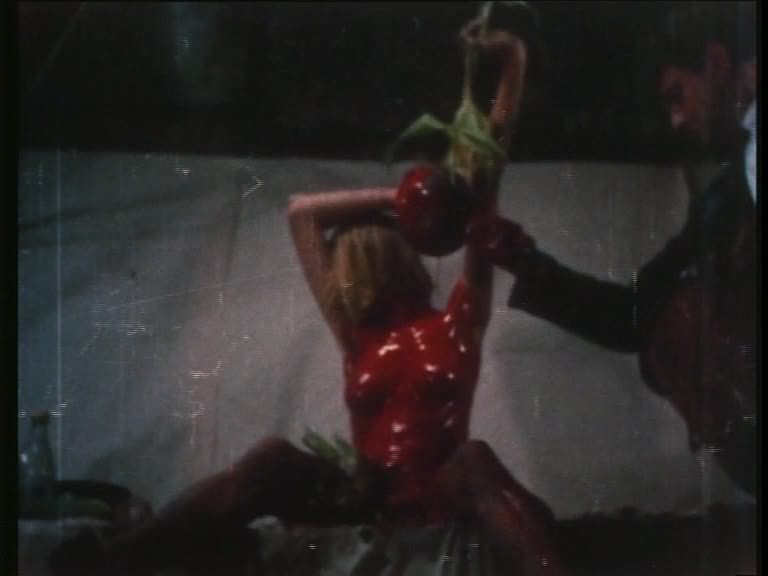
During the mid-1960s, Austrian experimental filmmaker Kurt Kren became momentarily associated with the confrontational performance art of the Vienna Aktionists, primarily Otto Mühl (who would later contribute to Dušan Makavejev's great Sweet Movie) and Günter Brus. Mühl and Brus specialized in bizarre "materialaktions" in which they would act upon the human body with paint and food products, creating messy, perverse spectacles in which sexuality, bodily functions and physicality were foregrounded and explored. In 1964, Kren began filming some of these aktions, though he was not interested in being a documentarian. Instead, he took the raw materials of Mühl and Brus' aktions and acted upon them himself, creating new works through the formal exploration of the images he gathered at these events. The results often infuriated the two provocateurs, who had desired a more straightforward documentary record of their work — Mühl would eventually begin filming his performances himself instead — but Kren's raw, ragged films nevertheless capture the intense spirit and unfettered physicality of this scene, while crafting these images into entirely new works of his own.

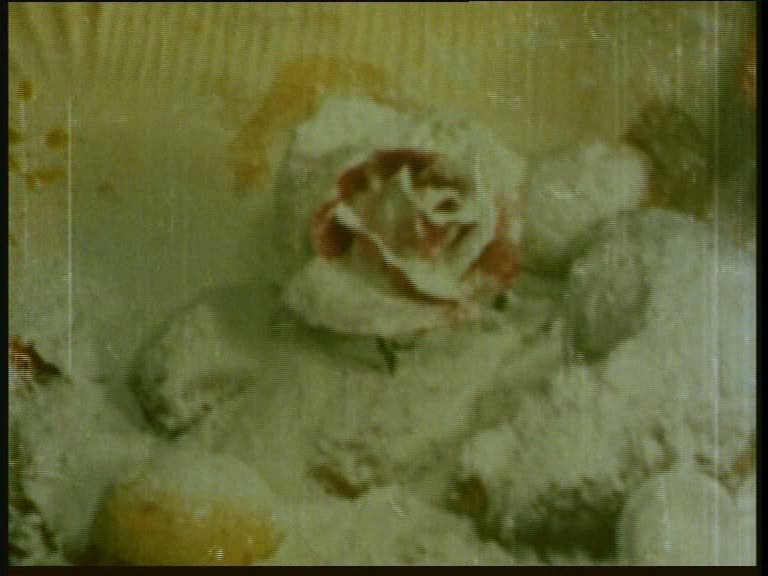
His first film in this vein was Mama und Papa, based on an aktion by Mühl. This first film sets the tone for Kren's work with the Aktionists, and especially for the color films he made with Mühl. The editing is hyper-fast and fragmentary, and carefully cycles through the same shots in a rhythmic pattern, returning again and again to the same images. This pulsating repetition shatters the cause-and-effect chains of Mühl's aktion, but preserves its subversive power. This aktion, as with most of Mühl's performances, consists primarily of nude models being coated with paint or food, their bodies carefully arranged and posed as though molding inanimate objects. Mühl methodically lays out his arrangements of flesh and viscous materials, focusing on the interactions of colors and forms, as though he were a painter working with the human body as his canvas. Kren's film limns the visceral qualities of Mühl's work; the sense of disgust is palpable, as is a feeling of profound discomfort. One can't help but see these films and imagine the sensations: the stickiness and sliminess of the liquids, dripping off the participants' bodies, puddling on the floor around them.


And yet Kren's films also demonstrate that Mühl's work goes beyond such confrontation, beyond the sensations of disgust. There's a kind of childishness to these performances as well, an innocence that seems rooted in childhood games, in mud pies and sand boxes. This spirit of play is perhaps most apparent in O Tannenbaum, also derived from a Mühl aktion, a ludicrous Christmastime farce in which Mühl arranges his actors with Christmas trees protruding from their asses. Working like a flower arranger or a gourmet chef, he carefully lays out assortments of eggs and sausages around a man's penis, then tops it with a flower — or places a pair of toy glasses over the penis as though it were a nose. There's a goofiness to much of this work, a loose spirit of improvisation that works against the notes of menace and exploitation and deviant sexuality also running through Mühl's work. These two threads tangle together in his films, much as his performances tangle together human bodies into indiscriminate masses of limbs and torsos, dehumanized canvases to be acted upon.

Kren takes this ethos further by acting upon the footage, abstracting it from its origins and the ideas of his collaborators. By chopping up Mühl's aktions into blurred, frantically edited montages, he reduces them to their visceral essence. In O Tannenbaum, what remains is a brilliant sense of color, the bright reds and greens of the Christmas season being sprayed onto bodies in violent slashes of color. Of Kren's Mühl films, only his last, Cosinus Alpha, slows the action down enough to make it more coherent, rather than treating it as material for montage. At 9 minutes long, it is also the longest of the Aktionist films, and its pace seems positively languid in comparison to the others. What comes across here is a sense of the erotic and the sexual in Mühl's work, a dimension of his performances largely missing in Kren's other films, despite the copious nudity. Here, the camera's relative steadiness, and the slow, deliberate movements, emphasize the sensual contact of flesh on flesh, the rubbing and caressing as bodies rub against one another, covered in thick soupy muck, kneading the liquids into one another's skin.

This sensuous film emphasizes the pleasurable aspects of Mühl's performances, especially since it's apparent that his models are not simply passive in this instance, but are actively engaging with one another, and with the mess that covers them, seemingly taking pleasure in wallowing in each other so messily.

The other major thread in Kren's Aktionist films was his interaction with Mühl's colleague Günter Brus. Brus' work is quite different from that of his contemporary, and as a result Kren's films are different as well. Whereas all of his Mühl films were in bright color, glorying in the eye-catching palette of these aktions, the Brus films are all in black and white and decidedly more abstract, distanced from the concrete reality of the event being captured. If Mühl's aktions are messy and sexualized and all more or less the same, Brus seems to be more conceptual, more varied, and probably more interesting in his own right — his works captured here seldom seem to be simple exercises in sloppy play, but are instead rigid engagements with conceptual re-imaginations of the human body.

Kren's films sometimes make Brus' work hard to grasp, however, because even more so than with the Mühl films, these films atomize and break down the continuity of the event itself. Ana was the first film Kren made with Brus, and it's seldom even clear what's actually going on here. There are flashes of movement and occasional moments of clear activity, but for the most part the action is an indistinct blur, rapidly flitting across the frame. For much of the film, Kren's choppy cutting approaches the impressionistic pixelization of Stan Brakhage's painted films: black forms dancing across a plain white field, shifting and vibrating from frame to frame, seldom resolving into anything representational. This approach is as viscerally stunning as Kren's treatment of Mühl's work, but seems to have wandered even further afield from the content of the work itself. In Silber, Kren's abstractions progress even further, to the point where virtually the entire film takes place in a vague, under-exposed darkness. It is perhaps the weakest film in this set, the one film where Kren's refusal to provide a faithful documentary account results in a loss of any context or even content; all that remains is the form, the pace of the editing.
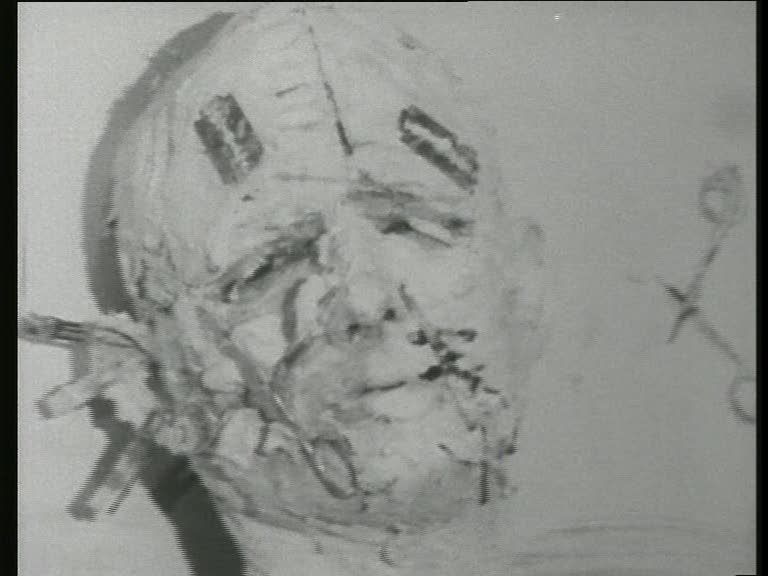

Fortunately, the strongest film in this set is another of Kren's collaborations with Brus, the harrowing Self-Mutilation. For this aktion, Brus coated himself with a viscous paste, rolled around on the floor, and subjected himself to simulated (and probably some amount of genuine) mauling with scissors, razors, pins, clips, corkscrews and knives. It is an expression of anguish in its purest form. Brus' face and body, covered with a thick porridge-like substance, are reduced in their entirety to his mouth, perpetually open in a scream or a cry, and his eyes, staring fearfully out of the muck accumulated on his face.

Kren responds to this performance by concentrating on Brus' face, on the expressions of terror, pain and despair that are communicated solely through the eyes and mouth, with everything else reduced to a lumpy gray landscape. The pace is much slower than in Kren's other films, the shots longer, so the emphasis remains on the performance itself as it does in few of his other Aktionist works. This is perhaps the Aktionists' ultimate statement, the simplification of human emotion to a primal scream, eyes pleading and a mouth opened in a silent howl, unable to communicate, unable to forge deeper connections, unable to get beyond one's own body and the pain it feels. This is a startling, terrifying portrait of imprisonment within the cage of the body: a man trapped by his own sensations, self-imposed and yet unavoidable. The film takes place almost entirely in closeups of Brus' face, essentially trapping the audience along with this sufferer. Kren's camera frequently goes out of focus, capturing the wild-eyed Brus as he flails about, his face contorted, his hands scraping at the coating on his skin. The filmmaking is simple and direct, a perfect accompaniment to this performance's terrifying straightforwardness.
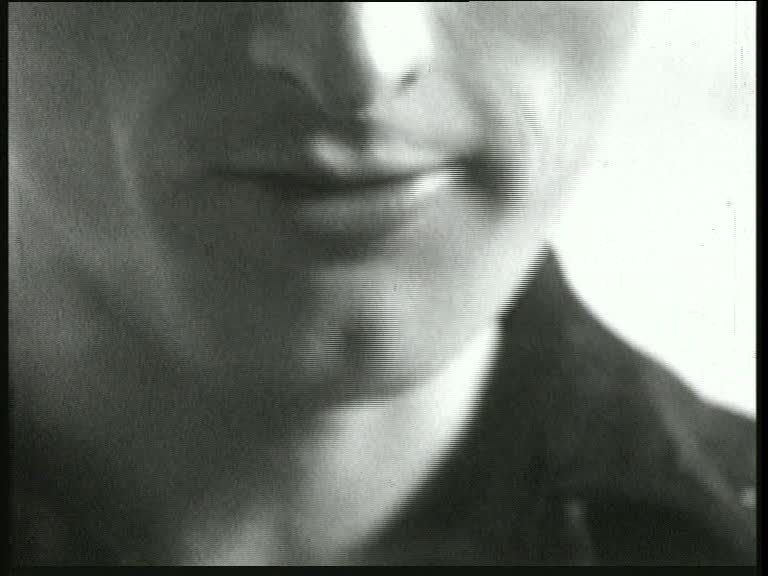

After Kren ended his association with Mühl and Brus, he returned to the formalist experiments he'd been making prior to this brief Aktionist period; this was the filmmaking mode that would define the remainder of his career. Before he fully ended his collaborations with the Aktionists, however, he made one last film in this vein. 20. September, unlike the other Aktionist films, is not a document of an aktion, but is instead a true collaborative work in which Brus is more or less an "actor" for Kren. The film has been charmingly nicknamed the "Eating, Drinking, Pissing and Shitting film," and that title pretty much announces what one is in for here. This disturbing, difficult-to-watch film takes the Aktionists' exploration of the body to its extreme resolution, simplifying the "plot" of a film to the four simple bodily processes that form the basic bedrock of human existence. Along with breathing and sleeping, these are the necessities of life, the things that humans must do in order to live, to survive and thrive. Kren films each of these processes in intimate closeups: images of Brus' mouth as he drinks a beer or shovels food into his mouth, intercut with straight-on images of a penis emitting a steady stream of urine and an anus opening up to allow the feces to crawl slowly out.

There is no possible reaction to a film like this but visceral disgust and discomfort, and that seems to be the primary intent. Its point is a simple one, and it achieves it by juxtaposing both ends of the processes by which we sustain our lives: drinking ends in pissing, and eating ends in shitting. Unlike the films crafted from actual Aktionist performances, this film seems to work on one level only, and once its essential point is understood — which happens pretty quickly — all it has to offer is the repetition of its message of disgust. However disturbing and gross the other Aktionist films are, however much they wallow in filth and disgusting images, they are always more multi-faceted than this, always more complicated in the juxtapositions of sexual feelings, disgust, playfulness and subversion of the norm.

Kren's collaborations with Mühl and Brus yielded a body of work that, while perhaps peripheral to Kren's later work as a formalist and structuralist innovator, is still interesting in its own right. It's the rare piece of provocation and controversy that retains its power over 40 years after it originally appeared, but that certainly applies to these unsettling films.
Wednesday, June 10, 2009

Maria Lassnig: Animation Films

[This is the start of a new series here, where I'll be exploring the work of the Austrian DVD label Index DVD. This company has released a great deal of valuable European experimental cinema onto DVD, naturally focusing on the Austrian underground but occasionally branching out as well. Index's DVDs are distributed in the US by Erstwhile Records, so anyone intrigued by Index's catalog should take a look and support the fine work both these companies are doing for obscure and avant-garde cinema. The review below focuses on a sampling of the nine films included on Index's Maria Lassnig DVD.]
Maria Lassnig was trained as a fine artist, but throughout the 70s, during a stay in New York, far from her native Vienna, she made a series of rough, nearly childlike animations in short film form, exploring ideas of sexuality and male/female relationships through her loose, jittery, continually shifting and reforming animated figures. Her work from this period varies from crude and simplistic to visually stimulating and inventive, covering a pretty broad territory in just a few shorts.

Her first completed film was 1971's Iris, and it's undoubtedly one of her best, a briskly moving and restlessly inventive film in which she subjects the female form to a series of outlandish distortions and reinventions, alternately erotic and nightmarish. A naked woman lounges on a bed, and Lassnig's camera crawls across her body as though exploring an alien surface, settling into the crevices and protrusions created by her voluptuous model's form as she twists and turns around on the bed. On the walls behind her, a reflective surface creates funhouse mirror distortions of the woman's body, and these reflections increasingly become the focus of the film. Lassnig dives into this twisted mirror world, where the woman is whittled down to a cubist abstraction, disjointed and sharply angled, or expanded into a blob-like waterfall of flesh. These abstractions, occasionally resolving into familiar facial features or body parts, are by turns beautiful and horrifying — sometimes crystalline and delicate, glistening like the water in a lake at sunset, at other times turning hard and dark, creating globular mounds of flesh that seem to be hungrily devouring each other, flesh turning parasitic on itself.

This is what Lassnig is exploring here, in fact: flesh. It's a film about the skin, about the physical reality of the body, and against that the transience and malleability of images of the body. The body itself continually edges back into the frame, stretched out on the bed, languid and corporeal, natural and somehow graceful, set off against the fractal patterns on the wall. Even the soundtrack suggests the body, with mouth squeaks and chirps and laughs creating loose rhythms, a kind of quirky, light-hearted analogue to the more disturbing bodily confrontations of the Vienna Aktionists, working at roughly the same time back in Lassnig's homeland. Lassnig shares their interest in the body, in bodily processes, but from a very different perspective. Whereas the Aktionists reveled in confrontation and abjection, Lassnig undeniably sees beauty and grace in the physicality of the body, in its weight and heft, its folds and curves. That's why the abstractions her camera carves, with light and refraction, are equal parts disturbing, moving and erotic. It's a fascinating film, fluidly managing these contradictions to create a powerful and unified whole.


Although Iris is a rather uncharacteristic work that's wholly filmed, Chairs is more in the form of the rough animation that is Lassnig's primary means of expression. This brief 2-minute short consists mostly of crudely animated chairs (no surprise there), though Lassnig manages to give these drawings a weird kind of life, almost as though she's translating her fascination with the human body into these inanimate objects. Her drawing style is extremely rough, using pencil and felt-tip marker, and there's little attempt to disguise the transitions from one cell to the next. The result is a rough flipbook effect, with Lassnig cycling through various permutations, transforming these chairs so that they seem to breath and vibrate, pulsating with hidden life. There's something almost obscene about Lassnig's chairs, a darkness and ugliness in her mutations.

It's obvious that Lassnig's crude animation here is an extension of her work in Iris, another very different perspective on questions of sexuality and the erotic. And yet, despite the unsettling qualities of Lassnig's vision, this film, and most of her others, always retain a sense of play, of not taking anything too seriously. This is basically just a brief sketch, a series of charming visual non sequiturs as Lassnig cycles through some of her absurd chair designs, then ends with a filmed shot of a woman in a gas mask sitting in a chair. The whole thing is set to a tinkly piano score reminiscent of a silent movie soundtrack, and there's definitely more than a hint of the surreal and the nonsensical to this work. Coupled with the child's coloring book aesthetics of Lassnig's drawings, it gives the impression of a rough sketchbook diary being aired in public.


This impression is more prominent on the even sketchier and cruder Selfportrait, in which Lassnig narrates, in a dry, deadpan tone, the story of her struggles with love and relationships. As that description probably suggests, it all has the potential to be a bit unbearable; Lassnig's work, at its worst, frequently tips over into confessional diary ranting and trite "insights" into contemporary relationships between men and women. Frequently, when her voice or texts intrude into these films, she has a tendency to say things flatly and in conventional, overly familiar language — psychobabble, regurgitated feminist propagandizing — rather than allowing her images to stand on their own. The strength of a film like Iris is its ambiguity, its openness to multiple readings about sexuality and the female form and its representation. There is no openness, no ambiguity in Selfportrait or the slogan-laden animations that follow it in Lassnig's oeuvre.

It's unfortunate, because despite her tendency to proselytize about feminist ideologies and her troubles with men, Lassnig's visual sense remains engaging in this film. Her aesthetic is simple: the film consists mostly of a roughly sketched portrait of her face, crudely animated so that as she talks, the lips chatter away no matter what she's actually saying, and her features move slightly but expressively. It's simple, but not simplistic, and she has a healthy sense of surrealism to enliven her drawings, as when she draws herself with wild distortions to her face — like a camera convincingly assembling itself over her features — or creates dreamlike effects, like her body disintegrating into grains of sand and blowing away with the wind. This restless creativity, and the amateurish enthusiasm of her drawings (a precursor to modern avant comic artists like C.F. or Frank Santoro), carries her films even when her intrusions get in the way.


Lassnig doesn't provide a voiceover for Shapes, but in this case the material itself just isn't that strong. Here she's animating cutout figures of male and female forms, spraypainted in various multi-colored patterns that rapidly change as she switches from one image to the next or overlaps multiple exposures. The figures sometimes seem to be dancing, but more often simply stutter in place, changing positions and colors and rotating around, but doing little else. It's another exploration of form and the body, but without an actual physical form on which to rest this inquiry, Lassnig's ideas here seem rather bloodless. It's ironic, but for an animator and painter, she often seems to be more comfortable — and to craft more powerful images — when she's not working exclusively with her own drawings.

She proves the point here with an exquisite section towards the middle of the film where she expands upon the simple animated cutout figures. Instead of animating flat drawings, she affixes several of her cutouts to the outer rim of a glass filled with water, then photographs the glass in extreme closeup as she turns it slowly around. The effect is startling, especially juxtaposed against the more prosaic animated spraypaint that characterizes the rest of the film. This short segment has weight and an ethereal beauty, the black outline figures drifting by the camera as though on a merry-go-round, while behind them the surface of the water vibrates and water droplets shine on the inside of the glass. The textures, the playing with light and form, are reminiscent of a slower-paced Stan Brakhage, and it's a disappointment when Lassnig returns to her two-dimensional forms. There are moments like this in her oeuvre when one regrets that she was not more committed to film as a form, that she didn't experiment more outside of her animations.


Of course, Lassnig's most recent film, made long after her 70s animation experiments, in 1992, is exactly such a departure. It's a bizarre, whimsical film, made with the help of co-director Hubert Sielecki, called Maria Lassnig Kantate. In this film, Lassnig blends together her signature animations with her own digitally inserted image, dressed in a variety of increasingly wild costumes and speak-singing the story of her life from early childhood to old age. It's a silly conceit, something like a children's storybook, demonstrating that Lassnig still has the playfulness and free-spiritedness of her youth. It's a bizarre pastiche, with its rough animation, even rougher digital effects, and Lassnig's flat, atonal voice delivering an awkward ballad atop a bed of Sielecki's wheezing barrel-organ. It shouldn't work, and yet somehow it does.

The initial few verses of the song are a kind of adjustment period, entering into this weird aesthetic, which calls to mind the goofier extremes of Polish animator and digital effect pioneer Zbigniew Rybczynski. But once one surrenders oneself to Lassnig's silly style, and her shameless singing, this film reveals itself as one of her most fun and light-hearted offerings. Her sheer exuberance is hard to resist, especially during the tour de force montage signaling her journey to America, during which, in front of an animation of the Statue of Liberty raising her skirts, Lassnig dons an Indian headdress, a tasseled cowboy outfit, a noir tough guy's trenchcoat and fedora, and most outrageously, a full punk rocker get-up, with leather jacket, black eyeliner and black lipstick. It's absurd, and goofy, and so much fun: Lassnig was in her 70s when she made the film, but her sense of humor and play remains youthful and irrepressible. She's not afraid to act like a fool and just do something for its own sake.

It's this attitude that shows through in all her films, which give the impression that they're simply unmediated outpourings from her psyche. No animation can really be as direct as that — even Lassnig's unpretentious style must require many hours of painstaking labor for each animated sequence — but Lassnig seems to work hard at maintaining this unstudied, improvisatory quality in her work, as though she's simply goofing around, having fun. Thankfully, she usually invites her audience to have fun with her, and her quirky, inventive and sui generis body of work is well worth exploring.

Wednesday, May 6, 2009

Films I Love #30: Asyl (Kurt Kren, 1975)


The structural films of the Austrian avant-garde filmmaker Kurt Kren are each based around a single technical conceit to which the film rigidly coheres, and around which it is structured. For Kren and the structuralists he inspired, the technical craft of cinema is in fact the whole of the cinema, and the themes and ideas in his films arise directly and solely from the methods of their contruction. Asyl is one of Kren's most formally ambitious works, an experiment in time lapse photography, multiple exposures, and segmented images. When he moved to a home in the country, Kren set up a static camera nearby, and over the course of 21 non-consecutive days, he fed the same strip of film stock through the camera once per day. In front of the lens, Kren also placed a masking board with holes in it, the placement of which was varied daily so that each time the film stock went through the camera, different areas of the image were exposed. The result is a film in which, within a single frame, time and space are made to overlap and coexist in unusual ways, creating impossible landscapes composed from footage shot on different days throughout the year. Sometimes, most of the film is exposed and the image becomes a collaged landscape, in which a snowbank runs directly into a grassy springtime meadow, or in which rain falls through the top half of the frame only to disappear when in reaches the bright sunshine of the lower half. At other times, the image is more pointillist, with distinct areas floating in the black frame like pieces of a puzzle that needs to be assembled.

The seasons run seamlessly into each other in this way, and time becomes hazy. Occasionally, a person will walk along the road in one part of the image, disappearing at an invisible border where the image fades into a different day, a different time. Kren is here reconfiguring film as a medium in which time and space cease to be linear in any sense. The film is instead about totalities; it invites the viewer to think about the progress of time and the way it generally works in cinematic images, and by contrast to process the multiple layered times implicit in each frame of Asyl. This short is Kren's finest work, with a conceptual purity and inventiveness that are unmatched even in his consistently intriguing oeuvre.