Showing posts with label 1941. Show all posts

Monday, January 23, 2012

How Green Was My Valley


John Ford's How Green Was My Valley is a gorgeous, achingly sad movie, a moving evocation of "the way things were" and the process by which the inexorable progress of industry and modernity slowly, steadily erodes the old ways, breaking apart the stability of family and shattering tradition. The film is steeped in the director's love of innocence and simple virtue, his rosy perspective on the past and its values. Because of this, the film is deliberately, lovingly old-fashioned in every way, paying tribute to a way of life that dies out one step at a time over the course of the film. The film even opens with an acknowledgment that the place and the time it is depicting is already long gone, changed forever, its emotions tinged with nostalgic regret and sorrow. In the opening voiceover, Huw (Roddy McDowall) prepares to leave home, packing his things while the sad voice on the soundtrack describes his memories of his home the way it used to be. The remainder of the film is set in the past, looking back wistfully at the glorious days of childhood happiness and familial closeness, and the slow disintegration of those virtues over many years of suffering and sadness.

Huw's family lives in a Welsh village in the shadow of a valley, and all the men work all day in the coal mine perched at the top of the valley, above the town, its smokestacks belching black clouds into the air above the town. Huw's memories stretch back to a time when he was a young boy, when the coal and the smoke had not yet stained the valley's green hills black. Huw's recollections of his boyhood begin in idyllic bliss, recalling the beauty of the valley, the love of his parents, Mr. and Mrs. Morgan (Donald Crisp and Sara Allgood), the fresh-faced beauty and sweet smiles of his sister Angharad (Maureen O'Hara) and sister-in-law Bronwyn (Anna Lee), the camaraderie of his four older brothers. The happiness of these memories is deliberately exaggerated, marinating in over-ripe sentimentality and down-home charm. Looking back, Huw remembers his early boyhood as a paradise, rooted in the stern but loving ritual of home life: deep-seated respect for his parents, religion, love and generosity. This life is strongly ritualized and formalized, with a set of encoded traditions that drive daily life. Every day, the men go off to work in the mornings, then return home in the late afternoon, winding through the streets singing while the women and children come out to watch. They deposit their daily earnings with the matriarch of the family, settle down to dinner after prayers, and eat heartily without speaking — "I never met anyone whose talk was better than good food," Huw says. Afterwards, the young men are given their spending money, sent off to have the nightly fun that their day of hard work has earned them. It's a simple and sometimes difficult life but a fulfilling one, and Ford purposefully spends some time establishing this traditional existence's appeal and its grace, because the rest of the film is concerned with the erasure of all this tradition and stability.


Over the rest of the film, Ford slowly reveals how these traditional values and ways of life have been corrupted and made irrelevant by the advances of modernity. The men working at the coal mines are increasingly subjected to more and more injustice: their wages are reduced as cheap labor becomes readily available, and men who have been toiling in the mine for many years are unceremoniously fired and replaced by younger, poorer men who can be paid less for the same work. Mr. Morgan largely takes these changes in stride at first, convinced that the old standards of fairness and decency will remain intact, but the younger generation is not so trusting, and they struggle to form a union that could help them fight against the mistreatment they receive at the hands of the rich mine owners. Ford increasingly provides little way out. Religion offers some comfort in the form of the pastor Mr. Gruffydd (Walter Pidgeon), but his kindly spirit and goodness are an anomaly in a church mostly ruled over by bitter old men. In one chilling scene, these older church dignitaries call a "meeting" at the end of mass to summon one poor young woman to stand in front of the congregation, where they castigate her for having a child out of wedlock, sneering angrily at her; Ford captures the wizened, shaking hand of one deacon in closeup, pointing an accusing finger at the woman. Scenes like this suggest that the goodness and kindness of the Morgan family is only one possible outcome of old-fashioned tradition, and that tradition can also be close-minded and judgmental, so stuck in its ways that there's no room for deviation.

This scene is a premonition of the way that Angharad — who is the only parishioner to storm out of the church, enraged by this display of cruelty disguised as religion — will later be treated by the town in which she grew up. Angharad loves Mr. Gruffydd, but their relationship is not meant to be, and instead Angharad marries the wealthy son of the mine owner and moves to South Africa. Her wedding is contrasted against the marriage of her brother Ivor (Patric Knowles) to Bronwyn earlier in the film. At Ivor and Bronwyn's wedding, the mood is joyful and ecstatic, with the bride and groom running through the town surrounded on all sides by revelers enthusiastically throwing rice, smiling and singing. At Angharad's wedding, the bride is grim and stoic, and her expression is matched by many in the crowd; though the groom at least is smiling, this is a joyless affair, and the singing only starts when Mr. Morgan shames the crowd, made up of men who have been beaten down and mistreated by the mine owners, into singing for his daughter's marriage. When Angharad later returns to town without her husband, it's no surprise, but she's not greeted with any joy then either: though no one cheered her marriage's beginning, they now flood the streets with vicious rumors about divorce, unfaithfulness and scandal centering on Angharad and Mr. Gruffydd, even though nothing has happened between them. There is another church "meeting," and again the viciousness and ugliness of traditional values are exposed.

Not that modernity offers anything better. Huw is the only member of his family to go to school, which Mr. Morgan at least sees as a path out of the family's poverty and lack of options. Mr. Morgan has already seen all of his other sons — except for Ivor, who dies in the mines — leave home for greater opportunities far away, and he recognizes that this is the inevitable fate of his family and his village, broken up by changes to which they are ill-suited to adapt. He hopes that Huw will be different, but at the regional school Huw encounters only prejudice and disdain, from his snooty teacher and his fellow students alike. He's beaten and abused, mocked for his old-fashioned ways and his relative poverty, while at home his mother has no patience for the abstract ideas and theoretical problems involved in education, seeing no practical applications for the things her son is learning. Perhaps influenced by his mother's pragmatism, as well as his boyish love for Bronwyn, when Huw finishes his education, he decides that all he wants is to work in the mines like the rest of his family rather than put his new knowledge of Latin and mathematics to use.
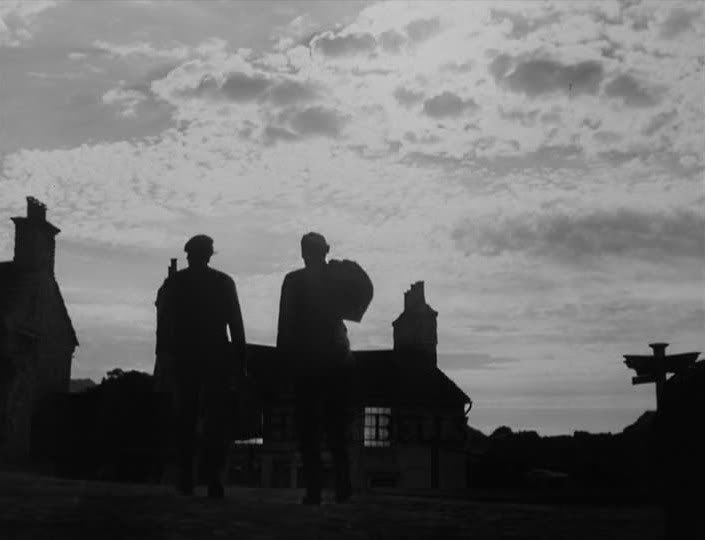

Cinematographer Arthur C. Miller's stark, dark black-and-white imagery contrasts against the aching nostalgia and sentiment of Ford's vision. The cinematography is darkly romantic, using a high-contrast style in which the blacks are rich and deep, occasionally broken by the bright, pure light shining through the valley. In the hills above the town, the trees cast latticework networks of shade across the rustling grass, while the town itself is brighter, with long shadows stretching across the roads winding along the rows of houses. The film's most beautiful images are inevitably the departures: images of the Morgan sons leaving home, two by two, for greater opportunities, their belongings slung across their backs, their silhouettes shrouded in darkness and the big country sky towering above them, tumultuous with clouds. This film's simple beauty perfectly captures the longing for home and tradition that inflects every minute of it. Even the mine, spewing smoke and ash across the countryside, is rendered with an awful beauty, a stark industrial simplicity that hovers above the town, slowly infecting it with a sickness that drains the village of its young people, its hope, its rock-solid reliance on a certain way of life.

This is sentimentality with real purpose behind it, sentiment and nostalgia honed into biting social commentary. Ford's vision is so pure, so direct, that it's near impossible to take his idealistic perspective on the old days at anything but face value. The film only occasionally stumbles, mostly because of the often lame accents. Also, Ford's decision to have Huw played by the young McDowall throughout the film becomes very strained later in the movie, when the boy begins working in the mine and living with his brother's widow — it's obvious that he is supposed to be a young man at this point, as he was in the Richard Llewellyn novel that Ford was adopting, rather than a little boy. This structural and casting misstep aside, How Green Was My Valley is a staggering achievement, a film of tremendous beauty and melancholy, a deeply sad but never despairing portrait of the way things were, and the way they'll never be again.

Monday, December 6, 2010

The Lady Eve


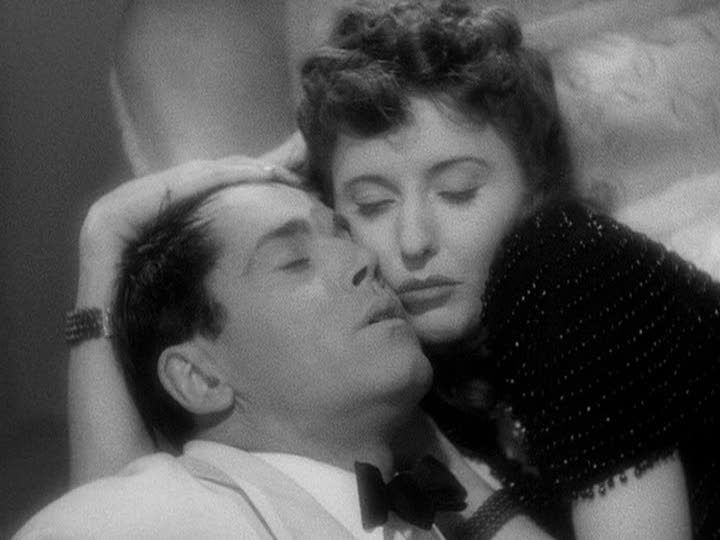
It's not for nothing that Preston Sturges' The Lady Eve opens with an animated title sequence in which a leering serpent winds across the screen, because Barbara Stanwyck, who spends the first half of the film as the card sharp Jean Harrington and the second half as the British noblewoman Lady Eve Sidwich, is a sly, sexy, serpent-like incarnation of the woman as a temptress and a conniver. She's a con woman of the first degree, a seasoned hand at luring men to their financial doom, usually at the hands of her con man father the "Colonel" (Charles Coburn) and his wily valet Gerald (Melville Cooper). So when she meets the inheritor of an ale fortune, the reptile scientist Charles Pike (Henry Fonda), she immediately sets out to snare him the same way she's snared so many other men. She sets a trap, gets his interest, snuggles up to him and not so subtly seduces him. She oozes sex: in one scene, she cuddles up to the helpless Charles, speaking to him with her cheek pressed against his and her lips moving just inches from his, constantly threatening to kiss him but never quite doing it. It's steamy, and so disarming that the audience is seduced right along with Charles, which is part of the film's charm. Sturges has concocted such an irresistible con woman — and embodied her, wisely, in the slinky toughness of Stanwyck — that one is constantly rooting for her to succeed, to get the hapless and, at times, brainless Charles in her clutches, to do with as she pleases. That she predictably falls in love with the guy and winds up wanting him for more than his money is expected but almost incidental to the plot. Whether she's looking for love or squeezing another con, we're rooting for her to get her man.

The implicit undercurrent of the film, in these scenes of wooing and seduction, is that love is a con like any other. At one point, Jean gives Charles a speech about how cleverly women must win over men; she's talking about love, about the ways in which women use their feminine powers to subtly ingratiate men to them, but she might as well be talking about her con jobs and plots. It's all the same, and the methods she uses to get the guy she wants to fall in love with her overlap conspicuously with the methods she would use to cheat him out of his cash. In one of her more candid moments, Jean admits, "a moonlit deck is a woman's business office." Sturges has a lot of fun with this basic conceit, turning games of love into games of trickery and deceit, games of lies and truths, with the increasingly floundering Charles obviously in over his head, whether he's being swindled out of money or tricked into love. The name Eve, which Jean takes on as her alias, is particularly well chosen, because in this film the woman has all the power, the woman is in control, the woman guides the man into folly and then, if she chooses, back out again.

Fonda gamely plays along with these shenanigans, tripping into one bit of horseplay after another. He eventually figures out that Jean, who he wants to marry, is not an oil man's daughter but a notorious swindler and card cheat, and he's crushed. But when she shows up again, in the second half of the film, as the Lady Eve, niece of a nearby British nobleman, he incredibly doesn't believe it's the same woman; he falls for her disguise completely after some initial doubts. At first, this seems like an unforgivable contrivance, a stretch even by this film's standards of masculine stupidity. But the longer the gag plays out, the better it gets, and the more believable. It's as though Charles wants to be deceived, wants to be conned, because more than anything what he wants is Jean, or Eve, or whatever she's calling herself, and if he has to be blindsided to get her, then he'll clear his brain and fall for any lame scheme she cooks up, just so he can be in her clutches again.


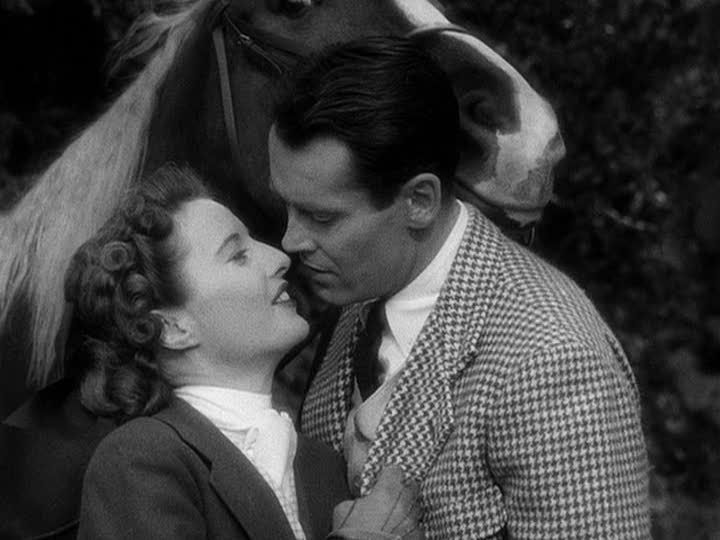
It's all totally delightful, particularly when, predictably, he falls hard for Eve and asks her to marry him — and the same scene from earlier plays out again, with him delivering the same corny lines, the same poetic visions, as though he'd rehearsed this speech over and over again for whoever he was going to marry. This time around, she fills in some of the lines for him, knowing this bit pretty well by now, and Sturges turns the scene into even more of a farce by having a horse continually interrupt the expressions of love by nuzzling Charles' head, thrusting its big head into the frame, looming over the two lovebirds below. It's brilliantly staged, a would-be romantic scene that's utterly undermined both by the fact that this is the second time it's played out within a half hour of screen time, and by the horse's insistence on butting into the frame, ruining the glorious romantic shot of the lovers framed against a dramatic sunset. Sturges takes the usual romantic imagery and completely subverts it, mocking the whole idea of a grand and pure romantic love: his characters eventually do find love, but only through a maze of misunderstandings, misidentifications, lies and schemes.

Sturges' sense of comic timing, his visual and verbal wit, is impeccable throughout, and the script is teeming with sharp lines and quick turns of phrase. When Charles tells Jean she has a "nose" for cards, she asks him if there are any other parts of her he likes, a neatly suggestive line that only gets better when his flustered reaction prompts her to say, "Relax, I was only flirting with you." This guy's such a dolt he doesn't even recognize flirtation, and in the second half of the film he's subjected to a ludicrous series of pratfalls and mishaps, especially at a party where he's distracted by Eve's uncanny resemblance to the woman who had earlier broken his heart. He falls over a sofa, gets the roast dumped on him by his comically snooping bodyguard Muggsy (William Demarest), and stoops to free up a snag in Eve's dress, only to stand up into a dessert tray. This stuff works because Sturges never leans too hard on the slapstick for its own sake; the physical comedy is an expression of Charles' humiliation and abasement, as similar scenes often were in the romantic comedies of Howard Hawks.

Muggsy, for his part, provides a running commentary on his employer's stupidity, as he instantly recognizes Eve as Jean and can't understand why Charles has any doubts. Muggsy keeps popping up every so often, dubiously exclaiming, "it's the same dame," as though to remind the audience, as if we could forget, of just how loony this whole business is. Muggsy's parody of detective work, as if there's any real sleuthing necessary to figure out this non-mystery, is just one of the running gags running through the film, among which the most prominent is probably Charles himself. Charles' inability to grasp what's happening to him — that he's falling for the same woman twice, and in the end, three times — is mirrored in his physical incompetence. Early on, he practically melts in Jean's arms, closing his eyes, his face slack, barely able to mutter a word as she patters on with her lips so close to his. If he was in a Warner Brothers cartoon of the era, he would've literally turned into mush and puddled on the floor, and he all but does it anyway here, constrained only by his corporeality.

That's why that cartoon snake at the beginning of the film is so appropriate, in so many ways, suggesting the themes of seduction and trickery, and the Adam and Eve myth, as well as the literal snake (from Charles' scientist gig) which keeps showing up in unlikely places and providing fodder for more comic wordplay. But also because the film is a cartoon, with Jean/Eve as a kind of fleshy, sexy Bugs Bunny, doing anything to trip up and toy with her opposite number, turning rivalry and hunting into a big game of constant reversals and dress-up routines. The crackling dialogue, the edgy persona of Stanwyck, the good old boy dumbness of Fonda, Sturges' casually effective way of staging comic scenes, all of it is in service to the film's celebration of love as a long con that's well worth being tricked into.

Saturday, March 14, 2009

Sullivan's Travels


Sullivan's Travels is writer/director Preston Sturges' heartfelt tribute to the power of comedy, to the value of laughter and escapism as ways of coping with hardship. The Sullivan of the title is John L. Sullivan (Joel McCrea), a very successful Hollywood director whose light slapstick comedies have made him and his producers a fortune. Still, he yearns to make more serious pictures, films that deal with poverty and depression and social problems. Unfortunately, he quickly realizes that as a successful, wealthy man, he knows very little about such things, and he decides to learn. Dressing up as a bum and going out into the world with just a dime in his pocket, Sullivan tries to experience poverty and misery so that he can make a film about it, but he finds it harder than he thought to break free of his privilege and status. First, his producers insist on saddling him with a massive camper van full of handlers, cooks, journalists and doctors to make sure that Sullivan's adventures don't get too out of control. And the director's various attempts to escape this bunch don't fare much better: first he winds up in the clutches of a sexed-up farmer's widow who dresses him up in fancy clothes and locks him in for the night, but even after escaping from her he can't seem to manage to truly get away from his privilege.

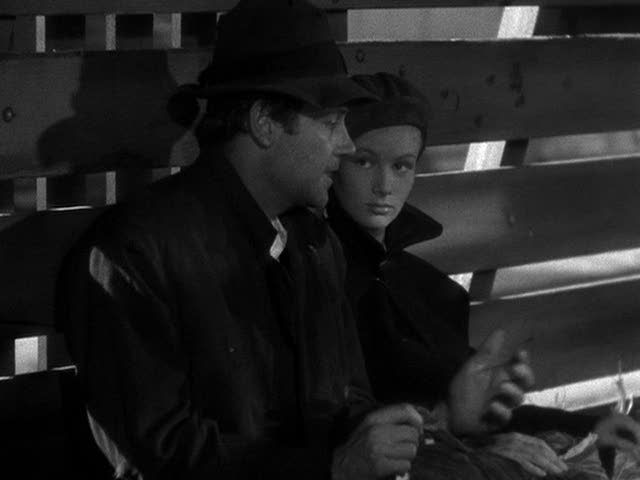
That changes somewhat when he meets a girl (Veronica Lake, whose character never gets a name), a down on her luck aspiring actress who's giving up on Hollywood and heading home, but still has the kindness to buy breakfast for the bum she sees in a diner. She's soon tipped off to Sullivan's ruse, and though angry at first, she obviously takes to this stubborn, adventurous guy who's so determined to experience a different way of living. Sullivan's producers always insist that the director's films should have "a little bit of sex" no matter how serious they are, and Lake is this film's little bit of sex, looking glamorous and incongruously sexy when she first meets Sullivan, like a noir femme fatale who's stumbled into a comedy. She's unnamed because she fulfills an iconic role: she's "the girl," and "there's always a girl in the picture," as Sullivan says. In that sense, there's something cynical about her inclusion, as though Sturges was acknowledging that he too is bowing to studio pressure, that he too has to include "a little bit of sex" if he wants anyone to see his pictures. Nevertheless, the girl proves eager to accompany Sullivan on his tramp's journey, and the two of them head off together.

The film is often funny, manically comic in the style of old silent movie farces. It is, based on the descriptions of Sullivan's movies in the script, the kind of movie that Sullivan himself was making before his awakening to "social problems." The action is often sped up and frenzied, never more so than in the early scene where Sullivan hitches a ride with a kid playing army in a souped-up go-cart that he calls a "tank." As the tank blasts down the road at 120 mph — the speedometer is permanently drawn in this position, and it doesn't look like the cart's capable of going any slower — the pursuing van of movie studio handlers tries desperately to keep up, tossing everyone inside around the interior. The sequence is an excuse for one slapstick gag after another, the best of which is probably the moment when the cook's head bursts through the roof of the van and he finds himself looking around confusedly. Later, Sullivan and the girl's adventures on the road have some of the same slapstick glee, Sturges' tribute to Chaplin, who is also referenced in several shots that recall, naturally, The Tramp.


Ultimately, Sullivan's journey seems to have come to an end, he's experienced some misery and poverty — mostly conveyed through a long, dialogue-free montage — and he's ready to call it quits. But he goes out for one last charity mission, handing out five-dollar bills to tramps, and after one knocks him out and robs him, Sullivan is thrown on a train heading east, thought to be dead by everyone back in Hollywood. Instead, he's very much alive but badly dazed, and soon finds himself in a prison work camp after getting in a fight with a railroad employee. The film's final section is a harrowing, exaggerated depiction of the horrors of prison, more terrifying in its depiction of the loss of identity and privilege than Hitchcock's The Wrong Man. Of course, Sullivan's tenure there doesn't actually last that long, only long enough for him to go with the other inmates to see a movie at a local black church, where the pastor encourages his congregation to welcome these less fortunate men. They watch a Disney cartoon, and the laughing Sullivan realizes that comedy brings happiness to people in hard times. This scene is a stark contrast to an earlier scene of Sullivan at the movies with the farmer's widow, where they'd gone to see a bill of serious dramas, and the whole theater sat in joyless lethargy staring at the screen and fumbling noisily with popcorn.

The ending of the film is interesting and complex, consolidating what Sturges had been driving at throughout the film. After all his adventures and mishaps, Sullivan gets the girl and easily regains his privilege — once everyone learns he's a movie director, he's immediately released from prison, which might be a wry commentary about the disparate punishments for the wealthy and the poor, or might be simply a cynical deus ex machina in which the God in the machine is Hollywood's sense of entitlement. In any event, Sullivan no longer has any interest in making the serious picture about the poor he'd intended; he wants to go back to making silly comedies. There's a weird ambivalence about this ending, an unresolved tension in the way the film deals with poverty. At the resolution, Sturges seems to reject any possibility of film dealing seriously with the state of the world — Sullivan's attempts to do so are mocked and dismissed, with Sullivan condemned as a "limousine liberal," even literally in the scene where his butlers drop him off at the train depot so he can hop on a freight.

The film mocks the condescension of elites who think they're making films about "social problems" to help the poor, but there's a different kind of condescension in the idea that the poor only want dumb escapism, that there's nothing anyone can do for the poor and unfortunate besides make them laugh. There's a troubling sense that Sturges' worldview has little room for social mobility, that the film believes, with Sullivan, that one should stay where one belongs and simply hope for a miracle like Sullivan's "discovery" of the girl. At the same time, however, the film provides ample evidence of alternate ways of dealing with poverty, like the compassion of the black church who welcome in hardened criminals for a night of entertainment, or the kindness of a lunch counter owner who, learning that Sullivan and the girl have no money, gives them coffee and donuts anyway. Sullivan's Travels is a smart — and very funny — film that is, above all, an ode to comedy, a love letter to Charlie Chaplin and all the other great comic performers who have graced the screen.

Saturday, February 21, 2009

The Tell-Tale Heart (1941)


The Tell-Tale Heart is a solid, enjoyable horror short adapted from Edgar Allen Poe's famous short story. It is one of many such short-form literary adaptations used to fill up pre-feature time on Hollywood screens in the 30s and 40s, but this happens to be a particularly strong, interesting example of the genre. For one thing, it was the first film for director Jules Dassin, who would go on to become one of the great directors of noirs and crime pictures throughout the 40s and 50s. The story here is very familiar, but Dassin treats it with his characteristic sweaty intensity and slow-burning suspense, making the Poe classic feel new again. A young man (Joseph Schildkraut) has been dependent for his entire life upon a nasty, brutish older man (Roman Bohnen) who he cares for. Finally, the young man has had enough of being verbally abused and taunted, and he decides to kill the old man, to finally be free of him. But after burying the body beneath the floor boards, the pounding of the old man's heart continues to torture the murderer with his guilty conscience.

It's a simple tale, perfectly suited to this twenty minute adaptation, and Dassin lingers on each of the story's emotional beats, drawing out the slow-building horror and tortured feelings at its core. Schildkraut delivers a fine performance, seemingly always sweating, his dark eyes communicating his terror and rage, and Bohnen is sufficiently nasty, speaking to the younger man in a sing-song cadence as though mocking him with schoolyard taunts. But it's in Dassin's shadowy aesthetic, the glossy beauty of his images, that the film's horror really resides. The murder scene is particularly gorgeous, as the young man sneaks into his tormentor's room with a lamp that he's modified to emit a single narrow beam of light. Dassin shoots the set-up to the murder from a distance, with the beam of light glowing in the darkness, illuminating motes of dust in its path, an iridescent string connecting murderer and victim across the room. As the young man draws closer, the viewpoint switches briefly to that of the old man, who sees a nova of light nearly blinding him, and behind it, barely visible, the intent face of the man who has come to kill him. The murder itself takes place offscreen, with Dassin briskly editing together peripheral details like the old man's hands desperately grabbing at a tapestry on the wall as he is strangled.


In the aftermath of the murder, Dassin gets across the mostly abstract horror of the situation — the killer hearing his victim's heartbeat beneath the floor boards — through frequent closeups of the increasingly unraveling Schildkraut and some brilliant sound design. The room is filled with possible sources of the insistent heartbeat: a clock on the wall, a dripping faucet, a metal pan outside the window with rain water falling into it. As the young man methodically checks into each of these to eliminate the sound, the pounding on the soundtrack only continues unchecked. Finally, when two detectives (Oscar O'Shea and Will Wright) arrive to question the young man, the murmuring beat on the soundtrack is carried over even into the music, which pounds with the rhythms of the heartbeat in the drums. This is a potent, interesting take on a familiar tale, elevated above the average literary adaptation because Dassin pays as much attention to Poe's psychological effects and the uncomfortable sensations of the protagonist as he does to the actual details of the story.

Sunday, January 25, 2009

Sleepers West


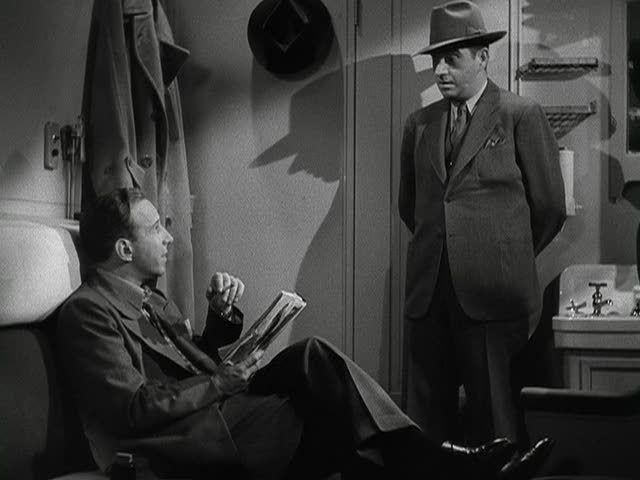
Sleepers West is the second installment in the series of Michael Shayne detective flicks in which Lloyd Nolan plays the laidback, wisecracking private eye. In Nolan's hands, Shayne is a very different kind of movie gumshoe; he's no tough-but-romantic leading man in the Humphrey Bogart mold, and his malleable face and side-of-the-mouth wit is much more appropriate for low-key comedy than for action or intrigue. Nor is Nolan's Shayne a particularly good detective, even. As in the series' first film, Michael Shayne: Private Detective, the lead is here consistently shown up by his large supporting cast, most of whom seem to be always one step ahead of the detective, who doesn't actually do all that much of substance. He knocks out a few hoods, plays some mind games and engages in clever banter with his adversaries, and mostly just lounges around waiting for things to happen. He's a spectacularly bad detective in virtually every way, and in any case this film isn't really a mystery at all, but it's still a fine, ragged entertainment.

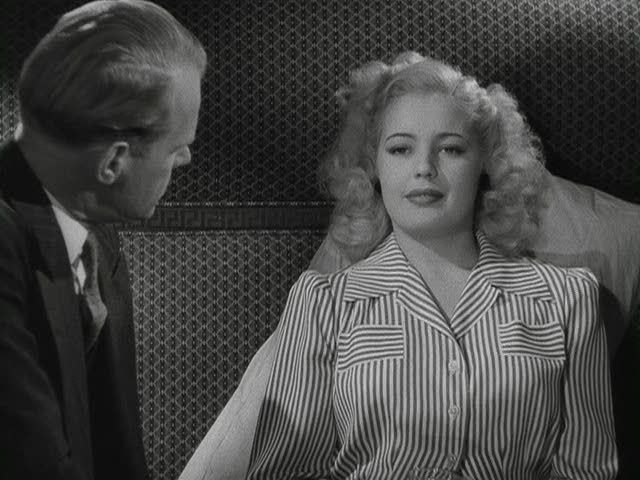
The plot provided the template for a later, much more popular film, Richard Fleischer's great 1952 noir The Narrow Margin. As in the later film, Sleepers West is about a young woman, Helen Carlson (Mary Beth Hughes), who is scheduled to appear as a surprise witness in a big case. She has some key information that could both clear an innocent man and trigger a tremendous public scandal surrounding a thuggish political boss who's currently running for governor of California. As a result, Helen's become a target for some pretty shady characters who would much rather she not testify, and she's under Shayne's protection on a cross-country train ride to San Francisco. While Helen's locked up in her room, disguised as an ailing woman with a brown wig to cover her platinum blonde locks, Shayne sits tight outside, trying to fend off the interest in Helen's location. Some of this interest comes from Shayne's inquisitive ex Kay Bentley (Lynn Bari), a low-rent Hildy Johnson girl reporter knock-off with a nose for a big story brewing. She sniffs around her former beau, playing cute cat-and-mouse games in which Kay and Shayne circle around each other, verbally sparring while trying not to reveal what they each know. His Girl Friday came out the year before, and its influence was obviously in the air.


Meanwhile, Kay's fiancé Linscott (Donald Douglas) who works for the political boss with such a keen interest in keeping Helen silent, gets recruited by the hood Izzard (Don Costello) to find Helen as well. Director Eugene Forde doesn't have a showy style, but he proves adept at balancing a huge cast where the wily intrigues of those concerned with Helen Carlson and California politics begin intersecting with all sorts of other little subplots and distractions. There's a lot happening on this train ride, and the film frequently diverts from its main plot to deal with other little bits of business, some of which wind up impacting the central narrative later on. There's the folksy small-town boy Jace (Louis Jean Heydt) who takes an interest in big-city dame Helen, confiding in her that he's running away from his wife and his stable but boring life to open a store in South America instead. There's a railroad dick (Edward Brophy) who isn't quite sure why he's been asked to stakeout this train, but who begins to suspect that Jace is an "embezzler" when he finds stacks of money — his life savings — in this average joe's suitcase. There's a conductor (Harry Hayden) making his last run before retirement, determined to bring the train in on time for his last haul even if it means speeding dangerously fast at all times. The film even spends a substantial amount of time with the black railroad porters, who turn in an assortment of broad, pop-eyed caricatures as they spread slowly exaggerating rumors around the train.

In the midst of all this chaos and confusion, Shayne himself threatens to seem somewhat unimportant by comparison, getting lost in the throngs. Indeed, the hesitant romantic tension between the gee-whiz Heydt and the tough-talking femme fatale Hughes is more interesting than anything Shayne can work up. The script also isn't nearly as amusing as the first film in the series, despite the watered-down efforts to build up some screwball-style patter between Nolan and Bari. It's all lightweight but undeniably amusing, as is the film's fondness for literal double-takes to punctuate its best one-liners — a great silent comedy throwback that fits in nicely with Nolan's broad, mugging style. Sleepers West will never be remembered as a classic of its form, but it's a decent, forgettable entertainment where the troop of admirable character actors filling out the margins wind up stealing the show from the main event.

Monday, January 5, 2009

Sergeant York


Sergeant York is truly a film from another time, infused with values and ideas that seem today entirely alien, at least as portrayed unironically in a modern movie: earnest religious conviction, equally sincere and unapologetic patriotism, the forgiveness of those who do one wrong. The real-life Alvin York, as played by Gary Cooper, embodies all of these attributes, as he transforms himself from a dirt-poor rural farmer and drunken rabble-rouser into a reformed Christian, and later a decorated World War I hero. Surprisingly, the film version of York's unusual life, made under the able guidance of director Howard Hawks, does not focus on his wartime exploits, instead developing at a leisurely pace with the emphasis on his time in rural Tennessee before he is drafted for the army.

In this sense, the film's title is misleading: York does not attain his titular rank until the very end of the film, and indeed the combat adventure promised by the title is a long time in coming. In its place, the film offers a religiously tinged drama of abjection and redemption. York is a rough, hard-living man, working a barren farm with rocky soil, getting as much of a crop as he possibly can out of this unforgiving land, providing for his mother and two siblings. As a result, he's also apt to strike out, going on periodic drinking binges with a pair of equally downtrodden friends, taking out his angst in bar fights and drunken revelry. When he falls in love with childhood neighbor Gracie (Joan Leslie), now all grown up, she gives him the drive to better his position in life, causing him to work harder than ever in his attempts to earn a piece of land with better soil. Meanwhile, the local preacher Pastor Pile (Walter Brennan) works to save York's soul, convincing him of the virtues of faith and forgiveness to such a degree that York even forgives and humbly acquiesces to the men who cheated and deceived him out of his one opportunity to get his own land. York transitions from a rowdy, temperamental drunk — he's introduced in a hilarious scene where his gunshots and hollers continually interrupt the pastor's sermon — into a near-saint, so humble and self-effacing that he'll turn his cheek at almost anything.

Only Gary Cooper could sell this radical transformation so convincingly. Cooper seems essentially decent even when he's playing a drunk and a habitual brawler who's been in and out of the local jails, and his basic goodness shines through the layers of slow-witted stubbornness and bitterness etched on his face. Cooper's portrayal even manages to overcome the inherent sappiness of the script, which attempts to smother the central performance with leaden Biblical references and sentimentalized stagings. York's conversion is symbolized by a scene that obviously references, in a stunning bit of presumption, the story of Paul's conversion on the road to Damascus: York is struck down off his horse by a bolt of lightning, powerful enough to bend his rifle (which he intended to use for vengeance) into a horseshoe-shaped loop. It's a heavy-handed contrivance, but Hawks' touch is felt in the following scene, which expresses the nature of York's conversion in a way that fits much more comfortably into the Hawksian universe. Following his solitary experience in the woods, York wanders into the nearby church, where Pastor Pile is leading the congregation in enthusiastic singing. As the singing intensifies — "give me that old-time religion," the worshipers chant — York wanders, as though dazed, into the crowd, which begins to gather around him. Hawks cuts between shots of the parishioners singing in tight clusters, and York's slow assimilation into their midst. The sequence culminates with a high-angle shot from behind the altar, as the pastor reaches down towards York, who is now kneeling in the center of the gathered throng. This is a distinctively Hawksian moment, one that has often recurred throughout his work, albeit not often in such a religious milieu: the people gathered in song, the music infused with emotional subtexts, as a lone individual is accepted into the group. Surely this is a vision of religious experience that would have made more sense to Hawks than York's lightning-bolt revelation on the road, which is staged in a much more saccharine, conventional manner, with hazy lensing and angelic choirs on the soundtrack.


Hawks continually makes his touch felt in this way, putting his own slant on material that is in many ways not a natural fit for his talents. He does have a strong feel for the folksy rhythms of everyday life in York's small rural community, and the early stretches of the film are packed with subtle down-home humor. The scenes of York carousing with his friends in the local bar — positioned right on the Tennessee/Kentucky border to take advantage of differing liquor laws — are a case in point, as Hawks nudges his camera in close to the three men. He sets up triangular compositions with Cooper in the middle and the two other men flanking him on each side, with the camera maintaining a conspiratorial closeness, as though it was huddled in to whisper and joke with the three drunken friends. Hawks also clearly has a lot of fun with a rough-and-tumble bar brawl, which manages to mix bawdy humor with rugged physicality. And one of the bar rats delivers an amazing running commentary on the largeness and impressiveness of a nearby dancing woman, showcasing the kind of irreverent sexual wordplay that feels much more attuned to Hawks' sensibility than anything else in the film.

Even the underwritten romance between York and Gracie — which proceeds almost entirely through the chemistry of the actors in a few key scenes, with little help from the screenplay — provides Hawks with an opportunity for some masterfully executed banter. York shows up at Gracie's house one evening to find her sitting on the porch with his rival, Zeb Andrews (Robert Porterfield). Once again, Hawks films it as a triangular composition, with York forming the pivot of the triangle in the center of the frame, bisecting the line between Gracie and Zeb. This composition becomes the basis for a great scene in which the two rivals trade barbs while jockeying for Gracie's attention, before York finally sends the other man packing. None of the romantic material is very fully developed here, but Hawks' graceful touch, coupled with the performances from Cooper and Leslie, manage to sell what otherwise would've been an wholly unconvincing screen romance.


The film remains interesting in its final stretch, the forty-five minutes dedicated to York's reluctant induction into the army. The recently devout York is convinced that fighting and killing are wrong, and tries to get an exemption as a conscientious objector on this basis. But when the army doesn't buy it, York goes off to war anyway, conflicted over whether he should actually fight or not. The result is predictable, particularly considering the film's timing: it was released in 1941 with an obvious eye towards inspiring American soldiers and potential soldiers. Still, the film's propagandist slant is unusual, dealing as it does with the potential conflict between religion and nationalism. What seems most extraordinary in today's context is that such a baldly patriotic film should posit that there even could be such a disjunction between God and country, that the tenets of religion might pose an obstruction to the orders of one's government, or vice versa. There is no hint of the suggestion, so familiar from modern wars and their accompanying propaganda, that God is on our side. York's moral dilemma is melodramatically staged, with lots of stirring shots of him sitting with his dog on a mountaintop, reading about the history of the United States, but it is no less genuine for all the corn piled on top of it. This is a moral quandry that centers around differing interpretations of Biblical texts, and conflicts between different forms of duty and ideals. If the film resolves York's choice with a pat reference to a single Biblical verse — "render unto Caesar that which is Caesar's..." — it nevertheless retains the moral integrity that it earned by asking these tough questions in the first place.

Ultimately, Sergeant York is a film at war with itself, or at least with its director. When Hawks is able to suppress or ignore the sentimental tripe of the story — as he does for most of the taut, excitingly filmed wartime action sequences towards the end — he crafts some typically fun, engaging drama. If the film occasionally threatens to sink under the weight of its own overbearing corniness and melodrama, Hawks is frequently able to buoy it back up with scenes of grace, intelligence, and economic emotional storytelling.

Thursday, November 20, 2008

Ball of Fire


Ball of Fire is a delightful romantic comedy in the "opposites attract" tradition, throwing together the stuffy, intellectual professor Bertram Potts (Gary Cooper) and the smart-mouthed burlesque girl and gangster's moll Sugarpuss O'Shea (Barbara Stanwyck). Potts is part of a group of eight professors putting together an encyclopedia, but the project stalls when they reach the entry for "slang" and Potts realizes that using out-of-date reference books just doesn't cut it: he needs first-hand knowledge of "the living language." To this end, he enlists Sugarpuss to give him some linguistic tutelage after witnessing her va-va-voom nightclub act. Sugarpuss agrees for her own reasons: her gangster boyfriend Joe Lilac (Dana Andrews) is under pressure from the cops and needs Sugarpuss to go into hiding because she could be forced to testify against him. The professors' research institute is naturally the last place anyone would look for her, and so Sugarpuss settles in, shaking things up with her vivacious manner and colorful language.

Director Howard Hawks makes interesting use of his two stars, casting them not exactly against type, but in notable variations on their types. Certainly, Cooper is not the most obvious choice for a stuffy intellectual with no knowledge of worldly matters, but his taciturn, stone-faced chilliness turns out to be perfectly suited to a man who suppresses any hint of emotional excitement in himself. It's a matter of context: when Cooper's playing a Western hero, his stoicism is seen as courage and determination, but here he employs essentially the same demeanor, the same basic set of expressions and body language, to indicate his dopey, nerdy cluelessness. It's a clever bit of counter-intuitive casting. Likewise, Stanwyck's world-wise, tough gangland babe is familiar territory for her, but with a softer, cheerier edge to it. She isn't a femme fatale or a hard frontier woman here, though there are touches of both in her character. She's too fun-loving, too exuberant and lively, for the darker corners of her personality to define her completely. In one scene, she teaches the professors how to dance, leading them in a conga line, bumping her hips and swaying her fists in time with the music, a wide and toothy smile spread appealingly across her face.

Stanwyck's introduction is one of the film's finest scenes, demonstrating Hawks' intuitive grasp of her strengths. When Potts first arrives at the nightclub to see Sugarpuss perform, she comes on singing and dancing as part of a loose jazz number. Stanwyck looks out of her element here, playing the leggy chorus girl in a sequined, barely-there outfit; she's not cut out for this kind of glamour. Her sexiness is too casual, too intimate, to come across on stage, and she only winds up looking uncomfortable, unsure of what to do with her hands or how to move. She looks at her most relaxed during the instrumental break, when she lounges sedately on the stage, her legs uncrossed and sticking defiantly out of her flimsy little dress, leaning her head back and smiling while she listens to the band play. It's obvious that Hawks recognizes that intimacy and relaxation bring out the best in his star, and the next scene is a typical Hawks moment that requires a huge crowd to gather around Stanwyck and listen to the music. She calls everyone in around a single table, where her drummer casts aside his sticks and picks up a pair of matches instead. Together, they deliver a hushed performance, the scrape and tick of the matches keeping the rhythm while Stanwyck leads the crowd in whispered chants of the chorus, "drum boogie." Hawks loves these kinds of communal music scenes, which are more often clustered around a piano or a guitar in his films, though a matchbox suffices just as well. The image switches back and forth throughout the scene between a Hawksian crowded frame with the whole audience peering in at the performance from behind, and a shot of the black, polished table, with the matchsticks tapping out their rhythm while Stanwyck's smiling face is reflected, blurred, in the table's surface.


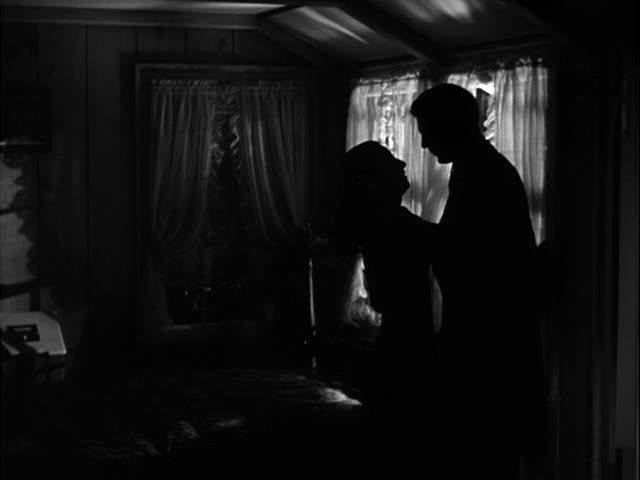
This brief scene is the film's most obvious visual touch from cinematographer Gregg Toland, who nevertheless peppers the film with moments of grace and elegance to offset its often farcical tone. Toland's moody, shadow-strewn images — like a lushly romantic kiss between the leads, shown only with black profiles in a darkened room — crop up periodically and do a lot of heavy lifting for the love story, which is otherwise a bit briskly developed amidst all the humor. Visually, though, Hawks' imprint comes through much more clearly, perhaps because he's blessed with a central cast of ten characters all living in the same house. Hawks' love of crowded compositions is especially apparent in the antics of the seven professors besides Cooper, who all warm up to Sugarpuss much more quickly than he does.

There's a shot of the old men all leaning eagerly over a railing to look down at the girl's arrival, their heads poking over the top like a row of wrinkled cabbages, that perfectly captures the boyish spirit of these old bachelors. The film's obvious starting point is Snow White and the Seven Dwarfs, a reference that comes up explicitly just once in the dialogue, but which is tipped off much earlier, in the opening scene of the old professors marching in tight rows of two through a park. They might as well be humming, "heigh ho, heigh ho..." Hawks gets a lot of comic mileage out of this group, clustering their expressive faces around Stanwyck and Cooper and giving them plenty of choice lines. Fittingly for a bunch of dwarfs, they're like children in old men's bodies, turning into unruly schoolboys once Sugarpuss arrives on the scene.

This is a fun, vibrant film that unites the talents of Hawks, Toland, and even Billy Wilder, who co-wrote the amusing, pun-laden script, which comes up with an at times dizzying array of post-Code workarounds for joking about sex without ever really talking about it directly. The film is breezily paced, and shifts nimbly between silly comedy, romance, and even a violent gangster yarn without ever seeming schizophrenic. It handles all these modes with a light touch and a game cast who are just consistently fun to watch.

Tuesday, September 2, 2008

Citizen Kane


In lieu of anything more substantial I might have to say about one of the most famous and critically analyzed films of all time, I'm going to limit myself to the progression of its opening, the two minutes of introduction leading up to the film's well-known first word of dialogue: "rosebud." Curiously for the opening of this most famous of films, the silent montage that introduces Orson Welles' first feature Citizen Kane is not quite as iconic as so many other images from the film have become, it has not seeped so thoroughly into pop culture — perhaps because its tone, if not its technique, is so distinct from the bulk of the film. The scene is introduced with economy, restraint, and moody static visuals that suggest a horror film to come: the dark, foreboding castle on the hill, shrouded in wispy tendrils of fog, captured in a series of shots that suggest movement not through fluid motion but by blending one static image into another, each new shot slowly inching in closer until, two minutes later, the camera is actually inside the bedroom of this castle's mysterious, dying owner. In a sense, Kane does become a horror film eventually, or a monster movie even, with Welles lurching around in increasingly thick layers of caked makeup as his bellowing newspaper tycoon ages into a bitter, melancholy old man — but it's not until the finale that the film returns to the quiet, elegiac tone of the introduction.

The series of images of the outside of the castle culminates in a shot of the window to Charles Foster Kane's bedroom, and Welles enacts a remarkable 180-degree change of perspective by subtly fading between this image and its mirror opposite, a shot from inside the room in which the window occupies the same position, except that Kane's bed blocks the lower portion. This fade is so subtle, so effective, that its psychological effect — the reversal from looking in to looking out, the closeness to and curiosity about Kane cultivated by this sudden switch — is felt long before more careful examination of the shots reveals how it was achieved. Even more fascinating is the series of fades that shifts from this long shot to the inside of a snow globe and then out again, to the hand holding it and then dropping it, all leading towards that startling shot in which the maid rushing into the room is fleetingly captured in the reflection from the shattered glass. From the very beginning of the film, in two minutes and just twenty shots, Welles announces his technical artistry, establishes the sad, lonely death of his protagonist, and creates a baseline of emotional quietude that undergirds the film even if it seldom reappears in concrete form.