Showing posts with label 1995. Show all posts

Thursday, May 5, 2011

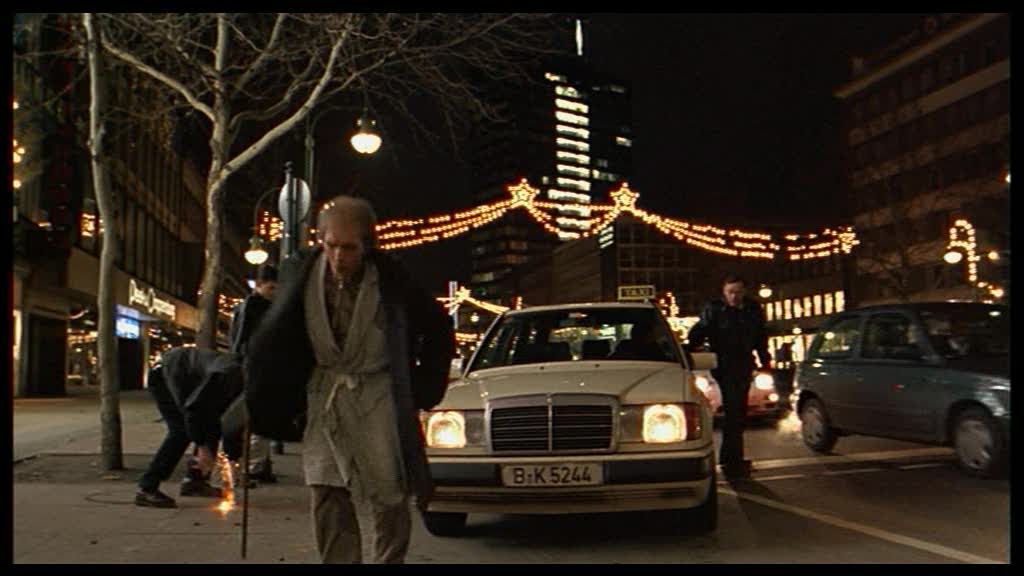
Fallen Angels


Fallen Angels is a moving, hilarious, poppy, absurd, moody film about urban disconnection and loneliness, alternately contemplative and hyperactive, filmed with the characteristic punchy stylization of director Wong Kar Wai. The city (Wong's Hong Kong home) is a peppy, colorful place, neon and bright, its colors brilliant, shining bright in the seemingly perpetual night: beautiful and dangerous. The film concerns itself with the people who live their lives almost wholly at night, shunning the daily nine-to-five grind in favor of nights packed with activity, with crime and romance and desperate attempts to connect with other wanderers of the night. In this city, it's often raining, the streets are slick and shiny, and time moves unpredictably, sometimes racing by in the blur of time-lapse traffic scenes, sometimes slowed to a crawl. The city's night is populated by a professional killer (Leon Lai) who wants to quit his job, his agent (Michelle Reis) who arranges his kills without ever meeting him in person, the mute He Zhiwu (Takeshi Kaneshiro) who spends his nights in closed stores, reopening them without their owners' knowledge and forcing passersby to partake of his wares, the emotional young woman Charlie (Charlie Yeung) who's obsessed with a guy who's left her, and the punky Blondie (Karen Mok) who just wants somebody to think she's special, to remember her.

These various drifters and loners collide off one another in the night, careening around on their oddball errands, their violent missions, their melancholy unkept dates in various smoky bars. As Zhiwu says, he's always looking to find "friends and confidants," so he "rubs elbows" with anyone he meets, which in his case usually means dragging his unwitting victims, kicking and screaming, into bizarre transactions. Running a laundromat, he forces a bum to get his clothes washed. Taking over a grocery store, he tries to convince a lady to buy eggplants — hilariously, she thinks it's improper since she's single, and what would people think? — and then saddles her with a tremendous watermelon. He keeps running into the same unfortunate guy (Fai-hung Chan) over and over again, first giving the guy a hair washing and shave under duress, then riding him and his extended family around the city in an ice cream truck, gorging them with cones and tremendous sundaes with candles flaring on top like it's a big birthday celebration. These surreal crimes are a weird way of getting attention, connecting with people — Zhiwu sees it as a kind of service, a way of making people happy in unexpected ways.

It's also a way to break through the barriers preventing communication. Zhiwu can't talk because there was an accident with expired pineapple, an in-joke based on the character with the same name and played by the same actor in Chungking Express, who was also obsessed with pineapple, and who says, as this Zhiwu does later in the film, that everything has an expiration date. The other characters in the film don't have Zhiwu's extreme communication problems, but they're similarly disconnected, isolated from one another in various ways. The killer and his partner communicate with one another primarily through technology. She faxes him maps of the locations for his missions, hand-drawn with marker, her little personal touch added to an impersonal business. Otherwise, they communicate through numbers: through the numbers of answering machine services, a common device in Wong's films, or the number of a particular song on a jukebox that the killer leaves as a message to his partner when he wants to quit. Unable to tell her his feelings face to face, he leaves a number that leads to a song about breaking up.

In the same way, he leaves behind clues for her in the apartment where he stays while on his missions. She's in the apartment before the killer, cleaning it and setting it up for him, much like Faye Wong's character in Chungking Express, rearranging the apartment of the man she loves to help him forget his ex-girlfriend. Wong films these scenes to emphasize the parallels and the disjunctions: the killer and his partner inhabit the same space in subsequent scenes, separated by time but not by space. Later, after the missions, she goes through the killer's trash, because it helps her learn about him, to feel close to someone she never actually meets face to face. And, as the killer reveals later, he knows she does this and deliberately leaves behind evidence of his actions and his personality, knowing that she'll be able to piece together information about him through what he throws away. In this way, they become closer while remaining at a physical remove; it is as close as they get to connection, as close as they get to really knowing another person intimately.
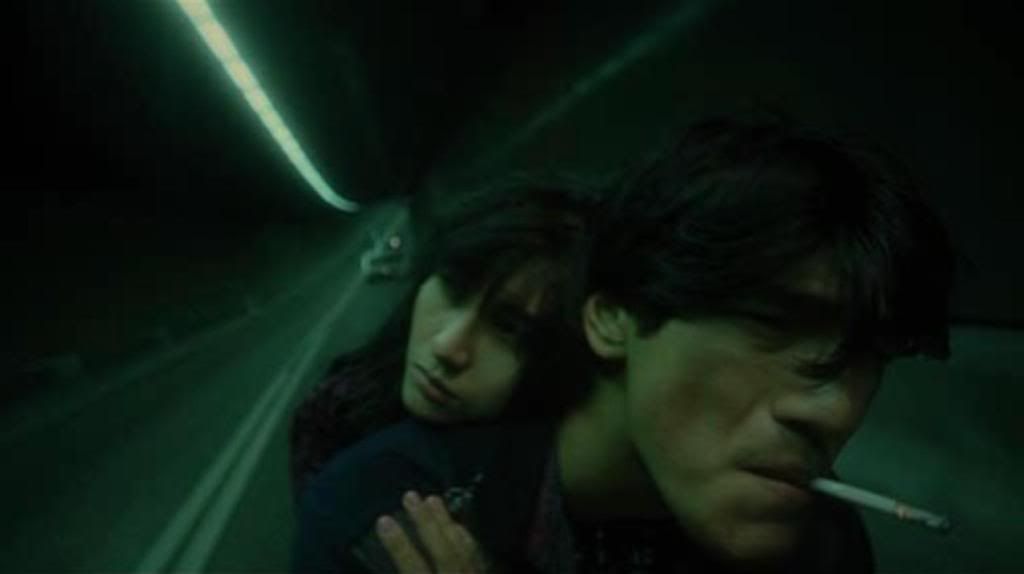

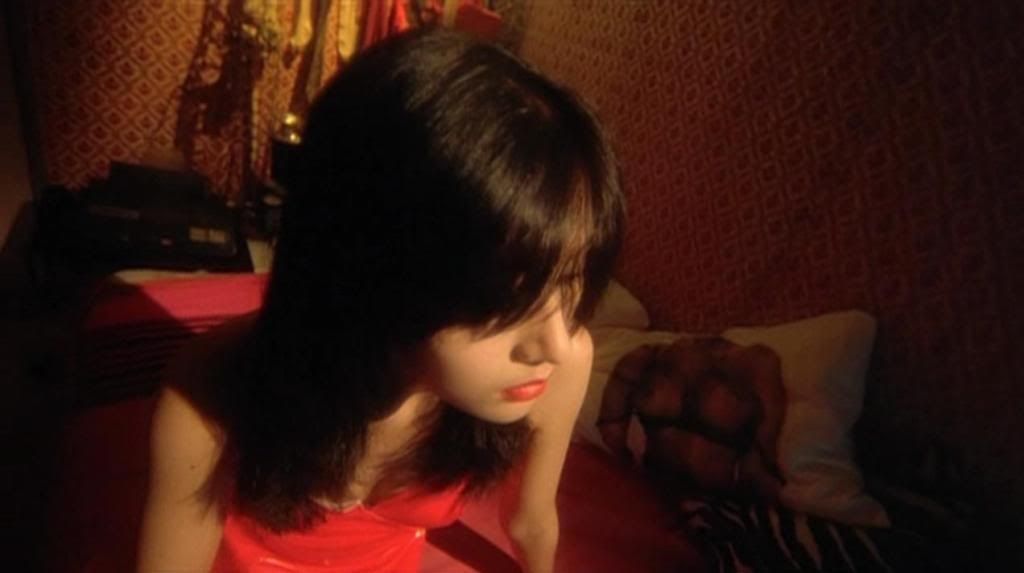
For the killer and his partner, this distance is something they try to maintain, even if they don't really want to; they pose, keeping their cool, playing their roles, even if they secretly yearn for something deeper, something more real. Towards the beginning of the film, the killer's partner says that she's not interested in any of the "friends" she visits, that it's all anonymous and impersonal for her, that these targets don't mean any more to her than the man she sics on them. She tries to live up to that image, projecting an aura of untouchable cool: her bangs combed over her forehead and hanging down into her face, nearly covering her eyes completely most of the time, as though if she hides her eyes, she can't see or, more importantly, be seen. She is, like so many of Wong's characters, an icon of cool with her rubbery fetish dresses and her bright red lips, her garters and her cigarettes, sexy and cool, remote, simmering and chilly at once. It's only in private that she betrays her reserves of feeling, masturbating violently and passionately in the empty apartment whenever the killer isn't there; in public she appears as the cold professional that her job requires her to be.

The killer is similarly haunted by emotions that don't suit his profession. He yearns, like so many other killers and criminals in the history of genre fiction, for an ordinary life, for this one last job to be his true last one; he wants to find a girl he can love, he wants to settle down. He occasionally runs into people who recognize him from a more innocent time; he wryly notes, in voiceover, that "even if you're a killer, you still have classmates from grade school around." When he meets a cheery old school friend who's about to get married, the guy tries to sell him an insurance policy, but he won't get one because it only reminds him that he wouldn't have anyone to name as a beneficiary. He's living an entirely solitary existence, with no friends, no family, no real life other than traveling from place to place, living for a day at a time in apartments scrubbed clean by his partner, killing people in a burst of gunfire and then moving on to the next mission.

The yearning for connection in this film is intense, as every character wants someone or something they can't have, while somehow remaining isolated from the people who do cross their paths. Zhiwu tries to connect with the chatterbox Charlie, a romance that seems counterintuitive but somehow perfect — a man who can't talk and a woman who can't stop pouring out her every feeling in a torrent of talk and tears — but she's still hung up on her ex and barely registers Zhiwu's presence. Blondie wants the killer, and is in fact convinced, whether rightly or wrongly, that they'd once dated and he'd simply forgotten her, but he only wants company for the short term.

Wong situates these gloomily romantic stories and characters within a glitzy, hyper city that seems to be losing its collective mind, unleashing bursts of unpredictable violence that recall the abrupt transitions from calm to bloodshed in his directorial debut As Tears Go By, or the climactic gunfight in Days of Being Wild. The overall atmosphere of slowly simmering heartache — all those shots of lonely people in lonely bars, bathed in neon glow — is thus constantly threatened by outbursts of absurdity or over-the-top violence. The most notable is a surreal but gory fight that suddenly breaks out in a restaurant around Charlie and Zhiwu, with a man named Blondie — the name of the girl who Charlie believes stole her man, though she seems to have a very different story from the Blondie who hangs around with the killer — at the center of the brawl. The sequence is frantic and motion-blurry, a frenetic outpouring of kinetic knife-fighting and screaming, streams of blood and people running desperately through the chaos.

These outbursts add to the sense of emotions flaring out of control; the city seems to reflect the turbulent confusion and desperate longings of these people, or perhaps it's the other way around. Either way, the landscape of Fallen Angels is emotionally explosive, with Wong's bold aesthetics creating the impression that the characters' feelings are being written onto the surface of the film, inscribed in every shaky pan and every over-saturated color.

Monday, October 25, 2010

Rendezvous In Paris


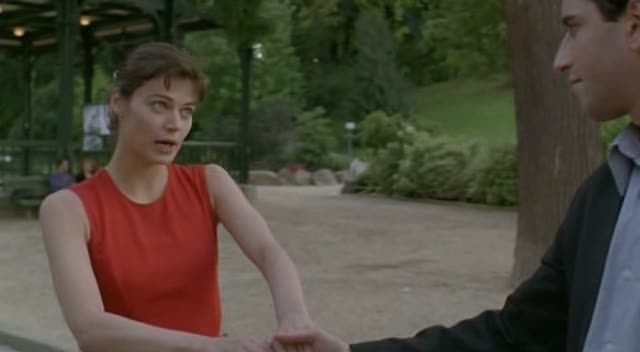
Rendezvous In Paris is one of Eric Rohmer's episodic films, like his sadly unknown 4 Adventures of Reinette and Mirabelle. This is a triptych of three stories set in Paris, with the concept of the rendezvous as the driving force and structural foundation of all three. The three stories concern two-timers and cheaters, and revolve around O. Henryesque ironies and coincidences, the stories marked by cute twists and wry reversals that mask the more quietly emotional subcurrents running through all three tales. These are simple, even stereotypical stories — one girl discovers her boyfriend is cheating, another cheats on her boyfriend with an older man, and a painter clumsily juggles two women who aren't interested in him — told with the directness and playfulness that Rohmer typically brings to his work. It is a light film, even minor, in the context of Rohmer's career as a whole, but its simplicity is also a virtue. The dialogue, as usual in Rohmer, is refreshingly open and eloquent: Rohmer's characters don't always say what they mean, or even know what they mean, but they always speak in ways that reveal their souls, whether intentionally or not. Rohmer seems to have a profound belief in the power of talk, even when it's idle banter or lies.

In the first of the film's three stories, Esther (Clara Bellar) becomes obsessed with the idea, mentioned in passing by an admirer, that her boyfriend Horace (Antoine Basler) is seeing another girl on the side. The rendezvous here is an idée fixe for Esther: she's told that Horace meets another girl at a certain café at 7:00 on the evenings when he's not with Esther. After introducing this structuring idea, Rohmer allows the plot to meander along, with Esther's obsession with this supposed meeting always percolating subtly in the background. She tries to study for a test, confesses her worries to a friend, and then indulges a playful flirtation with a man (Mathias Mégard) she meets in an outdoor market, and all the while she's thinking about Horace's supposed meeting with another girl.

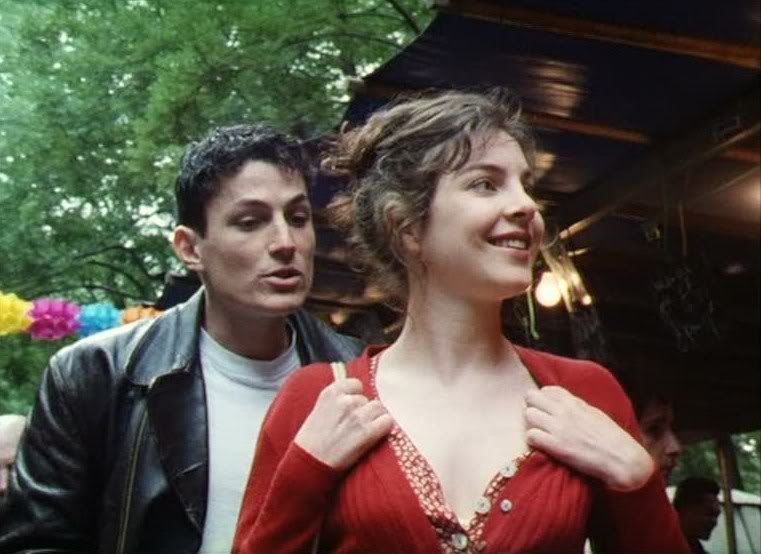
The scene where Esther flirts in the marketplace is a masterful piece of staging. As Esther walks along in the foreground of the shot, turning her head this way and that to look at the various stalls in the market, the man trails along behind her, telling her that he has a dentist's appointment and wants to pass some pleasurable time with her beforehand. Rohmer's camera drifts along with the pair as they walk, capturing the delicate struggle between them as the man flirts and tries to charm her, while she maintains a pose of faux-aloofness, pretending to be absorbed by the sights of the market around her, hardly ever even looking directly at the man who's strolling just behind her. It's a game, and a fun game to watch, this jockeying for position within the frame, this struggle to get the upper hand in a game of romance and flirtation. Rohmer captures the little details — Esther's studied air of casualness offset by a charmingly genuine smile, the way she keeps subtly cutting off her would-be suitor, preventing him from walking exactly next to her — that characterize these games between men and women, the games that are the subject of so many of Rohmer's films.

The games continue as Esther sets a fake date for the same café that Horace is rumored to frequent, a date she really has no intention of keeping. But when her wallet is stolen and then returned by a stranger named Aricie (Judith Chancel), who also has a date at that same café, it becomes obvious that Esther is meant to be at that meeting at 7:00, just as it becomes obvious to the audience what the ironic twist is going to be. The denouement is no less delightful for its obviousness and contrivance, though. It's a cutesy twist, a pat irony, but Rohmer uses it as a way of probing how the seemingly light games that men and women play with each other in love disguise deeper reservoirs of feeling. Esther plays off her confrontation with Horace as a game at first, acting as though she doesn't know him, letting herself be introduced as an old friend by Aricie, hiding bits of coded malice in her superficially playful patter. But it's obvious how much she's hurt, how shaken she is by this betrayal, and finally she can't hide behind the games anymore, and storms away. It's fitting that the final irony is also hurtful: she leaves without fulfilling her date with the man from the market, who shows up just after the drama has played out, looking around expectantly and hesitantly, already fearing the disappointment of the girl not showing up. These games of love, Rohmer suggests, are not the laughing matter that we sometimes pretend they are.


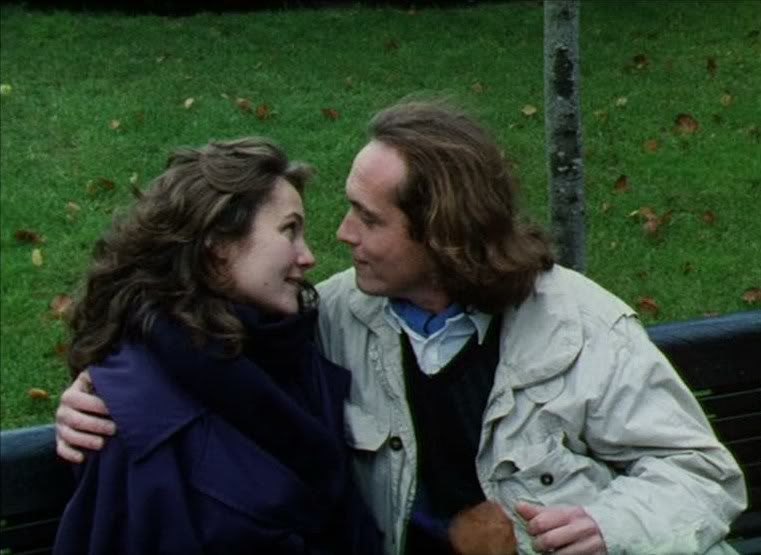
The middle story of this triptych also deals with unfaithful lovers, although from the opposite perspective: a woman (Aurore Rauscher) meets with a somewhat older man (Serge Renko) in parks around Paris, cheating on a longtime boyfriend who she almost thinks of as her husband. Rohmer's sense of geography, his attention to the nuances of place, is on full display here, as the two lovers meet in one park after another, always searching for novelty and "poetry" as they get to know one another and try to negotiate their clandestine relationship. They always meet in public, because the woman doesn't want to risk going too far by visiting his apartment, and as a result their relationship exists only in public, in parks where they walk with arms wrapped around each other, or kiss on benches in secluded areas, or playfully trot from place to place. Their conversation is at times banal, just idle chit-chat, at times touching on the deeper issues of love and intimacy that concern their relationship and the woman's continuing but increasingly loveless relationship with her other boyfriend.

The two lovers are unnamed, credited only as "elle" and "lui," suggesting that they are archetypes, paradigms of the dueling negotiations between men and women as they try to form relationships. They lie to one another, in small ways, telling each other conflicting stories about their desires and their feelings, never quite forming a solid bond: she's leading him on, keeping him at a distance, while he wants more but seems disappointed when she finally offers it. It's as though their relationship is perfect within the limited confines they set for it, and outside of that narrow purview it will inevitably collapse. As they slowly work towards discovering this truth, Rohmer revels in the beauty of the Parisian parks they visit, surrounding these hesitant lovers in rich, vibrant green hues that seem to enfold them at first, and which are increasingly replaced by bare trees and paths strewn with browning leaves as fall leads into the winter chill. Rohmer has always had a great feel for the seasons, around which he built a four-film series late in his career, and here he manages to film the chilly air, the coldness that makes these lovers want to cuddle closer on damp benches.

In the end, for their last tryst, the lovers play at being tourists in Paris, pretending that they've arrived for a sightseeing trip, and the metaphor of tourism in a subtle way comments on their own relationship. There's a sense of the temporary, of the scenic and superficial, in this relationship that exists only in parks. The ending is another ironic twist worthy of O. Henry, but as in the first segment, it's also an opportunity for the playfulness and games to give way to stark honesty. The woman, dropping her tourist act and dropping, too, the flirty charm with which she'd strung along her lover, finally tells him her true feelings, in blunt and painfully honest terms. It's yet another reminder that the charm and surface lightness of much of Rohmer's work can be deceptive, that the emotions at stake in these seemingly trifling stories can in fact be quite profound.


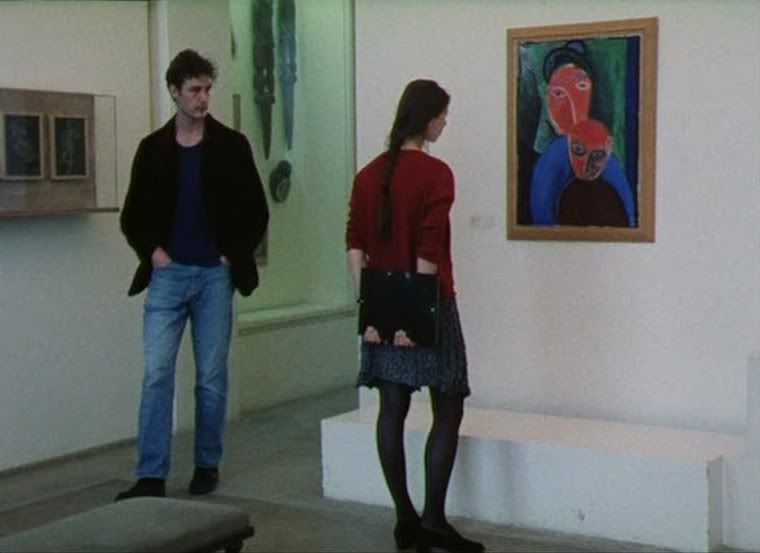
The third and final segment of Rendezvous In Paris, though, concerns much more frivolous and transient relationships than the more enduring ones in the first two stories. A painter (Michael Kraft) gets a visit from a friend of a friend, a Swedish woman (Veronika Johansson) who's visiting Paris and needs someone to show her around. He's not too interested in her, and she seems indifferent to him, and he takes her to a museum where he becomes fascinated by another woman (Bénédicte Loyen), who turns out to be married. There's a more subtle irony at work in this story than in the first two, with their broadly telegraphed twist endings. Throughout this story, the painter uses his work as an excuse, as a pretext, as a prop for conversation: when he doesn't want to do something, he says he's engaged in painting, and when he wants to impress a girl he talks about painting, pompously lecturing on form and color and history to seem intelligent. He's kind of a fraud and an arrogant jerk, like so many of Rohmer's male protagonists, absorbed in himself and so insecure as an artist that his art hardly seems as important to him as meeting girls. The irony arises because, at the end of the film, having passed an afternoon with the married girl who makes it clear that she's not interested, and having been stood up by the Swedish girl who he'd earlier intended to stand up himself, he's finally left alone with his painting, and the events of the day send him off in a new and potentially fruitful direction, injecting some life and vigor into his previously dull work.

This is, perhaps, another not-so-complex ironic twist, if a more subtly communicated one than in the first two segments. But it's Rohmer's sensitivity and wit that allows this point to resonate, as he patiently observes this cad at work and play. "I thought you were an artist, not a pick-up artist," the newly married girl observes wryly as he trots along behind her, much as the stranger in the market had behind Esther in the film's first segment. Like Esther, she seems playfully receptive, committed to her new husband but not so much that she won't indulge in a little harmless banter with this stranger, and even visit his apartment to see his paintings. And as in the first segment, Rohmer's fluency with body language is compelling to watch: the conversation in the painter's studio is a study in distance and intimacy, as the two slowly drift together only for her to abruptly break away, shattering the intimacy that occasionally threatens to develop between them. Their conversation, about art and the importance of searching for one's aesthetic, is a kind of mask for their innocent flirtation, but it's also the first time in the film, one senses, that when the painter talks about his art, he's doing so genuinely, rather than using his painting as an excuse or a tool or a symbol for his identity.

This kind of multi-leveled conversation, where surface meanings and subtexts intertwine and words are both revealing and deceptive, is typical of Rohmer. Even in such a simple, essentially light-hearted film, with its jaunty illustrated titles and interludes of street singers to introduce each tale, Rohmer is dealing with complicated emotions, with the question of how we discover what's important to us and what we want from our lives and relationships. This is, as with so many of the films Rohmer made in his later career, a youthful film made by an older man, with its cute young actresses and handsome leading men, their vibrancy and vitality bringing Rohmer's agile dialogue to exciting life. It's a fun film where even its humor and its playfulness contribute to its deeper themes.

Monday, September 27, 2010

Haut bas fragile


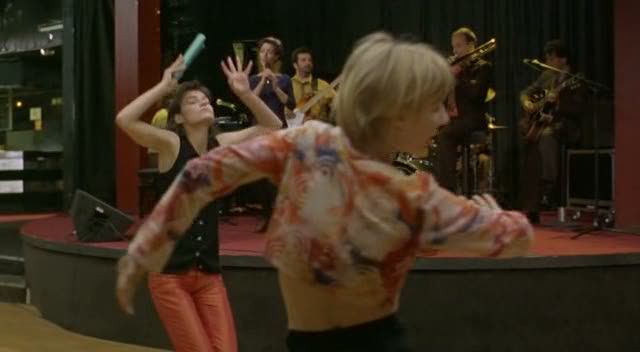
The films of Jacques Rivette often revolve around mysteries and secrets, around conspiracies and secret societies, the past hovering with foreboding over the present, his characters involved in labyrinthine plots that lead to places beyond understanding. Haut bas fragile is no exception, centered as it is on three young women whose lives are seemingly haunted by the past, by the secrets that linger all around them. Louise (Marianne Denicourt) has just awoken from a 5-year coma, and is determined to start a new life while pushing aside everything (boyfriend, family) that occupied her before her prolonged and involuntary absence from the world. Ida (Laurence Côte) was adopted as a child and is obsessed with finding out the identities of her biological parents, hoping that this knowledge will tell her something about her own identity. And Ninon (Nathalie Richard) is fleeing a life of violence that's shown in the opening scenes of the film, when a jealous ex stabs a man who she's dancing with at a club. These women, whose paths cross in ways both major and incidental over the course of the film, are all struggling to determine the courses of their own lives against the inertia of the past, simultaneously seeking the truth about the past and trying to break free of its influence.

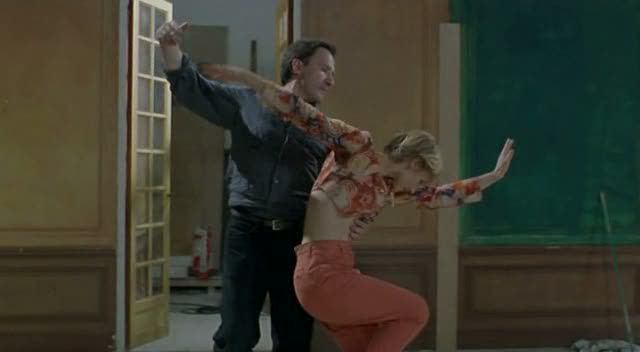
This is a common theme in the cinema of Rivette, this concern for the past, a theme that echoes through works like Secret Défense and The History of Marie and Julien, both films where history is a trap, a pattern that dooms the protagonists to cycles of repetition. In Haut bas fragile, however, this trap is continually sidestepped and defused, most notably through music and dance. The film is a musical — or at least, it increasingly becomes one, as the scenes of muscial interruption and performance become more and more frequent over the course of the narrative, transforming what had at times threatened to become a portentous drama into a playful subversion of this drama. Whenever the characters fight or argue, as they often do, their movements become formalized and graceful, striking poses in the midst of the fight, extending their limbs and becoming cat-like in their motion, until the music suddenly erupts and the argument has become a dance, often a dance of flirtation and seduction. It's through the dance, through music and movement, that the characters in the film fall in love and forge friendships, dancing around each other even as Rivette's camera, a playful third partner in these dances, dances around the actors.

This is a charming, exciting film, one in which Rivette lightly prods at some of his typical concerns. He introduces, as he often does, a secret society of sorts, a club that meets in an underground lair to play a sinister game of cards, presided over by the suave and mysterious Alfredo (Wilfred Benaïche). The game is a game of life and death, where one card dictates the killer and another card decides the victim in a real-life game of stalking and murder, a game that recalls Robert Altman's bizarre sci-fi film Quintet. But when Louise — who has infiltrated this mysterious circle through the help of the ubiquitous Roland (André Marcon) — draws the card of the killer, the game turns out to be a farce, a ruse designed to help her overcome her vertigo. The conspiracy dissipates like so much smoke, whereas in so many of Rivette's other films, the conspiracy — and the doubt over whether it exists or not — dominates the action and becomes an obsession for the protagonists. Louise's affliction is probably no coincidence, either, given Rivette's admiration for Hitchcock: whereas Scotty in Vertigo must undergo repeated traumas and psychological torture because of his vertigo, Louise overcomes hers in a few moments through a game. It's a conscious subversion of the thriller's psychosexual dimensions. Again and again, the playfulness of dancing and loving and verbal sparring — like the rhymes of Louise and Ninon's song as they celebrate their newly forming friendship — frees the characters from the constraints of generic drama.


Rather than becoming trapped in cycles of distrust and betrayal, these characters open up new possibilities through the seductiveness and goofiness of dance. The result is a series of happy reversals that send the film careening wildly away from the tragic course that it occasionally seems to be on. Ninon's thievery has short-term bad consequences for one ancillary character, but when she reappears later in the film, she's in a better situation than ever, happier than ever. It's as though Rivette is suggesting that tragedy need not be a permanent condition, and that the story of a life is exactly what we make of it. Thus, though much of the film's narrative is built around a sheaf of papers that provide incriminating evidence about Louise's father, these ultimately turn out to be something of a red herring. The papers threaten to shatter Louise's relationship with her earnest young suitor Lucien (Bruno Todeschini), but instead she doesn't allow the papers' revelations to disturb her; they're part of the past, part of a history that she's moving away from. The real purpose of the papers, in the end, is to provide an excuse for Ninon and Louise to meet, to go off in secret momentarily, and then to emerge, dancing and playful, Ninon twirling around her friend as Louise sways to the music and strikes silly poses as though caught in the flash of a camera. And Rivette's camera, for its part, spins slowly around the women as well, adding its own spiraling inertia to their graceful dance.

This film is a typically slippery and ambiguous delight from Rivette, a mystery whose solution lies, not in the revelation of secrets, but their submersion within an alternate narrative of love, flirtation, and affectionate friendship. It is, as with so many of Rivette's films, a celebration of femininity, where the attempts of the men to control and protect the women, to dictate the direction of the story, prove utterly inconsequential. Ninon and Louise, bonding over a shared distrust of Roland — whose intersections with all three women drive much of the narrative — joke about cooking and eating him, a reversal of the traditional conception of predator and prey. Roland and Lucien attempt to follow, to stalk, to track down these women, but in the process the women turn the tables, rejecting the conspiracies and lies of the men in favor of openness and seduction and the vitality of the dance. These are the positive, exuberant forces at the center of Haut bas fragile, which is packed with Rivette's sly wit and playfully experimental spirit.

Friday, December 11, 2009

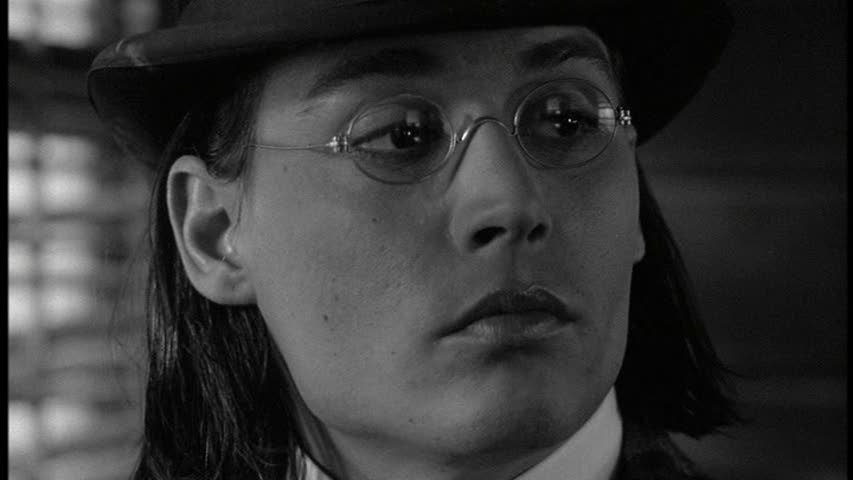
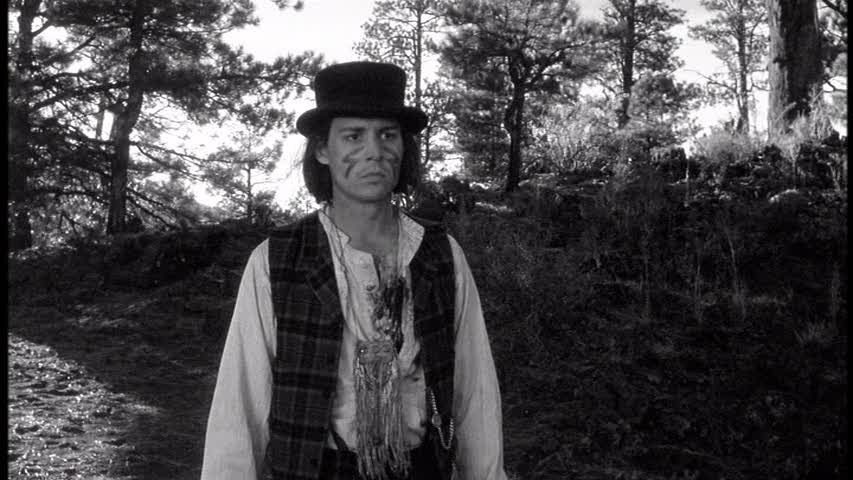
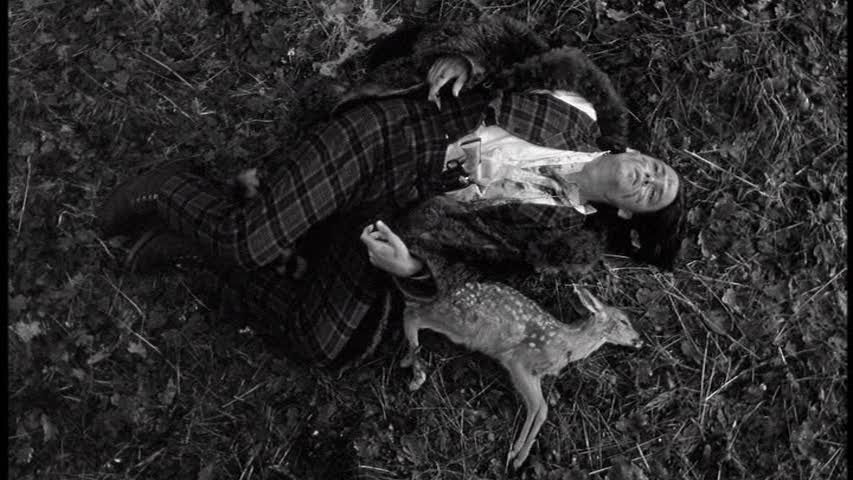
Films I Love #46: Dead Man (Jim Jarmusch, 1995)


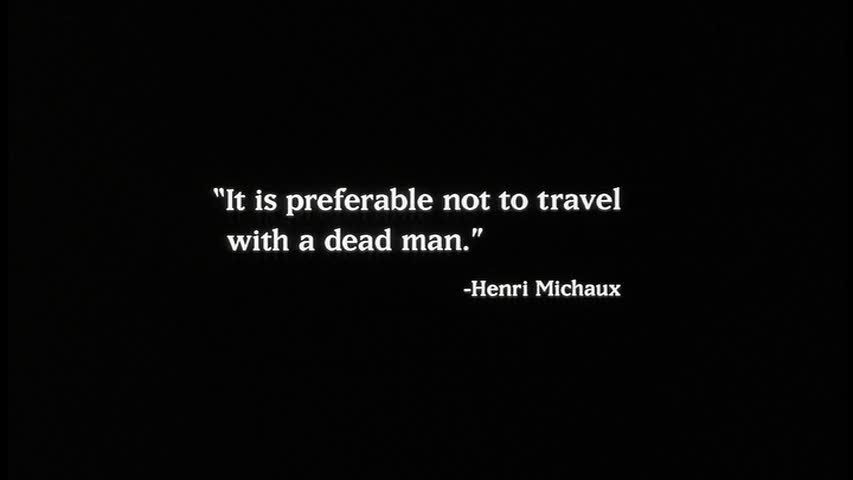
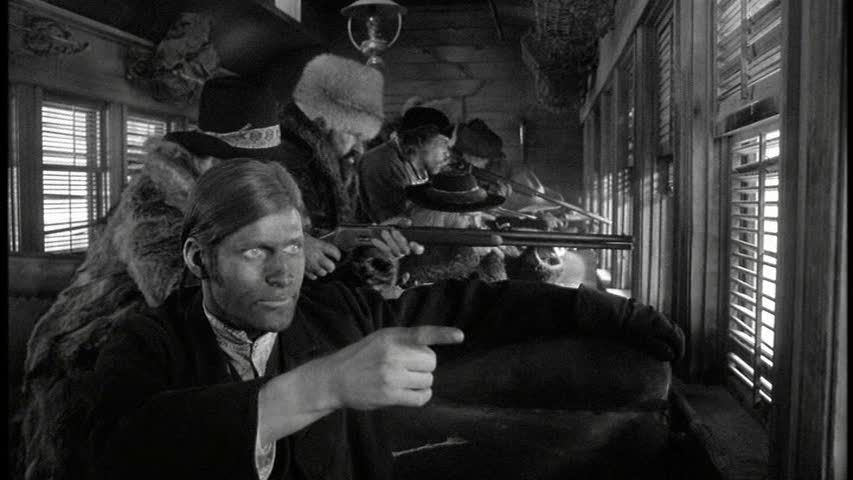
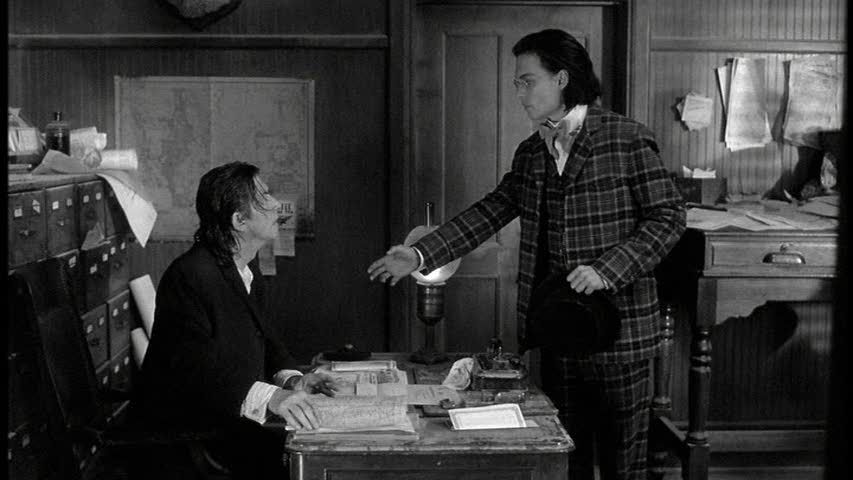
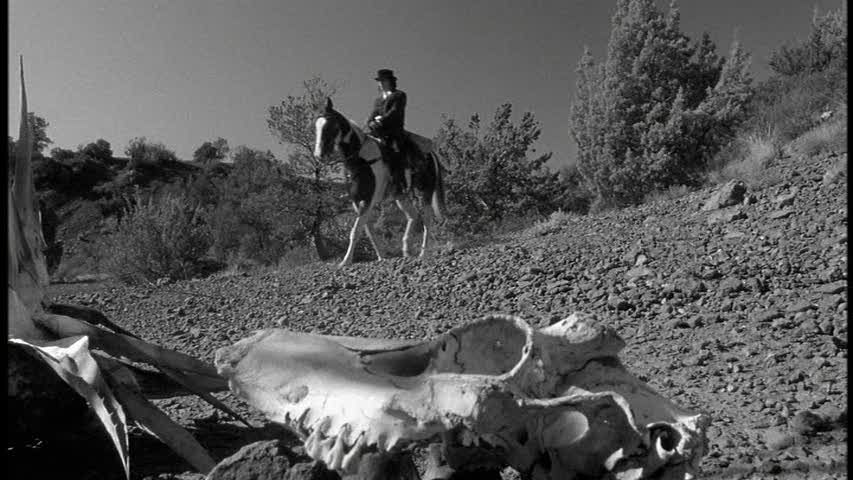
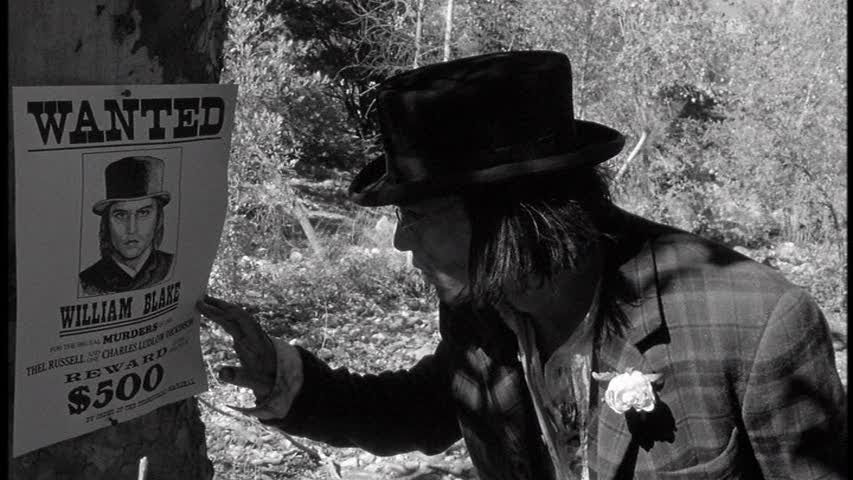
Dead Man is Jim Jarmusch's feverish American nightmare, a poetic vision of the American West — and the movie Western — as an endless plain of absurdist violence and senseless destruction. In the film's opening scenes, the accountant William Blake (Johnny Depp) rides on a train bound West following the death of his parents, towards the promise of a new job. But a coal-smeared train worker (Crispin Glover, in one of many memorable cameos dotted throughout the film) prophetically warns him not to trust in anything, not to expect sense or justice from the West. After all, he points out, as behind him the men on the train hoot and holler, shooting at buffalo through the windows, this is a land where millions of animals have been killed for no apparent reason. It's this idea that carries through the rest of the film, the idea of the American West as a surrealist frontier, where buffalo skulls line the walls, where friendliness is greeted with gunfire, where even sensual pleasure is deadly. Blake arrives in the West to find he doesn't have the job he was promised, but his true downfall comes after a gunfight in which he's wounded, fleeing with a bullet in his chest and an unjust dual murder charge chasing him.

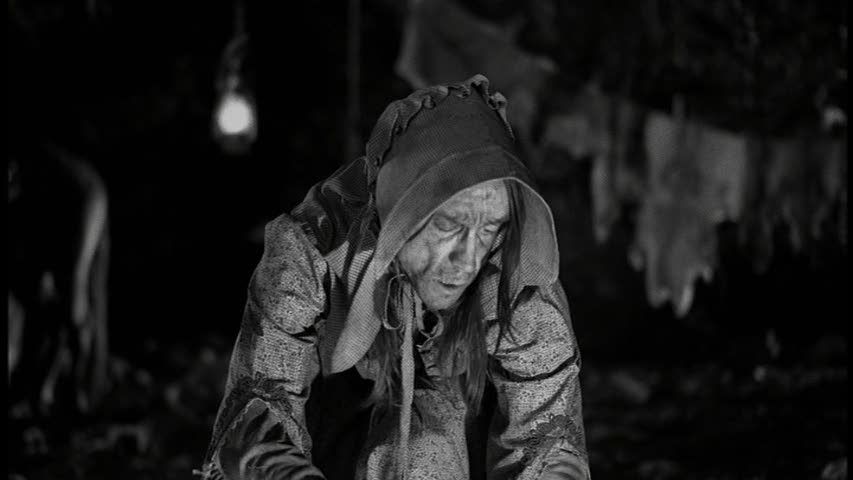
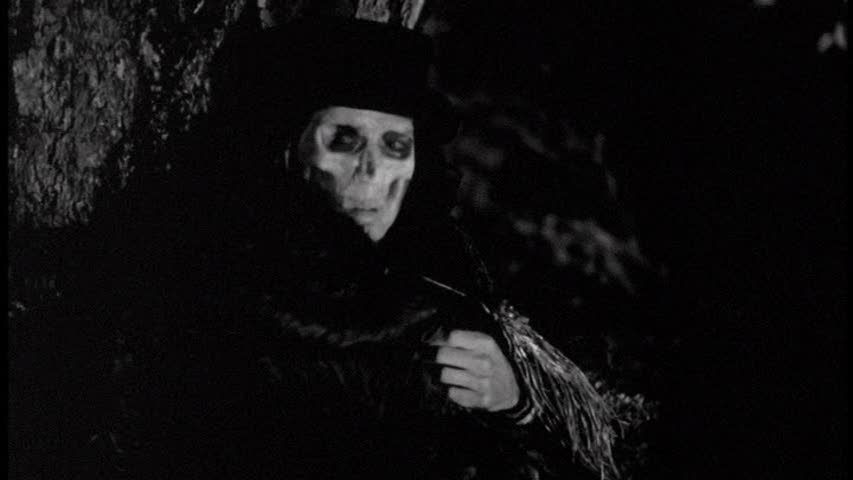
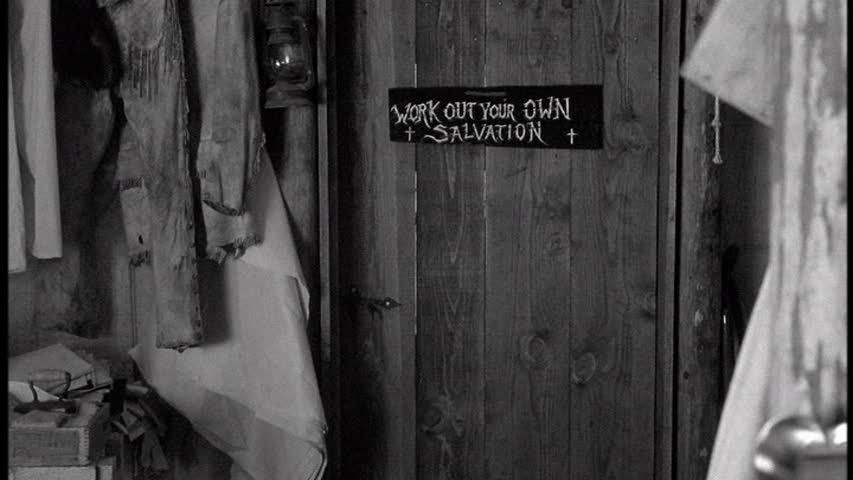
Wounded and weak, Blake is discovered by the Native American Nobody (Gary Farmer), who believes that his new ward is actually the poet William Blake. Together, they embark on a metaphysical journey towards Blake's eventual death, a spiritual adventure that Nobody approaches as if the other man is already dead, which maybe he is. In any event, Blake and Nobody's journey causes them to cross paths with Iggy Pop as a cross-dressing outlaw, an aging Robert Mitchum as a shotgun-toting factory owner who always appears in front of his own self-portrait, and Lance Henriksen, Michael Wincott and Eugene Byrd as a trio of ornery bounty hunters. The film's bursts of violence are darkly comic and ridiculous, with Depp's Blake evincing a serene detachment while his enemies are dispatched through Rube Goldberg-like bullet trajectories. The film is a fable of the West, a deconstruction of the scrubbed-clean Hollywood Westerns of old: Jarmusch makes his film about the exploitation of the Native Americans, the casual brutality and violence, the greed and power lust that drove men into the West, grasping at everything they could find. Jarmusch's poetic dream-story suggests an alternative to the cowboys vs. Indians mythology; this is the West in all its raw, nightmarish intensity, a West awash in blood and grit.

Friday, November 13, 2009

La cérémonie


Claude Chabrol has always been especially interested in the dynamics of class power, examining the nature of class with a dry, caustic wit. In La cérémonie, this examination plays out in a remote small town where the isolated lower-class maid Sophie (Sandrine Bonnaire) is hired by the Lelievre family. They're a typical bourgeois family, aloof and condescending. The father, Georges (Jean-Pierre Cassel), is an authoritarian Mozart lover, and his wife Catherine (Jacqueline Bisset) is a slightly bitchy control freak, while their kids Melinda (Virginie Ledoyen) and Gilles (Valentin Merlet) are mostly just indifferent. These people aren't evil, they're just wrapped up in themselves, to the point that they virtually ignore Sophie once she's in their house. As Melinda says, they treat the maid like a "robot," but despite Melinda's enlightened pose, she's really no different than the rest of her family, elitist and snooty, at heart concerned only with her own problems.

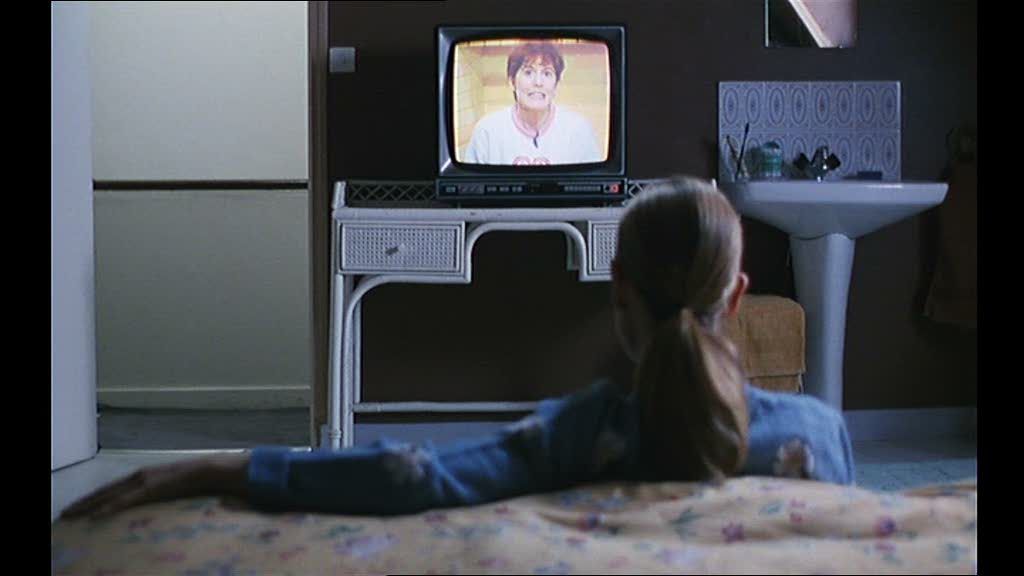
For her part, Sophie is insecure and introspective, locked up inside herself. She has no hobbies or interests of her own, and her only activity is to drown herself in the glow of the TV screen. Melinda, always playing at the liberal role, says that her parents are trying to hypnotize the maid with the TV, suppressing her with it: the television as an instrument of bourgeois control. In fact, Chabrol presents the television as central to this bourgeois existence. Both classes watch the TV, though they use it in different ways. Early on, Gilles and Georges are experimenting with a new satellite TV set, changing channels so fast that each one is just a momentary flicker: they're not so much watching anything in particular as demonstrating the excess that their wealth has purchased, an overload of so many channels that it'd be impossible to ever watch them all. Later, when they finally do watch something in earnest, it's a performance of Mozart's Don Giovanni, with the whole family gathered on the couch, weighed down with a thick libretto and recording equipment and the father dressed up in a tuxedo as though he was actually going to the opera rather than watching it on TV. Chabrol even makes a joke at his own expense by having the Lelievre family watch his 1973 film Les noces rouges on the TV, Stephane Audran and Michel Piccoli clenching and plotting murder on the small screen; it's a suggestion that all films, no matter their content, can be subsumed as commercial, bourgeois entertainments.

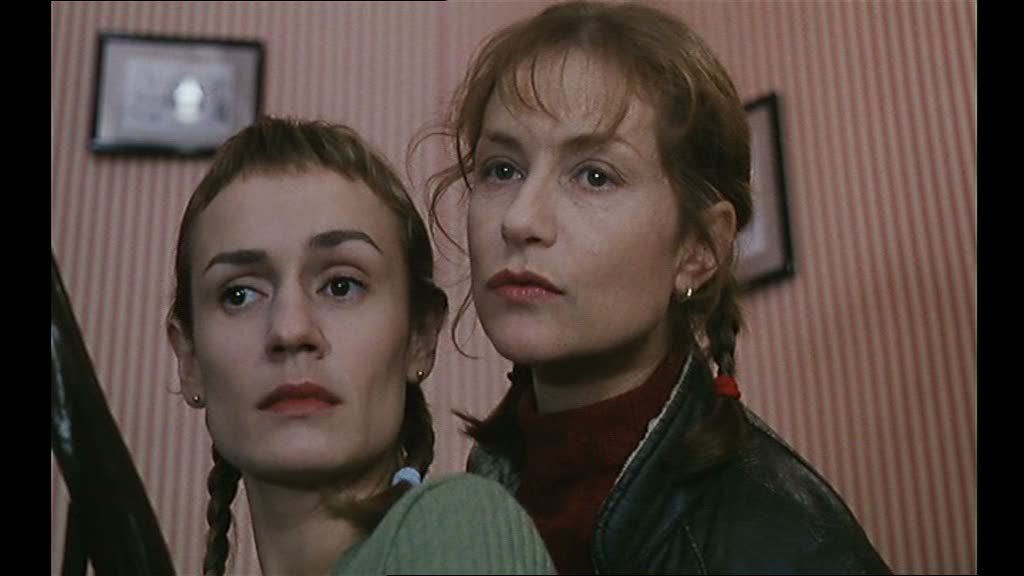
Sophie is indiscriminate in her viewing, sitting down in front of the television's pale blue glow, illuminating her face in the dark of her room: she watches game shows and commercials and televised movies without ever seeming to care what's on the screen, as long as it's on. She doesn't even seem to know how to change the channels or operate any of the TV's for-her-daunting set of buttons. Often, she is joined by the local postmistress Jeanne (Isabelle Huppert), who's despised by the Lelievre family for her insouciant attitude and defiant bad manners. Jeanne is, in contrast to the tightly wound Sophie, a true free spirit, angry and flighty and goofy, as full of gossip and nasty words as Catherine herself. The two lower-class women bond over a shared violent past. They trade stories — Jeanne was responsible for the possibly accidental death of her own baby, while Sophie heavily implies that she murdered her father through arson — then collapse on Jeanne's bed giggling and tickling one another. They're like sinister sleepover pals, coming together based on their shared pain and isolation, and the shared impression that they are trampled on by the upper classes. As their relationship develops, they become inseparable, watching TV with arms wrapped around one another, bathed in the same blue glow that was once Sophie's solitary comfort. The way Chabrol constantly shoots them so close together, their faces pressed against one another, emphasizes their similarity, the resemblance in Bonnaire and Huppert's angular features and hard stares. Their relationship hints at a lesbian sexual undercurrent — especially at the climax, when Jeanne poses seductively against her friend, her stockinged leg lifted up at an angle — but mostly they seem to be becoming the same person, morphing together.


Chabrol observes all of this activity from his characteristic wry distance; the film's tone is flat and nearly affectless, and its small touches of humor are all the more surprising because of it. As Jeanne and Sophie grow closer, and the postmistress begins to inculcate the maid with her revolutionary, anti-bourgeois attitude, the tone around the Lelievre house begins to change. It's all about power games for Chabrol, about who's in control. Sophie's rebellion begins with a birthday party for Melinda, which she leaves after preparing all the food and getting everything ready. She'd told Catherine beforehand that she had somewhere to go, and her employer accepted it grudgingly, but when the moment actually comes and Sophie has the nerve to leave, Catherine feigns shock and outrage. It's as though the family doesn't really expect their servant to have her own life — Georges prefaces one conversation by telling Sophie that her life is her own and he doesn't want to intervene, then proceeds to forbid her from seeing Jeanne anymore. For Chabrol, class is power, and more than that class is freedom: Sophie's life is constrained and hemmed in merely because of her station.

In that respect, Sophie's dark secret, hinted at from early on, is a visible indication of her lower rank, her limited opportunities: she cannot read, and she proudly does anything she can to mask this humiliation, to prevent others from discovering her inability. This marks her out as an inferior in most interactions; it is a physical manifestation of her lower class and limited education. Chabrol is driving home, again and again, how class defines choice: even when Melinda accidentally gets pregnant, it doesn't destroy her life, not in the same way that Jeanne's life was changed by her pregnancy. In fact, the only one to truly suffer from Melinda's pregnancy is Sophie herself; the family shrugs off the revelation, knowing they have the means to deal with this problem however they choose.

La cérémonie is a dark and mordantly funny satire of class relations from one of the cinema's most persistent probers of class. As the film patiently peels back the layers of convention and artifice from class interactions, the tone gets steadily uglier and more bitter. Resentments and tensions boil over, and Chabrol once again tears apart bourgeois pretensions and the implicit hierarchies of bosses and employees.

Wednesday, August 19, 2009

Films I Love #41: Safe (Todd Haynes, 1995)

Todd Haynes' Safe is a creepy, oblique horror movie about the horror of the "normal" life. It's a horror film in which there is no creeping monster behind the sedate suburban façade, no locus of evil that preys on the frazzled housewife Carol (Julianne Moore). The suburbs themselves are the source of the horror here: the ornately empty houses, the bored chatter of housewives with no real interests and nothing to talk about, the antiseptic routines of daily life, the lack of connections even to her own family. For the gay Haynes, straight existence itself is terrifying, a hellish, deadened nothingness with few escape routes. The first half of this film, in which Carol is isolated within her own palatial home as though stumbling in a narcotic daze, is a kind of warm-up for the pastel-colored Sirkian mise en scène of Haynes' Far From Heaven, in which he channeled Sirk's brightly colored vision of suburban Americana and the social ills lurking underneath. Safe is more oblique than both Sirk himself and than Haynes' later Sirk pastiche. There's something chilly and suffocating about this film, in the weirdly distanced interiors, so carefully set-decorated and lit, their precise geometric contours and patterned colors isolating Carol within a space where nothing betrays a hint of life or motion or vitality. Haynes' camera simply sits at a distance, observing stoically as this ordinary woman comes apart at the seams, becoming convinced that her very environment is trying to poison her.

The second half of the film largely abandons this stylized suburban crypt as Carol checks herself into a New Agey treatment facility that deals with amorphous illnesses caused by environmental factors. There, the urbanely sinister guru Peter Dunning (Peter Friedman) dispenses a variety of arcane "cures" and self-help advice to his patients. Haynes is not-so-subtly mocking the various charlatans and hippie commune-type facilities that exist on the fringes of this kind of Californian lifestyle, and especially the empty promises and rhetoric of so-called AIDS "cures." Carol, fleeing from the monotony of her zombified home life, winds up somewhere even worse, alienated even from her family, truly alone. By the film's end, she's locking herself up in a containment chamber where she can retreat from the world and try to come to terms with whatever her mysterious illness might be. With its halved structure, Safe asks whether the cure might sometimes be worse than the disease, or whether there is really any escape from the kind of soul-numbing existence depicted here, the deep existential emptiness that Carol feels eating away at her from within.

Tuesday, July 21, 2009

Showgirls


Paul Verhoeven's Showgirls must surely be among the most absurd movies ever made, a gaudy, nasty, hysterical tribute to excess and bad taste. Made from a script by the notoriously exploitative Joe Eszterhas, Verhoeven's collaborator on Basic Instinct and a seasoned peddler of sleaze, the film is a glorious mess, a neon overload of sexploitation. It's the inspirational story of an ambitious young girl who fights and claws her way to the top of her profession, struggling to be the best she can be, fighting to make her way on sheer talent and drive alone. Uh, yeah. That's what it's supposed to be, anyway. That's the kind of movie that Showgirls models itself on, the movie where the small-town girl makes it in the big city because she's just so talented, so tough, so pretty — she gets the gig, gets the guy, wins the hearts of all America in the process. These kinds of films are capitalist fantasies, melodramatically romantic visualizations of the idea that anyone in America can pull herself up by the metaphorical boot straps. There's a reason these kinds of films are so popular, why they're an enduring mainstay of the American cinema, virtually a genre unto themselves: everyone likes to feel like this success is possible, that anyone can make it with enough hard work and dedication. Everyone likes to think America is a meritocracy where those with talent rise to the top.

Showgirls is, defiantly, outrageously, not this type of movie, though it pretends to be right down to the very end. It is a remarkably straight-faced parody of the genre it supposedly represents, probably because its lead actress, Elizabeth Berkley, seems to think that's the kind of movie she's in. Berkley pours herself into her character, the aspiring dancer Nomi Malone. She stomps around, she pouts and cries and squeals (actually squeals!) with delight, she eats junk food with the ferocity of a true carnivore. She dances so vigorously she looks like she's in the midst of a particularly tough fight, flailing her arms around as though throwing punches. She pumps her hips and flashes her body for anyone who'll look. She intones Eszterhas' frankly ridiculous dialogue with earnest intensity. She completely sells every moment, and it's obvious: Nomi thinks that her arc in this film is one of self-discovery and self-realization, because that's exactly what Berkley thinks. By the end of the film, as she's unleashing vicious roundhouse kicks (Nomi, kung fu master!) at the head of a brutal rapist, or dramatically heading out of town in her six-inch stripper heels, she seems triumphant, redeemed, a new woman born from the shell of the old, a beautiful butterfly emerging from her cocoon. Or some crap like that, anyway.

In her own way, Berkley delivers an astonishing performance, though certainly not a "good" one. Then again, what would be a good performance in this context? The character of Nomi demands a certain badness, a wide-eyed enthusiasm and intensity. She's larger than life, and Berkley is the perfect actress to play Nomi because she's just so raw and sloppy, so awkward, so completely without barriers. She never seems to catch on to the fact that she's in a farce, which is probably a good thing, because that would kind of ruin the fun. And oh what fun there is. The film is delirious and pretty much batshit crazy, a neon-tinted orgy of American enterprise run amok. It's a delicious satire, because on its surface it doesn't seem satirical at all. It's a fairly accurate portrayal, one suspects, of exactly what goes on in this kind of milieu: the bitchiness, the catfighting, the trading of sexual favors, the ugly, seedy underside to all the glitz and glamour. Nomi arrives in Las Vegas, running away from her past, hoping to become a dancer. She starts working in a strip club, not exactly her dream, but this film would be a tragedy if Nomi wanted to be a ballerina and wound up just shaking her tits and ass instead. No, it's a comedy because the peak of her ambition, the one thing she absolutely wants to do, the dream job that would drag her out of this hellish strip club, is to be a showgirl in a flashy topless revue at one of the Vegas nightclubs. Yes, she's a stripper who dreams big: she wants to show off her tits and ass in a "classy" setting. (The quotation marks are necessary because this is Vegas' idea of "class," class as conspicuous consumption; the brighter everything shines, the classier it is.)

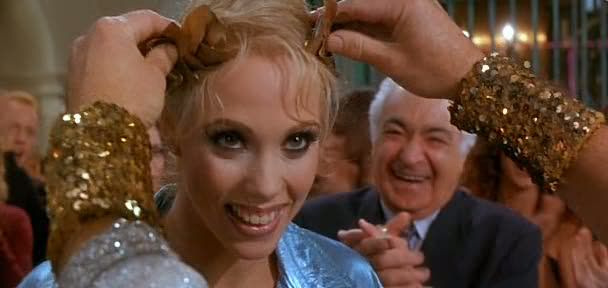
There's a hilarious scene when Nomi first sees the revue, which is called simply "Goddess." It's a faux-arty melange of leaping half-naked dancers, explosions and lots and lots of glitter, and at its center is the sexy, bitchy superstar Cristal Connors (Gina Gershon). The show looks like the Cirque du Soleil with bare boobs, gloriously tacky and gaudy. And Nomi is transfixed, raptly watching from the crowd as though confronted with a heavenly vision, her hands unconsciously mimicking the poses of the dancers on stage. Her eyes shine: she knows what she wants. Clearly, Verhoeven is having fun here, offering up all these kitschy surfaces without comment, as though to say, here it is, here's the American dream in all its glory, this is the pinnacle, this is something to aspire to. It's virtually the same attitude as the director took in his equally opaque satire Starship Troopers; both films offer up exactly what Verhoeven assumes that audiences want. It's a gesture of contempt, in a way, giving them what they want in the crudest, most overblown fashion. You asked for it, you got it. Want lots of mindless violence, things blowing up, blood and gore and video game special effects? Here's Starship Troopers. Want sex and glitz and conspicuous consumption, want excess and naked bodies? Here's Showgirls. One suspects that these two films together represent what Verhoeven sees when he looks at the American film industry, and it's apparent that he doesn't like what he sees.


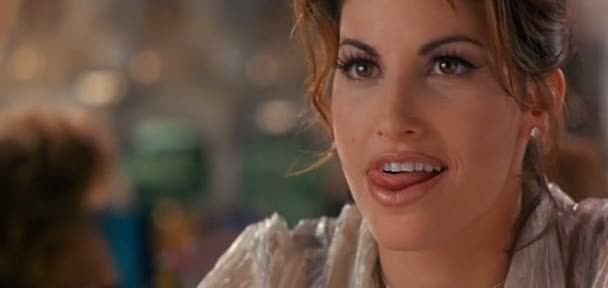
This perspective gives the film a wicked edge, a biting undercurrent that elevates it to the level of a camp classic, albeit a deliberately campy one. It's all in the details, like the richly funny performance of Gina Gershon, who plays the whole film with a predatory, crooked smile, permanently baring her teeth as though ready to bite into her prey. If Berkley probably isn't in on the joke, Gershon definitely is, and she feeds into the campiness of the project, relishing the overblown dialogue, rolling her tongue around her lips, looking at Berkley's Nomi with naked lust in her eyes, pouting her lips out until they look like shelves. She's lively and funny and bitchily endearing. Berkley, on the other hand, plays every scene with a deer-in-the-headlights stare; her Nomi is half lost little girl and half vicious tough dame, with a switchblade and a temper.

This is fitting, of course, because one of the film's unspoken (but nonetheless central) jokes is that Nomi just isn't that talented: she looks at home in a strip club, and even seems to be a talented stripper, as far as that goes, but once she's elevated to the moderately more demanding burlesque show, with its complex routines and choreography, she seems out of her element, awkward and ungainly. She goes far because she generates "heat," which seems to be code for everyone wanting to fuck her, both the men and the women. And indeed, one of the film's recurring lines is that she dances like she fucks, which is especially funny in light of an early scene at a club where she's spastically dancing, flailing her limbs around, obviously thinking she's cool and sexy when in fact she looks like a malfunctioning machine; one expects to see sparks flying from her joints. Sure enough, later on, when she gets a comically overwrought sex scene with entertainment manager Zack Carey (Kyle MacLachlan) in Zack's pool, she fucks him by straddling him and then flailing wildly, flopping around in the water like a fish that's just been hooked. At the moment they orgasm, she throws her head back into the spray of foamy water pouring from a dolphin statue's mouth, another of Verhoeven's typically unsubtle jokes. The film is all about details like this. See also: the way, immediately before this jaw-droppingly unsexy sex scene, Zack switches on the green neon palm trees by his poolside, doing it with a suave flick of his hand, as though it's meant to seduce her. The even funnier second punchline is that it does seduce her; of course Nomi gets off on neon.

The film is bathed in neon, too, simply saturated in it. It must be one of the most garish, brightly colored films ever made, and its visual sensibility matches its over-the-top acting and soapish storyline. It's a brilliant, deadpan satire, hilarious and tacky and relentlessly overblown, nearly operatic in its frenzied excess. It's a film about the American dream, but not quite in the way it pretends to be: it's about people who scratch, claw, betray and sleep their way to the top, about crass commercialism and the marketing of sexuality (this last of course a great irony since the film itself was marketed on the strength of its sexual excesses). It's a film in love with its own melodrama, in love with the neon overload of Las Vegas even as it satirizes and mocks it.

Monday, January 26, 2009

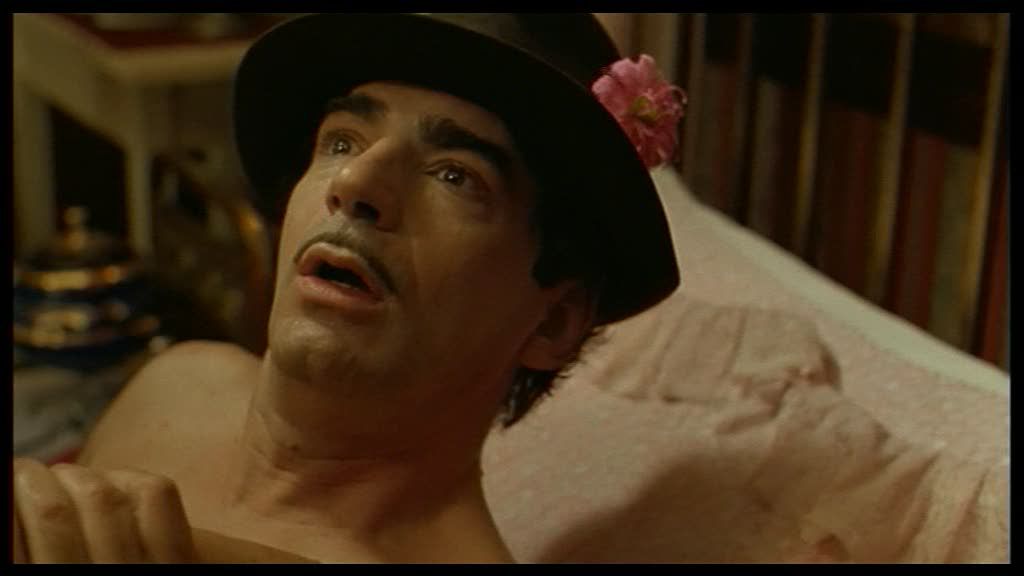
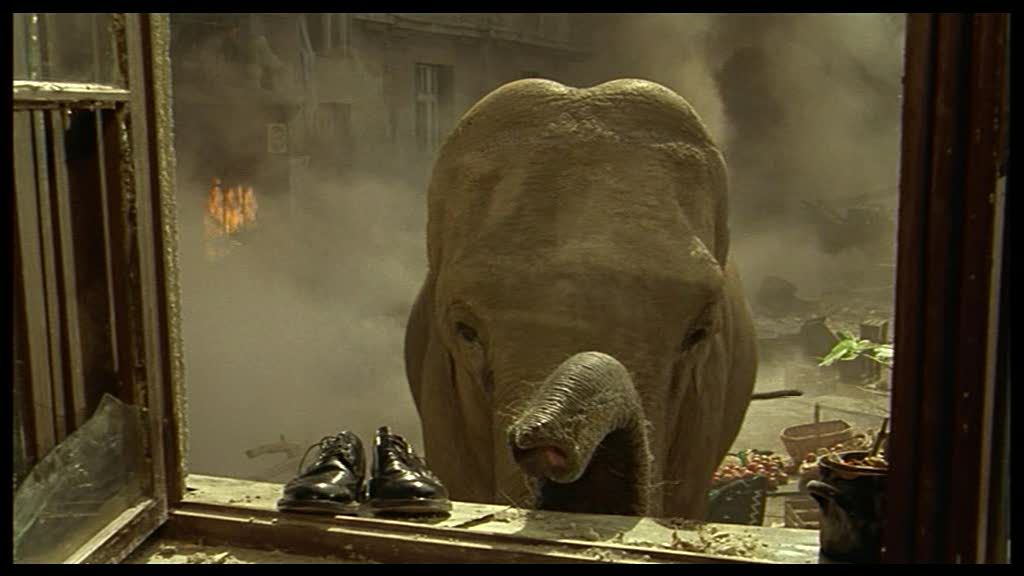
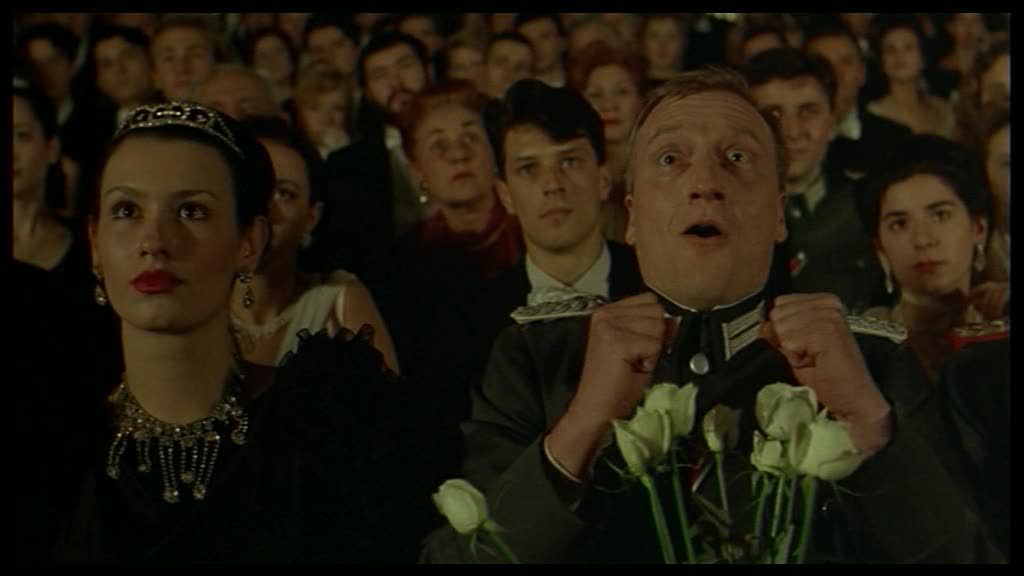
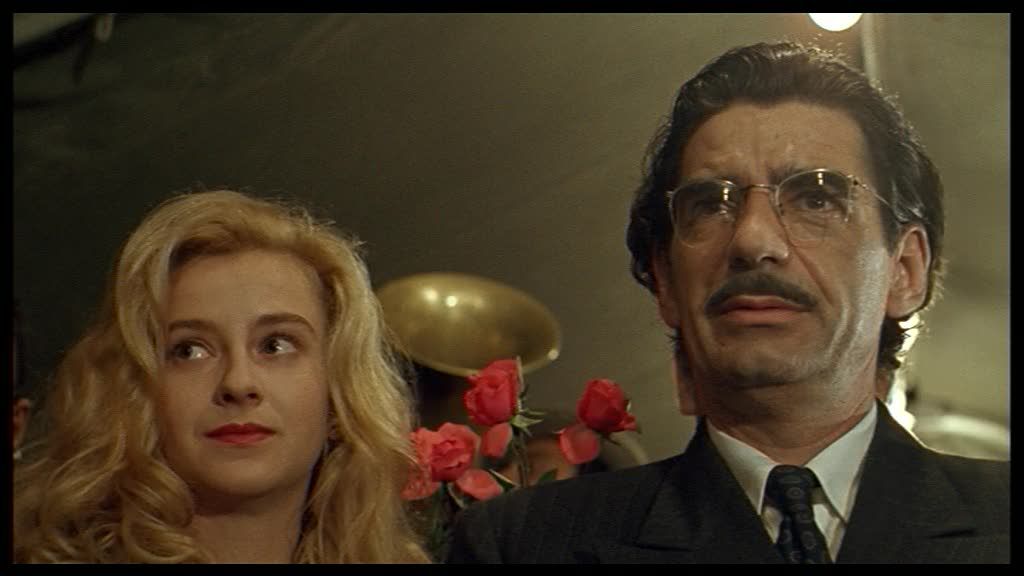
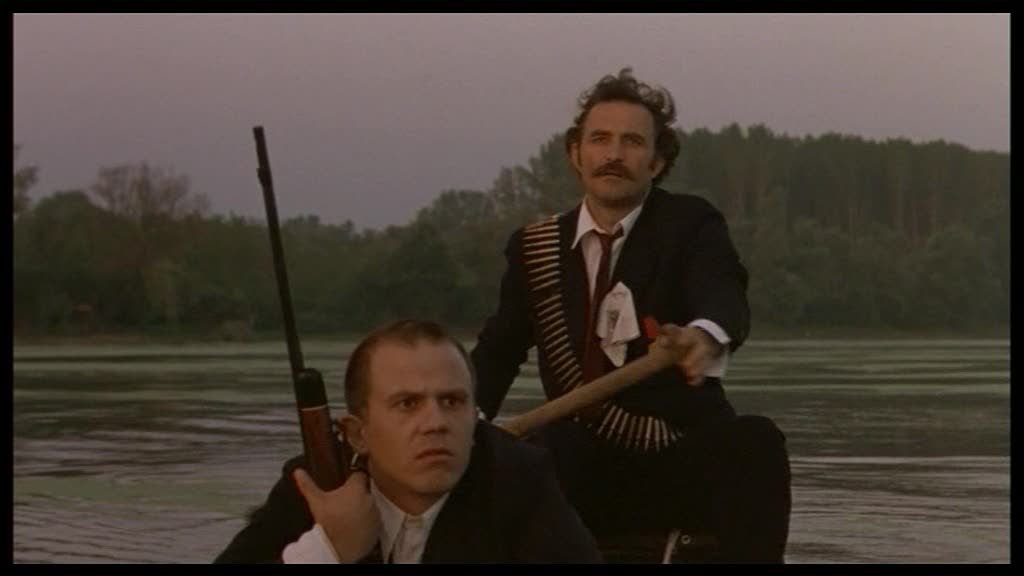
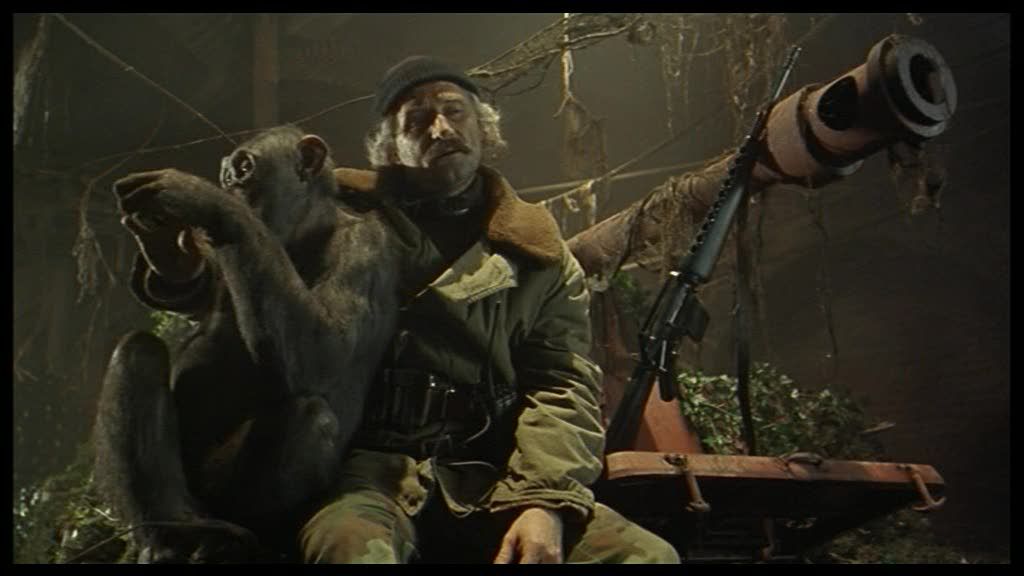
Films I Love #16: Underground (Emir Kusturica, 1995)


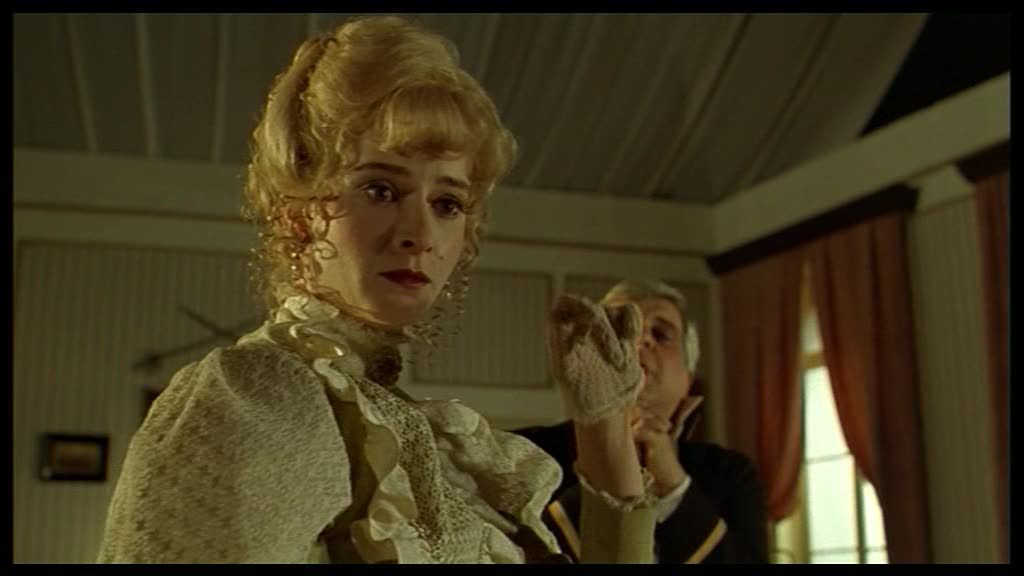
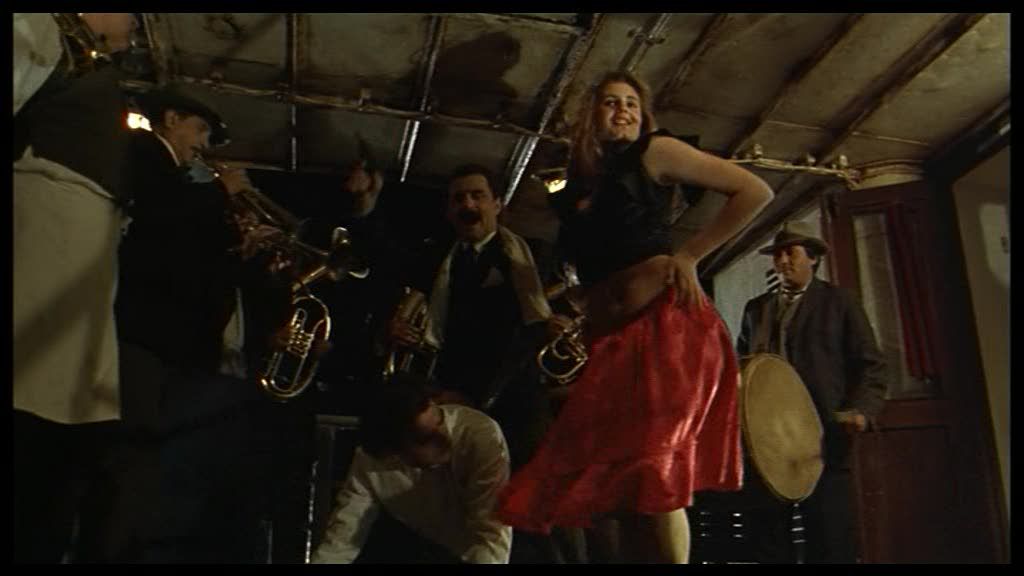
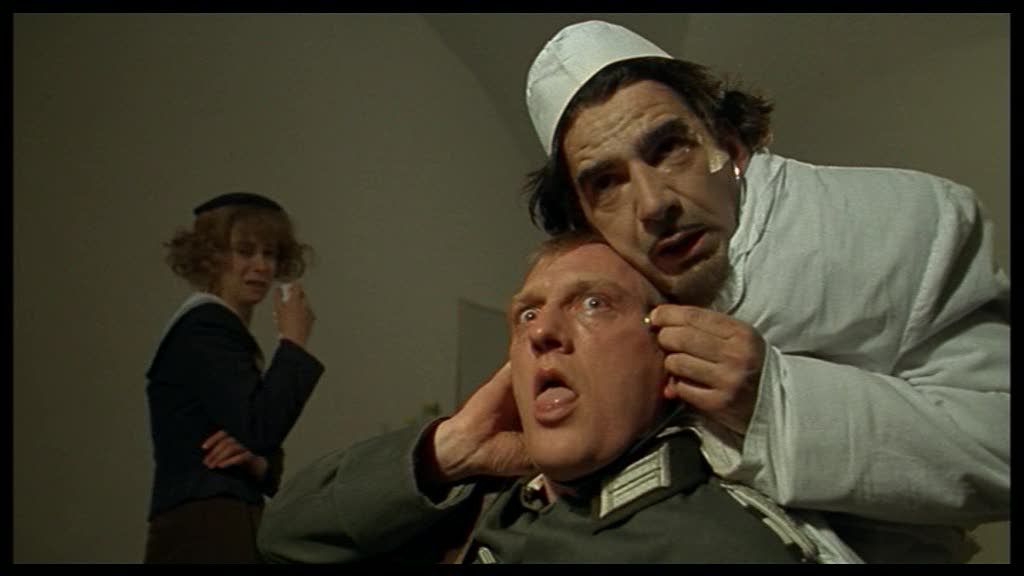
Underground is Emir Kusturica's wildly ambitious, relentlessly energetic, tragicomic allegory for the history of his native Yugoslavia from the Nazi invasion of World War II up to the disintegration of the unified country in the bloodshed and genocide of the Balkan wars. It is primarily the story of two friends, Marko (Miki Manojlovic) and Blacky (Lazar Ristovski), who start out as black marketeers providing weapons to the anti-fascist resistance, even as they become embroiled in a love triangle over the actress Natalija (Mirjana Jokovic), who they both adore. The film's allegorical structure becomes readily apparent when the war ends, and Marko becomes a prominent figure in Yugoslavia's new Communist government, while keeping Blacky and many of their other friends hidden in an underground bunker, unaware that the war against Germany has ended. It's an obvious metaphor for the deceit and manipulation rampant in Yugoslavia under Communism, with the common people kept in the dark while the party leadership enriched themselves and gorged on power.

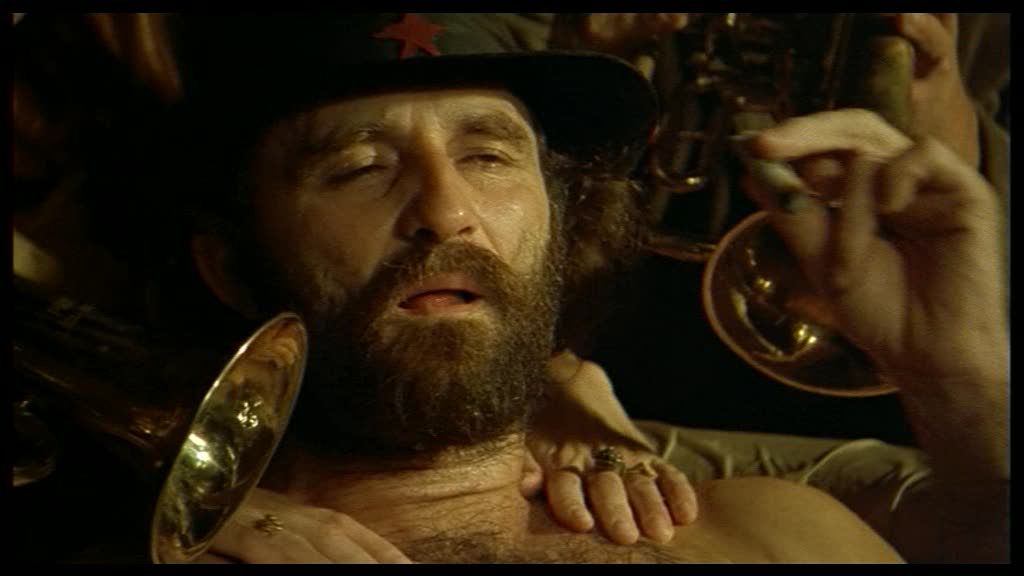
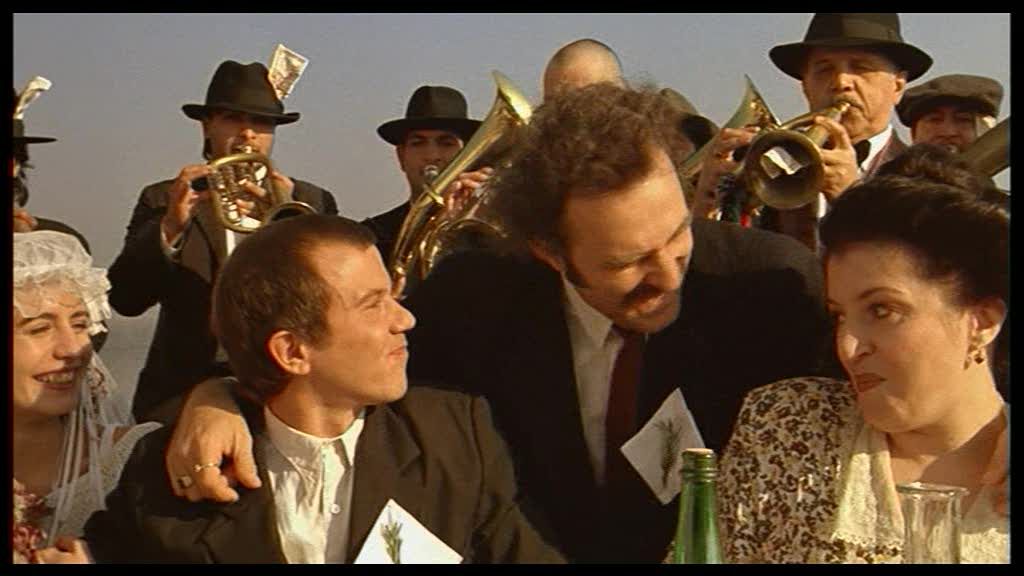
With such weighty themes threading through the film, one would expect it to be a heavy and ponderous experience, especially considering its nearly three-hour running time. Rather, it is surprisingly light on its feet, with a boisterous spirit and a comic exuberance that only begins to falter when the film takes a turn into horrifying darkness for its final act, mirroring Yugoslavia's descent into the scourging fire of ethnic war. Before this bracing coda, the film is often darkly hilarious even at its saddest or most violent moments. Blacky, a fun-loving soul with a generous heart and a prodigious capacity for celebration, often drafts a full marching band into following him around everywhere he goes. The film is propelled by the pulse of the region's music, a constant ba-bum-bum-bum rhythm emanating from the ever-present horn section. Underground is a joyous, celebratory, delirious satire that traces a country's history in the overblown, comic saga of a pair of friends whose story reflects the larger struggles of their nation.