Showing posts with label 2004. Show all posts

Monday, March 4, 2013

The Bridesmaid


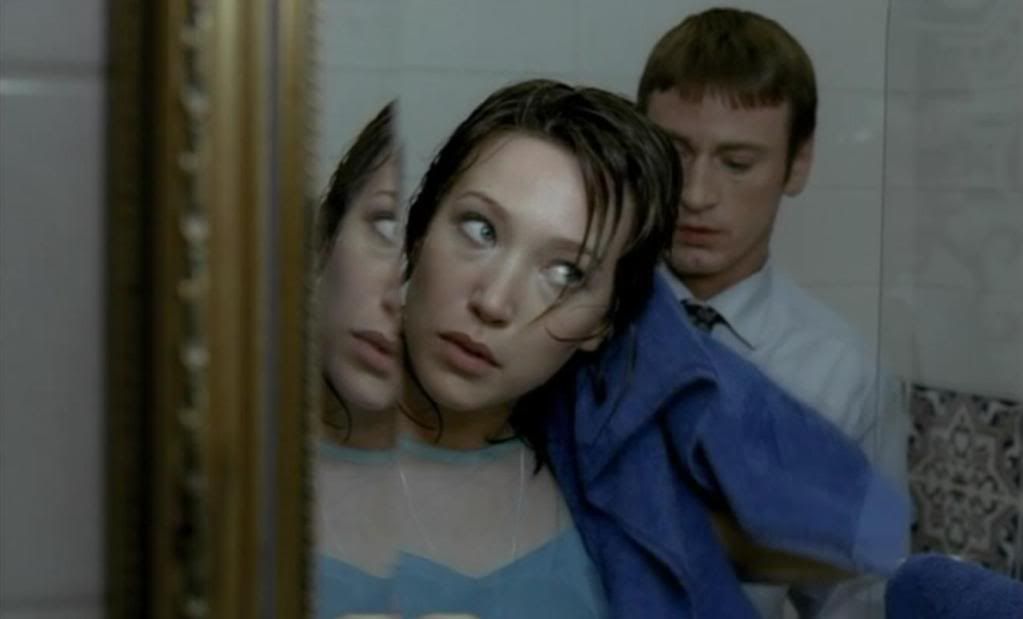
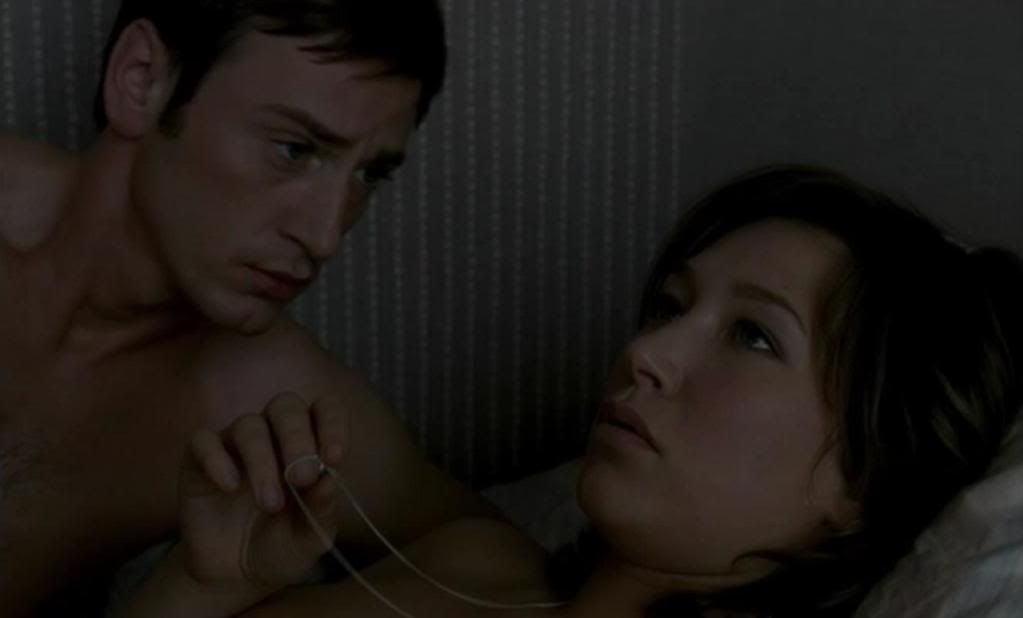
The Bridesmaid is a somewhat typical film for Claude Chabrol, a chilly, unsettling, at times darkly humorous movie that's nominally a thriller but doesn't put much emphasis at all on plot or mystery or even suspense. Philippe (Benoît Magimel) is a serious young man who falls in love with Senta (Laura Smet), a bridesmaid at his sister's wedding, a cousin of the groom. Senta, unfortunately, turns out to be utterly crazy, a lunatic femme fatale who says that the couple are fated to be together, and whose declarations of love are from the very beginning tinged with more than a hint of obsession. Philippe, who must be somewhat crazy himself, just can't stay away, even when she demands that he kill for her, and he keeps convincing himself that her crazier moments are playful performances — she's an actress, she says, who's had roles with Woody Allen and John Malkovich — rather than genuine expressions of the deeper malaise lurking behind her placid face.

Smet gives a fine, subtly creepy performance here, projecting a mild, blank exterior with an occasional slyly upturned smile, her very tranquility what makes her so unnerving. Magimel is playing a role very similar to his part in Michael Haneke's The Piano Teacher: a handsome, ambitious, slightly smug young man who gets way over his head in a relationship with stakes he doesn't fully understand. Not that Philippe is entirely normal, and there's an aura of sexual dysfunction throughout the film that feeds into the passionate affair between Philippe and Senta.

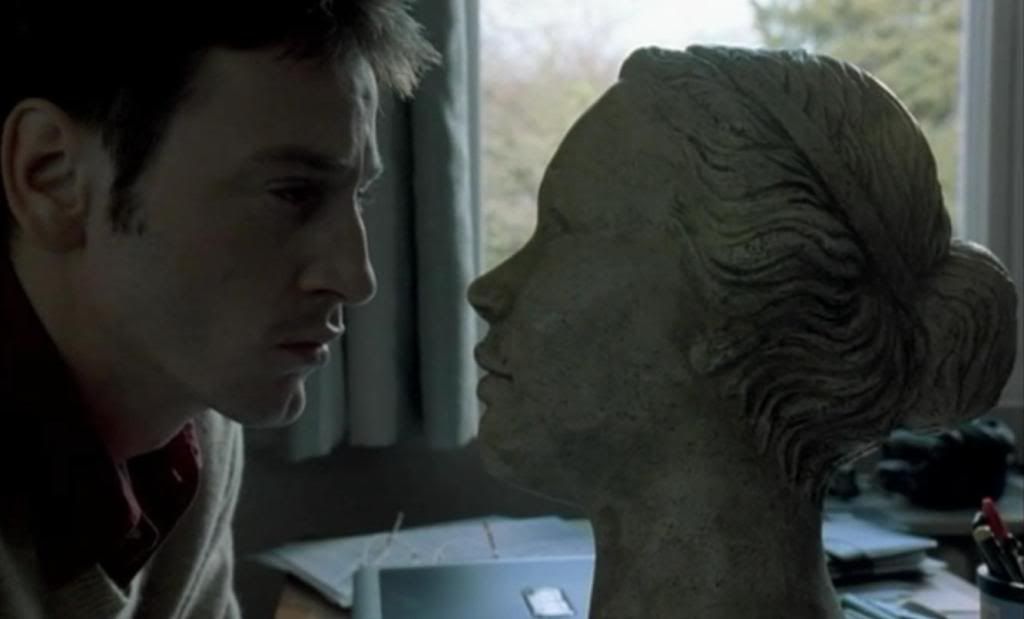
There's some awkward sexual tension between Philippe and his mother, Christine (Aurore Clément), in the opening scenes, some ambiguity in their relationship which is then transmuted into the stone carving of a woman's head that the family has dubbed Flora. Christine's boyfriend says that the statue looks like her, and when Philippe first sees Senta, he says that she looks like Flora, whereupon the camera pans over to the now-empty pedestal where the head had once sat, since they'd given it as a gift to Christine's boyfriend. Philippe steals it back and keeps it illicitly in his room, taking it out to admire when no one is around, as though it's a pornographic secret that he can only appreciate in private. This stone head is a locus of complex, unstated feelings, a surrogate for Senta with her blank, unreadable expressions, and Philippe frequently sleeps with the stone head curled up in his arms as though he's embracing a lover with an invisible body. At one point, he even holds the head tenderly and kisses Flora on the lips, kissing both his mom and his lover through this unfeeling stone, an uncomplicated stand-in for the flesh-and-blood women in his life.


Chabrol was, of course, always a big admirer of Alfred Hitchcock, whose thrillers provided something of a structuring principle for Chabrol's entire career, a central influence that he was continually mining and circling around. This is especially true here, and The Bridesmaid is built around a warped version of the murder-exchange deal from Strangers on a Train, with Senta asking Philippe to commit a murder for him, and she'll do the same for him, as a way of proving their love for one another. Chabrol doesn't delve into the suspense of the situation, since it's obvious from almost the moment she's introduced that Senta is disturbed, so the only real questions in the film arise from various misunderstandings and coincidences, with the "wrong" men being murdered. Chabrol then ends the film with a not-so-shocking but still satisfying revelation, unveiling a dessicated corpse with all the flair of Hitchcock's shot of Norman Bates' mother in Psycho — though of course Chabrol, never terribly interested in pat psychology or definitive explanations, ends the film there rather than dealing with the psychoanalytical aftermath.

There's some chilling material here, hinted at by the opening scenes in which Philippe and his family watch a TV report about a missing girl, which Chabrol uses as an opportunity to mock the exploitative, grisly sensationalism of TV news reports of violence, projecting these spectacles of suffering into meticulously decorated suburban living rooms. But the film is also darkly funny, with a subtle undercurrent of humor that tweaks the thriller and murder mystery conventions of the story; this is best seen in the moment when a police detective, tailing Philippe through a park, walks across the frame and steps in a big pile of dog shit, wiping his heel on the ground as he continues to follow his target. It's this kind of deadpan humor that cleverly shows Chabrol's slightly tongue-in-cheek perspective on this otherwise serious psychosexual thriller.

There's also a rich vein of sexual humor, since it's sex that blinds Philippe to the danger of his lover; he's having so much fun in bed that he manages to overlook the girl's obsession with murder and her strange, contradictory stories about a globe-trotting past of acting and prostitution. At one point, Philippe is talking on the phone about his home decoration job, discussing "pipework" with an elderly woman while Senta puts her hand between his legs and lowers herself to her knees in front of him. Everything becomes sexual, charged with eroticism, with passion in the bedroom tangled up with the violent passions broadcast over the TV and published in newspapers.

Monday, February 18, 2013

Anatomy of Hell


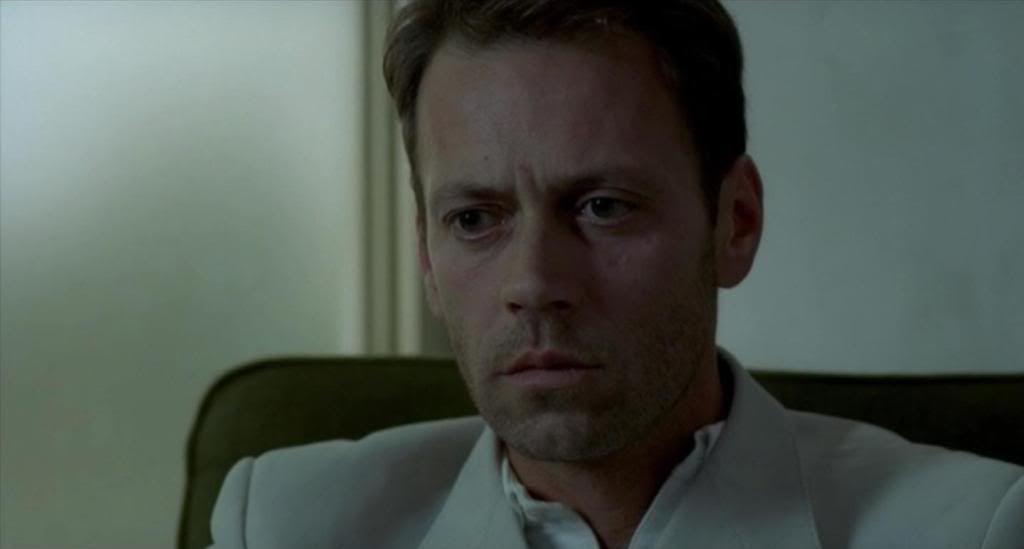
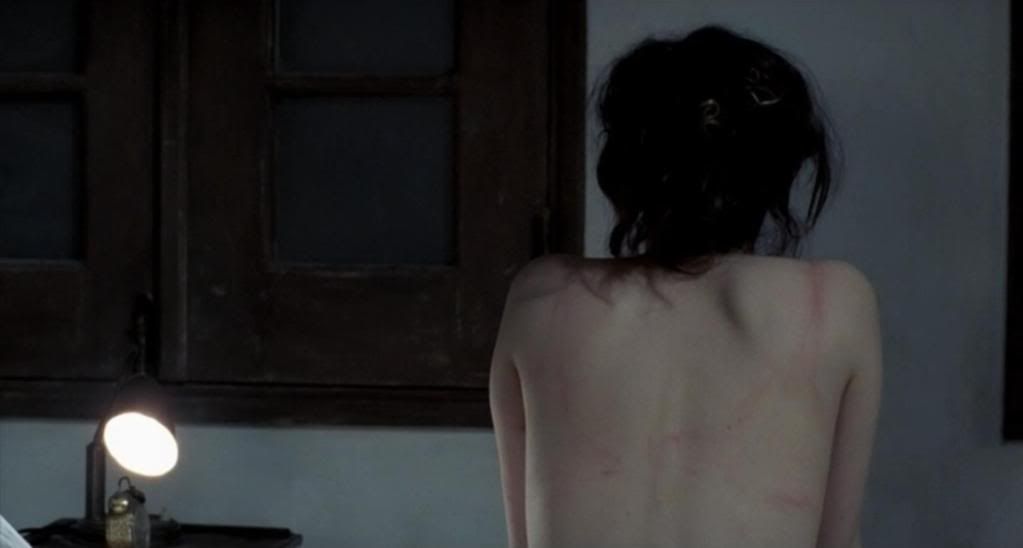
Catherine Breillat has never exactly been a subtle filmmaker, or a particularly easy one to grapple with. Her films are often bluntly provocative and polemical, using in-your-face, sexually explicit allegories to deliver her ideas about the essential antagonism between men and women. Anatomy of Hell is probably the ultimate Breillat film in many ways, a purely symbolic and abstracted confrontation between unnamed incarnations of female carnality and male brutality. It is also one of the director's worst films, a vile and simplistic work that wallows in its visceral images while advancing a rather nasty, limiting ideology that casts all men as vicious brutes, suggesting that while women are founts of life, men provide only death. It's familiar feminist rhetoric, here delivered in such exaggerated fashion that it seems grotesque, totally removed from anything that might shed real light on the nature of male/female dynamics.

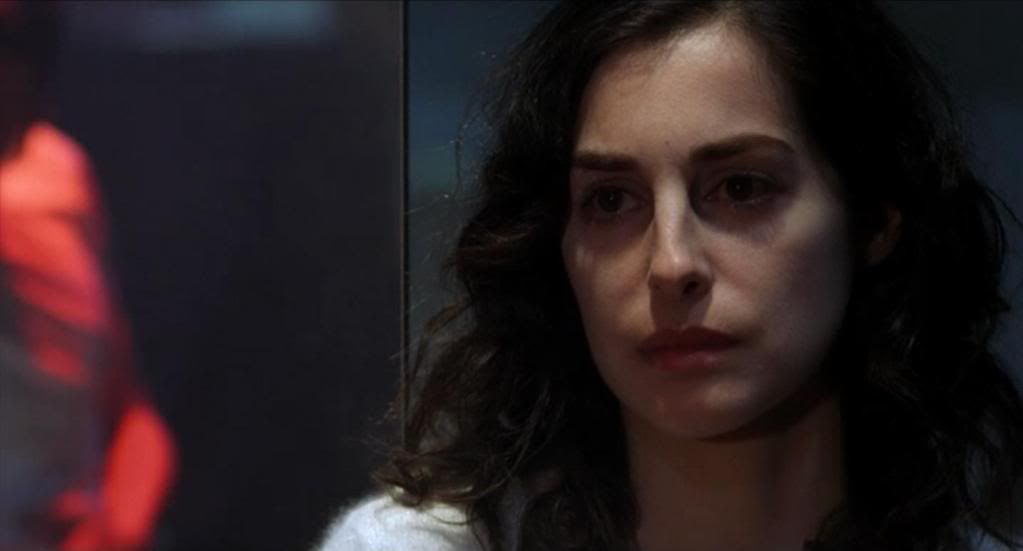
Breillat, never one to shy away from provocative imagery, has still never seemed so eager to offend as she does here, piling on so many calculatedly confrontational images that the effect is numbing rather than challenging. The film's allegorical structure focuses on the relationship between a young woman (Amira Casar) and a gay man (Rocco Siffredi), who finds her cutting her wrists in the bathroom of a gay club. When he asks her why, she responds, "because I'm a woman," which is a pretty good indication of the level of discourse Breillat is working with here. Casar represents the eternally suffering woman, subject to the hatred and disdain of men, which leads her to hate herself, to hate and deny her body. In order to deal with these feelings, she makes a deal with Siffredi: she'll pay him to come to her house, where he'll look at her naked body and talk about women.


At the root of the film is the idea that men hate women, and that perhaps gay men hate women most of all — that last being an especially repulsive concept, suggesting that gay men wouldn't be gay if only they didn't hate women so much, if only they weren't so disgusted by what's between a woman's legs. The man is gay, Breillat theorizes, because as a boy he once killed a bird, in innocent cruelty, and now he permanently associates female genitalia with the slippery guts of the bird, spilling out beneath his sneaker. He finds women disgusting, intuitively linking sex and death, and linking womanhood with his own boyhood shame and disgust — disgust with himself, and with the little pink crushed bird who'd died. Breillat seemingly extrapolates from this situation to all men, suggesting that the straight man's contempt for women is simply a less extreme version of the gay man's total disengagement from female sexuality. Breillat often locates the formation of sexuality in childhood, although not always in such a crude, blunt way. But then this film is Breillat at her crudest and most blunt, pouring out a really quite remarkable stream of outrageous ideas in between visceral scenes of sex, closeups of a bloody vagina, and other scenes carefully calibrated to offend and shock.

The film suggests that the essence of male/female relationships is hatred and self-hate, disgust and violence. Casar says she knows that Siffredi wanted to kill her during the course of one night — when he'd stood over her threateningly with a gardening implement before turning it around and sticking its blunt end inside her instead, leaving it hanging out of her at a jaunty angle. According to her, and presumably according to Breillat as well, the desire to kill a woman is "an urge all men have, that's how they are."


Breillat is dealing with all this at such a simplistic level that she winds up simply repeating clichés and stereotypes about both men and women rather than really interrogating or overturning those kinds of received ideas. Her most overt provocations — like having Siffredi and Casar share a glass of water mixed with menstrual blood from a tampon — come across as almost comically overwrought, and there's also some (presumably unintentional) comedy to be found in Siffredi's wooden line readings. Since Siffredi seems to get the bulk of the film's most torturously overwritten philosophical observations, his stiff acting — he spends much of the film staring blankly into space — only makes the film even harder to take seriously. (There's probably a joke about "stiffness" to be made here.)

With Anatomy of Hell, Breillat sets out to deconstruct misogyny, to confront it head-on. Obviously, the intent behind the film's overt presentation of a woman's body, without eroticism, is to challenge and subvert the disgust that men supposedly feel at the idea of women's body hair and menstruation. Breillat seeks simultaneously to disgust and to suggest that what she's showing is not disgusting, a contradictory dual purpose that sabotages the film; she really achieves neither aim. Breillat has, in recent years, moved away from the overt provocation represented by films like this and Romance, instead crafting increasingly nuanced works that explore her familiar themes without relying so heavily on viscera and excess. Anatomy of Hell was her last film to date in this vein, and it's the grimy, ugly bottoming-out of this approach. There was no further, or lower, to go after this, and perhaps this film's slate-clearing vitriol is what made it possible for Breillat, in the years since, to move so decisively beyond this kind of shallow provocation to the genuinely fascinating, intellectually rigorous work she's been making ever since.

Thursday, January 19, 2012

Clean


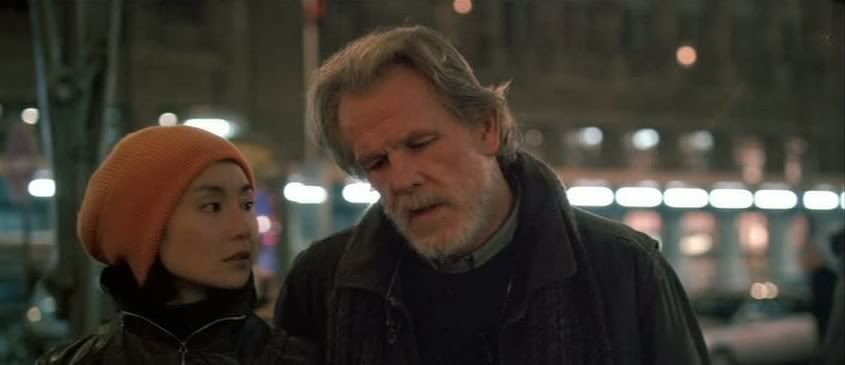
Olivier Assayas' Clean is a low-key, unassuming film that nevertheless accumulates great power as it traces the up-and-down trajectory of Emily Wang (Maggie Cheung), a former early-MTV-type celebrity and girlfriend of washed-up rock star Lee Hauser (James Johnston). When Lee dies of a drug overdose, Emily staggers on without him, struggling to get her life back in order, to get off the drugs, adjust to normal life, and get back her son Jay (James Dennis), who's living with Lee's parents, Albrecht (Nick Nolte) and Rosemary (Martha Henry). Obviously, this is a story with intense and unsettling emotional stakes, but Assayas, typically, resists the impulse for melodrama, instead crafting a quiet and gently paced film that puts the emphasis on day-to-day life and the ordinary dramas of getting through each day in the wake of a life-shaking tragedy.

It's a film all about grief and guilt, and Assayas places Cheung's subtle performance front and center. Her expressive face, surrounded here by a halo of frizzy, punky unwashed hair, conveys the full range of her feelings as she struggles to make a new life without Lee, and without the aura of low-level fame that she was accustomed to. Lee's old rock star friends and associates — including drum-and-bass producer Tricky, one of several real musicians playing himself — now want nothing to do with her, and the press eulogizes Lee with more praise than he ever got in life while condemning Emily as the cause of his addiction and death. The patterns are familiar: dead rock stars suddenly become geniuses, while rock stars' girlfriends are always blamed, like Yoko Ono, for all the ill that befalls the men. Assayas is taking all the old rock n' roll clichés and digging into them, trying to reveal the less sensational human truths behind the music magazine headlines and rhapsodic essays. In one scene, Lee's parents, reviewing a reissue project of their son's music, read the CD liner notes which portray their son as a romantically tragic figure, self-destructive and tormented. They lament that these notes present such a one-dimensional portrait of a man who they knew had so much more to him, and then they laugh, because they know that Lee would laugh, too, bemused to be turned into such a poetic martyr.

It's a striking scene because it's unlike almost anything else that usually appears in cinematic portrayals of rock n' roll tragedy. The rock star dying of a drug overdose, leaving behind a strung-out girlfriend and a son neither of them could ever deal with? This is familiar. The rock star's parents sighing over the excessive imaginations of music journalists is something that only Assayas would think to include. Just as Irma Vep dealt with questions of identity and race by wandering around the fringes of a film set, Clean lingers at the edges of the music industry, populated with people who were once famous or had mildly famous bands or are known in certain insular scenes. Emily is peripheral to this milieu herself, not quite famous on her own merits, sometimes remembered for a TV show she had, mostly remembered, unfairly but predictably, as the woman who destroyed a rock star's life. Surrounded by phoniness and spite — Rivette regular Jeanne Balibar appears as a former friend who's too self-absorbed to help — Emily is trying to clean up, to readjust, taking low-level jobs in restaurants and clothing stores. Worst of all is an interview with a store manager who remembers her TV show, making her attempt to get a job as a salesgirl especially humiliating. When she returns to her friend Elena (Béatrice Dalle) after this interview, she admits that she isn't sure if this new life, this attempt to get a normal job and clean up, is better or worse than being a junkie — it's a devastating admission.


Though the film's focus remains almost entirely on Emily, Assayas occasionally cuts away to Lee's parents, who are also dealing with the aftermath of Lee's death and trying to raise his son. Nick Nolte delivers a quiet but intense performance as Albrecht, a gruff man whose wife is sick and, he begins to suspect, dying. He sits in a hospital by her side, waiting through endless barrages of tests, or in a hotel room with the precocious Jay. As Albrecht confesses to Martha, he'd never paid much attention to his own son when he was a child, because he doesn't know what to do with young children. He is a somewhat emotionally aloof man, his face often unreadable behind his beard, his raspy voice seldom betraying much of what he's feeling. But he's clearly shaken by his wife's slow decline, and by the prospect of being left alone with his grandson, so he reaches out to Emily, trying to get her to clean up, to reforge the broken connection with her son.

It's a touching story, and Assayas tells it with simple grace and not even a hint of sentimentality or falseness. As is often the case in his films, the story hops around the globe, from Canada to London to Paris to San Francisco, with his cinematography giving a distinct feel to each place even as his habit of cross-cutting between countries and continents conveys the ease of international travel, of a community of people whose human connections and family bonds transcend borders. It is perpetually nighttime in Assayas' Paris, moody and lit with the golden glow of street lamps and traffic, and he contrasts this romantic urban image with the institutional austerity of a London hospital, the forlorn and decaying motels of a fading rock tour passing through a small town, the noise and chatter of a crowded club, everyone talking and drinking while the band plays. Assayas has always had a real feel for music and performance, and the film's soundtrack is memorably scattered with snippets of Brian Eno, shoegazer ballads, and Maggie Cheung singing her own songs that sound like slightly accented Sonic Youth. Assayas films several musicians performing, most memorably an appearance by the Canadian indie rock outfit Metric: the camera glides seductively up and down the body of singer Emily Haines, admiring the short hem of her skirt and the legs below it, capturing the jittery, sexy energy of a rock star performing, projecting her whole body into the pulsing post-punk rhythms of the band's song "Dead Disco."

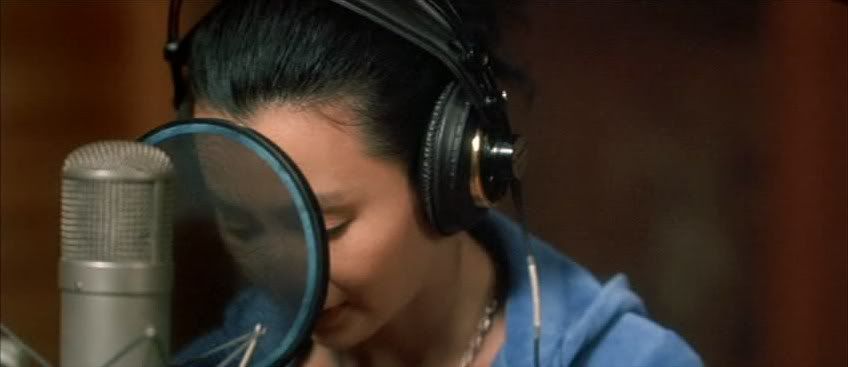
In the film's final scenes, Emily records a song, while the camera drifts in elegant half-circles around her, her face often hidden or half-hidden behind a microphone. She gets an ambivalent reaction from her producer, chats with her collaborator, cries and then skips out onto a patio outside, smiling as the camera pans up and away from her, taking in a hazy view of San Francisco's hills, the bridge in the distance. It's a perfect encapsulation of the film's emphasis on life slowly, steadily going on, with heartache and happiness tangled together, modest joy and lingering pain coexisting in equal measures.

Wednesday, June 15, 2011

Eros


Eros is an anthology film that brings together shorts from three international directors — Hong Kong's Wong Kar Wai, American director Steven Soderbergh, and Italian director Michelangelo Antonioni — for an old-school throwback to the heyday of the portmanteau film. The subject, naturally, is eroticism, and all three directors come at it from very different directions.

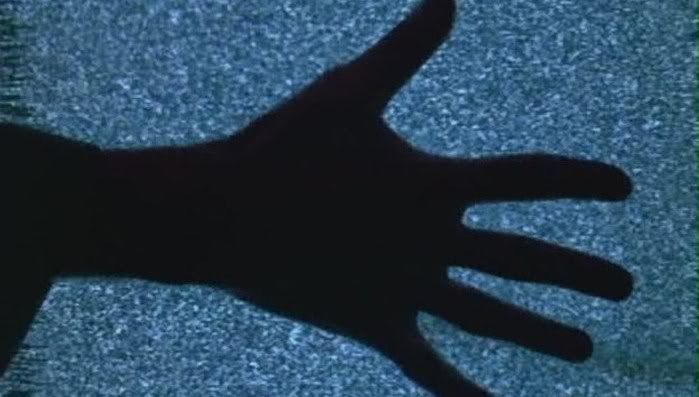
The Hand is Wong Kar Wai's contribution to the anthology, and its eroticism is inflected with a deep, poignant sadness, a sense of regret and loss that's built into the film's very structure. The opening shot is a sustained closeup of a man having a conversation with a woman who remains offscreen throughout these introductory minutes. The woman is obviously very ill, close to death, and the fact of her imminent death seems to be encoded into their conversation, into the way they talk about the future without really seeming to believe that there's any future for her. Their words eventually trigger a reminiscence about their first meeting, and Wong transitions smoothly into the extended flashback that will eventually bring the film back, full circle, to this moment, to continue this sad goodbye. Even within the flashback, the woman remains tantalizingly offscreen for some time, as the man, younger then, goes to visit her for the first time. He is a tailor's apprentice, Zhang (Chen Chang), and she is the high-class call girl Ms. Hua (Li Gong) who, due to her many wealthy clients and suitors, is rich enough to afford the most expensive, lavish clothes, so she's attended to by the tailor like nobility.

Wong deliberately withholds the image of the woman, retaining the air of abstraction achieved by the opening's closeup on the man alone. When Zhang goes to see his client, he first has to wait in the next room while she services a lover, and the sounds of their noisy lovemaking drift through the wall as Wong shoots the back of Zhang's head and the wall behind which the woman is moaning and crying out. Then, Zhang is called in, and still the woman is hidden from view by a wall, as she interrogates the nervous, shy young man. When Wong finally cuts to an image of the woman, it's a strikingly framed shot, looking slightly down on her, with Zhang standing nearby so that his hips are around the level of her head. With her head slightly cocked back, she regards him with a sultry, hungry expression, the look of a woman with a great deal of experience and confidence. In the strikingly erotic sequence that follows, she gives Zhang his first sexual experience with her hand, eying him all the while with that steely but sexually suggestive gaze, her dark red lips slightly parted, her glamorous aura a stark contrast to the tawdry gropings of the act itself.


This one act is sufficient to provoke an erotic fascination between Zhang and Ms. Hua, one that continues to affect Zhang even as, in periodic visits to provide clothes and take measurements, he watches her age, squander opportunities for security with several of her benefactors, and eventually pass her peak and gradually begin to fade away. She grows ill, eventually, but even before that she's lost her glamor, as she pushes away the rich men who could help her, and her haughty, provocative demeanor grows tinged with sadness and regret. Soon enough, the only man for whom she really holds any fascination is her lowly and adoring tailor, to whom she gave the most casual introduction into sexuality, and who has remained an unmarried loner, sustained only by his obvious desire for a woman he has to know he'll never really have.

Eventually, the film winds back around to its opening moment: Zhang sitting by Ms. Hua's bedside in the rundown hospital room where she's wasting away. The tailor brings her a fancy new dress, intended to impress a rich American man who she hopes will be her "last chance," but that chance is of course already long gone. Instead, there's simply a startling last union between the prostitute and the tailor, replaying the first scene — this time alternating closeups so that Ms. Hua's un-made-up face is revealed for the first time, her glamor (but not her beauty) entirely eaten up by her illness — and then continuing it. This final love scene transcends its potentially tawdry details to become something bracing, and intense, infused with the kind of sadness that only comes from a wasted life, and the knowledge of just how much has been wasted.

Only Wong could make this last, defiantly un-intimate sexual contact between Ms. Hua and her longtime admirer not only erotic, but depressing and loaded with the horrible emotions that linger between them: Zhang's unfulfilled longings, Ms. Hua's regret over lost possibilities, the mutual despair over their limited lives. There's a sense that both of these people, in very different ways, are confined and restricted by class and gender roles that create only a particular set of possibilities for them, and once those possibilities are exhausted there's just nothing left for them.


Steven Soderbergh's contribution to the anthology is Equilibrium, a clever skit based around an erotic dream and the analysis of it; it's a formal game about style and structure, light and funny, buoyed by a pair of charismatic and expressive performances. Nick (Robert Downey Jr.) is an advertising executive troubled by a mysterious dream he's been having, night after night, and to decipher the meaning of this dream he goes to see the psychiatrist Dr. Pearl (Alan Arkin). The dream itself, wordless and sensuous, forms the opening minutes of the film: the first shot is a hazy closeup of a woman's face, a little Mona Lisa smile curling the corners of her lips. Soderbergh follows this image with a series of crisp, clean images of the woman walking, in the nude, around a strikingly designed apartment, decorated all in bright blue shades, the woman's often shadowed, silhouetted form contrasting against the diffuse lighting of the rooms. Soderbergh's images are appropriately sensual and dreamy, the camera dizzily wavering to evoke the lack of the title quality — a loss of equilibrium that the dream represents — as the woman shifts in and out of focus. The camera is never quite able to capture all of her: as she prepares for a bath, she is sometimes a hazy out-of-focus blur, sometimes a dark and curvy silhouette, sometimes clearly in view and yet partially obscured by the angles of walls or doors. The swaying, dizzy camerawork has a voyeuristic quality, and yet the images are unmistakably intimate as well, as though conveying the sense of spying on someone who's so close that there would seem to be no possibility of, or need for, hiding. It's a lovely, moody — and, yes, erotic — opening sequence.

The film then transitions into an equally stylized black-and-white aesthetic — the shadowy, strikingly lit chiaroscuro of the film noir, with slatted shadows falling lightly over everything — as Nick visits Dr. Pearl and describes this dream. At this point, the film becomes a low-key but goofy farce, as Dr. Pearl manipulates Nick into lying down on a nearby couch and closing his eyes, ostensibly to comfort the patient and facilitate their work, but really for a mysterious ulterior motive of his own. For as soon as Nick lays down and closes his eyes, the doctor carefully pulls out a miniature pair of binoculars and, while maintaining a conversation with Nick as the latter relives his dream, spying on an unseen sight through the window facing outside. Soderbergh stages the sequence as antic comedy, with Arkin broadly enacting his obviously ritualized set of gestures, which feel like familiar games that he plays, perhaps, during all of his therapy sessions. As Nick walks through the dream, Dr. Pearl pulls out a bigger pair of binoculars, rearranges his furniture to get a better angle on whatever he's looking at, and finally throws a paper airplane out the window and begins excitedly waving and making complicated pantomime gestures to whoever is across the street.


Soderbergh stages the best moments in deadpan deep-focus shots that capture Nick on the couch in the foreground, utterly oblivious to all the fetishistic antics happening behind him as he spills the details of this dream that has obviously affected him very deeply. The effect is of two different forms of eroticism competing against one another, the verbal sensual description of the dream and the pantomime play of the voyeuristic doctor. It's funny and charming because the actors are funny and charming — and because there's something inherently funny in the passing thought that Downey's verbal recounting of a sexual/sensual dream is perhaps a little nod to Bibi Andersson's famously steamy storytelling in Bergman's Persona.

The film's finale eventually provides a further level in a wry punchline that recontextualizes all these sensual shenanigans as semi-conscious expressions of anxiety, while calling into question exactly which part(s) of the film were dreams — maybe all of them. More than anything the film seems like an exercise in style, a chance to set hazy digital color (evoking Hollywood Technicolor extravagance and the visual language of vintage advertising by way of modern technology) off against the deep blacks of noir's shadows. As a stylish and diverting little short, Soderbergh's contribution is entertaining and easily forgotten, nowhere near the emotional depths and complexity of Wong's The Hand, but then, hardly trying to enter that territory, either.


The final segment of this anthology is Michelangelo Antonioni's The Dangerous Thread of Things, a rather empty and unsatisfying fragment, the main purpose of which seems to be providing a venue for its actresses to cavort around naked. The plot, such as it is, centers on the couple of Christopher (Christopher Buchholz) and Cloe (Regina Nemni), who are obviously teetering on the edge of a breakup, disaffected and alienated from one another like so many other Antonioni characters. The couple fight constantly, then Christopher meets another woman, Linda (Luisa Ranieri), has sex with her, leaves, and the film ends with both women completely naked on the beach, Cloe dancing at the water's edge until she comes across Linda lying in the sand. The two women stare silently at each other, Linda with a smile on her face, Cloe's face hidden from view by the slightly elevated angle of the shot, and then the film ends.

What this short suggests, perhaps more than anything, is just how thin a line there is in Antonioni's cinema between the examination of emptiness and the perpetration of emptiness. The generous interpretation is that this is another attempt at a study of disconnection, an attempt to show how sex without feeling is just a surface, glossy and perhaps attractive but lacking in depth. The not-so-generous interpretation is that the film is a flimsy excuse for the nude scenes; both women spend much of the film in various states of undress, and several leering shots of the buxom Linda running up and down stairs seem to have dubious narrative or cinematic value in comparison to their making-things-bounce value. This impression is only enhanced by the cheesy synth soundtrack, which adds to the atmosphere of bad vintage porn.


Even so, there are some striking images and some beautifully photographed seaside settings here. At one point, the central couple visits an ocean-view restaurant where the waves of the ocean, oscillating sensuously in a reflection, all but blot out the couple as filmed through the large glass windows of the restaurant. It's an image that recalls, in a vague way, the layered montages of Jean-Luc Godard's later films, with their celebration of natural beauty, their love of light, water and reflections, and their unabashed sensuality. Needless to say, the promise of such images is not followed through here. More generally, Antonioni achieves a low-key pictorial beauty, the beauty of serene landscapes and well-framed shots, like a sequence where Christopher climbs a tall staircase to Linda's home, a very memorable stone tower. Antonioni frames the image to maximize the impact of the geometric design of the tower, which broadens above its first level, creating an upside-down trapezoid, the slanted sides of which overhang the approaching visitor ominously. After Christopher and Linda have sex, Antonioni frames the woman's foot, lounging at the edge of the bed as Christopher gets dressed, a very non-sexual shot that nevertheless winds up being more erotic, in its suggestiveness and its aesthetic beauty, than the softcore explicitness of the love scene itself.

Antonioni is the only one of these three directors to approach eroticism in the most obvious way — through copious nude scenes — and perhaps that's why his film feels so slight. These are generic characters and generic situations, with no time in the short's brief span to develop into anything more, and despite the film's occasional intimations of something deeper and more mysterious — like a weird little interlude in which bathing, naked sirens sing to lure the characters into lust — it never quite adds up to a whole. The same might be said of Eros itself, which features one great short, one enjoyable one, and one fairly disappointing one, and doesn't make much effort to integrate the three parts in any real way. The anthology would be worth a look for Wong's The Hand alone, though.
Tuesday, May 3, 2011

Tropical Malady


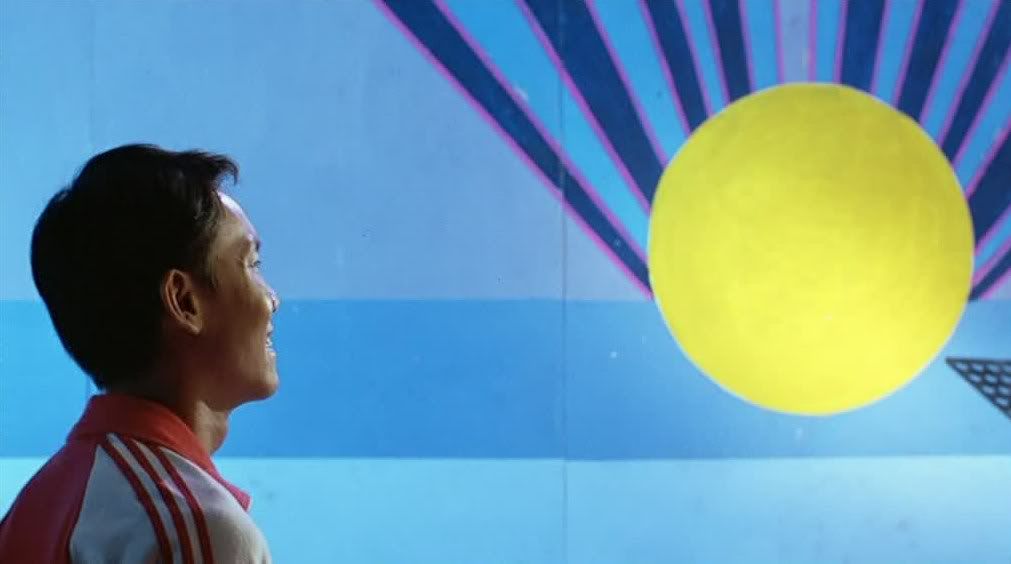
Apichatpong Weerasethakul's third feature, Tropical Malady, is a film split in two, comprising two very different perspectives on the connection between two men. In the first half of the film, Weerasethakul tells a meandering, nearly eventless little love story between two men, the soldier Keng (Banlop Lomnoi) and the illiterate country boy Tong (Sakda Kaewbuadee). In the second half of the film, Weerasethakul — inspired in equal parts by Thai folklore and the jungle adventure novelist Noi Inthanon — tells the story of a soldier (Lomnoi again) who travels into a jungle where villagers and cattle are going missing, and is stalked and haunted by the ghost of a shapeshifting shaman (Kaewbuadee) who often takes on the form of a tiger. The two halves of the film have diametrically opposite tones: a light, sensual mood that infuses the first half, with its constant shifts between urban modernity and tranquil rural lands, and the dark, somber and frightening aura that hangs over the second half's shadowy nighttime images.

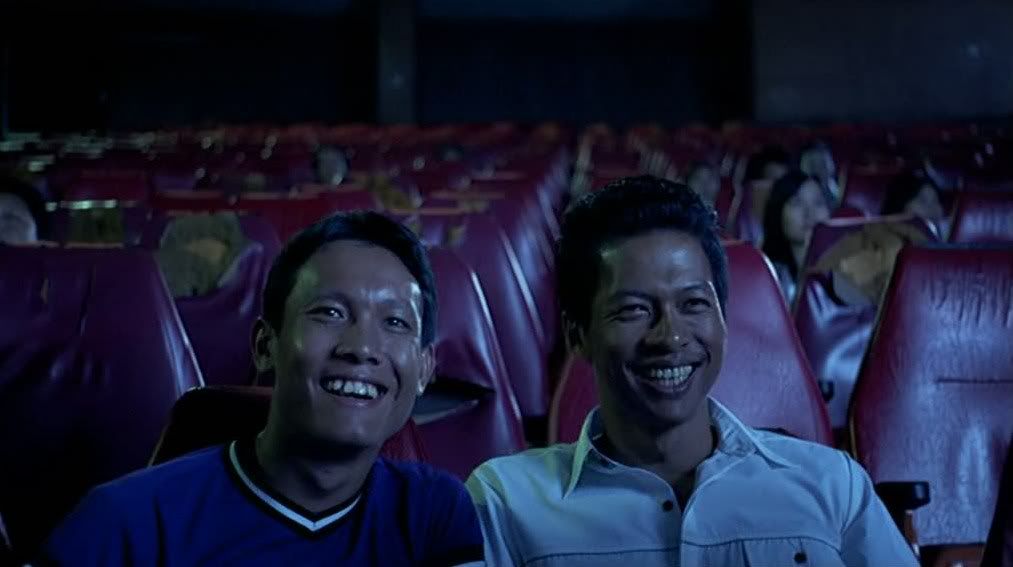
The first half of the film concerns the slow, hesitant progress of a burgeoning affection between these two men who initially don't know one another very well at all. There is great tenderness and warmth in Weerasethakul's depiction of this relationship, which exists on a hazy borderline between masculine friendship and romantic courtship. In one scene, Keng politely, formally asks Tong if he can lay his head across the other man's lap, and Tong replies "no" before, with a sheepish grin, adding that he really means "no problem." Keng tells Tong then that he'd like to serenade him, that he'd like to play the guitar for him like the romantic heroes of movies, which suggests that the two men are casting themselves in a grand screen romance. In other scenes, they goof around and play like brothers or playful best friends, their physical contact ambiguous, half romantic and half aggressive. When they go to see a movie together, Keng caresses the other man's knee and starts working his hand up the inside of his thigh, but Tong turns it into a game by crossing his other leg over Keng's hand, crushing it between his legs, and they struggle a bit with each other, smiling the whole time. There are indications that Keng is comfortable in his gay identity and probably has been for a long time: he encounters several other men who he seems to know, greeting them with nods and big smiles, and there are intimations of cruising in his bathroom encounter with one man. Tong, on the other hand, is bashful and seems inexperienced, and his awkward interactions with Keng reflect an uncertainty about what exactly is happening to them.

Weerasethakul simply observes the halting progress of this relationship, which culminates in a strangely erotic and mysterious scene in which the two men kiss and lick one another's hands, the most intimate contact they've had with one another, at which point Tong turns and walks away, disappearing into a dense, dark jungle, swallowed up by the black night around him. It feels like a moment of finality and rupture, and it is, for after this, Keng's motorcycle ride home transitions seamlessly into images of him back in the jungle with his army unit, looking at pictures of Tong. At this point, the film breaks apart and the second half of the film, titled "A Spirit's Path," is introduced with a second credit sequence, as well as the recitation of the legend of a shaman spirit who haunts a certain jungle area, playing tricks on the nearby villages. Keng, possibly in a new form as a different soldier, enters the jungle searching for this spirit, for the supernatural tiger that stalks the region, killing livestock and people.


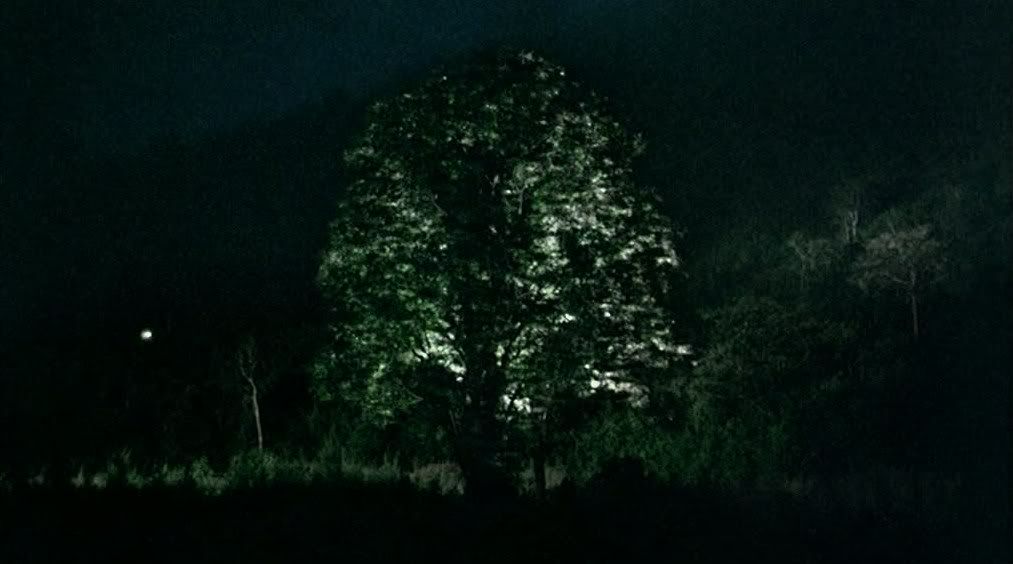
The second half of the film begins quietly, as the soldier wanders through the jungle, picking bugs off his skin, trying to keep warm in the night, listening to the mysterious rustling, crackling, chirping sounds of the jungle, which fill the soundtrack. But these prosaic, tranquil moments soon give way to an increasingly surreal and unsettling sequence of events, as the soldier fights with the shaman in his incarnation as a naked man, is warned of the dangers of the jungle by a monkey whose squealing language is mysteriously translated in subtitles, encounters the pale ghost of a dead cow, and comes face to face with a chirping firefly that might be a wandering soul, winding its way towards a tree lit up in the grainy night with thousands of similar pinprick lights. As the images and events become stranger and stranger, the soldier seems to be wandering through the dark jungle in a daze, lost in the shadows. The screen frequently goes black, or nearly black, and all sense of logic and stability is lost as the soldier stumbles towards his hysterical final confrontation with the tiger itself, a panting, hulking beast that fixes the soldier — and the camera — with an unforgettable, hungry stare, a stare that suggests that the tiger is sizing up the film's audience as prey.

The relationship between the film's two very different halves is unstated and elliptical, but the continuity in the actors, if not the characters, suggests that the second half of the film is a parable for the ferocity and danger of love, for the intensity of the connection that can bind two people together. The modern world, perhaps, is sometimes inappropriate to convey those intense emotions, the kind of emotions that defy words and explanations. In one scene in the film's first half, Tong and Keng visit a mall and Tong wanders up to a big advertisement for cell phones, adorned with the English words "connection" and "communication," but in fact the trip to the mall seems alienating and disconnecting, and Weerasethakul films Tong adrift in a sea of shirt racks and sale posters as though this was the jungle for him. In contrast, the scenes in the actual jungle convey a mysterious and otherworldly connection between the two men, or between the man and the tiger, who are drawn to one another and may kill one another or, in the suggestive words of the monkey, the man may be devoured by the tiger and enter its world. That's passion, violent and potent, infused with ancient myths and inexplicable occurrences.

The past and the modernized present coexist in Weerasethakul's cinema, blending into one another in interesting ways. Fables and legends linger on, as in the mention of an old uncle who could remember his past lives — an idea that was obviously percolating for Weerasethakul long before he made his most recent feature, Uncle Boonmee Who Can Recall His Past Lives, in which that conceit, tossed off in a few lines of dialogue here, is expanded upon. Shortly after this exchange, an older woman recounts a Buddhist parable about a monk who gave a pair of poor farmers a magical gift of gold and silver, which the men promptly lost through their greed for more — and the woman humorously, unexpectedly expands the parable through an anecdote about a similar situation on the Thai version of the TV game show Who Wants To Be a Millionaire. Fables, myths and legends remain relevant and alive in Weerasethakul's films, sometimes overshadowed by the bombast and chaos of modern life but never extinguished altogether. Such stories still resonate in the present, mysterious and beautiful and sometimes frightening.

Friday, August 21, 2009

Triple Agent


Eric Rohmer's Triple Agent is an elusive, enigmatic spy thriller, one in which all the actual spy action takes place offscreen, unseen but much talked about afterward. Rohmer, hardly known as a director of spy pictures, structures the film much like one of his much more characteristic observational relationship dramas, except that in this case the characters' relaxed, naturalistic conversations dance around the edges of political intrigues in 1937 France, just on the verge of World War II. The film centers on a single couple: the White Russian exile Fiodor (Serge Renko) and his Greek wife Arsinoé (Katerina Didaskalou). Fiodor is a political attaché with a right-leaning group ostensibly dedicated to providing aid to exiled veterans of the White Russian Army, who had fought against the Bolsheviks. In fact, he cavorts around Europe on shadowy tasks, courting contacts with the Nazis, the Soviets, various national Communist parties, and other groups of varying political allegiances. His purpose is mysterious, even to his wife, who catches only momentary glimpses of his activities. He is reticent with her, but in conversation with others he is constantly making references to his mysterious activities, sometimes seeming to be supporting one side, sometimes another. He is intriguingly opaque, especially since he more or less admits to Arsinoé that he often lies when speaking to others, deliberately making them think he's doing one thing when he might be doing another. He says that he doesn't want to lie to his wife, but throughout the film it becomes increasingly clear that this, too, is not true, that he is not only keeping secrets from her, which would be expected in his line of work, but is actually telling her lies as well, like disguising high-level meetings in Berlin as a minor detour to Brussels.

The way Rohmer explores this enigmatic figure is fascinating to behold. Never once does Rohmer ever actually show Fiodor on his trips or spy missions, or whatever it is he's doing in the long stretches of time where he's away from home. His activities and allegiances are left entirely to the imagination. The only information Rohmer doles out about this man comes from the spy's elliptical, often frustrating conversations with his wife. At times, the normally reserved Fiodor becomes positively animated, spilling out complicated torrents of information and heading off on so many tangents that the main point of the question he was supposed to be answering is quickly forgotten. It's apparent that he's an expert talker, that this unassuming man can be dazzlingly clever and manipulative. He knows it, too, and in his conversations with his wife he sometimes takes on an attitude of gleeful pride in how he is able to control and manipulate world affairs. According to him, a word from him — or the lack of a word — can change the course of events for entire nations. Since Rohmer never follows Fiodor away from his wife, it's impossible to know how much of his patter is truth and how much lies, how much he's exaggerating his own importance.

Who is he working for? What is he up to? What's his agenda? What does he really believe? Fiodor is extraordinarily difficult to pin down, especially since his ideas, as expressed verbally anyway, are constantly in flux. Talking to his Communist neighbors (Amanda Langlet and Emmanuel Salinger), he espouses rightist ideas and sardonically points out the contradictions in the Soviet party line, enjoying the Red couple's squirming. But when speaking to his royalist Russian cousin (Vitalyi Cheremet) he disparages the fascist regime of Franco and calls the Communists reasonable. He seems to be deliberately blurring his allegiances, and never more so than in the breathless monologues directed at his wife, punctuated with his curt assurances, "let me explain," a disclaimer almost always followed up with lengthy and ludicrously detailed stories, complete with to-the-minute timetables. His wife, in any event, is less interested in the details of his stories than in the mere fact that he seems to be opening up to her for once, letting out glimpses of the emotions he usually maintained clamped shut behind his bland demeanor. Arsinoé is the film's heart, as confused and out of the loop as the audience, and placed in the same position: forced to either disbelieve Fiodor entirely, or take his tortured explanations and rambling discourses about his political actions at face value.


Thus, while the film is seeped in politics, set in an era of extreme political turmoil, possibly the most tense and uncertain era in European politics, its center is actually another relationship drama from a director who has long explored the complex interplay of deceit and desire between men and women in love. Arsinoé is devoted to her husband, sometimes nauseatingly so. Every time he leaves home on one of his mysterious trips, she acts out a repetitive ritualistic goodbye: she holds his coat for him, cuddles close for a warm, loving goodbye kiss, and then watches him with smiling eyes as he leaves, seeming to savor this glimpse of him to last for a while. The slightly stylized romance of these goodbyes begins to unravel, however, when Arsinoé starts to become more suspicious of and frustrated with the extreme secrecy of her husband's lifestyle. She hears him casually telling other people things she never knew about, and hears stories from her friends that contradict things he has told her, and she realizes that in many ways she is entirely shut out from his life. Rohmer, always subtle, leaves much of this unstated, communicated by the expressions on Arsinoé's face and the kinds of questions she starts to ask her husband with probing interest.

Rohmer observes these scenes from a calm, languid distance, never quite breaking the surface of these characters but carefully catching the nuances of what they choose to show, and what they're unable to hide. In Fiodor's case, what primarily becomes apparent about him is his eagerness, his love of the spy's life, his image of himself — whether imaginary or accurate — as a bon vivant man of action with the fate of the world in his hands. There's an excitement and energy in his voice when he talks about his spy activities, and even in his posture, eagerly leaning forward to explain what he does and why. This danger-loving spy seems to emerge only occasionally from Fiodor's Walter Mitty exterior, his guise as a bureaucratic "pencil pusher" bored by his job. One wonders which is the truth: is Fiodor a bored office drone playing at being a spy, or is he really a top-level agent playing everyone against each other? Arsinoé, meanwhile, is patient and loving, though she does, in a moment of characteristically Rohmerian subtlety, let out a brief glare of annoyance when Fiodor, in his eagerness, interrupts her to tell a story of his own. The moment passes and Arsinoé silently forgives her husband, her annoyance fading into a smile, but the audience sees the truth: Fiodor is self-absorbed and doesn't much care what his wife has to say about her own life. He never takes the interest in her, or her artistic activities, that she takes in him.

Though this relationship is at the core of the film, Rohmer is also dealing with the historical context of the pre-war era, when the pieces were slowly shifting into place for what would eventually become World War II. He peppers the film with genuine newsreels, artifacts of the time, documents that provide a sense of verisimilitude. As with the unseen spy action, history seems to be happening elsewhere, at the fringes of the story, only sporadically commented upon by the characters. These people are not oblivious to politics, to the state of the world; quite to the contrary, they are constantly engaged with it. And yet even they seem to be on the periphery, not catching the significance of what's happening, unable to understand where things are heading — and incapable of grasping just how ancillary everything they do really is on the historical scale. After an abrupt and startling conclusion to Arsinoé and Fiodor's story, Rohmer finally pulls back for a more objective, large-scale observation of the events going on in this era. The ten-minute epilogue condenses the post-1937 build-up to World War II, and the invasion of France by the Nazis, into a dense collage of newsreel images, history taking over from the small-scale personal drama of one Parisian couple. The film's final moments are an irreverent, morbidly comic final tweak at Rohmer's characters, indeed at the entire story he's decided to tell, exhibiting a deadpan wit about just how pointless it all is, how so much talk and talk about politics could actually say so little about concrete realities.

Sunday, April 12, 2009

Eternal Sunshine of the Spotless Mind


There is a simple idea at the center of the Michel Gondry/Charlie Kaufman masterpiece Eternal Sunshine of the Spotless Mind: memory is the foundation for all of our relationships, with our world and with each other, an idea so obvious that it should hardly need elaboration. And yet this obviousness is exactly what this film is about. We take for granted the power of our own memories, rarely cherishing them, rarely delving as often as we should into the good ones, lingering instead in the sad memories that we allow to drown out those few magical memories that should shine out of the past like brilliant gems. Screenwriter Kaufman's has devised a perfect way of exploring the power of memory, through a mysterious company that allows people to selectively erase their memories, eliminating traumatic incidents or, especially, the memories of old relationships that have gone sour. This is what happens to Joel Barish (Jim Carrey), who discovers that his girlfriend Clementine (Kate Winslet) has, after a particularly angry break-up, erased the memory of him from her mind completely. Seeking to make up with her, he goes to see her at work and finds that she doesn't even seem to recognize him, that she treats him like just another customer.

Shattered and hurt, Joel soon tracks this puzzling situation back to Lacuna, Inc., a small company that specializes in this mind-wipe procedure under the supervision of Dr. Howard Mierzwiak (Tom Wilkinson). Joel decides to undergo the procedure as well, completely erasing the memory of Clementine and their tormented relationship from his own mind just as she had with him. Perhaps the most ingenious aspect of the film is its convoluted structure, which shuffles this chronology around freely in order to amplify its emotional and thematic resonances. The film opens with the meeting of Clementine and Joel, on a beach at Montauk: they both seem out of sorts, aimless, wandering along the beach, drawn to each other as if by some mysterious force of magnetism. As it turns out, this opening — lasting twenty minutes before the credits roll — is not the couple's first meeting, but only their first meeting after having their memories erased. It is, actually, a variation of their true first meeting, which also took place on this beach, but at a party where neither of them fit in and were drawn to each other from their individual states of isolation.

The remainder of the film is largely an extended journey through Joel's mind as he goes through the memory-erasing procedure. The structure is, as a result, loose and free-associative, mimicking the twisty trains of thought that characterize memory: one memory leads to another leads to another, with subtle emotional linkages between incidents. This is what Dr. Mierzwiak's procedure seeks to erase, using a kind of emotional "map" derived from objects provided by the patient, objects that mark various memories of the person being erased. The film follows the map of Clementine and Joel's relationship, beginning mostly with unpleasant memories from the end of their relationship, perhaps because these thoughts are freshest in Joel's mind and also because emotional wounds tend to leave a deeper impression than sweeter memories. The trip through Joel's mind doesn't strictly follow a backwards chronological path, but its general trajectory is to move backward in time, starting with the fights and boredom and awkward moments and slowly beginning to weave in happier memories, romantic nights together, heartfelt sexual experiences, the little quirks and humor that made Joel fall in love with Clementine in the first place. The effect is that, although Clementine is in the process of being erased, Joel experiences it like falling in love with her all over again. By tracing the progress of their relationship in reverse, he can see why they drew apart, can see his own role in pushing her away, can see the seeds of their later troubles in earlier times. And he can also see everything that he loved about her, things he'd maybe forgotten consciously or at least started to take for granted, things that had moved him so deeply about her.


This is an extraordinarily clever and emotionally satisfying way to explore the intricacies of love and relationships. As Joel's memory is erased, he begins fighting back, resisting the process, desperately trying to hold onto the memories he treasures about Clementine. Before the process is over, he already regrets what he has done, and he begins — along with his mental doppelganger of Clementine — struggling fiercely against the procedure, trying to hide away his image of Clementine in childhood memories or deeply repressed corners of his mind, running with her through a landscape that crumbles around them, people and places disappearing or fading to white as the memories are extinguished. The film is a wonderful blend of Gondry and Kaufman's genius, with Gondry a seemingly perfect choice to visualize Kaufman's concepts.

There's a playful, visually creative sensibility that leavens the bittersweet tone of the material, having fun with the imagery from within Joel's unraveling mind. Faces are distorted and blanked out, warped into clay-like distorted lumps atop people's bodies. At one point, trying to turn a man around and discover the identity of Clementine's new boyfriend, Joel finds he's continually confronted only with the back of the man's head. In one of the best sequences, Joel tries to hide Clementine in a childhood memory of being in his mother's kitchen, and Joel appears as a shrunken figure hiding underneath the table, a child-sized adult dwarfed beneath Clementine, who stands in for one of his mother's friends, in a sexy 60s dress that bares her long legs, which look like great tree trunks from Joel's childish perspective. Gondry's tireless visual inventiveness provides the perfect toolbox for a film centered around the narrative gimmick of traveling through a man's mind. Another director would view a script like this as an opportunity for show-offy visual trickery, but Gondry's imagery, as wild and fanciful as it is, is never less than integral to the film's emotional undercurrents. This trip through the mind of a man in love is so evocative and moving because its visual conceits make concrete the feelings and ideas at the story's core.

Joel's reverse travel through his relationship with Clementine is especially heart-rending and moving because it is constantly set against the film's opening, which is a second take on the same romance. The film's emotions are complex and multi-layered; the opening is romantic and beautiful, but as Joel's memories reveal, this relationship has happened before, progressing from that sweet, charming starting point towards bitterness and fighting. Clementine and Joel's mutual memory loss gives them the chance to start over, to try again, but it also provides them the opportunity to make the same mistakes over again without even realizing it, to relive the past as though for the first time.

This idea is made apparent through the complicated subplots woven into Joel and Clementine's story, involving the various employees of the memory-wiping company as they perform their procedure on Joel. Although the film is undoubtedly focused on Joel and Clementine, there are surprisingly rich supporting performances from the technicians Stan (Mark Ruffalo) and Patrick (Elijah Wood), along with Stan's girlfriend Mary (Kirsten Dunst), the Lacuna secretary who doesn't realize that her girlish crush on Dr. Mierzwiak is the fresh beginning of a cycle she's already lived through at least once before, in a time now erased from her memory. Ultimately, this film is about the importance of memory and continuity, the importance of maintaining a connection to the past — of not forgetting what makes the people we love special to us, of not losing track of the mistakes we've made before so we might not make them anew.

Friday, March 27, 2009

Melinda and Melinda


Melinda and Melinda starts with a premise that might be derived from a college creative writing exercise. A group of people, talking over dinner, begin debating whether life is essentially tragic or comedic. Two of the men (playwrights — one a tragedian and the other a humorist) try to prove their respective points by taking the same facts of an anecdote and telling the story two ways, once as a tragedy and once as a comedy. It's an obvious formal exercise, a writer's conceit, and Woody Allen seems to be in an experimental mood by expanding it from a sketchbook exercise into a feature film. The result is an interesting, uneven film anchored by an astonishing central performance — Radha Mitchell as both versions of the titular Melinda, the only character to exist in both versions of the central story.

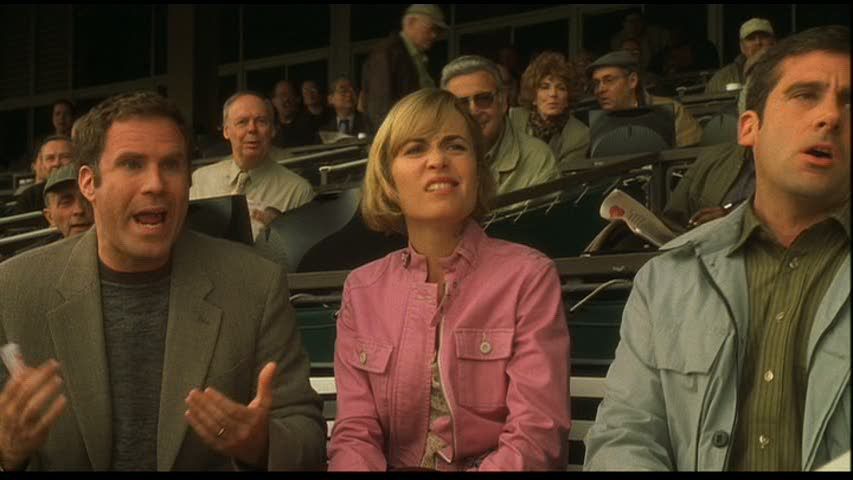
This story's basic outline consists of a triggering incident when the distressed Melinda stumbles into a dinner party. In the tragic version, she is worn out and fidgety, recovering from a suicide attempt and trying to forget the disintegration of both her marriage and the affair that ended it. She drops in unexpectedly at the apartment of her old friend Laurel (Chloë Sevigny), who is entertaining a theater producer who may be able to offer a job to Laurel's out-of-work actor husband Lee (Johnny Lee Miller). In the comic take on this scenario, Melinda is actually in the midst of committing suicide, stumbling into the apartment of her neighbors, the indie movie director Susan (Amanda Peet) and her struggling actor husband Hobie (Will Ferrell). What's striking is that the scene doesn't play out that much differently from the tragic one, with the exception of a tossed-off gag about Susan's insistence that her guests continue to eat while she and Hobie try to help their neighbor. This underlines the problem with the film: though it attempts to create a contrast between tragedy and comedy, the comedy here just isn't that funny, consisting mostly of reheated lines familiar from Woody's schtick in countless other films. The opposition of comedy and tragedy here is as superficial as giving the comedy a happy ending and the tragedy a sad one, without really delving into the interesting questions about why we find humor or pathos in various situations.

Instead, the supposedly "comic" story plays out like a light, fluffy tale of continually obstructed love, when the unhappily married Hobie falls hard for his flighty, troubled new neighbor Melinda. One wonders why Woody would cast Ferrell, or the gifted, naturally funny Steve Carrell (in a bit part as Hobie's buddy) if neither actor really gets to do anything funny; Carrell in particular seems wasted, mostly just delivering a few platitudes about marriage and honesty. Ferrell gets a few stale Woody one-liners and lets even them die; it's as though everyone thinks they've been cast in the dramatic half of the film. Maybe that's the point — that the only difference between comedy and tragedy is the way the story ends — but surely the script could've found a better way to indicate this idea than draining a comedy of its humor.


Fortunately, the "tragic" material in the film is handled much more substantially and intelligently — and what, exactly, does that say about a director once known wholly for his comedy? Radha Mitchell isn't given much to do in the lighter version of the story, but as a tragic heroine she comes into her own. She invests her character with an entire language of gestures and poses, ways of moving her face and speaking, a fully developed body language that communicates this character's emotional essence with every slightest move. It's a truly remarkable performance. It becomes hard to tell if Woody's writing is really that strong, or if Mitchell just brings out the hidden depths in this character so well that it wouldn't have mattered what Woody actually wrote for her. She's a shattered woman trying to regain some semblance of her life, some reason to want to live, and finding it, if only briefly, in a piano player with the unlikely name of Ellis Moonsong (Chiwetel Ejiofor).

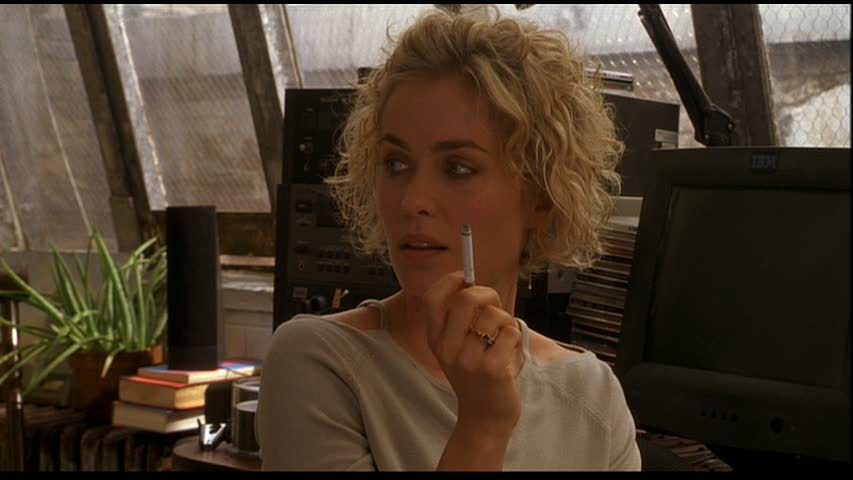
Mitchell's every scene is quietly compelling, never overstating the naturally melodramatic emotions of her story. She has a restrained intensity that comes through especially in the scene where she tells Ellis about how she killed her unfaithful lover and got away with it. Her disheveled hair and black-ringed eyes, the way she smokes a cigarette with just the slightest tremor in her hands, her neurotic pacing and jittery mood swings: Mitchell builds this character from the smallest details up, creating a busy but always realistic performance that makes the tragedy of Melinda hit hard. Without her performance at its core, it's hard to imagine what Melinda and Melinda would be, but with her it's at least half a good movie, and even occasionally a great one. Mitchell, Sevigny and Ejiofor together craft the emotional foundations for a compelling drama in half the ordinary time for a feature film; the story is basic, even trite, but the quality of the acting fosters the necessary emotional investment in these characters. One feels their shifting attractions and breakdowns and self-justifications in the subtleties of their voices, the exchange of glances. Woody frequently frames the two actresses in tight closeups, allowing all the nuances of their performances to come through in their expressive faces: Sevigny's fluttering eyelashes and downward glances, a few tears gathering at the corners of her eyes; the hard lines of Mitchell's mouth and her flashing, fiery glare.

In short, this is a well-made drama wedded to a mediocre comedy. The film purports to establish a contrast between tragedy and comedy, but it actually provides an instructive example of the difference between vibrant, emotionally rich storytelling and bland storytelling that traffics in clichés. It hardly matters that the story in the film's tragic half is ugly and depressing, while its comedic half is light and, ultimately, happy; the former is viscerally engaging and the latter simply deadening. That in itself illustrates, better than anything else in the film, the message that Woody's shooting for here: it's not the story that matters, but the way it's told. He just probably didn't mean to get across his theme in quite that way.

Thursday, March 26, 2009

The Conversations #3 (part 1): Overlooked - Undertow

The third installment of my monthly feature with Jason Bellamy, The Conversations, has now been posted at the great multi-author film blog The House Next Door. This month, Jason and I each selected a film from the last few years that we deemed to be "overlooked," and as it turned out, we hadn't previously seen one another's picks. I picked David Gordon Green's Undertow, and Jason opted for Steven Soderbergh's Solaris. This conversation has been divided into two parts. To read the first half of the conversation, about Undertow, click through to the House below. The second half, with a discussion of Solaris, will be posted tomorrow. As usual, reader comments are especially encouraged; we hope that our conversations will trigger a larger conversation.

Continue reading at The House Next Door

Thursday, July 24, 2008

Undertow


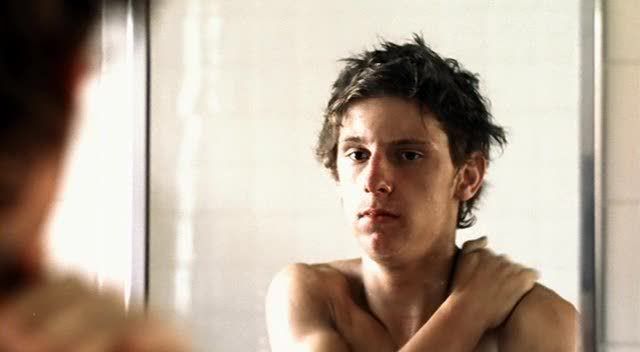
David Gordon Green's Undertow begins with a puzzling start/stop credits montage that sets the tone for the film's hallucinatory pastiche of pop culture and rural life. The film's first image is a blue blur, indistinct and hazy, with the outline of a figure hovering on the edge of resolution. The sound of waves lapping against a shore fade in on the soundtrack, as the camera zooms out to suggest that the image will come gradually into focus. But as the zoom finally resolves the image into a recognizable shot of a beach with a boy walking into the water, the blue fades into black and white, the color draining away as an old man's voice promises a story of violence and bloodshed affecting his grandsons. From here, the credits montage follows Chris (Jamie Bell) as he is pursued by his younger girlfriend's enraged father, who charges through the front door of his house with dual pistols blaring. The credits strike an odd note between over-the-top violence and a serenely contemplative mood that seems to be savoring these crazed visuals as though they were peaceful landscape shots. The credits sequence is also marked by a kitchen-sink approach to filmmaking craft, as Green warps and manipulates the images in crude, self-conscious ways. There are continual freeze frames, giving the action a jittery, rhythmic quality, but even more jarring is the manipulation of color and light, the way the image sometimes flares into blown-out, contrasty whiteness or switches between various color filters, throwing the images into negative relief or zooming in to reveal the grain of the film. When Chris throws a rock through a window, the action is repeated four times before the rock hits, each time with different filters and effects applied to the basic image. The effect is unsettling, giving the sequence a feel somewhere halfway between the credits to a 70s crime drama and an amateurish avant-garde production. Green's techniques seem random, roughly slapped on, though there's a certain poetry to it, like the seemingly arbitrary freeze frame that captures Chris' foot in a closeup just as it's lifting off the ground to run. The action itself has a brutally absurd quality to it — when Chris lands on a nail that sticks through his foot, instead of pulling it out he simply bends the nail over and begins hobbling along again, now with a board nailed to his foot like a miniature ski. This ridiculous chase is both harrowing and strangely funny, and the tonal chaos of these opening moments is further compounded by Philip Glass' quietly propulsive score, which is meditative but with tense undertones lurking within. This is an opening designed to confound expectations, to set the audience up for virtually anything — after an introduction as strange and stylistically confused as this, what could possibly come next?

The answer is that the film settles down into the rhythms of rural living, on the small rundown farm where Chris lives with his stern father John (Dermot Mulroney) and sickly, cerebral brother Tim (Devon Alan). At this point, the film finally begins to resemble Green's previous two features, the haunting, elliptical George Washington and All the Real Girls, evoking the quietude and routine of this isolated life. Green's eye for small moments and telling detail is as keen as ever, as is his sense of pacing and gift for visual rhythms. In one sequence, he crosscuts between the brooding John, sitting inside smoking a pipe, his face obscured by shadows, and the energetic, angry Chris outside in the garage, hammering away to make a toy for his brother from the board that been stuck to his foot in the first scene. Green's cutting is crisp and evocative, breaking down Chris' efforts into many shots while John's slouched contemplation is held at arm's length in a master shot. At times, the separate spaces also fade into each other, contrasting the electric blue of the garage's lights with the shadowy interior of the house. This sequence, entirely silent, establishes the distant and passive-aggressive relationship between father and son as well as the stumbling, awkward conversation that follows it.

Green's sense of humor, always idiosyncratic, is also at its best here, particularly in tracing the relationship between the two brothers. He has a real feel for the lovable goofiness and nonsense that's often shared between relatives and close friends, and many of these brief scenes provide a sense of eavesdropping on private moments that only make sense to the participants. There's the usual goofing around between siblings — smelling each other's armpits, telling silly jokes — and the truly weird moments that are distinctly Green, like the dinner where Tim decides to dress up like a pilgrim, which only gets funnier once it's revealed that this isn't some eccentric Thanksgiving tradition but a random quirk. There are also darker shades, like Tim's proclivity towards eating paint and mud, which may be either the source or a symptom of his mysteriously unnamed disease. Green presents all of this with a deadpan objectivity, which is not to say distance — he's always both physically and emotionally close to his characters. But his camera is non-judgmental, observing innocent fun and the offhand grossness of Tim's paint-drinking with equal steadiness.


All of this begins to shift into something else altogether after around a half-hour of evenly paced uneventfulness, with the introduction of John's sinister, crazed brother Deel (Josh Lucas), just out of prison and showing up unannounced after not having seen his brother in years. At this point, the film's well-established relationships begin to take on new dimensions as Deel's presence subtly alters the family dynamic and reveals hints of the past that led them to this isolated place. Deel has not come here by accident, he's looking for something quite specific, and his presence in the lonely farmhouse soon comes to resemble nothing so much as Robert Mitchum's creepy, murderous preacher from The Night of the Hunter, a film that echoes in interesting ways throughout the later acts of Undertow. This is especially true when a mid-film act of violence sends the two boys out on the run with Deel doggedly tracking them.

At this point, the quiet rhythms of the scenes on the farm give way to a rambling, discursive trek through the frontiers of weird America. In Night of the Hunter, actor Charles Laughton's dazzlingly strange single directorial feature, a brother and sister are set adrift on a raft through a patently artificial night-time dreamscape, a fantasy vision of the rural South. The second half of Green's film mirrors this journey, but his own fantasy of the South is quite different from Laughton's, night exchanged for the over-exposed brightness of day, and the artificial purity of studio sets exchanged for a rust-colored landscape strewn with wreckage and populated by wonderfully strange individuals. This is a visionary depiction of America at its outskirts, an America of drop-outs, bums, hippies, grubby dock workers, lonely wanderers. The two brothers' odyssey through this wasteland takes them through burnt-out urban ghettos, cluttered docks where the fish-stink practically seeps from the film, and vast open fields. They finally wind up in a junkyard, where they construct their own fantasy home from rusted car parts and bits of metal and trash, capping it off with a cup that ironically reads "Home Sweet Home," perhaps the only moment in the film when Green hits a false note, over-selling the scene's obvious metaphorical and emotional underpinnings. The boys are building a new home for themselves, carving out a new life from the very fabric of the American landscape, finding transient families with a group of street urchins living in communal squalor, or a sad but friendly couple who invite the boys to stand in briefly as a young presence in their home, replacing their long-dead only child. Green always imparts these characters, who are fleeting presences in the narrative, with startling amounts of depth. Characters who have only a minute or two of screen time still manage to convey the impression of fully fleshed-out and delightfully oddball individuals, who, if only you got to linger with them longer, would possibly be just as entertaining as the main characters. Even Deel's wild-eyed pursuit of the brothers is interrupted by deadpan, comical encounters with a goofy mechanic and a cheerfully dumb clerk who chokes on her gum — both characters right out of David Lynch's Twin Peaks, in which Green seems to have found a largely unacknowledged inspiration for his own work.

This ragged retelling of Night of the Hunter plays on the original's quality of a genuine American folk tale, transporting the story in time and place but dealing with the same basic battle of innocence against evil and greed. Lucas gives a marvelous performance as the evil brother, playing the character like a cartoon wolf, which is probably appropriate considering the amount of slapstick violence heaped on him in the film. He's especially fascinating when he's bouncing off of Mulroney, who gives an equally compelling performance as the family's troubled patriarch — the darkness and quiet of Mulroney sets off Lucas' subtle menace and manic facial expressions. These kinds of tonal contrasts are the film's essential strategy, mashing up the fantastical noir of Night of the Hunter against a 70s TV visual aesthetic or Green's elegiac vision of the modern rural South. After the opening credits, Green employs the freeze frames and other jarring intrusions of technique less frequently, but in the context of a forward-moving narrative such disjunctions are even more jarring. This is a remarkable film from the still-young director, who seems to have come into his own as a fully developed, self-assured voice with his third feature. Undertow melds the elliptical storytelling and pictorial sensibility of Green's first two features with a newly honed sense of tone and pastiche, as Green deftly blends the film's many inspirations and homages into a singular work of his own.