Thursday, April 5, 2012

Phantom


Though F.W. Murnau immediately followed his iconic vampire tale Nosferatu with a film called Phantom, there is nothing supernatural about this dreamlike examination of desire and obsession. It's the story of Lorenz Lubota (Alfred Abel), a mild-mannered and honest city clerk who's lost in the "dream world" of books, a shy and quiet man who lives with his mother and siblings and says that, for him, books give him experiences that he could never have in his actual staid life. Lorenz is a boringly decent man, closed off from the world and from sensual experience; when he's not in his room reading, he's at his dull job, where he always shows up late because he's such a dreamer, or in the bookstore, where the owner's daughter Marie (Lil Dagover) shyly loves him from a distance without ever expressing her feelings for him. It's a routine and quiet life, abstracted and restrained, with Lorenz's biggest thrills coming from literature, his greatest ambitions contained in the poems that he secretly writes.

This all changes one day when he's run down in the street by a woman driving a carriage. She stops and stands over him, and as he comes to, he's hypnotized and enthralled by the sight of her face, and he becomes obsessed with her. It's sudden and utterly illogical, an abrupt break in the linear path of this man's solitary, predictable existence. In that moment, he loses all sense of perspective, and everything else in his life melts away into insignificance; all he can do from this point on is frantically pursue this woman, about whom he knows nothing beyond a brief glimpse of her face. He eventually finds out that she is Veronika (Lya de Putti), the daughter of a wealthy family, unattainable to a lowly and pathetic clerk. As he desperately chases her, he's fended off by her servants and her parents, and he begins making one terrible decision after another, totally losing control of himself and forsaking the morality that had once defined his life. He is now solely "a poet... a man with no luck... who chases a shadow... a phantom!"

It's a stock melodramatic narrative that Murnau treats as melancholy poetry. The melodrama is especially recognizable in the way that Lorenz's descent into madness and misery parallels his sister Melanie's (Aud Egede Nissen) similar path into decadence and sin, in her case motivated simply by boredom with a gray, workaday lower-class life — she didn't need Lorenz's excuse of a sudden, consciousness-erasing obsession to leave behind the safety of home for taverns and trashy hotels. The film is somewhat slow and plodding at times, its minimal incidents stretched out between long periods of sensuous stasis. In some ways, though, this quality only adds to the dreamlike, hypnotized nature of Lorenz's experiences.
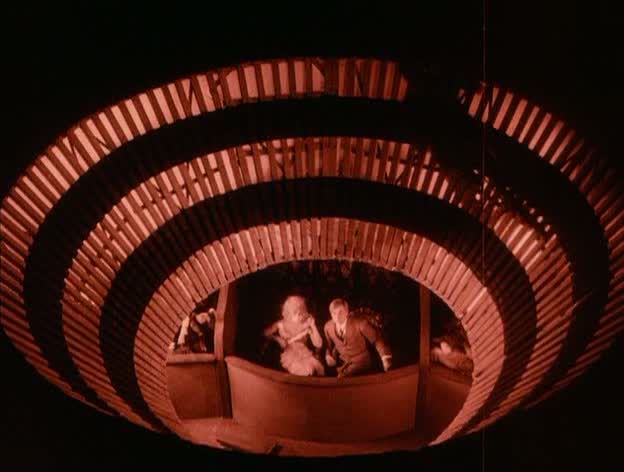
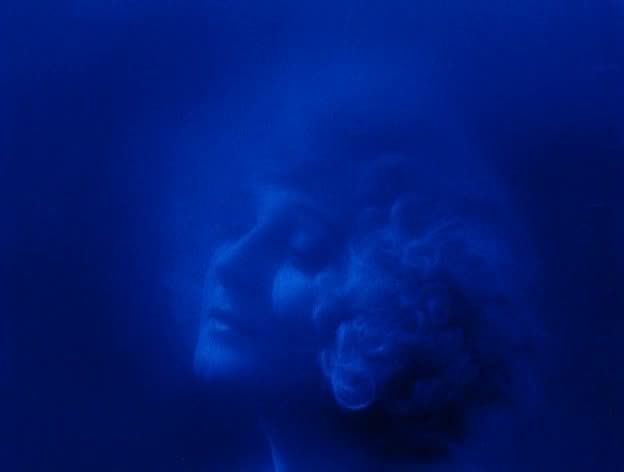
The film's best moments are Lorenz's periodic departures into daydreaming fantasy, signaled by shots that go slowly out of focus until the world is rendered as vaguely defined shapes and indistinct blurs, gradually losing tangibility so that dreamlike images of impossible love can take form, bright and brilliant, briefly seeming as real as the physical world, if not even more so. These images brilliantly convey Lorenz's disconnection from the world, the way he's sucked into this ephemeral world of dreams, the mere momentary sight of a woman's face destabilizing his world until it seems to be fading away, replaced by reveries and imaginings. He never sees the woman again, but he can't stop thinking about her. He imagines her carriage as a ghostly presence superimposed on the world, always just out of his reach. He imagines her face, surrounded by fog, a phantom, the ghost of a memory. He even finds her doppelganger, a woman (also played by de Putti) who looks just like his beloved but is far more worldly and accessible, as long as he can shower her with borrowed money and expensive goods, squandering his reputation and everything he has for some ephemeral pleasure with this woman who's only an echo of his real desire — although counter-intuitively, this echo is more material and tangible than the ghostly original for whom she's standing in.

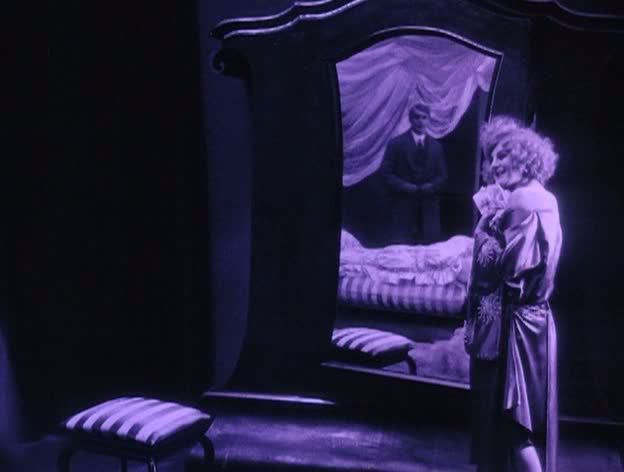
Phantom would be just another 1920s melodrama of corruption and redemption if not for Murnau's expressive, poetic aestheticization of Lorenz's logically inexplicable downfall. It's a gorgeous and rigorous film, with Lorenz continually framed by doorways and mirrors, which suggest separation from the world. His sister Melanie, too, is introduced doing her makeup in a cracked mirror, half her face missing as she mugs and purses her lips in the glass, foreshadowing her brokenness. The final few chapters are especially haunting, as Lorenz's world collapses around him, even literally collapsing in a sequence where the buildings of the town seem to tip over on him, the shadows of their spiked spires chasing him along the streets, an effective bit of trick photography that Murnau would then reuse for The Last Laugh.

Despite its formal beauty and dreamy qualities, Phantom isn't one of Murnau's strongest movies. Its appeal is in the way Murnau takes a melodramatic narrative and strips it down to a core of almost surreal, and certainly irrational, emotional breakdown.

Wednesday, April 4, 2012

The Woman in the Window


Fritz Lang's 1944 noir The Woman in the Window is in many ways a meta-noir that examines the tragic allure that draws so many doomed noir heroes into situations that are bound to end up in murder and worse. The aging professor Richard Wanley (Edward G. Robinson) is a pretty unlikely noir hero, and he seems to know it. He's settled into routine and domesticity, and even when his wife and children go away on vacation, leaving him on his own, he doesn't have anything planned beyond drinking quietly at his club, reading and smoking cigars. Naturally, he's going to be shaken out of this routine in a rather startling way, and in true noir fashion his downfall is practically preordained from the moment he sees a painting of a lovely, elegant woman in a gallery window adjacent to his club. He and his friends cheerfully discuss the woman in the painting, their infatuation with her virtually the only outlet for the sexual feelings of these thoroughly domesticated middle-aged men.

Wanley's conversation with his friends at the beginning of the film lays on the foreshadowing pretty thick, with his friends warning him that they're now too old for adventures, while Wanley insists that he has no interest in anything but going to bed early. He even tempts fate by saying that, should he encounter the beautiful woman from the portrait in the window, he'd walk right by, not even letting her sway him from his quiet, eventless night. It's of course immediately obvious what destiny has in store for Wanley, so it's no surprise when he walks outside, peering at the portrait one last time before he goes home, only to have the woman herself appear, reflected in the window. Lang telegraphs what's going to happen long before it does; even the framing and composition of the shot as Wanley looks in the window seems to be primed for the woman's inevitable appearance. Her face floats in the reflection in the glass, hovering in the blackness right next to her painted doppelganger, two alluring images superimposed. She briefly exists only as this hazy, wavering ghost image, her reality uncertain, before Lang's camera turns, with Wanley's gaze, towards the flesh-and-blood woman.

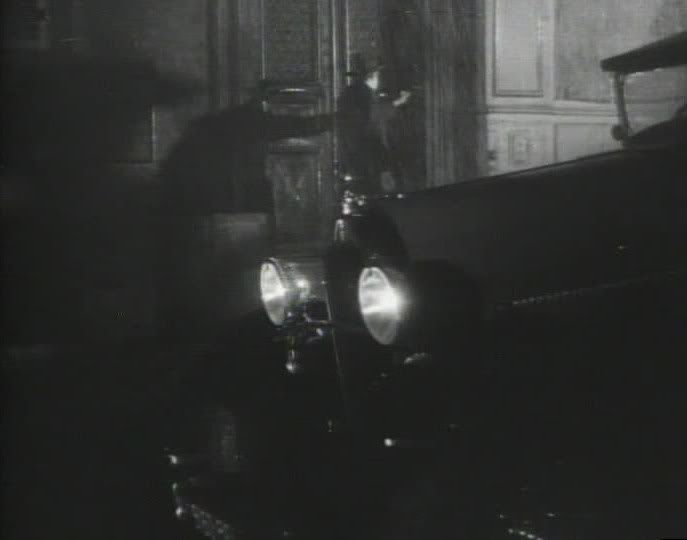
This woman, Alice Reed (Joan Bennett), leads Wanley, in total innocence, into a shadowy nightmare of murder, suspense and intrigue. The pair spends an innocent, pleasant night together, their flirtations barely edging past politeness — Wanley is married and scrupulous — when suddenly one of Alice's lovers bursts in, immediately flies into a rage, and begins strangling the shocked professor. Of course, it's the other man who ends up dead, and Wanley and Alice must dispose of the body, covering up their crime before morning comes. Lang draws out the process of cleaning up after this accidental murder, not skimping on any details, emphasizing what a difficult, physical, tense procedure it is. Every moment is loaded with the possibility of getting caught: lugging the body, wrapped in a sheet, out to the car in the rain, then driving out to the country to dump the corpse in the woods. The empty, rainy nighttime streets are eerily quiet and empty but seem loaded with danger, like a taxi dropping off a passenger just as Wanley is about to carry the body outside, or all the cops who suddenly pop out of nowhere, threatening to pull the professor over and discover his sinister cargo. One cop actually does pull him over, before Wanley has picked up the body, and sneers suspiciously at the professor's ethnic origins, in a sequence that surely must have resonated with the immigrant Lang: "Wanley, huh, what's that, Polish?" "No," Wanley replies, "it's American."


This attention to detail enhances the film's nightmarish atmosphere. Wanley is a man who's totally unprepared for this kind of intrigue, and Lang rigorously emphasizes each step of the process, as well as calling attention to all the little details of the evidence trail that Wanley leaves behind. After the murder and cover-up, the film becomes an interesting kind of forensic mystery in which the hero is the killer, watching his friend, district attorney Frank Lalor (Raymond Massey), piece together the clues and form a startlingly accurate picture of the crime. Throughout the film, Wanley's conversations with his friends, especially Lalor, keep him updated on the inexorable progress of the police, who uncover more and more evidence, all of which would point directly to Wanley if they ever got on his track. Moreover, these conversations work on a meta level to signal future plot points in an almost playful way: when his doctor prescribes Wanley medicine for nerves but warns him not to take too much, Wanley exclaims, almost excited, "poison!" It's as though he can't wait to see who will inevitably be getting poisoned via this new plot device, and neither can the audience.

This meta playfulness is carried over into the series of ironic twists that constitute the finale, with the last of these twists purportedly forced on Lang by a studio displeased with the director's original tragic ending. The studio-favored ending might seem like a cop-out if it weren't also so consonant with the film's theme of a man chasing his modest fantasies into danger and ruin. The film is a dreamlike journey through the dark side of the American city — in that respect, it would make an ideal double feature with Martin Scorsese's later After Hours — only to pull back at the last moment into safety, security, and a lack of risk. The urban environment and young women like the lovely Alice embody excitement and danger, contrasted against the stability and the safety, but also the boredom, of the nuclear family. At a key moment towards the end of the film, Wanley receives a phone call from Alice about another problem with their plans, and Lang shoots him sitting in an armchair with photos of his wife and two children prominently placed on a table beside him, reminders of everything he stands to lose, but also everything he was running away from into this dark fantasy.

The Woman in the Window is beautifully shot, bathed in shadows, with exceptional performances and witty dialogue. Robinson and Bennett make a great central couple, with Robinson playing a restrained, sophisticated man slowly being overtaken by fear, while Bennett radiates femme fatale glamour. Also notable is Dan Duryea as a sleazy blackmailer who seems to be constantly talking out of the side of his mouth. Lang shoots with precision and formal rigor, his camera constantly tracking either in or out of a scene, as though continually alternating between psychological intimacy and the forensic observation of distance. At one point, he shoots Wanley and Alice walking alongside an iron railing, the metal bars falling across their figures like prison cell doors, a familiar noir visual shorthand for a trap closing in, that's nevertheless effective nearly every time it's used. This is a potent noir that writes the subconscious psychological desires of the protagonist onto the dark, lonely city streets, suggesting that one's fondest fantasies can also be — and often are — traps. The shy, sly smile of a woman in a painting can be an invitation to adventure and romance, but also an invitation to be swallowed whole by the city's deep pools of darkness.

Tuesday, April 3, 2012

The Navigator


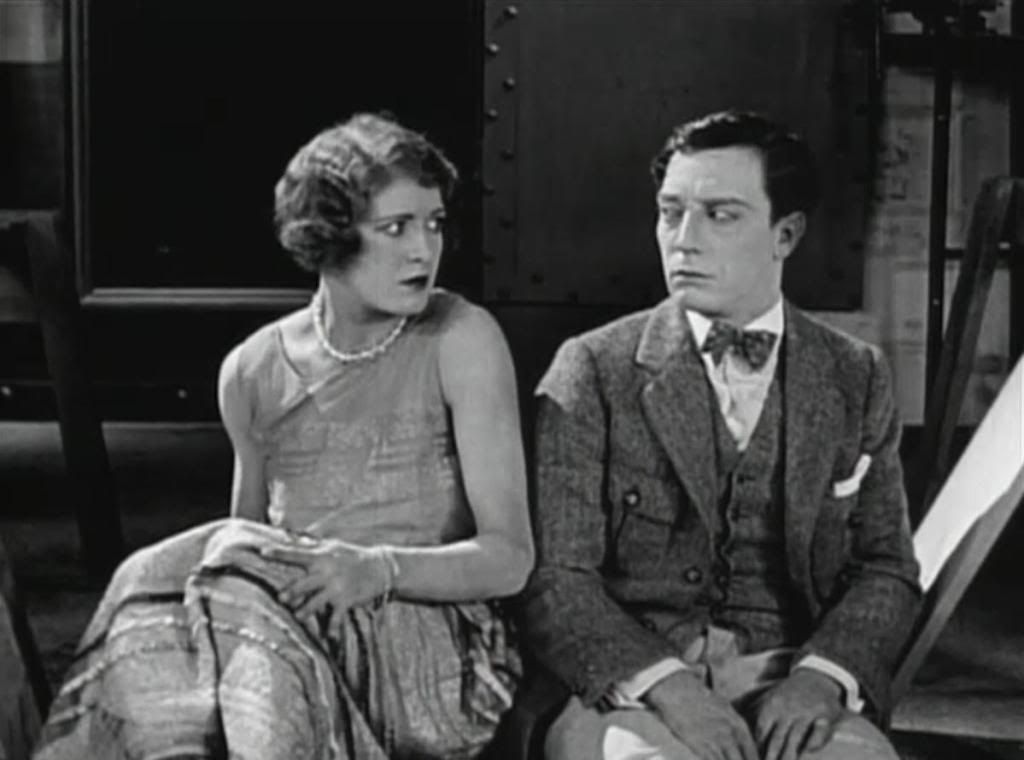
In The Navigator, Buster Keaton plays Rollo Treadway, a wealthy society heir with a very unsentimental idea of love. He simply decides one day that he'd like to get married after seeing a happy newlywed couple outside his window, and he promptly makes all the arrangements before strolling across the street to tell the woman he has in mind (Kathryn McGuire), another socialite. She says no, and Keaton, his deadpan expression never changing, just turns around and returns home without another word.

Through a mishap, the pair then winds up together on a drifting ocean liner, the only people aboard as the giant boat floats out to sea. For a while, they're unaware of each other's presence on the boat, and Keaton makes the most of the sequence where they wander around the boat, constantly missing each other by just a second, one going up a ladder while the other goes down a different ladder, darting through corridors at cross purposes, crossing paths but never so much as catching a glimpse of the other person. Keaton's sense of timing is impeccable: his comedy has a precise geometric formalism that's perfectly timed and laid out. He places his camera in ways that emphasize this timing, shooting down a long corridor with the characters running in circles, one bounding into the frame in the foreground at precisely the moment that the other disappears around the far corner, out of view.

When they finally collide into one another and realize that they're not alone on the ship, there follows a lengthy, brilliant and ultimately touching sequence in which these two spoiled rich youths struggle to fend for themselves. Earlier, Keaton's Rollo had gotten into his limo for a simple ride across the street — the car only had to make a U-turn to arrive at the destination — and had obliviously tried to take a bath in his clothes, suggesting just how helpless he is, how dependent he is on servants and luxury. When he's left on his own, the results are predictably comical, and the film's funniest sequence is the one where the two hapless socialites try to prepare breakfast, making "coffee" with a few uncrushed beans and seawater, throwing a handful of eggs into a massive pot of boiling water and then fishing around to find them again, trying and failing to open cans of food with a butcher knife.


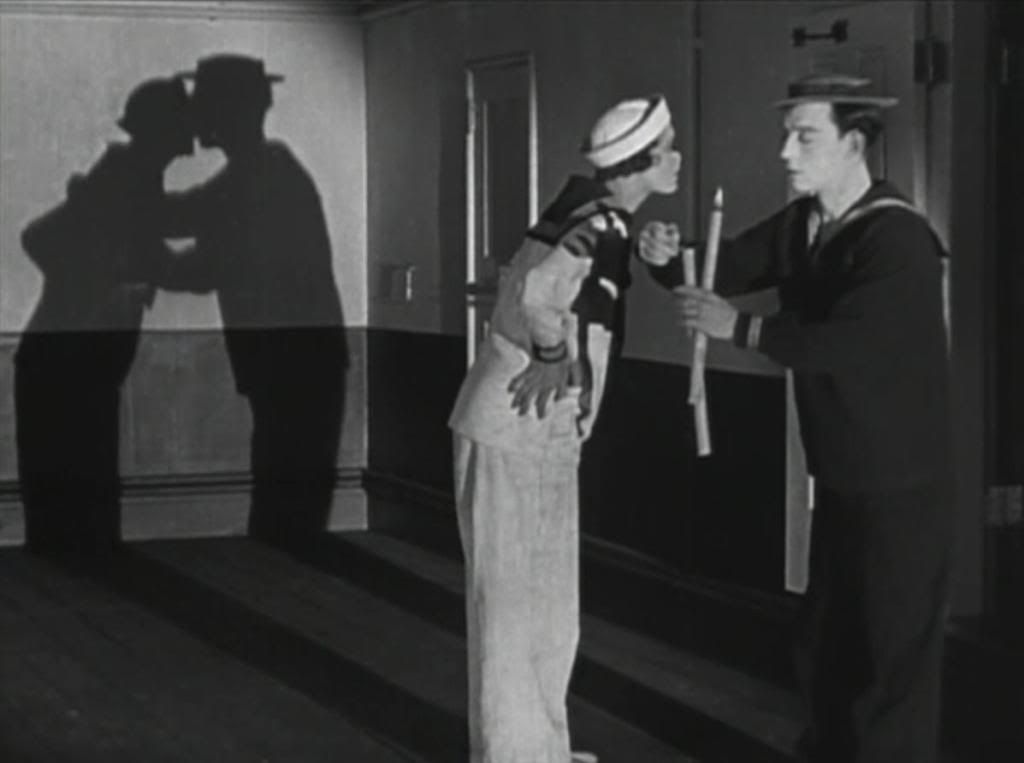
It's unrelentingly hilarious, and it pays off in a big way later in the film when a title card provides an ellipsis of several weeks, after which time the couple have adapted to their circumstances and evolved a whole succession of Rube Goldberg-esque contraptions to perform their morning chores. It's great stuff, with these wealthy, sheltered socialites learning to do things for themselves, to make inventive use of their surroundings. They perform the same tasks that they'd earlier struggled with so comically, now having remade the ship's kitchen in clever ways that demonstrate how they've learned from their mistakes, transforming the place into a complex series of levers and makeshift devices that help them through their morning tasks. They've also found shelter, after the slightly melancholy comedy of the sequence where they'd wandered all around the ship, trying to find a comfortable and safe place to sleep, spooking themselves with fireworks mistaken for candles and a creepy portrait of the ship's captain (co-director Donald Crisp) that Keaton mistakes for a sinister-looking man peering in through a porthole. Keaton's attempts to comfort and help his companion reveal a tenderness and compassion not revealed by his characteristic stoic expression and the deadpan way he'd approached romance earlier in the film. This undercurrent reaches its apex with a wonderful shot in which Keaton and McGuire struggle to light some candles while their shadows seem to kiss on the wall behind them, enacting the romance that they never quite consummate in the flesh.

After all this equally poignant and hilarious build-up, the film's final act is a bit of a letdown, as Keaton and McGuire run into an island full of cannibals and have to fend off the vicious natives. The racial caricatures are unfortunate, but mostly these sequences are disappointing simply because they're not at the same level of formal ingenuity and hilarity as the rest of the film. One exception is the famous scene where Keaton, in a diving suit, goes underwater to repair the ship's hull before the natives can reach them. It's an example of Keaton's physicality and preference for realistic stunts, as he really dives under and enacts a series of pantomime gags, like washing his hands in a bucket and then drying them off with a rag. Best of all is his fight with a pair of swordfish, one of which he wrestles into submission and then starts using its nose to duel with a second, bigger fish that appears. The submarine gag at the very end of the film is also a nice final note, especially the dazzling 360-degree spin in which everyone within the sub struggles to stay upright.

Coming after the viscerally exciting Our Hospitality and the absolutely brilliant Sherlock Jr., The Navigator feels like a bit of a step down for Keaton, but certainly not a big one. Its best gags have the director's characteristic precision and unparalleled sense of space, as well as being side-splittingly funny and thematically resonant. The film's theme is awareness: these sheltered people, locked off in a world of privilege at the beginning of the film, gradually become aware of the necessity of paying attention to the world around them, caring for other people, and working together to survive. By the end, these hapless socialites have become inventive and lively, propelled into constant motion and constantly ingenious use of everything they can lay their hands on. This includes each other, too: in one very suggestive shot, McGuire uses Keaton, in full diving gear, as a boat, straddling him and paddling back to the safety of their ocean liner.

Monday, April 2, 2012

La Chienne


Bleak, tragic, affecting, and at times surprisingly humorous, Jean Renoir's La Chienne is the melancholy tale of a poor schlub who gets in way over his head. Maurice Legrand (Michel Simon) is a low-level cashier, a reserved, quiet guy who's the butt of everyone's jokes because of his social awkwardness and his notoriously nasty wife Adèle (Magdeleine Bérubet). She shrilly browbeats him over the most insignificant things and is constantly comparing him, unfavorably, to her dead first husband, a war hero whose dashing portrait she proudly hangs in the parlor as a reminder of all the ways in which Legrand fails to measure up. Simon delivers a sensitive, heartbreaking performance as this broken and beaten man, his tall frame constantly stooped over, his face droopy and locked into a frown of resignation. He's a forgettable lump of a man, plodding tiredly through life, his only pleasure coming from his painting — a hobby that his wife takes every opportunity to insult him about.

As sad as his life is, though, his attempt to escape this pathetic existence only gets him into even more trouble, when he falls in love with the prostitute Lulu (Janie Marèse). Lulu's a crass opportunist who latches onto Legrand only to get money for her pimp and boyfriend Dédé (Georges Flamant). Legrand, naïve as he is, adores Lulu and doesn't even realize that she's only using him while pining for Dédé, who's as disinterested in her as she is in Legrand. This dysfunctional love triangle plays out with brutal emotional honesty. Even as Legrand's earnest love leads him to ruin, Renoir explores the cruel irony of Lulu being mistreated in turn by Dédé, who never displays a moment of tenderness with her, roughly grabbing her face to kiss her, after which she beams with joy; she's as oblivious as Legrand is.

What's great about the film is the somewhat haphazard unpredictability of its plotting and its juggling of tones. It's a twisty film where the reversals and ironies are anything but cheap, but instead provide bitter commentary on the follies of the characters and the society in which they live. Probably the best example is the subtle humor of the scene where Adèle's "dead" husband Godard (Roger Gaillard) returns, thinking that Legrand would pay him off to stay away, but instead the unhappily married Legrand is all too eager to simply step aside, responding with exaggerated courtliness to the other man's attempted bribery. It's hilarious to watch the dawning fear on Godard's face as he desperately lowers his bribe demand and begins to realize that his plan might backfire on him.


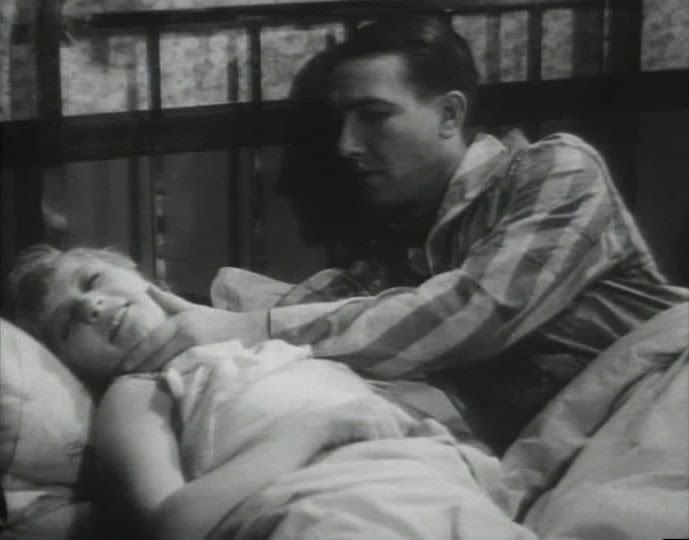
Renoir's style gives the film a deceptively off-the-cuff look, contributing to its low-key realism, but there's great precision in these seemingly casual images. In particular, Renoir often shoots frames within the frame, which call back to the film's opening, a fourth-wall-breaking Punch and Judy introduction which frames this story as an explicitly fictional narrative and promises, somewhat facetiously, that there will be no moral to the story. The prevalence of frames and mirrors surrounding these characters, creating additional layers within the film frame, is a reminder of the dramatic artificiality of this story. In one such shot, Legrand comforts Lulu, sitting on the bed and embracing her, framed by a window, flanked by flowers sticking up from the bed in front of the window. This striking shot recurs in a very different context later in the film, but these frames are everywhere: in the mirrors that reflect Legrand as he shaves, and in the deep focus shots that show Legrand's neighbors doing household chores in the windows across the way.

Even more powerful is the pivotal moment when Legrand discovers Lulu in bed with Dédé. There's a long silence as Renoir cuts to outside, the camera peering through the window at the lovers in bed, then tracking to the right to reveal Legrand standing in the doorway, looking in at them. The distance of the image reflects Legrand's sudden feeling of disconnection, as though he's floating outside of himself, looking in on this scene from a safe distance. Renoir then cuts directly to a closeup of Lulu, lamely trying to justify her actions, which shatters the shocked contemplation of the exterior shot. Renoir also gets a lot of mileage out of the slanted street in front of Lulu's house, and the twisty, shadow-strewn expressionist staircase that leads up to her flat. Her place seems to be built on unstable ground, and all these jagged, crooked lines and serpentine curves emphasize just how far off the straight and narrow path the normally conservative Legrand has wandered whenever he goes to visit her.

The film almost gleefully embraces the moral confusion of its protagonist, whose very normality ultimately allows him to, quite literally, get away with murder. Towards the end of the film, Renoir cleverly shows Legrand slouching discretely away, unnoticed, while the flashy pimp Dédé pulls up in a fancy new car. The film's conclusion suggests that Legrand, a respectable member of bourgeois society and a white collar worker, doesn't have to pay for his actions, at least not in a legal sense, when there's a far less respectable scapegoat at hand. The film ends with a weirdly tragicomic epilogue, in which Legrand and Godard meet up as hobos, years later, both of them gruff old men cackling about their shared fate. When Legrand confesses that he has become a murderer since they last met, Godard simply stares at him for a moment and then shrugs, "it takes all kinds." This cheerful amorality is part of Renoir's vicious satire of the bourgeois, and this ending serves as a prelude of sorts to Boudu Saved From Drowning, in which Renoir again directed Simon as a tramp stomping on middle class respectability; by the end of La Chienne, Simon's Legrand seems primed to become Boudu. La Chienne ends with Legrand telling Godard, without irony, "life is beautiful." As the two men walk away together, Renoir pulls back, through a window that's then revealed as the proscenium of a theater, the curtain falling on this sordid little human drama.