Wednesday, April 22, 2009

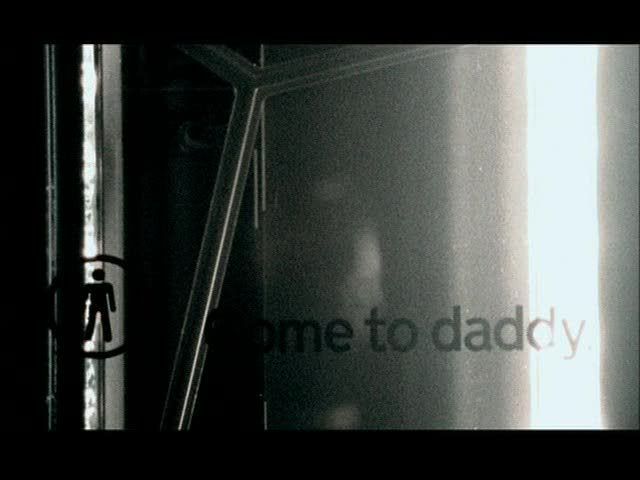
Films I Love #28: Come To Daddy (Chris Cunningham, 1997)


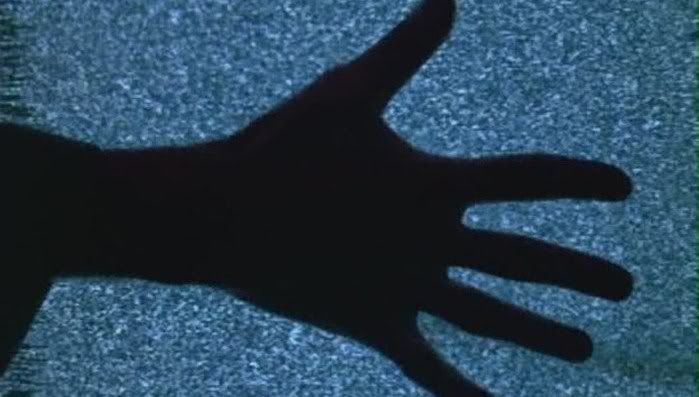
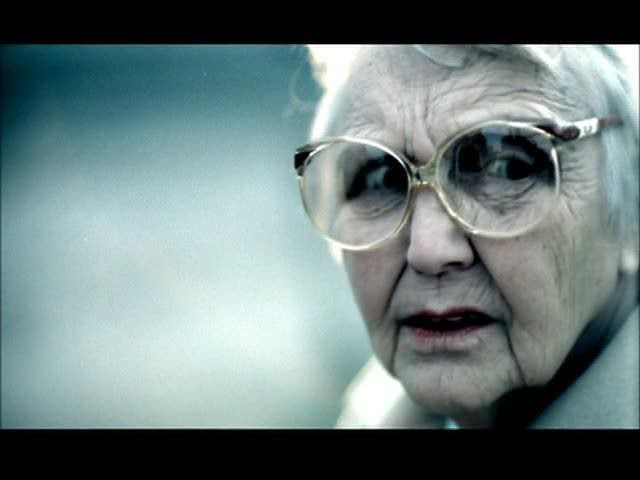
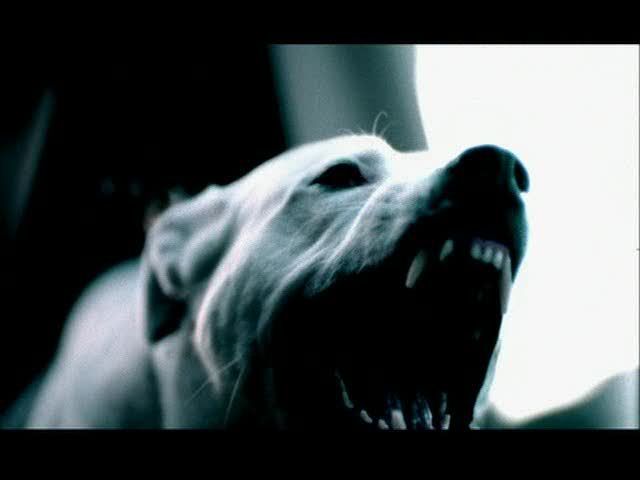
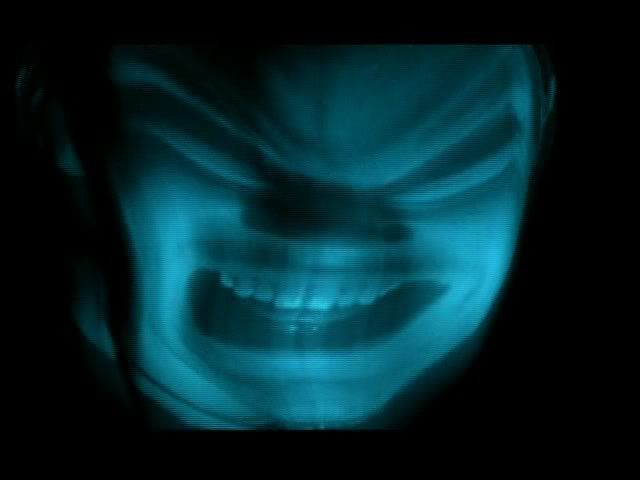
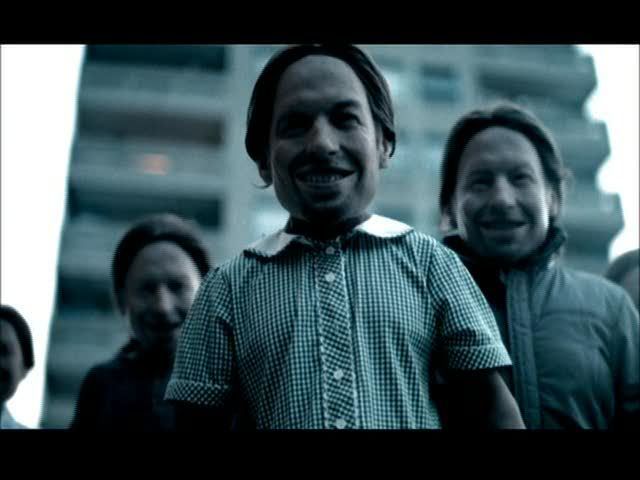
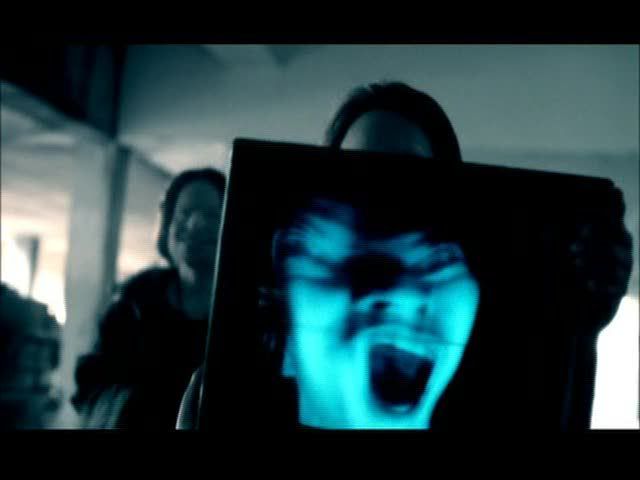
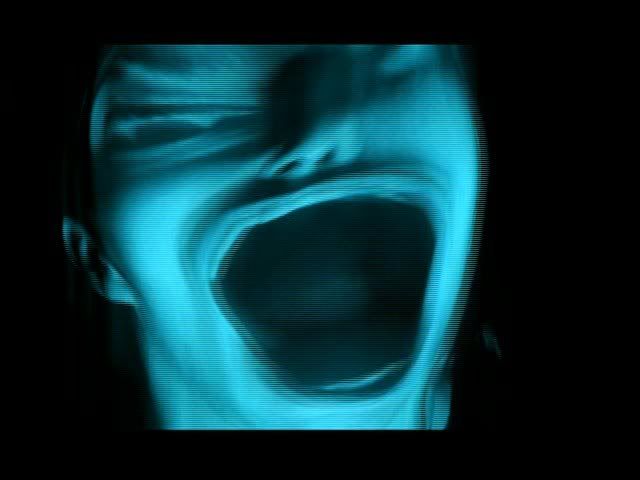
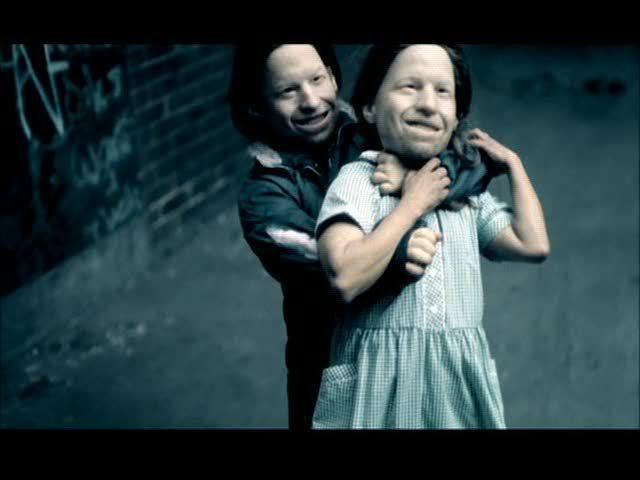
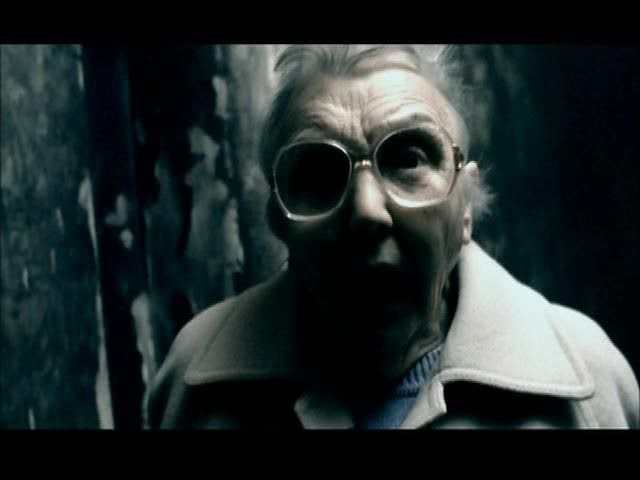
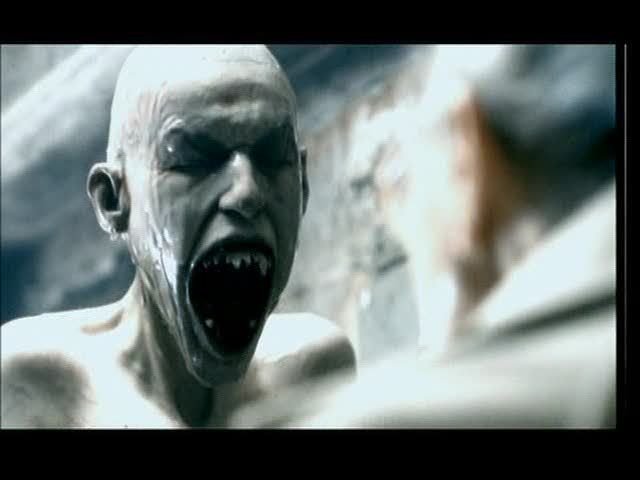
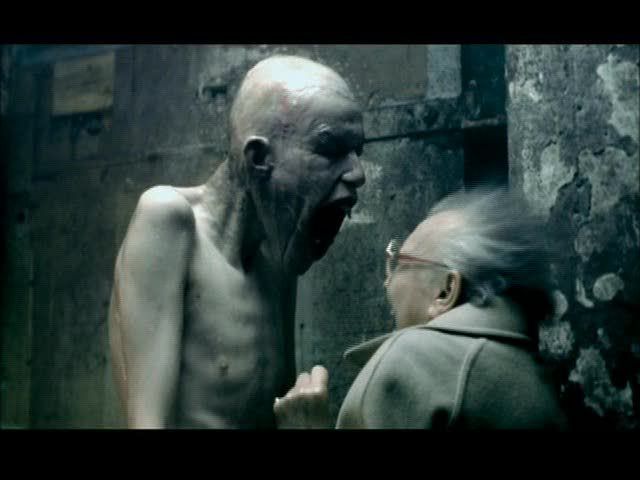
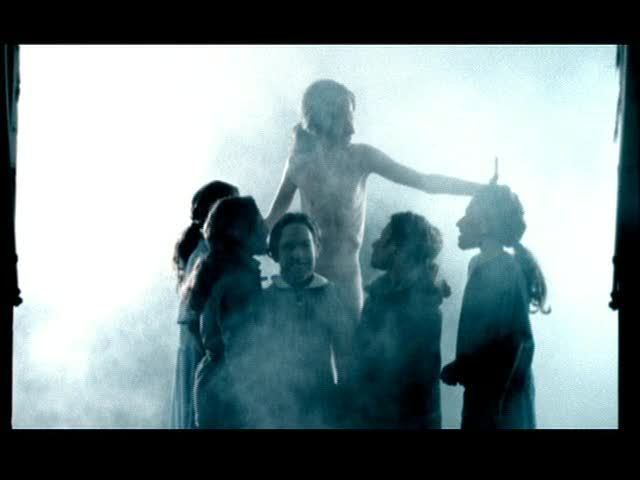
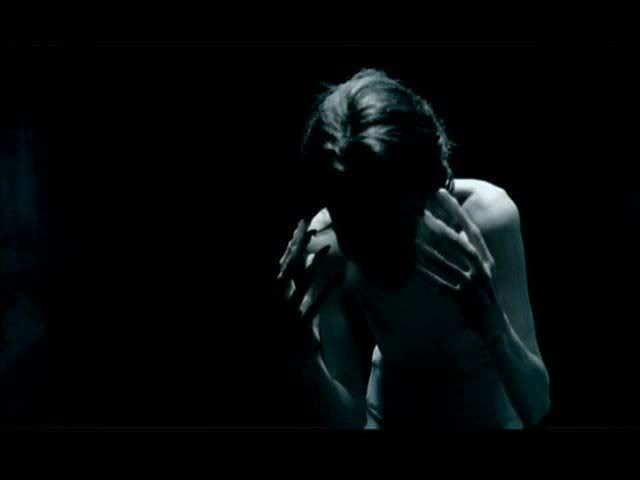
Come To Daddy was the first music video that director Chris Cunningham created for eccentric electronic musician Richard D. James, AKA Aphex Twin. It's a miniature masterpiece of audiovisual assault, marrying one of James' most demented, frantic tracks to an appropriately warped visual sensibility that mingles horror with absurdist humor. There's something simultaneously unsettling and hilarious about the way Cunningham clones James himself, placing the musician's demonically grinning visage atop an army of cheerful kids and later grafting his face onto a hellspawned creature who crawls, Videodrome-style, out of a TV set to scare the wits out of a passing old woman. It's a marvelously deranged piece of work, frightening and ridiculous, and possibly a bit perverted — a tendency Cunningham and James would pursue further in their equally outrageous follow-up, Windowlicker, a rap video parody with a chorus line of ass-jiggling, bikini-clad Aphex Twins.

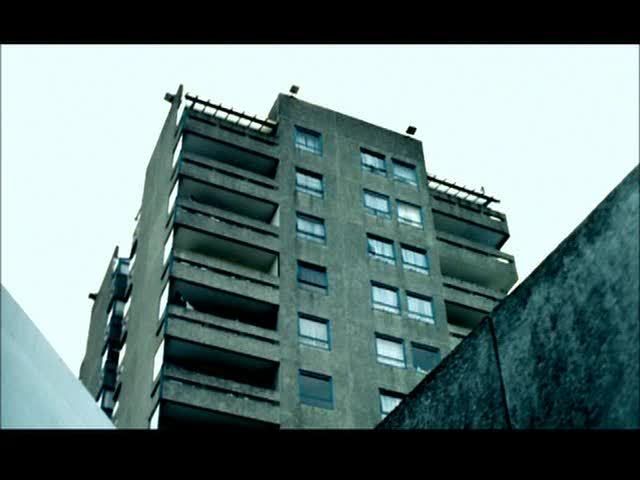
"Come to Daddy," the song, joins James' usual frenetic, inhuman beats to a trashy, static-laden pseudo-metal vibe, with James' chanted vocals seemingly beamed in direct from Hell: "I want your soul/ I will eat your soul." Cunningham takes the lyrics at their word, and visually interprets what it might look like to see James devouring souls, whether he's incarnated as a strangely creepy midget child, or as a towering demon birthed from the television. The pace of the editing matches the energy of James' beats, and Cunningham establishes recurring patterns within the chaos: repetitive loops of James-faced little brats storming through an abandoned building, assaulting anyone who gets in their way as they pay tribute to their televised master. It's a disturbing, unforgettable few minutes, a reminder of the tremendous and often underused capacity of the music video as a medium for experimentation.

Tuesday, April 21, 2009

Cléo From 5 To 7


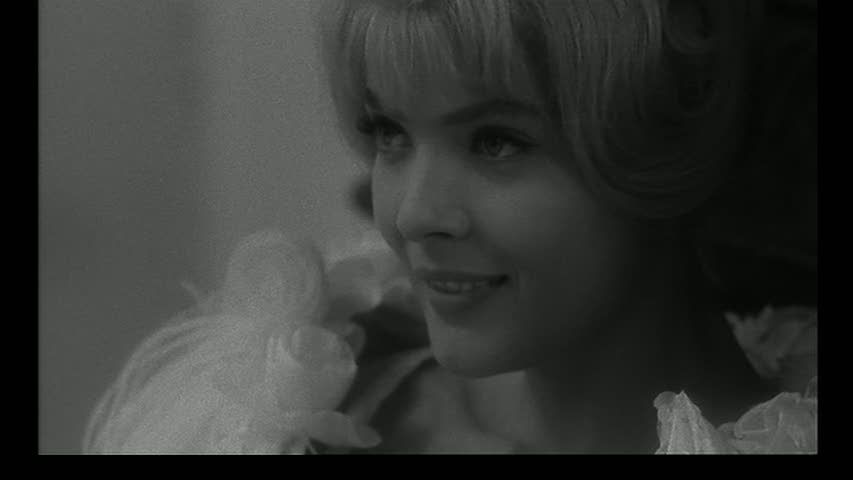
Agnès Varda's iconic heroine Cléo (Corinne Marchand) is a young woman, a fledgling pop singer, who wanders around Paris one evening while anxiously awaiting the results of a test for cancer; she fears she's ill and is going to die. And yet despite her melancholic mood, Varda's Cléo From 5 To 7, the record of those two nervous hours condensed into a mere hour and a half, is as light and sprightly as the elegant shawls and airy dresses the stylish Cléo dons over the course of the film. Cléo is a flighty, unstable girl — her friends are continually calling her "capricious," not without justification — with a real streak of vanity and egoism. She loves her own looks, loves to admire her face in mirrors, loves to shop not so much for what she buys as for the pleasures of trying things on, modeling for herself. Varda patiently indulges Cléo's mood swings and whims, simply following the girl around, twirling the camera in playful circles around her as she shops, bickers and teases with her friends and lover, then wanders through the streets of Paris, passing the time until her test results are ready.

Seldom has self-absorption been so charming and attractive. Cléo is reminiscent of the inward-looking protagonists of Varda's first film, La Pointe-Courte, the troubled lovers who are oblivious to everything but their own problems. But Cléo is a much more appealing figure: she's clever and has an unpredictable spirit that makes her fun to watch even when she's doing little besides whining about her own problems. Marchand's performance is subtle and endearing, infusing Cléo's bubbly air-headedness with an undercurrent of sadness and regret, a desperate fear of death that she tries to cover up with games and distractions. During a scene with her musician friends Bob (composer Michel Legrand) and Plumitif (Serge Korber), Cléo bounces erratically from annoyance to delight to depression, culminating in a wonderful shot where she sings a maudlin ballad that the duo wrote for her. Varda's camera, which had been frenetic throughout the scene, jumping around like an excited puppy from one face to another, now slows into a stately tracking shot, circling around Cléo, ending in a head-on closeup of the singer, her pale face isolated in a field of black, as tears run down her cheeks. It's an especially poignant moment because Varda allows it to arise naturally from out of the jovial spirit of the rehearsal session, an unexpected turn into bathos as Cléo's mind turns once again towards her uncertain fate.

Varda's style is continually calling attention to itself in disruptive ways, the calling card of the Nouvelle Vague, but unlike Varda's contemporary Godard, whose disjunctions were initially motivated by economy and expedience, Varda's seem more purposeful. One gets the sense in Godard's films from around this time that his stylistic flourishes are often there for their own sake, for fun, while Varda's style — though equally active — seems more directly motivated by the needs of the story. Early on in the film, after Cléo goes to see a fortune teller who delivers a foreboding vision of the future, an image of the girl walking down the stairs stutters and skips so that her blank, shaken face shifts out of and then back into the frame several times before finally being allowed to descend out of view. The effect is of holding a closeup without actually holding it, accentuating the girl's face and her stunned reaction to the fortune teller's confirmation that things are not looking good. Elsewhere, Varda's jittery jump cuts recall Breathless in the way they subtly shorten a scene, eliding a few seconds here and there as though speeding up time. Godard himself appears (along with Anna Karina) in a film-within-the-film segment, as a hammy silent actor in a short film that Cléo and her friend Dorothée (Dorothée Blank) go to see one afternoon. The short is in fact Varda's own Les fiancés du pont Mac Donald, a tribute to silent comedy in which Godard plays a man who sees the world as miserable and negative when he puts on a pair of dark sunglasses, only to recover his happiness once he takes them off.


The inclusion of this short is appropriate for a film that's all about the importance of one's outlook, one's way of looking at the world. Cléo's self-absorbed perspective isolates her, keeps her from recognizing the happiness in the world around her, keeps her from engaging with her fellow beings. During her travels, she walks into a café and winds among the tables, looking at people and picking up snatches of conversation here and there. Throughout the film, when the curious Cléo engages in this kind of nonchalant eavesdropping and spying, Varda spies along with her: the camera roams through the café, looking at the faces of the people, and on the soundtrack muted bits of dialogue drift in and out.

To some extent, Varda continually tweaks and critiques the solipsism of her protagonist by taking on a more democratic perspective. Throughout the film, titles occasionally appear to chronicle the advance of time between the titular hours of 5 and 7. Though these titles are often preceded by Cléo's name, they are also frequently dedicated to other characters, who take momentary possession of the narrative, offering up glimpses of their own lives and concerns as they intersect with Cléo. Often these characters will even voice their thoughts in the narration. In the café scene, the title introduces "quelques autres," "some others," a democratic gesture that takes the focus off of Cléo for a few moments, drifting in and out of some other lives that happen to be passing through this spot at the same moment as her. But the protagonist herself remains mostly oblivious to these maneuvers; she plays one of her own records on the jukebox and is only annoyed that nobody is listening, that they all remain locked into their private conversations, as egoistic and self-absorbed in their own way as she is.

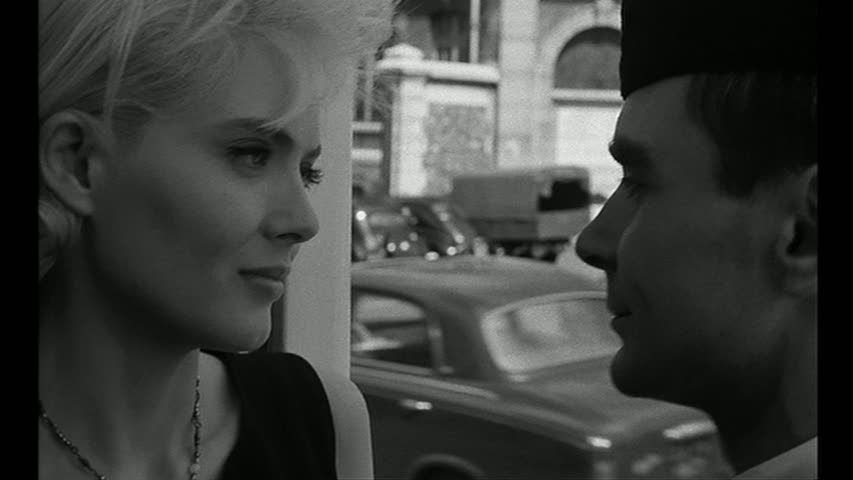
This self-absorption extends also to political matters, which linger on the fringes of the film, always threatening to intrude into Cléo's insular world. The Algerian War, in particular, buzzes through the film, a popular topic of conversation in the streets and the subject of a news broadcast that plays in a taxi as Cléo rides around Paris. There's no indication that Cléo pays any attention, at least until the war confronts her directly during the finale, when she meets the kind and chatty soldier Antoine (Antoine Bourseiller), spending his last day of furlough in a park. The pair click almost immediately, and Antoine offers to accompany Cléo to the hospital, distracting her from her fears along the way by engaging in a running commentary about types of trees, mythology, and the beauty of nudity.

This sequence is sweet and touching, as Cléo seems to emerge from her protective cocoon to engage with the charming Antoine. But the Algerian War haunts the scene's background, a constant threat that limits their time together, politics finally impacting tangibly on Cléo's self-contained existence. The final shot, of Cléo and Antoine looking at one another and smiling shyly, is ambiguous and lovely, representing so many different possibilities: the blossoming of love, the penetration of Cléo's self-absorption, the happiness she feels when she realizes she won't have to die, the knowledge of their impending separation, all these bittersweet feelings emanating from a simple image of two young people smiling on the first day of summer.

TOERIFC: The Serpent's Egg

[This post is prompted by The Oldest Established Really Important Film Club, which will be spotlighting a different blogger-selected film every month. This month's selection is courtesy of Bill from The Kind of Face You Hate. Visit his site to see his thoughts on the film and to join the main discussion.]

To the extent that Ingmar Bergman's The Serpent's Egg has a reputation at all, it is not a good one. The film is mildly notorious, at least among Bergman admirers, as a late 70s oddity from the great director, a lavishly produced English-language epic made in Germany and starring American actor David Carradine alongside longtime Bergman muse Liv Ullmann. It's known as a colossal misstep, weird and boring in roughly equal measures. There's little denying that the film lives up to its reputation: it's a bizarre, unsettling, deeply unpleasant film, a one of a kind anomaly in the Swedish director's oeuvre. At times, it feels more like a Fassbinder film than anything by Bergman, and one wonders if shooting a period epic in Germany inspired Bergman to subtly shift his style towards one of this foreign country's contemporary greats, though something ineffable gets lost in the translation. The baroque, teutonic weirdness of this film, seen through Bergman's dispassionate lens, makes for a destabilizing experience. It's never clear just how one should feel, as the dizzy atmosphere and elliptical storytelling produce a blurry portrait of Germany in the unstable years between World War I and World War II.

The film follows the dazed wanderings of the American circus acrobat Abel Rosenberg (Carradine) after the inexplicable suicide of his troubled brother and fellow performer, Max. Abel falls in with Max's ex-wife Manuela (Ullmann), who works as a cabaret performer to support herself amidst the disintegrating German economy. The film portrays a nightmare world in which men are beaten on the streets while the police walk by as though nothing was happening, where everything is fluid and nothing can be depended on. Abel, a Jew facing increasingly virulent anti-Semitism, is especially adrift in this transitional culture.

Bergman conveys the aimlessness and deadened nerves of this milieu by making a film that's almost relentlessly aimless and deadened itself. Abel and Manuela are lost, clinging desperately to one another, but the slack pacing of the narrative mostly just leaves a lot of empty space, and a lot of room for Carradine and Ullmann's overacting impulses to spill over. The actors indulge in scenery-chewing explosiveness whenever they get the chance, with Ullmann tending towards shrill, over-emotive hysteria, and Carradine veering into convulsive gestures and tourettic verbalizing. His breakdown at a police station is uncomfortable to watch more for the strange, mannered quality of the acting than for the actual emotional state of his character. The same goes for some of Ullmann's loonier outbursts; Bergman not only makes no attempt to control or smooth out the performances but actually seems to be encouraging them to go over the top as often as possible. The unhinged quality of the performances actually makes a weird kind of sense, both aesthetically and narratively, for a film that's all about people losing their grip on reality and succumbing to wild mood swings and disconnected emotional reactions. Knowing this doesn't make the film's more out-there moments any easier to watch, of course.


Despite the uneven tone and staggering narrative, The Serpent's Egg is an interesting film in many ways, not least of which is the way Bergman captures the mood and feel of pre-WWII Germany, building a tremendous studio set of the streets around Abel's neighborhood. The streets seem to be continually rain-streaked and lit, at night, by flickering lamps that reflect off the slick cobblestones and metal street-car rails. Abel wanders through the dark in a fedora and trenchcoat like a badly misplaced noir hero, confused and lost. Along the way, there are striking moments — especially several of the grotesque, lascivious and gender-bending performances glimpsed at the cabaret where Manuela works — but many more dead patches.

During the second half of the film, however, Manuela and Abel enter weird new territory as the plot unravels even more than ever. Manuela and Abel move into a suite of apartments given to them by the courtly but sinister Hans Vergerus (Heinz Bennent), an old acquaintance of Abel's and now an admirer of Manuela's. Once there, Manuela takes a job at a nearby factory while Abel begins working within the labyrinthine medical archives of a clinic, mechanically shifting papers back and forth from one folder to another. Things get even weirder when Abel begins to realize that strange experiments are going on at the clinic, experiments in human pain and terror, essentially warm-up exercises for the atrocities of the Nazis a few years later.

In one of the film's best and most startling scenes, Abel confronts Vergerus in a hidden room within the maze of the clinic's library, where the mad doctor keeps the filmed records of his warped experiments. Vergerus recounts, with a chilling lack of emotion, the pain and psychological torment inflicted on his patients, as he shows Abel grainy black and white film reels documenting these experiments. This scene is a bracing coda, the crystallization of the film's themes about violence and inhuman ideologies. Abel's confused meanderings eventually lead him to a horrified face-to-face confrontation with a purely evil being, a man who prophesizes a not-so-distant future society in which his work will be viewed, not as degenerate and frightening, but as the vanguard of scientific research. It's a bone-chilling prediction of the Third Reich's collective insanity, and it's well worth trudging through the often maddening boredom and indifference of this film in order to reach this fascinating scene. Bergman shoots it mostly with closeups of Vergerus, played with an icy intensity by Bennent, calmly smoking as he displays a catalogue of horrors, a gleam of mild pleasure in his pale blue eyes.

Ultimately, The Serpent's Egg is worth seeing if only for this scene, an unforgettable, terrifying vision of the radical disconnection from morality that led to the Holocaust. Despite the potency of this climax, the rest of the film is loose and frustrating, with flashes of interesting ideas giving way to stale melodrama and uneven acting. This is a true curiosity for Bergman, a disjointed failure with enough sparks animating it that it can't be written off completely.

Monday, April 20, 2009

L'eclisse


The typical descriptions of Michelangelo Antonioni's great L'eclisse make it sound like an unbearably dull affair, a true product of the 60s art film era. It's about "alienation," right? And disconnection, and the isolation of people from one another in the modern age. Given the typical critical wisdom surrounding Antonioni and this film, one could be forgiven for expecting a bracing, obtuse, rather chilly affair, a humorless intellectual statement that maintains its distance from its characters. Upon seeing the film, of course, one begins to suspect that this is an instance of too much critical discourse threatening to smother the life out of a vibrant, complex work of art. L'eclisse pulses with energy and beauty, with the formal ingenuity of Antonioni's images, which have a lush, sensuous quality. This is a film about the disconnected modern era, yes, but much more importantly it's about the people who have to live in this age, people who aren't willing to take alienation and lack of communication as a given, who fight against the sometimes suffocating constraints placed upon their lives.

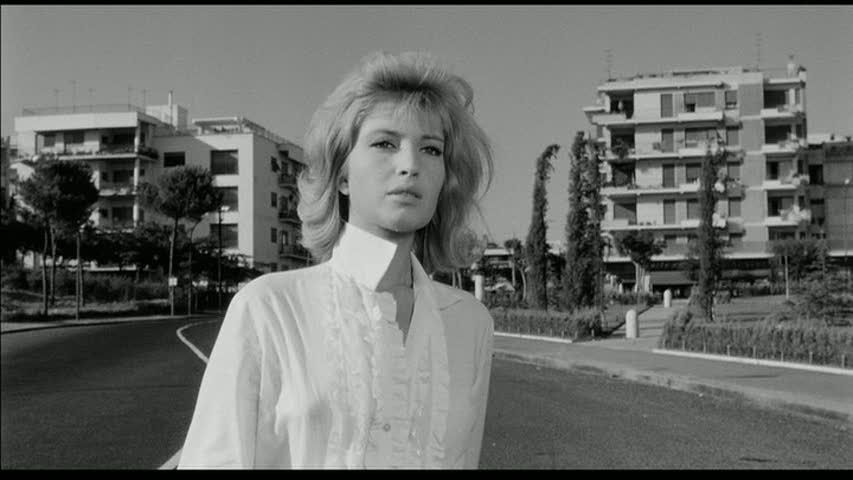
Specifically, it's about the lovely Vittoria (Monica Vitti), who breaks up with her lover Riccardo (Francisco Rabal) in the film's extended opening set piece, which masterfully creates tension solely out of the manipulation of space and movement. As Vittoria and Riccardo pace around his apartment together, they are engaging in a dance of disconnection, their words flying past unheard even as their bodies clang off one another whenever they're on the verge of coming together. Antonioni accentuates these disjunctions with his camera, which purposefully creates jarring angles within which the quarreling lovers are awkwardly fitted. At one point, an abrupt cut pushes the lovers out of the frame almost completely, so that a large gray lampshade fills most of the empty space, until Vittoria turns away from Riccardo to face the camera again. It's a great, raw scene, all abstracted motion and hard lines, but its rigidity is contrasted against the equally wonderful sequence in which Vittoria commiserates after the breakup with her girlfriends Anita (Rosanna Rory) and Marta (Mirella Ricciardi). At the apartment of Kenyan native Marta, Vittoria is delighted to study the photos and memorabilia of the other girl's homeland, and she and Anita playfully dress up as blackface natives and dance to the rhythms of an African drum music record, their snaking limbs making fluid "S" shapes in the air.

Despite the racial obliviousness of these middle-class Italian women — Marta puts a stop to the game, seemingly offended, but then derisively calls the blacks she grew up with "monkeys" — they're trying to have fun, and Vittoria at least possesses a genuine spirit of intellectual curiosity, a desire to absorb learning from her surroundings, to learn about other people. She's a woman who will randomly follow strangers on the street to see what they'll do, or who will be suddenly struck by the quality of a person's face. She has a playful, whimsical spirit, a perhaps unconscious desire for something more that drives her to leave Riccardo at the beginning of the film. She's a product of her time and her culture, and she shares the flaws of her milieu, but she's also a spirited and independent woman who isn't willing to settle for the dreary existence that's seemingly plotted out for her: a discontented marriage, like her friends have, to some man who's perpetually away on business.

She's more in touch with the world: a night-time chase through the streets for her friend's lost dog leads to a wonderful shot of her laughing, unguarded, as the dog walks on its hind legs away from her. Later, she's drawn to the clanging sound of tall metal poles bouncing off each other in a strong wind; she has a sensual sensibility that appreciates the urban poetry of these subtle moments. Antonioni is, like Vittoria, attuned to the sensuality of the world, to the puffed cotton wisps of a cloud bank or the ripples spiraling out from a finger as it breaks the surface of stagnant water. His images reflect engagement with the world, even when he isolates Vittoria in pale gray expanses of nothingness that visualize her loneliness and alienation. He's able to find beauty even in a construction site lit by street lamps, in a splinter of wood floating in a barrel filled with rain water, in the abstract lines of an apartment block set off against the vast empty sky.


Despite her free spirit and thirst for more, almost immediately after breaking up with Riccardo, Vittoria finds herself being drawn into the orbit of the stock trader Piero (Alain Delon), a driven, intense young man who spends his days in the relentlessly fast-paced world of the stock exchange, where he shouts into phones and races back and forth across the office's floor placing frantic buy and sell orders. He's completely immersed in the world of money all day long, and is sometimes just barely able to peek his head above the water by night. Vittoria meets him because she goes to the stock exchange to see her mother (Lilla Brignone), who spends all day there as though playing a game — she's a precursor to those old ladies who today would be found sitting in front of a Las Vegas slot machine for endless hours at a stretch. Vittoria has nothing but contempt for this world, and she's pushed away whenever Piero can't resist talking about his new car or the money he's made or lost in the course of the day. And yet she also feels a strange attraction to him, a slowly sparking connection.

The slow, halting courtship between Vittoria and Piero is warm and human and touching, marked by hesitations and withdrawals and false starts. Antonioni is a master at portraying the difficulty of love, the incredible psychological and sociological obstacles to forging a connection between two independent beings. But what's too often overlooked is the hope and beauty that are also contained within his vision of the world: despite the difficulties, despite the seemingly insurmountable barriers separating us, we frequently do make connections, if only momentary ones. The playful wrestling and cuddling of Vittoria and Piero, their stylized come-ons and maneuvers, are a dance of desire, a response to the hard-edged dance of disconnection between her and Riccardo in the film's opening minutes. In contrast to the earlier scenes, the love scenes with Piero often dissolve into frantic, messy movements, uncontrolled and passionate — two reserved people letting go with one another.

There is, of course, a sense even at the height of their love affair that this cannot work in the long term. One knows instinctively that there is little room in Piero's busy work schedule for true, enduring love, and that Vittoria will not have the patience of Piero's less serious old girlfriends for his habitually broken dates and long, unpredictable working hours. And yet Antonioni allows the couple their moments of happiness, then lets them drift out of the film altogether. The final seven minutes of the film are a poetic, dialogue-free collage of quiet, unassuming street scenes from around the city, scenes of urban life going on, no matter what the fate of this one couple might be. This is a sublimely humanist statement, a refusal to give his attractive movie star couple their proper denouement, focusing instead on the ordinary people who get on and off of buses, reading papers, walking to or from work, sitting in a park. Antonioni even includes a clever joke halfway through, a shot of a blonde woman's head from behind, briefly giving the audience the impression that Vitti's character has returned, until the woman turns around, revealing someone else altogether. The main couple are represented again, symbolically, only in the penultimate shot, a haunting nighttime image of the construction site where they planned to meet, empty and desolate, lit only by a single street lamp, perhaps the site of an unkept date, the onset of their disconnection.