Tuesday, May 19, 2009

TOERIFC: Dancer in the Dark

[This post is prompted by The Oldest Established Really Important Film Club, which will be spotlighting a different blogger-selected film every month. This month's selection is courtesy of Pat from Doodad Kind of Town. Visit the site to see Pat's thoughts on the film and to join the main discussion.]

Lars von Trier's Dancer in the Dark is a bleak, ugly film, relentlessly grim in its depiction of the rapid downward spiral of the Czech immigrant, struggling single mother, factory worker and would-be musical star Selma Jezkova (Björk). Selma suffers from a rare disease that runs in her family, causing her to go blind at a young age, and she's already in the final stages, losing the last of her sight and descending into blackness. Before she does, she is desperate to work as hard as she can and save up as much money as she can, so that she can pay for the operation that her son Gene (Vladica Kostic) needs, to prevent him from meeting the same fate as his mother. This is a tearjerking premise, and von Trier is intent on milking as much pathos and anguish as he can out of his poor heroine. It's not enough that she's going blind, not enough that she's destitute, living in a trailer and struggling to scrape together the money she needs for her son, not enough that she has a rather pathetic but earnest admirer in Jeff (Peter Stormare), but has no time to foster a relationship with him. On top of all this, she's soon also betrayed by her neighbor and friend Bill (David Morse), a local cop who's despairing because his money has run out and he's no longer able to give his pretty, stylish wife (Cara Seymour) the lifestyle she's accustomed to. This betrayal leads Selma to even lower depths, towards a denouement so tragic it's devastating.

Or, at least, it would be, if von Trier's behind-the-scenes puppetry weren't so blatantly obvious, if the strings he was pulling to set this weepy drama in action weren't so visible. Subtle is not the first word that comes to mind here. If there's anything that von Trier can do to increase his scenario's tragedy, he does it. This isn't a realistic tragedy, and it isn't even a stylized melodrama: after a while, it becomes very nearly a laundry list of the bad things that can befall a person by a combination of bad luck, betrayal and astonishingly terrible decision-making. It's grating, especially when von Trier inserts exaggerated anti-American caricatures, like Selma's co-worker who calls her a "Commie" and tells her, with no provocation, that she shouldn't prefer her homeland to "the US of A." At moments like this, von Trier's hands on the strings slip into the frame, exposing the contrived nature of this whole artifice. The film is an elaborate Rube Goldberg device designed to destroy Selma, and it's an especially cruel trap since it's been set by her own creator, the writer/director who called into being simply because she'd be especially pathetic and easy to tear apart.

Indeed, Selma is a true naif, totally oblivious to the ways of the world, staggering blindly through life — first metaphorically, then literally. She's obsessed with Hollywood musicals, and loves to go to them even after she starts losing her sight; she can still listen to the music, and she has her caring friend Kathy (Catherine Deneuve in a wonderful supporting performance) to explain what's happening or tap out the rhythms of the dances on Selma's palm. She had always imagined America as being very much like the images in the movies, and if reality doesn't always measure up, she daydreams this glamorous Hollywood life into existence. What makes this character so moving, in spite of all von Trier's manipulations, is the sensitive and sweet performance of Björk, who invests this childlike woman with depth and intensity. Von Trier's aesthetics are often distractingly bland and anestheticized; in trying to capture the dull, deadening surfaces of Selma's life, he does it so well that his film looks like a dull, dead TV show, a "reality show." However, he wisely spends much of the film in probing, tight closeups on Selma, and Björk's expressive face, so mobile and unique, conveys the inner complexities of her character.


Björk also provides the music for Selma's daydreams and fantasies, which frequently burst through the prosaic routine of her life, turning tragic scenes into occasions for weird, robotically choreographed musical numbers. These scenes are indescribably odd and off-kilter, the work of choreographer Vincent Paterson, who conceived of Selma's inner life as a kind of kitschy, stiff take on the Busby Berkeley musical numbers she loves so much. Underpinned by mechanical rhythms and repetitive motions, these pieces really do look like the work of someone who has studied and loved Hollywood musical forms but isn't entirely sure how to put them together for herself. As a result, only Selma moves freely through these dreams, twirling and dancing, her flowing motion offset against the awkward, mechanized movements around her. She finds music everywhere, especially in the rhythms of industrial society — the noise of the machines in the factory where she works, the clank of the trains near her home — and her musical numbers as a result have a pseudo-industrial drive beneath the soaring, saccharine Hollywood strings.

Of course, it's Björk's typically quirky, active music and Paterson's choreography that drive these musical numbers. Von Trier's contributions are mostly negative, particularly in the way that he chops up the mise en scène of these performances, cutting to odd angles at a fast pace. His editing does great damage to the musical numbers, fracturing the internal rhythms of the music and dancing, forcing his own distinct rhythms onto the material. It adds an unnecessary disjunctive layer to all the musical scenes, with von Trier's choices jarring against the choreography and the meaning of these interludes as an escape for Selma. In fact, the most interesting aspect of the film as a musical is how unbearably sad its musical interludes are, infused as they are with the knowledge of Selma's tragic life, with the certainty that these are just ephemeral fantasies, unable to stave off the next inevitable disaster for very long. The film thus vacillates between an appreciation of fantasy as a way of making life bearable, and a rather savage denunciation of the Hollywood dream machine for delivering fantasies with no tangible connection to reality.

But then, von Trier's film has just as few threads connecting it to actual reality. The director has often been accused of fostering anti-American sentiment in his later film Dogville, but those accusations seem misplaced; it's Dancer in the Dark that presents a straw America for von Trier to rant against, while Dogville is a much richer, deeper film. Here, von Trier seems to want it both ways, stylizing intensely while making choices calculated to suggest ordinary reality: the flat aesthetic of the non-musical scenes, the unglamorous portrayal of his lead actress, the barren rural wasteland of the setting, overgrown and desolate. One senses that this is von Trier's idea of presenting unvarnished reality, but his cruel control over this supposed verisimilitude is distracting; the minimalist theatricality of Dogville is more honest and, paradoxically, more real. Dancer in the Dark is propelled by a marvelous central performance, and the beautifully strange music that Björk brings to the film, but this only makes von Trier's wallowing in misery especially hard to take. Both Björk and Selma deserve better than this film is able to give them.

Saturday, May 16, 2009

King Lear


To be or not to be? No. No thing. Nothing. That is not the question. The question is: to see or to hear? To show or to tell? Reality or image? Sound or silence? Or both? For Jean-Luc Godard, if Hamlet is the theater, King Lear is the cinema, so he abandons that "to be or not to be" stuff and focuses instead on the story of an old man and his daughter. The old man is sound, hearing. Lear, ear. The daughter is the image, what is seen. The father insists on words: he has specific things he wants to hear. But the daughter will say only "nothing." She can give, will give, only herself, her presence, her body: image, reality, but not sound. Leave it to Godard to find in this old play the elements of the cinema, to reconstitute the story of King Lear and Cordelia as the eternal conflict between sound and image, those interlocked but opposing forces that have tangled and wrestled their way through Godard's entire oeuvre, from the 60s onward.

Godard's version of Lear is a dense and allusive (not to say elusive) reworking of Shakespeare's play — a patchwork assembly reflected in the struggles of the historical researcher William Shaksper Junior the Fifth (theater director Peter Sellars) to reconstitute the lost works of his famous ancestor after a nuclear disaster destroys all of the world's culture. Godard, obsessed as always with resetting things to zero, imagines a post-apocalyptic world in which people and places are pretty much the same but culture and art have vanished. It's up to intrepid researchers like Shaksper — and Godard's own alter-ego Professor Pluggy — to set things right, to rediscover the combinations of elements by which stories can be told. Professor Pluggy might be an absurd concoction — a cinematic prophet with hair made of audio-visual cables, a cigar perpetually in his mouth, and a mumbled, slurred diction that makes him sound like he's narrating the film while eating breakfast — but he's the one who introduces Shakespeare's descendant to the idea of the image. It's Pluggy who allows the recreation of King Lear to progress beyond the stage of the word, beyond just writing.

Indeed, Godard's distrust of the written word is apparent from the opening section, his savage mockery of Norman Mailer, who wrote the original script for this film, re-envisioning Lear as a gangster picture, with Mailer to play Don Learo and his real daughter Kate to play Cordelia. Godard sarcastically calls Mailer "the Great Writer" and, while he replays the several repetitive takes the writer actually completed before storming off the film, Godard/Pluggy's voiceover deconstructs Mailer's contribution and the writer's failure to engage with the cinematic process, continuing to think in terms of words even after filming begins. But of course Godard saves his best takedown of Mailer for his sendoff, saying that the Great Writer leaves by airplane, Mailer and Kate flying first class, Kate's boyfriend flying economy.

With Mailer and his daughter gone, Burgess Meredith and Molly Ringwald play Lear and Cordelia for the remainder of the film, which amounts to film actors replacing people who were basically playing themselves: image replacing reality. This is one of the film's dominant themes, the interactions between the various layers and elements that go into creating a work of art. In one scene, Shaksper finds the wanderer Edgar (Leos Carax) in the woods, while his voiceover says that he finds Edgar and his girlfriend Virginia, but that the girl isn't there. And indeed, she isn't; only Edgar is onscreen, and Virginia (Julie Delpy) won't appear until later. This scene seems to be a throwaway, one of the many humorous non sequiturs scattered throughout the film, but it's also tied in with Godard's interest in dealing with words and images as opposing forces. The image shows, unequivocally, Shaksper meeting Edgar, but the voiceover suggests something stranger, something surreal and impossible to visualize: Shaksper meeting Edgar and a girl who isn't there. It's a simple scene, a joke even, but it's also a rumination on the differences between images and words. Words can lie, can be abstract or complex or have ambiguous meanings, but an image tells the truth, an image represents a thing in a straightforward way. Which is still not quite the same as documentary reality, as Godard proves by running the film backwards at one point, creating a strikingly beautiful image of a hand carefully placing petals back onto a stripped-bare flower.

This is one of Godard's many films in which he attempts to reconfigure the cinema from a razed ground zero. To that end, banks of video monitors toy with images, reminders of Godard's late 70s experiment Numéro deux, already over a decade old by the time he made his Lear. The soundtrack is even more unstable, constantly being disrupted, looped, turned back on itself: the sound slows down into a distorted warble, or breaks down, becomes repetitive. It frequently sounds as though a tape is being treated so badly that it's tearing apart, being warped and crinkled. The manipulations of sound are extreme. Indeed, everything is extreme here, from the bizarre cast — Woody Allen even makes a cameo at the end as an editor who stitches film together with a needle and thread — to the fragmentary quotations of the Shakespeare play to the near-slapstick gags scattered throughout the film. This masterful but underseen film is Godard's dense, typically playful attempt to break cinema down into its constituent elements, to treat this hybrid medium like a warring family, and to attempt to reconcile father and daughter, fiction and reality, image and sound.

Wednesday, May 13, 2009

Films I Love #31: Holiday (George Cukor, 1938)


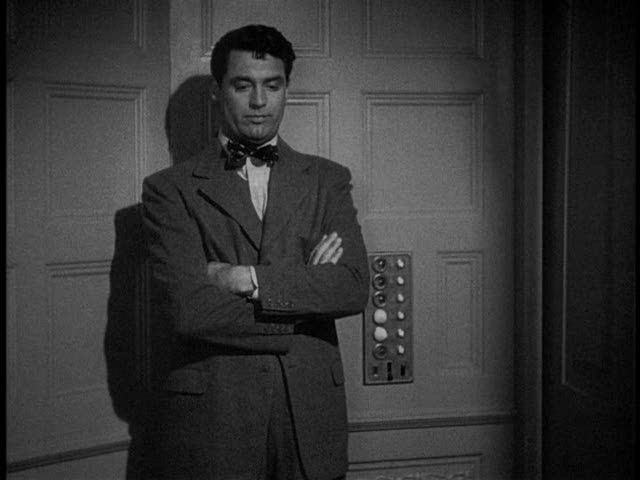
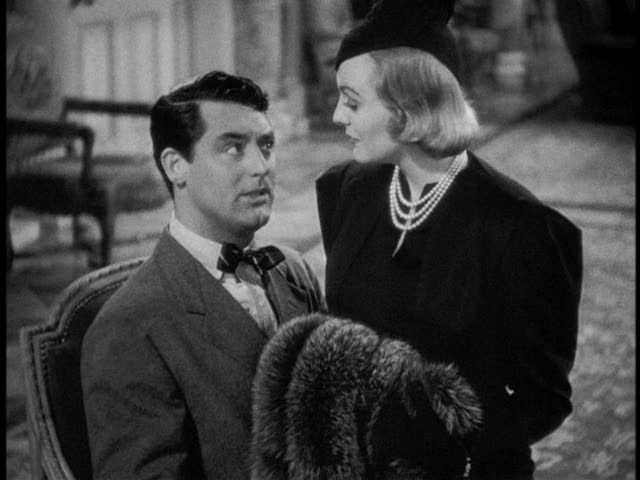
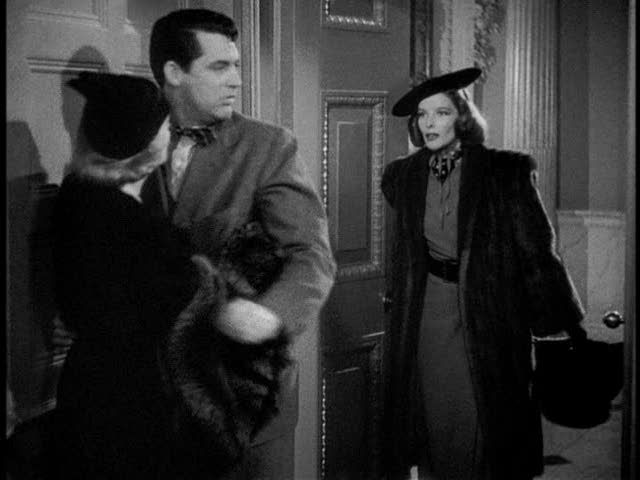
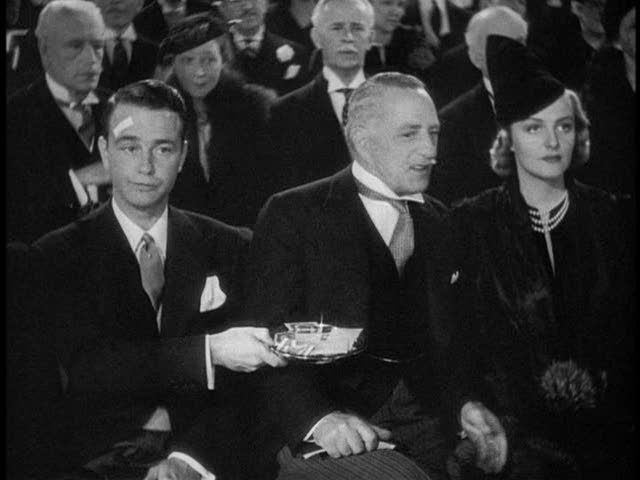
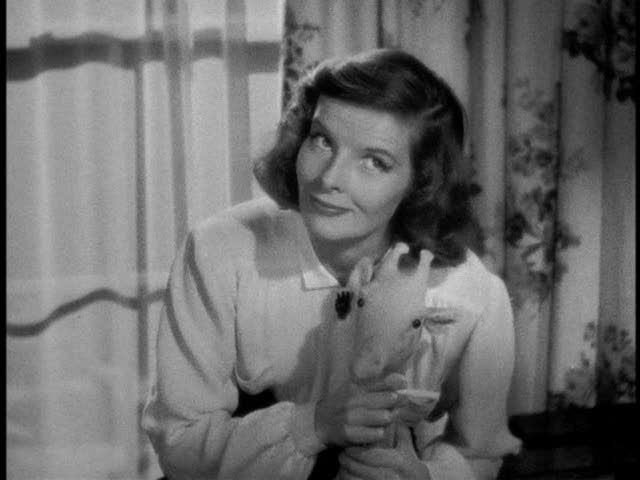
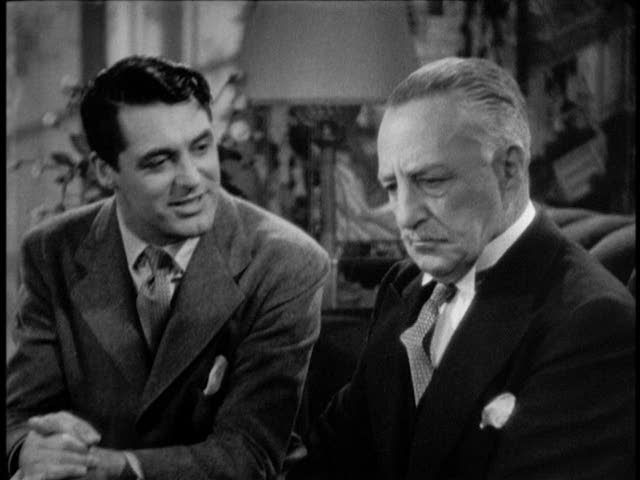
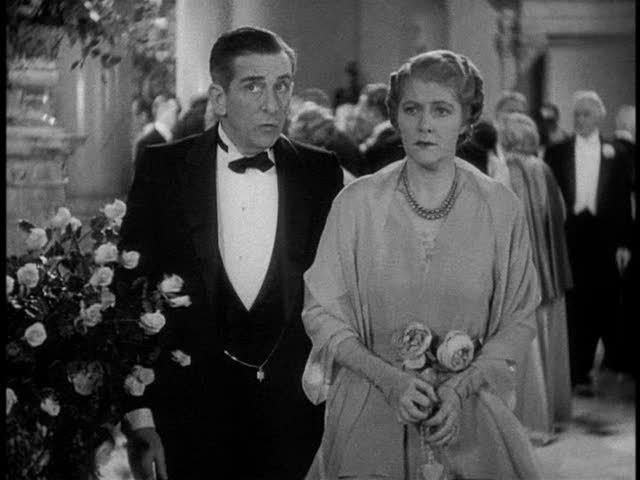
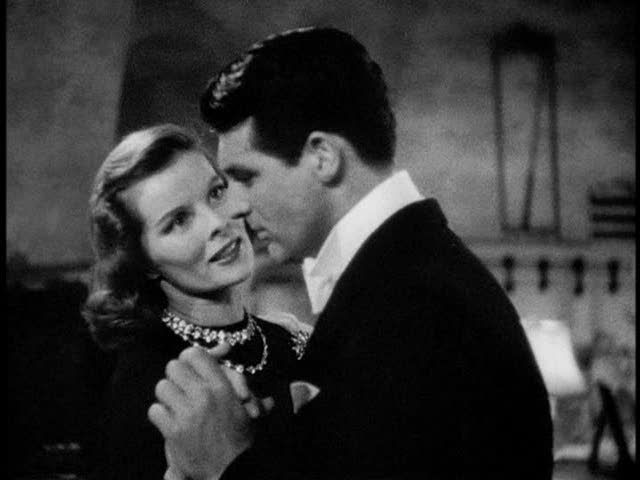
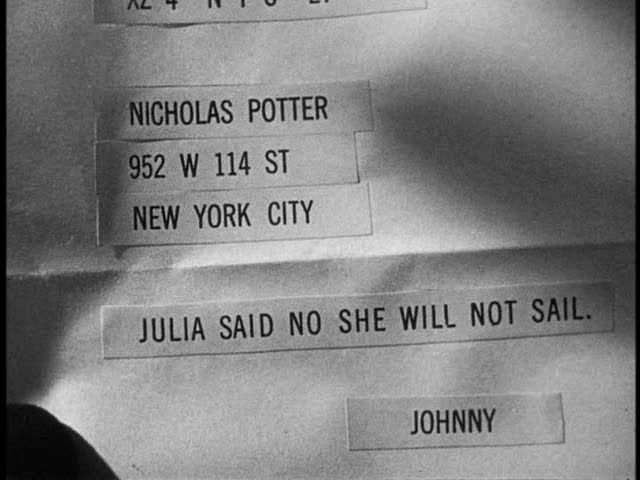
I've written about George Cukor's sublime Holiday here before, but any list of my favorite films would simply not be complete without it. The film is a moving, joyous parable about the importance of finding your own place in life, of not only marching to the beat of your own drummer, but of pounding out the beat with your own two hands. The film boasts one of Cary Grant's best performances, as a free-spirited self-made man who thinks he's in love with a stuffy society heiress (Doris Nolan) but seems more of a natural match for her fun-loving sister (Katharine Hepburn). Every second of screentime between Grant and Hepburn glows and sparkles with the pleasure of seeing two such vivacious performers enjoying one another's company. It's obvious from the moment they're introduced and shake hands with a playful nod, that they're the film's real couple, and Nolan is all but cast aside.

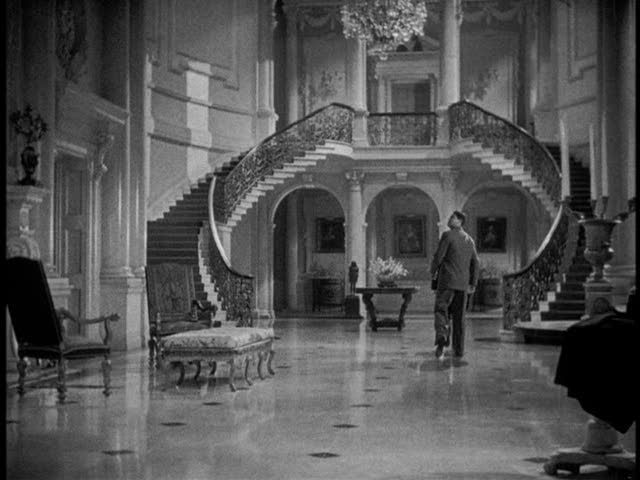
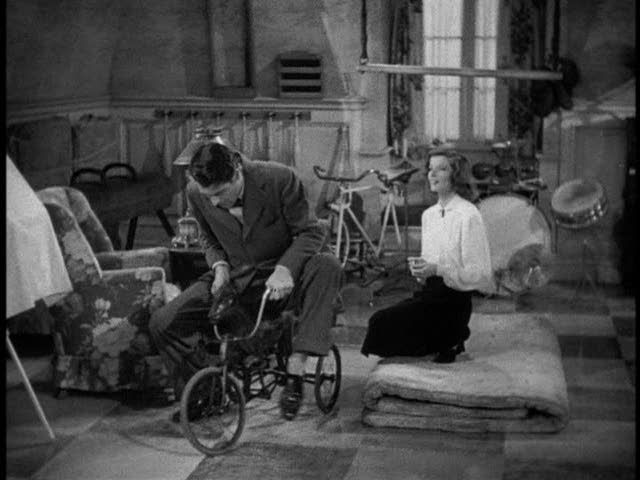
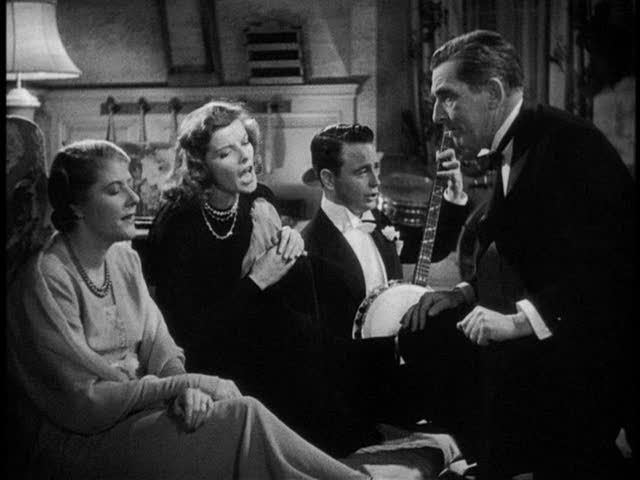
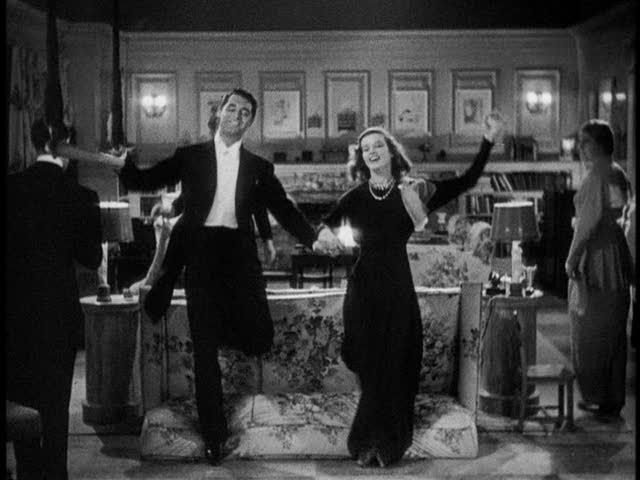
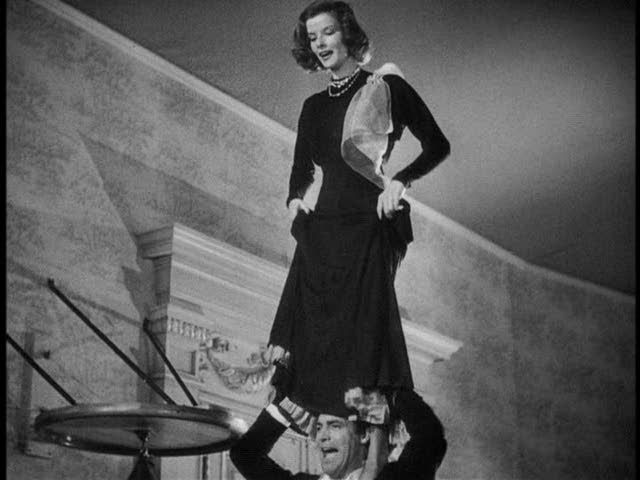
The film is a tribute to remaining youthful, and there's a childlike spirit to the way Grant and Hepburn play here: riding tricycles, doing somersaults, putting on Punch and Judy shows, not to mention the witty verbal banter and playacting of their conversations. The centerpiece of the film is a New Year's Eve party where Grant and Hepburn retreat to an upstairs room, away from the snooty society crowd, along with Grant's friends (Edward Everett Horton and Jean Dixon) and Hepburn's drunkard brother (Lew Ayres). This small, intimate party takes place in the only comfortable room in a palatial mansion, the only room with a normal sense of scale. Throughout the film, Cukor isolates Grant in long shots of rooms that seem to have been built for eight-foot tall giants, emphasizing his discomfort with the luxury and opulence that seems to await him if he marries into this family. It's only in the upstairs playroom, with its cozy fireplace and leftover childhood toys, that Grant and Hepburn can relax and be themselves.

Tuesday, May 12, 2009

Hatari!


Hatari! is a rambling, discursive, nearly plotless film from late in director Howard Hawks' career, and it's something of a compendium of the director's obsessions and signature themes, a summation of his career up to this point. It's hard to imagine a more typically Hawksian film: an outdoor adventure about a group of men living in the African wilds, hunting and capturing animals in order to sell them to zoos. The men are tough and professional, they work hard and celebrate just as hard when the day is over, and they only grudgingly allow women to infiltrate their tight-knit clan. The men are led by Sean Mercer (archetypal Hawks star John Wayne), a real man's man derived from the same template as Cary Grant's Geoff Carter in Only Angels Have Wings, a professional man doing a risky, physical job day after day, wounded by a girl in his past who just couldn't understand his way of life, who forced him to make a choice between her and his job — a choice he made, obviously, but one that continues to haunt him, especially in his dealings with women.

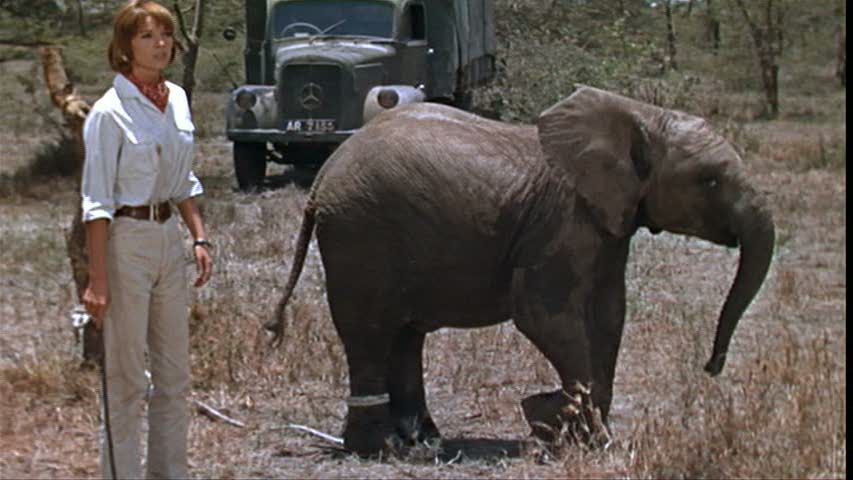
Of course, the arrival of a new woman at the camp stirs up this psychological drama within Mercer. The Italian photographer who the men quickly nickname "Dallas" (Elsa Martinelli) makes Mercer wonder if maybe she, unlike his old flame, could accept him as he is. As usual in the Hawksian world, it's the woman who has to come towards the man, and there's no doubt that Dallas has to be initiated into this world: she makes a fool of herself with over-confidence when she first arrives, and has to apologize to the men for her feminine silliness. Of course, it's also typical of Hawks that once this initial fazing period is over, Dallas is accepted as one of the men, and proves herself just as capable and resourceful as they are, if not more so; she's able to tame three baby elephants and take their care entirely into her own hands when no one else can figure out what to do. Hawks has often been accused of misogyny for requiring his women characters to compete on masculine turf, but Dallas is among his best female characters, strong and whip-smart without ever sacrificing her femininity (or her sexual allure).

This male/female struggle is just one of the elements threading through this sprawling, patiently paced film. Never before had Hawks seemed to care so little for plot, even in his most rambling earlier films like The Big Sky. This epic stretches to nearly three hours long without ever mustering up a really big conflict or a truly dominant plotline. Instead, the men at the camp, in between adventures catching various animals on the plains, simply goof around, sparring and jockeying for position with the women, drinking, telling stories, playing music, playing cards. It's a light, fun atmosphere, with plenty of room for diversions and gags. And the cast flesh out these characters with depth, warmth and good humor: the goofy former New York cab driver Pockets (Red Buttons); the German race car driver Kurt (Hardy Krüger); the aging mentor the guys simply call the Indian (Bruce Cabot); the stout little Frenchman "Chips" (Gérard Blain), so nicknamed because he carries a big chip on his shoulder; the coltish young Brandy (Michèle Girardon), who these guys have raised since she was a kid, and who is starting to attract some of their attentions as a woman. The cast is multinational and eccentric, and it shows in the sometimes stiff acting in English. At the same time, the variety of accents and personalities melding together is a great metaphor for Hawks' characteristic concern with group dynamics, and the energy and vitality of these actors more than compensates for their rawness.

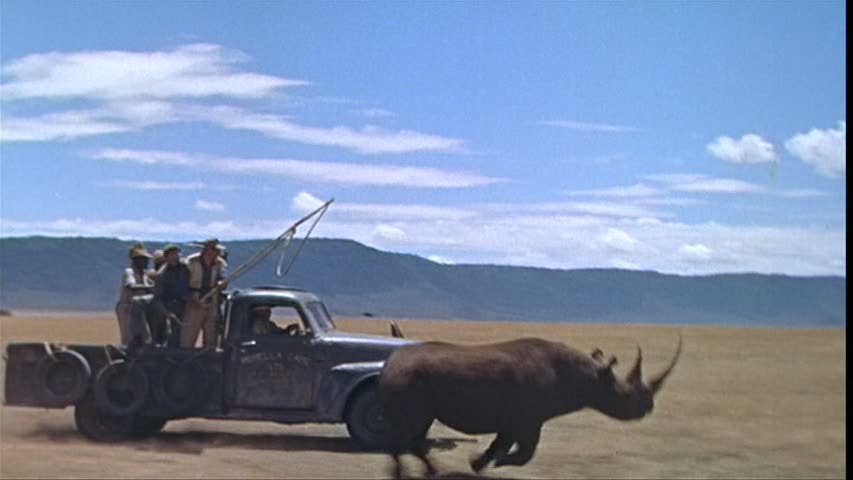
The structure of the film is loose and free-wheeling, comprised of a stitched-together series of incidents rather than a coherent storyline. It's like watching a selection of pages snatched from a diary documenting the group's three months together. This sprawling, relaxed structure is both to the film's benefit and its detriment. Over the course of the film's length, the actual animal-hunting scenes, visceral and thrilling at first, shot at high speeds with two jeeps full of men racing alongside the galloping wild animals, begin to feel perfunctory and overly familiar. Thankfully, Hawks increasingly intersperses these scenes with many fun scenes back at camp. There are too many to mention: the great sequence when Kurt and several natives try to herd some escaped ostriches back into their pens; the many scenes of Dallas with the elephants, who adore her like a mother; Pockets' ingenious and crazy plan to capture 500 vicious little monkeys using an enormous net and a rocket; the drunken "who's on first" routine between Mercer, Pockets and Kurt when Dallas first arrives at camp; the climactic slapstick chase through an African village with a trio of elephants charging through the streets.


What makes this film so charming is that Hawks is combining his comedic mode and his adventure mode, which in most of his work exist independently of one another. Not that Hawks' adventures and dramatic works don't contain any humor — it's the rare Hawks film that doesn't have at least some great zingers in the dialogue — but he seldom blended comedy so heavily into the kind of tight-knit professional milieu that characterized his dramatic films. The result is a Hawks film that has nearly everything, that's like a dazzling visual encyclopedia of Hawks. There's the obligatory scene clustered around a piano, with Dallas tickling the keys while Pockets play harmonica. There are love triangles and even love squares, particularly forming around Brandy, who suddenly finds herself the center of attention as Pockets, Chips and Kurt all vie for her affection. In typical Hawks fashion, this arrangement serves as a sparking iron on which to forge the masculine friendship of Chips and Kurt, who open the film by punching one another and at the end are poised to head off to Paris together, locked together in a homoerotic companionship that references all the way back to the beginning of Hawks' career in A Girl in Every Port. As usual, male rivalry is a form of bonding, in which the woman who's the ostensible goal isn't nearly as important as one's rival.

Despite its overstuffed thematic underpinnings and riotous surface thrills, Hatari! occasionally stumbles over the course of its length. In fact, that length is one of its principle problems, since it sometimes feels bloated and repetitive in its structure, particularly when the nth animal-chasing sequence plays out in nearly the same way as the first. The cinematography in these scenes is undoubtedly gorgeous, though, with Hawks fully exploiting the widescreen frame, positioning the action horizontally so that the animals and trucks race across the screen, the pale blue sky stretched out in the distance behind them, dust kicking up everywhere. It's thrilling stuff, though Hawks returns to this well perhaps one time too many in the slightly slack middle section of the film. Moreover, for such a long film there are times when the scene-to-scene flow is surprisingly abrupt. The editing is occasionally jarring and ragged, as though transitions between scenes are missing. It's obvious that Hawks cares much more about the structure of individual scenes than he does about the ways they might fit together in the completed film. Each scene is perfectly constructed and engaging in its own right, but the connections between scenes sometimes seem to have been left on the cutting room floor, and there are sometimes the kinds of narrative ellipses that one expects in a shorter and more plot-driven film but which are inexplicable in such a sprawling work.

More troubling is a brief but rather awkward sequence in which, as a joke, the guys allow Dallas to be kidnapped for a ritual by the local Masai, who return her dressed in native garb and painted more or less in blackface. It's a weird, uncomfortable gag, and only serves to point up the general obliviousness to race issues in this lighthearted film where the only black characters are servants and primitive natives. Even so, Hatari! remains a fascinating and compelling late work from Hawks. Not only is it one of his most purely fun and engaging films, but it's one of the best examples of Hawks allowing femininity, jokes and romance to liven up the typically grim, death-obsessed atmosphere of the Hawksian professional man. The Indian is the one holdout from earlier Hawks films, the one who predicts death and misfortune at the peak of hunting season, when the men finally face down the dreaded rhino who has done so much harm to their group. This would-be climax surprisingly passes by with the same breezy tone as the rest of the film, casually defusing the danger inherent in this scenario. This is Hawks at his most disarmingly light, obviously having as much fun behind the camera as he manages to capture on film.