Showing posts with label 1998. Show all posts

Thursday, July 21, 2011

Out of Sight


Out of Sight is the way sexy, charming, steamy star power movies are supposed to be. Steven Soderbergh's witty, beautifully filmed adaptation of an Elmore Leonard pulp novel is a throwback to classic Hollywood's casual stylishness and verbal sparkle, the kind of film that Hollywood isn't supposed to be capable of making anymore. The film is built around the mutual attraction between unrepentant bank robber Jack Foley (George Clooney) and the US marshal, Karen Sisco (Jennifer Lopez), who's trying to catch him. Or, more accurately, it's built on the charm, attractiveness and rapport of the two leads, who are at their most naturally charismatic here, radiating the self-assurance and sexiness that makes them irresistible both to each other and to audiences. Theirs is a mad love, a lunatic love built on seductive banter, utterly unbelievable in any conventional sense: why would a smart, capable woman dedicated to the law fall so deeply in love with the man who represents her complete opposite? But then again, why not? Clooney and Lopez are so attuned to one another, so comfortable in one another's presence onscreen, that the unbelievable is rendered not only plausible but unavoidable, fated, totally logical.

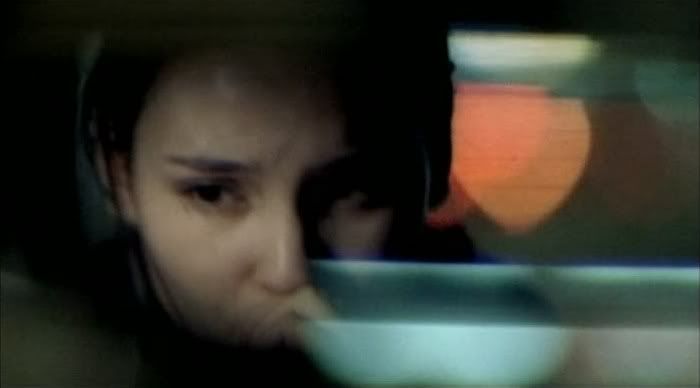
This romance arises from the time the pair spends in a trunk together after Jack kidnaps Karen during his escape from prison. This scene is the most iconic and oft-cited of the film, and justifiably so, as Soderbergh keeps his camera inside the trunk with the dirty, mud-smeared escapee and the elegant, reserved marshall, all dolled up and glamorous after a birthday dinner with her dad, ready for a date with her FBI agent boyfriend. A red light overlays the pair, and the cramped space of the trunk enforces their physical intimacy. Later, remembering the moment, Karen will tell Jack, "you kept touching me, feeling my thigh," and she sounds wistful, nostalgic, fondly recalling the time he kidnapped her. Soderbergh captures Jack's hand in closeup, tapping idly on Karen's hips, feigning casualness but obviously lingering a bit over the curved thigh beneath her skirt. Karen lays in the trunk with her back to her kidnapper, her curves pressed against him, seeming as relaxed as though she's just hanging out at home, although whenever she hears a police siren pass by her eyes grow alert. They chat amiably about crime and the law and the movies, their banter leading them towards a discussion of unlikely screen love stories, such as the one they're obviously about to enact.

Soderbergh's old-school stylishness is well-suited to this charming criminal love story. Nearly every frame pops with brilliant colors, and Soderbergh associates particular colors and images with certain moods and themes. The scenes of Jack and his partner Buddy (Ving Rhames) in prison are awash in the yellow jumpsuits of the prisoners, and the color-coding helps clarify the otherwise unannounced leaps into prison flashbacks. The present-tense scenes in Miami, on the other hand, are full of bright pastel hues: lurid orange walls, the red Hawaiian shirt Jack chooses as a disguise. A trip to Detroit for the film's second half is announced with a shot of a blue-tinged street scene, smoke drifting from a manhole cover, a grimly urban noir landscape that ushers in the outbursts of violence that punctuate the final act.

After Karen gets separated from Jack during his escape attempt, there's a sequence that turns out to be a dream in which she visits Jack's hotel, gun drawn, to find him lying naked in the bath, his eyes closed. Soderbergh emphasizes the orange walls, and shoots through the louvers of a nearby window as Karen creeps into her prey's hotel room. Then Jack grabs her, pulls her into the bath with him, and there's an indescribably sexy shot of her sitting on top of him, fully clothed, in the tub, kissing him and sinking into the water with him. It's a dream, but Soderbergh's style is so lurid and romantically overblown to begin with that it's as plausible as any of the things that actually do happen in the film. The film is itself a dream, a romantic fantasy, and he merely calls attention to that fact by throwing in an actual romantic dream like this.


Soderbergh's romanticism reaches its peak during the central love scene in which Jack finally catches up with Karen again, and they get to play out a real version of that dream, although the reality feels every bit as dreamlike. Jack finds Karen at a bar, just as he'd imagined during their first meeting, when he wondered aloud what would've happened if they'd met under different circumstances, like in a bar. He shows up like a vision after Karen has been hit on by a pair of determined advertising agents, the very opposite, in their professional respectability and conventionality, of bank robber Jack. Behind Karen, a huge glass window reveals snow falling, large fluffy flakes tumbling down in slow motion, and as Jack appears the bar around them becomes fuzzy, the city seen through the bar window as a blur of colored lights in the background. Jack's initial appearance is as a reflection in the window, and Karen turns towards him as though half-expecting that he won't be there, that she was just imagining his ghostly form superimposed over the nighttime city and the snow. Soderbergh's cutting cleverly draws out the moment, making the audience wonder, too, if Karen is just dreaming again; it takes a few more shots for the pair to appear together in the same frame.

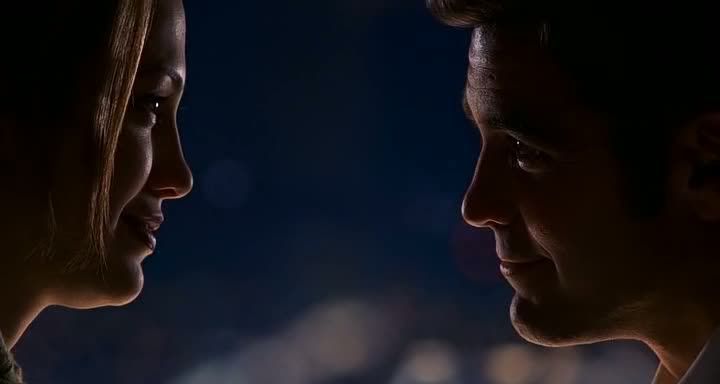
They speak in hushed voices, as though they're hiding in plain sight, afraid of being caught, their desire aroused even more by the forbidden, furtive nature of their romance. Soderbergh captures their faces in beautifully lit closeups, their eyes shining, shy smiles constantly seeming to flutter at the edges of their lips. The actors have never looked better or seemed warmer or more natural; they are captured here at their best, flirting with one another, their characters flirting with one another, it hardly matters. It's delightful, and sexy as hell. It's some kind of glossy ideal of what love is supposed to be like, not the painfully banal notions of love advanced by so many other Hollywood romances but a real, deeply felt attraction that expresses itself in every least gesture, every word, every glance.

Their conversation is intercut with a scene in a hotel room afterward, as Jack and Karen eye each other from across a hotel room, taking turns stripping, Jack taking off his shirt to reveal a muscular chest, Karen slipping her dress over her head to reveal a shapely body in a bra and panties. Their bodies don't communicate as much as the looks they give each other, though, those intense stares from across the room. Then, and only then, does Soderbergh restore them to the intimacy they shared during that earlier trunk scene, as they come face to face in bed, their faces in profile and shadowed, a freeze frame holding them in place just inches apart. All the while, the snow continues to drift down in the background, and the light in the room is gorgeous and moody, enveloping the lovers in the romantically exaggerated hues that their mad love seems to require. Soderbergh will subtly evoke this scene again towards the end of the film, when the criminals' plans have gone awry and Karen, of course, comes face to face with Jack again, this time with a gun in her hand, facing him down as criminal and pursuer. Behind Jack, a large window frames a glimpse of the midnight blue night, with fluffy snow falling as it had on that other night.

The film has a lot to recommend it besides this stylish romanticism, of course. Soderbergh has assembled a cast of gifted comic actors who anxiously flit and dodge around the central couple. The colorful criminals and lawmen who provide the film's detail and its heist plotting include Dennis Farina as Karen's father, Steve Zahn as a stoned and hapless would-be robber, and Luis Guzman as an alternately sinister and silly criminal whose scene with Catherine Keener's Adele starts out threatening but abruptly becomes surprisingly comic. Michael Keaton shows up for another very funny cameo, reprising his role as federal lawman Ray Nicolette, the character he played in Quentin Tarantino's Jackie Brown, another Leonard adaptation. It's a nice nod, because while Soderbergh's film strikes a very different balance from Tarantino's — tilting more fully towards romance and away from tragicomic violence as compared with Tarantino's much darker vision — the two films have in common their moodiness and their commitment to slow-burn pacing and sharply defined characters.

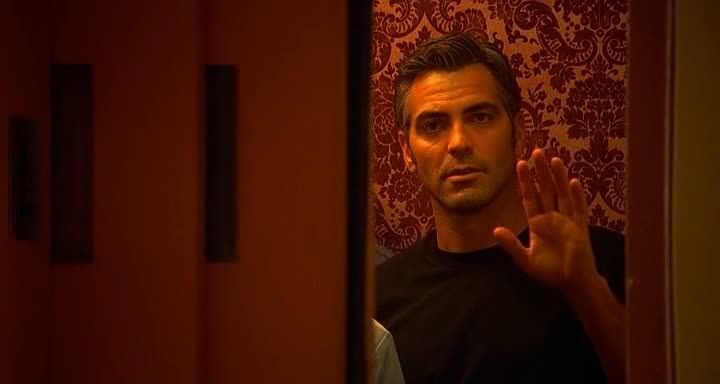
In fact, Out of Sight is best summed up by a small, subtle moment that occurs between its two central characters without a word being spoken. At one point, Karen is tagging along on a raid meant to capture Jack and Buddy. She's staking out downstairs while the rest of the federal agents storm the robbers' room, but while she's waiting in the lobby she notices, across the room, Jack and Buddy standing in an elevator, its doors about to close and take them down to the parking garage. She raises her walkie-talkie to her lips but then pauses, and lets her hand drop away as she simply watches until the door close. Soderbergh cuts away from the closeup of her to show Jack, as the doors are closing, tentatively raising his hand as if to wave, not the cocky, show-off wave of a cheeky movie criminal, but the genuinely confused wave of a guy who's acting nervous around a girl he really likes. It's a funny moment, but not as broadly funny as it might have been if Soderbergh had exaggerated the gestures or played it a little differently. This way, it's not broadly comic but natural and genuine, an expression of the pleasant confusion that these two soon-to-be lovers feel when in each other's company. That repartee, visual and silent as well as verbal, is the essence of Out of Sight, and it's that warmth, that real spark of attraction and wit, that makes it such a special and delightful film.

Monday, June 6, 2011

Saving Private Ryan


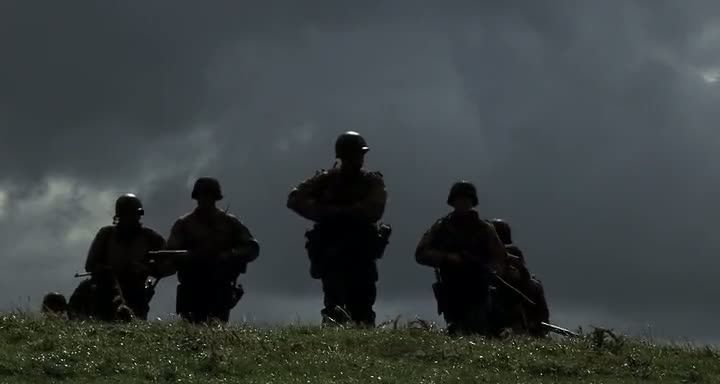
It has been said that all war movies are ultimately anti-war. The implication is that it is impossible to show the reality of war — the death and destruction, the dismemberment, the endless struggle over just one more patch of land like any other — without showing its horror, brutality and pointlessness. It has also been said, however, that no war movie can ever truly or completely be anti-war. By the nature of the war movie genre, it is inevitable that these films will be exciting and visceral, that they will show the bravery and honor of the soldiers, who are always at their bravest precisely when they are delivering grand, solemn speeches about how they're not brave. If Steven Spielberg's Saving Private Ryan proves the truth of one of these axioms, it is the latter rather than the former. Spielberg's film is all about the honor of war, the bravery of the soldiers. Saving Private Ryan has often been praised for its realism, for its truthfulness to the experience of war, but Spielberg's idea of realism is hiring real amputees to play soldiers who get their limbs blown off. It's shallow realism, a thin coating of the real over a foundation of Hollywood contrivances and rote recitations of familiar ideas.

The script (by Robert Rodat) makes repeated use of the words of Abraham Lincoln's letter to the widow Bixby, who lost five sons in battle during the Civil War, the key words of which refer to those who offer their lives as a "sacrifice upon the altar of freedom." (There's a metaphor for Spielberg's "realism" here, since history has shown that the letter was mistaken, and at least three of those sons didn't die in combat.) This letter is read early on in the film by a general upon learning that three brothers have died within a week of one another during the invasion of Normandy, during World War II. A fourth brother, James Ryan (Matt Damon), has air-dropped into a chaotic region, his location and status unknown. The film bears the name of this Private Ryan, and it's this man, who remains offscreen for much of the film, who serves as the focus of the subsequent action. Later, the words of the Bixby letter are repeated in voiceover, and again they seem like brazen manipulation, an unthinking regurgitation of grand words with a grand name to somehow legitimize them.

Such sentimentality is at odds with the battle scenes, in which Spielberg tries to be unstinting in his depiction of the horrors of war. The celebrated opening (which kicks in after a lame and thoroughly Spielbergian framing device) is a nearly half-hour re-enactment of the invasion of Normandy, a bloody and relentless sequence. The opening minutes of this sequence are especially striking: as the troop boats drift towards the shore, Spielberg shows the men inside the boats, praying and muttering to themselves, throwing up, shaking with fear. And then the boats arrive at the beach, and the gangway at the front lowers to allow the soldiers to charge off... and the enemy machine guns open fire, cutting down whole ranks of soldiers where they stand, before they have a chance to take so much as a step forward. Within seconds, a whole boat's worth of men has fallen, each line collapsing riddled with bullets, clearing the path for the next men behind them to be shot as well. It's horrifying, this devastating slaughter, and the rest of the sequence only intensifies the sensation of being surrounded by death. It's loud and visceral. Limbs fly, the bottom half of a man's body disappears into an impact crater, blood spurts, bullets ping off metal, medics struggle to staunch the flow of blood from men who are soon dead, either from existing wounds or new ones, as bullets continue to fly. In one shot, Captain John Miller (Tom Hanks), dazed from an explosion, watches as a soldier with his arm blown off wanders aimlessly in a circle, stoops down, and stands back up holding his own detached arm before strolling away like a zombie.

This is powerful stuff. But the film's visceral feel for combat and death doesn't really carry over into the scenes after the battle of Normandy, when Miller's unit is tasked with the mission of locating the missing Private Ryan and bringing him back safely, so that his mother will not have to hear that her fourth and final son has also died in combat. Miller's men resent the mission, resent being asked to risk eight lives for the sake of one, and though Miller mostly tries to keep his reservations to himself, he too is unhappy with the job. He loves and cares for his own men and feels the pain of losing each one, but Ryan, as he says himself, means nothing to him. The bulk of the film consists of this small group's trek across a battle-fraught stretch of France where German and American troops square off in various ruined small towns.


When the soldiers aren't engaged in battle, Spielberg and the script mostly resort to war movie clichés, like one man's never-sent letter to his parents, taken after his death by another man in the unit and then passed from one man to the next as those carrying it are killed in action. Another man regrets a childhood unkindness to his mother. Another man is Jewish and never gets tired of shouting his religion at German soldiers. The home and pre-war occupation of the guarded, private Miller are the subject of a pool in his company, and of course at a key moment he must deliver a big (and unbearably maudlin) speech about what he did before the war. The action is realistic and visceral, but when the soldiers put down their guns there's nothing but obvious scriptwriters' devices and Hollywood speechifying, a reminder that for all the blood and missing limbs Spielberg displays onscreen, this is still just another in a long line of Hollywood war movies, and a rather traditional one at heart.

There is one cliché that Spielberg and Rodat go to great lengths to subvert, and that's the cliché of the cowardly or incompetent soldier who redeems himself at the last moment in a grand act of bravery. Corporal Upham (Jeremy Davies) is a translator and map-maker who has never seen combat, but who joins the unit because Miller needs someone who speaks both French and German. Upham cowers at the fringes of each battle, watching from the sidelines, but in the film's final battle, a desperate struggle to hold a bridge against German tanks and infantry, he's tasked with running back and forth among the American positions, carrying ammo where it's needed. At some point, his already modest courage utterly falls apart, and he can barely do more than whimper and cower in a corner, trying to hide from the Germans. There is a certain moment that seems to be building towards Upham's redemption, but that redemption never comes. The tension of the scene arises almost entirely from the way Spielberg cleverly sets up expectations for a very conventional resolution: one expects Upham to finally man up and come to the rescue, but it never happens. It's a bracing defiance of convention from a filmmaker who is usually conventional, and purposefully so, even at his finest moments. So it's worth noting that Spielberg defies the convention in order to reinforce another, solidifying Upham's status as the cowardly and ineffectual intellectual figure. He also ties this cowardice to one of the film's most laughable contrivances, the German soldier who Upham had earlier defended from summary execution, only for him to return at the climax, once again killing American soldiers. It's outrageous, especially since it winds up suggesting that Upham was wrong, earlier in the film, to oppose the summary execution of a surrendering enemy soldier. The film seems to be singularly lacking in the perspective that enemy soldiers are, like Miller and his men, mostly just ordinary men doing their duty for their country. Instead, Spielberg, with his blockbuster instincts, has to make this random German soldier the villain of the piece, and everything surrounding Upham and the German soldier is so irredeemably muddled that it's not really clear what, if anything, the film is trying to say about this situation.

Sometimes a movie that isn't very good can still be interesting. A movie that fails in a thousand ways can still capture the imagination, provoke thought, deliver startling insights. Spielberg's movie is the opposite. Saving Private Ryan is a "good movie" that's not that interesting, a well-made war picture with no particularly fresh or interesting insights, only confused messages and silly regurgitations of clichés and leftovers from countless other war movies. In isolated scenes it sometimes seems like a fine film, and at its best it's undoubtedly a great action movie. There are scenes here, moments of awful beauty, that must surely rank among the most powerful cinematic encapsulations of the wartime experience. The red waves washing up over the bodies of men and beached fish at the end of the battle of Normandy, bloody waves gently rolling into the shore, are haunting and unforgettable (though borrowed from Sam Fuller, a towering influence on this film). The film's non-battle scenes don't often rise to this level, though, and the film is torn between two modes, between stark realism and Hollywood artificiality, without ever quite settling on one or the other.

Monday, October 18, 2010

Late August, Early September


In Late August, Early September, Olivier Assayas delicately probes the loosely intersecting lives of the friends and family surrounding ailing writer Adrien Willer (François Cluzet). The film's episodic structure, divided into segments like chapters in a novel, emphasizes the effect of time and the way people tend to drift in and out of each other's lives. Weeks or months pass between episodes, and when the film returns to a character, things have changed or just shifted slightly, much has happened to be summed up in a few suggestive words or a telling glance. The film revolves around the way these people are, as the title suggests, on the cusp of a change, poised in between seasons in their lives: they are all at an age where they're settling down, becoming respectable or willfully refusing to, learning what they want out of life and love. Gabriel (Mathieu Almaric) is shaken up by the realization that his friend Adrien might be dying, and he's disturbed by the usually reticent Adrien's sudden bursts of forthrightness and warmth, but more than that he's reflecting on his own life. Adrien is a dissatisfied writer, self-critical to a fault, pretending that he's not bothered by what people think but, inside, really seething that his books haven't been more successful on a mass scale, angry over what he sees as his commercial failure. The dissatisfaction and frustration of this man as he faces death drives the drifting, aimless Gabriel to really look intensely at his own life for the first time, and to rethink what he wants to do with the time in front of him.

This theme, never stated explicitly but always bubbling just beneath the surface, drives every character in the film to one extent or another. Assayas builds the relationships between these characters patiently, with small, writerly details that give the film a kind of novelistic attention to subtleties. Many of the characters in the film are writers or creative people of one sort or another, and what they do with words Assayas molds with his images, with the performances he shapes from his great cast. The relationship between Gabriel and his ex Jenny (Jeanne Balibar) is strained and charged through with the last remnants of the sexual chemistry that must have once defined their love. In the opening scenes of the film, Gabriel and Jenny attempt to sell the apartment they once had together, and Assayas frames Jenny in the foreground, occasionally mumbling something under her breath, even as Gabriel dominates the conversation with the prospective buyers. It's immediately apparent how unhealthy their relationship was, how Gabriel steamrolls over his former lover's words, ignoring her even as Assayas ensures that she remains in a prominent position within the frame, creating a tense dynamic of domination and submission between the pair. Throughout the film, though, this relationship, now ended, ironically becomes stronger as the lovers grow apart, realizing that despite the occasional temptation to reunite, they are no good for each other. There's a moment, late in the film, where it seems like Jenny is going to get a ride home with Gabriel, but instead takes an offer from another friend; it's casual and offhand, but when they say goodbye there's something final in it, like they've finally realized they're both moving on.

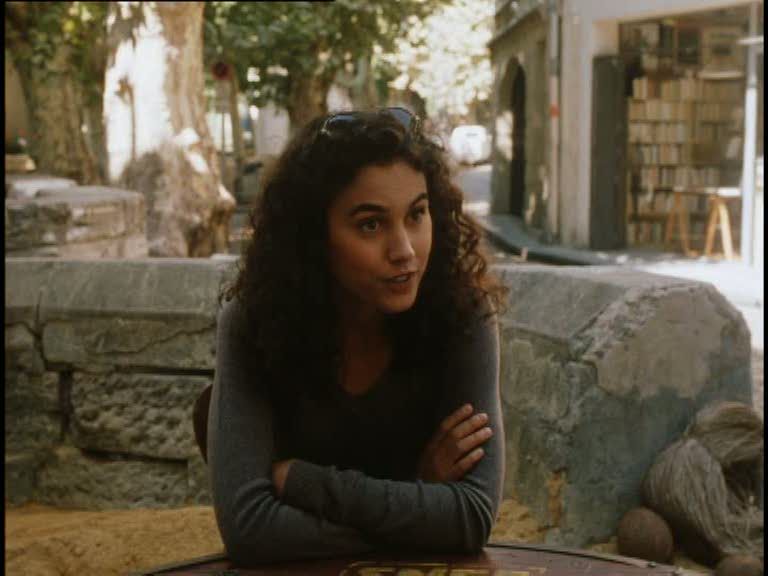
Assayas has a real feel for such beneath-the-surface realizations and symbolic moments. The film flows with the pacing and naturalness of ordinary life, but his camera seems to guide the viewer towards the moments and the images that suggest deeper currents. Gabriel's tumultuous relationship with his new lover, Anne (Virginie Ledoyen) reaches a pivotal moment when the unstable Anne visits him for a weekend. Their conversation at an outdoor café touches on trivialities and routine banter, only gradually working towards more serious matters, but there's something almost magical about the cups of hot drinks sitting in front of them, streaming pennants of steam out into the cold wind throughout the sequence. It's the delicacy and the ambiguity of this detail that makes the scene so special: it's not an obvious symbol for anything, merely a beautiful aesthetic touch that helps to enforce the scene's sense of two people who love each other finally connecting in a solid way.


This subtlety goes a long way, also, towards defining the troubles between Anne and Gabriel in the first place. Assayas' gliding, flitting camera has a way of guiding the attention to just the right moment, just the right image. At one point, Anne and Gabriel go to see Gabriel's brother (Eric Elmosino) and his wife (Nathalie Richard) at their house in the country. There, surrounded by Gabriel's friends and family, all of whom are still very close friends with his ex Jenny, Anne feels out of place and lost, an outsider looking in at her lover's life. Nowhere is this more clear than when Gabriel seriously discusses Adrien's condition with a few close friends, and they all try to come to terms with their grief and their anxiety about what's going to happen. These are intense emotions, but Assayas is too subtle a filmmaker to forget about Anne, who he locates sitting off to the side, smoking, drawn into herself, feeling as though she's excluded from these strong feelings, feeling that there are parts of her boyfriend's life that are utterly inaccessible to her. It's all accomplished without words, just the simple gesture of including her in the scene, not letting her get completely shuffled off to the side by the camera as she is by the characters within the scene.

Assayas shows a similar generosity and understanding towards Véra (Mia Hansen-Løve), the young teenage girl who was the much older Adrien's girlfriend in his final months. She largely appears at the fringes of the narrative, saying little, her existence mostly unknown to Adrien's friends. But Assayas periodically returns to her, silently observing her reactions to the film's events from her slightly distanced perspective, and in the final stretch of the film she becomes a kind of icon for the ways in which lives can connect in unexpected ways, the ways in which our experiences eventually form the mature people we'll later become. Assayas, who would brilliantly return to this kind of multi-character narrative with his more recent Summer Hours, is rejecting the convention of the linear narrative, instead focusing on the ways in which people's individual stories intersect and split apart to form new stories. The naturalism of this film arises from the fact that the characters seem to be living individual lives independently of the junctions and encounters required by the plot; the ellipses of the narrative create a sense of getting reacquainted with these characters after some time apart, catching up on what's changed and what's stayed the same. That's why, in addition to being a film about maturity, Late August, Early September is itself a mature film, a film that's clear-eyed about people's failings and virtues, about the limits and joys of creativity, about how much a person can change and how much we're all slaves to our natures.

Tuesday, October 20, 2009

The Gingerbread Man


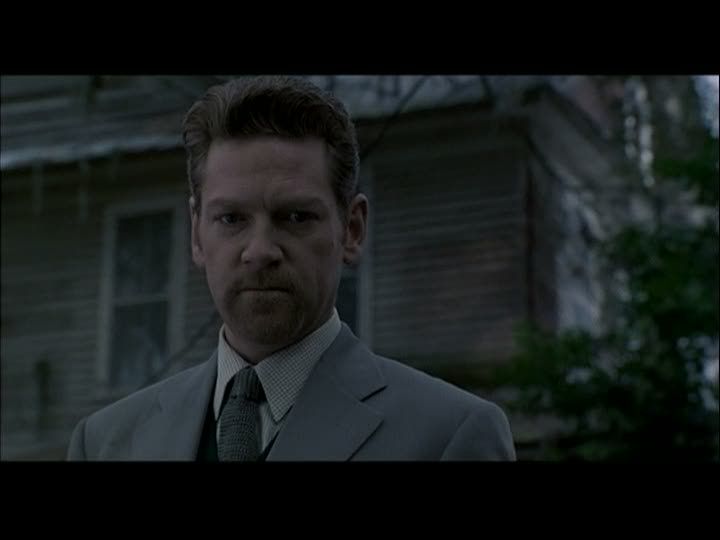
A John Grisham potboiler would seem an unlikely subject for director Robert Altman, who nevertheless made Grisham's The Gingerbread Man his own, mapping the familiar Altmanesque casual pacing and loose aesthetics onto this lurid thriller plot. The film opens with a lengthy aerial shot of a Southern delta on an overcast day, suggesting a storm about to come. Indeed, the entire film is building towards the not-so-threateningly-named Hurricane Geraldo — not the TV personality, as one character wryly points out. Altman is essentially telegraphing the Short Cuts-style ending that he so loves, writing the internal anguish of his characters onto the landscape itself, into nature, which grows more and more ugly and sinister as the central character, the lawyer Rick MacGruder (Kenneth Branagh), spirals into confusion and despair. From the beginning, we know that a storm, both emotional and physical, is coming, and its threat hangs over the whole movie, even when the sun briefly breaks out.

This tension and moody build-up adds some much-needed heft to the film's rather silly and convoluted story, built on a series of genre clichés and reversals of expectations: the dark-haired, sexed-up damsel in distress (or femme fatale?) and the sinister, crazy hillbilly. MacGruder's downfall begins when he gets wrapped up with the waitress Mallory Doss (Embeth Davidtz), who strips off her clothes at the slightest provocation and quickly embroils MacGruder in a tale about her crazy father, who's been stalking and harassing her. The lawyer, who normally wouldn't think of doing anything not on the payroll, is suddenly convinced that he can do a good deed for this woman he wants so badly, and he helps her commit her nutty father, the unruly wild man Dixon Doss (Robert Duvall, communicating menace with his clear blue eyes and language of grunts and muttering). This is only the beginning, of course, as Dixon quickly escapes from the mental institution with the help of his hillbilly posse, and goes cavorting off through a graveyard in a wonderfully silly/creepy night scene, wisps of fog hanging over everything, white and fluffy in the darkness.

The film's plot takes some increasingly loony twists and turns from there, but it's clear that Altman isn't so much interested in delivering a satisfying genre experience so much as just riffing on all these unlikable characters. Certainly, MacGruder is an astonishingly rotten protagonist: a self-centered jerk, a womanizer, and of course that oldest of crime fiction archetypes, the high-priced defense lawyer who keeps getting "scum" released back onto the streets. He's divorced from Famke Janssen's Leeanne, who's taken up with the couple's divorce lawyer now; another genre cliché fulfilled. When MacGruder gets his kids for visits, he's so inattentive that he lets them wander off everywhere while taking cell phone calls, even when he starts receiving threats about them, presumably from the missing Dixon. All this lazy parenting sets up the wonderfully handled late scene where MacGruder is making a call at a phone booth, with a visual line of sight to his kids through a hotel room window across the way, when a truck pulls up right in front of him, cutting off the view; it's a great sight gag and also a piece of formalist visual suspense worthy of Hitchcock.


There are many other pleasures to be found here as Altman lazily meanders through this story. There's a great shot where Mallory lights a cigarette and Altman syncs the flash of the lighter's flame against the cigarette tip with a crack of thunder outside, making a simple gesture seem epic. At the finale, all this sturm und drang pays off in the fantastic hurricane sequence, which makes suspense from missed cell phone connections and the flickering of lights, where everyone is silhouetted in windows, framed against the stormy perpetual night outside. MacGruder goes running around through the storm like a lunatic, always missing the obvious, always thrusting himself into danger — he's a totally incompetent thriller hero, but the film's arc is about him realizing what a lousy guy he's been, deciding at the end to stop fighting, that he deserves what he gets, that he shouldn't try to wriggle out of it even if he probably could. Meanwhile, Altman's camera is as busy as ever, using zoom as a device to make right-angle turns within a scene, unexpectedly pointing out details of interest, as when a slow zoom into a meowing cat foreshadows its grim fate.

Altman also has some fun with the character of MacGruder's private detective, Clyde Pell (Robert Downey, Jr.). Downey is always a blast to watch, and his leering, drunken private eye is a welcome presence in this film that so thoroughly mocks thriller conventions: just as the hero is a jerk who's blind to what's going on around him, the detective is sloppy but also strangely effective, always seeming to know exactly what's going on. In one of the film's funniest scenes, while Mallory is taking a call from MacGruder, Clyde lurks outside, pressing his ear against a window, listening in. Altman is frequently composing in depth like this, shooting with windows revealing crucial information or sight gags outside, like the spectacle of Downey exaggeratedly listening in, his whole body leaning in towards the phone conversation. Even funnier are the scenes with Downey hanging out in a bar with a couple of trashy-looking girls; when he's pulled away for a case, the girls shrug, look at one another, and kiss, as though with him gone they'll just have to settle for each other tonight. These little throwaway touches are so obviously Altman's work, infusing some quirky eccentricity into a film that could've been a paint-by-numbers thriller.

On the whole, The Gingerbread Man is a rather slight and goofy offering from Altman, a film that finds the director dabbling once more in the thriller genre. It lacks the self-assurance and thematic depth of his better genre deconstructions like The Player or The Long Goodbye, but it's nevertheless a fine example of Altman playfully mixing together noir and legal thriller conventions into an off-kilter confection. The film is more satisfying for its textures, for its small touches, than for its actual plot.

Wednesday, September 23, 2009

Those Who Love Me Can Take the Train


When the filmmaker François Reichenbach was dying, he told his friend, the screenwriter Danièle Thompson, that he was going to be buried in his family plot in the country town of Limoges, and that any of his Parisian friends who really cared would have to take the train to visit him. These words, so charged with meaning and feeling, became the centerpiece of Thompson's script for Patrice Chéreau's Those Who Love Me Can Take the Train. The title phrase represents a dying man delivering a last command to those he gathered around him in life, his friends, relatives and lovers: come see me, take a journey, because paying your respects won't be easy. The geographical displacement transforms the funeral and its aftermath into an adventure, into something grand and epic, freighted with meaning: it's like a pilgrimage, where the distance traveled adds to the spiritual and emotional impact of what's experienced at the destination. By delivering this commandment, Reichenbach's stand-in for the film, the "minor painter" Jean-Baptiste Emmerich (Jean-Louis Trintignant), turns his death into a test for his friends, an opportunity to bring them all together, a last game for him to play.

The film is thus a prolonged meditation on death, on friendship, and especially on families, both the ones we're born into and the ones we make for ourselves with those we meet in life. A huge, unwieldy cast of characters gathers at a Paris train station, finding one another through the bustle and chaos: various friends and enemies, ex-lovers and estranged friends, all of them bound together by complicated relationships. All of them also revolve around the common nexus of Jean-Baptiste, who in life seems to have been a much-beloved central figure in many people's lives, but also a figure of destructiveness, causing much pain to those around him, all these people now journeying so far for his funeral. Jean-Baptiste himself remains an enigma in the film, never present directly: he speaks on the soundtrack periodically, his voice preserved for a magazine interview, and he appears, silent and brooding, walking around his art studio in elegiac interludes that Chéreau inserts into the loose flow of the narrative.

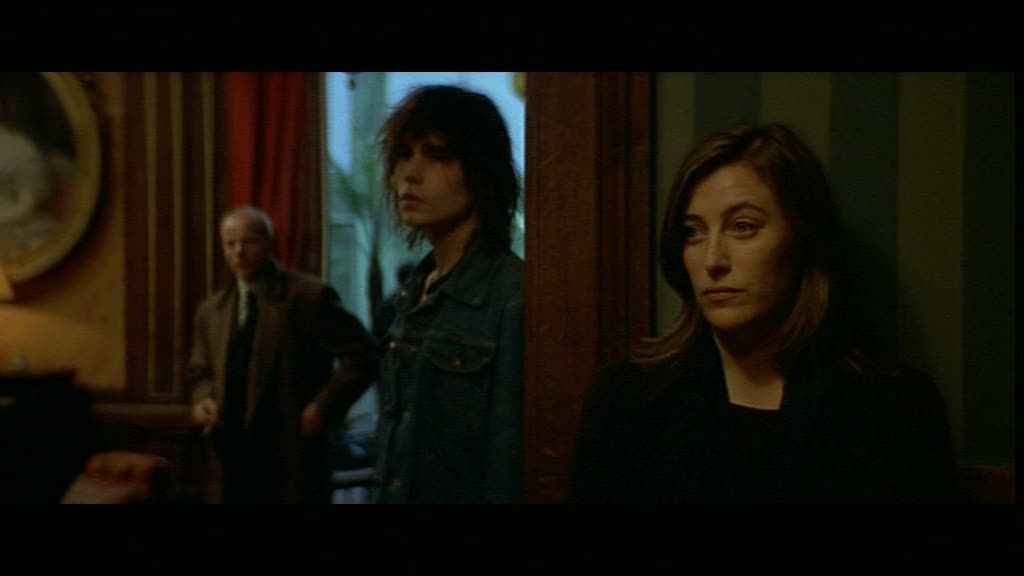
Mostly, though, Jean-Baptiste is present in the stories and recriminations of the people attending his funeral. For his nephew Jean-Marie (Charles Berling), he was a "spiritual father," much preferred to Jean-Marie's real father, Jean-Baptiste's twin brother Lucien (also played, later in the film, by Trintignant). But Jean-Baptiste also determinedly injected strife into Jean-Marie's marriage to the drug-addicted Claire (Valeria Bruni-Tedeschi), to the point that the couple is now on the verge of divorce, barely able to speak to each other. There's also Jean-Baptiste's ex-lover François (Pascal Greggory), traveling with his new lover Louis (Bruno Todeschini), who's instantly distracted by the appearance of the young, HIV-positive pretty boy Bruno (Sylvain Jacques), who has also slept with both François and Jean-Baptiste. Other cast members hang out around the fringes. The mean-spirited Thierry (Roschdy Zem), Jean-Baptiste's former nurse, drives his patient's coffin across the countryside, sometimes parallel with the train, while his wife and kleptomaniac daughter Elodie (Delphine Schiltz) ride with the others.

Nearly a dozen other characters drift through the film, part of this crowd traveling to Limoges for a man they all loved and hated in roughly equal measure. In the film's frantic opening scenes, Chéreau shows little concern for stabilizing the audience, instead letting his handheld camera bounce and jangle through the crowded station and train, picking out the faces of the principals as though discovering familiar friends within the chaos. Facts and details start to accumulate, stories start to take shape, hints of the past appear as bitchy rumors or harsh accusations, and names are thrown about with little concern for identifying anyone or making the relationships truly clear. It's an audacious opening, thrusting the audience into the midst of this well-established network. Chéreau simply lets the stories and characters emerge naturally from his dense, free-associative montage. Little details stand out: the charged glances between Louis and Bruno, the sprite-like smile of Elodie before she steals a pack of cookies, the frazzled urgency of Claire as she hastily prepares herself in a shaky train bathroom before going out to meet the others.


Once in Limoges, the film settles down into an explosive melodrama, as all these people, many of whom haven't been in the same room with one another for years, are reunited, bringing up old fights and jealousies, as well as further opening the cracks in their current relationships. It's all tense and brilliantly acted, and Chéreau navigates these unstable conversations and arguments with his fluid camerawork, sometimes gliding gracefully through a scene, letting the rigid blocking define the relationships, while at other times cutting fast and ragged while the handheld camera spins and shakes to follow the action. Thompson's script deserves a lot of the credit as well, for saying so much between the lines, leaving important matters unspoken, but also knowing how to have the characters just blurt things out without allowing it to verge into naked exposition. There's a wonderful scene, late in the film, where a phone call between François and Louis, with Bruno listening in, becomes a beneath-the-surface conversation between François and Bruno instead, with the former indirectly apologizing and explaining himself, letting his ex-lover know why their relationship fell apart. It's all handled subtly, with discrete exchanges of closeups and pointed dialogue that seems to be directed at Louis but delivers an entirely different meaning to the eavesdropping Bruno.

There's a similar grace and subtlety in the treatment of Viviane (Vincent Perez), a transsexual once better known to the assembled guests as a man. Now she drifts, mysterious and strange, through the crowd, unrecognized, provoking murmurs of wonder about who this stranger could be. Chéreau communicates this mystery in the way he has her move, her hair falling around her face, through the Emmerichs' palatial but decaying family home, and then pulls aside the curtain of mystery in a series of scenes, late in the film, where Viviane increasingly bares her soul to Claire in intimate conversation, and then literally bares her/his body for the camera. She arrives late but winds up being one of the film's most fascinating characters, particularly during an unlikely seduction/flirtation between her and the melancholy Lucien, who comes alive, free of the weight of the past, when talking to her.

This lovely, powerful film boasts a wide assortment of strong performances, as well as Chéreau's self-assured direction. He deliberately montages together the tightly cramped Cassevetes-like improvisation of the messier crowd scenes with formalist deep-focus shots, complex tracking movements in which characters are constantly moving in different directions, the camera following different ones at different times, and those stark, silent intervals in the dead man's studio, reminders of the film's triggering personage. His soundtrack is equally bold, encompassing a broad array of pop songs, many of them sung in English: Jeff Buckley, Portishead, Björk, Nina Simone, even Cake's deadpan, halting cover of "I Will Survive." These musical choices are sometimes absolutely perfect: the late appearance of Portishead's gorgeous "Western Eyes" is wonderfully suited to Chéreau's slow track along the exterior of the Emmerich house as the lights are put out in one room after another. At other times, however, the soundtrack is invasive and distracting. The taste in songs is impeccable, and there's no arguing with the quality of the music in general, but the way Chéreau uses it sometimes causes the music to sit uncomfortably against the images rather than really enhancing and supporting them. Using Jeff Buckley's "Last Goodbye" for an otherwise moving scene where the train's passengers see Thierry's car speeding along on a parallel road, carrying Jean-Baptiste's coffin, is certainly too spot-on, too obvious and sentimental a choice. The music sometimes becomes like a pop radio collage layered over the images, slightly muted to allow for dialogue, then clumsily bursting back to full volume when the characters aren't speaking. In a film that's otherwise so nuanced and perfectly pitched, the occasional distractions of the soundtrack definitely stand out.

On the whole, however, Those Who Love Me Can Take the Train is sublime and exciting. Its filmmaking is visceral and intuitive, fluidly shifting gears as required, encompassing a wide variety of approaches to the expansive, Altmanesque drama that comprises its core. Chéreau's approach is as bold and free-spirited as his title's ultimatum, suggesting a challenge: either love this film, in all its messy excitement and excess, or get off the train.

Thursday, July 2, 2009

Secret Défense


Throughout his career, Jacques Rivette has always flirted with the thriller genre, evincing a fascination with the shadowy conspiracies and labyrinthine plots that twist and turn behind the scenes, their contours hidden, their surprises held back. In spite of this, Rivette's cinema has been in many other ways the antithesis of the thriller, trading in slow, languid character development and a patient exploration of the truths and lies shared between his characters. He continually adapts the framework of the genre picture — the thriller, the mystery, the detective film — to his own set of concerns and his own unique perspective. In Secret Défense, perhaps for the first time, he confronts the thriller on its own terms, crafting a masterful mystery plot in which, nevertheless, the emphasis is on the longueurs between actions rather than on the twists and turns of the plot.

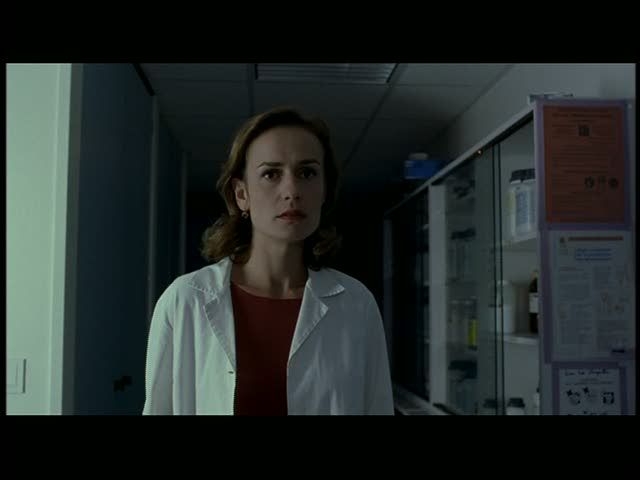
The story is certainly an archetypal revenge scenario. Sylvie (Sandrine Bonnaire), a research scientist, learns from her brother Paul (Grégoire Colin) that their father, who had died five years before in a train accident, had not fallen off the train but had in fact been pushed. Paul suspects their father's business partner Walser (Jerzy Radziwilowicz), who now runs the business in his place. Sylvie is not so sure, but she fears that her brother will rashly and foolishly try to kill him, so to cut him off she goes to kill Walser herself instead. This triggers a convoluted sequence of events in which Sylvie is placed in the same situation as her hated nemesis, coming to understand Walser and why he did what he did. The film doesn't lack for drama, but that's not what primarily interests Rivette. The most crucial narrative scenes have a kind of blunt, clipped quality, as though Rivette is only fulfilling an obligation by showing us these things. Violence happens quickly and abruptly, with a faint undertone of surrealist absurdity, and also a touch of Rivette's theatricality: these are stage deaths, the gestures just slightly exaggerated and stylized.

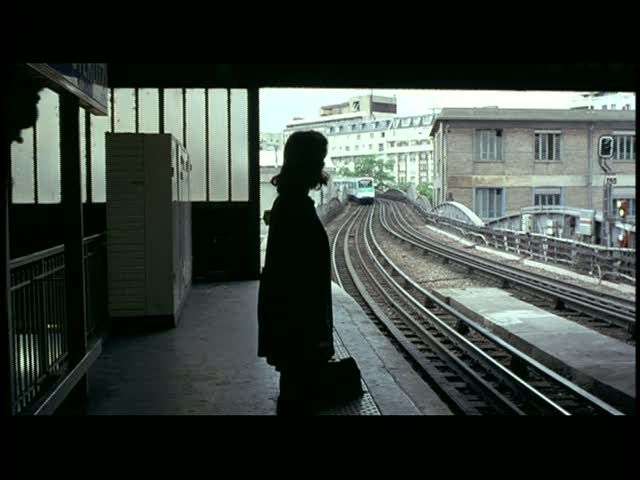
Rivette intersperses the dramatic scenes, the confrontations and revelations and twists, with extended sequences that expose the mechanics by which the characters get around, communicate with one another, navigate their world and their story. The scenes that would be brief and obligatory in another film, Rivette expands and elevates to a central importance. The simple act of moving from one place to another is never glossed over, but is instead transformed into an epic narrative in itself. At one crucial moment, after she has decided to kill Walser, Sylvie must take a long journey from Paris to the countryside, where Walser is spending the night at his palatial home. Another film would cut from Sylvie's decisive action of packing for the trip directly to her standing in the dark outside his home, stalking him. Instead, Rivette follows her in near-silence as she buys her train ticket, switches from train to train, nervously fidgets, tries on different pairs of sunglasses as though fancying herself a character in a gangster movie. He follows her long walk through the dark dirt roads leading from the train station to Walser's house, as she hides her face from passing cars and strides purposefully towards her fatal destination. Rivette lingers with her, refusing to resort to an easy linkage between decision and action: he emphasizes the time she has to think, to ponder what she's going to do, to wonder what it's going to be like when she finally gets there. And then, when the moment finally comes after all this anticipation, nothing goes as planned, and it's over in a startling few seconds, a brilliant climax/anticlimax before Rivette fades to black.

Rivette is fascinated with the long pauses between actions, the moments of stasis where Sylvie is simply lounging around her apartment — with Mark Rothko prints propped up casually against the walls — or working at her lab or traveling by train. At times, Rivette seems intent on remaking, again and again, the Lumière brothers' L'arrivée d'un train à La Ciotat, and imagining its sequels and prequels: woman waiting for train, woman traveling on train, woman switching trains. And yet Rivette's film is irrevocably set in an era when such things no longer hold the fascination they did for audiences in earlier times. Travel like this is mundane, ordinary, and Rivette's lengthy shots of trains pulling in and out of stations capture this prosaic quality without obscuring the strange beauty the Lumières must have seen in such images.


The train is no longer the height of technology, and Rivette continually reminds us of this by packing the film with then-modern accoutrements: cordless phones, answering machines, fax machines, computers, the scientific equipment that Sylvie uses in her lab, and the mysterious weapons systems being manufactured by Walser's company. These technological devices drive the plot, but often in negative ways: the phone bears only bad news, and more often than not the answering machine's assurances that someone will "call back" are never fulfilled. Communication is difficult, missed opportunities are frequent, and thus everybody seems to be out of sync with everyone else, misunderstanding one another's motives and actions and words. All of this technology is amassed around these characters to facilitate things, to make travel and communication easier, but they are nevertheless unable to make connections or speak openly to one another, to get beyond the lies and silences. This is why the truth comes out only slowly, hesitantly, after false starts and misleading diversions. It's Rivette's take on the necessity for deceit and double talk in the thriller genre: the characters lie because they simply don't know how to talk to one another. This is also why, perhaps, Sylvie keeps dodging her earnest, likable boyfriend Jules (Mark Saporta), unable to say anything to him. Later, she'll manage to tell a friend the truth only by backing into it, telling it first as though it was part of a dream.

Rivette's characters are so often weighted down by their histories, haunted by the past — sometimes literally, as in the romantic ghost story History of Marie and Julien. Here, Sylvie is haunted by the long-ago death of her older sister Elizabeth, a suicide she never understood, a death that lingers with her just as Paul can't get over their father's death. This obsession with missing relatives extends outside of Sylvie and Paul's family with the entry of the waifish Ludivine (Laure Marsac), who's searching for her missing sister Véronique (also played, earlier in the film, by Marsac, in a chameleonic double role: the pale, severe Ludivine and the lively Véronique couldn't be more different). Rivette has always been fascinated by doubles and mirroring, a theme that was especially apparent in the Duelle/Noroît diptych of 1976. Here, multiple characters enact the same plot, as though trapped within an endless cycle, unconsciously repeating the same narratives: investigation, mistaken assumptions, murder. Murderer and victim switch places and identities fluidly, standing in for one another and for others — some kill so that others don't have to, some die so that others won't have to. It is a cycle of sacrifice, a cycle in which the deeds of the past reverberate in unexpected ways in the present.

This has often been a key theme for Rivette, for whom revenge and violence hold a peculiar fascination — for a director renowned for his slow, stately pacing, his films seethe with strong emotions just below the surface. This one is no exception despite its stony, tranquil surface. Rivette gets understated performances from his cast, who don't react with melodramatic verve to the sometimes startling turns of the plot. If the narrative edges into soap opera in its final act, it's barely noticeable because the characters take it all in stride, with little to betray their tangled inner states. Bonnaire especially is perfectly balanced, capturing Sylvie's increasingly frazzled nerves and disintegrating composure while hardly ever venturing outside of a very narrow range of calm, non-committal expressions. Rivette's camera often lingers over the actress' face, so distinctive and angular, staring into her eyes or tracing her geometric profile for long moments of quiet contemplation.

Besides the oblique references to Rivette's past in terms of theme, this film seems like something of a summation for the director, a conscious engagement with the past. Just as the past and its horrors haunt these characters, the film itself is populated by ghosts from Rivette's cinematic history: his one-time youthful heroine Hermine Karagheuz (of Duelle and Merry-Go-Round) has a cameo as a stern, sour nurse; Sylvie's mother Geneviève is played by Out 1's François Fabian; Bernadette Giraud, who played a young aspiring actress in Gang of Four, reappears here as a maid. Rivette has often used the same actors multiple times, but here the way he inserts these characters around the fringes of the narrative seems calculated to call attention to the device, to add a metafictional layer to the casting. The appearance of these characters, particularly the instantly recognizable Karagheuz, is a way of tying this film to its director's lineage: this isn't just a thriller but a Rivette thriller. And that means it's a particularly smart, contemplative and entrancing thriller.

Tuesday, April 28, 2009

Autumn Tale


The final chapter of Eric Rohmer's "Four Seasons" cycle is Autumn Tale. Like the other films in the series, it takes its title as more than a mere invitation to set its story in a particular season; its evocation of autumn is concerned with the moods, emotions and resonances associated with the fall. Rohmer, who in his maturity often worked with very youthful casts (as he had, for the most part, in the cycle's previous three films), seems very conscious of the fact that autumn is not just a time of year but also a time in a person's life. Thus, this film shifts the focus of the narrative away from the younger protagonists of the other "Four Seasons" films, centering the story around a pair of middle-aged friends, Isabelle (Marie Rivière) and Magali (Béatrice Romand). This casting is surely very self-conscious, since both Rivière and Romand have not only worked with Rohmer quite frequently before, but had both been, roughly a decade earlier, the stars of two films from his "Comedies and Proverbs" cycle. In those films, Rivière (in The Green Ray) and Romand (in A Good Marriage) had both played stubborn, determined, idiosyncratic women looking for love but willing to accept it only on their own terms. They are different women here, different characters, but there is nevertheless no escaping the resonance of seeing them reappear, a decade or fifteen years older, matured into middle age, with very different concerns and attitudes from the women they'd played in Rohmer's earlier films.

Isabelle is married and settled, content in her life and about to see her daughter (Aurélia Alcaïs) get married. Magali, on the other hand, is discontented; she is a widow, and now that her children have grown up and are moving out on their own, she feels loneliness setting up. She is a true Rohmer heroine, though, stubborn and self-reliant, and she refuses to lower herself or appear desperate in order to find a man. Instead, she pours herself into the work at the vineyard she owns, maintaining her fierce pride for the quality of the wine she produces. She is also comforted by the presence of the young and vibrant Rosine (Alexia Portal), the girlfriend of her son Léo (Stéphane Darmon). Rosine isn't serious about Léo — she's just getting over an affair with her teacher Étienne (Didier Sandre) — but she is fascinated by Magali, and loves spending time with her at the older woman's vineyard. Rosine concocts a plan to get over her professor and simultaneously find someone for Magali, so she plots to bring the two of them together. At the same time, Isabelle is planning something very similar; she places an ad in a newspaper, and when the divorced businessman Gérald (Alain Libolt) answers it, she initially poses as Magali in order to judge this man's acceptability for her friend.

Obviously, the romantic entanglements in this film are complex: triangles and quadrangles worthy of Shakespeare's Midsummer Night's Dream, including the younger generation as well as the older. Rohmer juggles it all with a lightness and irreverence that keeps the plot's twists and turns from descending into melodrama. No one bursts into tears or makes sudden rash pronouncements; everything is played with smiles and subtleties as theses characters glide around each other, flirting and matchmaking and playing games with love. It's a breezy, playful film, treating middle-aged romance with the kind of breathless charm and sentimentality usually reserved for depictions of young lovers. When Gérald and Magali first meet, their conversation is touchingly awkward and halting, interrupted by slight pauses and nervous giggling. The chemistry is obvious, though, inscribed in their body language and immediate intimacy, the way they subtly shift their bodies towards one another as they talk, shuffling nervously and coming together as though dancing.


No one is better than Rohmer at capturing the intricate and layered subtleties of these kinds of meetings, these kinds of relationships, either developing or disintegrating or hovering between states. The tentative romance between Magali and Gérald is only one thread running through a film whose structure is criss-crossed with delicate strands connecting its characters. There's even the flirtation between Gérald and Isabelle, since the former initially thinks that it's Isabelle, and not Magali, whose ad he has answered: a connection forms between them and is then aborted when Isabelle finally reveals the truth, though Rohmer continues to examine the aftermath of this revelation with characteristic candor.

There is a devastating moment where Isabelle, having already started Gérald on the path towards hooking up with her friend, continues to semi-innocently flirt with him, to toy with him a little, and it's devastating because it feels so real, so naked and emotionally vulnerable. It's obvious, in every movement of Isabelle's body, in every nuanced expression nervously playing across her face, that she's feeling a brief tinge of middle-aged insecurity, a desire to feel wanted, to feel some passion. It's not that she's dissatisfied with her own marriage, only that she wants a little more of the youthful excitement she felt when arranging clandestine dates with Gérald. Rohmer doesn't judge, and he doesn't allow this moment — only a moment, transitory but no less powerfully felt — to overwhelm either the narrative or the characters. He's only interested in getting at the complex feelings awakened by this airy matchmaking comedy.

More than anything, Rohmer recognizes the danger inherent in love, the complicated mixture of trust and openness and spontaneity that love requires to really blossom. And he understands how fragile it is, how easily stifled by factors beyond either party's control. Rohmer's touch is light, and his style is nearly invisible, subtly framing his characters within luminous outdoor landscapes where their romantic dramas can play out. His characters are always conscious of their surroundings, and Magali's love of the countryside is a constant presence here, as is the pair of industrial smokestacks that can be seen from various angles around the countryside and often appear in the background of shots, an intrusion of the modern age into this idyllic region. As the characters speak about the scenery, Rohmer's images quietly capture the essence of these places, the natural beauty that these people cherish so much. The film opens with a montage of silent, mostly unpopulated street scenes interspersed with the titles, setting the mood through an evocation of place. Rohmer is deeply sensitive to small touches like this, and this fine, charming film, populated with wonderful performances and enduring characters, is a fun and affecting final movement to complete his seasonal quartet.

Monday, January 5, 2009

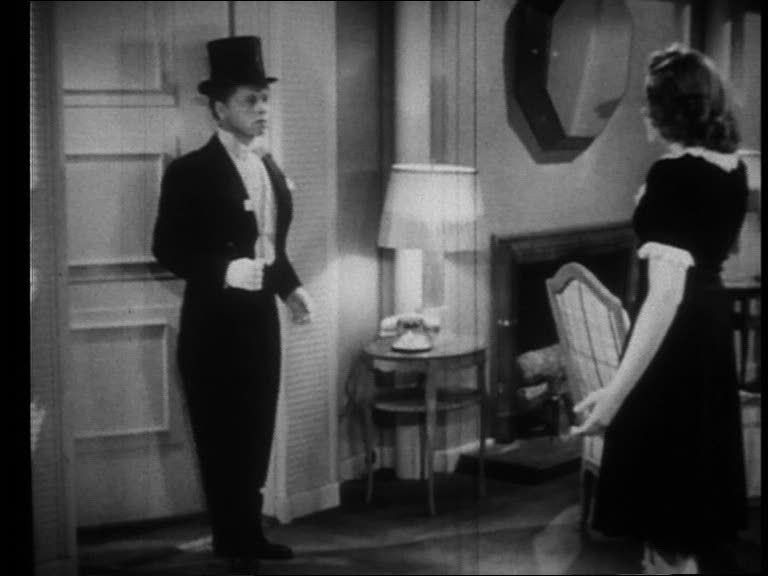
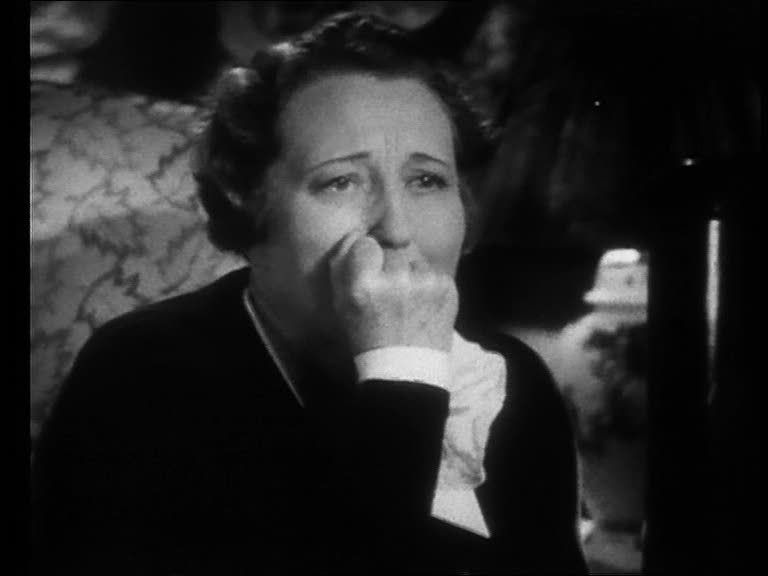
Films I Love #13: Alone. Life Wastes Andy Hardy (Martin Arnold, 1998)


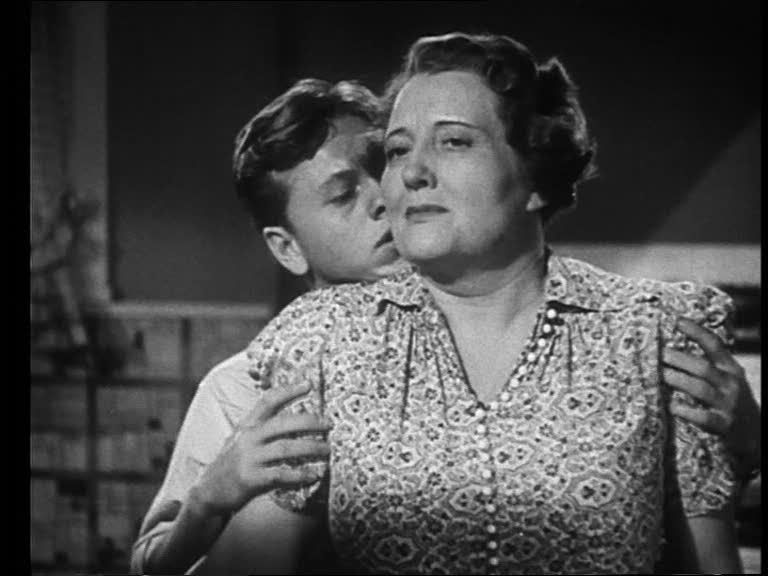
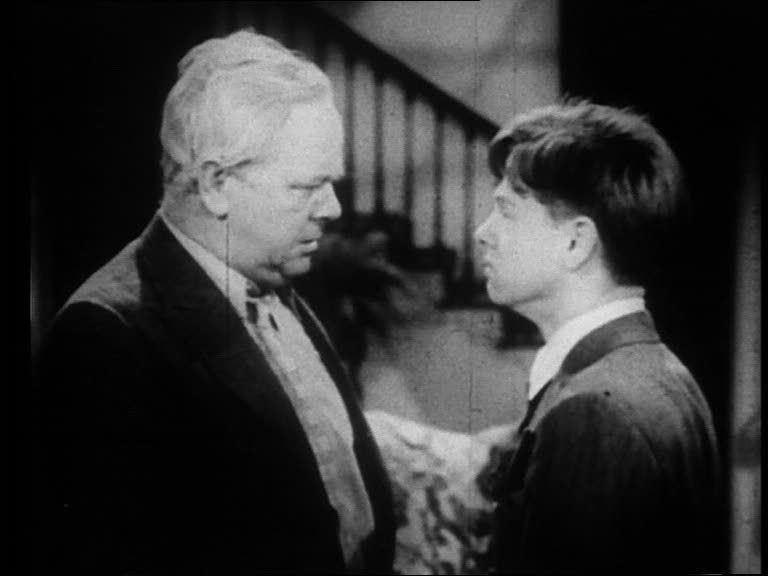
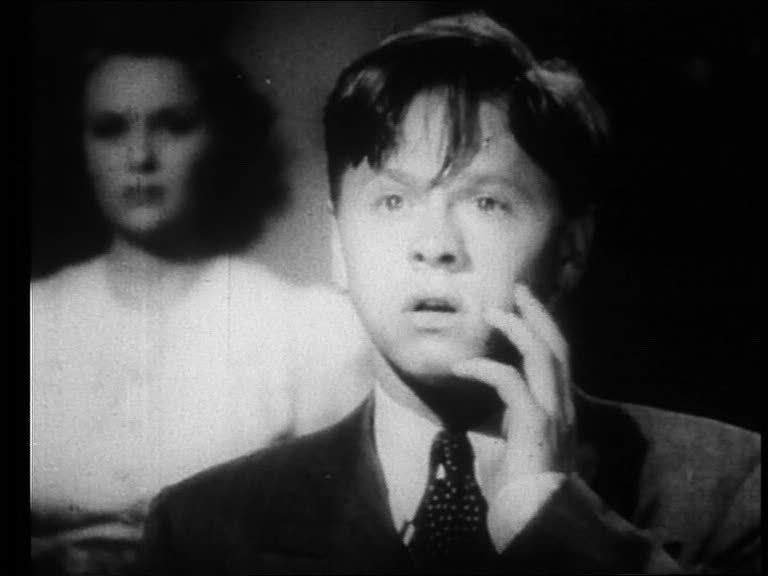
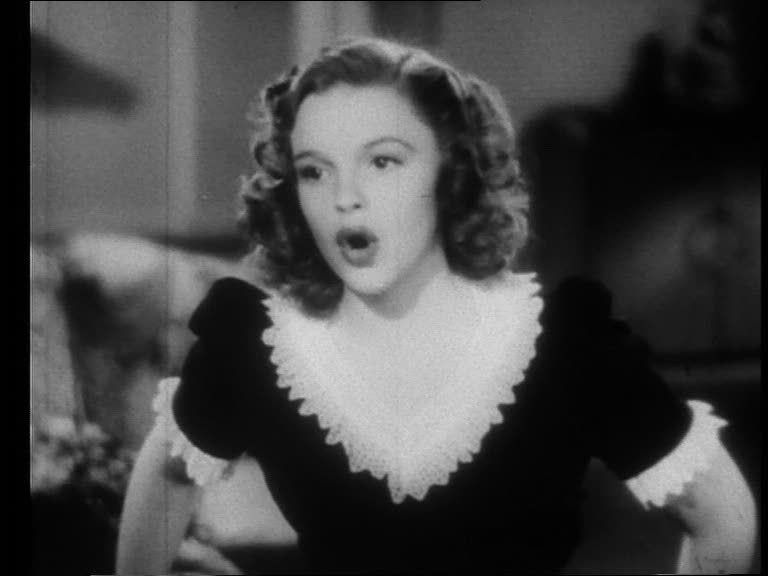
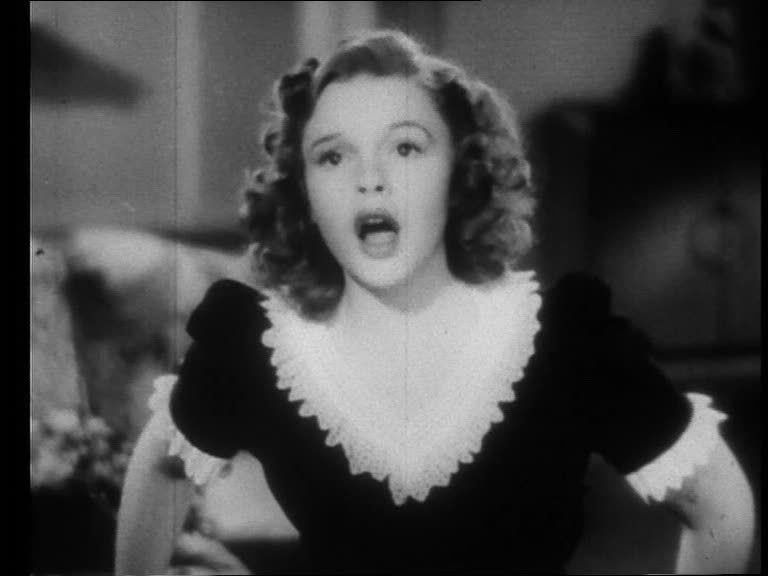
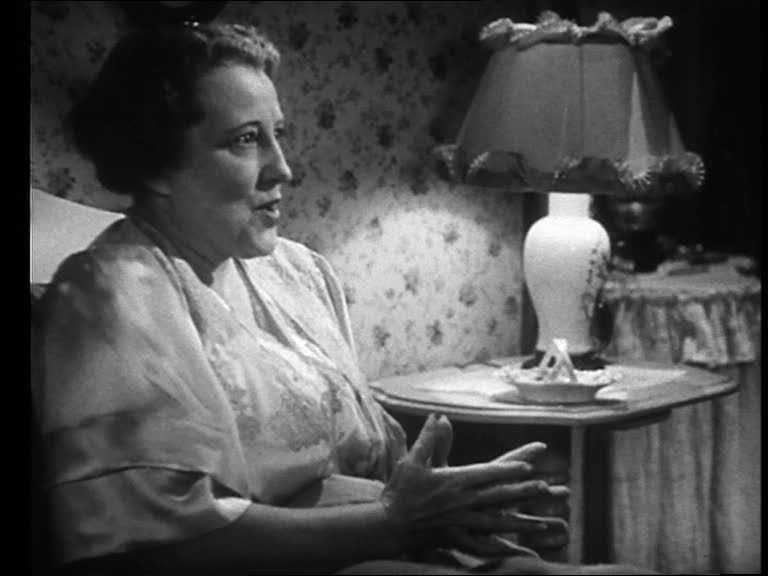
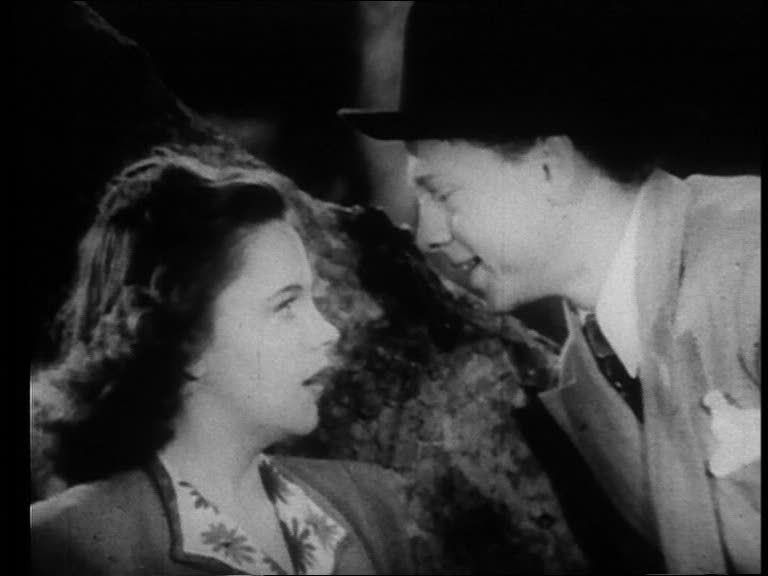
Lasting only 15 minutes and consisting entirely of footage taken from the Andy Hardy teen comedies, Martin Arnold's Alone. Life Wastes Andy Hardy is a mini-masterpiece and one of the funniest films I've ever seen. Arnold's experimental short films relentlessly deconstruct narrative cinema by pulling apart scenes from Hollywood movies frame by frame, repeating key images in stuttery, syncopated rhythms that reveal hidden subtexts and create new meanings for previously innocuous moments. In this film, Arnold stitches together brief scenes from three of the Andy Hardy movies, starring Mickey Rooney and Judy Garland, stretching out moments that apparently passed within seconds in the original film but here go on for several minutes each. In the process, Arnold creates a new narrative of sexual desire between Andy and his mother, an incestual subtext of meaningful glances and hesitant touches that pays off in the wonderful scene where Garland and Rooney kiss, and Arnold cuts back and forth between their clench and a reaction shot of Andy's horrified, jealous mother. It's hilarious, as is the unexpected final scene where the repetitive editing turns the young couple's post-kiss smiles into an orgasmic bout of pig-like gasping and wheezing. It never fails to send me into hysterics, though the effect is hard to capture either in stills or in prose.

This is also Arnold's most sonically rich film, deconstructing the soundtrack every bit as much as the image. He emphasizes the breaths and murmurs between words, cutting off much of the speech in order to create a breathy, sibilant soundtrack composed almost entirely of abstracted verbal noises — a perfect complement to the film's Freudian digging into psychosexual impulses. Best of all, though, is the way Arnold rips apart a Judy Garland musical number, allowing her only one syllable at a time, keeping her locked in a repetitive groove like a record that keeps skipping to the same spots over and over again. As she coos and trills, her face going through matching patterns of expressions to emit each abstracted note, the music track runs backward and folds in on itself, while very slowly the song is allowed to emerge from this morass as recognizable words and musical phrases take form. It's a masterful manipulation of sound.

Sunday, November 9, 2008

Celebrity


"You can learn a lot about a society by who it chooses to celebrate." So says former schoolteacher and current television interviewer Robin (Judy Davis) in Woody Allen's Celebrity, in one of those moments that Woody often inscribes in his films, where his authorial voice comes through loud and clear no matter which character the mouthpiece happens to be at any given moment. This line, coupled with the generic title, announces the film as Woody's commentary on the concept of celebrity rather than on any individual celebrities, and to that end he populates his film with a virtual cross-section of the kinds of people we, as a culture, tend to celebrate: movie stars, musicians, models, writers, New Yorker-style intellectual elites, athletes, TV newspeople, crime and accident victims, people suffering from rare illnesses, eccentric guests on Springeresque talk shows, even a famous priest who gets devout Catholics and nuns clustered around him like groupies at a rock concert. The point is obvious: there may be many types of celebrities, but the basic functioning of celebrity itself is the same, no matter the reason for the fame. The film teems with celebrities, though its two main protagonists exist on the boundaries of this world, continually rubbing up against the aura of celebrity in a series of encounters that reveal the parallel workings of the celebrity world and the "real" world. Woody's perspective is almost anthropological, as though he had discovered this strange new tribe of people and wanted to observe their odd mating rituals and inscrutable traditions. The camera, gliding with effortless ease under the guidance of Bergman cinematographer Sven Nykvist, gapes with equal wonder at the prodigious beauty of these people and the casual nastiness with which they treat one another. This satire of celebrity is, admittedly, not terribly original, but it is sharp, incisive, and has an acrid bite that makes it hit particularly hard. In some ways, Woody is taking aim at easy targets, but he knocks them over so forcefully, and with such brutal humor, that it's difficult to resist.

The film centers around the diverging paths of Robin and her ex-husband Lee (Kenneth Branagh) in the aftermath of their acrimonious divorce. By the end of the film, one of them will have been inducted into the annals of celebrity while the other continues to circle around the edges, always just outside the promised land. Throughout most of the film, though, Lee and Robin function as though the usual Woody Allen character had been split into two beings, each of whom ventures off on their own journey. And journey is an appropriate term, in the sense of a kind of epic quest; in many ways, Lee's episodic path through the film in particular is analogous to Dante's descent through the levels of Hell, exploring the many forms of sin and perdition among the celebrities he encounters in his job as a magazine reporter. The film opens with the letters "HEL," as in the Norse variation on the underworld, scrawled across the screen in skywriting, a message that's soon completed with one additional letter to read "HELP." Both words are equally appropriate for these characters, who are neurotic, self-conscious, insecure, and always trying to figure out how their life "should" be. In other words, they are very typical Woody Allen characters, but the fact that Woody is playing neither frees him up to explore some interesting variations on his usual persona.

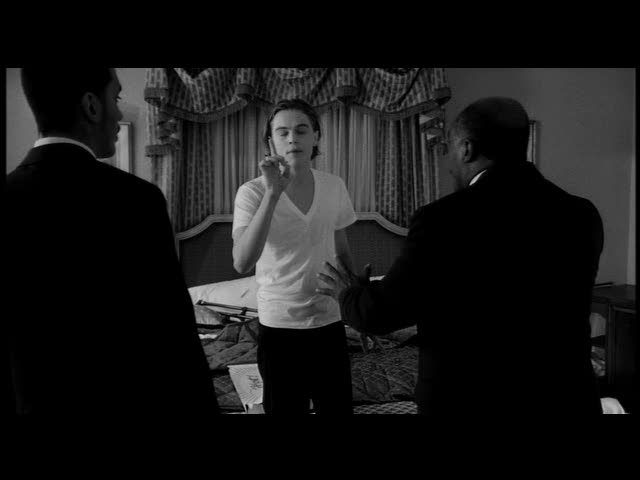
For his part, Lee is the ugly and annoying aspect of Woody's neurotic charm. Branagh takes on Woody's signature stutter and the vacillation between insecurity and a preternatural confidence that allows him to walk up to the most beautiful woman in the room and come on to her. He has the ability, like Woody, to sell his charm, to make us believe that the pretty girls actually would go for this kind of goofy, sputtering fool, that in spite of or because of his insecurity these women really do see something in him. But whereas Woody's manner is always good for a laugh, Branagh makes this character frustrating in a way that Woody never does. He keeps pushing, keeps saying and doing exactly the wrong thing, stuttering his way into deeper and deeper trouble, until one wants to scream at the screen for him to cut it out. There's a sequence where Lee is trying to sell the volatile, self-centered actor Brandon Darrow (Leonardo DiCaprio) on his screenplay, and somehow gets roped into spending a wild night with the actor, shuttling between Atlantic City and New York and finally winding up in bed with the actor and two gorgeous girls. Throughout it all, Lee just cannot stop chattering, cannot keep his mouth shut about his screenplay for long enough to even notice, much less enjoy, what's going on around him. The scene ends with Lee, disinterested in sex, leaning over to ask Darrow, who's in the middle of passionately going at it with his girlfriend, what he thought of a scene in the screenplay.

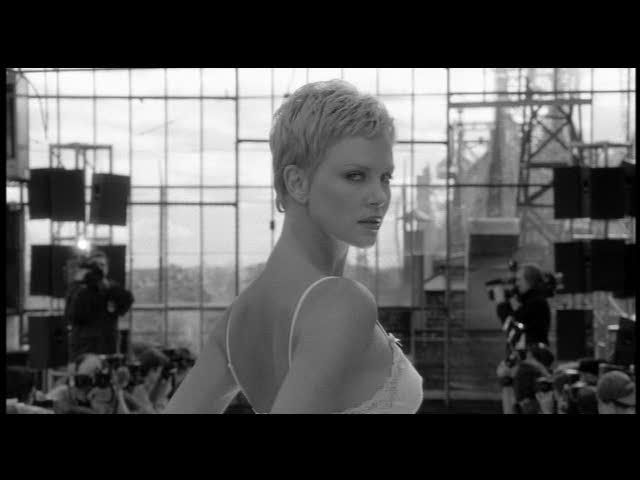
There are no words for this kind of exasperating character, and yet one quickly realizes that if Woody had played it, this scene would have been hilarious instead of pathetic and aggravating. Branagh takes the Woody persona to dark places, frequently going so far that it becomes hard to watch him. One quickly realizes that all those movies where we laughed at Woody's fumbling, nebbishy demeanor were actually about guys who, if we met them in real life, would turn out to be too much to take. Lee is, quite simply, an asshole, and Branagh does a great job of playing this dark mirror of the usual Woody character. Throughout the film, he goes through a succession of women — a "polymorphously perverse" supermodel (Charlize Theron), the stable, intelligent book editor Bonnie (Famke Janssen), the moody wannabe actress Nola (Winona Ryder) — and each time convinces them (and the audience), with absolute sincerity, that he is deeply in love with them. Each time, of course, it falls completely apart, sometimes through no fault of his own (the hilarious sequence with Theron, who is both stunning and a surprisingly good comic actress) and sometimes because he's just an utter jerk at heart.


Meanwhile, Judy Davis' Robin is the other half of the Woody persona, the earnest, yearning spirit in search of what she wants, even if she doesn't quite know what that is. Davis also has the Woody stutter, the neurotic tics that sometimes explode into full-blown public embarrassment, like when her internal monologue of rage against Lee suddenly erupts into out-loud screaming in the middle of a movie theater. Robin is, despite this outburst, the gentler side of Woody, and also the depressive side — where Lee lets his dissatisfaction out in the form of his passive-aggressive treatment of the women in his life, Robin simply sinks into sadness and self-pity. It's a no less ugly self-portrait for Woody, who by pouring himself into these two opposite halves seems to have exaggerated all the usual foibles of his screen personality. But Robin also represents an arc of self-improvement and success, even if it's the barbed success of celebrity. After the divorce from Lee, she meets the TV producer Tony (Joe Mantegna), who falls in love with her and convinces her to shed some of her inhibitions and come to work in television. As a result, Robin winds up pushing aside her ambivalent feelings about TV and celebrity, becoming a success and even seemingly finding happiness with her new career and new man.

In a sense, Robin's passage into celebrity is the American dream, a version of the familiar Hollywood narrative whereby the ordinary girl is made over, as if by magic, into a media princess of some kind. Woody skewers the myth subtly by having the princess in question essentially be himself in drag, but in many other ways Robin's story acts as a corrective to the film's overall thrust regarding the negativity of celebrity. Sometimes, Woody seems to be saying, too good to be true comes true anyway, and sometimes the rich and beautiful really are happy. In taking on these cultural stereotypes — DiCaprio as the drug-addled star trashing a hotel room, Melanie Griffith as a famous actress whose idea of marital fidelity is giving random strangers blowjobs but stopping short of "intercourse" — Woody is careful to include this glimpse of genuine happiness and connection. In some ways, he really does glamorize this celebrity lifestyle, idolizing it with the same outsider's awe that overcomes Lee whenever he's in the presence of these beautiful people. There's a reason that the film's black and white cinematography has such a gorgeous, metallic sheen, as though every image in the film was constantly being subjected to the glow of a thousand flashbulbs going off. The film simultaneously deconstructs and celebrates America's concept of celebrity. The film puts these people up on a pedestal and then asks, simply and often hilariously, "why?"