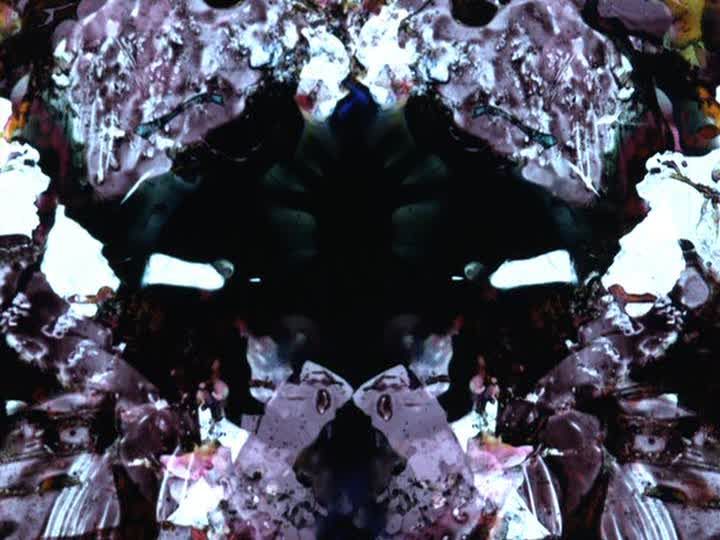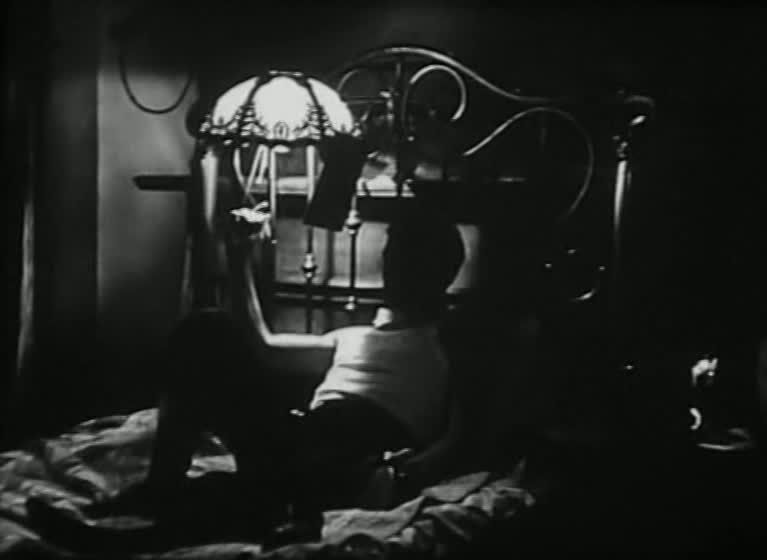
Jean Rollin's first feature, The Rape of the Vampire, establishes virtually all of the templates for this trash auteur's distinctive approach to no-budget sexploitation horror. Surreally dreamlike and strange, with a plot that never makes a shred of sense, Rollin's film wanders dreamily from one set piece to another, the connections between them as ephemeral as the neural pathways linking one moment to another in a dream. This debut was shot in black-and-white, and though a bright, garish color sensibility is integral to the director's later work, the color is hardly missed here, as he crafts an equally potent, moody aesthetic in stark sun and shadow.
The film is actually split into two unequal parts, and though the story, such as it is, continues more or less seamlessly from one part to another, they're definitively split apart and there's even a second credits sequence that runs before the second part begins. The bridge between the two parts of the film is like crossing from the real world, where a rational explanation, however unlikely, is still possible, to the truly unhinged world of the surreal, the nightmarish, the supernatural, where rationality is utterly banished and the semblance of a plot is all but entirely erased.
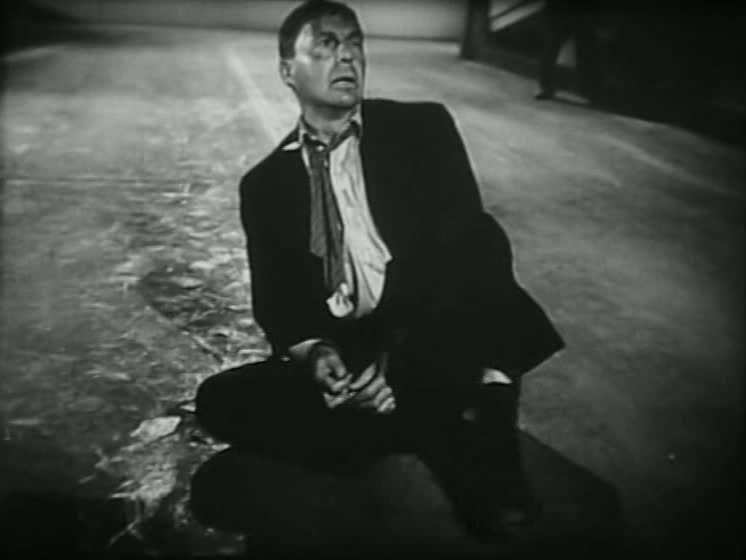
In the first third of the film, the psychoanalyst Thomas (Bernard Letrou) and his friends visit a remote village supposedly haunted by four vampire sisters. Thomas doesn't believe the sisters are actually vampires, he thinks they've just been manipulated into thinking they are, and he seeks to cure them of their delusion. He even seems to be right: the sisters worship before a pagan altar and are given orders by their god, who turns out to be an old man from the village, hiding behind the altar, delivering instructions to the women for his own mysterious purposes. This segment ends with virtually everyone dead, climaxing at the bleak-looking beach, with wooden posts like prison bars, that Rollin would return to again and again in his oeuvre. That beach is a conduit into the unknown, and as the film transitions into the second segment that constitutes its final two-thirds, the rational explanations and pseudo-scientific jargon of the first part are jettisoned in favor of an enthusiastic embrace of the supernatural.
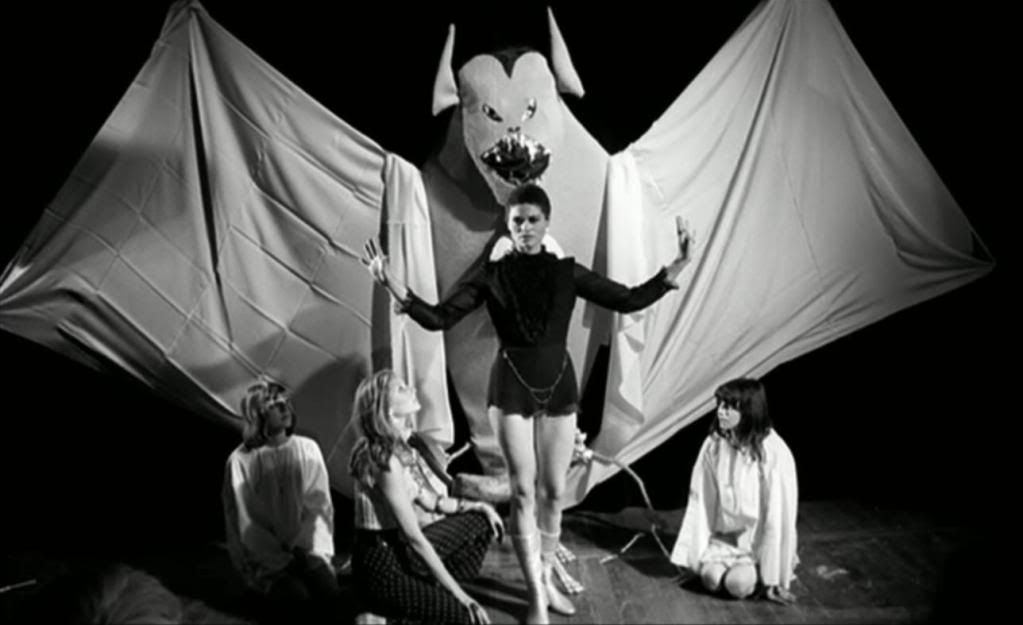
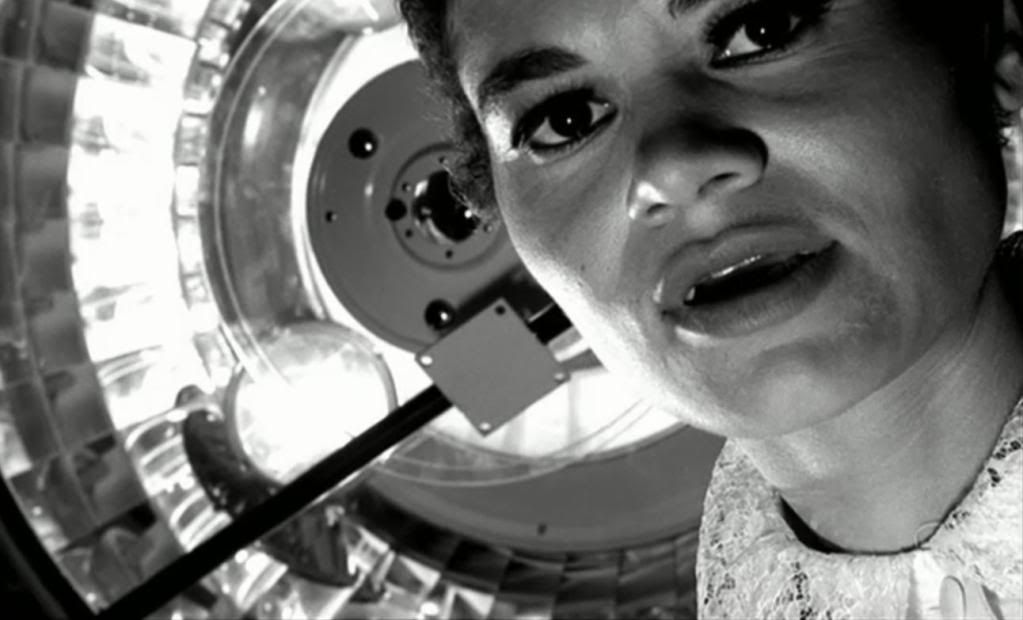
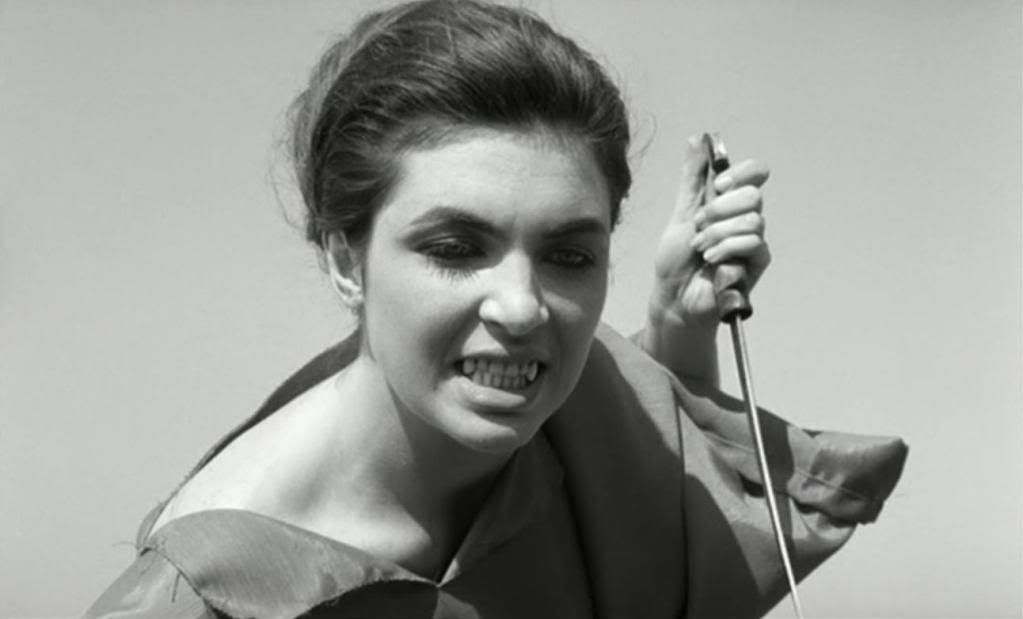
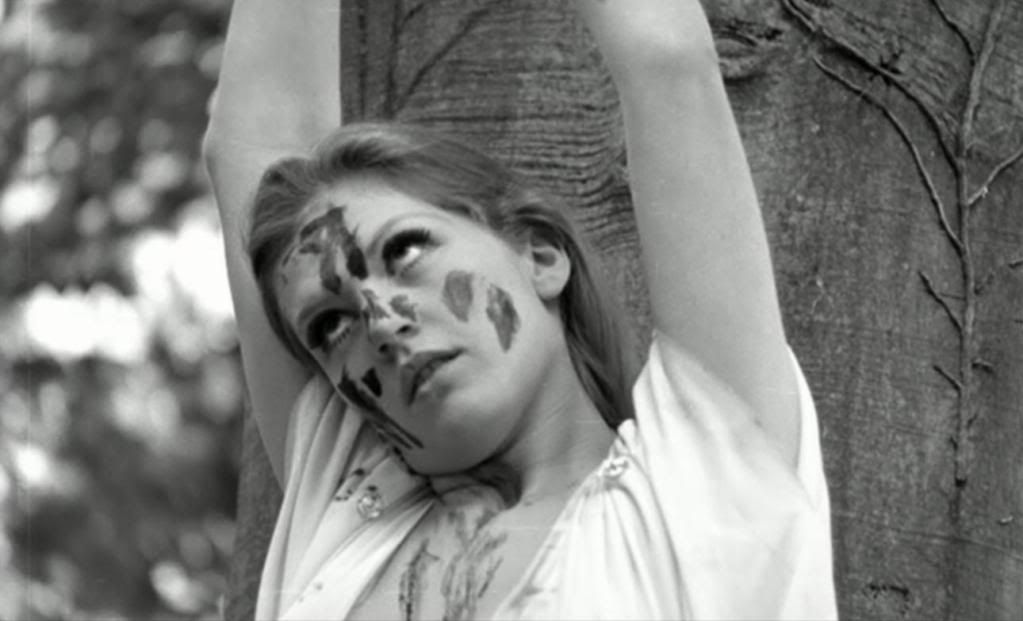
This shift is announced especially by the arrival of the Queen of the Vampires (Jacqueline Sieger), a campy and outrageous figure who's constantly baring her fangs and laughing sinisterly, often without any context whatsoever: Rollin seems to love cutting to her in mid-cackle. The Queen's plans are typically hazy, but there's lots of grave-robbing, hypnotized girls hooked up to tanks of blood from which the vampires drink through long straws, sinister operations and rituals, a vampire priest holding an upside-down cross, and so on. The film's imagery is wild and weird, climaxing with a very chintzy vampire wedding that looks like the vampires are actually staging an amateur play: it's set on a stage with a huge and clumsily constructed bat in the background, its wings seemingly made from bedsheets.
There's a strong element of theatricality in Rollin, certainly, a sense that these vampires are performing for someone, maybe just for one another. The vampires even repeat the trick that the old man had pulled in the first part of the film, setting up an altar that seems to be speaking to some vampire supplicants, but actually houses a tape recorder playing back a loop of the Queen's voice. The supernatural is very ordinary in Rollin's world, the artifice paper-thin. There's little boundary between the real and the unreal, and the rough, clumsy low-budget aesthetic lays bare the artificiality of it all. There's a raw, one-take feel to much of the film: if a statue falls off a shelf and nearly hits the vampire queen in the head as she descends on a reclining victim, no matter, it's good enough, and Rollin leaves in this unscripted accident. The blood wedding, with its amateur drama club feel, is another good example; the vampires for some reason feel the need to stage their rituals with shoddy dramatics and awkwardly constructed props, performing for an audience of other vampires, who sit playing bongos in the theater seats and storm the stage for an impromptu celebration at the climax of this "play."
That's the essence of Rollin right there, the real and the unreal, the theatrical and the seemingly unstudied, the supernatural and the ordinary, colliding within his utterly idiosyncratic cinema. He presents a fractured and nonsensical dream world that leaps without warning from one thing to another at the speed of thought, giving the impression of a film edited according to the momentary whims of the dreamer. Action can jump suddenly from one location to another without warning or narrative justification, and the connections between scenes are often, let's say, mysterious. Even the seedy eroticism that always characterizes Rollin's work follows this (il)logic: women are rarely seen taking their clothes off in this film, instead leaping effortlessly from clothed to naked in between shots. All of this combines to make Rollin a true poet of trash, locating a strange kind of unsettling poetry and even beauty in his outrageous dream world.